

International Journal of Diabetes & Metabolic Disorders(IJDMD)
ISSN: 2475-5451 | DOI: 10.33140/IJDMD

Impact Factor: 1.23


Case Report - (2024) Volume 9, Issue 2
An Overview of Glucokinase Gene Mutation: A Case Series Study of Six Maturity-Onset Diabetes of The Young Type 2 Patients From North of Iran
2Department of Immunology, Immunogenetics Research Center, Faculty of Medicine, Mazandaran University of Medical Sciences, Sari, Iran
3Metabolic Disorders Research Center, Endocrinology and Metabolism, Molecular-Cellular Sciences Institute, Tehran University of Medical Sciences, Tehran, Iran
4Diabetes Research Center, Endocrinology and Metabolism Clinical Sciences Institute, Tehran University of Medical Sciences, Tehran, Iran
5PhD, Immunogenetic research center, molecular and cell biology research center. Factuality of of med, Mazandaran university of Medical Sciences, Sari, Iran
6Diabetes Research Center, Endocrinology and Metabolism Clinical Sciences Institute, Mashhad university of medical sciences, Iran
7Department of endocrinology and metabolism, Mazandran university of medical sciences, Iran
8Mazandran university of medical sciences, Sari, Iran
Received Date: Oct 30, 2024 / Accepted Date: Dec 02, 2024 / Published Date: Dec 06, 2024
Copyright: ©© 2024 Daniel Zamanfar, et al. This is an open-access article distributed under the terms of the Creative Commons Attribution License, which permits unrestricted use, distribution, and reproduction in any medium, provided the original author and source are credited.
Citation: Zamanfar, D., Abediankenari, S., Amoli, M., Hashemi-Soteh, M. B., Hashemian, S., et al. (2024). An Overview of Glucokinase Gene Mutation: A Case Series Study of Six Maturity-Onset Diabetes of The Young Type 2 Patients From North of Iran. Int J Diabetes Metab Disord, 9(2), 01-03.
Abstract
Background Maturity-onset diabetes of the young type 2 (MODY 2) is a specific form of MODY that is distinguished by persistent hyperglycemia without any associated vascular complications. The objective of this study was to assess the clinical findings of six patients with MODY 2.
Case presentation We conducted a study involving six caucasian children, consisting of five boys (with disease onset of 7, 9, 5, 15, and 6 years old, respectively) and a 2-year-old girl. All of the mutations observed were missense mutations. Among the patients, two had the same mutation (c.G1130A). Additionally, we identified a new heterozygous mutation in the GCK gene, specifically a G to A transition at nucleotide 1342 (exon 10, c.G1342A). One patient exhibited insulin resistance and tested positive for auto-antibodies against ICA and GAD. At the time of diagnosis, three patients presented with symptoms of polydipsia and polyuria, while the others were initially asymptomatic. Three patients were prescribed anti-diabetic medication, while the remaining patients were initially managed through dietary interventions.
Conclusion Hyperglycemic symptoms, the existence of autoantibodies, and insulin resistance, should not discourage us from considering a MODY 2 diagnosis. Given the conflicting opinions on patient management, conducting a genetic analysis is beneficial as it reduces treatment expenses and allows for distinguishing between MODY 2 and other subtypes of MODY.
Keywords
Monogenic Diabetes, Mody 2, Mild Hyperglycemia, Gck
Abbreviations
MODY : Maturity-onset diabetes of the young
IFGT : impaired fasting glucose test
IGTT : impaired glucose tolerance test
GCK : Glucokinase
HNF-1α : Hepatocyte nuclear factor-1α
HNF-4α : Hepatocyte nuclear factor-4α
FBS : fasting blood sugar
NL : normal
OGTT : oral glucose tolerance test
TC : total cholesterol
LDL : low-density lipoprotein
HDL : high density lipoprotein
TG : triglyceride
Anti-IAA: anti-insulin autoantibodies
anti-IA-2: anti-protein tyrosine phosphatase
anti- ICA: anti-islet cell antibodies
anti- GAD: anti-glutamic acid decarboxylase
UA : urine analysis
U/SG : urine/specific gravity
BUN : blood urea nitrogen
Cr : creatinine
DM : diabetes mellitus
NDD : neurological development delay
BMI : body mass index
PMH : past medical history
GDM : gestational diabetes mellitus
NDM : neonatal diabetes mellitus
SNP : single nucleotide polymorphisms
FPG : fasting plasma glucose
HGMD : Human Gene Mutation Database
OHA : oral hypoglycemic agents
PNDM : permanent neonatal diabetes mellitus
Introduction
Arare form of diabetes known as monogenic diabetes, characterized by beta cell dysfunction, is caused by a single gene defect. This type of diabetes is categorized into three primary subtypes: MODY, syndromic diabetes, and neonatal diabetes, with MODY being the most prevalent form [1]. MODYs refers to a group of non-ketotic and non-insulin dependent types of diabetes. These subtypes are differentiated based on the age at disease onset, the pattern of hyperglycemia, and the response to treatment [2]. The prevalence of MODY is estimated to be between 0.3% and 2.4% among diabetic patients [3].
Although the clinical findings of MODY subtypes vary, there are common features such as autosomal dominant inheritance, beta cell dysfunction, insulin secretion insufficiency, young onset at diagnosis, non-insulin regimen for initial management, lack of insulin resistance, and autoimmune processes [4]. Currently, there are 14 identified subtypes of MODY, with the majority of cases being attributed to mutations in the Glucokinase (GCK), Hepatocyte nuclear factor-1α (HNF-1α), and Hepatocyte nuclear factor-4α (HNF-4α) genes. The GCK gene, which contains 12 exons and encodes a 465-amino acid protein, plays a role in the functioning of gut endocrine cells, the brain, liver, and the pancreas. It is also known as hexokinase IV and is responsible for regulating the first phase of glycolysis. This isoform of hexokinase is distinct from others due to its high affinity for glucose and ATP as the first and second substrates.
The first subtype of MODY, MODY 2, was diagnosed in France and the United Kingdom in 1992. MODY 2 is a unique form of diabetes characterized by mild hyperglycemia, a non-progressive course, rare vascular complications, and HbA1c levels seldom exceeding 7.5%. Differentiating between MODY and type 1 or type 2 diabetes mellitus can be challenging, but clinical findings play a significant role in the diagnosis. Gene screening can also be helpful in determining MODY subtypes and selecting appropriate management strategies [2, 4, 5]. This study evaluates six cases of MODY 2 findings, including their mutations, clinical manifestations, and management approaches.
Case Presentation
We presented a study involving six patients from six families who were referred to our pediatric endocrinology and metabolism clinic. These patients were diagnosed with MODY2 based on their clinical findings and genetic analysis. All of the GCK mutations identified were missense and pathogenic, with one mutation being a novel discovery (c.G1342A). A detailed summary of the genetic analysis for the MODY2 patients can be found in Table 1. Additionally, we discribe the demographic, clinical, and paraclinical findings of these six patients. A comprehensive overview of the MODY 2 patients are detailed in the Table 2.
|
No. |
Gene |
Exon number |
c DNA variants |
Type of mutation |
Amino acid change |
Described |
|
Patient 1 |
GCK |
9 |
c.G1130A |
Missense |
p.R377H |
Previously reported |
|
Patient 2 |
GCK |
10 |
c.G1342A |
Missense |
p.G448S |
Novel |
|
Patient 3 |
GCK |
9 |
c.C1163T |
Missense |
p.A388V |
Previously reported |
|
Patient 4 |
GCK |
9 |
c.G1130A |
Missense |
p.R377H |
Previously reported |
|
Patient 5 |
GCK |
7 |
c.C823T |
Missense |
p.R275C |
Previously reported |
|
Patient 6 |
GCK |
7 |
c.G680A |
Missense |
p.G227D |
Previously reported |
Table 1: Genetic Analysis of Mody 2 Patients
|
Features |
Patient1 |
Patient2 |
Patient3 |
Patient4 |
Patient5 |
Patient6 |
|
Age at disease onset (year) |
7 |
9 |
5 |
6 |
6 |
2 |
|
Sex |
male |
male |
male |
male |
male |
female |
|
Weight |
31 |
34 |
21 |
33 |
35 |
11 |
|
Height (cm) |
133 |
140 |
112 |
124 |
138 |
92 |
|
BMI (Kg/m2) |
17.9 |
17.3 |
16.5 |
21.5 |
18.4 |
13 |
|
Blood group |
- |
O+ |
O+ |
A+ |
B+ |
B+ |
|
Family history of diabetes |
Positive |
unclear |
Positive |
Positive |
Positive |
Positive |
|
Initial presentation |
Asymptomatic |
Polydipsia, polyuria, nocturia |
Polydipsia, polyuria, polyphagia, nocturia |
Abdominal pain, polydipsia, polyuria |
Asymptomatic |
Asymptomatic |
|
DKA or Siezure during follow-up |
Negative |
Negative |
Negative |
Negative |
Negative |
Negative |
|
Pancreatic auto-antibodies |
Negative |
Negative |
Negative |
Negative |
Positive/Negative |
Negative |
|
Thyroid auto-antibodies |
Negative |
Negative |
Negative |
Negative |
Negative |
Negative |
|
C-peptide at diagnosis (ng/ml) |
- |
0.9 |
2.6 |
0.9 |
1.5 |
4.1 |
|
Insulin at diagnosis (mIU/L) |
2 |
3.3 |
20 |
7 |
13 |
4 |
|
FBS at diagnosis (mg/dl) |
124 |
122 |
142 |
114 |
112 |
121 |
|
OGTT at diagnosis (mg/dl) |
144 |
126 |
141 |
160 |
106 |
170 |
|
HbA1c at diagnosis (%) |
7.8 |
6.2 |
6.4 |
5.8 |
5.7 |
4.9 |
|
Cholesterol (mg/dl) |
226 |
107 |
173 |
170 |
146 |
161 |
|
HDL-cholesterol (mg/dl) |
61 |
36 |
65 |
38 |
59 |
55 |
|
LDL-cholesterol (mg/dl) |
131 |
60 |
87 |
83 |
72 |
81 |
|
Triglyceride (mg/dl) |
89 |
50 |
105 |
66 |
76 |
81 |
|
Urinanalysis (microalbuminuria, glcosuria, ketonuria) |
Negative |
Negative |
Negative |
Negative` |
Negative |
Negative |
|
Follow up duration |
5 years |
8 years |
7 years |
10 years |
9 years |
6 years |
|
Range of FBS during follow up (mg/dl) |
120-145 |
113-128 |
112-145 |
112-138 |
90-125 |
120-131 |
|
Range of OGTT during follow up (mg/dl) |
90-197 |
126-159 |
134-161 |
125-160 |
101-138 |
126-170 |
|
Range of HbA1c during follow up (%) |
5.4-7.8 |
6.1-10.7 |
5.1-7.1 |
5.7-6.1 |
5.3-6.3 |
4.9-5.4 |
|
Initial intervention |
Glibenclamide |
Metformin |
Diet |
Glibenclamide + Metformin |
Diet |
Diet |
|
Renal function |
Normal |
Normal |
Normal |
Normal |
Normal |
Normal |
|
Fundoscopy |
Normal |
Normal |
Normal |
Normal |
Normal |
Abnormal |
|
Dental examination |
Normal |
Normal |
Abnormal |
Normal |
Normal |
Abnormal |
|
Physical activity |
regular |
regular |
regular |
regular |
regular |
Regular |
Table 2: Description of Clinical Findings and Laboratory Parameters of Six Mody 2 Patients
BMI: body mass index; FBS: fasting blood sugar; OGTT: oral glucose tolerance test; HDL: high density lipoprotein; LDL: low-density lipoprotein; DKA: diabetic ketoacidosis
Patient 1:
A caucasian 7-year-old boy, currently 11 years old, was referred to our pediatric clinic due to recurrent hyperglycemia without ketoacidosis. His laboratory results showed elevated blood sugar levels, including a fasting blood sugar (FBS) of 124 mg/dl (normal range: 70-126 mg/dl), oral glucose tolerance test (OGTT) of 144 mg/dl (normal range: 140-200 mg/dl), and HbA1c of 7.8% (normal range: <5.7%). It is important to note that his grandmother had a family history of diabetes mellitus and his father had hyperglycemia. The patient's birth weight was 3.1 kg, and he was delivered term via cesarean section. There was no history of neurological development delay (NDD), drug consumption, hospitalization, or underlying diseases.
His physical examination was normal. His appetite was normal, also he did not experience hyperglycemic manifestations encompass frequency, noctury, and weight loss recently. Additionally, the patient's lipid profile was abnormal, with total cholesterol (TC) of 226 mg/dl (normal range: <200 mg/dl), low-density lipoprotein (LDL) of 131 mg/dl (normal range: <130 mg/dl), high-density lipoprotein (HDL) of 61 mg/dl (normal range: 35-70 mg/dl), and triglyceride (TG) of 89 mg/dl (normal range: <150 mg/dl). Initial insulin level was measured at 2 mIU/L. The analysis of auto-antibodies, including anti-insulin autoantibodies (IAA), anti-protein tyrosine phosphatase IA-2 (IA2), anti-islet cell antibodies (ICA), and anti-glutamic acid decarboxylase (GAD), all came back negative. Additionally, thyroid auto-antibodies were also negative. Renal function was found to be within normal range, as indicated by normal blood urea nitrogen (BUN) levels of 13.2 mg/ dl (NL range: 7-23 mg/dl) and creatinine (Cr) levels of 0.68 mg/dl (NL range: 0.5-1.4 mg/dl). Urine analysis (UA) did not reveal any evidence of microalbuminuria, ketonuria, or glycosuria. The urine specific gravity (U/SG) was measured at 1023. Given the elevated FBS and HbA1c levels, the patient was started on Glibenclamide to manage his blood sugar levels.
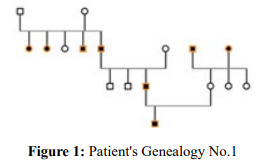
Based on the patient's clinical findings, positive family history of diabetes, laboratory parameters, normal body mass index (BMI) of 17.9 kg/m2, and the absence of acanthosis nigricans, the possibility of MODY was suspected. Genetic analysis confirmed the diagnosis of MODY 2, with a heterozygous mutation of GCK G to A transition at nucleotide 1130 (exon 9). No other coding transitions were observed. The patient maintained regular physical activity and had normal fundoscopy and dental examinations. Further detail on the patient's genealogy is described in figure 1.
Patient 2:
A caucasian 9-year-old boy (currently a 16-year-old boy) presented to our clinic with intermittent episodes of polydipsia, polyuria, and nocturia without increased appetite or weight loss. Upon initial examination, there were no abnormalities detected. He was born term by cesarean section, weighing 3.6 kg at birth. There is no history of underlying disease, hospitalization, or drug consumption. Due to being an adopted son, the family history of diabetes is unclear. However, there is no history of developmental delay according to the patient's medical record. Additionally, there are no signs of acanthosis nigricans.
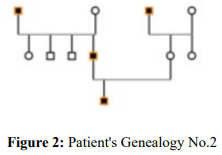
His glycemic profile showed a FBS level of 122 mg/dl, HbA1c level of 6.2%, and OGTT result of 126 mg/dl, all without signs of ketoacidosis. His lipid profile revealed TC of 107 mg/dl, LDL cholesterol of 60 mg/dl, HDL of 36 mg/dl, and TG level of 50 mg/dl. The pancreatic auto-antibodies profile indicated anti-IA2 (0.2 IU/mL), anti-ICA (0.3 IU/mL), anti-IAA (0.4 nU/mL), and anti-GAD (1 IU/mL). Initial insulin and c-peptide levels were 3.3 mIU/L and 0.9 ng/ml, respectively. Thyroid auto-antibodies were negative. UA did not show any signs of ketonuria, glucosuria, or microalbuminuria. The U/SG of the urine was 1009, indicating normal kidney function. BUN and Cr levels were 14 mg/dl and 0.7 mg/dl, respectively. Metformin was considered as the initial treatment option. The patient had a normal BMI of 17.3 kg/m2 and normal c-peptide levels. Despite lacking information about the family history of diabetes, we decided to rule out MODY diagnosis. Genetic testing revealed a heterozygous mutation of GCK G to A transition at nucleotide 1342 (exon 10). Once MODY2 diagnosis was confirmed, Metformin was discontinued, and hyperglycemia was controlled through diet. The patient maintains regular physical activity and has normal findings in both fundoscopy and dental examination. The patient's genealogy can be found in figure 2.
Patient 3:
A caucasian 5-year-old boy, currently 11 years old, presented to our pediatric clinic with symptoms of polydipsia, polyuria, polyphagia, and nocturia. He did not experience recent weight loss. He was the first child of the family, born term by cesarean section with birth weight of 3.4kg. His family history of diabetes included his father, uncle, grandfathers, and grandmothers. There was no history of drug consumption, underlying disease, or hospitalization. The medical record did not report any NDD. The patient's clinical examination was normal, and there were no signs of acanthosis nigricans or organomegaly.
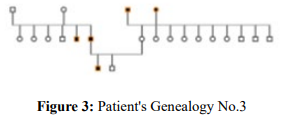
The glycemic profile did not indicate ketoacidosis and included FBS level of 142 mg/dl, OGTT level of 141 mg/dl, and HbA1c level of 6.4%. The lipid profile showed TC of 173 mg/dl, LDL of 87 mg/dl, HDL of 65 mg/dl, and TG of 105 mg/dl. The patient's pancreas auto-antibodies profile was negative, including anti-IA2 of 0.1 IU/mL, anti-ICA of 0.2 IU/mL, anti-IAA of 0.5 nU/mL, and anti-GAD of 2 IU/mL. Initial insulin and c-peptide levels were 20 mIU/L and 2.6 ng/ml, respectively. Thyroid auto-antibodies were also negative. BUN and Cr levels were 14 mg/dl and 0.7 mg/dl, respectively. U/A did not indicate evidence of glucose, ketones, or microalbumin, and the U/SG was 1025. MODY was ruled out based on a negative auto-antibodies profile, normal c-peptide level, normal BMI (16.5kg/m2), positive family history of diabetes, impaired fasting glucose tolerance (IFGT), and impaired glucose tolerance test (IGTT). Genetic evaluation confirmed MODY2 diagnosis, which was determined to be a heterozygous mutation of GCK with a C to T transition at nucleotide 1163 (exon 9). The patient had an abnormal dental examination, including 2 extracted teeth, 3 filled teeth, and 2 decayed teeth. Renal evaluation and fundoscopy showed no abnormalities. The patient regularly engaged in physical activity. The patient's genealogy is described in figure 3.
Patient 4:
A caucasian 15-year-old boy was referred with complaints of abdominal pain. He has been experiencing polyuria and polydipsia recently. Upon physical examination, the patient was found to have an undescended testes, but all other examinations were normal. There were no signs of acanthosis nigricans. He was born term via cesarean section with a birth weight of 3.5kg. The patient has never been hospitalized, but he had history of urticaria and migratory arthritis. When reviewing his family history, his grandmother had hyperthyroidism and his mother had gestational diabetes mellitus (GDM). Additionally, his father, father's cousins, father's aunt, and mother's grandfather had a positive history of diabetes.
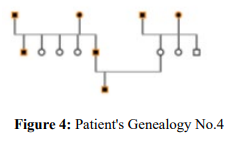
Initial laboratory tests revealed the following values: FBS of 114 mg/dl, OGTT of 160 mg/dl, and HbA1c level of 5.8%. The lipid profile included TC of 170 mg/dl, LDL of 83 mg/dl, HDL of 38 mg/dl, and TG of 66 mg/dl. Pancreatic auto-antibodies such as anti-IA2, anti-ICA, anti-IAA, and anti-GAD were all negative. Initial insulin level was 7 mIU/L and c-peptide level was 0.9 ng/ ml. Thyroid auto-antibodies were also negative. BUN and Cr were 33 mg/dl and 0.9 mg/dl, respectively. UA did not show any signs of albuminuria, glycosuria, or ketonuria, and the U/SG was 1013. Based on IFGT, IGTT, normal c-peptide level, normal BMI of 21.5 kg/m2, and positive family history of diabetes, the patient was recommended for genetic evaluation of MODY. Genetic testing revealed a heterozygous GCK G to A transition mutation at nucleotide 1130 (exon 9), with no other coding abnormalities observed. Renal evaluation did not show any abnormal findings. Dental examination and fundoscopy were normal. The patient's blood sugar is currently being controlled with the use of metformin and glibenclamide. The patient's genealogy can be found in figure 4.
Patient 5:
A caucasian 6-year-old boy, currently 14 years old, was referred to the hospital due to hyperglycemia. He did not experience the typical symptoms associated with hyperglycemia, such as polyuria, polydipsia, nocturia, and ketoacidosis. Upon physical examination, no abnormalities were found. The patient was born term through a normal vaginal delivery with a birth weight of 3.4 kg. He has never had a history of drug use, hospitalization, or any underlying medical conditions. His father, his mother's grandfather, and his mother's grandmother had a positive family history of diabetes.
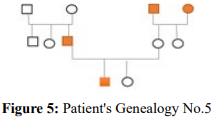
The patient's glycemic profile revealed FBS level of 112 mg/dl, OGTT level of 106 mg/dl, and HbA1c level of 5.7%. In terms of lipid profile, TC was 146 mg/dl, LDL was 72 mg/dl, HDL was 59 mg/dl, and TG was 76 mg/dl. The pancreatic auto-antibodies profile showed negativity for anti-IA2 and anti-IAA, and positivity for anti-ICA (1.5 IU/mL) and anti-GAD (12 IU/mL). Initial levels of insulin and c-peptide were 13 mIU/L and 1.5 ng/ml, respectively. Thyroid auto-antibodies were negative and there were no reports of aminoaciduria or glycosuria. U/SG value was 1028. Renal evaluation showed normal results, with BUN of 15 mg/dl and Cr of 0.9 mg/dl. Genetic testing was conducted due to inconsistent clinical symptoms, laboratory findings (such as IFGT and IGTT), auto-antibodies profile, absence of acanthosis nigricans, normal BMI of 18.4 kg/m2, normal c-peptide level, and positive family history of diabetes mellitus. The genetic analysis revealed a heterozygous mutation of GCK with a C to T transition at nucleotide 823 (exon 7). The patient maintained regular physical activity and the dental examination and fundoscopy yielded normal results. Further detail on the patient's genealogy is described in figure 5.
Patient 6:
A caucasian 2-year-old girl, who is currently 6 years old, was referred to our pediatric clinic for regular follow-up due to growth delay. During her physical examinations, we found that her genital, heart, and thyroid were normal, and there was no evidence of acanthosis nigricans or organomegaly. However, she recently experienced symptoms such as polyuria and intermittent constipation. The patient is the first child in her family and was born via cesarean section. She suffered from intrauterine growth restriction (IUGR) and had a birth weight was 2kg. There is no history of underlying diseases or drug consumption in her medical records. However, she had a history of developmental delay since birth and throughout her childhood. She started walking at the age of 15 months. It is important to note that there is a positive family history of diabetes, including her aunt, uncle, mother (whose blood glucose is controlled by metformin), her mother's sister, and her mother's grandfather.
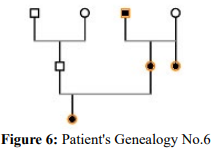
Glycemic profile was indicated FBS of 121 mg/dl, OGTT of 170 mg/dl and HbA1c of 4.9%. Lipid profile included TC of 161mg/ dl, LDL of 81 mg/dl, HDL of 55 mg/dl, and TG of 81 mg/dl. The pancreas auto-antibodies were negative such as anti-IA2 of 0.1 IU/ mL, anti-ICA 0.2 IU/mL, anti-IAA of 0.3 nU/mL and anti-GAD of 2.5 IU/mL. Initial insulin (mIU/L) and c-peptide (ng/ml) levels were 4 and 4.1, respectively. Thyroid auto-antibodies were also negative. Renal evaluation was normal. BUN and Cr were 10 mg/ dl and 0.5 mg/dl, respectively. No evidence of microalbuminuria, ketonuria and glycosuria was seen in U/A study and U/SG was 1010. Based on her findings; her family history of diabetes and medical history, normal c-peptide level, and normal BMI (13kg/m2) genetic analysis was performed to ruled out MODY. Gene sequencing was identified a heterozygous mutation of GCK G to A transition at nucleotide 680 (exon 7) and MODY 2 diagnosis was confirmed. She had regular physical activity. She had 2 decayed teeth in her dental examination. Her eye examination was abnormal. She wore glasses due to her eye deviation and hyperopia at the age of 10 months. Patient's Genealogy is available in figure 6.
Discussion
Monogenic forms of diabetes encompass mitochondrial diabetes, insulin receptor mutations, neonatal diabetes mellitus (NDM), MODY, and syndromes of diabetes. In MODY and NDM forms of diabetes, beta cell function is impaired. MODY is a heterogeneous disorder characterized by insulin secretion insufficiency, young age of onset, and a positive family history of diabetes. Different MODY subtypes exhibit progressive or persistent hyperglycemia, extra-pancreatic findings, vascular complications, and even phenotypic variations [6, 7]. The likelihood of MODY 2 inheritance in a newborn is typically 50%, unless the mutation is de novo. However, if both the mother and father have the GCK mutation, the probability significantly rises to 75% [8]. The prevalence of MODY2 varies from country to country, with approximately 40 to 50 percent in countries with a school-based blood glucose screening program [9]. GCK mutations devote 15% of incidental hyperglycemia of patients below 18 years old [10]. Unlike other forms of diabetes, MODY 2 patients are hyperglycemic from birth, but their insulin secretion remains stable throughout the course of the disease. As a result, they do not experience a progressive reduction in insulin secretion and are not prone to vascular complications [11]. Unlike blood glucose levels, HbA1c ranges are consistently below 10% in these patients [12]. It is important to note that pharmacological treatments have no effect on reducing HbA1c levels [2].
The clinical presentation of MODY 2 patients closely resembles that of both type 1 and type 2 diabetes at disease onset. More than 80% of individuals with MODY are initially misdiagnosed [4, 13]. While the progression of type 1 diabetes is more aggressive than that of MODY and requires insulin treatment, it is crucial to differentiate between the two conditions, especially in children experiencing chronic hyperglycemia. Unlike type 1 diabetes, patients with MODY 2 do not require insulin therapy within the first five years of diagnosis. Additionally, the stimulated c-peptide levels are typically higher than 200 pmol/L, auto-antibodies are often absent, and hyperglycemia tends to be mild. In children younger than six months, hyperglycemia without an autoimmune cause should prompt genetic analysis [14, 15]. It is noteworthy that obesity and acanthosis nigricans, which are typical features of type 2 diabetes, may also be observed in MODY 2 patients. MODY 2 is one of the MODY subtypes that predispose patients to type 2 diabetes [16]. When evaluating children with hyperglycemia, the general approach should involve ruling out initial causes such as stress and illnesses [17]. If hyperglycemia persists in subsequent evaluations, consideration should be given to type 1 or type 2 diabetes, and in rare cases, MODY [18].
GCK plays a vital physiological role in ATP production, energy supply, insulin secretion, and glycolysis. Mutations in this enzyme result in higher basal plasma glucose levels in order to compensate for its impaired function [19]. Impaired glycemic levels are typically observed in the form of IGTT and IFGT [5]. In MODY 2, sustained hyperglycemia is caused by an average 60% reduction in insulin secretion compared to individuals without the mutation. Beta cell compatibility helps to cover this deficit. The moderate hyperglycemia experienced by MODY 2 patients after meals can be attributed to alterations in hepatic gluconeogenesis. Around 95% of MODY 2 cases show an OGTT reading of 83 mg/dl at 120 minutes. While the first phase of insulin secretion is often preserved, plasma insulin fails to properly inhibit glycogen synthesis [20-22]. Overall, there is no clear correlation between GCK mutations and blood sugar or insulin secretion. The level of insulin and plasma glucose is determined by factors such as insulin sensitivity, patient activity, and diet [23]. The decreased activity of GCK leads to a reduction in the turnover of glycogen and malonyl-CoA. This, in turn, affects the production of fatty acids by influencing carnitine palmityl transferase 1. As a result, the synthesis of triglycerides and fatty acids is lower than normal [24]. Research has shown that single nucleotide polymorphisms (SNPs) are linked to changes in HDL levels [25]. Fendler et al. reported that MODY 2 patients have high levels of HDL, which contributes to a lower risk of cardiovascular accidents due to changes in their lipid profiles [26].
Most GCK mutations result from the inactivation of the coding region, while some polymorphisms can cause hypoglycemia without affecting the coding region. GCK mutations can occur in the promoter region, as well as through deletions (partial or complete), frame shifts, splice sites, nonsense mutations, and missense mutations. Missense mutations account for approximately 65% of all GCK mutations [27, 28]. In a study by Zhou Y et al., GCK mutations and clinical features of MODY 2 patients in Asia were analyzed [29]. The researchers reviewed the findings, including the mutations and the glycemic and lipid profiles of 110 probands. It was found that 81.4% of the probands had a positive family history of diabetes mellitus. Additionally, 93% of the patients had FPG levels ranging from 5.4 to 8.3 mmol/L and HbA1c levels ranging from 5.6 to 7.6. Exons 5 and 7 were the most commonly affected, and missense mutations were the most prevalent type of mutation. In the current study, patient 1 and 4 both had a heterozygous mutation of c.G1130A on exon 9, resulting in a substitution of Arg377His. This mutation was previously reported by N.A. Zubkova et al. [30]. They identified 99 GCK mutations in probands and their relatives among 312 MODY patients, which only MODY 2 cases showed compatibility between genotype and phenotype. Out of the probands, 8 presented with osmotic symptoms, but none of them experienced ketoacidosis. 85.3% of the probands had a positive family history of diabetes in either their maternal or paternal families, while 15.5% had no family history of diabetes. At diagnosis, the mean FBS, HbA1c, and OGTT were 6.9 mmol/L, <6.0%, and 8.5 mmol/L at 120 min, respectively. Patient 2 had a heterozygous mutation of c.G1342A on exon 10, which has not been previously reported in ClinVar or the Human Gene Mutation Database (HGMD®). The GCK analysis of Patient 3 revealed a heterozygous mutation of c.C1163T on exon 9, which has been reported previously in ClinVar and HGMD®. Patients 2, 3, and 4 presented with polydipsia and polyuria, which are rare symptoms in MODY 2 patients [27]. Anık A et al. conducted a molecular analysis of Turkish children and reported that a quarter of the patients had polydipsia and polyuria in their first presentation [31].
Genetic sequencing of Patient 5 revealed a missense mutation in the GCK gene on exon 7, specifically an Arg275Cys substitution. This mutation has been previously reported by Walter Bonfig et al., Belma Haliloglu et al. and L. Guazzarotti et al. [32-34]. During the evaluation, positive islet auto-antibody profiles were observed, including anti-ICA of 1.5 and anti-GAD of 12. Additionally, insulin resistance was reported. However, the presence of positive auto¬antibodies makes a MODY 2 diagnosis unlikely. It is important to note that positive auto-antibody profiles can be transient and may be influenced by factors such as obesity and medication use. Furthermore, these profiles may be associated with diabetes duration and poor glycemic control, but they do not necessarily indicate a progressive course of the disease [35, 36]. In a study by Schober et al., 17% of MODY cases had at least one positive islet cell antibody [37]. However, in a case-control study conducted by McDonald TJ et al., less than 1% of patients with a definitive MODY diagnosis had positive auto-antibodies [35]. These atypical MODY cases can be identified through an assessment of auto-antibody profiles, including GAD and IA2 auto-antibodies, which should be followed by genetic analysis [38]. Insulin resistance is a characteristic feature of type 2 diabetes and can also be observed in MODY patients. Asian MODY 2 patients with higher visceral fat tend to exhibit higher insulin resistance, as indicated by the Homeostatic Model Assessment (HOMA-IR). This is attributed to lower insulin secretion and a BMI [39, 40]. Insulin resistance has been reported by Clément K et al. and Guenat E et al. in MODY 2 patients [22, 41]. Clément K et al. demonstrated higher insulin resistance in MODY 2 patients compared to control group [22]. Guenat E et al. discussed the role of glucagon in hepatic gluconeogenesis as a potential cause of insulin resistance in a hyperglycemic condition [41].
A heterozygous mutation of c.G680A on exon 7 was discovered in Patient 6, accompanied by a Gly227Asp substitution. The same mutation was previously reported by May Sanyoura et al. in the US Monogenic Diabetes Registry [42]. Additionally, our patient had a history of intrauterine growth restriction (IUGR). It is believed that IUGR may be a result of reduced insulin secretion in the fetus inheriting the mutation [43]. Hattersley AT et al. analyzed the centile and absolute birth weight of the fetus and found a correlation between gender, gestational age, and both fetal and maternal mutations with birth weight [43]. They also noted that isolated or additive GCK mutations can impact insulin secretion and the birth weight of the fetus.
It is important to note that approximately half of MODY patients do not meet the diagnostic criteria, therefore genetic screening should be performed. Sanger sequencing is considered the gold standard for detecting single gene mutations due to its high sensitivity (>99%). It is recommended that only patients who meet the diagnostic criteria should be evaluated for GCK mutations [44]. The use of IFGT and OGTT can help determine the level of hyperglycemia and identify suitable candidates for GCK screening.
Additionally, FBS and HbA1c levels in the patient's parents can be used to increase the accuracy of a MODY 2 diagnosis. It is common for families of MODY 2 patients to have impaired fasting plasma glucose (FPG) or a history of diabetes [35, 45]. Laboratory findings such as OGTT < 3mmol/L, HbA1c levels of 5.8%-7.6%, and FBS levels of 5.4-8.3mmol/L can further support the diagnosis of MODY 2 [44]. Considering the nature of the disease, the decision to treat patients with MODY 2 can be a controversial one [46]. Various factors come into play, such as age, BMI, patient preferences, financial and psychological issues, as well as changes in HbA1c and OGTT [47]. In cases where the mutation of GCK is heterozygous, MODY 2 patients tend to respond well to diet and oral hypoglycemic agents (OHA). However, if the mutation is homozygous, it can lead to permanent neonatal diabetes mellitus (PNDM), requiring insulin treatment [48]. According to a study conducted by Zhou Y et al., out of 110 Asian MODY 2 patients, 85.5% were successfully managed with diet alone. Only 13% required insulin or OHA, and just one patient (1.5%) needed both insulin and OHA. It has been reported that diet is sufficient for managing MODY 2, however OHA and insulin are generally not necessary except in rare cases. Because insulin treatment can cause weight gain and increase the risk of insulin resistance [44]. The low efficacy of anti-diabetic agents in these patients can be attributed to the fact that insulin secretion is directly proportional to the amount of glucose sensed by beta cells [49].
Conclusion
In conclusion, we have described six cases of MODY 2 and discussed their clinical findings and mutations. The current approach to evaluating children with incidental hyperglycemia using diagnostic criteria is incomplete. It is important to note that hyperglycemic symptoms, insulin resistance, and the presence of autoantibodies do not rule out MODY 2 diagnosis. Therefore, genetic analysis should be considered to confirm MODY 2 diagnosis. Screening is also recommended as it can help reduce treatment costs and complications. Differentiating between MODY 2 and other types of diabetes is valuable because misdiagnosis can significantly impact patient's prognosis and management. Acknowledgment:Hereby, we sincerely appreciate the collaborators who helped us completing this project, especially Daniel Zamanfar for conducting the study.
References
- Unnikrishnan, R., Shah, V. N., & Mohan, V. (2016). Challenges in diagnosis and management of diabetes in the young. Clinical Diabetes and Endocrinology, 2, 1-9.
- Murphy, R., Ellard, S., & Hattersley, A. T. (2008). Clinical implications of a molecular genetic classification of monogenic β-cell diabetes. Nature clinical practice Endocrinology & metabolism, 4(4), 200-213.
- Shields, B. M., McDonald, T. J., Ellard, S., Campbell, M. J., Hyde, C., & Hattersley, A. T. (2012). The development and validation of a clinical prediction model to determine the probability of MODY in patients with young-onset diabetes.Diabetologia, 55, 1265-1272.
- Shields, B. M., Hicks, S., Shepherd, M. H., Colclough, K., Hattersley, A. T., & Ellard, S. (2010). Maturity-onset diabetes of the young (MODY): how many cases are we missing?. Diabetologia, 53, 2504-2508.
- Velho, G., Blanche, H., Vaxillaire, M., Bellanne-Chantelot, C., Pardini, V. C., Timsit, J., ... & Froguel, P. H. (1997). Identification of 14 new glucokinase mutations and description of the clinical profile of 42 MODY-2 families. Diabetologia, 40, 217-224.
- Slingerland, A. S., Shields, B. M., Flanagan, S. E., Bruining,G. J., Noordam, K., Gach, A., ... & Ellard, S. (2009). Referral rates for diagnostic testing support an incidence of permanent neonatal diabetes in three European countries of at least 1 in 260,000 live births. Diabetologia, 52, 1683-1685.
- Khelifa, S. B., Martinez, R., Dandana, A., Khochtali, I., Ferchichi, S., & Castano, L. (2018). Maturity Onset Diabetes of the Young (MODY) in Tunisia: Low frequencies of GCK and HNF1A mutations. Gene, 651, 44-48.
- Wynn, T. (2008). Cellular and molecular mechanisms of fibrosis. The Journal of Pathology: A Journal of the Pathological Society of Great Britain and Ireland, 214(2), 199-210.
- Sánchez-Reyes, L., Fanghänel, G., Márquez-Cid, M. E., Rocha, R. S., Labastida-Sánchez, C., Solís-Pérez, A., & Luna,M. T. T. (2001). Actualización en los diferentes subtipos de diabetes tipo MODY. Revista de Endocrinología y Nutrición, 9(1), 5-11.
- Codner, E., Rocha, A., Deng, L., Martínez-Aguayo, A., Godoy, C., Mericq, V., & Chung, W. K. (2009). Mild fasting hyperglycemia in children: high rate of glucokinase mutations and some risk of developing type 1 diabetes mellitus. Pediatric Diabetes, 10(6), 382-388.
- Lorini, R., Klersy, C., d'Annunzio, G., Massa, O., Minuto, N., Iafusco, D., ... & Italian Society of Pediatric Endocrinology and Diabetology (ISPED) Study Group. (2009). Maturity-onset diabetes of the young in children with incidental hyperglycemia: a multicenter Italian study of 172 families. Diabetes care, 32(10), 1864-1866.
- Borowiec, M., Antosik, K., Fendler, W., Deja, G., Jarosz-Chobot, P., Mysliwiec, M., ... & Mlynarski, W. (2012). Novel glucokinase mutations in patients with monogenic diabetes–clinical outline of GCKâ?ÂÃÂ?ÂÂMD and potential for founder effect in Slavic population. Clinical genetics, 81(3), 278-283.
- Hattersley, A. T., Greeley, S. A., Polak, M., Rubio-Cabezas, O., Njølstad, P. R., Mlynarski, W., ... & Craig, M. E. (2018). ISPAD Clinical Practice Consensus Guidelines 2018: The diagnosis and management of monogenic diabetes in children and adolescents.
- Rubio-Cabezas, O., Hattersley, A. T., Njølstad, P. R., Mlynarski, W., Ellard, S., White, N., ... & Craig, M. E. (2014). The diagnosis and management of monogenic diabetes in children and adolescents. Pediatric diabetes, 15.
- Chambers, C., Fouts, A., Dong, F., Colclough, K., Wang, Z., Batish, S. D., ... & Steck, A. K. (2016). Characteristics of maturity onset diabetes of the young in a large diabetes center. Pediatric diabetes, 17(5), 360-367.
- Agladgoglu, S. Y., Aycan, Z., Çetinkaya, S., Bas, V. N., Önder, A., Peltek Kendirci, H. N., ... & Ceylaner, S. (2016). Maturity onset diabetes of youth (MODY) in Turkish children: sequence analysis of 11 causative genes by next generation sequencing. Journal of Pediatric Endocrinology and Metabolism, 29(4), 487-496.
- Bhisitkul, D. M., Morrow, A. L., Vinik, A. I., Shults, J., Layland,J. C., & Rohn, R. (1994). Prevalence of stress hyperglycemia among patients attending a pediatric emergency department. The Journal of pediatrics, 124(4), 547-551.
- Kropff, J., Selwood, M. P., McCarthy, M. I., Farmer, A. J., & Owen, K. R. (2011). Prevalence of monogenic diabetes in young adults: a community-based, cross-sectional study in Oxfordshire, UK. Diabetologia, 54, 1261-1263.19.
- Liu G. Molecular Pathogenesis of MODYs. Switzerland: Karger. 2009.
- Velho, G., Petersen, K. F., Perseghin, G., Hwang, J. H., Rothman, D. L., Pueyo, M. E., ... & Shulman, G. I. (1996). Impaired hepatic glycogen synthesis in glucokinase-deficient (MODY-2) subjects. The Journal of clinical investigation, 98(8), 1755-1761.
- Sturis, J., Kurland, I. J., Byrne, M. M., Mosekilde, E., Froguel, P., Pilkis, S. J., ... & Polonsky, K. S. (1994). Compensation in pancreatic β-cell function in subjects with glucokinase mutations. Diabetes, 43(5), 718-723.
- Clement, K., Pueyo, M. E., Vaxillaire, M., Rakotoambinina, B., Thuillier, F., Passa, P. H., ... & Velho, G. (1996). Assessment of insulin sensitivity in glucokinase-deficient subjects. Diabetologia, 39, 82-90.
- Massa, O., Meschi, F., Cuesta-Munoz, A., Caumo, A., Cerutti, F., Toni, S., ... & Diabetes Study Group of the Italian Society of Paediatric Endocrinology and Diabetes (SIEDP). (2001). High prevalence of glucokinase mutations in Italian children with MODY. Influence on glucose tolerance, first-phase insulin response, insulin sensitivity and BMI. Diabetologia, 44, 898-905.
- Spégel, P., Ekholm, E., Tuomi, T., Groop, L., Mulder, H., & Filipsson, K. (2013). Metabolite profiling reveals normal metabolic control in carriers of mutations in the glucokinase gene (MODY2). Diabetes, 62(2), 653-661.
- Tam, C. H., Ma, R. C., So, W. Y., Wang, Y., Lam, V. K.,Germer, S., ... & Ng, M. C. (2009). Interaction effect of genetic polymorphisms in glucokinase (GCK) and glucokinase regulatory protein (GCKR) on metabolic traits in healthy Chinese adults and adolescents. Diabetes, 58(3), 765-769.
- Fendler, W., Borowiec, M., Antosik, K., Szadkowska, A., Deja, G., Jarosz-Chobot, P., ... & Mlynarski, W. (2011). HDL cholesterol as a diagnostic tool for clinical differentiation of GCK-MODY from HNF1A-MODY and type 1 diabetes in children and young adults. Clinical endocrinology, 75(3), 321-327.
- Osbak, K. K., Colclough, K., Saint-Martin, C., Beer, N. L., Bellanné-Chantelot, C., Ellard, S., & Gloyn, A. L. (2009).Update on mutations in glucokinase (GCK), which cause maturity-onset diabetes of the young, permanent neonatal diabetes, and hyperinsulinemic hypoglycemia. Human mutation, 30(11), 1512-1526.
- Gašperíková, D., Tribble, N. D., Staník, J., Hucková, M., Mišovicová, N., van de Bunt, M., ... & Gloyn, A. L. (2009). Identification of a novel β-cell glucokinase (GCK) promoter mutation (− 71G> C) that modulates GCK gene expression through loss of allele-specific Sp1 binding causing mild fasting hyperglycemia in humans. Diabetes, 58(8), 1929-1935.
- Zhou, Y., Wang, S., Wu, J., Dong, J., & Liao, L. (2020).MODY2 in Asia: analysis of GCK mutations and clinical characteristics. Endocrine Connections, 9(5), 471-478.
- Anik, A., Çatli, G., Abaci, A., Sari, E., Yesilkaya, E., Korkmaz,H. A., ... & Böber, E. (2015). Molecular diagnosis of maturity-onset diabetes of the young (MODY) in Turkish children by using targeted next-generation sequencing. Journal of Pediatric Endocrinology and Metabolism, 28(11-12), 1265-1271.
- Bonfig, W., Hermanns, S., Warncke, K., Eder, G., Engelsberger, I., Burdach, S., ... & Lohse, P. (2011). GCK-MODY (MODY2) caused by a Novel p. Phe330Ser mutation. International Scholarly Research Notices, 2011(1), 676549.
- Haliloglu, B., Hysenaj, G., Atay, Z., Guran, T., Abali, S., Turan, S., ... & Ellard, S. (2016). GCK gene mutations are a common cause of childhood-onset MODY (maturity-onset diabetes of the young) in Turkey. Clinical endocrinology, 85(3), 393-399.
- Guazzarotti, L., Fumelli, P., Testa, I., Pecora, R., Panicari, F., Bellanne-Chantelot, C., & Bartolotta, E. (2001). Diagnosis of MODY in the offspring of parents with insulin-dependent and non-insulin-dependent diabetes mellitus. Journal of Pediatric Endocrinology and Metabolism, 14(Supplement), 611-618.
- McDonald, T. J., Colclough, K., Brown, R., Shields, B., Shepherd, M., Bingley, P., ... & Ellard, S. (2011). Islet autoantibodies can discriminate maturity-onset diabetes of the young (MODY) from Type 1 diabetes. Diabetic Medicine, 28(9), 1028-1033.
- Urbanová, J., Rypácková, B., Procházková, Z., Kucera, P., Cerná, M., Andel, M., & Heneberg, P. (2014). Positivity for islet cell autoantibodies in patients with monogenic diabetes is associated with later diabetes onset and higher HbA1c level. Diabetic medicine, 31(4), 466-471.
- Schober, E., Rami, B., Grabert, M., Thon, A., Kapellen, T., Reinehr, T., & Holl, R. W. (2009). Phenotypical aspects of maturity-onset diabetes of the young (MODY diabetes) in comparison with Type 2 diabetes mellitus (T2DM) in children and adolescents: Experience from a large multicentre database. Diabetic Medicine, 26(5), 466-473.
- Shields, B. M., Shepherd, M., Hudson, M., McDonald, T. J., Colclough, K., Peters, J., ... & Hattersley, A. T. (2017). Population-based assessment of a biomarker-based screening pathway to aid diagnosis of monogenic diabetes in young-onset patients. Diabetes Care, 40(8), 1017-1025.
- Urakami, T., Kuwabara, R., Habu, M., Okuno, M., Suzuki, J., Takahashi, S., & Mugishima, H. (2013). Clinical characteristics of non-obese children with type 2 diabetes mellitus without involvement of β-cell autoimmunity. Diabetes research and clinical practice, 99(2), 105-111.
- Tfayli, H., Bacha, F., Gungor, N., & Arslanian, S. (2009). Phenotypic Type 2 Diabetes in Obese Youth: Insulin Sensitivity and Secretion in Islet Cell Antibody–Negative Versus–Positive Patients. Diabetes, 58(3), 738-744.
- Guenat, E., Seematter, G., Philippe, J., Temler, E., Jequier, E., & Tappy, L. (2000). Counterregulatory responses to hypoglycemia in patients with glucokinase gene mutations. Diabetes & metabolism, 26(5), 377-384.
- Sanyoura, M., Letourneau, L., Johnson, A. E. K., Del Gaudio, D., Greeley, S. A. W., Philipson, L. H., & Naylor, R. N. (2019). GCK-MODY in the US Monogenic Diabetes Registry: description of 27 unpublished variants. Diabetes research and clinical practice, 151, 231-236.
- Hattersley, A. T., Beards, F., Ballantyne, E., Appleton, M., Harvey, R., & Ellard, S. (1998). Mutations in the glucokinase gene of the fetus result in reduced birth weight. Nature genetics, 19(3), 268-270.
- Ellard, S., Bellanné-Chantelot, C., Hattersley, A. T., & European Molecular Genetics Quality Network (EMQN) MODY group. (2008). Best practice guidelines for the molecular genetic diagnosis of maturity-onset diabetes of the young. Diabetologia, 51, 546-553.
- Stride, A., & Hattersley, A. T. (2002). Different genes, different diabetes: lessons from maturity-onset diabetes of the young. Annals of medicine, 34(3), 207-216.
- Steele, A. M., Shields, B. M., Wensley, K. J., Colclough, K., Ellard, S., & Hattersley, A. T. (2014). Prevalence of vascular complications among patients with glucokinase mutations and prolonged, mild hyperglycemia. Jama, 311(3), 279-286.
- Naylor, R. N., John, P. M., Winn, A. N., Carmody, D., Greeley,S. A. W., Philipson, L. H., ... & Huang, E. S. (2014). Cost-effectiveness of MODY genetic testing: translating genomic advances into practical health applications. Diabetes care, 37(1), 202-209.
- Aykut, A., Karaca, E., Onay, H., Göksen, D., Çetinkalp, S., Eren, E., ... & Özkinay, F. (2018). Analysis of the GCK gene in 79 MODY type 2 patients: A multicenter Turkish study, mutation profile and description of twenty novel mutations. Gene, 641, 186-189.
- Hattersley, A. T., Ellard, S., Shpherd, M., Frayling, T. M., Bulman, M., Ballantyne, L., & Ayres, S. (2000). Phenotype-genotype relationships in maturity-onset diabetes of the young. FRONTIERS IN DIABETES, 15, 16-34.