



Research Article - (2025) Volume 10, Issue 1
Adulteration in Basmati Rice Samples in India: SSR Marker Analysis
Received Date: Jan 16, 2025 / Accepted Date: Feb 03, 2025 / Published Date: Feb 19, 2025
Copyright: ©Â©2025 Mausumee Mohanty, et al. This is an open-access article distributed under the terms of the Creative Commons Attribution License, which permits unrestricted use, distribution, and reproduction in any medium, provided the original author and source are credited.
Citation: Mohanty, M., Kuncham, R., Goriparthi, K. R., Thekkeetil, P., Vannereddy, M. et al. (2025). Adulteration in Basmati Rice Samples in India: SSR Marker Analysis. Adv Nutr Food Sci, 10(1), 01-06.
Abstract
When it comes to rice, Basmati stands out because of its highly praised characteristics, which include the grain's shape, quality, aroma, flavour, texture, and cooked rice's suppleness. The Traditional Basmati variety is regarded as the highest class among Basmati variations due to its rich aroma and nutritional benefits. In the current study, 350 samples of Basmati rice were gathered from super markets and retail stores all over India, and 10 SSR markers were used to assess the allelic behavior of the samples in order to verify that they were of the Basmati variety. PUSA Basmati (PB-1 and/or PB-6) was the most abundant variety available, accounting for 52% of the total analyzed amount. It was also clear that very few brands offered in India actually contain 100% Basmati varieties as advertised. Surprisingly, none of the examined rice samples had any Traditional Basmati, despite the fact that India is the world's largest producer of the grain.
Keywords
Basmati, SSR Markers, Adulteration, Pusa 1121 and 1509, Allelic Behavior
Introduction
Since rice (Oryza sativa L.) is the most widely grown food crop worldwide, it plays a significant role in the Indian economy. Especially in Asia and Africa, it is a significant staple food crop worldwide [1,2]. Apart from agro-ecological variables, consumer quality preferences have always been important, even in spite of the numerous varietal groups that have arisen through genetic divergence. One such varietal group is the expensive rice in both domestic and foreign markets, making up the aromatic pulao biryani rice of the Indian subcontinent known as "Basmati" [3]. A unique place among all aromatic rice cultivars is held by basmati rice, which gets its name from the Hindi word for fragrant. This is because of its extra-long, thin grains, soft and fluffy cooked rice, and delightful, unique aroma. Because basmati rice contains a metallothionein-like protein and a lot of cysteine, which aids in the absorption of iron, it has a very high nutritional value. Owing to a few distinct qualities, such as its large grains, easy digestion, pleasant aroma, palatability, longer shelf life, and cooker-friendly texture, Basmati rice is highly sought-after in the global market. For many years, the majority of the Basmati types have been grown in the Indian subcontinent's northwestern provinces, including Delhi, Jammu & Kashmir, Haryana, Punjab, Uttaranchal, and Western Uttar Pradesh.
Since the Indian subcontinent's Indo-Gangetic regions are the only places where Basmati rice is grown, Taraori Basmati and Dehradun Basmati are two examples of authentic traditional Basmati (TB) kinds. In addition to being highly sought after in home markets, TB rice is also a staple on the menus of foodies around the globe. But because TB is not suitable for intensive farming, breeders have created evolved Basmati (EB) varieties, that lack the qualitative attributes of TB. As a result, there are now both EB and TB varieties available in the market. According to www.Basmati.com and www.oryza.com, evolved basmati rice and non-basmati rice are less expensive on the market than traditional basmati rice. The main difficulties lie in distinguishing these rice varieties using traditional procedures and a visual foundation. Thus, it is essential to the Basmati trade to be able to differentiate between classic Basmati rice and advanced Basmati and non-Basmati rice [4].
Because basmati is a highly prized and premium variety of rice, adulteration of the rice occurs due to variations in market pricing and quality, which benefits traders [5]. In order to ensure that the products are legitimate and comply with the rules of the importing countries, it is now essential to detect adulteration in the Basmati rice and the portion of different Basmati rice kinds. Adulteration of up to 7% of non-Basmati rice is allowed in Basmati rice because non-Basmati rice substitutes may occasionally be added to Basmati rice during its manufacture (the UK Code of Practice's acceptable amount of adulteration). Therefore, it is crucial to accurately quantify these substitutions in order to stop these unethical practices. In order to verify the legitimacy of Basmati rice being promoted within its boundaries, the UK Food Standards Agency is hired. The European Union has recognised a small number of varieties of Basmati rice grown in Pakistan and India as "Basmati." These rice types are marketed at a significantly higher price in the market than regular rice (a 4:1 ratio) [6].
More exact methods are necessary since the morphological and chemical parameters that have been employed in the past have not been shown to be sufficiently discriminative. Genetic variations within and between cultivars can be found using a variety of molecular methods [5,7-9]. As of right now, DNA-based techniques have proven to be sufficiently practical and reliable for accurate adulteration detection and quantification [10,11]. Notwithstanding the health advantages of basmati rice, India exported about 4.5 million metric tons of basmati rice in 2022–2023 due to strong demand and competitive pricing (source: APEDA). Since that Basmati Rice is one of the main rice exports from India, it is imperative to increase public understanding of the rice varieties that are consumed there. In the current study, we have attempted, in accordance with the British code of practice, to assess and report on the Basmati varieties that are accessible in the Indian market in the form of branded and non-branded packets using microsatellite SSR marker-based detection. The available information and conclusions provide a comprehensive picture of the Basmati types that are consumed in India.
Materials and Methods
Sampling and DNA Isolation
Three hundred and fifty Basmati rice were gathered from different supermarkets and retail stores around India. These samples from various manufacturers were ground to produce a fine powder using a mixer grinder. From this, 200 mg of rice flour were used to extract the DNA. Following the manufacturer's recommendations, genomic DNA was extracted from three aliquots of a single rice sample using the NucleoSpin® food kit (Macherey-Nagel, Germany). Good quality genomic DNA was employed for the next step in the process. Utilizing Biotek Epoch (Agilent Technologies Inc., USA) the quantity and purity of DNA were measured and subsequently examined via 1% agarose gel electrophoresis.
PCR Amplification/DNA Finger Printing
For PCR amplification, ten universal SSR markers—RM1, RM223, RM348, RM202, RM44, RM201, RM241, RM229, RM55, and RM171—were employed [12,13]. Barcode Biosciences Pvt Ltd, Bangalore, India labelled SSR markers at the 5' end with fluorescent dyes such as FAM (6-carboxylfluorescein), JOE (6-carboxy-4, 5-dichloro-2, 7-dimethoxy-fluorescein), or TAMRA (carboxy-tetramethyl-rhodamine). A PCR reaction including 25μL of 60 ng of DNA, 0.1 μg of each forward and reverse primer, 200 mM of dNTPs, 2.5 μL of 10 x PCR buffer with MgCl2, and 2 units of Amplitaq Gold DNA polymerase (Thermo Fisher Scientific, USA) was carried out using the extracted DNA as the template. The VeritiTM 96 well Thermal cycler (Thermo Fisher Scientific, USA) was used to program the PCR thermal cycler for an initial denaturation at 94°C for 5 minutes, followed by 35 cycles of 94°C for 1 minute, 55°C for 1 minute, 72°C for 1 minute, and a final cycle of 45 minutes at 60°C.
Capillary Electrophoresis
PCR fragments were submitted to capillary electrophoresis using an ABI3730XL Genetic Analyzer (Applied Biosystems Inc., USA) after being suspended in 10 μL of Hi-Di formamide (Thermo Fisher Scientific Inc., USA) and 0.2 μL of Internal lane standard 600 (Promega Inc., USA).
SSR Marker Analysis
Gene Mapper software v6.0 (Life Technologies, USA) was used to analyse the allele profile of the test samples. According to a survey on Basmati rice, tandem repeats of alleles with ten microsatellite markers are represented as V, W, X, Y, and Z, where V stands for shortest and Z for longest amplicon (allele) size. Three samples with a standard deviation were used in each of the test experiments, which were run in triplicate.
Results and Discussion
Allelic data was successfully created using Genetic Analyser. In the Gene Mapper study, a minimum signal strength of 2000 rfu was discovered for alleles. According to the letter code given by FSA (24), the shortest and longest alleles were found and labelled as V-Z. These alleles were then evaluated as having the maximum fluorescence intensity among stutter peaks. Each character defined a distinct DNA segment of a given length for each SSR marker. It's noteworthy to note that for the samples under examination, markers such as RM1, RM55, RM171, and RM229 expressed a number of allelic behaviours, suggesting considerable adulteration in the current sample. Based on ten SSR markers, Table 1 presents the allele patterns of numerous certified Basmati rice varieties in compliance with the CoPs of 2005, 2011, and 2017.
|
S.No |
Variety |
UK CoP -
Source |
RM
1 |
RM
223 |
M
16 |
RM
202 |
RM
44 |
RM
201 |
RM
229 |
RM
241 |
RM
171 |
RM
55 |
|
|
Traditional Basmati Varieties |
|||||||||||
|
1 |
Basmati 370 |
2017 |
W |
W |
Z |
Y |
X |
X |
Y |
Z |
Y |
Z |
|
2 |
Type 3 (Dehradun) |
2005 |
W |
W |
Z |
Y |
X |
X |
Y |
Z |
Y |
Z |
|
3 |
Ranbir basmati |
2017 |
W |
W |
Z |
Y |
X |
X |
Y |
Z+4 |
Y |
Z |
|
4 |
Taraori Basmati |
2017 |
W |
W |
Z |
Y |
Y |
X |
Y |
Y |
Y |
X |
|
5 |
Basmati 386 |
2017 |
W |
W |
Z |
Y |
Y |
X |
Y |
Y |
Y |
X |
|
|
Evolved Basmati Varieties |
|||||||||||
|
6 |
Kernal |
2011 |
W |
W |
Z |
Y |
Y |
X |
Y |
Y |
Y |
X |
|
7 |
Pusa Basmati 1 |
2017 |
W |
W |
Y |
Y |
Y |
X |
X |
Y |
Z |
Y |
|
8 |
Super Basmati |
2011 |
W |
W |
Z |
Y |
X |
X |
Y |
Z |
Z |
X |
|
9 |
Basmati 385 |
2005 |
Y |
W |
Z |
X |
Y |
X |
Y |
Z |
Y |
Z |
|
10 |
Basmati 198 |
2005 |
Y |
W |
Z |
X
(Y) |
X |
X |
Y |
Z |
Y |
Z |
|
11 |
kasturi |
2017 |
W |
V |
Y |
Y |
W |
X |
Y+2 |
Z |
Z |
Y |
|
12 |
Haryana Basmati |
2017 |
Z+2 |
W |
Y |
X |
W |
X |
X |
Y |
Z |
Y |
|
13 |
Mahi Sugandha |
2005 |
Y |
X |
Z |
X |
W |
Z |
X |
Z |
Z |
Y |
|
14 |
Punjab basmati (IET 8580) |
2005 |
Z+5 |
Y |
Z |
X |
X(+
1) |
X |
Y |
Z |
Y |
Z |
|
|
New Varieties added in the UK Code of Practice 2017 |
|||||||||||
|
15 |
Basmati 2000 |
2017 |
W |
W |
Z |
Y |
X |
X |
Y |
Z |
Z |
X |
|
16 |
Shaheen Basmati |
2017 |
W |
W |
Z |
Y |
Y |
X |
Y |
Z |
Z |
X |
|
17 |
Improved Pusa 1 (1460) |
2017 |
W |
W |
Y |
Y |
Y |
X |
X |
Y |
Z |
Y |
|
18 |
Pusa Basmati 1121 |
2017 |
W |
W |
Y |
Y |
Y |
X |
X |
Y |
Y |
X |
|
19 |
Vallabh Basmati 22 |
2017 |
W |
W |
Z |
Y |
Y |
X |
Y |
Y |
Y |
Z |
|
20 |
Basmati 515 |
2017 |
W |
W |
Z |
Y |
X |
X |
Y |
Z |
Z |
X |
|
21 |
Pusa Basmati 6 (1401) |
2017 |
W |
W |
Y |
Y |
Y |
X |
X |
Y |
Z |
Y |
|
22 |
Punjab Basmati 2 |
2017 |
W |
W |
Z |
Y |
X |
X |
Y |
Y |
Z |
X |
|
23 |
Basmati CSR30 |
2017 |
W |
W |
Z |
Y |
Y |
X |
Y |
Y |
Y |
X |
|
24 |
Malviya Basmati Dhan 10.9 |
2017 |
Z |
Y |
Y |
Y |
W |
X |
X |
Y |
W |
Y |
|
25 |
Vallabh Basmati 21 |
2017 |
Z+2 |
Y |
Y |
Y+4 |
W |
X |
Y+2 |
Z |
W |
Z |
|
26 |
Pusa Basmati 1509 |
2017 |
W |
W |
Y |
Y |
Y |
X |
Y+2 |
Y |
Z |
X |
|
27 |
Basamti 564 |
2017 |
Y/W |
W(
Y) |
Z/Y |
Y+4 /X/ Y |
Y/W
-2 |
Z/X |
X/Y |
Z/Y |
Y |
Z/X |
|
28 |
Vallabh Basmati 23 |
2017 |
W |
W |
Z |
Y |
Y |
X |
Y |
Y |
Y |
Z |
|
29 |
Vallabh Basmati 24 |
2017 |
W |
V-6 |
Y |
Y/X |
W |
X |
X |
Y-2 |
Z |
Y |
|
30 |
Pusa Basmati 1609 |
2017 |
Z |
V |
Y |
X+2 |
W |
X |
X |
Y |
Z |
Y |
|
31 |
Pant Basmati 1 |
2017 |
Z+2 |
Y |
Y |
X |
W |
W |
X |
Y |
W |
Y |
|
32 |
Pant Basmati 2 |
2017 |
Z |
W |
Z |
X |
W |
Z |
X+2 |
Y |
W |
Y |
|
33 |
Punjab Basmati 3 |
2017 |
W |
W |
Z |
Y |
Y |
X |
Y |
Y |
Y |
X |
|
34 |
Pusa Basmati 1637 |
2017 |
W |
W |
Y |
Y |
Y |
X |
X |
Y |
Z |
Y |
|
35 |
Pusa Basmati 1728 |
2017 |
W |
W |
Y |
Y |
Y |
X |
X |
Y |
Z |
Y |
|
36 |
NIAB Basma 2016 |
2017 |
W |
W |
Z |
Y |
X |
X |
Y |
Z |
Z |
Z |
|
37 |
Noor Basmati |
2017 |
Y+2 |
W |
Y |
Y |
W |
W |
Y+2 |
Y |
Z |
Y |
|
38 |
Chenab Basmati |
2017 |
Y+2 |
Y |
Y |
X/Y |
W |
Z |
X |
Y |
Z |
Y |
|
39 |
Punjab Basmati (Pakistan) |
2017 |
Y+2 |
Y |
Y |
Y |
W |
Z |
X |
Y |
Z |
Y |
|
40 |
Kissan Basmati |
2017 |
W |
V |
Y |
Y |
W |
Z |
X |
Y |
Z |
Y |
Table 1: Allele Patterns of 40 Basmati Rice Varieties, Approved According to the UK CoP of 2005, 2011 and 2017.
Only 75 samples, out of 350 samples, comply with the UK Code of Practice, according to our thorough investigation of the samples from various Indian outlets and businesses. Out of the total samples, we have got only 77.12% of basmati portions and 22.88% of non-basmati portions (Figure. 1). In case of Basmati portions, we got 52% of Pusa Basmati, 28% of Pusa Basmati 1121, 16% of Pusa Basmati 1509, and the rest sections of Pusa Basmati 1718 and Pusa Basmati 1609 make up these 77.12% of the Basmati samples (Figure. 2). This means that not all of the basmati rice that is sold in India is made entirely of basmati rice. It has even been reported that sellers have sprayed grass-based scent extract on non-basmati rice to fool purchasers. Intentional or unintentional adulteration is a worldwide source of economic fraud to consumers and also to all stake holders involved in rice production and distribution.

Figure 1: A doughnut Plot Describing the Total Percentage of Basmati and Non-Basmati Rice Out of 350 Specimens Collected Across Indian Outlets
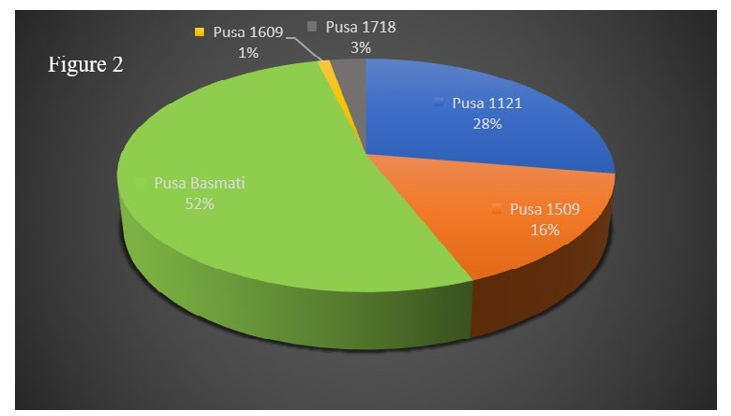
Figure 2: Individual Contribution of Available Basmati Varieties in 350 Specimens Collected Across Indian Outlets
The United Kingdom Code of Practice (UK CoP) states that rice classified as Traditional, Evolved, or New Basmati rice must contain 93% or more Basmati rice in order to be deemed approved. Only 75 of the 350 samples in the current investigation met the requirements of the UK Code of Practice (UK CoP). Remarkably, neither partial nor full Traditional Basmati rice portions are seen. The traditional Basmati rice that is grown in India is mostly exported to other nations; it is not sold in the domestic market. The majority of high-end brands of Basmati rice combine Pusa Basmati 1121 and Pusa Basmati 1509, which are both classified as Evolved Basmati types. In contrast, the unbranded variety contains a higher number of non-Basmati variants with longer grains and an aroma that are not considered Basmati rice since they lack additional nutritious components. Even though basmati rice has evolved, only few manufacturers offer pure basmati rice that is free of adulterants. Thus, it is clear from the current study that most of the Basmati types being marketed in Indian markets are either exclusively evolved basmati or its admixtures, despite the fact that India is the world's largest producer and exporter of traditional basmati rice. Because of its great economic demand, premium price, premium tag, and abundance of buyers in international marketplaces, the majority of traditional basmati is exported to other nations.
Declarations
Funding: Barcode Biosciences Pvt.Ltd.
Conflicts of Interest/Competing Interests: The authors declare that there is no conflict of interests regarding the publication of this paper.
Availability of Data and Material: All the scientific data for 350 samples collected across India is available with the corresponding author and can be produced upon request.
Authors' Contributions: RPK involved in designing the experiment and analysis of results. MM participated in revision to prepare the final version of the manuscript. PT and MV performed the experiment, KRG involved in the review of manuscript. TS involved in preparation of part of manuscript.
Acknowledgement
We are grateful to thank Barcode Biosciences Management for providing fund to collect sample and infrastructure to perform complete study.
References
- Zafar, S. A., Patil, S. B., Uzair, M., Fang, J., Zhao, J., Guo, T., ... & Li, X. (2020). DEGENERATED PANICLE AND PARTIAL STERILITY 1 (DPS 1) encodes a cystathionine β- synthase domain containing protein required for anther cuticle and panicle development in rice. New Phytologist, 225(1), 356-375.
- Adeel Zafar, S., Uzair, M., Ramzan Khan, M., Patil, S. B., Fang, J., Zhao, J., ... & Li, X. (2021). DPS1 regulates cuticle development and leaf senescence in rice. Food and Energy Security, 10(1), e273.
- Nagaraju, J., Kathirvel, M., Kumar, R. R., Siddiq, E. A., & Hasnain, S. E. (2002). Genetic analysis of traditional and evolved Basmati and non-Basmati rice varieties by using fluorescence-based ISSR-PCR and SSR markers. Proceedings of the National Academy of sciences, 99(9), 5836-5841.
- Chaudhary, R. C., Tran, D. V., & Duffy, R. (2001). Speciality rices of the world: breeding, production and marketing (pp. xii+-358).
- Vos, P., Hogers, R., Bleeker, M., Reijans, M., Lee, T. V. D., Hornes, M., ... & Zabeau, M. (1995). AFLP: a new technique for DNA fingerprinting. Nucleic acids research, 23(21), 4407- 4414.
- Lopez, S. J. (2008). TaqMan based real time PCR method for quantitative detection of basmati rice adulteration with non-basmati rice. European Food Research and Technology, 227(2), 619-622.
- Botstein, D., White, R. L., Skolnick, M., & Davis, R. W. (1980). Construction of a genetic linkage map in man using restriction fragment length polymorphisms. American journal of human genetics, 32(3), 314.
- Cho, Y. G., Ishii, T., Temnykh, S., Chen, X., Lipovich, L., McCOUCH, S. R., ... & Cartinhour, S. (2000). Diversity of microsatellites derived from genomic libraries and GenBank sequences in rice (Oryza sativa L.). Theoretical and Applied Genetics, 100, 713-722.
- Temnykh, S., Park, W. D., Ayres, N., Cartinhour, S., Hauck, N., Lipovich, L., ... & McCOUCH, S. R. (2000). Mapping and genome organization of microsatellite sequences in rice (Oryza sativa L.). Theoretical and applied genetics, 100, 697- 712.
- Primrose, S., Woolfe, M., & Rollinson, S. (2010). Food forensics: methods for determining the authenticity of foodstuffs. Trends in Food Science & Technology, 21(12), 582-590.
- Woolfe, M., & Primrose, S. (2004). Food forensics: using DNA technology to combat misdescription and fraud. TRENDS in Biotechnology, 22(5), 222-226.
- Nader, W., Brendel, T., & Schubbert, R. (2013). DNA- analysis: enhancing the control of food authenticity through emerging technologies. Agro Food Ind Hi Tech, 24, 42-46.
- Nader W, Elsner J , Brendel T, Schubbert R (2019). The DNA fingerprint in food forensics: the basmati rice case. Agro Food Industry Hi Tech. 30(6), 57-6.