

Advancements in Journal of Urology and Nephrology(AJUN)
ISSN: 2689-8616 | DOI: 10.33140/AJUN
Impact Factor: 1.0


Research Article - (2021) Volume 3, Issue 1
Acute Renal Failure Induced by Madder
Received Date: Apr 23, 2021 / Accepted Date: May 03, 2021 / Published Date: May 08, 2021
Copyright: ©S Ezzaki, et al. This is an open-access article distributed under the terms of the Creative Commons Attribution License, which permits unrestricted use, distribution, and reproduction in any medium, provided the original author and source are credited.
Citation: S Ezzaki, I Failal, N Mtioui, S Khayat, M Zamed, G Medkouri, M Benghanem, B Ramdani (2021) Acute Renal Failure Induced by Madder. Adv J Uro Nephro 3(1): 01-04.
Abstract
Madder or Rubia Tincturium, called in Morocco ELFOUA is a plant belonging to the Rubiaceae family. Used in Morocco for its cosmetic food and therapeutic properties in particularly anemia and all blood diseases. It can be toxic if it is incorrectly dosed. We report 3 cases of nephrotoxicity collected in the nephrology and hemodialysis service of the IBNROCHD university hospital center in Casablanca: 3 women aged 15, 39 and 47 years, following the ingestion of infusion of this plant at doses indeterminate, presented with acute tubuleinterstitial nephritis. These new cases of nephrotoxicity at RUBIA TINCTURIUM must challenge the need to know how to evoke the diagnosis, to inform, to fight against the trivialization of its consumption, to encourage research on the traditional pharmacopoeia allowing to identify their therapeutic properties in order to formalize, rationalize and codify their prescriptions.
Resumes
Rubia Tincturium ou garance, appelée au Maroc ELFOUA est une plante appartenant à la famille des Rubiacées. Utilisée au Maroc pour ses propriétés cosmétiques alimentaires et thérapeutiques notamment dans les anémies et toutes les maladies du sang. Elle peut être toxique si elle est mal dosée. Nous rapportons 3 cas de néphrotoxicité colligés au service de néphrologie et d’hémodialyse du centre hospitalier universitaire IBNROCHD de Casablanca : 3 femmes âgées de 15 ans, 39 ans et 47 ans, suite à l’ingestion d’in-fusion de cette plante à des doses indéterminées, avaient présenté une néphrite tubulo-interstitielle aiguë. Ces nouveaux cas de néph¬rotoxicité au RUBIA TINCTURIUM doivent interpeler sur la né-cessité de savoir évoquer le diagnostic, d’informer, de lutter contre la banalisation de sa consommation, d’inciter à la recherche sur la pharmacopée traditionnelle permettant d’identifier leurs propriétés thérapeutiques afin de formaliser, rationaliser et codifier leurs pre¬scriptions.
Introduction
Rubia tinctorum (El FOUA) is a plant widely used for thousands of years as a source of red color with its variants for dyeing textiles (Figure 1,2), in cosmetology, in food as an additive but also as a drug with many therapeutic properties. It is very widespread in the world and particularly in Europe, Asia and North Africa
In Morocco and in the Mediterranean basin, it is a ubiquitous plant. It is used for dyeing purposes by obtaining a red dye intended for dyeing, painting and even food. Added to this is its medicinal use in many fields. Indeed, it is very popular with Moroccan women, as a purgative, after childbirth. A decoction of the whole plant is prescribed in anemia and all diseases of the blood. Its daily intake is recommended to increase blood volume and improve the com¬plexion.
However, Rubia tinctorum is very rich in anthraquinone deriva¬tives. It is considered according to the World Health Organization (WHO) and some other health and food organizations (such as Health Canada or the French Ministry of Agriculture) as involving risks for the consumer. Recent studies have shown a certain toxici¬ty especially on the kidney with a mutagenic or even carcinogenic power of certain anthraquinone derivatives [1].
Patients and Methods
We report 3 cases of nephrotoxicity collected in the nephrology and hemodialysis service of the IBNROCHD hospital center in Casablanca: women aged 15 39 years and 47 years following the ingestion of infusion of this plant in undetermined doses to treat anemia
Results
Observation 1
HE aged 15, with no particular pathological history, admitted to the nephrology department for a glomerular syndrome with renal insufficiency at 66 mg / L of plasma creatinine and 24-hour pro-teinuria at 1 g / 24 hours and aseptic leukocyturia after taking Ru¬bia tincturium for ten days, infused several times a day for iron deficiency anemia.
On examination, the patient is apyretic, normo tensioned to 130/70 mm Hg, presence of a protein cross with urinary strips without traces of blood, diuresis is calculated at 300 ml per day.
The assessment revealed an acute renal failure at 66 mg / L of creatinine, 24-hour proteinuria at 1g / 24 hours without impact on the protidogram, sterile ECBU with leukocyturia at 200,000e / ml. Kidney ultrasound showed good kidneys, well differentiated with-out dilation of the excretory tract.
Observation 2
LN aged 39, with no pathological history, hospitalized in the ne-phrology department for glomerular syndrome with 24-hour pro-teinuria at 2g / 24 with severe acute renal failure at 90 mg / l of plasma creatinine and aseptic leukocyturia without hematuria or hypertension in the context of incoercible vomiting following the taking of “elfoua” for 5 days taken in front of a skin-mucous pallor. On examination, the patient is non-pyretic, normo-tensioned at 120/70 mm Hg, diuresis is calculated at 500 ml per day, with two urine strips of protein without hematuria on the urine strip. mg / L creatinine, 24-hour protein at 2 g / 24 hours without impact on the protidogram, ECBU sterile with leukocyturia at 120,000 e / ml. The renal ultrasound was without abnormality,
Observation 3
AH aged 47, hospitalized in nephrology for acute renal failure at 73 mg / l of plasma creatinine incidental discovery during a CPA assessment for cholecystectomy with the notion of taking “ELFOUA” a week before admission.
On examination, the patient is apyretic, normo-tense, diuresis is kept at 1000 ml per day, with urine strip a protein cross without hematuria. The assessment revealed an acute renal failure at 73 mg / L of creatinine, 24-hour protein at 1 g / 24 hours without impact on the protidogram, ECBU sterile with leukocyturia at 100 000 e / ml. The renal ultrasound was without abnormality,Patients under¬went renal biopsy punctures which showed acute tubulointerstitial nephritis.
Therapeutically all our patients were put on corticosteroid therapy with a good improvement in creatinine.
Discussion
Despite progress in pharmacology, the therapeutic use of plants is very present in certain countries of the world, especially those developing notwithstanding a medical system modern. Morocco by the richness and diversity of its flora, constitutes a true phyto-genetic reservoir with around 4500 plant species and subspecies, including rubia tinctorum (Figure 1) [1]. In the literature, the data concerning intoxication in madder, are rare and few documented. Use for food, curative or aesthetic purposes of certain plants pos¬sibly toxic, or at least a part (seed, stem, etc.), can induce serious poisoning, even fatal. These poisoning is a frequent accident in most regions of the world [2].
Rubia tinctorum has been used for thousands of years. The proper¬ties most cited in the literature for this plant are [3, 4]. Its diuretic activity and especially as a hypotensive, its emmenagogue activity, its activity in obstructions of the spleen, its purgative / laxative activity and its activity cholagogue.
The study of the chemical composition of the roots of Rubia tinc¬torum has shown its richness in anthraquinones in its two free and combined forms [5]. Free anthraquinone forms have no marked pharmacological activity. These free genins present in the drug or formed by the beginning of gastric hydrolysis and which reach the intestine are absorbed at the level of the small intestine, are glucu-rono-conjugated at the hepatic level and largely eliminated by the urinary route. We also note the existence of an enterohepatic cycle.
The combined forms are neither absorbed nor hydrolyzed in the small intestine. When they reach the colon, they are hydrolyzed by β-glucosidases from the intestinal flora and the anthraquinones re¬leased are reduced and will act on intestinal motility [6]. Action on the Na-K-ATPase pump in the cell membrane of enterocytes: by inhibiting the pump, sodium in the colon cells is increased, which leads to a decrease in the reabsorption of water and sodium. This explains the laxative effect. The excessive use of anthraquinones can lead to recto-colic melanoses by a cytotoxic effect [6,7].
As part of the assessment of the madder root safety (figure 3), used as food coloring, toxicity tests were carried out on mice. An acute toxicity test was carried out by administration for 14 madder root days at doses of 0, 500, 2000, 3500, and 5000 mg / kg of body weight. A male mouse receiving 5000 mg / kg body weight died before the end of the study, indicating that the maximum tolerated dose of GR was between 3500 and 5000 mg / kg body weight. A subacute GR toxicity test was also carried out with 62 mice of each sex, with a diet containing madder root at concentrations of 0.3; 0.6; 1.25; 2.5 and 5% for 90 days. All mice tolerated these doses. None of the mice treated with RG showed clinical signs of toxicity. Histopathological examination showed retention cysts in the kid¬neys and vaginal epidermal cysts in some of the treated or control mice. No hyperplastic, pre-neoplastic and neoplastic lesions and no pathological signs of toxicity were found. These results suggest that dietary exposure to GR at these doses has no acute or subacute toxic effects on mice [8].
Another study of chronic toxicity and carcinogenicity was carried out. For 90 days repeated doses of 0; 0.6; 1.2; 2.5 and 5.0% of the test substance. The results demonstrate toxic effects of madder root on the liver, kidneys and on the hematopoietic system [9].
Histopathological changes were mainly observed in the proximal renal tubules, such as vacuolar microvesicular degeneration in the cortex and caryomegaly in the external medulla, the lesions being evident even with 0.6%. In the external medulla, the increase in cell proliferation activity, appreciated by the proliferation of nu¬clear antigen cells, has been observed. The Severity of focal he¬patocyte necrosis increased only in females, to 5.0%, while the in¬crease in the relative weight of the liver but also that of conjugated bilirubin was evident in both sexes, at the dose 1.2% [10].
A more recent study of the carcinogenicity, was conducted to elu-cidate the long-term effects of Rubia tinctorum and its target or-gans. Histologically, the frequency of caryomegaly and atypical hyperplasia of the tubules, as well as adenomas and carcinomas in the renal cells, increased significantly in the groups treated in both sexes. These results show that RG exerts an unequivocal car¬cinogenic power on the cells of the renal tubules and hepatocytes in rats [11].
Regarding toxicity in humans, an analysis of 11 studies treating colorectal cancers and the use of laxatives has shown that the use of laxatives has increased risk of colorectal cancer [5].
Other studies have mentioned anthraquinones specifically in eval¬uating the use of laxatives as a risk factor for cancer. Melanosis coli (discoloration of cells in the colon corresponding to cell death if it is due to excessive use of anthraquinones). In short, anthraqui¬nones should not be used long term and improperly because of the risk of melanosis coli [12].
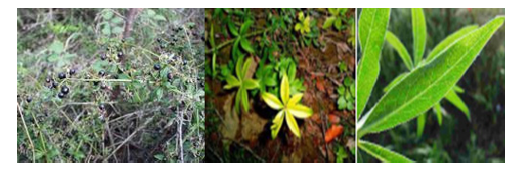
Figure 1 [13] : Plant and madder leaf
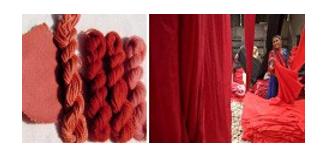
Figure 2: Dyeing of cotton threads and fabrics [13]

Figure 3: Madder Root [13]
Conclusion
In the literature, renal toxicity linked to the consumption of elfoua has not been described in humans, but studies done in rats have shown that the administration of this plant can cause tubular ne¬crosis, with nephritis interstitial. These effects have been observed following chronic ingestion of large doses. Cases have been de¬clared and registered according to the pharmacovigilance center of Morocco.
The association of histological lesions and the taking of elfoua in this patient evokes its toxic effect on the kidney that constitutes a limit to the use of this plant despite its therapeutic qualities.
References
- Wikipedia the free encyclopedia The madder of the dyers.
- Bertin P, Kinet JM Training in plant biology, faculty of biological, agronomic and environmental engineering (Fac AGRO), faculty of Sciences (Fac SC), Catholic University of Louvain (UCL).
- Hindorf H, Omondi C (2011) A review of three major fungal diseases of Coffee Arabica L in the rainforests of Ethiopia and progress in breeding for resistance in Kenya. Journal of advanced Research 2: 109-112.
- H C Bhardwaj, Kamal K Jain (1982) Indian Dyes and Industry During 18th-19th Century. Indian Journal of History of Science 17: 70-81.
- LE Anderson, WH Bailey, CF Blackman (2002) IARC Monographs on the Evaluation of Carcinogenic Risks to Humans. World Health Organization International Agency for Research On Cancer 82: 129-151.
- Bruneton J (1999) Pharmacognosie Phytochimie Medicinal plants. 2nd edition Tec and Doc 1999: 405-445.
- Inoue K, Yoshida M, Takahashi M, Fujimoto H, Ohnishi K, et al. (2009) Possible contribution of rubiadin, a metabolite of madder color, to renal carcinogenesis in rats. Food Chem Toxicol 47: 752-759.
- Ino N, Tanaka T, Okumura A, Morishita Y, Makita H, et al. (1995) Acute and subacute toxicity tests of madder root, natural dye extracted from madder (Rubia tinctorum), in (C57BL / 6 X C3H) F1 mice. Toxicol Ind Health 11: 449-458.
- Masutomi N, Shibutani M, Toyoda K, Niho N, Uneyama C, et al. (2000) AT 90-day repeated dose toxicity study of madder color in F344 rats: a preliminary study for chronic toxicity and carcinogenicity studies. Kokuritsu Iyakuhin Shokuhin Eisei Kenkyusho Hokoku 118: 55-62.
- Inoue K, Shibutani M, Masutomi N, Toyoda K, Takagi H, et al. (2008) A 13-week subchronic toxicity study of madder color in F344 rats. Food and Chemical Toxicology 46: 241-252.
- Inoue K, Yoshida M, Takahashi M, Shibutani M, Takagi H, etal. (2009) Induction of kidney and liver cancers by the natural food additive madder color in a two-year rat carcinogenicity study. Food and Chemical Toxicology 47: 184-191.
- Jager I, Hafner C, Welsh C, Schneider K, Iznaguen H, et al. (2006) Tea Mutagenic Potential of Madder Root in Dyeing Processes of the Textile Industry. Mutation research 605: 22-29.