

International Journal of Cancer Research & Therapy(IJCRT)
ISSN: 2476-2377 | DOI: 10.33140/IJCRT
Impact Factor: 1.3

Research Article - (2026) Volume 11, Issue 1
A Phase Ii Randomized Control Study to Assess The Efficacy of Curcumin and Honey in Cough on Patients with Lung Cancer at A Tertiary Cancer Center, Hbni, Mumbai
2Professors,Department of Medical Oncology ,Parel, HBNI, Mumbai, India
3Department of Pharmacy,ACTREC, TMH, HBNI, India
4Department of statistics TMH, HBNI, India
Received Date: Apr 05, 2026 / Accepted Date: May 22, 2026 / Published Date: May 25, 2026
Copyright: ©2026 Prathepa Jagdiish, et al. This is an open-access article distributed under the terms of the Creative Commons Attribution License, which permits unrestricted use, distribution, and reproduction in any medium, provided the original author and source are credited.
Citation: Jagdiish, P., Shinde, S., Patil, V., Noronha, V., Menon, N., et al. (2026). A Phase Ii Randomized Control Study to Assess The Efficacy of Curcumin and Honey in Cough on Patients with Lung Cancer at A Tertiary Cancer Center, Hbni, Mumbai. Int J Cancer Res Ther, 11(1), 01-09.
Abstract
Introduction: Lung cancer is the most important cancer in men and the 2nd most common cancer in women in India with the largest fatality .Squamous cell carcinoma and small cell undifferentiated lung cancer are more likely to be associated with cough. Symptoms include dyspnea , persistent cough and haemoptysis. In these scenario curcumin represents a promising and effective anticancer drug to be used alone or in combination with other drugs to treat cough . It affects different signalling pathways and molecular targets involved in the development of several cancers. Its biological activities such as antioxidant, anti-inflammatory, antimicrobial, antiviral, among which its anticancer potential has been the most described. Honey is rich in flavonoids. Flavonoids has its anticancer properties. The mechanisms suggested are rather diverse such as various signalling pathways , including stimulation of TNF-alpha release , inhibition of cell proliferation, induction of apoptosis and cell cycle arrest as well as inhibition of lipoprotein oxidation
Objectives: Primary objective was to assess the efficacy of curcumin and honey on cough in patients with lung cancer at a tertiary cancer centre . Secondary objectives were to assess incidence & degree of cough, to find out the association between clinical data and efficacy of curcumin and honey
Methodology: Quantitative approach with randomized controlled trial (open labelled) design. Targeted Population Lung cancer patients with cough. Total 52 patients participated in the study. Control arm participants received standardized treatment with no intervention. Participants from experimental arm had curcumin 500mg with 5 ml of honey mixed together for three time a day orally for 21 days .Cough visual analogue scale was used . Data were analysed using descriptive and inferential statistics using SPSS version 25.
Results: Mann Whitney U test was carried to check difference between control and intervention group on day 0, day 10 and day 22 . It was found that for CVAS p value was < 0.05, indicating a statistically significant difference in the experimental arm.
Keywords
Lung Cancer, Cough, Curcumin, Honey, Cough Visual Analogue Scale
Introduction
Lung cancer is the most common cancer in men1 and the 2nd most common cancer in women with a larger fatality [1-2]. with more than 2.2 million new cases of lung cancer in 2020 [3]. Most lung cancer statistics include both small cell lung cancer (SCLC) and non-small cell lung cancer (NSCLC) [4-10]. There can be tumours from other diseases like lymphoma or tuberculosis [11-14]. Most lung cancer can be associated with cough. Squamous cell carcinoma and small cell undifferentiated lung cancer are more likely to be associated with cough It includes chronic cough usually lasting more than 8 consecutive weeks, a cough that is either dry or productive and interferes with sleep and haemoptysis [15-16]. Cough occurs by the irritation of cough receptors. Chemical receptors sensitive capsaicin-like compounds trigger the cough reflex via activation of the type 1 vanilloid capsaicin receptor. Impulses from stimulated cough receptors traverse an afferent pathway via the vagus nerve to a cough centre in the medulla [17-22]. Many studies suggest that curcumin exhibits a broad range of anti-cancerous properties like antioxidants, anti-inflammatory, antiproliferative and anti-immunomodulatory effects. Manuka, pasture and jelly bush honey were found to significantly increase TNF-α, IL-1β, and IL-6 release from MM6 cells and human monocytes when compared with untreated and artificial honey-treated cells [23]. On the basis of Lung Cancer Symptoms Scale, Iyer et al proved that the most frequent symptoms include fatigue (98%), loss of appetite (98%), respiratory problems(94%), cough (93%), pain (90%) and blood in sputum (70%). Additionally, correlation analysis showed that the greater the severity of symptoms, the lower the QOL [24-25]. Suppression of cough is not always the aim of treating cough among patients with lung cancer [26]. Many of the patients with lung cancer report a dry tickling cough and current antitussive treatments are suboptimal. Potassium iodide, bromhexine and amroxol used as mucolytic for wet cough leads to increased broncho secretion, lessens viscosity, hypothyroidism, blurred vision, drowsiness or dizziness., nausea or vomiting Curcumin has anticarcinogenic, anti-tumour, antiviral, antibacterial, antifungal and antiplatelet activity [27]. It inhibits multiple signalling pathways such as nuclear factor kappaB cyclooxygenase-2 and interleukin-8. Curcumin has anticancer potential through the modulation of multiple cell signalling pathways. Honey has potent mechanism of anti-cancer activity. The possible mechanisms are due to its apoptotic, antiproliferative, antitumor necrosis factor, antioxidant, anti-inflammatory, estrogenic and immunomodulatory activities. Investigator seeks to understand the efficacy of honey and curcumin as a natural supplement for cough in lung cancer patients.
Primary objective was to assess the efficacy of curcumin and honey on cough in patients with lung cancer at a tertiary cancer centre. Secondary Objectives were to assess incidence & degree of cough and to define the association between clinical data and efficacy of curcumin and honey. Materials and methods - quantitative research approach This was an open labelled, prospective, randomized controlled study using sealed envelope technique. Institutional Ethics Committee approval number was 4109 and CTRI approval(CTRI/2023/6/54088). The samples were selected based on inclusion and exclusion criteria with sample size of 52 and informed consent Inclusion Criteria -Patients diagnosed of proven lung cancer with cough, Cough severity with ≥40 mm as per cough VAS, patients who were on NACT /Adjuvant, Age group 18-65years, ECOG score 0-2, Willing to participate in study and followed Marathi/Hindi or English and exclusion criteria was patients with lung metastasis and with diabetes mellitus. Data collection was done using CVAS tool. Evaluation of tool - Mild 0-33mm, Moderate - 34mm-67mm, Severe was 68mm-100mm. Method – Post randomization, allocation was done. Baseline assessment was obtained on day 0 for both groups. Intervention provided to experimental arm with curcumin 500mg and 5 ml of honey a mix made by patient for three time a day. Orally consumed for 21 days. Control arm had no intervention. Second time point assessments were day 10 and day 22 for both groups.
Results
|
Variables |
Categories |
Control Arm A |
% |
Experimental Arm B |
% |
|
Sex |
Female |
10 |
58.8% |
7 |
41.2% |
|
|
Male |
16 |
45.7% |
19 |
54.3% |
|
income_cat |
<10,000 |
6 |
60.0% |
4 |
40.0% |
|
|
10,000-20,000 |
12 |
41.4% |
17 |
58.6% |
|
|
21,000-30,000 |
6 |
66.7% |
3 |
33.3% |
|
|
31,000-40,000 |
2 |
50.0% |
2 |
50.0% |
|
Diagnosis_cat |
Lung carcinoid |
2 |
66.7% |
1 |
33.3% |
|
|
Squamous cell carcinoma of lung |
7 |
38.9% |
11 |
61.1% |
|
|
Adenocarcinoma carcinoma |
14 |
56.0% |
11 |
44.0% |
|
|
Epithelioid Hemangioendothelioma EHE |
1 |
50.0% |
1 |
50.0% |
|
|
Spindle cell carcinoma in lung |
0 |
0.0% |
1 |
100.0% |
|
|
Undiffrentiate round cell sarcoma of lung |
1 |
100.0% |
0 |
0.0% |
|
|
small cell lung cancer |
1 |
100.0% |
0 |
0.0% |
|
|
synovial sarcoma |
0 |
0.0% |
1 |
100.0% |
|
Treatment |
Adjuvant |
9 |
50.0% |
9 |
50.0% |
|
|
NACT |
4 |
50.0% |
4 |
50.0% |
|
|
Under diagnostic evaluation |
13 |
50.0% |
13 |
50.0% |
|
ECOG |
0 |
3 |
75.0% |
1 |
25.0% |
|
|
1 |
19 |
43.2% |
25 |
56.8% |
|
|
2 |
4 |
100% |
0 |
0.0% |
|
T_stage |
T1 |
2 |
50.0% |
2 |
50.0% |
|
|
T2 |
8 |
72.7% |
3 |
27.3% |
|
|
T3 |
12 |
60.0% |
8 |
40.0% |
|
|
T4 |
4 |
23.5% |
13 |
76.5% |
|
N_stage |
No |
7 |
46.7% |
8 |
53.3% |
|
|
N1 |
5 |
83.3% |
1 |
16.7% |
|
|
N2 |
7 |
38.9% |
11 |
61.1% |
|
|
N3 |
3 |
50.0% |
3 |
50.0% |
|
|
N2/3 |
4 |
57.1% |
3 |
42.9% |
|
M_stage |
Mo |
21 |
55.3% |
17 |
44.7% |
|
|
M1 |
5 |
35.7% |
9 |
64.3% |
|
Tobacco |
Yes |
4 |
50.0% |
4 |
50.0% |
|
|
No |
22 |
50.0% |
22 |
50.0% |
|
Smoking |
Yes |
13 |
50.0% |
13 |
50.0% |
|
|
No |
13 |
50.0% |
13 |
50.0% |
|
Pan masala |
Yes |
1 |
33.3% |
2 |
66.7% |
|
|
No |
25 |
51.0% |
24 |
49.0% |
|
Alcohol |
Yes |
4 |
57.1% |
3 |
42.9% |
|
|
No |
22 |
48.9% |
23 |
51.1% |
|
Hypertension |
Yes |
7 |
53.8% |
6 |
46.2% |
|
|
No |
19 |
48.7% |
20 |
51.3% |
|
Tuberculosis |
Yes |
4 |
50.0% |
4 |
50.0% |
|
|
No |
22 |
50.0% |
22 |
50.0% |
|
Covid |
yes |
0 |
0.0% |
2 |
100.0% |
|
|
No |
26 |
52.0% |
24 |
48.0% |
|
Oher diseases |
Yes |
5 |
55.6% |
4 |
44.4% |
|
|
No |
21 |
48.8% |
22 |
51.2% |
|
Grade 1 |
Moderate |
24 |
60.0% |
16 |
40.0% |
|
|
Severe |
2 |
16.7% |
10 |
83.3% |
|
Grade 2 |
Mild |
9 |
52.9% |
8 |
47.1% |
|
|
Moderate |
16 |
53.3% |
14 |
46.7% |
|
|
Severe |
1 |
|
4 |
|
|
Grade 3 |
Moderate |
13 |
76.5% |
4 |
23.5% |
|
|
No cough |
2 |
66.7% |
1 |
33.3% |
|
|
Severe |
2 |
66.7% |
1 |
33.3% |
|
Occupation |
Farmer |
3 |
37.5% |
5 |
62.5% |
|
|
Homemaker |
8 |
61.5% |
5 |
38.5% |
|
|
labour |
4 |
36.4% |
7 |
63.6% |
|
|
Service |
3 |
42.9% |
4 |
57.1% |
|
|
unemployed |
5 |
62.5% |
3 |
37.5% |
|
|
other |
3 |
60.0% |
2 |
40.0% |
|
Family history |
Yes |
7 |
63.6% |
4 |
36.4% |
|
|
No |
19 |
46.3% |
22 |
53.7% |
|
Total |
|
26 |
50.0% |
26 |
50.0% |
Table 1: Distribution of Demographic and Clinical variables in control and Experimental arm . n=52
Section II
|
|
Mean |
N |
Std. Deviation |
Mean Difference |
Std Deviation |
P |
|
CVASscore1 |
49.2308 |
26 |
11.87542 |
11.53846 |
21.15268 |
0.073 |
|
CVASscore2 |
37.6923 |
26 |
19.64427 |
|
|
|
|
CVASscore2 |
37.6923 |
26 |
19.64427 |
6.15385 |
16.09268 |
0.193 |
|
CVASscore3 |
31.5385 |
26 |
25.44476 |
|
|
|
|
CVASscore1 |
49.2308 |
26 |
11.87542 |
17.69231 |
27.73501 |
0.040 |
|
CVASscore3 |
31.5385 |
26 |
25.44476 |
|
|
|
Table 2: Compares the CVAS scores between day1, day 10 and day 22 in Control Arm A
|
|
Mean |
N |
Std. Deviation |
Mean Difference |
Std Deviation |
P |
|
CVASscore1 |
60.0000 |
26 |
19.57890 |
16.53846 |
9.87096 |
0.000 |
|
CVASscore2 |
43.4615 |
26 |
22.11566 |
|
|
|
|
CVASscore2 |
43.4615 |
26 |
22.11566 |
13.84615 |
9.38835 |
0.000 |
|
CVASscore3 |
29.6154 |
26 |
21.45359 |
|
|
|
|
CVASscore1 |
60.0000 |
26 |
19.57890 |
30.38462 |
12.98421 |
0.000 |
|
CVASscore3 |
29.6154 |
26 |
21.45359 |
|
|
|
Table 3. Represents Compares the CVAS scores of day1, day 10 and day 22 in Experimental Arm B
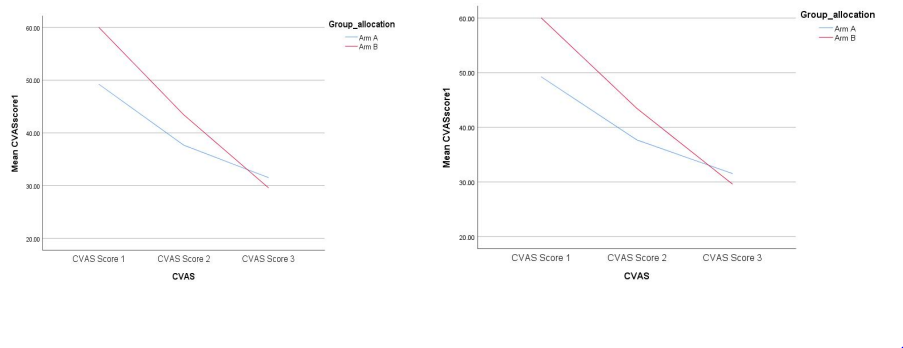
Figure 2: Graph Represent mean of CVAS between Control Arm A and Experimental Arm B
There are statistically significant differences between CVASscore1 and CVASscore2, between CVASscore2 and CVASscore3, and between CVASscore1 and CVASscore3, as all the corresponding P-values were less than 0.05..
|
DAY 1 |
|
Control Arm A |
% |
Ex-peri-mental Arm B |
% |
|
Control Arm A |
% |
Experimental Arm B |
% |
TOTAL |
% |
|
|
CVAS SCORE day 1 |
Severe |
2 |
7.7% |
10 |
38.5% |
CVAS SCORE day 22 |
Severe |
2 |
7.7% |
2 |
7.7% |
4 |
7.7% |
|
|
Moderate |
24 |
92.3% |
16 |
61.5% |
|
Moderate |
10 |
38.5% |
4 |
38.5% |
14 |
38.5% |
|
|
Mild |
0 |
|
0 |
|
|
Mild |
14 |
53.8% |
20 |
53.8% |
34 |
53.8% |
|
|
total |
26 |
100% |
26 |
100% |
|
|
26 |
100% |
26 |
100% |
52 |
100% |
Table 4: Represent the Efficacy of Experimental Arm B over Control Arm A for Degree of Cough Pre-Treatment between day 1 and day 22
|
|
Control arm A |
% |
Control Arm B |
% |
TOTAL |
% |
|
|
CVAS SCORE 3 |
Severe |
2 |
7.7% |
2 |
7.7% |
4 |
7.7% |
|
|
Moderate |
10.7 |
38.5% |
4 |
38.5% |
14 |
38.5% |
|
|
Mild |
14 |
53.8% |
|
|
|
|
|
|
20 |
53.8% |
34 |
53.8% |
|
|
|
|
|
Total |
26 |
100% |
26 |
100% |
52 |
100% |
Table 5: Represents the Degree of Cough in both Arms on day 22
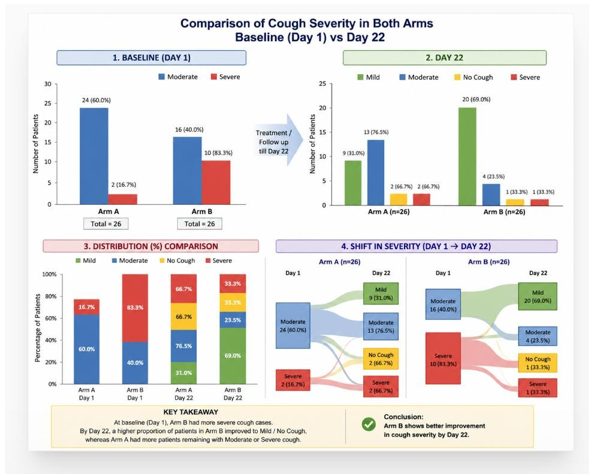
Figure 2: Graph Representing the Change of Shift of Severity of Cough in Experimental and Control Arms
Section-III
|
Variables |
Categories |
Total |
P value |
|
Sex |
Female |
17 |
0.375 |
|
|
Male |
35 |
|
|
Income |
<10,000 |
10 |
0.52 |
|
|
10,000-20,000 |
29 |
|
|
|
21,000-30,000 |
9 |
|
|
|
31,000-40,000 |
4 |
|
|
Diagnosis_cat |
Lung carcinoid |
3 |
0.589 |
|
|
Squamous cell carcinoma of lung |
18 |
|
|
|
Adenocarcinoma carcinoma |
25 |
|
|
|
Epithelioid Hemangioendothelioma EHE |
2 |
|
|
|
Spindle cell carcinoma in lung |
1 |
|
|
|
Undiffrentiate round cell sarcoma of lung |
1 |
|
|
|
small cell lung cancer |
1 |
|
|
|
synovial sarcoma |
1 |
|
|
Treatment_cat |
Adjuvant |
18 |
1 |
|
|
NACT |
8 |
|
|
|
Unser diagnostic evalution |
26 |
|
|
ECOG |
0 |
4 |
0.055 |
|
|
1 |
44 |
|
|
|
2 |
4 |
|
|
T_stage |
T1 |
4 |
0.049 |
|
|
T2 |
11 |
|
|
|
T3 |
20 |
|
|
|
T4 |
17 |
|
|
N_stage_cat |
No |
15 |
0.439 |
|
|
N1 |
6 |
|
|
|
N2 |
18 |
|
|
|
N3 |
6 |
|
|
|
N2/3 |
7 |
|
|
M_stage_cat |
Mo |
38 |
0.211 |
|
|
M1 |
14 |
|
|
Tobacco |
Yes |
8 |
1 |
|
|
No |
44 |
|
|
Smoking |
Yes |
26 |
1 |
|
|
No |
26 |
|
|
Panmasala |
Yes |
3 |
0.522 |
|
|
No |
49 |
|
|
|
No |
45 |
|
|
Hypertension |
Yes |
13 |
0.749 |
|
|
No |
39 |
|
|
Tuberculosis |
Yes |
8 |
1 |
|
|
No |
44 |
|
|
Covid |
yes |
2 |
0.149 |
|
|
No |
50 |
|
|
Other diseases_ |
Yes |
9 |
0.714 |
|
|
No |
43 |
|
|
Grade 1 |
Moderate |
40 |
0.008 |
|
|
Severe |
12 |
|
|
Grade 2 |
Mild |
17 |
0.369 |
|
|
Moderate |
30 |
|
|
|
Severe |
5 |
|
|
Grade 3 |
Mild |
29 |
0.022 |
|
|
Moderate |
17 |
|
|
|
No cough |
3 |
|
|
|
Severe |
3 |
|
|
Occupation |
Farmer |
8 |
0.723 |
|
|
Homemaker |
13 |
|
|
|
labour |
11 |
|
|
|
Service |
7 |
|
|
|
unemployed |
8 |
|
|
|
other |
5 |
|
|
Family history |
Yes |
11 |
0.308 |
|
|
No |
41 |
|
|
Total |
|
52 |
|
Table 6: Associations Of demographic, clinical data with CVAS Score. n=52
Discussion
To the best of our knowledge, this study represents the first randomized trial to demonstrate the efficacy of curcumin and honey in alleviating cough symptoms among patients with lung cancer. The natural medicine combination of curcumin and honey exhibited notable improvements in cough severity and impact, as indicated by a significant reduction in both parameters and further validated by the cough domain of the CVAS. Alex Massarottis emphasized that tailored symptomatic treatments hold promise for alleviating cough symptoms in adult lung cancer patients.3 Amelie Harle et al. indicated that patients undergoing anticancer treatment experience a lower cough prevalence (40%) compared to untreated patients (54%). Notably, half of the patients considered their cough significant enough to warrant treatment.3 Our study corroborated that there was cough. Baseline control arm showed 7.7% severe cough and 92.3% moderate cough and experimental arm exhibited 38.5% severe cough and 61.5 moderate cough. Tsai et al., demonstrated curcumin’s efficacy in inhibiting the metastatic potential of non -small cell lung cancer (NSCLC) cells through modulation of the adiponectin /NF-Kb/MMPs pathway and down regulation of COX- 2 and EGFR with curcumin has stated the efficacy of curcumin .
Kumaravel Mohankumar et al. (2021) conducted a study on the anticancer potential of bis-dimethoxy curcumin (BDMC-A) in laryngeal cancer. Dimethoxy curcumin acts as a metabolite, an antineoplastic agent, and an anti-inflammatory agent. Same with our study which demonstrated a significant reduction in CVAS score of day 1 to day 22 of the experimental group with a p value of <0.05 indicating the efficacy of curcumin, honey combination. Our study concluded that curcumin and honey offer a new natural therapeutic option for patients with lung cancer and cough, demonstrating efficacy without adverse events.
Shadkam et.al.conducted a clinical experimental study on children aged 2-5 years, revealing that administering honey before bedtime had a beneficial effect on cough associated with upper respiratory tract infections. In our study, a comparison between both arms indicated statistically significant differences in CVAS scores, reinforcing the positive impact of curcumin and honey. In our study in experimental group the moderate cough was 40.0 % which has reduced to 23.5% on 22nd day and the severe cough reduced from 83.3% to 3.3%.
Morrison E.J. et al. asserted that cough is a prominent symptom in lung cancer, often accompanied by emotional issues. Their extensive study, encompassing 2205 participants, revealed that emotional problems were more prevalent in younger individuals, males, current smokers, and those with advanced disease stages. In our study, we observed that a majority of participants (34.61%) fell within the 31-40 age group, followed by 15.28% in the 18-30 and 41-50 age groups. Participants in the 51-60 age group constituted 23.07%, while the least (11.53%) were in the 61-65 age group. Additionally, 80.76% were male, and 19.24% were females. Monthly income distribution showed that 38.46% had incomes below Rs. 10,000, 34.61% fell in the Rs. 10,001-20,000 range, 15.38% in Rs. 20,001-30,000, 7.69% in 30,001-40,000, and 3.84% with incomes exceeding Rs. 40,000. Furthermore, 84.61% of participants had social habits, such as chewing tobacco, smoking cigarettes and consuming pan masala, while 19.24% reported no social habits. The overarching conclusion from this study is that curcumin and honey represent an effective intervention for cough in lung cancer patients, supported by an open-label randomized control trial with 26 participants. The study involved a treatment regimen using 5 ml of honey and 500 mg of curcumin, with assessment conducted on day 1, 10 and 22 using the cough visual analogue scale (CVAS). Notably, no adverse events were reported during the study period.
Conclusion
Curcumin and honey has yielded a good reduction in cough on day 22 with a p value <0.05 in [patients of ca lung. This shows that the intervention was effective [28].
COI – There was no conflict of interest with any authors.
References
- World Health Organization. (2023). Noncommunicable diseases. Retrieved August 11, 2023, from
- American Lung Association. (2023). Types of lung cancer.Retrieved August 11, 2023, from
- Healthline. (2018). What determines if a cough is related to lung cancer? Retrieved August 11, 2023, from
- Polverino, M., Polverino, F., Fasolino, M., Andò, F., Alfieri, A., & De Blasio, F. (2012). Anatomy and neuro-pathophysiology of the cough reflex arc. Multidisciplinary Respiratory Medicine, 7(1), 5.
- Cough reflex. (2023). TeachMePhysiology. Retrieved August 11, 2023, from
- Ranneh, Y., Akim, A. M., Hamid, H. A., Khazaai, H., Fadel, A., Zakaria, Z. A., & others. (2021). Honey and its nutritional and anti-inflammatory value. BMC Complementary Medicine and Therapies, 21(1), 30.
- Healthline. (2023). 7 unique health benefits of honey.Retrieved August 11, 2023, from
- Othman, N. H. (2012). Honey and cancer: Sustainable inverse relationship particularly for developing nations—A review. Evidence-Based Complementary and Alternative Medicine, 2012, e410406.
- Welcome to Country. (2018). Indigenous Australian honey, the most powerful in the world. Retrieved August 11, 2023, from
- Ernestine Wiedenbach nursing theory. (2023). Retrieved August 11, 2023, from
- Morrison, E. J., Novotny, P. J., Sloan, J. A., Yang, P., Patten,C. A., Ruddy, K. J., & others. (2017). Emotional problems, quality of life, and symptom burden in patients with lung cancer. Clinical Lung Cancer, 18(5), 497–503.
- Noronha, V., Bhattacharjee, A., Patil, V. M., Joshi, A., Menon, N., Shah, S., & others. (2020). Aprepitant for cough suppression in advanced lung cancer: A randomized trial. Chest, 157(6), 1647–1655.
- Harle, A. S. M., Blackhall, F. H., Molassiotis, A., Yorke, J., Dockry, R., Holt, K. J., & others. (2019). Cough in patients with lung cancer: A longitudinal observational study of characterization and clinical associations. Chest, 155(1), 103–113.
- Oksholm, T., Rustoen, T., Cooper, B., Paul, S. M., Solberg, S., Henriksen, K., & others. (2015). Trajectories of symptom occurrence and severity from before through five months after lung cancer surgery. Journal of Pain and Symptom Management, 49(6), 995–1015.
- Tsai, J. R., Liu, P. L., Chen, Y. H., Chou, S. H., Cheng, Y. J.,Hwang, J. J., & others. (2015). Curcumin inhibits non-small cell lung cancer cells metastasis through the adiponectin/NF-κB/MMPs signaling pathway. PLOS ONE, 10(12), e0144462.
- Lev-Ari, S., Vexler, A., Starr, A., Ashkenazy-Voghera, M., Greif, J., & Aderka, D. (2007). Curcumin augments gemcitabine cytotoxic effect on pancreatic adenocarcinoma cell lines. Cancer Investigation, 25(6), 411–418.
- Zhang, Y., et al. (2021). Synthetic curcumin analog: Inhibiting the invasion, angiogenesis, and metastasis in human laryngeal carcinoma cells via NF-kB pathway. Retrieved August 10, 2023, from
- Mansouri, K., Rasoulpoor, S., Daneshkhah, A., Abolfathi, S., Salari, N., Mohammadi, M., & others. (2020). Clinical effects of curcumin in enhancing cancer therapy: A systematic review. BMC Cancer, 20(1), 791.
- Elad, S., Meidan, I., Sellam, G., Simaan, S., Zeevi, I., Waldman, E., & others. (2013). Topical curcumin for the prevention of oral mucositis in pediatric patients: Case series. Alternative Therapies in Health and Medicine, 19(3), 21–24.
- Holt, P. R., Katz, S., & Kirshoff, R. (2005). Curcumin therapy in inflammatory bowel disease: A pilot study. Digestive Diseases and Sciences, 50(11), 2191–2193.
- Cheng, A. L., Hsu, C. H., Lin, J. K., Hsu, M. M., Ho, Y. F.,Shen, T. S., & others. (2001). Phase I clinical trial of curcumin, a chemopreventive agent, in patients with high-risk or pre-malignant lesions. Anticancer Research, 21(4B), 2895–2900.
- Fogh, S. E., Deshmukh, S., Berk, L. B., Dueck, A. C., Roof, K., Yacoub, S., & others. (2017). A randomized phase 2 trial of prophylactic Manuka honey for the reduction of chemoradiation therapy-induced esophagitis during the treatment of lung cancer: Results of NRG Oncology RTOG 1012. International Journal of Radiation Oncology, Biology, Physics, 97(4), 786–796.
- Aliyu, M., Odunola, O. A., Farooq, A. D., Mesaik, A. M., Choudhary, M. I., Fatima, B., & others. (2012). Acacia honey modulates cell cycle progression, pro-inflammatory cytokines and calcium ions secretion in PC-3 cell lines. Journal of Cancer Science & Therapy, 4(12), 401–407.
- Hassaniazad, M., Inchehsablagh, B. R., Kamali, H., Tousi, , Eftekhar, E., Jaafari, M. R., & others. (2020). The clinical effect of nano micelles containing curcumin as a therapeutic supplement in patients with COVID-19 and the immune responses balance changes following treatment: A structured summary of a study protocol for a randomized controlled trial. Trials, 21(1), 876.
- Abedi, F., Ghasemi, S., Farkhondeh, T., Azimi-Nezhad, M., Shakibaei, M., & Samarghandian, S. (2021). Possible potential effects of honey and its main components against COVID-19 infection. Dose-Response, 19(1), 1559325820982423.
- Abuelgasim, H., Albury, C., Lee, J. (2020). Effectiveness of honey for symptomatic relief in upper respiratory tract infections: A systematic review and meta-analysis. BMJ Evidence-Based Medicine. Retrieved August 10, 2023, from
- Shrestha, J. M. (2019). Role of honey in children with acute cough in upper respiratory tract infection: Randomized, placebo-controlled study. Journal of Pediatrics & Neonatal Care, 9(3). Retrieved August 10, 2023, from
- Shadkam, M. N., Mozaffari-Khosravi, H., & Mozayan, M. R. (2010).Acomparison of the effect of honey, dextromethorphan, and diphenhydramine on nightly cough and sleep quality in children and their parents. Journal of Alternative and Complementary Medicine, 16(7), 787–793.