



Review Article - (2023) Volume 1, Issue 2
A Brief Overview of Nanozyme-Based Colorimetric and Fluorometric Sensors for Early Diagnosis of COVID-19
Received Date: Aug 28, 2023 / Accepted Date: Sep 26, 2023 / Published Date: Oct 30, 2023
Copyright: ©Ã?©2023 Saeed Reza Hormozi Jangi. This is an open-access article distributed under the terms of the Creative Commons Attribution License, which permits unrestricted use, distribution, and reproduction in any medium, provided the original author and source are credited.
Citation: Hormozi Jangi, S. R. (2023). A Brief Overview of Nanozyme-Based Colorimetric and Fluorometric Sensors for Early Diagnosis of COVID-19. Trans Med OA, 1(2), 76-84.
Abstract
Currently, there are several methods for diagnosis of COVID-19 such as real-time reverse transcription-polymerase chain reaction, hematology examination, polymerase chain reaction, diagnostic guidelines based on clinical features, Chest CT scans, etc. However, yet actual testing methods to identify SARS-CoV-2 are limited. Besides, diagnosis of this new pandemic over SARS, MERS, and H1N1 is one of the most challenges of this field due to their very similar clinical characteristics. To overcome these difficulties, recently, nanozmyes-based systems have been applied for fast, accurate, reliable, and cost-effective early diagnosis of COVID-19. The aim of this review is quick overview of the nanozyme-based sensing and detection colorimetric and fluorometric methods toward early diagnosis of COVID-19. In this regard, the historical background of COVID-19 and its current diagnostic methods were reviewed. Afterward, the nanozymes were introduced and their biomedical applications were discussed. Finally, the recent progress of early diagnosis of COVID-19 based on nanozymatic systems was reviewed.
Keywords
COVID-19, Nanzoyems; Early Diagnosis of COVID-19, Nanozyme-Based Sensing and Detection, Infectious Disease, Colorimetric, Fluorometric Methods
Introduction
On December 31, 2019, the first case of a novel infectious disease with unknown origin (causative agent), features, duration of human transmission, and epidemiological parameters was confirmed in a designated hospital in Wuhan, a major city in China [1,2]. The studies on this new infectious disease revealed that a new generation of coronavirus, SARS-CoV-2 (severe acute respiratory syndrome coronavirus 2), is its causative agent [3-5]. Coronaviruses are a group of Coronaviridae families with a broad distribution in mammals which are known as the non-segmented positive-sense RNA viruses [6]. This novel disease caused by SARS-CoV-2 was called Coronavirus disease 2019 and termed COVID-19 by WHO on 11 Fed 2020 [7]. Although the human infections resulting from coronavirus are mild in most cases, shortly after the first report of COVID-19, the novel COVID-19 exhibited a high potential for outbreaks and becoming an epidemic disease and even a pandemic, as now we see in the world [6,8-10]. Currently, there are several methods for diagnosis of COVID-19 including real-time reverse transcription-polymerase chain reaction (rRT-PCR), hematology examination, polymerase chain reaction (PCR), diagnostic guidelines based on clinical features, Chest CT scans [1]. However, early diagnosis of any disease is crucial for an appropriate treatment, yet actual testing methods to identify SARS-CoV-2 are limited. Here, it is challenging to developeffective diagnostics and therapeutics against SARS-CoV-2 [11]. Besides The diagnosis of this new pandemic over SARS, MERS, and H1N1 is one of the most challenges due to their very similar clinical characteristics. To overcome these difficulties, nanozmyes have been applied for fast, accurate, reliable, and cost-effective early diagnosis of COVID-19 [1]. Hence, the aim of this review is a quick overview of the nanozyme-based sensing and detection colorimetric and fluorometric methods for early diagnosis of COVID-19.
Nanozymes: Nanomaterials with Enzyme-Like Activity
The fast development of nanoscience and material chemistry has increased interest in researching new and innovative synthesis methods to produce new nanomaterials with unique catalytic activity, unique optical properties, high active area, antibacterial properties, and high biocompatibility [12-19]. The new field of nanozyme-based catalysis, which has been introduced as an alternative to enzyme-based catalysis, is called nanozyme chemistry. On the other hand, nanozymes are known as nanomaterials with high enzyme-like activity and can be used to simulate enzymatic reactions in harsh environmental conditions (for example, higher temperature or wider pH range) [20-27]. As previously reported in the literature, native enzymes, for instance, native peroxidases or ureases suffer from several disadvantages and drawbacks such as low pH stability, low thermal stability, low recoverability, and no reusability. Commonly, to solve these difficulties and drawbacks of native enzymes, the development of enzyme immobilization protocols has been widely considered in the literature [27-30]. Although enzyme immobilization can enhance enzyme stability, however, the immobilized enzymes reveal very lower activity than the native enzymes due to the enzyme inactivation during the immobilization process [27]. Hence to solve these difficulties, the design and development of low-cost nanozymes with higher stability than the native enzymes along with high enzyme-like/mimic activity were considered as an interesting way for performing enzyme-catalyzed reactions in harsh conditions [21,31].
Biomedical Application of Nanozymes
Nanozymes are intensively studied for biomedical applications thanks to their superior intrinsic and tunable enzyme-like activities, for instance, nanozymes with peroxidase, oxidase, and catalase-like activity have been used for several applications in catalysis, biomedical imaging, tumor therapy, and sensing and detection [32-38]. Regarding biosensing applications of nanozymes, up to date, different types of nanozyme-based sensors such as single nanozymatic sensors, enzyme-nanozyme hybrid sensors, etc. have been developed [39]. The majority of nanozyme-based sensors are single-nanozyme-based systems, however, recently a new generation of nanozyme-based systems called “multinanozyme system’ was introduced by Hormozi Jangi et al. (2020) [40,41]. During the last years, a wide variety of nanozyme-based colorimetric sensors have been developed for the detection and quantification of a variety of analytes for instance, tryptophan, glutathione (GSH), dopamine, tetracycline, metal cations, glucose, H2O2, explosives, and cysteine through the nanozyme-catalyzed oxidation of chromogenic peroxidase substrates including 3, 3´, 5, 5´-tetramethylbenzidine (TMB), 3,3′-diaminobenzidine (DAB), and o-phenylenediamine (OPD) as system-substrate and their colored oxidation products as analytical probes [39,42-50]. Besides, some of the dual-mode nanozyme-based sensors with fluorescence-based response had been developed and utilized for detecting several analytes [51,52].
Early Diagnosis of COVID-19 Using Nanozymes
To determine the occurrence and development of COVID-19, in vitro diagnostics based on nanozymatic systems via colorimetric detection were introduced after the first report of COVID-19 in 2019. In this regard, nanozymes with peroxidase-like activity, especially nanozymes with various chemical designs, are inspired to catalyze a colored reaction for fast, accurate, reliable, and cost-effective early diagnosis of COVID-19. For example, Liang et al. (2021) developed a nanozyme-linked nanosensor for the rapid and quantitative diagnosis of COVID-19 by detecting the SARS-CoV-2 nucleocapsid protein in human blood [53]. In this system, immunoreaction and enzyme-catalyzed substrate color reaction were carried out on the chromatographic strip in a device, of which the light signal was read by a photometer through a biosensor channel, and the data was synchronously transmitted via the Bluetooth to the app in-stored smartphone for reporting the result (Figure 1).

Figure 1; A Strip Nanozyme-Linked Nanosensor for the Rapid and Quantitative Diagnosis of COVID-19 (Adopted from Liang et al. (2021) [53]).
Besides, Fu et al. (2021) used porous metallic gold@platinum nanozymes for the diagnosis of COVID-19 via colorimetric detection of spike (S1) protein of SARS-CoV-2, obtaining a wide linear working range over 10–100 ng mL−1 along with a low limit of detection (LOD) of 11 ng mL−1 [54]. The schematic representation of this nanosensor is shown in Figure 2. As can be seen from this figure, in this system, the bimetallic nanozymes were synthesized by successive reduction of Au(III) and Pt(IV) ions, followed by conjugation of antibody of COVID-19 on the surface of the as-prepared nanozymes. Thereafter, the nanozymes were used for the oxidation of TMB to produce a blue-colored product. In the presence of spike (S1) protein of SARS-CoV-2, the color intensity was inhibited which was used as a basis for colorimetric diagnosis of COVID-19 [54].

Figure 2: A Novel Strategy for Diagnosis of COVID-19 Based on Metallic Nanozyme-Catalysis (adopted from Fu et al. (2021) [54]).
In 2021, Liu et al. developed a paper-based chemiluminescence nanozymatic strip test for sensitive detection of SARS-CoV-2 antigen which the core of their paper test was a Co–Fe@hemin- peroxidase nanozyme that can catalyze chemiluminescence and amplify immune reaction signal (Figure 3), providing a very low detection limit of 0.1 ng/mL of antigen of COVID-19 and a wide linear range of 0.2-100 ng/mL with a short test time as low as 16.0 min [55].

Figure 3: A Paper-Based Chemiluminescence Nanozymatic Strip Test for Sensitive Detection of SARS-CoV-2 Antigen (adapted from Liu et al. (2021) [55]).
Liu et al. (2021) introduced a smartphone-based nanozyme- linked immunosorbent assay for quantitative sensing of SARS- CoV-2 nucleocapsid phosphoprotein in 37 serum samples from 20 patients infected with COVID-19 [56]. The system was based on probing the light intensity of the colored product of oxidation of TMB using a Lux meter or an android-based Lux meter application. The schematic representation of this smartphone- based nanozyme-linked immunosorbent assay is shown in Figure 4. As can be seen from this figure, in the first step, the SARS-CoV-2 nucleocapsid phosphoprotein was separated from the blood via its interaction with magnetic beads modified with antibody#1 and applying a magnetic field. The magnetic beads were then introduced into a nanozymatic system. The SARS- CoV-2 nucleocapsid phosphoprotein presented on the surface of the magnetic beads interacted with antibody#1 presented on the nanozymes surface. Afterward, the linked nanozymes were applied to catalyze the oxidation of TMB by hydrogen peroxide. Thereafter, the Lux meter was utilized for detecting the variation of light intensity as an index for detecting the SARS-CoV-2 NP antigen [56].

Figure 4: A Smartphone-Based Nanozyme-Linked Immunosorbent Assay for Quantitative Sensing of SARS-CoV-2 Nucleocapsid Phosphoprotein (Adapted from Liu et al. (2021) [56]).
functionalized Cu-MOF fluorescent nanozyme and utilized it for optical detection of C-reactive protein toward the diagnosis of COVID-19 via colorimetric and fluorometric dual mode responses of a nanozymatic process based on TMB oxidation for colorimetric and variation of fluorescence intensity of Cu- MOF for fluorometric mode detection of COVID-19 [57]. It is notable that the immobilized RNA on Cu-MOFs can block the peroxidase activity and fluorescence of the signal traducer probe while upon addition of C-reactive protein, the RNA will release from the surface of nanozyme and consequently both the fluorescence and peroxidase activity of Cu-MOFs will recover which was used as a basis for diagnosis of COVID-19 (Figure 5).

Figure 5: An Ultrasensitive Aptamer-Functionalized Cu-MOF Fluorescent Nanozyme for Optical Dual Mode Diagnosis of COVID-19 (Adopted from Ali and Omer (2022) [57]).
Zhao et al. (2022) employed MIL-101(CuFe) nanozymes for accurate visual naked-eye diagnosis of COVID-19 via detecting the universal receptor of CD147, providing a very low detection limit of 3 PFU/mL and a detection time as short as 30 min [58]. The sensor was based on the inhibition of the peroxidase-like activity of as-prepared nanozymes in the presence of the universal receptor of CD147. This inhibition was probed by detecting the color intensity of the oxidation product of TMB in the presence and the absence of the universal receptor of CD147. The principles of this nanobiosensing method are shown in Figure 6.
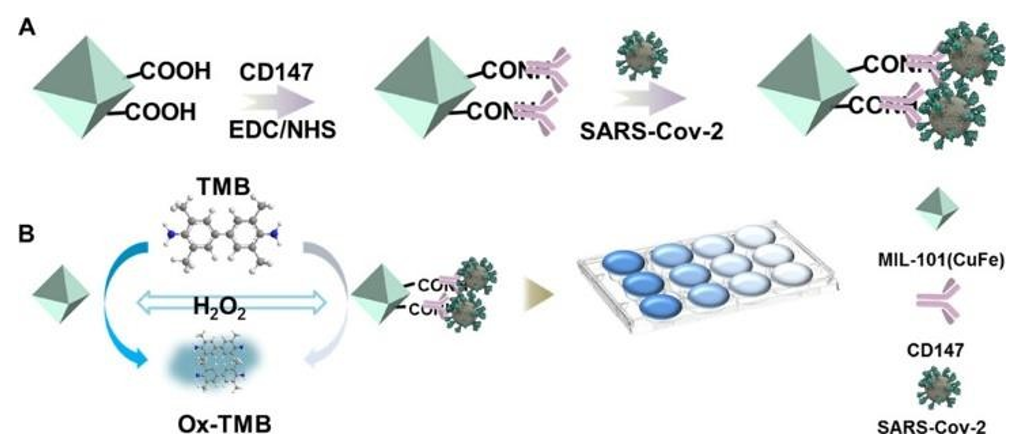
Figure 6: MIL-101(CuFe) Nanozymes for Accurate Visual Naked-Eye Diagnosis of COVID-19 via Detecting the Universal Receptor of CD147 (Adopted from Zhao et al. (2022) [58]).
Besides, Wu et al. (2022) developed a MnO2 nanozyme- mediated CRISPR-Cas12a system for naked-eye diagnosis of COVID-19 [59]. In this system, the MnO2 nanorods were initially linked to magnetic beads using a single-stranded DNA (ssDNA). The as-prepared nanozymes show high oxidase-like activity and can catalyze the oxidation of TMB to a blue-colored product. However, the detection color will change by activation of Cas12a by SARS-CoV-2 and cleaving the ssDNA which was used as a basis for the detection of SARS-3CoV-2 (Figure 7).

Figure 7: A MnO2 Nanozyme-Mediated CRISPR-Cas12a System for Naked-Eye Diagnosis of COVID-19 (Adopted from (Wu et al.
2022) [59]).
In 2023, He et al. performed a nanozyme-based colorimetric method for naked-eye diagnosis of COVID-19 by iron manganese silicate nanozymes as peroxidase-like nanozymes [60]. The nanozymes activity can be inhibited by introducing the pyrophosphate ions which are generated by amplification processes and can be used for optical diagnosis of COVID-19. Besides, Chu et al. developed a robust colorimetric immunosensing method using liposome-encapsulated MnO2 nanozymes for diagnosis of COVID-19 via detection of SARS- CoV-2 antigen using TMB as the chromogenic substrate [61]. Moreover, Vafabakhsh et al. reported a paper-based colorimetric nanozyme-based sensor for diagnosis of COVID-19 using aptamer-modified ChF/ZnO/CNT nanohybrids as peroxidase mimics and TMB as the chromogenic substrate [62]. The main nanocomposite platform was constructed and functionalized with a specific COVID-19 aptamer, providing a linear range of 1–500 pg/mL and a detection limit of 0.05 pg/mL. Also, Sun et al. used Fe(â?¡)-doped ZIF-67 derivatives-based composites as nanozymes for eye diagnosis of COVID-19 via dual- mode colorimetric and fluorescent detection of SARS-CoV-2 nucleocapsid protein, providing a limit of detection of 0.022 ng/mL and 0.018 ng/mL for colorimetric and fluorescent nanozymatic sensors, respectively [63]. The schematic representation of the introduced sensor is shown in Figure 8. As can be seen in this scheme, TMB was used as a chromogenic substrate and CDs were utilized as fluorescent nanoprobes for the detection of SARS-CoV-2 nucleocapsid protein.

Figure 8:  doped ZIF-67 Derivatives-Based Composites as Nanozymes for Eye Diagnosis of COVID-19 Via Dual-Mode
Colorimetric and Fluorescent Detection of SARS-CoV-2 Nucleocapsid Protein (Adopted from Sun et al. (2023) [63]).
Conclusion
Currently, there are several methods for diagnosis of COVID-19 such as real-time reverse transcription-polymerase chain reaction, hematology examination, polymerase chain reaction, diagnostic guidelines based on clinical features, Chest CT scans, etc. However, yet actual testing methods to identify SARS- CoV-2 are limited. Besides, diagnosis of this new pandemic over SARS, MERS, and H1N1 is one of the most challenges of this field due to their very similar clinical characteristics. To overcome these difficulties, recently, nanozmyes-based systems have been applied for fast, accurate, reliable, and cost-effective early diagnosis of COVID-19. The aim of this review is a quick overview of the nanozyme-based sensing and detection colorimetric and fluorometric methods toward early diagnosis of COVID-19. In this regard, the historical background of COVID-19 and its current diagnostic methods were reviewed. Afterward, the nanozymes were introduced and their biomedical application was discussed. Finally, the recent progress of early diagnosis of COVID-19 based on nanozymatic systems was reviewed.
Acknowledgements
The authors gratefully thank the Hormozi Laboratory of Chemistry and Biochemistry (Zabol, Iran) for the support of this work.
Conflict of interest
The authors declare that they have no known competing financial interests or personal relationships that could have appeared to influence the work reported in this paper.
References
- Hormozi Jangi, S. R. (2023). A Brief Overview on Clinical and Epidemiological Features, Mechanism of Action, and Diagnosis of Novel Global Pandemic Infectious Disease, Covid-19, And its Comparison with Sars, Mers, And H1n1. World J Clin Med Img, 2(1), 45-52.
- Jangi, S. R. H. (2023). Natural Polyphenols of Pomegranate and Black Tea Juices can Combat COVID-19 through their SARS-CoV-2 3C-like Protease-inhibitory Activity. Qeios.
- Hao, W., & Li, M. (2020). Clinical diagnostic value of CT imaging in COVID-19 with multiple negative RT-PCR testing. Travel medicine and infectious disease, 34, 101627.
- Li, R., Tian, J., Yang, F., Lv, L., Yu, J., Sun, G., ... &Ding, J. (2020). Clinical characteristics of 225 patients with COVID-19 in a tertiary Hospital near Wuhan, China. Journal of Clinical Virology, 127, 104363.
- Tang, X., Du, R. H., Wang, R., Cao, T. Z., Guan, L. L., Yang,C. Q., ... & Shi, H. Z. (2020). Comparison of hospitalized patients with ARDS caused by COVID-19 and H1N1. Chest, 158(1), 195-205.
- Huang, C., Wang, Y., Li, X., Ren, L., Zhao, J., Hu, Y., ...& Cao, B. (2020). Clinical features of patients infected with 2019 novel coronavirus in Wuhan, China. The lancet, 395(10223), 497-506.
- https://www.who.int/emer gencies/diseases/ novelcoronavirus-2019.
- Ye, G., Li, Y., Lu, M., Chen, S., Luo, Y., Wang, S., ... &Wang, X. (2020). Experience of different upper respiratory tract sampling strategies for detection of COVID-19. Journal of Hospital Infection, 105(1), 1-2.
- Wu, Z., & McGoogan, J. M. (2020). Characteristics of and important lessons from the coronavirus disease 2019 (COVID-19) outbreak in China: summary of a report of 72 314 cases from the Chinese Center for Disease Control and Prevention. jama, 323(13), 1239-1242.
- Hill, M. A., Mantzoros, C., & Sowers, J. R. (2020). Commentary: COVID-19 in patients with diabetes. Metabolism-Clinical and Experimental, 107.
- Verma, M. K., Sharma, P. K., Verma, H. K., Singh, A.N., Singh, D. D., Verma, P., & Siddiqui, A. H. (2021). Rapid diagnostic methods for SARS-CoV-2 (COVID-19) detection: an evidence-based report. Journal of Medicine and Life, 14(4), 431.
- Hormozi Jangi, S. R. (2023). Low-temperature destructive hydrodechlorination of long-chain chlorinated paraffins to diesel and gasoline range hydrocarbons over a novel low-cost reusable ZSM-5@ Al-MCM nanocatalyst: a new approach toward reuse instead of common mineralization. Chemical Papers, 1-15.
- HORMOZI JANGI, S. R., & Akhond, M. (2020). Highthroughput green reduction of tris (p-nitrophenyl) amine at ambient temperature over homogenous AgNPs as H-transfer catalyst. Journal of Chemical Sciences, 132, 1-8.
- Dehghani, Z., Akhond, M., Jangi, S. R. H., & Absalan, G. (2024). Highly sensitive enantioselective spectrofluorimetric determination of R-/S-mandelic acid using l-tryptophan- modified amino-functional silica-coated N-doped carbon dots as novel high-throughput chiral nanoprobes. Talanta, 266, 124977.
- Hormozi Jangi, S. R., & Gholamhosseinzadeh, E. (2023). Developing an ultra-reproducible and ultrasensitive label- free nanoassay for L-methionine quantification in biological samples toward application in homocystinuria diagnosis. Chemical Papers, 1-13.
- Jangi, S. R. H., & Akhond, M. (2021). Ultrasensitive label-free enantioselective quantification of d-/l-leucine enantiomers with a novel detection mechanism using an ultra-small high-quantum yield N-doped CDs prepared by a novel highly fast solvent-free method. Sensors and Actuators B: Chemical, 339, 129901.
- Thakkar, K. N., Mhatre, S. S., & Parikh, R. Y. (2010). Biological synthesis of metallic nanoparticles. Nanomedicine: nanotechnology, biology and medicine, 6(2), 257-262.
- Hajipour, M. J., Fromm, K. M., Ashkarran, A. A., de Aberasturi, D. J., de Larramendi, I. R., Rojo, T., ... & Mahmoudi, M. (2012). Antibacterial properties of nanoparticles. Trends in biotechnology, 30(10), 499-511.
- Hormozi Jangi, S. R. (2023). Synthesis and characterization of magnesium-based metal-organic frameworks and investigating the effect of coordination solvent on their biocompatibility. Chemical Research and Nanomaterials, 1(4), 1-9.
- Hormozi Jangi, S. R. (2023). Biochemical characterization of enzyme-like silver nanoparticles toward nanozyme-catalysed oxidation reactions. Micromaterials and Interfaces, 1(1), 2170.
- Hormozi Jangi, S. R. (2023). Evaluation of Biochemical Behavior and Stability of Gold Nanoparticles with High Intrinsic Peroxidase-Like Activity. Petro Chem Indus Intern, 6(4), 234-239.
- Jangi, S. R. H. (2023). Introducing a high throughput nanozymatic method for eco-friendly nanozyme-mediated degradation of methylene blue in real water media. Sustainable Chemical Engineering, 90-99.
- Hormozi Jangi, S. R., & Dehghani, Z. (2023). Kinetics and biochemical characterization of silver nanozymes and investigating impact of storage conditions on their activity and shelf-life. Chemical Research and Nanomaterials, 1(4), 25-33.
- Jangi, S. R. H. (2023). Determining kinetics parameters of bovine serum albumin-protected gold nanozymes toward different substrates. Qeios.
- Jangi, S. R. H. (2023). Effect of daylight and air oxygen on nanozymatic activity of unmodified silver nanoparticles: Shelf-stability. Qeios.
- Ahmadi-Leilakouhi, B., Hormozi Jangi, S. R., & Khorshidi,A. (2023). Introducing a novel photo-induced nanozymatic method for high throughput reusable biodegradation of organic dyes. Chemical Papers, 77(2), 1033-1046.
- Jangi, S. R. H. (2023). A Comparative Study on Kinetics Performances of BSA-gold Nanozymes for Nanozyme- Mediated Oxidation of 3, 3’, 5, 5’-Tetramethylbenzidineand 3, 3’-Diaminobenzidine.
- Jangi, S. R. H., & Akhond, M. (2021). High throughput urease immobilization onto a new metal-organic framework called nanosized electroactive quasi-coral-340 (NEQC- 340) for water treatment and safe blood cleaning. Process Biochemistry, 105, 79-90.
- Jangi, S. R. H., & Akhond, M. (2022). Introducing a covalent thiol-based protected immobilized acetylcholinesterase with enhanced enzymatic performances for biosynthesis of esters. Process Biochemistry, 120, 138-155.
- Jangi, S. R. H., Akhond, M., & Dehghani, Z. (2020). High throughput covalent immobilization process for improvement of shelf-life, operational cycles, relative activity in organic media and enzymatic kinetics of urease and its application for urea removal from water samples. Process Biochemistry, 90, 102-112.
- Wang, Q., Wei, H., Zhang, Z., Wang, E., & Dong, S. (2018). Nanozyme: An emerging alternative to natural enzyme for biosensing and immunoassay. TrAC Trends in Analytical Chemistry, 105, 218-224.
- Lu, W., Guo, Y., Zhang, J., Yue, Y., Fan, L., Li, F., ... &Shuang, S. (2022). A High Catalytic Activity Nanozyme Based on Cobalt-Doped Carbon Dots for Biosensor and Anticancer Cell Effect. ACS Applied Materials & Interfaces, 14(51), 57206-57214.
- Ren, X., Chen, D., Wang, Y., Li, H., Zhang, Y., Chen, H.,... & Huo, M. (2022). Nanozymes-recent development and biomedical applications. Journal of Nanobiotechnology, 20(1), 92.
- Tang, G., He, J., Liu, J., Yan, X., & Fan, K. (2021, August).Nanozyme for tumor therapy: Surface modification matters.In Exploration (Vol. 1, No. 1, pp. 75-89).
- Li, M., Zhang, H., Hou, Y., Wang, X., Xue, C., Li, W., ... &Luo, Z. (2020). State-of-the-art iron-based nanozymes for biocatalytic tumor therapy. Nanoscale Horizons, 5(2), 202- 217.
- Yu, R., Wang, R., Wang, Z., Zhu, Q., & Dai, Z. (2021).Applications of DNA-nanozyme-based sensors. Analyst, 146(4), 1127-1141.
- Chang, Y., Gao, S., Liu, M., & Liu, J. (2020). Designing signal-on sensors by regulating nanozyme activity. Analytical Methods, 12(39), 4708-4723.
- Arshad, F., Mohd-Naim, N. F., Chandrawati, R., Cozzolino, D., & Ahmed, M. U. (2022). Nanozyme-based sensors for detection of food biomarkers: a review. RSC advances, 12(40), 26160-26175.
- Jangi, A. R. H., Jangi, M. R. H., & Jangi, S. R. H. (2020).Detection mechanism and classification of design principles of peroxidase mimic based colorimetric sensors: A brief overview. Chinese Journal of Chemical Engineering, 28(6), 1492-1503.
- Jangi, S. R. H., Akhond, M., & Absalan, G. (2020). A novel selective and sensitive multinanozyme colorimetric method for glutathione detection by using an indamine polymer. Analytica Chimica Acta, 1127, 1-8.
- Jangi, S. R. H., Davoudli, H. K., Delshad, Y., Jangi, M.R. H., & Jangi, A. R. H. (2020). A novel and reusable multinanozyme system for sensitive and selective quantification of hydrogen peroxide and highly efficient degradation of organic dye. Surfaces and Interfaces, 21, 100771.
- Xu, S., Zhang, S., Li, Y., & Liu, J. (2023). Facile synthesis of iron and nitrogen co-doped carbon dot nanozyme as highly efficient peroxidase mimics for visualized detection of metabolites. Molecules, 28(16), 6064.
- Jangi, S. R. H., & Akhond, M. (2020). Synthesis and characterization of a novel metal-organic framework called nanosized electroactive quasi-coral-340 (NEQC-340) and its application for constructing a reusable nanozyme-based sensor for selective and sensitive glutathione quantification. Microchemical Journal, 158, 105328.
- Ray, S., Biswas, R., Banerjee, R., & Biswas, P. (2020). A gold nanoparticle-intercalated mesoporous silica-based nanozyme for the selective colorimetric detection of dopamine. Nanoscale Advances, 2(2), 734-745.
- Shen, Y., Wei, Y., Liu, Z., Nie, C., & Ye, Y. (2022).Engineering of 2D artificial nanozyme-based blocking effect-triggered colorimetric sensor for onsite visual assay of residual tetracycline in milk. Microchimica Acta, 189(6), 233.
- Akhond, M., Hormozi Jangi, S. R., Barzegar, S., & Absalan, G. (2020). Introducing a nanozyme-based sensor for selective and sensitive detection of mercury (II) using its inhibiting effect on production of an indamine polymer through a stable n-electron irreversible system. Chemical Papers, 74, 1321-1330.
- Chen, J., Wu, W., Huang, L., Ma, Q., & Dong, S. (2019).Selfâ?indicative gold nanozyme for H2O2 and glucosesensing. Chemistry–A European Journal, 25(51), 11940-11944.
- Hormozi Jangi, S. R., & Dehghani, Z. (2023). Spectrophotometric quantification of hydrogen peroxide utilizing silver nanozyme. Chemical Research and Nanomaterials, 2(1), 15-23.
- Hormozi Jangi, S. R., Akhond, M., & Absalan, G. (2020). A field-applicable colorimetric assay for notorious explosive triacetone triperoxide through nanozyme- catalyzed irreversible oxidation of 3, 3′-diaminobenzidine. Microchimica Acta, 187, 1-10.
- Mandeep, S., Pabudi, W., Dinusha, L. P., Edwin, M., Rajesh, R., & Vipul, B. (2017). Competitive Inhibition of the Enzyme-Mimic Activity of Gd-Based Nanorods toward Highly Specific Colorimetric Sensing of l-Cysteine.
- Wang, M., Zhang, J., Zhou, X., Sun, H., & Su, X. (2022).Fluorescence sensing strategy for xanthine assay based on gold nanoclusters and nanozyme. Sensors and Actuators B: Chemical, 358, 131488.
- Heo, N. S., Song, H. P., Lee, S. M., Cho, H. J., Kim, H. J.,Huh, Y. S., & Kim, M. I. (2020). Rosette-shaped graphitic carbon nitride acts as a peroxidase mimic in a wide pH range for fluorescence-based determination of glucose with glucose oxidase. Microchimica Acta, 187, 1-11.
- Liang, C., Liu, B., Li, J., Lu, J., Zhang, E., Deng, Q., ... & Li,T. (2021). A nanoenzyme linked immunochromatographic sensor for rapid and quantitative detection of SARS-CoV-2 nucleocapsid protein in human blood. Sensors and Actuators B: Chemical, 349, 130718.
- Fu, Z., Zeng, W., Cai, S., Li, H., Ding, J., Wang, C., ... &Yang, R. (2021). Porous Au@ Pt nanoparticles with superior peroxidase-like activity for colorimetric detection of spike protein of SARS-CoV-2. Journal of colloid and interface science, 604, 113-121.
- Liu, D., Ju, C., Han, C., Shi, R., Chen, X., Duan, D., ... &Yan, X. (2021). Nanozyme chemiluminescence paper test for rapid and sensitive detection of SARS-CoV-2 antigen. Biosensors and Bioelectronics, 173, 112817.
- Liu, B., Wu, Z., Liang, C., Lu, J., Li, J., Zhang, L., ... & Li,C. (2021). Development of a smartphone-based nanozyme- linked immunosorbent assay for quantitative detection of SARS-CoV-2 nucleocapsid phosphoprotein in blood. Frontiers in Microbiology, 12, 692831.
- Ali, G. K., & Omer, K. M. (2022). Ultrasensitive aptamer- functionalized Cu-MOF fluorescent nanozyme as an optical biosensor for detection of C-reactive protein. Analytical Biochemistry, 658, 114928.
- Zhao, X., Yang, Z., Niu, R., Tang, Y., Wang, H., Gao, R.,... & Meng, L. (2022). MIL-101 (CuFe) Nanozymes with Excellent Peroxidase-like Activity for Simple, Accurate, and Visual Naked-Eye Detection of SARS-CoV-2. Analytical Chemistry, 95(2), 1731-1738.
- Wu, L., Wang, X., Wu, X., Xu, S., Liu, M., Cao, X., ... &Huang, H. (2022). MnO2 nanozyme-mediated CRISPR- Cas12a system for the detection of SARS-CoV-2. ACS Applied Materials & Interfaces, 14(45), 50534-50542.
- He, M., Xu, X., Wang, H., Wu, Q., Zhang, L., Zhou, D.,... & Liu, H. (2023). Nanozymeâ?Based Colorimetric SARSâ? CoVâ?2 Nucleic Acid Detection by Naked Eye. Small, 2208167.
- Chu, C., Jiang, M., Hui, Y., Huang, Y., Kong, W., Zhu, W., ... & Ji, L. (2023). Colorimetric immunosensing using liposome encapsulated MnO2 nanozymes for SARS-CoV-2 antigen detection. Biosensors and Bioelectronics, 239, 115623.
- Vafabakhsh, M., Dadmehr, M., Noureini, S. K., Es' haghi, Z., Malekkiani, M., & Hosseini, M. (2023). based colorimetric detection of COVID-19 using aptasenor based on biomimetic peroxidase like activity of ChF/ZnO/CNT nano-hybrid. Spectrochimica Acta Part A: Molecular and Biomolecular Spectroscopy, 122980.
- Sun, Y., Xie, Z., Pei, F., Wu, Y., Feng, S., Hao, Q., ... &Tong, Z. (2023). Fe (â?¡)-doped ZIF-67 derivatives-based composites as nanozyme for dual-mode colorimetric and fluorescent detection of SARS-CoV-2 nucleocapsid protein. Sensors and Actuators B: Chemical, 394, 134428.