Current Trends in Business Management(CTBM)
ISSN: 2995-4010 | DOI: 10.33140/CTBM



Research Article - (2024) Volume 2, Issue 1
Workforce’s Motivation and Attitude Towards Organizational Transformation At King Faisal Specialist Hospital & Research Center, Sa, Riyadh
2Departement of Health Administration, College of Business Administration, Kind Saud University, Riyadh, Saudi Arabia
Received Date: Feb 15, 2024 / Accepted Date: Mar 18, 2024 / Published Date: Mar 23, 2024
Copyright: ©©2024 Muntaha M. Almansour, et al. This is an open-access article distributed under the terms of the Creative Commons Attribution License, which permits unrestricted use, distribution, and reproduction in any medium, provided the original author and source are credited.
Citation: Almansour, M. M., Aljuaid, M. (2024). Workforce
Abstract
Background: As part of Saudi Arabia’s Vision 2030 and its plans to maintain a robust regulatory function of the healthcare system, King Faisal Specialist Hospital & Research Center (KFSH&RC) has become an independent, private, not-for-profit foundation that reflects the transformation strategy and plans of the Kingdom's Vision 2030. Previous research has focused more on change processes and implementations than on employees’ feelings, perceptions, and attitudes toward this change.
Aim: This research aims to explore and critically analyze the motivation and attitude of the employees towards the organizational transformation at KFSH&RC in Riyadh.
Methods: A cross-sectional study was constructed using demographic variation and a multifactor scale of motivation at work concerning the respondent’s opinion of organizational transformation effectiveness.
Result: A total of 200 participants in this study, of which 18% have a marked satisfaction level of work motivation, 43% have a moderate satisfaction rate, 23% are natural, and 15% are dissatisfied. Respondent opinion of organizational transformation effectiveness was positively related to nationality and work organization.
Conclusion: In summary, we found that the organizational transformation in question was positively related to many studied factors that describe the workforce and influence its performance through their efforts and decisions, to the extent that the employee feels or grows more responsible for their job, and this positively impacts their motivation at work.
Keywords
Organizational transformation, Change, Healthcare, Motivation, Attitude.
Introduction
The transformed organization acquires an assortment of skills and an increased capacity to serve its customers or clients in new and different ways. (Lyons et al., 2018) summarized the Delphi panel that suggested the success of organizations is composed of ten critical elements: active and person-centered job placement; clear and consistent goals; strong internal and external communications; a culture that values inclusion; investment in professional development; performance measurement; reallocation and restructuring of resources; a holistic approach; diverse community partnerships; and customer engagement [1]. Moreover, added three elements that help maintain a constant organizational transformation process, which they concluded as leveraging day support, offering clear and consistent messaging to all stakeholders, and delivering best practices in job development. Given the above, all workforces must push beyond efficiency and effectiveness improvements to transform an organization. Radical change requires new ways of thinking that alter taken-for-granted and often hidden organizational rules that limit how people think about change. The benefits of a transformation seem clear and compelling [2]. However, they observe that many workforces struggle to find a path to change or even feel lost in the middle of the transitional period. A transformation takes place when a vision is used to suggest radical, creative, and coherent changes to all an organization's strategies. Transformations result when a revitalizing vision is used to guide the search for answers to these same questions in a future context that causes radical changes in an organization's strategy and abandons an orientation rooted in the present. Approach projecting today's thinking into the future to imagine what it would be like in the future. As a result, a transformation requires development and integration. Change must lead to growth, like being able to serve a wider range of customers or clients in new ways and becoming more flexible and adaptable. These are all parts of being able to deal with environmental challenges and take advantage of opportunities [3].
King Faisal Specialist Hospital and Research Center (KFSH&RC) has become an independent, private, not-for-profit institution aiming to build a world-leading healthcare model. Concurrently with the Health Sector Transformation Program, the national center for performance measurement and the Centre of Spending Efficiency, working practices are reconstructed across the entire organization, including the research center, academia, IT, finance, administration, human resources, and clinical quality, to offer high safety standards and patient experience. The critical element of establishing the transformation was to have a corporate transformation office, known as a CTO, that directs the legal and financial due diligence. Legal due diligence conveys all legal implications and considerations related to transferring assets, employees, and contracts. On the other hand, financial due diligence consists of a high-stander accounting framework and practices, as well as fixed asset valuation and impairment testing. Subsequently, the operational transformation took place by changing the back and front office functions and frontline staff, guaranteeing efficiency, productivity, and protection against health risks (KFSH&RC, 2021).
Furthermore, a study done in Malaysia in 2020 concluded that a positive relationship and a strong connection developed between transformational leadership and employee behavior, thus enhancing trust and confidence with the reduction of disenchantment even in complex and stressful situations, such as during the transformation process. So, it's important to keep a close eye on employee attitudes and motivation during and after the transformational period. Employee assessment is one of the most delicate issues; for that matter, Ferreira constructed a multi-factor scale of motivation at work containing 28 items from theoretical research rated on a 5-point Likert scale. The questionnaire comprises four subdivisions that measure employee motivation by workplace organization, work performance, power and achievement, and involvement. The questionnaire comprises four subdivisions that measure employee motivation by workplace organization, work performance, power and achievement, and involvement. Ferreira et al. (2005) found that the questionnaire had good validity, reliability, and internal consistency based on Cronbach's Alpha of 0.70.
Rational
As part of Vision 2030 and its programs, KFSH&RC has become an independent, private, not-for-profit foundation that reflects the transformation plan of the Kingdom's Vision 2030. The transformation program is in line with the organization's strategic vision, which is to be the best and most innovative healthcare provider in the world. As a senior employee in the physical rehabilitation department at KFSH&RC, I was impacted by all these changes that took place around me. My role is to maintain a calm behavior and attitude toward the physical and mental well-being of the patients and the workforce. This stimulated my interest in further studying the effectiveness of organizational transformation on employee motivation and attitude at the KFSH&RC. Currently, a number of existing studies have sought to address the impact of organizational transformation on employee behavior and attitude, and these have tended to focus on the role that the medical administration of a healthcare organization plays in planning, decision-making, and healthcare strategy development in developed countries. But so far, no research has been published that explores the impact of organizational transformation on hospital employee motivation and attitude in Saudi.
Aim of the Study
This research aims to explore and critically analyze the attitude and motivation of the employees regarding the organizational transformation at KFSH&RC in Riyadh.
Objectives
• To explore and critically analyze the employees’ attitude and motivation toward organizational transformation.
• To explore and analyze the factors predictive of a range of native attitudes towards organizational transformation.
• To explore the impact of organizational transformation on KFSH&RC-R workforce’s motivation.
Research Design and Instrumentation
Methodolgical Orientation
Research Design
This research used a descriptive cross-sectional design to explore and critically analyze the motivation and attitude of the employees towards the organizational transformation at KFSH&RC in Riyadh.
Research Population
King Faisal Specialist Hospital & Research Center workforce in Riyadh.
Sample Size
The sample size was detected through a sample size calculator of a 95% confidence level for population size = 12,000 with a margin error of 5% = 373.
Data Collection
Tool Appendix 1 An online survey of a Modified Multi-Factor Scale of Work Motivation. The structured questionnaire was initially developed in Spanish and then translated into Arabic.
Research Variables
The dependent variable is the respondent’s opinion of organizational transformation effectiveness. The Independent Variables are the socio-demographic variables such as age, gender, nationality, education, occupation, job duration, income, and the multi-factor work motivation scale.
Data Analysis
The collected data was analyzed through a statistical program for social sciences (SPSS) version 24. Variables were analyzed through a t-test, and categorical variables were through a chi- square test. If the p-value < 0.05 should be considered for significance. The multi-factor motivation scale was analyzed using convergent, divergent, and predictive validity.
Ethical Consideration
All information and data are confidential and used solely for this research purposes. Also, it was approved in November 2022, by King Saud University, Scientific Research Ethics Committee, and by the Research Ethics Committee at King Faisal Specialist Hospital & Research Center.
Result
Demographic Results
Table (1) represent the demographic variables of the samples, which show that most participants were between the age of 20-30 years 39.5% followed by 31-40, 41-50, and 51-60 with 33%, 21%, and 6.5 consequently. According to gender, most of the participants were female, 64.5%. According to nationality, most of the participants were Saudi, 79.5%. In the report on education and occupations, the majority of the participant had a bachelor’s degree, 62%, and were working in the nursing department, 30.5%. A significant part of the participants had a monthly income of 11,000 - 20,000 SAR 48.5%. Most of the participants have work experience of more than 10, years 44.5%
|
Label |
Frequency |
Percent |
|
|
Age |
20 - 30 |
79 |
39.5 |
|
31 - 40 |
66 |
33.0 |
|
|
41 - 50 |
42 |
21.0 |
|
|
51 - 60 |
13 |
6.5 |
|
|
Gender |
Female |
129 |
64.5 |
|
Male |
71 |
35.5 |
|
|
Nationality |
Saudi |
159 |
79.5 |
|
Non-Saudi |
41 |
20.5 |
|
|
Education |
Primary / Preparatory |
1 |
.5 |
|
High school |
9 |
4.5 |
|
|
Diploma |
19 |
9.5 |
|
|
Bachelor Degree |
124 |
62.0 |
|
|
Higher Professional Degree |
47 |
23.5 |
|
|
Occupation |
Ambulatory Care Services |
12 |
6.0 |
|
Administration |
44 |
22.0 |
|
|
Clinical Services; PT, SLP, RT, laboratory, radiology, paramedics ... |
59 |
29.5 |
|
|
HITA |
4 |
2.0 |
|
|
Nursing |
61 |
30.5 |
|
|
Pharmacy |
9 |
4.5 |
|
|
Physician; MD, MBBS, BDS |
11 |
5.5 |
|
|
Monthly Income |
Less than 5000 SAR |
6 |
3.0 |
|
5,000 - 10,000 SAR |
51 |
25.5 |
|
|
11,000 - 20,000 SAR |
97 |
48.5 |
|
|
21,000 - 30,000 SAR |
36 |
18.0 |
|
|
Greater than 30,000 SAR |
10 |
5.0 |
|
|
Years of experience |
|
|
|
|
Less than 5 years |
60 |
30.0 |
|
|
5 - 10 years |
51 |
25.5 |
|
|
More than 10 years |
89 |
44.5 |
|
|
Organizational Transformation Effectiveness |
Yes |
148 |
74.0 |
|
No |
52 |
26.0 |
|
Table 1: Demographic variation.
According to the skewness and kurtosis Table values present in Table (2) for the 4 subscales for a validity study, the factorial analysis method is used to study the validity of the questionnaire; we obtain values close to zero, which can be associated with a normal distribution.
|
|
N |
Mean |
Std. Deviation |
Skewness |
Kurtosis |
|
Work Performance |
200 |
22.0650 |
4.01890 |
-.312 |
-.372 |
|
work Organization |
200 |
24.0050 |
2.93565 |
.077 |
.186 |
|
Power and Achievement |
200 |
27.0400 |
3.28823 |
-.324 |
.118 |
|
Involvement |
200 |
25.7500 |
2.90512 |
-.037 |
-.354 |
Table 2: Descriptive statistics of the four subscales of the questionnaire.
Graph (1) shows that the multifactorial scale of motivation at work of more than 18% of the participants was strongly satisfied, 43% were satisfied, 23% were neither satisfied nor unsatisfied “natural,” 11% unsatisfied, and 4% strongly unsatisfied.

Graph 1: Multifactor Scale of Motivation at Work
We use the chi-squared test to test the association between organization transformation effectiveness and demographic variables at a significant level. The results in table (3) show that the value of chi-square =5.5776, and the p=value = 0.123 > 0.05.
We conclude that there is no association between organization transformation effectiveness and age at the significant level α ≤ 0.05.
|
|
Organizational Transformation Effective |
Total |
||
|
Yes |
No |
|||
|
Age |
20 - 30 |
62 |
17 |
79 |
|
31 - 40 |
43 |
23 |
66 |
|
|
41 - 50 |
31 |
11 |
42 |
|
|
51 - 60 |
12 |
1 |
13 |
|
|
Total |
148 |
52 |
200 |
|
|
Chi-Square test =5.5776 |
Anova=.124 |
P-value= 0.123 |
||
Table 3: Association between organization transformation effectiveness and age.
The results in a table (4) show that the value of chi-square =.732, and the p=value = 0.404 > 0.05. We conclude that there is no association between organization transformation effectiveness and gender at the significant level α ≤ 0.05.
|
|
Organizational Transformation Effective |
Total |
||
|
Yes |
No |
|||
|
Gender |
Female |
98 |
31 |
129 |
|
Male |
50 |
21 |
71 |
|
|
Total |
148 |
52 |
200 |
|
|
Chi-Square test =.732 |
T-test = -.836 |
P-value= 0.404 |
||
Table 4: Association between organization transformation effectiveness and gender.
The results in a table (5) show that the value of chi-square =14.880, and the p=value = 0.000 <0.05. We conclude that there is a significant association between organization transformation effectiveness and nationality at the significant level α ≤ 0.05.
|
|
Organizational Transformation Effective |
Total |
||
|
Yes |
No |
|||
|
Nationality |
Saudi |
108 |
51 |
159 |
|
Non-Saudi |
40 |
1 |
41 |
|
|
Total |
148 |
52 |
200 |
|
|
chi-square =14.880 |
T-test = 6.671 |
p=value = 0.000 |
||
Table 5: Association between organization transformation effectiveness and gender.
The results in a table (6) show that the value of chi-square =5.226, and the p=value = .265 >0.05. We conclude that there is no association between organization transformation effectiveness and education at the significant level α ≤ 0.05.
|
|
Organizational Transformation Effective |
Total |
||
|
Yes |
No |
|||
|
Education |
Primary / Preparatory |
1 |
0 |
1 |
|
High school |
5 |
4 |
9 |
|
|
Diploma |
17 |
2 |
19 |
|
|
Bachelor Degree |
93 |
31 |
124 |
|
|
Higher Professional Degree |
32 |
15 |
47 |
|
|
Total |
148 |
52 |
200 |
|
|
chi-square =5.226 |
ANOVA=.268 |
p=value = .265 |
||
Table 6: Association between organization transformation effectiveness and education.
The results in table (7) show that the value of chi-square =1.75, and the p=value = .941 >0.05. We conclude that there is no association between organization transformation effectiveness and occupation at the significant level α ≤ 0.05.
|
|
Organizational Transformation Effective |
Total |
||
|
Yes |
No |
|||
|
Occupation |
Administration |
30 |
14 |
44 |
|
Ambulatory Care Services |
9 |
3 |
12 |
|
|
Clinical Services; PT, SLP, RT, laboratory, radiology, paramedics ... |
44 |
15 |
59 |
|
|
HITA |
3 |
1 |
4 |
|
|
Nursing |
48 |
13 |
61 |
|
|
Pharmacy |
6 |
3 |
9 |
|
|
Physician; MD, MBBS, BDS |
8 |
3 |
11 |
|
|
Total |
148 |
52 |
200 |
|
|
chi-square =1.750 |
ANOVA=.944 |
p=value = .941 |
||
Table 7: Association between organization transformation effectiveness and occupation.
|
|
Organizational Transformation Effective |
Total |
||
|
Yes |
No |
|||
|
Monthly Income |
Less than 5000 SAR |
6 |
0 |
6 |
|
5,000 - 10,000 SAR |
42 |
9 |
51 |
|
|
11,000 - 20,000 SAR |
72 |
25 |
97 |
|
|
21,000 - 30,000 SAR |
23 |
13 |
36 |
|
|
Greater than 30,000 SAR |
5 |
5 |
10 |
|
|
Total |
148 |
52 |
200 |
|
|
chi-square =8.867 |
ANOVA=.064 |
p=value = .065 |
||
Table 8: Association between organization transformation effectiveness and monthly income.
The results in table (9) show that the value of chi-square =3.959, and the p=value = .065 >0.05. We conclude that there is no association between organization transformation effectiveness and experience at the significant level α ≤ 0.05.
|
|
Organizational Transformation Effective |
Total |
||
|
Yes |
No |
|
||
|
Years of experience |
Less than 5 years |
50 |
10 |
60 |
|
5 - 10 years |
35 |
16 |
51 |
|
|
More than 10 years |
63 |
26 |
89 |
|
|
Total |
148 |
52 |
200 |
|
|
chi-square =3.959 |
ANOVA=.140 |
p=value = .138 |
||
Table 9: Association between organization transformation effectiveness and experience.
To test the association between the multifactorial scale of work motivation and demographic variables at a significant level α ≤ 0.05,we use the chi-squared test. The results in a table (10) show that the value of chi-square=9.412 and the p=value = .667>0.05.
We conclude that there is no association between work organization of multifactorial scale and age at the significant level α ≤ 0.05.
|
|
Age |
Total |
||||
|
20 - 30 |
31 - 40 |
41 - 50 |
51 - 60 |
|||
|
Work organization |
Strongly Disagree |
3 |
0 |
0 |
0 |
3 |
|
Disagree |
12 |
17 |
9 |
3 |
41 |
|
|
Neutral |
31 |
25 |
20 |
6 |
82 |
|
|
Agree |
31 |
23 |
13 |
4 |
71 |
|
|
Strongly Agree |
2 |
1 |
0 |
0 |
3 |
|
|
Total |
79 |
66 |
42 |
13 |
200 |
|
|
chi-square =9.412 |
Anova=.877 |
p=value = .667 |
||||
Table 10: Association between work organization of multifactorial scale and age.
The results in a table (11) show that the value of chi-square =7.951, and the p=value = .539>0.05. We conclude that there is no association between work performance of multifactorial scale and age at the significant level α ≤ 0.05.
|
|
Age |
Total |
||||
|
20 - 30 |
31 - 40 |
41 - 50 |
51 - 60 |
|||
|
Work performance |
Strongly Disagree |
0 |
0 |
0 |
0 |
0 |
|
Disagree |
1 |
2 |
2 |
1 |
6 |
|
|
Neutral |
31 |
25 |
21 |
5 |
82 |
|
|
Agree |
43 |
38 |
19 |
6 |
106 |
|
|
Strongly Agree |
4 |
1 |
0 |
1 |
6 |
|
|
Total |
79 |
66 |
42 |
13 |
200 |
|
|
chi-square =7.951 |
Anova=.029 |
p=value = .539 |
||||
Table 11: Association between work performance of multifactorial scale and age.
The results in table (12) show that the value of chi-square =23.736, and the p=value = .526>0.05. We conclude that there is an association between power and achievement of multifactorial scale and age at the significant level α ≤ 0.05.
|
|
Age |
Total |
||||
|
20 - 30 |
31 - 40 |
41 - 50 |
51 - 60 |
|
||
|
Power and achievement |
Strongly Disagree |
0 |
0 |
0 |
0 |
0 |
|
Disagree |
1 |
1 |
0 |
0 |
2 |
|
|
Neutral |
6 |
6 |
13 |
4 |
29 |
|
|
Agree |
50 |
43 |
27 |
5 |
125 |
|
|
Strongly Agree |
22 |
16 |
2 |
4 |
44 |
|
|
Total |
|
79 |
66 |
42 |
13 |
200 |
|
chi-square =23.736 |
Anova=.002 |
p=value = .005 |
||||
Table 12: Association between power and achievement of multifactorial scale and age.
The results in a table (13) show that the value of chi-square =7.439, and the p=value = .282>0.05. We conclude that there is no association between the involvement of multifactorial scale and age at the significant level α ≤ 0.05.
|
|
Age |
|
|
|
Total |
|
|
20 - 30 |
31 - 40 |
41 - 50 |
51 - 60 |
|||
|
Involvement |
Strongly Disagree |
0 |
0 |
0 |
0 |
0 |
|
Disagree |
0 |
0 |
0 |
0 |
0 |
|
|
Neutral |
15 |
12 |
13 |
3 |
43 |
|
|
Agree |
58 |
43 |
27 |
9 |
137 |
|
|
Strongly Agree |
6 |
11 |
2 |
1 |
20 |
|
|
Total |
79 |
79 |
66 |
42 |
13 |
|
|
chi-square =7.439 |
Anova=.068 |
|
||||
Table 13: Association between Involvement of multifactorial scale and age.
The results in table (14) show that the value of chi-square =10.484, and the p=value = .03<0.05. We conclude that there is a significant association between the work organization of a multifactorial scale and nationality at the significant level α ≤ 0.05.
|
|
Nationality |
Total |
||
|
Saudi |
Non-Saudi |
|||
|
Work organization |
Strongly Disagree |
3 |
0 |
3 |
|
Disagree |
38 |
3 |
41 |
|
|
Neutral |
67 |
15 |
82 |
|
|
Agree |
49 |
22 |
71 |
|
|
Strongly Agree |
2 |
1 |
3 |
|
|
Total |
159 |
41 |
200 |
|
|
Chi-Square test =10.484 |
T-test = -3.462 |
P-value= 0.033 |
||
Table 14: Association between work organization of multifactorial scale and nationality.
The results in table (15) show that the value of chi-square =.940, and the p=value =.816 >0.05.We conclude that there is no association between work performance of the multifactorial scale and nationality at the significant level α ≤ 0.05.
|
|
Nationality |
Total |
||
|
Saudi |
Non-Saudi |
|||
|
Work performance |
Strongly Disagree |
0 |
0 |
0 |
|
Disagree |
5 |
1 |
6 |
|
|
Neutral |
64 |
18 |
82 |
|
|
Agree |
86 |
20 |
106 |
|
|
Strongly Agree |
4 |
2 |
6 |
|
|
Total |
159 |
41 |
200 |
|
|
Chi-Square test =.940 |
T-test = -4.64 |
P-value= 0.816 |
||
Table 15: association between work performance of multifactorial scale and nationality.
The results in a table (16) show that the value of chi-square =.7.324, and the p=value =.062 >0.05. We conclude that there is no association between power and achievement of the multifactorial scale and nationality at the significant level α ≤ 0.05.
|
|
Nationality |
Total |
||
|
Saudi |
Non-Saudi |
|||
|
Power and achievement |
Strongly Disagree |
0 |
0 |
0 |
|
Disagree |
2 |
0 |
2 |
|
|
Neutral |
18 |
11 |
29 |
|
|
Agree |
101 |
24 |
125 |
|
|
Strongly Agree |
38 |
6 |
44 |
|
|
Total |
159 |
41 |
200 |
|
|
Chi-Square test =7.324 |
T-test = 2.02 |
P-value= 0.062 |
||
Table 16: association between power and achievement of multifactorial scale and nationality.
The results in table (17) show that the value of chi-square =2.013, and the p=value =.365 >0.05. We conclude that there is no association between the involvement of the multifactorial scale and nationality at the significant level α ≤ 0.05.
|
|
Nationality |
Total |
||
|
Saudi |
Non-Saudi |
|||
|
Involvement |
Strongly Disagree |
0 |
0 |
0 |
|
Disagree |
0 |
0 |
0 |
|
|
Neutral |
67 |
15 |
82 |
|
|
Agree |
49 |
22 |
71 |
|
|
Strongly Agree |
2 |
1 |
3 |
|
|
Total |
159 |
41 |
200 |
|
|
Chi-Square test =2.013 |
T-test =1.866 |
P-value= .365 |
||
Table 17: association between the involvement of multifactorial scale and nationality.
The results in table (18) show that the value of chi-square =40.380, and the p=value =.019 <0.05. We conclude that there is a significant association between work organization of multifactorial scale and occupation at the significant level α ≤ 0.05.
|
|
Occupation |
||||||||
|
Ambulatory Care Services |
Administration |
Clinical Services; PT, SLP, RT, laboratory, radiology, paramedics ... |
HITA |
Nursing |
Pharmacy |
Physician; MD, MBBS, BDS |
Total |
||
|
Work organization |
Strongly Disagree |
0 |
0 |
2 |
0 |
1 |
0 |
3 |
3 |
|
Disagree |
2 |
9 |
13 |
3 |
9 |
3 |
41 |
41 |
|
|
Neutral |
6 |
23 |
31 |
0 |
17 |
4 |
82 |
82 |
|
|
Agree |
4 |
12 |
13 |
1 |
31 |
2 |
71 |
71 |
|
|
Strongly Agree |
0 |
0 |
0 |
0 |
3 |
0 |
3 |
3 |
|
|
Total |
12 |
44 |
59 |
4 |
61 |
9 |
22 |
200 |
|
|
chi-square =40.380 |
Anova= .002 |
p=value = .019 |
|||||||
Table 18 : Association between work organization of multifactorial scale and occupation.
The results in a table (19) show that the value of chi-square =29.419, and the p=value =.043 <0.05. We conclude that there is a significant association between work performance multifactorial scale and occupation at the significant level α ≤ 0.05.
|
|
Occupation |
||||||||
|
Ambulatory Care Services |
Administration |
Clinical Services; PT, SLP, RT, laboratory, radiology, paramedics ... |
HITA |
Nursing |
Pharmacy |
Physician; MD, MBBS, BDS |
Total |
||
|
Work performance |
Strongly Disagree |
0 |
0 |
0 |
0 |
0 |
0 |
0 |
0 |
|
Disagree |
0 |
0 |
1 |
5 |
0 |
0 |
0 |
6 |
|
|
Neutral |
0 |
3 |
10 |
52 |
17 |
6 |
2 |
82 |
|
|
Agree |
1 |
6 |
7 |
63 |
29 |
3 |
7 |
106 |
|
|
Strongly Agree |
0 |
0 |
1 |
4 |
1 |
0 |
2 |
6 |
|
|
Total |
12 |
44 |
59 |
4 |
61 |
9 |
11 |
200 |
|
|
chi-square =29.419 |
Anova=.026 |
p=value = .043 |
|||||||
Table 19: Association between work performance of multifactorial scale and occupation.
The results in table (20) show that the value of chi-square =20.276, and the p=value =.317 <0.05. We conclude that there is no association between power and achievement of multifactorial scale and occupation at the significant level α ≤ 0.05.
|
|
Occupation |
||||||||
|
Ambulatory Care Services |
Administration |
Clinical Services; PT, SLP, RT, laboratory, radiology, paramedics ... |
HITA |
Nursing |
Pharmacy |
Physician; MD, MBBS, BDS |
Total |
||
|
Power and achievement |
Strongly Disagree |
0 |
0 |
0 |
0 |
0 |
0 |
0 |
0 |
|
Disagree |
0 |
0 |
0 |
0 |
1 |
0 |
1 |
2 |
|
|
Neutral |
3 |
6 |
8 |
2 |
7 |
3 |
0 |
29 |
|
|
Agree |
7 |
26 |
39 |
1 |
41 |
4 |
7 |
125 |
|
|
Strongly Agree |
2 |
12 |
12 |
1 |
12 |
2 |
3 |
44 |
|
|
Total |
12 |
44 |
59 |
4 |
61 |
9 |
11 |
200 |
|
|
chi-square =20.276 |
Anova= .617 |
p=value = .317 |
|||||||
Table 20: Association between power and achievement of multifactorial scale and occupation.
The results in a table (21) show that the value of chi-square =25.278, and the p=value =.014 <0.05. We conclude that there is a significant association between the involvement of multifactorial scale and occupation at the significant level α ≤ 0.05.
|
|
Occupation |
||||||||
|
Ambulatory Care Services |
Administration |
Clinical Services; PT, SLP, RT, laboratory, radiology, paramedics ... |
HITA |
Nursing |
Pharmacy |
Physician; MD, MBBS, BDS |
Total |
||
|
Involvement |
Strongly Disagree |
0 |
0 |
0 |
0 |
0 |
0 |
0 |
0 |
|
Disagree |
0 |
0 |
0 |
0 |
0 |
0 |
0 |
0 |
|
|
Neutral |
7 |
4 |
16 |
1 |
12 |
2 |
1 |
43 |
|
|
Agree |
4 |
36 |
34 |
3 |
46 |
7 |
7 |
137 |
|
|
Strongly Agree |
1 |
4 |
9 |
0 |
3 |
0 |
3 |
20 |
|
|
Total |
12 |
44 |
59 |
4 |
61 |
9 |
11 |
200 |
|
|
chi-square =25.278 |
Anova=.003 |
p=value = .014 |
|||||||
Table 21 : Association between work organization of multifactorial scale and occupation.
The table (22) results show that the chi-square value =39.923, and the p=value =.00 <0.05. We conclude that there is a significant association between the work organization of multifactorial scale and organizational transformation effectiveness at the significant level α ≤ 0.05.
|
|
Organizational Transformation Effectiveness |
Total |
||
|
Yes |
No |
|
||
|
Work organization |
Strongly Disagree |
0 |
3 |
3 |
|
Disagree |
17 |
24 |
41 |
|
|
Neutral |
67 |
15 |
82 |
|
|
Agree |
61 |
10 |
71 |
|
|
Strongly Agree |
3 |
0 |
3 |
|
|
Total |
148 |
52 |
200 |
|
|
Chi-Square test =39.923 |
T-test =6.074 |
P-value= 0.00 |
||
Table 22: Association between the work organization of multifactorial scale and organizational transformation effectiveness.
The results in a table (24) show that the value of chi-square =2.470, and the p=value =.481 >0.05. We conclude that there is no association between work performance of multifactorial scale and organizational transformation effectiveness at the significant level α ≤ 0.05.
|
|
Organizational Transformation Effectiveness |
Total |
||
|
Yes |
No |
|
||
|
Work performance |
Strongly Disagree |
0 |
0 |
0 |
|
Disagree |
4 |
2 |
6 |
|
|
Neutral |
59 |
23 |
82 |
|
|
Agree |
79 |
27 |
106 |
|
|
Strongly Agree |
6 |
0 |
6 |
|
|
Total |
148 |
52 |
200 |
|
|
Chi-Square test =2.470 |
T-test =1.169 |
P-value= 0.481 |
||
Table 23: Association between the work performance of multifactorial scale and organizational transformation effectiveness.
The results in table (25) show that the value of chi-square =4.254, and the p=value =.119 >0.05. We conclude that there is no association between the involvement of multifactorial scale and organizational transformation effectiveness at the significant level α ≤ 0.05.
|
|
Organizational Transformation Effectiveness |
Total |
||
|
Yes |
No |
|
||
|
Power and achievement |
Strongly Disagree |
0 |
0 |
0 |
|
Disagree |
1 |
1 |
2 |
|
|
Neutral |
24 |
5 |
29 |
|
|
Agree |
94 |
31 |
125 |
|
|
Strongly Agree |
29 |
15 |
44 |
|
|
Total |
148 |
52 |
200 |
|
|
Chi-Square test =3.346 |
T-test =-.731 |
P-value= 0.341 |
||
Table 24: Association between the power and achievement of multifactorial scale and organizational transformation effectiveness.
The results in table (25) show that the value of chi-square=4.254, and the p=value =.119 >0.05. We conclude that there is no association between the involvement of multifactorial scale and organizational transformation effectiveness at the significant level α ≤ 0.05.
|
|
Organizational Transformation Effectiveness |
Total |
||
|
Yes |
No |
|
||
|
Involvement |
Strongly Disagree |
0 |
3 |
3 |
|
Disagree |
17 |
24 |
41 |
|
|
Neutral |
67 |
15 |
82 |
|
|
Agree |
61 |
10 |
71 |
|
|
Strongly Agree |
3 |
0 |
3 |
|
|
Total |
148 |
52 |
200 |
|
|
Chi-Square test =39.923 |
T-test =-2.304 |
P-value= 0.119 |
||
Table 25: Association between the involvement of multifactorial scale and organizational transformation effectiveness.
A multiple regression analysis was done to study the impact of age, gender, nationality, education, occupation, monthly income, and years of experience on the participant's belief in the effectiveness of organizational transformation. The demographic variables were significant in predicting the strong belief of the participant’s effectiveness of organization transformation F (192) =3.205, P<.05, which indicates demographic variables can play a significant role in the belief of the participant’s effectiveness of organization transformation. Moreover, the R2 explains that 10.5% of the variance in the belief of the participant’s effectiveness of organization transformation. In addition, the multifactorial scale for work motivation was significant in predicting the strong belief of the participant’s effectiveness of organization transformation F (195) =11.696, P<001, which indicates the multifactorial scale for work motivation can play a significant role in the belief of the participant’s effectiveness of organization transformation. Moreover, the R2 explains 19.3% of the variance in participants' beliefs about the effectiveness of organizational transformation.
Discussion
The present study is the first to explore the experiences and understandings of workforces in the early stages of a hospital’s organizational transformation in Saudi Arabia. Our findings suggest that the organizational transformation has impacted the workforce’s experiences in many directions and with expectations that are dependent upon the level of personal acquaintance, awareness of the change to come, and how confident they already feel in these changes. The interlocution with the respondent highlighted how organizational transformation positively influences the organization of work and work performance and encourages power and achievement; besides, that cultivates the feeling of being adequately informed and involved about what is to come. In addition, they described a range of sometimes differing expectations about the organizational effects of this change. This supports the conceptualization of hospital redevelopment as not only a physical change but an organizational one too.
This supposition will be essential to the success of organizational transformation. We show that change, even based on the best strategic design, can be disappointing and bring about negative experiences for the staff. The satisfaction and positive impact of the change expressed by staff in the present study are contrary to past research that retrospectively explored staff experiences during a hospital change [4]. Contrary to the previous studies, staff faced low morale and held negative expectations regarding the transformation; our study represented over 70% of the participants who strongly supported the organization’s transformation effectiveness, for which more than 60% showed a satisfaction level from all perspectives. This reinforces how keen the transformation plan built into our system is to improve the healthcare system not only for those who seek medical help but also for those who reside inside the system, which corresponds to a previous study from 2016 that concluded that workforce flexibility is a part of the organization’s change capability and a crucial success factor for a sustainable transformation to lean healthcare. Moreover, (Grady et al., 2021) showed their study that anxiety levels and work-related stress related to additional layers for decision-making and/or more communication problems experienced by healthcare professionals, especially in more considerable practice during organization changes that may lead to significant consequences such as increased conflict, absenteeism, and turnover and decrease the morale, productivity, and motivation [5]. This is a red flag of how important to investigate and monitor the satisfaction level and behavioral change of healthcare workforces. Until about the middle of the 20th century, Saudi Arabia was away from having an organized healthcare system until recently when simultaneously elements of high stander of welfare system during the transitional period [6]. It must be confessed that Saudi Arabia has harnessed and provided all the resources needed to grow the healthcare infrastructure. Still, the challenge is to make the system coherent, efficient, and sustainable. Although these challenges are not rare or impossible, with careful planning, implementation, and adjustment of policies, there is plenty of reason for optimism and hope for the future to have a unique healthcare system that can be a role model for others.
Conclusion
In summary, we found that the organizational transformation in question was positively related to many studied factors that describe the workforce and influence its performance with their efforts and decisions, to the extent that the employee feels or grows in their responsibility for their job and that this positively impacts their motivation at work. Furthermore, based on the socio-demographic variation, our results found that nationality was the most significant factor that positively impacted the organizational transformation of the KFSH&RC workforce. On the other hand, the organization of work was the most significant factor of the multi-factor work motivation scale that affected the organizational transformation.
Limitations
As with the majority of studies, the sample size of the current study is subject to limitations due to time constraints.
References
- Lyons, O., Timmons, J., Cohen-Hall, A., & LeBlois,S. (2018). The essential characteristics of successful organizational transformation: Findings from a Delphi panel of experts. Journal of Vocational Rehabilitation, 49(2), 205-216.
- Timmons, J. C., Lyons, O., Enein-Donovan, L., & Kamau, E. (2019). Provider strategies on ten elements of organizational transformation [Article]. Journal of Vocational Rehabilitation, 50(3), 307-316.
- Nutt, P. C., & Backoff, R. W. (1997). Organizational transformation [Article]. Journal of Management Inquiry, 6(3), 235-254.
- Lourens, G., & Ballard, H. H. (2016). The consequences of hospital revitalisation on staff safety and wellness : original research. Occupational Health Southern Africa, 22(6), 13-18.
- Grady, V. M., Soylu, T. G., Goldberg, D. G., Kitsantas, P., & Grady, J. D. (2021). A Cross-Sectional Analysis of Primary Care Practice Characteristics and Healthcare Professionals' Behavioral Responses to Change. Inquiry, 58, 46958021996518.
- Khaliq, A. A. (2012). The Saudi health care system: a view from the minaret. World Health Popul, 13(3), 52-64.
- Bruce, J. A. (2018). Organizational Transformation : How to Achieve It, One Person at a Time [Book]. Stanford Business Books.
- Gutiérrez-Bolaño, E. N., Bermúdez-Lugo, M., Moreno-Chaparro, J., & Guzmán-Suárez, O. B. (2019). Transformation strategies for healthy organizations. Rev Bras Med Trab, 17(3), 394-401.
- KFSH&RC. (2021). Vision 2030 and Transformation Program.
- Ramady, M. A., & Ramady, M. A. (2010). Privatization and foreign direct investment. The Saudi Arabian Economy: Policies, Achievements, and Challenges, 323-349
- Lee, S.-Y. D., Weiner, B. J., Harrison, M. I., & Belden, C.M. (2013). Organizational Transformation:A Systematic Review of Empirical Research in Health Care and Other Industries. Medical Care Research and Review, 70(2), 115-142.
- Øygarden, O., Olsen, E., & Mikkelsen, A. (2020). Changing to improve? Organizational change and change-oriented leadership in hospitals. J Health Organ Manag, ahead-of-print(ahead-of-print), 687-706.
- Pomare, C., Churruca, K., Long, J. C., Ellis, L. A., & Braithwaite, J. (2019). Organisational change in hospitals: a qualitative case-study of staff perspectives. BMC Health Services Research, 19(1).
- Rahman, R. (2020). The Privatization of Health Care System in Saudi Arabia. Health Services Insights, 13, 117863292093449.
- Stoller, J. K. (2014). The Cleveland Clinic: a distinctive model of American medicine. Ann Transl Med, 2(4), 33.
- Vinson, K. S. A. N. C., & Barko, W. F. M. S. C. (1984).Organizational Transformation: Using Organizational Development (OD) in Nursing Education and Training. Journal of Nursing Education, 23(3), 130-132.
- Zpevák, A., & Zufan, J. (2017). EMPLOYEES ASSESSMENT AND LABOUR-LAW ASPECTS OF THE CZECH LEGAL REGULATIONS - APPLICATION INHOSPITALITY [Article]. Czech Hospitality & Tourism Papers, 13(29), 75-87.
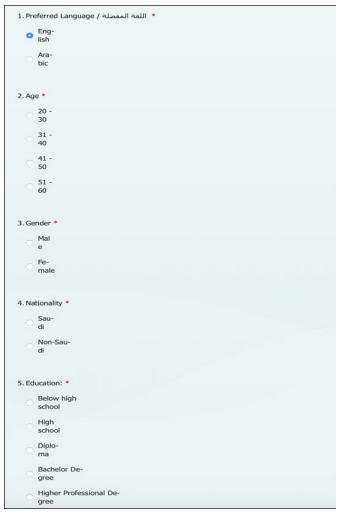
Appendix 1: The questionnaire: Multifactor Scale of Motivation at Work.