

Advances in Bioengineering and Biomedical Science Research(ABBSR)
ISSN: 2640-4133 | DOI: 10.33140/ABBSR

Impact Factor: 1.7

Research Article - (2020) Volume 3, Issue 3
Why Did Supermassive Black Holes Already Exist In The Early Universe?
Received Date: Nov 21, 2020 / Accepted Date: Nov 25, 2020 / Published Date: Dec 05, 2020
Copyright: ©Copyright: ©2020 Horst Fritsch. This is an open-access article distributed under the terms of the Creative Commons Attribution License, which permits unrestricted use, distribution, and reproduction in any medium, provided the original author and source are credited.
Abstract
Recent observations show that there are many more and much older black holes than previously known. What is particularly puzzling is that supermassive black holes containing more than a billion solar masses already existed in the very early universe. To date, there is no conclusive explanation for how such gravity monsters could have been created in such a short time after the Big Bang. The “Cosmic Time Hypothesis (CTH)” offers a solution to this problem [1]. According to this hypothesis, the early universe had much more time at its disposal than according to the “present-time scale” and the material-condensing forces were much stronger than now. Therefore, objects with extremely large masses could form in a very short “todaytime”.
Introduction
In recent years some extremely large black holes have been dis-covered, which are located in the center of extraordinarily lumi-nous quasars. Measured by the redshift of their light, they must be very far away from us, i.e. they must have formed in the earliest universe. Typical examples are:
• The quasar SMSS J2157. It is 12.6 billion light years away from us and is one of the most luminous in the entire universe. Its black hole contains 34 billion solar masses!
• The quasar 11342 + 0928 with a redshift z = 7.5, i.e. a distance of 13 billion light years. The black hole in its center contains 800 million solar masses.
According to conventional theories, there is currently no expla-nation for how quasars with such gigantic black holes could form in such a short time after the "big bang". A reason why they could form is provided by the < Cosmic Time Hypothesis > (CTH). It requires that time (in contrast to Newton's and Einstein's theory) is not symmetrical, but must be asymmetrical if the General Theory of Relativity (GR) is to apply to the entire cosmos.
The asymmetric cosmic time and its consequences give the answer to the question asked in the title.
The solution of the problem

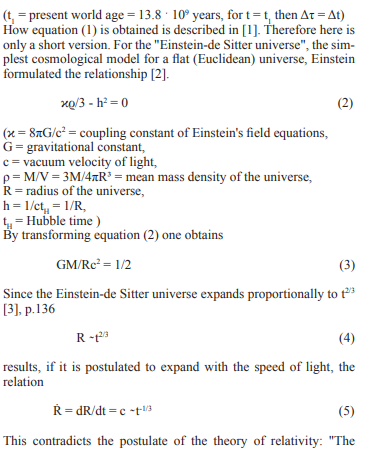
speed of light is a universal natural constant.
“ The question to be answered is: What do we understand by the term natural constant? Answer: Natural constants are physical quantities that can only be determined empirically and cannot be derived from a superordi-nate theory. The statement c = constant thus means that the mea¬sured numerical value of c must always be the same at any place and at any time. The problem now is to reconcile this requirement with the relationship (5).
As we know, Einstein relativized time twice. In the special theory of relativity (dependence of time on relative velocity) and in GR (dependence of time on gravitational potential). Now the question arises, if time has to be relativized a third time, so that the postu¬late c = constant is fulfilled also for the relation (5). So the task is to find a measure of time, which measures the speed of light at all times as a constant quantity, as Einstein recommended [2], p.30: "To complete the definition of time, the principle of the constancy of the speed of vacuum light can be used. Transferred to the rela¬tion (5), the requirement c = constant is fulfilled, if one introduces a time τ, which changes proportionally to the world radius. An idea, by the way, which Henning Genz already had [4]. Why not go all the way then and choose the radius of the universe as time parameter? Also R.A. Muller made similar considerations [5]. If we imagine the universe from the point of view of space-time, why should the universe actually only expand spatially? Why not also in time? Actually, it obviously does; with every second we add a new second to time. Perhaps we should think of the time stream more accurately as such a creation of new time. We are not imag¬ining a three-dimensional big bang, but a four-dimensional one, in which new space and new time are constantly being created.“
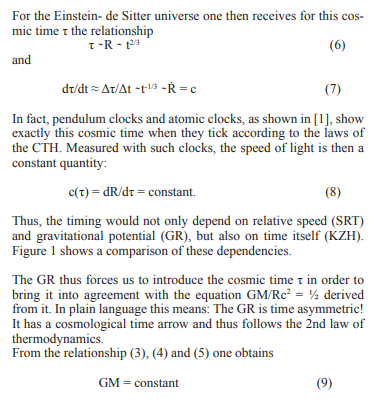
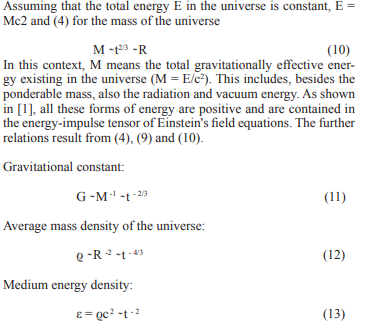
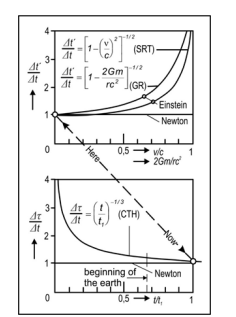
Figure 1: Time relation of SRT, GR and CTH (t1 = today) [1]
One could now object that time-varying "natural constants" (c ≈ t-1/3, G≈ t-2/3) are not compatible with GR. Since however c and G do not appear solitary in the field equations, but are linked together by the coupling constantx = 8πG/c2 = 1.86.10 -26 m/kg, there is no contradiction between GR and CTH.
The consequences resulting from the asymmetric cosmic time τ ultimately lead to a new cosmological model which, as shown in Figure 2, is fundamentally different from the current standard model of cosmology ( CDM model).
According to the CTH, the clock frequency of time relative to to¬day (t1) was higher in the past and will slow down in the future (Δτ/Δt = (t/t ) -1/3 ,see Figure 1).
However, the early quasars not only had a longer individual time span than that measured with the "today's time measure" avail¬able to them to form, but also the material-condensing forces were much greater than today because of G ≈ t -2/3 and ≈ t -2

Figure 2: CDM model and CTH model in comparison [1].
In the concrete case of the quasars mentioned above (SMSS 72157 and J11342 + 0928), the development possibilities shown in Fig¬ure 3 then arise. The first atoms (hydrogen) could form already from the recombination (380000 years after the "Big Bang") when time ran 33 times faster and gravity was 1090 times greater than today. This means that as much happened then in a billion years as happened now in 33 billion years. In the state in which we observe them now, time still ran 2.7 times faster, gravity was 7.3 times stronger and the average energy density was even 390 times high¬er than today. After the CTH, the early quasars were thus able to develop much faster than from the point of view of the established theories and thus take on the shape we observe today.
In addition, the CTH solves many other problems of cosmology, as shown in [1]. Examples are:
• The riddle of the cosmological constant (the CTH explains why the vacuum energy density calculated according to quan-tum field theory is larger by a factor of 10122 than observations suggest).
• According to the CTH there should be no dark energy ( = 0) possibly also no dark matter.
• The universe does not expand accelerated, but decelerated, if one interprets the measurements at SNIa using the CTH.
• The CTH does not require an inflationary phase in the early universe.
• According to the CTH, the strongest natural force (strong nu-clear force) and the weakest (gravitational force) were identical at the Planck time (tp ≈ 10-43 s) - when, according to the theory of supergravity, all natural forces were equally strongi.e. they had the same strength and range.
• In cosmic time there was no "big bang". The universe is in-finitely old.
• According to the CTH, the cosmic expansion is permanently in the unstable state of equilibrium, which is necessary for a long-term flat, evolutionarily developing universe.
• All these findings result from an extended interpretation of the GR, which is necessary, if one extends its validity to the entire universe.
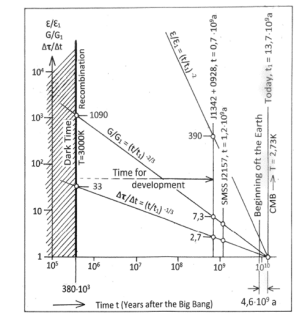
Figure 3: Development of supermassive black holes in the early universe
References
- Fritsch H, Schlücker E (2020) The Asymetric Cosmic Time - The Key to a New Cosmological Model. International Journal of Cosmology, Astronomy and Astrophysics 2: 97-111.
- Einstein A (1990) Grundzüge der Relativitätstheorie, 6th edition.
- Sexl RU, Urbantke HK (2002) Gravitation and cosmology. Springer Spectrum, Physics & Astronomy.
- Genz Henning (1999) Wie die Zeit in die Welt kam. Carl Hanser Verlag.
- Muller RA (2016) Now - The Physics of Time, WW Norton,New York/London.