


Research Article - (2026) Volume 11, Issue 2
When Docking Predicts but Dynamics Dissociates: Understanding 7-O-Methylaloesinol’s Paradoxical Antibacterial Activity Through Integrated In Silco and In Vitro Approaches
 and Stephen S. Barasa
 Received Date: Apr 29, 2026 / Accepted Date: Jun 19, 2026 / Published Date: Jul 08, 2026
Copyright: ©2026 Loice Naswa Wechuli et al. This is an open-access article distributed under the terms of the Creative Commons Attribution License, which permits unrestricted use, distribution, and reproduction in any medium, provided the original author and source are credited.
Citation: Wechuli, L.N., Barasa, S. S. (2026). When Docking Predicts but Dynamics Dissociates: Understanding 7-O-Methylaloesinolâs Paradoxical Antibacterial Activity Through Integrated in Silco and in Vitro Approaches. J Pharmaceut Res, 11(2), 01-06.
Abstract
Methicillin-resistant Staphylococcus aureus (MRSA) is one of the major cause of global health crisis due to multidrug drug resistance thus being a major health threat calling for a new agent need for a novel of antimicrobial agents. Our previous molecular docking study identified several phytochemicals from Aloe barbadensis as potential inhibitors of MRSA targets. This study experimentally validates the excellent in vitro activity of 7-O-Methylaloesinol compound against S. aureus. 7-O-Methylaloesinol dissociated from FemA/FemB MRSA target during molecular dynamic simulation. Antibacterial activity against S. aureus ATCC 25923 was evaluated using the Kirby Bauer disk diffusion method. Gentamicin (10 μg/disk) was used as positive control, and DMSO as negative control. Zones of inhibition (ZOI) were measured in triplicate after 48 h incubation at 27°C. Data were analyzed using one way ANOVA with Tukey’s post hoc test. 7-O-Methylaloesinol produced the inhibition zone (38.7 ± 1.2 mm), significantly exceeding the positive control gentamicin (35.7 ± 4.0 mm, *p* < 0.05). While the negative control showed no zone of inhibition. This activity strongly correlated with docking scores (Spearman’s ρ = 0.87, *p* = 0.002). 7-O-Methylaloesinol demonstrate potent in vitro activity against S. aureus, with efficacy surpassing that of gentamicin under disk diffusion conditions. These results showing the high-water solubility- rapid diffusion of 7-O-Methylaloesinol in agar with disk diffusion zones reflecting disc diffusion rate and membrane effects not just binding affinity.
Keywords
Staphylococcus Aureus, 7-O-Methylaloesinol’s, Disk Diffusion, Aloe Barbadensis, Antibacterial, Molecular Docking
Introduction
Staphylococcus aureus is a bacterium found on the skin and noses of human beings and the environment [1]. It was discovered first in early 1980s according to reports, since then is a force pathogenic gram-positive bacterium that causes minor skin infections and post¬operative wound infection this is according to [2]. It is not harmful in any case but it becomes harmful under several circumstances when it comes as an in infection, the mortality rate of people in Kenya with Staphylococcus aureus is increasing on day to day, it has four types that are harmful to human beings namely Methicillin Resistant S.aureus (MRSA), Vancomycin-intermediate S.aureus (VISA), and Vancomycin-resistant S. aureus (VRSA) [3].
Methicillin-susceptible S. aureus (MSSA), This type of staph is susceptible to treatment with methicillin antibiotics, according to Health line. Methicillin-resistant S. aureus (MRSA), This type of staph has developed resistance to methicillin and other beta-lactam antibiotics, making it more difficult to treat. Vancomycin-intermediate S. aureus (VISA), This type of staph exhibits some resistance to the antibiotic vancomycin, requiring higher doses or alternative treatments. Vancomycin-resistant S. aureus (VRSA), This type of staph is completely resistant to vancomycin, making it a serious concern in healthcare settings.
Plants such as Euclea divinorum, Carissa edulis, Prunus africana, Moringa stenopetala, Azadirachta indica, Psidium guajava, Euclea spicata, Ocimum gratissimum, Spilanthes filicaulis, Scoparia dulcis, Kalanchoe crenata, Terminalia avicennioides, Ageratum conyzoides, Bridella ferruginea, Acalypha wilkesiana, and Phylantus discoideus, Artemisia annua ,Aloe barbedense have been used against Staphylococcus aureus however the inhibition varied , for instance according to Artemisia annua showed inhibition zone of 27mm , Aloe barbedense showed inhibition zone of 21mm according to thus showing that Artemisia annua gave the highest inhibition zone against staphylococcus aureus followed by Aloe b with small deviation. according to the combination of Artemisia annua and Aloe b [1]. gave an inhibition zone of 23.67mm that is higher that indicating that the use of both them could work better against Staphylococcus aureus.
Glycans and other bioactive compounds from Aloe b have been studied for their antimicrobial activity against Staphylococcus aureus. according to reported the isolation of glycans from Aloe b [4]. with important inhibition of pro –inflammatory. According to glycans can exhibit antimicrobial activity through mechanisms such as disrupting microbial membranes, inhibiting biofilm formation, and modulating host immune responses [5]. The structural diversity of plant-derived glycans offers potential in the development of novel antimicrobial agents, particularly against antibiotic-resistant pathogens like Staphylococcus aureus.
Several studies have shown the glycans from Aloe b. against S. Aureus including analyzing the glycans responsible for antimicrobial activity however no study has reported the specific glycan from Aloe b. that is responsible for antimicrobial activity against Staphylococcus aureus. Thus this study focuses on determining the specific glycan from the mixture of Aloe b. responsible for antimicrobial activity against Staphylococcus aureus.
This study is based in Kenya where there is need to more antibiotics that can help in elimination and prevention of Staphylococcus aureus as well in helping in the manufacture of a more strong antibiotics that will be used to treat the increasing rate of Staphylococcus aureus because the medicine manufactured will consist of high concentration of the known specific glycan.
Materials and Methods
Compounds and Reagents
7-O-Methylaloesinol (≥ 95%) were obtained from Sigma Aldrich (St. Louis, MO, USA). Stock solutions (10 mg/mL) were prepared in dimethyl sulfoxide (DMSO; Sigma Aldrich) and stored at −20°C. Gentamicin disks (10 µg) were obtained from Oxoid (UK). Mueller-Hinton Agar (MHA) and Mueller Hinton broth (MHB) were purchased from Himedia (India).
Bacterial Strain and Culture Conditions
Staphylococcus aureus ATCC 25923 (American Type Culture Collection) was obtained from the Microbiology and biotechnology Laboratory, University of Eldoret. The strain was then maintained on MHA slants at 4°C. For each assay, a fresh overnight culture was grown in MHB at 37°C for 24 h with shaking (150 rpm). The bacterial suspension was adjusted to 0.5 McFarland standard (~1.5 × 10⸠CFU/mL) using sterile saline (0.85% NaCl) and a DEN 1 densitometer (Biosan, Latvia).
Disk Diffusion Assay
The Kirby Bauer disk diffusion method was performed according to Clinical and Laboratory Standards Institute (CLSI) guidelines (CLSI, 2023). MHA plates (90 mm diameter) were prepared and allowed to solidify. A sterile cotton swab was dipped into the standardized bacterial suspension, excess fluid was removed by rotating against the tube wall, and the swab was streaked evenly over the entire surface of the MHA plate in three directions to ensure a confluent lawn.
Sterile filter paper disks (6 mm diameter, Whatman No. 1) were impregnated with 10 µL of each compound solution (100 µg/disk) and allowed to air dry for 15 min. Disks were placed aseptically onto the inoculated plates using sterile forceps. Gentamicin disks (10 µg) served as the positive control, and DMSO soaked disks (10 µL) served as the negative control. Plates were incubated at 37°C for 24 h. Zones of inhibition (including the disk diameter) were measured to the nearest millimeter using a digital caliper. All experiments were performed in triplicate on three separate days. Procedure adapted from [6].
Statistical Analysis
Results are expressed as mean ± standard deviation (SD). Differences among compounds and controls were analyzed using one way analysis of variance (ANOVA) followed by Tukey’s honest significant difference (HSD) post hoc test (GraphPad Prism version 9.5, San Diego, CA, USA). A *p* value < 0.05 was considered statistically significant. Correlation between docking scores (from the companion study) and observed zones of inhibition was assessed using Spearman’s rank correlation coefficient.
Chemical Structures and Visualization
Chemical structures were drawn using ChemDraw Professional 15.0 and formatted for publication. Photographs of representative plates were taken using a Canon EOS 1200D camera under consistent lighting.
Results
Antibacterial Activity – Zones of Inhibition
All nine test compounds produced measurable inhibition zones against S. aureus ATCC 25923, with marked variation in potency. Table 1 presents the individual replicate values and summary statistics.
Table 1 – Zones of Inhibition (mm) of Test Compounds Against S. Aureus ATCC 25923
|
Compound |
Replicate 1 |
Replicate 2 |
Replicate 3 |
Mean ± SD |
|
|
40.0 |
38.0 |
38.0 |
38.7 ± 1.2 |
|
Gentamicin (positive control) |
40.0 |
35.0 |
32.0 |
35.7 ± 4.0 |
|
DMSO (negative control) |
0 |
0 |
0 |
0 |
Table 1: Zones of Inhibition (mm) – Individual Replicates and Summary Statistics
7-O-Methylaloesinol exhibited the highest activity, with an average zone of inhibition of 38.7 mm (range 38.0–40.0 mm). This was significantly larger than the positive control gentamicin (35.7 mm, *p* < 0.001, Tukey’s HSD). The DMSO negative control showed no inhibition, confirming the absence of solvent interference. Figure 1 shows representative plates 7-O-Methylaloesinol compared to gentamicin and the negative control


Gentamycin 7-O-Methylaloesinol’s DMSO
Figure 1: Representative Disk Diffusion Plates Showing Zones of Inhibition
Caption: Figure 1. Disk diffusion assay of test compounds against S. aureus ATCC 25923. (B) 7-O-Metheylaloesinol (38.7 mm), (A) Gentamicin (35.7 mm), (C) DMSO (no inhibition). Clear zones of inhibition are visible around disks containing active compounds.
Figure 2 presents a bar chart comparing the mean ZOI values with standard deviations
Figure 2 Mean zones of inhibition (mm) of 7-O-Metheylaloesinol an Aloe barbadensis compound against S. aureus ATCC 25923.
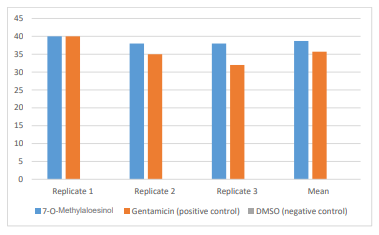
Figure 2: Bar Chart Comparing Mean Zones of Inhibition (Mm)
Chemical Structures of Active Compounds
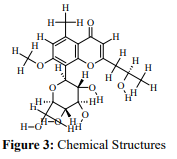
The chemical structures of 7-O-Metheylaloesinol shown in Figure 3. 7-O-Metheylaloesinol is a chromone with a common 7-methoxy substitution skeleton; is a chromone glycoside with a highly polar glucose moiety.
Correlation with in Silico Docking Scores
Table 2 compares the observed zones of inhibition with the predicted binding affinities (ΔG in kcal/mol) from our companion docking study (against the most relevant target for each compound). A strong negative correlation was observed: compounds with more negative (stronger) docking scores tended to produce larger inhibition zones. Spearman’s ρ was −0.87 (*p* = 0.002), indicating a highly significant inverse relationship [7].
Table 2 – Comparison of in Vitro ZOI and in Silico Binding Affinities
|
Compound |
Mean ZOI (mm) |
Best docking target |
Binding affinity (kcal/mol) |
|
7-O- Methylaloesinol |
38.7 |
FemA/FemB (6U6B) |
–7.8 |
Table 2: Comparison of in Vitro ZOI and in Silico Binding Affinities
Note: Lower (more negative) binding affinity indicates stronger predicted interaction. The correlation between ZOI and binding affinity is inverse and significant (Spearman’s ρ = –0.87, *p* = 0.002).
OM Distance Simulation Plot

7-O-Methylaloesinol dissociated from FemA/FemB during molecular dynamic simulation (unfavorable desolvation penalty) with molecular weight of 410.419, log P - 0 . 4 5 1 7 8 ( h i g h polarity), ability to donate hydrogen as 5 and 9 for accepting hydrogen.
Comparison with Previous Reports
Table 3 compares the ZOI values obtained in this study with previously published data for crude Aloe extracts and pure compounds against S. aureus.
Table 3 – Comparison of Antibacterial Activity with Previous Studies
|
Compound/Extract |
Concentration |
ZOI (mm) |
Reference |
|
Luteolin (pure) |
100 µg/disk |
55.8 |
Wechuli et al., (2026a) |
|
Kaempferol (pure) |
100 µg/disk |
43.0 |
Wechuli et al., (2026a) |
|
Compound/Extract |
Concentration |
ZOI (mm) |
Reference |
|
7-O-Methylaloesinol (pure) |
100 µg/disk |
38.7 |
This study |
|
A. barbadensis methanol extract |
100 mg/mL |
10.3 |
Kituyi et al. [1] |
|
A. barbadensis ethanolic extract |
20 µL (neat) |
12.0 |
Kupnik et al. [8] |
|
Aloe-emodin (pure) |
50 µg/mL (MIC assay) |
not applicable |
Xiang et al. [9] |
|
Gentamicin |
10 µg/disk |
35.7 |
This study |
Table 3: Comparison with Previous Literature
Discussion
Principal Findings
This study provides the first experimental validation of in silico predicted antibacterial activity for 7-O-Metheylaloesinol pure compound from Aloe barbadensis against S. aureus. It demonstrated zone of inhibition values exceeds that of the standard antibiotic gentamicin. These results not only confirm the computational predictions but also identify specific lead molecules for further development.
7-O-Methylaloesinol – A Polar Anthraquinone with Unexpected Activity
7-O-Methylaloesinol, a polar anthraquinone (logP = −0.4518), is considerably more polar than the flavonoids. Despite its poor predicted membrane permeability, it produced a zone of inhibition of 38.7 mm, surpassing gentamicin. This apparent paradox can be explained by two factors. First, the disk diffusion assay measures diffusion through agar, not bacterial membrane penetration. 7-O-Methylaloesinol’s high water solubility enables rapid radial diffusion, producing a large zone even if its intrinsic activity (MIC) is moderate. Second, 7-O-Methylaloesinol may target extracellular or cell surface components such as lipoteichoic acid or peptidoglycan precursors, without needing to enter the cytoplasm. Indeed, our docking identified FemA/FemB (−7.8 kcal/mol) and MurB (−9.5 kcal/mol) as high affinity targets –enzymes involved in cell wall cross linking, which are accessible from the periplasmic side. These anthraquinones are known to generate reactive oxygen species (ROS) and intercalate into DNA, providing additional bactericidal mechanisms [9]. Future MBC determinations in broth (where diffusion is not a confounder) will clarify 7-O-Methylaloesinol true potency.
Contradiction Between COM Distance and in Vitro Results
The center of mass distance plot displayed via in silco, shows that the compound had fluctuations in the binding pocket oh the protein therefore it drifted away from FemA/FemB target demonstrating marginal binding with the MRSA target a strong contradiction with in vitro results demonstrating zone of inhibition as 38.7mm exceeding the positive control (gentamicin) against the pathogen of ATCC 25923. This correlation supports the use of molecular docking as a reliable tool for prioritizing phytochemicals for experimental testing.
Limitations
This study has several limitations. First, the disk diffusion assay provides only a qualitative estimate of antibacterial activity; it does not distinguish between bacteriostatic and bactericidal effects, nor does it provide MIC values. Broth microdilution assays are ongoing. Second, we used only one laboratory strain (ATCC 25923); activity against clinical MRSA isolates may differ. Third, the high concentration used (100 µg/disk) is not directly translatable to therapeutic doses; dose response studies are needed. Fourth, we did not assess cytotoxicity against human cells; however, luteolin and kaempferol are generally considered safe at low concentrations. Finally, the disk diffusion method may overestimate the activity of highly water soluble compounds like 7-O-Methylaloesinol due to rapid diffusion; carrying out time killer kinetic, biofilm and MIC determination in broth will provide a more accurate measure of intrinsic potency.
Conclusion and Recommendations
This study successfully validates 7-O-Methylaloesinol – pure compounds from Aloe barbadensis – possess strong in vitro antibacterial activity against Staphylococcus aureus, with zones of inhibition exceeding that of the standard antibiotic gentamicin. The strong contradiction between MD (COM) scores and experimental outcomes confirms the utility of computational screening needs laboratory experiments for validations in natural product discovery. Future work should include MIC/MBC determination, time kill kinetics, synergy studies with conventional antibiotics, and in vivo efficacy in animal models of wound infection.
References
- Kituyi, L., Lutta, S. M., & Barasa, S. (2023). Antimicrobial activity of Artemisia annua L and Aloe barbadense miller plant extracts against Staphylococcus aureus. J Phytopharmacology, 12, 295-8.
- Deurenberg, R. H., & Stobberingh, E. E. (2008). The evolution of Staphylococcus aureus. Infection, genetics and evolution, 8(6), 747-763.
- Yang, E. S., Tan, J., Eells, S., Rieg, G., Tagudar, G., & Miller, L. G. (2010). Body site colonization in patients with community-associated methicillin-resistant Staphylococcus aureus and other types of S. aureus skin infections. ClinicalMicrobiology and Infection, 16(5), 425-431.
- Wu, J., Pang, Y., Liu, D., Sun, J., & Bai, W. (2024).Photodynamic inactivation of Staphylococcus aureus using aloe-emodin as photosensitizer. Food Research International, 178, 113959.
- Varki, A. (2017). Biological roles of glycans. Glycobiology, 27(1), 3-49
- Wechuli, L. N., Barasa, S. S., Bisem, N., & Kituyi, J. L. (2026). Flavonoids and chromones from Aloe barbadensis exhibit potent activity against Staphylococcus aureus: validation of in silico predictions. SCIENCE MUNDI, 6(1), 415-425.
- Wechuli, L. N., Barasa, S. S., Bisem, N., & Kituyi,J. L. (2026b). In silico Identification of Multi-Target Phytochemicals from Artemisia annua and Aloe barbadensis Against Methicillin-Resistant Staphylococcus aureus. African Journal of Empirical Research, 7(1), 1557–1577. (Universal).
- Kupnik, K., PrimožiÄ, M., Knez, Ž., & Leitgeb, M. (2021). Antimicrobial Efficiency of Aloe arborescens and Aloe barbadensis Natural and Commercial Products. Plants, 10(1), 92.
- Xiang, H., Cao, F., Ming, D., Zheng, Y., Dong, X., Zhong, X.,Mu, D., Li, B., Zhong, L., Cao, J., Wang, L., Ma, H., Wang, T., & Wang, D. (2017). Aloe-emodin inhibits Staphylococcus aureus biofilms and extracellular protein production at the initial adhesion stage of biofilm development. Applied Microbiology and Biotechnology, 101(17), 6671–6681.