

Archives of Clinical and Medical Microbiology(ACMMJ)
ISSN: 2835-9968 | DOI: 10.33140/ACMMJ
Impact Factor: 1.0

Research Article - (2024) Volume 3, Issue 3
What Is the Relationship Between Emotional Intelligence, Conflict Management Abilities, and Workplace Stress and Burnout among Health Centers? Systematic Literature Review
Received Date: Oct 04, 2024 / Accepted Date: Nov 01, 2024 / Published Date: Nov 07, 2024
Copyright: ©©2024 Ashenafi Woldemichael Woime. This is an open-access article distributed under the terms of the Creative Commons Attribution License, which permits unrestricted use, distribution, and reproduction in any medium, provided the original author and source are credited.
Citation: Woime, A. W. (2024). What Is the Relationship Between Emotional Intelligence, Conflict Management Abilities, and Workplace Stress and Burnout among Health Centers? Systematic Literature Review. Archives Clin Med Microbiol, 3(3), 01-12.
Abstract
A systematic literature review of 29 articles was carried out to assess the relationship between emotional intelligence (EI), conflict management abilities, work-related stress, and burnout in healthcare settings. The review intends to analyze the geographical distribution of these research, the findings assessed, and the importance of EI in conflict resolution. It analyzes the many forms of disputes that arise within healthcare organizations, the measuring techniques used to test emotional intelligence, and the role of EI in resolving workplace conflicts. The findings imply that regional and cultural characteristics play a crucial role in establishing conflict resolution methods and represent the emotional intelligence of healthcare professionals in managing organizational disparities. The results also suggest that conflict management styles, particularly those that promote teamwork and compromise, are useful in resolving workplace conflicts, with emotional intelligence playing a significant role in this process. The investigation reveals that healthcare workers with higher levels of EI are more skilled at managing stress, lowering burnout, and building constructive team dynamics. This knowledge enhances our comprehension of current studies on emotional intelligence and conflict management in healthcare settings. The study also emphasizes gaps in the literature, including the need for longitudinal studies, evaluation techniques, and further research on frontline healthcare professionals.
Keywords
Emotional Intelligence, Conflict Management, Workplace Stress, Burnout, Healthcare
Introduction
Existing Knowledge
The relationship between emotional intelligence (EI), conflict management (CM) abilities, and job stress and burnout among healthcare professionals has been a key subject of research for more than a decade. In the demanding healthcare system, understanding how these factors interact is essential to the health of health professionals and the provision of appropriate patient care.
Emotional Intelligence and Its Role in Healthcare
Emotional intelligence is significantly characterized as the capacity to notice, analyze, control, and regulate emotions in oneself and others. In healthcare settings, where emotional demands are high owing to patient care and interpersonal interactions, EI plays a significant role in affecting work performance, stress levels, and conflict management.
According to the studies by Aqqad et al., there is a positive correlation between increased emotional intelligence and better conflict resolution skills in healthcare personnel, especially nurse managers [1]. Nurse Managers with high emotional intelligence (EI) are better equipped to handle interpersonal challenges frequently occurring in healthcare contexts since their jobs involve a lot of strain. These people are better at identifying the underlying emotions in disputes and know how to use the right tactics to bring them to a successful conclusion
Arnone et al. go into more specifics on how emotional intelligence prevents burnout among healthcare professionals [2]. The research suggests that people with high emotional intelligence are less likely to burn out—a condition marked by depersonalization, emotional tiredness, and a lessened sense of personal accomplishment. Emotional intelligence helps one build emotional resilience and reduce the harmful effects of work-related stress mostly.
Conflict Management Abilities in Healthcare
Conflict management is essential for maintaining a positive work environment in healthcare. How conflicts are handled can greatly affect job satisfaction, team unity, and overall workplace culture. In 2008 Morrison found a link between emotional intelligence and how people handle conflicts [3]. Those with higher emotional intelligence tend to use more positive conflict management strategies, like problem-solving and collaboration, instead of avoiding conflicts or being competitive.
Aseery, Mahran, and Felemban examine the relationship between EI and conflict management strategies from the nurse managers' perspective [4]. The results support other studies suggesting that high emotional intelligence nurses' managers are more likely to apply team conflict management techniques. This is critical in healthcare environments with interdisciplinary teams where patient care depends on collaboration.
In addition, Rezvani, Barrett, and Khosravi discovered that emotional intelligence increases trust and minimizes conflict among teams, consequently strengthening team performance [5]. Their study emphasizes that team emotional intelligence can reduce interpersonal disputes and promote team performance, further underscoring the importance of EI in managing workplace dynamics.
Workplace Stress and Burnout
The connection between emotional intelligence and workplace stress management has been explored extensively. Healthcare professionals, especially nurses, are frequently exposed to stressful and emotionally draining situations. According to Chikobvu and Harunavamwe, emotional intelligence and resilience are critical factors in enhancing work engagement and reducing stress among nurses [6]. Emotional intelligence enables healthcare workers to regulate their emotions better, which is essential in preventing stress from escalating into burnout.
Burnout is a serious issue in healthcare since it leads to decreased work satisfaction, greater turnover rates, and reduced quality of patient care. Lu and Shorey performed qualitative systematic research that illustrates how nurses consider emotional intelligence as a beneficial skill in handling the emotional demands of healthcare environments [7]. Nurses with greater EI reported feeling more suited to handle stress and emotional problems, minimizing their risk of burnout.
A study by Hirai and Yoshioka discovered that nurse managers with higher levels of emotional intelligence had more positive work perceptions and were better able to cope with the emotional demands of their role [8]. This, in turn, reduced their experience of workplace stress and improved their overall job satisfaction.
A recent study has highlighted a significant and positive connection between emotional intelligence, conflict management skills, and the management of job-related stress and burnout in healthcare environments. Emotional intelligence enables healthcare professionals to regulate their own emotions while also improving their capacity to resolve conflicts and navigate challenging situations effectively. Finally, this helps healthcare workers and the patients they treat by reducing burnout, raising job satisfaction, and improving team dynamics.
As the healthcare industry continues to evolve, fostering emotional intelligence through training and professional development could be a key strategy in addressing the challenges of workplace stress, conflict, and burnout, ensuring a healthier and more productive workforce.
Limitations on existing Knowledge
The current understanding of how emotional intelligence (EI) relates to conflict management skills and the levels of stress and burnout in healthcare professionals reveals important insights. Nonetheless, there are still several limitations that prevent a comprehensive grasp of these interactions.
Contextual and Cultural Limitations
The current understanding of how emotional intelligence (EI) relates to conflict management skills and the levels of stress and burnout in healthcare professionals reveals important insights. Nonetheless, there are still several limitations that prevent a comprehensive grasp of these interactions. One recurring limitation in the literature is the contextual and culturally particular nature of research projects. Studies by Al-Hamdan et al. and Aqqad et al., for instance, focus on specific national settings, like Jordanian banks and nurse managers, therefore limiting the application of their results to other cultural contexts [9,1]. Healthcare environments vary significantly due to differences in cultural norms, organizational frameworks, and healthcare legislation, complicating the generalization of findings. Ranjbar and Bahariniya highlight the influence of particular social and cultural factors on emotional intelligence and conflict management techniques within Iranian healthcare institutions [10].
Methodological Constraints
Many current studies apply cross-sectional designs that capture the correlations between emotional intelligence (EI), conflict management, and burnout at a particular moment in time [11,8]. This decreases the capacity to establish causal relationships. While less widespread, a longitudinal research would offer a broader picture of how EI and conflict management strategies effect burnout and job stress over time. Additionally, many of this study depends on self-reported data, which could be biased, as participants could underestimate their burnout symptoms owing to social desirability or exaggerate their emotional intelligence [12].
Lack of Experimental Interventions
Although studies like [13] highlight the potential of emotional intelligence training to improve workplace outcomes, there is a limited number of experimental intervention studies that rigorously assess the effectiveness of EI training in reducing conflict and burnout. Most research examines correlations, rather than performing controlled tests where the influence of EI enhancement on conflict management and stress reduction may be explicitly quantified.
Overemphasis on Managers
According to Al-Hamdan et al. and Aseery et al., the existing literature often focuses on nurse managers and other healthcare leaders leaving a gap in understanding how EI and conflict management affect frontline healthcare workers [9,4]. Frontline staff members may encounter different pressures and conflicts compared to managers, and their emotional intelligence might play a key role in managing workplace stress and burnout.
Inconsistent Definitions and Measurements of EI
According to Lee & Wong, there are different ways that emotional intelligence (EI) is defined and assessed in research [14]. Some studies take a broad view of EI, while others focus on specific traits like emotional regulation or empathy. This variety makes it challenging to compare findings across studies and hinders the development of a cohesive understanding of how EI relates to conflict management and burnout.
In conclusion, although recent research highlights the importance of emotional intelligence (EI) in the healthcare system, there is still a significant knowledge gap. To address these issues, researchers need to consider broadening the cultural focus of their investigations, utilizing experimental and longitudinal techniques, and placing greater emphasis on the perspectives of front-line healthcare providers.
The Relationship between Emotional Intelligence, Conflict Management Abilities, and Workplace Stress and Burnout among Health Centers
The healthcare environment is naturally high-stakes, requiring not just technical skills but also outstanding interpersonal and emotional management abilities. Emotional intelligence (EI), conflict resolution skills, and the challenges of workplace stress and burnout are deeply linked in health centers, where healthcare professionals encounter significant pressures every day. Grasping the connection between these elements is vital for improving employee well-being and providing the best possible patient care.
Emotional Intelligence in Healthcare
Emotional intelligence (EI), often defined as the ability to recognize, understand, and manage one’s own emotions and the emotions of others, is critical in healthcare settings. In 1995, Goleman highlighted the significance of emotional intelligence (EI) in various social and professional contexts [15]. According to Salovey and Mayer, healthcare employees with high emotional intelligence are better able to build strong connections with patients, navigate challenging scenarios effectively, and foster positive relationships with their coworkers [16]. Empathy, a core feature of EI, helps healthcare workers obtain a better understanding of patient issues, thereby boosting patient satisfaction [17].
Furthermore, emotional intelligence (EI) is vital in assisting healthcare workers in managing the emotional stress they experience. Individuals with higher emotional intelligence (EI) tend to manage stress more efficiently, keep emotional balance, and demonstrate perseverance despite meeting hurdles [18]. Consequently, healthcare personnel with inferior emotional intelligence are at a higher risk of feeling stress and burnout [19].
Conflict Management Abilities
It's important to keep in mind that conflict is a common part of working in healthcare. When people are under pressure, dealing with heavy workloads, and have different perspectives, disagreements can arise among colleagues. Effectively resolving these issues is crucial for creating a positive work atmosphere and making sure that healthcare workers receive the support they need for their mental well-being. Research reveals that those with high EI are more likely to employ constructive conflict management methods, such as collaboration and compromise, rather than avoidance or confrontation [20].
Conflict management abilities are closely linked to emotional intelligence. Healthcare professionals with higher EI are better equipped to manage conflicts because they can regulate their emotions, empathize with others’ perspectives, and communicate more effectively [3]. These skills enable them to de-escalate conflicts, reduce interpersonal tension, and foster positive team dynamics. In contrast, poor conflict management can exacerbate stress, contribute to a toxic working environment, and lead to emotional exhaustion [21].
Workplace Stress and Burnout
In several healthcare settings, addressing stress and burnout among workers is a widespread topic. Healthcare personnel commonly experience burnout owing to causes including long working hours, emotional pressures, and the obligation to deliver the best treatment possible. This burnout, which manifests as emotional tiredness, depersonalization, and a reduced sense of personal accomplishment, can have a significant impact on healthcare workers' well-being and the quality of care they provide to patients.
The connection between emotional intelligence, conflict management, and burnout is well established. Healthcare workers with high EI are more skilled at identifying and controlling their stress levels, which helps to decrease the risk of burnout [22]. By skillfully regulating emotions and resolving disputes, these individuals can sustain greater levels of work satisfaction and emotional well-being. On the other hand, people with low emotional intelligence tend to experience higher levels of stress, especially when they don't possess the necessary skills to manage conflicts in interpersonal situations [23].
Unresolved conflicts can lead to significant workplace stress and may hasten burnout. When disagreements are inadequately managed, they generate a hostile work atmosphere, heighten emotional strain, and impair team cohesion [24]. Health facilities that foster a culture of open communication and train their personnel with conflict resolution skills can significantly reduce the likelihood of employee burnout.
Conclusion
In health centers, emotional intelligence and conflict management abilities are critical determinants of workplace stress and burnout. Professionals with high emotional intelligence (EI) are better equipped to handle their emotions, prevent conflicts from escalating, and deal with the pressures of their careers, ultimately reducing stress and the risk of burnout. Healthcare facilities that encourage the growth of EI and conflict management skills among their staff can build stronger, more adaptable teams, leading to improved patient care and employee well-being.
Methodology
This systematic literature review (SLR) explores how emotional intelligence (EI) relates to conflict management skills, workplace stress, and burnout in health centers. The methodology used for this review follows a structured approach to identify, analyze, and synthesize relevant literature from multiple databases. The steps outlined below detail the procedures implemented in this review.
Search Strategy
A thorough search was carried out to find relevant studies published from 2018 to 2023. The search specifically focused on peer-reviewed journal articles that examined emotional intelligence, conflict management, workplace stress, and burnout in health centers. The following databases were utilized for this search: Google Scholar, PubMed, MEDLINE via PubMed, BioMed Central, Wiley Online Library, ResearchGate, Frontiers, IPRJB, and IJRSI. These databases were chosen for their significance in the fields of psychology, healthcare management, nursing, and conflict management.
Inclusion and Exclusion Criteria
The following criteria were established to include or exclude studies:
Inclusion Criteria:
• Studies published in peer-reviewed journals between 2018 and 2023.
• Research focused on health center environments, including hospitals, clinics, and other healthcare facilities.
• Studies that examine emotional intelligence in relation to conflict management, workplace stress, and burnout.
• Research focusing on healthcare workers and support staff.
• Studies available in English.
Exclusion Criteria:
• Studies outside the healthcare context.
• Research focusing exclusively on patient emotional intelligence or patient experience.
• Studies not published in peer-reviewed journals.
• Articles without an explicit focus on emotional intelligence, conflict management, stress, or burnout.
Data Extraction
Data were extracted from the identified studies using a standardized form.
Data Synthesis
The data extracted from the various studies were synthesized to identify common themes, findings, and gaps in the literature. Studies were grouped by their focus on emotional intelligence, conflict management, and workplace stress or burnout. Key variables such as leadership styles, job satisfaction, workplace bullying, and healthcare management were analyzed in relation to their impact on emotional intelligence and conflict resolution among healthcare workers.
Geographical and Sectoral Distribution
The review also examined the geographical distribution of the studies, with a particular focus on countries such as Japan, India, South Korea, Italy, Turkey, Singapore, Iran, the USA, and others. Sectoral distribution was also considered, with studies focusing on health centers, nursing, and conflict management in different healthcare settings.
Results and Interpretations
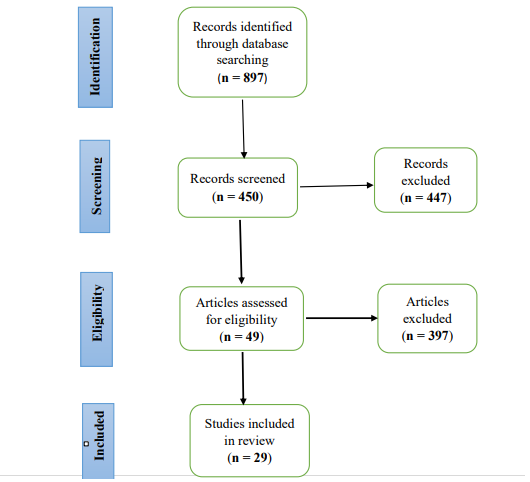
Initially, a total of 897 records were identified through database searching. In the first screening, 447 articles were excluded that were not deemed acceptable within the review parameters, and three articles were duplicates. Following the screening, 49 articles were further assessed for eligibility. Of these, 397 were excluded because they did not meet the eligibility criteria. Finally, 29 studies were included in the systematic review, where n = 29 (Figure 1).
Geographical Setting and Research Area
The geographical setting of the studies listed in the document spans multiple countries, reflecting a global interest in the relationship between emotional intelligence, conflict management, workplace stress, and burnout in healthcare settings. These studies are conducted in both developed and developing nations, covering regions such as Japan, India, Italy, South Korea, Turkey, Singapore, Iran, Canada, Australia, Jordan, and South Africa, among others. The diversity of countries indicates that these issues are of universal concern in healthcare management, regardless of economic or cultural differences.
The research area focuses primarily on healthcare management, with a particular emphasis on nurses and nursing management in various contexts. Emotional intelligence and conflict management are recurrent themes, especially in relation to mitigating workplace stress, bullying, and job satisfaction. Studies also address broader topics such as leadership styles, team management, and the impact of violence against healthcare workers in conflict zones. Databases like Google Scholar, PubMed, and Wiley Online Library reveal that the studies are well documented and accessible to academic and medical research communities across the globe. This extensive access underscores the crucial roles of emotional intelligence and conflict management in supporting work well-being in healthcare settings worldwide.
|
S/
No |
Author(s) |
Year |
Journal Name |
Country |
Citations |
Databases |
Subject Area |
|
1 |
Hirai, Yuka; Yoshioka, Shin-ichi |
2020 |
Yonago Acta Medica |
Japan |
11 |
Google Scholar |
Hirai, Yuka; Yoshioka, Shin-ichi |
|
2 |
Saikia, Monalisa; George, Linu Sara; Unnikrishnan, Bhaskaran; Nayak, Baby |
2024 |
International journal of mental health |
India |
9 |
Google Scholar, MEDLINE via PubMed, |
Emotional Intelligence, Nurses, Training Programs |
|
3 |
Haar, Rohini J.; Read, Róisín; Fast, Larissa |
2021 |
Conflict and Health |
Multiple (Global) |
82 |
Google Scholar, BioMed PubMed Central, |
Violence against healthcare in conflict, Human Rights |
|
4 |
Jang, Insil; Jang, Sun Joo; Chang, Sun Ju |
2024 |
Journal of Nursing Management |
South Korea |
- |
PubMed, |
Workplace Bullying, Emotional Intelligence, Meritocracy |
|
5 |
Specchia, Maria Lucia; Cozzolino, Maria Rosaria |
2021 |
International journal of environmental.... |
Italy |
387 |
Google Scholar, PubMed, |
Leadership Styles, Job Satisfaction, Nurses |
|
6 |
Sakalli, Dilek; Timuçin, Arzu |
2023 |
Florence Nightingale Journal of Nursing |
Turkey |
5 |
Google Scholar, PubMed, |
Emotional Intelligence, Nurse Managers |
|
7 |
Lu, Yen Ling; Shorey, Shefaly |
2021 |
Journal of Nursing Management |
Singapore |
25 |
Google Scholar, PubMed, |
Emotional Intelligence, Nursing |
|
8 |
Mirzaei, Alireza; Imashi, Reza; Saghezchi, Roghayeh Yaghoobi; Jafari, Mohammad Javad; Nemati-Vakilabad, Reza |
2024 |
BMC nursing |
Iran |
- |
PubMed, |
Nursing, Healthcare Management |
|
9 |
Carminati, Lara |
2021 |
Frontiers in sociology |
Italy |
38 |
Google Scholar, Frontiers |
Sociology, Psychology |
|
10 |
Nadler, Ruby; Carswell, Julie J.; Minda, John Paul |
2020 |
Frontiers in psychology |
Canada |
96 |
Google Scholar, Frontiers |
Psychology |
|
11 |
Winardi, Michael Aswin; Prentice, Catherine; Weaven, Scott |
2022 |
Journal of Global Scholars of Marketing Science |
Australia |
42 |
Google Scholar |
Marketing, Management |
|
12 |
Ullah, Rahman |
2022 |
International Journal of Conflict Management |
Pakistan |
25 |
Google Scholar, |
Conflict Management |
|
13 |
Sloan, Monique; Geldenhuys, Madelyn |
2021 |
SA Journal of Industrial Psychology |
South Africa |
16 |
Google Scholar, |
Industrial Psychology |
|
14 |
Krishnakumar, Sukumarakurup; Perera, Buddhika; Hopkins, Kay; Robinson, Michael D. |
2019 |
Conflict Resolution Quarterly |
USA |
33 |
Google Scholar, Wiley Online Library |
Conflict Resolution |
|
15 |
Ma, Jie; Liu, Cong |
2019 |
International journal of conflict management |
China |
41 |
Google Scholar, |
Conflict Management |
|
16 |
Aqqad, Noor; Obeidat, Bader; Tarhini, Ali; Ra',
N.A.; Masa', Ed; Deh, N.A. |
2019 |
International Journal of Human Resources Development and Management |
Jordan |
150 |
Google Scholar |
Human Resource Management |
|
17 |
Rezvani, Azadeh; Barrett, Rowena; Khosravi, Pouria |
2019 |
Team Performance Management: An International Journal |
Australia |
170 |
Google Scholar |
Team Management |
|
18 |
Lee, Changyu; Wong, Chi-Sum |
2019 |
Journal of Management & Organization |
Multiple (Hong Kong/ China) |
127 |
Google Scholar |
Organization Management |
|
19 |
Arnone, R; Cascio, M I; Parenti, I |
2019 |
European Journal of Public Health |
Italy |
9 |
Google Scholar, Research Gate, |
Public Health |
|
20 |
Aseery, Manal; Mahran, Sabah; Felemban, Ohood |
2023 |
Cureus |
Saudi Arabia |
322 |
Google Scholar, Cureus, PubMed Central |
Nursing Management |
|
21 |
Assi, Mohammad Dar; Eshah, Nidal F |
2023 |
British Journal of Healthcare Management |
Jordan |
4 |
Google Scholar |
Healthcare Management |
|
22 |
Chikobvu, Pardon; Harunavamwe, Martha |
2022 |
SA Journal of Industrial Psychology |
South Africa |
23 |
ResearchGate, Google Scholar, |
Psychology |
|
23 |
Mutongi, Chipo; Muchuri, Tinashe; Nyazema, Majory Tinotenda; Kandufa, Precious |
2024 |
International Journal of Research and Scientific Innovation |
Zimbabwe |
|
IJRSI |
Conflict Management |
|
24 |
Soriano-VAzquez, Iris; Cajachagua Castro, Mayela; Morales-GarcIa, Wilter C. |
2023 |
Frontiers in Public Health |
Peru |
13 |
Google Scholar, Frontiers |
Public Health, Nursing |
|
25 |
Zenawi, Meles |
2024 |
Journal of Conflict Management |
Ethiopia |
16 |
IPRJB |
Conflict Management |
|
26 |
Ranjbar, M., & Bahariniya, S. |
2021 |
British Journal of Healthcare Management |
Iran |
5 |
Google Scholar, |
Conflict Management |
|
27 |
Salem, S., Safan, S., & Nassar, R. |
2018 |
Menoufia Nursing Journal |
Egypt |
7 |
Google Scholar, |
Conflict Management |
|
28 |
Al-Hamdan, Z., Adnan Al-Ta’amneh, I., Rayan, A., & Bawadi, H |
2019 |
Journal of Nursing Management |
Jordan |
116 |
Google Scholar, Wiley Online Library |
Conflict Management |
|
29 |
Morrison, J. |
2008 |
Journal of Nursing Management |
USA |
331 |
Google Scholar, Wiley Online Library |
Conflict Management |
Table 1: Author(s), Year, Journal and Location of 29 Studies on the Relationship between Emotional Intelligence, Conflict Management Abilities, and Workplace Stress and Burnout among Health Centers
Discussion
The systematic literature review examining the connection between emotional intelligence (EI), conflict management skills, and workplace stress and burnout in health centers uncovers several important findings. Emotional intelligence emerges as a vital factor influencing both conflict management and the alleviation of stress in healthcare environments. High EI enables healthcare professionals to navigate interpersonal challenges effectively, thereby reducing the likelihood of burnout and promoting a healthier work environment [26].
The research studies show that training programs that focus on emotional intelligence (EI) can improve conflict resolution skills, leading to better job satisfaction and patient care [28]. This is especially important in high-stress environments like hospitals and clinics, where the ability to manage conflicts can reduce stress and improve team dynamics [29]. It's interesting to note that the combination of EI and meritocracy suggests that organizations that value emotional competencies may build more resilient and adaptable teams [7].
The literature also points out considerable study gaps, notably regarding the long-term impacts of emotional intelligence (EI) training on burnout and stress management. A lot of the available research is cross-sectional, which hinders our knowledge of how EI changes workplace dynamics over time [30,5]. Furthermore, the cultural environment in which healthcare professionals operate can considerably affect the application and success of EI and conflict management measures [6].
Future Agenda
Longitudinal Studies on EI Impact
Most well-known studies are cross-sectional, which limits understanding of how emotional intelligence affects over-time tiredness and conflict management. Longitudinal approaches should be used in next studies to track these mechanisms [30,31].
Cultural Context Variability
Research examining how cultural variations impact the use and efficacy of emotional intelligence and conflict management methods in various healthcare environments is lacking [6,11].
Integration of EI and Conflict Management Training
Although individual training courses are common, little study has been done on integrated programs combining emotional intelligence and conflict management techniques especially for healthcare professionals [27,5].
Standardization of Measurement Tools
Many times, current research test emotional intelligence and conflict management skills using different methods, which results in conflicting results. Comparability among research depends on standardizing measuring tools [29,32].
Impact on Patient Outcomes
The direct impact of emotional intelligence of healthcare providers on patient care quality and outcomes is not often investigated. Investigating this association can help to emphasize the need of emotional intelligence in the provision of healthcare [33].
Role of Leadership in EI Development
The impact of different leadership styles on the emotional intelligence development of healthcare professionals has not been fully researched. Future study might explore how different leadership methods either enhance or inhibit emotional intelligence within teams [31,34].
Sector-Specific Studies
Much of the existing research is broad and applicable to all healthcare situations. Upcoming research should focus on specific areas like emergency care and mental health to discover distinct issues and potential correlations to emotional intelligence and conflict management [35,13].
Technological Integration
As telehealth and digital communication technologies become increasingly popular, it is essential to explore how emotional intelligence and conflict management can be effectively utilized in virtual environments [29,28].
Effectiveness of EI Training Programs
Although training programs are accessible, there is a striking paucity of detailed assessment studies testing their usefulness in decreasing burnout and promoting conflict management. Future research should prioritize outcomes and best practices [1,7].
Diversity and Inclusion
There is a significant gap in knowing how emotional intelligence may be exploited to increase diversity and inclusivity within healthcare companies. Research might study how EI training might assist eliminate biases and enhance team interactions [36-42,5].
Acknowledgements
I would like to express my heartfelt gratitude to Rev. Goferie Adisho Shato (PhD) for his invaluable advisership throughout my systematic literature review. His expert guidance and insightful feedback significantly enhanced the quality of my work. Shato's ability to clarify complex concepts and provide constructive criticism fostered a productive research environment. I am particularly grateful for his patience and encouragement during challenging phases of the project. His commitment to academic excellence and his passion for research have inspired me greatly. This work would not have been possible without his support, and I am truly thankful for the opportunity to learn from him.
Declarations
I, Ashenafi Woldemichael Woime, takes responsibility for the integrity of this article titled "What is the relationship between emotional intelligence, conflict management abilities, and workplace stress and burnout among health centers? Systematic Literature Review." I designed the study, collected and analyzed the literatures, interpreted the results, and wrote the manuscript. I confirm that this manuscript represents an honest work of mine and have approved the final version.
I attest that I have made substantial contributions to the conception and design of the work and the acquisition, analysis, and interpretation of the data. I have drafted and critically reviewed the work for important intellectual content. I have approved the final version to be published and agree to be accountable for all aspects of the work, ensuring that questions related to the accuracy or integrity of any part of the work are appropriately investigated and resolved. To the best of my knowledge, my statement fairly represents my contributions to this project.
Additional Declaration
The author declares no competing interests.
Funding statement
Except for the author, no one or any organization has funded this work.
References
- Aqqad, N., Obeidat, B., Tarhini, A., & Masa'deh, R. E. (2019). The relationship among emotional intelligence, conflict management styles, and job performance in Jordanian banks. International Journal of Human Resources Development and Management, 19(3), 225-265.
- Arnone, R., Cascio, M. I., & Parenti, I. (2019). The role of Emotional Intelligence in health care professionals burnout. European Journal of Public Health, 29(Supplement_4), ckz186-553.
- Morrison, J. (2008). The relationship between emotional intelligence competencies and preferred conflict-handling styles. Journal of Nursing Management, 16(8), 974-983.
- Aseery, M., Mahran, S., & Felemban, O. (2023). The relationship between emotional intelligence and conflict management strategies from the nurse managers’ perspective. Cureus, 15(3).
- Rezvani, A., Barrett, R., & Khosravi, P. (2019). Investigating the relationships among team emotional intelligence, trust, conflict and team performance. Team Performance Management: An International Journal, 25(1/2), 120-137.
- Chikobvu, P., & Harunavamwe, M. (2022). The influence of emotional intelligence and resilience on work engagement amongst nurses in public hospitals. SA Journal of Industrial Psychology, 48(1), 1-10.
- Lu, Y. L., & Shorey, S. (2021). Nurses' perceptions of emotional intelligence in the clinical setting: A qualitative systematic review. Journal of nursing management, 29(8), 2453-2460.
- Hirai, Y., & Yoshioka, S. I. (2020). Emotional intelligence and work perceptions among nurse managers. Yonago Acta Medica, 63(4), 343-352.
- Al-Hamdan, Z., Adnan Al-Ta'amneh, I., Rayan, A., & Bawadi,H. (2019). The impact of emotional intelligence on conflict management styles used by Jordanian nurse managers. Journal of nursing management, 27(3), 560-566.
- Ranjbar, M., & Bahariniya, S. (2021). The relationship between emotional intelligence and conflict management in healthcare systems: a case study in Iran. British Journal of Healthcare Management, 27(10), 1-7.
- Assi, M. D., & Eshah, N. F. (2023). Emotional intelligence and conflict resolution styles among nurse managers: a cross-sectional study. British Journal of Healthcare Management, 29(6), 1-11.
- Krishnakumar, S., Perera, B., Hopkins, K., & Robinson,M. D. (2019). On being nice and effective: Work-related emotional intelligence and its role in conflict resolution and interpersonal problem-solving. Conflict Resolution Quarterly, 37(2), 147–167.
- Nadler, R., Carswell, J. J., & Minda, J. P. (2020). Online mindfulness training increases wellbeing, trait emotional intelligence, and workplace competency ratings: A randomized waitlist-controlled trial. Frontiers in Psychology, 11, 255.
- Lee, C., & Wong, C.-S. (2019). The effect of team emotional intelligence on team process and effectiveness. Journal of Management & Organization, 25(6), 844–859.
- Goleman, D. (2020). Emotional intelligence: Why it can matter more than IQ. Bloomsbury Publishing.
- Salovey, P., & Mayer, J. D. (1990). Emotional intelligence.Imagination, cognition and personality, 9(3), 185-211.
- Freshwater, D., & Stickley, T. (2004). The heart of the art: Emotional intelligence in nurse education. Nursing Inquiry, 11(2), 91-98.
- Zeidner, M., Matthews, G., & Roberts, R. D. (2012). What we know about emotional intelligence: How it affects learning, work, relationships, and our mental health. MIT press.
- Shanafelt, T. D., Boone, S., Tan, L., Dyrbye, L. N., Sotile, W., Satele, D., ... & Oreskovich, M. R. (2012). Burnout and satisfaction with work-life balance among US physicians relative to the general US population. Archives of internal medicine, 172(18), 1377-1385.
- Jordan, P. J., & Troth, A. C. (2021). Managing emotions during team problem solving: Emotional intelligence and conflict resolution. In Emotion and performance (pp. 195-218). CRC Press.
- Afzalur Rahim, M. (2002). Toward a theory of managing organizational conflict. International journal of conflict management, 13(3), 206-235.
- Montgomery, A., Panagopoulou, E., Kehoe, I., & Valkanos,E. (2016). Connecting organizational culture and burnout: A theoretical framework. Work & Stress, 25(2), 123-140.
- Jennings, B. M. (2008). Work stress and burnout among nurses: Role of the work environment and working conditions. Nursing Clinics, 43(1), 35-45.
- Leiter, M. P., & Maslach, C. (2011). Banishing burnout: Six strategies for improving your relationship with work. John Wiley & Sons.
- Moher, D., Liberati, A., Tetzlaff, J., Altman, D. G., & PRISMA Group*, T. (2009). Preferred reporting items for systematic reviews and meta-analyses: the PRISMA statement. Annals of internal medicine, 151(4), 264-269.
- Saikia, M., George, L. S., Unnikrishnan, B., Nayak, B. S., & Ravishankar, N. (2024). Thirty years of emotional intelligence: A scoping review of emotional intelligence training programme among nurses. International Journal of Mental Health Nursing, 33(1), 37–51.
- Sakalli, D., & Timuçin, A. (2023). Factors Associated with the Emotional Intelligence Levels of Nurse Managers: A Systematic Review and Meta-Analysis. Florence Nightingale Journal of Nursing, 31(3), 203–214.
- Jang, I., Jang, S. J., & Chang, S. J. (2024). Factors Influencing Hospital Nurses’ Workplace Bullying Experiences Focusing on Meritocracy Belief, Emotional Intelligence, and Organizational Culture: A Cross-Sectional Study. Journal of Nursing Management, 2024(1).
- Haar, R. J., Read, R., Fast, L., Blanchet, K., Rinaldi, S., Taithe, B., Wille, C., & Rubenstein, L. S. (2021). Violence against healthcare in conflict: A systematic review of the literature and agenda for future research. Conflict and Health, 15(1), 37–18.
- Ma, J., & Liu, C. (2019). The moderating effect of emotional intelligence on the relationship between supervisor conflict and employees’ counterproductive work behaviors. International Journal of Conflict Management, 30(2), 227–245.
- Ullah, R. (2022). The buffering role of emotional intelligence in conflict transformation. International Journal of Conflict Management, 33(2), 223–244.
- Sloan, M., & Geldenhuys, M. (2021). Regulating emotions at work: The role of emotional intelligence in the process of conflict, job crafting and performance. SA Journal of Industrial Psychology,47(1),1–14.
- Mirzaei, A., Imashi, R., Saghezchi, R. Y., Jafari, M. J., & Nemati-Vakilabad, R. (2024). The relationship of perceived nurse manager competence with job satisfaction and turnover intention among clinical nurses: An analytical cross-sectional study. BMC Nursing, 23(1), 1–11.
- Winardi, M. A., Prentice, C., & Weaven, S. (2022). Systematic literature review on emotional intelligence and conflict management. Journal of Global Scholars of Marketing Science, 32(3), 372–397.
- Carminati, L. (2021). Emotions, emotion management and emotional intelligence in the workplace: Healthcare professionals’ experience in emotionally-charged situations. Frontiers in Sociology, 6, 640384.
- Specchia, M. L., Cozzolino, M. R., Carini, E., Di Pilla, A., Galletti, C., Ricciardi, W., & Damiani, G. (2021). Leadership Styles and Nurses’ Job Satisfaction. Results of a Systematic Review. International Journal of Environmental Research and Public Health, 18(4), 1552.
- Maslach, C., & Jackson, S. E. (1981). The measurement of experienced burnout. Journal of Occupational Behavior, 2(2), 99-113.
- Maslach, C., & Leiter, M. P. (2016). Burnout: A Brief History and How to Prevent It. Harvard Business Review.
- Mutongi, C., Muchuri, T., Nyazema, M. T., & Kandufa,P. (2024). The Role of Emotional Intelligence in Conflict Management. International Journal of Research and Scientific Innovation, XI(V), 178–187.
- Salem, S., Safan, S., & Nassar, R. (2018). Emotional Intelligence Role among Nurse Managers; Its Relation to Conflict Resolution Management. Menoufia Nursing Journal, 3(2), 53–62.
- Soriano-Vázquez, I., Cajachagua Castro, M., & Morales-García, W. C. (2023). Emotional intelligence as a predictor of job satisfaction: The mediating role of conflict management in nurses. Frontiers in Public Health, 11, 1249020.
- Zenawi, M. (2024). Role of Emotional Intelligence in Managing Interpersonal Conflicts in Ethiopia. Journal of Conflict Management, 4(3), 53–64.