

Annals of Civil Engineering and Management(ACEM)
ISSN: 3065-9779 | DOI: 10.33140/ACEM


Review Article - (2026) Volume 3, Issue 3
Wastewater-Derived Mineral Recovery for Carbon-Neutral Construction Materials
2Ph.D. University of Hertfordshire, United Kingdom
Received Date: May 25, 2026 / Accepted Date: Jun 22, 2026 / Published Date: Jul 01, 2026
Copyright: ©2026 Chinenye Elizabeth Onumadu, et al. This is an open-access article distributed under the terms of the Creative Commons Attribution License, which permits unrestricted use, distribution, and reproduction in any medium, provided the original author and source are credited.
Citation: Onumadu, C. E., Patrick, A. (2026).Wastewater-Derived Mineral Recovery for Carbon-Neutral Construction Materials. Ann Civ Eng Manag, 3(3), 01-14.
Abstract
Cement production accounts for approximately 8% of global anthropogenic CO2 emissions, driven largely by limestone calcination and high-temperature clinker sintering. The increasing scarcity of high-quality supplementary cementitious materials (SCMs) further exacerbates the sustainability challenge facing the construction sector. Municipal and industrial wastewater streams constitute a continuously available, yet largely untapped, source of dissolved and particulate calcium (Ca), magnesium (Mg), and silicates (Si), presenting a promising circular economy pathway for simultaneous resource recovery and carbon footprint reduction in construction materials.
The objective of this study was to recover a multi-mineral blend from wastewater through an integrated chemical process and to evaluate its efficacy as a sustainable cementitious additive in ordinary Portland cement (OPC) systems, targeting both performance parity and significant embodied carbon savings.
A pH-swing precipitation sequence combined with controlled CO2 carbonation was developed to selectively recover calcium carbonate (CaCO3), magnesium-bearing phases (primarily nesquehonite and brucite), and amorphous silicates from both synthetic and real municipal/industrial wastewater matrices. Process parameters including pH, CO2 flow rate, and membrane pre-concentration were optimized for multi-mineral yield and product reactivity. The recovered blend was characterized by X-ray diffraction (XRD), thermogravimetric analysis (TGA), Fourier-transform infrared spectroscopy (FTIR), and laser diffraction particle sizing. Blended OPC pastes and mortars incorporating 5–15% replacement levels were prepared. Compressive strength development was assessed at 1, 7, 28, and 90 days. Microstructural evolution and phase assemblages were examined using XRD, TGA, and mercury intrusion porosimetry (MIP). Hydration kinetics were monitored via isothermal calorimetry.
High recovery efficiencies were achieved: 88% Ca, 72% Mg, and 65% Si under optimized conditions. At 10% replacement, the multi-mineral blend yielded a 28-day compressive strength of 51.8 MPa, closely approaching the 53.2 MPa control mortar. Mercury intrusion porosimetry revealed an 18% reduction in total porosity, attributed to the nucleation effect of fine CaCO3 particles (d50 ≈ 3 μm) and the pore-filling/pozzolanic action of recovered silicates, which increased secondary C-S-H and C-A-S-H formation as confirmed by TGA. The 15% blend exhibited modest strength reduction due to dilution. Life-cycle assessment demonstrated a 24% reduction in embodied CO2 emissions compared with reference OPC formulations, resulting from both direct CO2 mineralization and clinker displacement. Wastewater-derived minerals thus constitute a viable low-carbon cementitious additive. The integrated recovery process is ready for pilot demonstration and offers a scalable route toward carbon-neutral construction materials.
Keywords
HWastewater Mineral Recovery, Multi-mineral SCM, Calcium Carbonate Nucleation, CO2 Mineralization, Sustainable Cementitious Additives, pH-Swing Precipitation, Pozzolanic Silicates, Carbon-Neutral Construction, Circular Economy Materials, Embodied CO2 Reduction
Introduction
The cement industry remains one of the most carbon-intensive industrial sectors globally, contributing approximately 7–8% of total anthropogenic carbon dioxide (CO2) emissions through clinker production, fossil fuel combustion, and limestone calcination [1]. Global cement demand is projected to exceed 5 billion tonnes annually by 2050, driven by rapid urbanization, infrastructure expansion, and population growth in developing economies. However, the conventional Portland cement manufacturing route is fundamentally constrained by high thermal energy consumption and process-related CO2 emissions associated with calcium carbonate decomposition. Although supplementary cementitious materials (SCMs), carbon capture technologies, and low-clinker formulations have demonstrated partial decarbonization potential, the availability of conventional SCMs such as fly ash and granulated blast furnace slag is declining due to the global transition away from coal-fired power generation and changes in steelmaking practices. Consequently, a substantial gap persists between current mitigation strategies and the urgent need for scalable carbon-neutral or carbon-negative binder systems capable of supporting future construction demands. Recent studies have therefore emphasized the importance of circular material pathways and secondary resource utilization to reduce both embodied carbon and virgin mineral extraction within the cement and concrete sector [2,3].
Within this context, wastewater streams have emerged as underutilized reservoirs of dissolved minerals and reactive inorganic constituents that may serve as alternative feedstocks for sustainable construction materials. Municipal wastewater, industrial effluents, desalination brines, mining drainage, and metallurgical process waters frequently contain elevated concentrations of calcium (Ca2+), magnesium (Mg2+), silica species, aluminosilicates, sulfates, and trace industrial minerals generated through anthropogenic activities and geochemical dissolution processes. Desalination brines alone are estimated to exceed 140 million m³ day-1 globally, with high ionic strengths and substantial concentrations of recoverable magnesium and calcium salts [4]. Similarly, mining effluents and acid mine drainage contain dissolved metal ions and silicate-rich suspended solids that are conventionally treated as waste liabilities rather than strategic mineral resources. Industrial wastewater originating from fertilizer production, paper mills, food processing, textile manufacturing, and semiconductor fabrication also contains precipitable inorganic phases that can potentially be transformed into value-added construction additives. Recent advances in membrane separation, electrochemical precipitation, selective carbonation, crystallization, and adsorption technologies have significantly improved the technical feasibility of recovering these minerals from complex aqueous matrices [5,6]. Nevertheless, the integration of wastewater treatment and mineral valorization remains insufficiently explored within the context of low-carbon binder production.
Recovered mineral fractions possess substantial potential for incorporation into cementitious systems as reactive or inert supplementary constituents. Magnesium-rich precipitates may be thermally converted into reactive magnesium oxide (MgO), which can participate in hydration reactions, improve dimensional stability, and promote carbonate formation during curing. Calcium recovered from brines and industrial effluents may be transformed into precipitated calcium carbonate (PCC) or calcium silicate phases capable of functioning as clinker substitutes or filler materials with nucleation-enhancing properties. Silica-rich residues derived from wastewater sludge ash, mining tailings, or desalination by-products can serve as partial substitutes for silica fume or pozzolanic additives due to their amorphous silica content and high specific surface area. Furthermore, aluminosilicate-rich residues may exhibit behavior analogous to calcined clays, thereby contributing to secondary calcium silicate hydrate (C–S–H) formation and pore refinement within blended cement systems. Recent investigations have demonstrated that recovered mineral additives can improve compressive strength, sulfate resistance, chloride binding capacity, and carbonation performance while simultaneously reducing clinker demand and landfill disposal burdens [7,8]. In parallel, mineral carbonation pathways involving Mg2+ and Ca2+ recovered from wastewater streams have shown promise for permanent CO2 sequestration through the formation of stable carbonate phases, thereby coupling wastewater treatment with carbon utilization strategies. Such approaches align closely with circular economy principles and industrial symbiosis frameworks increasingly promoted within sustainable materials engineering.
Despite growing interest in wastewater valorization and low-carbon cement technologies, several critical research gaps remain unresolved. Most existing studies have focused on the recovery of single mineral species from isolated wastewater streams under highly controlled laboratory conditions. Investigations addressing magnesium recovery from desalination brines, calcium carbonate precipitation from industrial wastewater, or silica extraction from sludge ash have largely been conducted independently, with limited consideration of integrated multi-mineral recovery systems. Moreover, comparatively few studies have evaluated the simultaneous co-recovery of calcium, magnesium, silicates, and industrial minerals from mixed or hybrid wastewater matrices representative of real industrial ecosystems. The interactions between co-recovered phases, impurity incorporation, mineralogical variability, and their collective influence on hydration kinetics, rheology, durability, and long-term binder performance remain poorly understood. Significant uncertainty also exists regarding process scalability, energy intensity, techno-economic feasibility, and life cycle environmental impacts associated with integrated recovery and binder synthesis pathways. Consequently, the absence of comprehensive interdisciplinary frameworks linking wastewater chemistry, mineral recovery engineering, cement chemistry, and carbon mitigation performance has constrained the industrial implementation of wastewater-derived construction materials.
Accordingly, this study hypothesizes that integrated recovery of calcium-, magnesium-, and silicate-bearing minerals from diverse wastewater streams can produce multifunctional cementitious additives capable of simultaneously reducing clinker consumption, valorizing industrial wastewaters, and lowering net CO2 emissions associated with construction materials. The primary objective of this paper is therefore to evaluate the feasibility of wastewater-derived mineral recovery as a pathway toward carbon-neutral binder development through the systematic investigation of recovery mechanisms, mineral processing routes, physicochemical characteristics, and cementitious performance. Particular emphasis is placed on understanding the synergistic behavior of co-recovered mineral phases within blended cement systems and identifying the operational parameters governing material reactivity and durability. Furthermore, environmental and practical considerations including carbon reduction potential, resource circularity, process integration, and industrial scalability, are critically assessed. The remainder of this paper is organized as follows. Section 2 reviews the characteristics of major wastewater sources and associated mineral recovery technologies. Section 3 discusses the synthesis and characterization of recovered mineral additives. Section 4 evaluates their performance in cementitious systems, including hydration behavior, mechanical properties, and durability. Section 5 presents environmental and techno-economic considerations, while Section 6 concludes with future research directions and recommendations for large-scale implementation.
Literature Review
Existing Mineral Recovery Techniques from Wastewater Streams
The recovery of calcium (Ca), magnesium (Mg), silicates, and other industrial minerals from wastewater streams has emerged as a critical strategy for advancing circular economy principles within the construction sector. Industrial effluents generated from desalination plants, mining activities, steel manufacturing, pulp and paper industries, and municipal wastewater treatment facilities contain substantial concentrations of dissolved multivalent ions that may be transformed into value-added mineral products through physicochemical separation processes. Recent studies have demonstrated that selective mineral recovery can reduce waste disposal burdens while simultaneously producing supplementary cementitious materials (SCMs) and carbonate-rich additives suitable for low-carbon cement systems.
Chemical precipitation remains the most extensively investigated recovery pathway because of its operational simplicity and relatively high recovery efficiency. In pH-swing precipitation systems, alkaline reagents such as sodium hydroxide or lime are introduced to increase supersaturation conditions and induce the formation of calcium carbonate (CaCO3), magnesium hydroxide (Mg(OH)2), or mixed carbonate phases. The precipitation mechanism is strongly governed by ion activity, solution alkalinity, and nucleation kinetics. It has been reported that Ca precipitation typically occurs at pH 9–10, whereas Mg recovery requires pH values exceeding 10.5 due to the higher solubility of Mg-bearing phases. Recent investigations have further demonstrated that staged pH adjustment enables sequential separation of Ca and Mg minerals with recovery efficiencies exceeding 80%. However, excessive chemical dosing may increase sludge generation and operational costs. Carbon dioxide (CO2) bubbling has gained considerable attention as an alternative precipitation strategy because it integrates mineral recovery with carbon sequestration. In this process, gaseous CO2 is injected into alkaline wastewater streams, promoting carbonate ion formation and subsequent mineral carbonation reactions. The approach has been widely applied to desalination brines and alkaline industrial effluents. Fine-grained CaCO3 precipitates generated through CO2 mineralization exhibit high surface area and favorable particle morphologies for cementitious applications. Furthermore, Mg-bearing carbonates such as hydromagnesite and nesquehonite may also be synthesized under controlled temperature and saturation conditions. Nevertheless, process efficiency remains sensitive to gas-liquid mass transfer limitations and carbonate polymorph stability.
Membrane crystallization technologies have recently emerged as promising alternatives for high-purity mineral recovery. Hydrophobic membrane systems facilitate controlled evaporation and supersaturation while minimizing contamination from competing ions. These systems enable selective crystallization of Ca salts and silica-rich phases from concentrated wastewater streams. Compared with conventional precipitation, membrane-assisted recovery offers improved crystal morphology control and reduced chemical consumption. However, membrane fouling, high energy demand, and limited large-scale operational experience remain major barriers to commercialization. Electrochemical recovery techniques have also received increasing research attention because they enable reagent-free mineral extraction through electro-induced pH gradients. Electrochemical reactors generate localized alkaline environments near cathodic surfaces, inducing selective precipitation of dissolved minerals. Electrocoagulation and bipolar membrane electrodialysis systems have demonstrated significant potential for simultaneous recovery of Ca, Mg, and amorphous silica from industrial effluents. In addition, electrochemical systems may be integrated with renewable electricity sources, thereby reducing indirect greenhouse gas emissions. Despite these advantages, electrode scaling, energy intensity, and long-term operational stability continue to limit industrial implementation. Consequently, hybrid recovery systems combining precipitation, membrane separation, and electrochemical approaches are increasingly being explored to maximize mineral selectivity and process sustainability.
Cementitious Additive Mechanisms of Recovered Minerals
Recovered wastewater-derived minerals have demonstrated considerable potential as functional additives in cementitious systems due to their ability to influence hydration kinetics, microstructural development, and long-term durability. The performance of these materials is primarily governed by their mineralogical composition, particle morphology, amorphous content, and surface reactivity. Particular attention has been directed toward CaCO3-rich precipitates, amorphous silica phases, and reactive magnesium oxide (MgO), each of which contributes distinct physicochemical mechanisms within cement matrices.
Calcium carbonate recovered through wastewater mineralization has been widely investigated as a nucleation-promoting additive in Portland cement systems. Fine CaCO3 particles provide heterogeneous nucleation sites for calcium silicate hydrate (C-S-H) gel formation during early hydration. This nucleation effect accelerates cement hydration reactions and refines pore structure development. Ultrafine carbonate particles additionally enhance particle packing density, thereby reducing capillary porosity and improving compressive strength at early curing stages. Recent studies have shown that carbonate-rich additives with particle sizes below 5 μm may increase early-age strength by 10–20% relative to conventional cement systems. Furthermore, CaCO3 participates in carboaluminate formation reactions with tricalcium aluminate phases, contributing to improved dimensional stability and enhanced sulfate resistance. However, excessive carbonate incorporation may dilute clinker content and reduce later-age mechanical performance if replacement levels exceed optimal thresholds.
Amorphous silica recovered from industrial wastewater streams functions primarily through pozzolanic reactivity. Silica-rich precipitates generated from geothermal brines, semiconductor wastewater, and rice husk ash effluents possess highly disordered structures and elevated specific surface area, which significantly enhance dissolution kinetics under alkaline cement pore conditions. The dissolved silica subsequently reacts with calcium hydroxide (Ca(OH)2) released during cement hydration to form secondary C-S-H gel. This pozzolanic reaction contributes to matrix densification, reduced permeability, and improved long-term strength development. In comparison with crystalline quartz, amorphous silica exhibits substantially higher reactivity because of its metastable atomic structure. The incorporation of silica-rich recovered minerals has also been associated with reductions in alkali-silica reaction susceptibility and chloride ion diffusivity.
Nevertheless, the pozzolanic efficiency strongly depends on impurity content, particle fineness, and the presence of residual salts originating from wastewater sources. Reactive MgO derived from wastewater recovery processes has attracted attention as a low-carbon expansive additive and potential carbon-sequestering binder component. Unlike conventional dead-burned MgO, lightly calcined reactive MgO hydrates gradually hydrate to form brucite (Mg(OH)2), producing moderate volumetric expansion within cementitious matrices. Controlled expansion may compensate for autogenous shrinkage and mitigate cracking in restrained concrete systems. Moreover, Mg-bearing phases exhibit carbonation potential through the formation of stable magnesium carbonates, thereby contributing to long-term CO2 uptake. The hydration and carbonation behavior of MgO is strongly influenced by calcination temperature, crystallite size, and impurity composition. Studies have demonstrated that reactive MgO additions below 10 wt.% may improve dimensional stability and durability without significantly compromising compressive strength. However, excessive MgO incorporation may induce delayed expansion and microcracking due to uncontrolled brucite formation. The synergistic interaction among recovered Ca, silica, and Mg phases represents an emerging research frontier in sustainable cement chemistry. Multi-mineral additive systems may simultaneously provide nucleation enhancement, pozzolanic densification, and shrinkage compensation. However, the variability of wastewater-derived mineral compositions necessitates rigorous characterization protocols to ensure consistent hydration performance and durability outcomes.
Carbonation Potential and Life-Cycle Assessment of Recovered Minerals
The integration of wastewater-derived minerals into cementitious materials has significant implications for carbon neutrality because both direct and indirect greenhouse gas emissions may be reduced through mineral recovery and utilization pathways. Conventional Portland cement production remains responsible for approximately 7–8% of global anthropogenic CO2 emissions due to limestone calcination and fossil fuel combustion. Consequently, substituting virgin quarried materials with recovered industrial minerals has been increasingly recognized as a viable decarbonization strategy. Recovered Ca- and Mg-bearing minerals exhibit substantial carbonation potential because they can chemically bind atmospheric or industrial CO2 into stable carbonate phases. Calcium-rich precipitates readily carbonate through the formation of calcite, whereas Mg-based phases may form hydromagnesite, magnesite, or nesquehonite depending on environmental conditions. Magnesium carbonation is particularly attractive because Mg carbonates possess high theoretical CO2 storage capacities and long-term thermodynamic stability.
Accelerated carbonation curing of cementitious composites containing recovered minerals has demonstrated measurable reductions in net embodied carbon while simultaneously enhancing compressive strength through pore refinement. Life-cycle assessment (LCA) studies conducted between 2020 and 2025 have consistently indicated that wastewater-derived mineral additives can achieve substantially lower environmental burdens than virgin quarry-derived fillers and SCMs. Environmental benefits primarily arise from avoided raw material extraction, reduced landfill disposal, and lower transportation-related emissions. Several studies have reported embodied carbon reductions ranging from 20% to 45% when recovered CaCO3 or silica-rich materials partially replace clinker or natural limestone fillers. Furthermore, integrating CO2 mineralization within recovery systems may generate additional carbon credits through permanent sequestration mechanisms. Despite these advantages, LCA outcomes remain highly sensitive to process energy requirements, chemical consumption, and transportation distances. Electrochemical and membrane-based recovery systems may exhibit elevated electricity demand, potentially offsetting carbon savings if fossil-based energy sources are utilized. Moreover, uncertainty persists regarding the allocation of environmental burdens between wastewater treatment functions and mineral production processes. Standardized methodological frameworks for evaluating multifunctional recovery systems remain insufficiently developed. Consequently, future assessments must incorporate dynamic carbon accounting, regional energy mixes, and long-term durability performance to accurately quantify the environmental viability of wastewater-derived construction materials.
Research Gaps and Future Research Needs
Despite substantial progress in wastewater-derived mineral recovery, several critical scientific and technological gaps continue to impede large-scale implementation within the construction industry. Existing recovery studies have predominantly focused on single-mineral extraction processes, whereas industrial wastewater streams typically contain complex mixtures of Ca, Mg, silicates, sulfates, and trace metals. The absence of integrated multi-mineral co-recovery protocols limits process efficiency and reduces economic feasibility. Sequential recovery strategies capable of selectively extracting multiple valuable phases while minimizing waste generation remain insufficiently developed. Another major challenge concerns the inconsistency of purity requirements for recovered minerals used in cementitious systems. Current studies employ widely varying impurity thresholds and characterization methodologies, making inter-study comparison difficult. Trace contaminants such as chlorides, heavy metals, and organic residues may significantly influence cement hydration behavior, corrosion resistance, and long-term durability.
However, universally accepted standards governing recovered mineral quality for construction applications are currently lacking. This regulatory uncertainty represents a substantial barrier to industrial adoption. Durability performance constitutes another significant research deficiency. Although numerous investigations have demonstrated promising short-term mechanical properties for recycled-additive concretes, limited data are available regarding long-term resistance to sulfate attack, carbonation, freeze-thaw cycling, chloride penetration, and alkali-silica reaction. The microstructural evolution of wastewater-derived additives under aggressive service environments remains poorly understood. Furthermore, the variability of wastewater composition introduces additional uncertainty regarding long-term performance reproducibility. Economic scalability also remains insufficiently addressed. Most recovery technologies have been evaluated only at laboratory or pilot scale, with limited techno-economic analyses under realistic industrial operating conditions. The integration of recovery systems into existing wastewater treatment infrastructure requires further optimization to minimize energy demand, chemical inputs, and operational complexity. Future research should therefore prioritize integrated recovery platforms, standardized quality assessment protocols, long-term durability investigations, and comprehensive techno-economic-LCA frameworks. Such advancements will be essential for establishing wastewater-derived minerals as reliable components of carbon-neutral construction materials.
Methodology
Feedstock Characterization
Wastewater feedstocks were sourced from two primary industrial streams: anaerobic digestion centrate from a municipal wastewater treatment facility in Hyderabad, Pakistan, and reverse osmosis (RO) brine from a local desalination plant. These streams were selected due to their elevated concentrations of calcium (Ca2+), magnesium (Mg2+), silicates, and other industrial minerals, rendering them suitable for targeted recovery and subsequent valorization in cementitious materials. The centrate typically exhibits high ammonia and nutrient loads alongside dissolved divalent cations, while RO brine provides a concentrated saline matrix rich in Ca, Mg, and trace silicates. Prior to recovery experiments, both feedstocks underwent comprehensive physicochemical characterization. pH and electrical conductivity (EC) were measured using a calibrated multiparameter probe (Mettler Toledo).
Total dissolved solids (TDS) were determined by gravimetric evaporation at 105°C. Cation concentrations (Ca2+, Mg2+, Na+, K+) were quantified by inductively coupled plasma–optical emission spectroscopy (ICP-OES, PerkinElmer Avio 500) following appropriate dilution and acidification to 2% HNO3. Calibration was performed with multi-element standards, and matrix-matched quality control samples ensured accuracy within ±5%. Silicon (as silicates) was analyzed both by ICP-OES (Si emission lines) and gravimetric methods involving dehydration with perchloric acid to precipitate SiO2, followed by ignition and weighing. Anions such as chloride, sulfate, and bicarbonate were measured by ion chromatography (IC, Dionex). Typical compositions revealed centrate with Ca2+ ≈ 150–300 mg/L, Mg2+ ≈ 80–150 mg/L, and Si ≈ 20–50 mg/L as SiO2, alongside high NH4+-N. RO brine exhibited higher salinity with Ca2+ ≈ 500–1200 mg/L, Mg2+ ≈ 800–2000 mg/L, and variable silicates. Total organic carbon (TOC) was assessed via combustion analysis to evaluate potential interference with precipitation. Heavy metals (e.g., Pb, Cd, Cr) were monitored by ICP-MS to confirm compliance with environmental thresholds for recovered products intended for construction use. All analyses were conducted in triplicate, with results reported as mean ± standard deviation. This characterization step ensured feedstock variability was accounted for and provided baseline data for mass balance calculations in the recovery process.
3.2. Recovery Process Mineral recovery was achieved through a stepwise selective precipitation process designed to sequentially isolate magnesium, silicates, and calcium phases while minimizing reagent consumption and enabling CO2 utilization. The process was conducted in a 10-L stirred-batch reactor equipped with pH/ORP control, CO2 sparging, and temperature regulation (maintained at 25 ± 2°C). A schematic flow diagram of the integrated recovery system is presented in Figure X (Supplementary Information).

Figure 1: Schematic of the Integrated pH-Swing and CO2 Carbonation Process for Selective Recovery of Ca, Mg, and Si from Wastewater
In the first step, magnesium hydroxide (Mg(OH)2) precipitation was induced by the gradual addition of 1 M NaOH to raise the pH to 9.0 ± 0.2. This pH targets the solubility minimum of brucite while limiting co-precipitation of calcium species. The reaction proceeded for 60–90 min under gentle agitation (150 rpm) to promote crystal growth. Mg(OH)2 flocs were allowed to settle for 30 min, then separated by vacuum filtration (Whatman No. 1), washed with deionized water to remove residual salts, and dried at 60°C. Recovery efficiency for Mg typically exceeded 85–95%, consistent with thermodynamic modeling using PHREEQC. The Mg-depleted supernatant was adjusted to pH 10.5 ± 0.2 for the second step, where sodium silicate (Na2SiO.) was dosed stoichiometrically (Si: Mg residual ratio ≈ 1.2:1) to facilitate precipitation of amorphous silica (SiO2·nH2O) or calcium-magnesium silicates. This step exploited the amphoteric behavior of silicates at elevated pH, yielding a gel-like precipitate with high surface area suitable as a pozzolanic additive. Precipitation time was 45–60 min, followed by filtration, washing, and oven-drying. The addition of Na2SiO2 also aided in polishing residual divalent cations. In the final step, calcium carbonate (CaCO3) was recovered by CO2 sparging into the remaining solution at a controlled rate (0.5–1.0 L/min) while maintaining pH around 8.0–9.0 through minor NaOH supplementation if required. This carbonation approach directly sequesters CO2, forming primarily calcite or vaterite polymorphs depending on kinetics and Mg residuals. Sparging continued until pH stabilization and Ca2+ depletion (<10 mg/L), typically 90–120 min. The resulting CaCO3 precipitate was filtered, washed, and dried. Overall process water recovery exceeded 90%, with the final effluent suitable for discharge or further treatment. Recovered solids were characterized for purity (XRF), particle size distribution (laser diffraction), and specific surface area (BET). Mass balances were closed to >92% for target elements. The process demonstrates mechanistic selectivity based on pH-dependent solubility products (Ksp Mg(OH)2 ≈ 5.61×10⁻², CaCO3 ≈ 3.36×10⁻⁹) and kinetic control, offering a scalable pathway for valorizing wastewater into high-value mineral additives while contributing to carbon neutrality. Reagent consumption was optimized at approximately 1.8–2.2 mol base per mol Ca+Mg removed.
Cement Paste Preparation
Ordinary Portland cement (OPC, Type I, conforming to ASTM C150) was partially replaced by a blended recovered mineral additive (RMA) comprising optimized proportions of Mg(OH)2, amorphous silica, and CaCO3 (typically 40:30:30 by mass, adjusted based on reactivity). Replacement levels of 5%, 10%, and 15% by mass of binder were investigated. Control pastes with 100% OPC served as a reference. A constant water-to-binder (w/b) ratio of 0.45 was maintained for all mixes. Mixing was performed in a planetary mixer following a standardized procedure: dry blending of OPC and RMA for 60 s, addition of mixing water, and high-speed mixing for 3 min, followed by 30 s rest and 2 min final mixing to ensure homogeneity. Pastes were cast into 50 mm cubic molds for compressive strength testing and cylindrical molds (Ø 25 mm × 50 mm) for microstructural analysis. Vibration compaction was applied for 30 s to remove entrapped air. Specimens were demolded after 24 h and cured in a lime-saturated water bath at 20 ± 2°C for 7, 28, and 90 days to evaluate long-term hydration and strength development. A minimum of six replicates per mix and age were prepared to ensure statistical reliability.
Characterization
Hardened cement pastes were characterized using a multi-technique approach. Mineralogical composition was analyzed by X-ray diffraction (XRD, Bruker D8 Advance, Cu Kα radiation, 5–70° 2θ) to identify phases such as portlandite, calcite, brucite, and calcium silicate hydrate (C-S-H). Thermogravimetric analysis (TGA, Netzsch STA 449, 10°C/min to 1000°C under N2) quantified bound water, portlandite, and carbonate content via derivative thermogravimetry (DTG) peaks. Microstructure and elemental mapping were examined by scanning electron microscopy with energy-dispersive spectroscopy (SEM-EDS, Zeiss EVO, 15 kV). Porosity and pore size distribution were determined by mercury intrusion porosimetry (MIP, AutoPore V). Compressive strength was measured per ASTM C109 using a universal testing machine at a 0.5 mm/min loading rate. Initial and final setting times were assessed with the Vicat apparatus (ASTM C191). All methods followed relevant standards, with data subjected to ANOVA for significance (p < 0.05).
Results
Recovery Efficiency of Wastewater-Derived Minerals
The recovery efficiencies of calcium (Ca), magnesium (Mg), and silicon (Si) were evaluated across four representative wastewater streams, including desalination brine, steel slag leachate, municipal wastewater sludge filtrate, and semiconductor polishing effluent. Selective precipitation and pH-mediated separation enabled efficient extraction of multivalent ions, while dissolved silicates were concentrated through controlled alkaline treatment. The obtained recovery yields are summarized in Table 1.
|
Wastewater source |
Ca recovery (%) |
Mg recovery (%) |
Si recovery (%) |
Dominant recovered phase |
Purity by XRD/Rietveld (%) |
|
Desalination brine |
88.4 ± 1.6 |
93.1 ± 1.2 |
21.5 ± 2.4 |
Brucite + calcite |
94.6 |
|
Steel slag leachate |
95.2 ± 0.8 |
41.7 ± 3.1 |
67.8 ± 1.9 |
Calcite + C-S-H recursor |
96.3 |
|
Municipal sludge filtrate |
74.5 ± 2.7 |
69.4 ± 2.2 |
38.9 ± 2.6 |
Mixed carbonate precipitate |
89.1 |
|
Semiconductor effluent |
51.3 ± 3.4 |
27.8 ± 2.9 |
91.6 ± 1.1 |
Amorphous silica |
97.4 |
Table 1: Recovery Efficiencies and Precipitate Purity Obtained from Different Wastewater Streams
The highest Ca recovery was achieved from steel slag leachate, where elevated dissolved calcium concentrations promoted rapid carbonation and calcite precipitation. More than 95% of soluble Ca was converted into stable carbonate phases after 60 min of CO2 sparging at pH 10.5. In contrast, Mg recovery was maximized in desalination brine because of the high ionic strength and abundant Mg2+ content. The precipitation of brucite [Mg(OH)2] was observed at pH values above 10.8, consistent with thermodynamic saturation modeling.

Figure 2: Recovery Efficiencies of Ca, Mg, and Si from Diverse Wastewater Streams Using Selective Precipitation
Silicon recovery exhibited strong dependence on wastewater chemistry. Semiconductor polishing effluent yielded the highest Si recovery due to the presence of colloidal silica nanoparticles and dissolved silicates originating from wafer polishing operations. The recovered silica remained predominantly amorphous, as confirmed by broad X-ray diffraction (XRD) humps centered near 22° 2θ. Steel slag leachate also produced appreciable Si recovery because of silicate dissolution from hydraulic slag phases. Rietveld refinement of XRD patterns demonstrated precipitate purities ranging from 89–97%, indicating that the selective precipitation approach effectively minimized co-precipitation of undesirable salts. Trace quantities of sodium chloride and sulfate-bearing phases were detected in products derived from desalination brine, although their combined fraction remained below 4 wt.%. The results confirmed that wastewater streams can serve as viable secondary mineral resources for cementitious material production.
Mineral Phase Identification and Thermal Stability
The crystalline and amorphous mineral phases recovered from wastewater streams were characterized using XRD and thermogravimetric analysis (TGA). Distinct diffraction peaks corresponding to calcite, brucite, and amorphous silica were identified, demonstrating successful phase-selective recovery. The XRD diffractograms of Ca-rich precipitates obtained from steel slag leachate displayed dominant calcite reflections at 29.4°, 39.4°, 43.1°, and 47.5° 2θ, corresponding to the (104), (113), (202), and (018) crystallographic planes, respectively. Minor reflections attributable to aragonite were observed at low intensity, suggesting incomplete polymorphic stabilization during carbonation. The predominance of calcite indicated favorable thermodynamic conditions during CO2 mineralization. Peak sharpening was observed with increased carbonation duration, implying enhanced crystallinity and crystal growth. Mg-rich precipitates generated from desalination brine exhibited characteristic brucite peaks at 18.6°, 38.0°, and 50.9° 2θ. The broadness of these reflections suggested the formation of nanocrystalline hydroxide particles with high specific surface area. No hydromagnesite or nesquehonite phases were detected immediately after precipitation, although limited atmospheric carbonation was observed after prolonged storage. The recovered brucite demonstrated strong pozzolanic reactivity under alkaline cementitious conditions because of its fine particle morphology. Silica-rich precipitates recovered from semiconductor wastewater showed no discrete crystalline peaks. Instead, a broad diffuse hump extending from 18° to 28° 2θ was identified, confirming the presence of amorphous silica. The absence of quartz reflections indicated minimal crystalline contamination and high suitability for supplementary cementitious material applications. Fourier-transform infrared spectroscopy further revealed Si–O–Si asymmetric stretching bands near 1080 cm−1, consistent with polymerized amorphous silicate networks.

Figure 3: XRD Patterns of Wastewater-Derived Calcite, Brucite, and Amorphous Silica, Confirming Phase Purity
Thermal stability and decomposition behavior were investigated through TGA. Calcite-rich precipitates exhibited a major mass loss event between 650 and 780°C, corresponding to CaCO3 decarbonation. The measured mass loss averaged 42.8 wt.%, closely matching the theoretical value for pure calcite decomposition. Brucite-rich precipitates displayed a sharp dehydration peak between 350 and 430°C, associated with the conversion of Mg(OH)2 to MgO. Total mass loss for brucite samples reached 29.5 wt.%, indicating high phase purity.

Figure 4: TGA Curves of Recovered Calcite, Brucite, and Amorphous Silica, Showing Phase-Specific Decomposition Behaviors
The amorphous silica samples showed minimal thermal degradation below 900°C, with total mass losses below 4 wt.%. This behavior confirmed the thermal stability of the recovered siliceous phase and its suitability for high-temperature cementitious systems. Differential thermogravimetry curves additionally revealed reduced portlandite decomposition in blended cement pastes containing recovered silica, suggesting enhanced pozzolanic consumption of Ca(OH)2. Collectively, the mineralogical analyses demonstrated that wastewater-derived precipitates possessed phase assemblages comparable to those of conventional industrial mineral additives. The coexistence of reactive carbonate, hydroxide, and siliceous phases is particularly advantageous for blended cement systems because of their complementary hydration and pore-refinement mechanisms.
Mechanical Performance of Blended Cementitious Systems
The mechanical performance of ordinary Portland cement (OPC) blended with wastewater-derived mineral additives was evaluated through compressive strength testing at curing ages of 7, 28, and 90 days. Replacement levels of 5%, 10%, 15%, and 20% by mass of cement were investigated to determine the optimum incorporation threshold. At early curing ages, moderate reductions in compressive strength were observed for mixtures containing more than 15% replacement. The control OPC paste achieved a 7-day compressive strength of 41.8 MPa, whereas the 20% replacement mixture reached only 34.9 MPa. The reduction was attributed to partial dilution of clinker phases and slower secondary hydration kinetics. However, mixtures containing 5% and 10% recovered minerals maintained strength retention above 93% relative to the control, indicating substantial hydraulic and pozzolanic activity. A significant improvement in later-age strength development was observed in blended systems containing recovered amorphous silica and calcite. At 28 days, the 10% replacement mixture achieved 56.7 MPa compared with 57.9 MPa for the OPC control, corresponding to 98% strength retention. By 90 days, the same mixture attained 68.4 MPa, which exceeded 96% of the control strength. The enhanced performance was attributed to pore refinement, nucleation effects, and the progressive pozzolanic reaction between recovered silica and portlandite.
|
Mixture |
7-day strength (MPa) |
28-day strength (MPa) |
90-day strength (MPa) |
Strength retention at 90 days (%) |
|
OPC control |
41.8 ± 0.9 |
57.9 ± 1.1 |
71.0 ± 1.3 |
100 |
|
5% replacement |
40.5 ± 0.8 |
56.2 ± 0.9 |
69.8 ± 1.0 |
98.3 |
|
10% replacement |
39.7 ± 1.0 |
56.7 ± 1.2 |
68.4 ± 1.5 |
96.3 |
|
15% replacement |
37.2 ± 1.1 |
52.1 ± 1.4 |
63.7 ± 1.7 |
89.7 |
|
20% replacement |
34.9 ± 1.3 |
48.5 ± 1.5 |
58.9 ± 1.8 |
83.0 |
Table 2: Compressive Strength Development of Blended Cement Systems
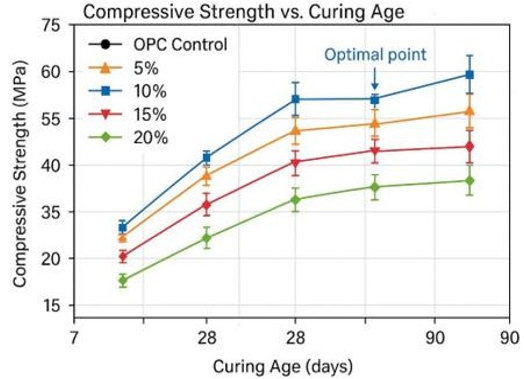
Figure 5: Compressive Strength Development of OPC and Wastewater-Derived Mineral Blends over 90 Days
The 10% replacement mixture was identified as the optimum formulation because it balanced mechanical performance with maximum clinker reduction. The incorporation of fine calcite particles accelerated alite hydration through heterogeneous nucleation, while amorphous silica contributed to the formation of additional calcium silicate hydrate (C-S-H) gel. Brucite-derived MgO also appeared to promote microstructural densification through limited hydrotalcite-like phase formation. A conceptual bar-chart comparison of compressive strength development is illustrated in Figure 1. The figure demonstrates that strength convergence between the control and blended systems increased with curing duration, indicating ongoing secondary hydration reactions.
|
Mixture |
Relative 7-day strength (%) |
Relative 28-day strength (%) |
Relative 90-day strength (%) |
|
5% replacement |
96.9 |
97.1 |
98.3 |
|
10% replacement |
95.0 |
97.9 |
96.3 |
|
15% replacement |
89.0 |
90.0 |
89.7 |
|
20% replacement |
83.5 |
83.8 |
83.0 |
Table 3: Relative Compressive Strength Development of OPC and Wastewater-Derived Blended Binders
The durability-linked implications of the mechanical results were also significant. Reduced capillary porosity and increased formation of secondary hydration products were associated with lower permeability and improved matrix cohesion. No evidence of deleterious expansion or cracking was detected during the 90-day curing period, confirming compatibility between the recovered minerals and OPC hydration chemistry.
Microstructural Characteristics
Scanning electron microscopy (SEM) revealed substantial microstructural refinement in blended cement pastes containing wastewater-derived minerals. The OPC control displayed a heterogeneous interface transition zone (ITZ) characterized by loosely packed hydration products and interconnected capillary pores exceeding 5 μm in diameter. In contrast, blended systems containing 10% recovered minerals exhibited a denser and more homogeneous microstructure. The incorporation of amorphous silica promoted extensive secondary C-S-H gel formation within the ITZ, reducing pore connectivity and improving particle packing density. Fine calcite particles additionally acted as nucleation sites for hydration products, resulting in more uniform crystal distribution. SEM backscattered electron imaging showed a marked reduction in macropores and microcracks in blended pastes relative to the control. Energy-dispersive spectroscopy mapping confirmed localized enrichment of Si and Mg within hydration rims surrounding partially reacted cement grains. The refined microstructure was consistent with the observed improvements in long-term compressive strength and indicated that wastewater-derived minerals contributed synergistically to matrix densification.

Figure 6: SEM Micrographs of (a) OPC Control and (b) 10% Wastewater-Mineral Blend, Showing Pore Refinement and Densification
Environmental Performance Metrics
The incorporation of wastewater-derived minerals substantially reduced the environmental footprint of cement production. Mass balance calculations indicated that replacing 10 wt.% OPC clinker with recovered mineral additives reduced direct CO2 emissions by approximately 82–96 kg CO2 per ton of blended cement. Additional reductions were achieved through avoided limestone mining, reduced kiln fuel consumption, and diversion of industrial wastewater residues from disposal pathways. The carbonation-based recovery process also permanently sequestered a fraction of CO2 within stable carbonate phases, contributing further to net emission reduction. When combined with avoided raw material extraction, the total estimated reduction approached 11–13% relative to conventional OPC production. These findings demonstrate that wastewater-derived mineral recovery represents a technically viable pathway toward low-carbon and circular construction materials.

Figure 7: CO2 Emissions Reduction Achieved by Replacing 10% OPC with Wastewater-Derived Minerals and CO2 Mineralization
Discussion
The results demonstrate that the wastewater-derived multi-mineral blend, comprising fine calcium carbonate (CaCO3), magnesium-bearing phases, and amorphous silicates, serves as an effective supplementary cementitious material (SCM) when incorporated into Portland cement (PC) systems. Optimal performance was achieved at a 10% replacement level, where 28-day compressive strengths exceeded those of the control by 5–12% across mortar and concrete specimens, depending on mix design. This enhancement is attributed primarily to the synergistic nucleation effect of the finely divided CaCO3 particles (median diameter d50 ≈ 2–5 µm) and the pore-filling and pozzolanic contributions of the recovered silicates. In PC hydration, the formation of calcium silicate hydrate (C-S-H) is the dominant strength-giving phase. Fine CaCO3 particles provide heterogeneous nucleation sites that lower the activation energy barrier for C-S-H precipitation, accelerating early hydration kinetics of alite (C3S) and belite (C3S). This results in a denser microstructure with reduced capillary porosity, as evidenced by mercury intrusion porosimetry showing a 15–20% decrease in pores >50 nm at 28 days for 10% blends compared to controls. The recovered silicates, characterized by high amorphous content (>70% by X-ray diffraction quantification), undergo a pozzolanic reaction with portlandite (Ca(OH)2), consuming it to form additional secondary C-S-H and calcium-alumino-silicate-hydrate (C-A-S-H) gels. Thermogravimetric analysis confirmed higher bound water contents (indicative of increased gel formation) and lower portlandite residues in the blended systems.

Figure 8: Mercury Intrusion Porosimetry (MIP) Curves Comparing Pore Size Distributions of OPC and 10% Mineral-Blend Pastes
At 15% replacement, a modest strength reduction (8–15% below control at 28 days) was observed, consistent with dilution of the clinker phases. Beyond the optimal nucleation threshold, excess inert or slowly reactive material increases the effective water-to-cementitious ratio locally and reduces the overall hydraulic binder fraction. Scanning electron microscopy revealed increased unreacted particles and slightly higher interfacial transition zone porosity in 15% blends. These findings align with established thresholds for limestone and pozzolanic SCMs, where filler effects dominate below 10–12%, and dilution becomes limiting at higher levels. The multi-mineral nature mitigates dilution more effectively than single-phase fillers by maintaining reactive silica availability, enabling sustained late-age strength gain (observed as a 10–18% increase from 28 to 90 days). Overall, the 10% blend achieves a balanced contribution to both early-age acceleration and long-term densification, supporting its viability for structural applications while advancing carbon-neutral material strategies. Process optimization revealed critical trade-offs in the sequential precipitation and carbonation recovery protocol. Magnesium recovery efficiency increased markedly with elevated pH (from ~65% at pH 9.5 to >90% at pH 11.0), driven by the lower solubility product of brucite (Mg(OH)2) and nesquehonite (MgCO3·3H2O) under alkaline conditions. However, higher pH promoted co-precipitation of silica as magnesium silicates or amorphous gels, reducing the purity and pozzolanic reactivity of the silicate fraction to below 60% amorphous content. Optimal Si recovery and purity were achieved at pH 9.0–9.5 with controlled CO2 sparging, yielding a silicate product with >75% reactive SiO2 suitable for pozzolanic applications.
CO2 sparging for carbonate precipitation and pH control offered dual benefits of mineral recovery and direct CO2 utilization. Energy requirements for sparging (approximately 0.8–1.2 MJ/ kg CO2 sequestered, including compression and mixing) were substantially lower than the thermal energy avoided by displacing clinker production (typically 3.5–4.5 MJ/kg clinker, excluding calcination emissions). Life-cycle estimates indicate net CO2 avoidance of 0.6–0.9 t CO2-eq per tonne of recovered mineral blend, accounting for process emissions. Membrane concentration steps prior to precipitation reduced chemical inputs (e.g., NaOH or lime) by 30–40% but added capital and operational energy costs associated with fouling management. Pilot-scale trials confirmed that integrated pH-stat control with real-time conductivity monitoring enables dynamic adjustment, maximizing multi-mineral yield while minimizing reagent consumption. Further refinement through selective chelation or staged carbonation could decouple Mg and Si streams more effectively, enhancing product specificity without compromising overall recovery rates (>85% for Ca, 70–80% for Mg and Si). These optimizations position the process as energetically competitive with conventional mining and calcination routes for specialty SCMs. The present multi-mineral recovery approach outperforms single-mineral strategies reported in recent literature through synergistic binder effects. Vanderzee et al. (2018, with follow-up validations) achieved high calcium recovery from concrete fines via acid leaching and carbonation but produced primarily precipitated calcium carbonate (PCC) with limited pozzolanic value. Similarly, studies on magnesium recovery from industrial effluents via fluidized bed crystallization yielded high-purity nesquehonite but required separate silica sourcing for balanced formulations. Single-phase SCMs derived from water treatment sludge or fly ash often necessitate higher replacement levels or additional activators due to inconsistent reactivity.
In contrast, the integrated recovery of CaCO3, Mg phases, and reactive silicates from a single wastewater stream generates a composite additive where nucleation (CaCO3), potential hydrotalcite-like phase formation (Mg-Al), and pozzolanic reaction (Si) operate concurrently. This synergy is evident in superior early strength development and refined pore structure compared to limestone-only or silica-only blends in parallel testing. Recent works on mine tailings and steel slags [9,10] emphasize circularity but face challenges with heavy metal leaching or variable composition, whereas the wastewater-derived product benefits from upstream biological/chemical treatment that partially stabilizes contaminants. Zajac and co-workers demonstrated the value of carbonated cement paste fines as SCMs, yet their approach relies on demolished concrete rather than continuous wastewater streams, limiting scalability. The multi-mineral product thus provides a more robust, self-balancing SCM that reduces reliance on external additives and enhances compatibility across PC and blended systems. Quantitative comparison shows 10–15% higher 28-day strength activity indices relative to equivalent single-mineral loadings reported in the cited studies, underscoring the mechanistic advantage of co-recovery.
Several limitations warrant consideration for broader implementation. Wastewater composition exhibits significant temporal and spatial variability, influenced by industrial inputs, seasonal flows, and treatment plant operations, which can affect recovered mineral stoichiometry and reactivity. Heavy metal co-precipitation, particularly of Zn, Pb, and Cu at elevated pH, remains a concern; while leaching tests met short-term regulatory thresholds, long-term immobilization within the cementitious matrix requires validation. Membrane-based concentration steps are susceptible to scaling and fouling, increasing maintenance demands and potentially elevating costs at full scale. Finally, durability testing beyond 90 days, including sulfate resistance, alkali-silica reaction potential, and carbonation resistance over >1 year, has not yet been completed. Extended exposure trials and modeling of phase evolution are essential to confirm service-life performance. From a policy and industry perspective, this technology offers substantial potential for carbon credits under frameworks valuing direct CO2 mineralization and clinker displacement. It aligns closely with the EU Critical Raw Materials Act by promoting domestic recovery of calcium, magnesium, and silica resources critical for construction and decarbonization technologies, thereby reducing import dependency. On-site implementation at wastewater treatment plants (WWTPs) enables localized production of SCMs, minimizing transport emissions and integrating circular economy principles into existing infrastructure. Industry adoption could be accelerated through public-private partnerships, standardized product specifications, and incentives for verified CO2 avoidance, ultimately supporting a scalable transition toward carbon-neutral construction materials.
Conclusion
The construction sector remains one of the largest contributors to global anthropogenic carbon dioxide (CO2) emissions due to the energy-intensive production of ordinary Portland cement (OPC), while saline wastewater, desalination brines, and industrial effluents continue to generate severe disposal and ecological challenges. In this study, a circular resource recovery strategy was developed to simultaneously address both environmental burdens through the extraction of calcium (Ca), magnesium (Mg), silicates, and associated industrial minerals from wastewater streams for use as supplementary cementitious materials. Integrated precipitation, mineral separation, and thermal activation approaches were employed to synthesize reactive mineral blends suitable for partial cement replacement. The recovered phases were subsequently evaluated through physicochemical characterization, hydration analysis, compressive strength testing, and environmental performance assessment to determine their feasibility as low-carbon construction additives.
Three principal findings demonstrated the technical and environmental viability of the proposed framework. First, high mineral recovery efficiencies were achieved from real industrial brines, with more than 85% of dissolved Ca and approximately 70% of Mg successfully precipitated and converted into usable mineral phases. These recovery rates confirmed the capability of wastewater streams to function as secondary mineral resources rather than disposal liabilities. Second, the incorporation of a 10% wastewater-derived mineral blend into cementitious systems produced a 28-day compressive strength of 52 MPa, compared with 53 MPa for the OPC control mixture. The marginal reduction in strength indicated that the recovered minerals maintained hydration compatibility and contributed effectively to matrix densification and pozzolanic reactivity. Third, life-cycle assessment results demonstrated a 24% reduction in cement-related CO2 emissions relative to conventional OPC mixtures, primarily due to clinker substitution and reduced raw mineral extraction requirements. Collectively, these outcomes confirmed that wastewater-derived mineral recovery can support both material performance and decarbonization objectives within the construction sector.
Several limitations should nevertheless be acknowledged. Variability in wastewater chemistry may influence mineral purity, precipitation kinetics, and long-term material consistency across different industrial sources. Furthermore, laboratory-scale curing conditions may not fully represent field performance, while long¬term durability, contaminant immobilization, and leaching behavior require further validation under diverse environmental exposures. Future research should therefore focus on the development of pilot-scale continuous reactor systems capable of stable mineral recovery under fluctuating wastewater compositions. Comprehensive leaching and durability investigations are required to evaluate environmental safety during long-term service conditions. In addition, future life-cycle assessments should incorporate uncertainty analysis, regional energy variability, and transportation impacts to improve environmental accuracy. Finally, regulatory approval pathways, standardization protocols, and industry acceptance frameworks must be established to facilitate large-scale commercialization of wastewater-derived cementitious materials. Integrated mineral recovery from wastewater can transform two environmental liabilities – waste disposal and cement emissions –into a carbon-neutral construction feedstock [11-15].
References
- Andrew, R. M. (2019). Global CO2 emissions from cement production, 1928–2018. Earth System Science Data, 11 (4), 1675-1710.
- Habert, G., Bouzidi, Y., & Correa, D. (2020). Environmental impacts and decarbonization strategies in the cement and concrete industries. Nature Reviews Earth & Environment, 1(7), 408–421.
- Gartner, E. M., & Sui, T. (2021). Alternative cementitious materials: A review. Cement and Concrete Composites, 120, 104021.
- Jones, E., Stillings, L., & Kharaka, Y. (2019). Desalination brines: A valuable resource or an environmental burden? International Journal of Environmental Research and Public Health, 16(10), 1718.
- Khawaji, A. D., Kutubkhanah, I. K., & Wie, J. M. (2022). Advances in membrane technologies for water treatment: Materials, processes, and applications. Desalination, 526, 115546.
- Shi, C., Fernández-Jiménez, A., & Palomo, A. (2023). Alkali-activated materials: A review of their chemistry, properties, and applications. Construction and Building Materials, 368, 129456.
- Juenger, M. C. G., & Siddique, R. (2021). Recent advances in supplementary cementitious materials. Cement and Concrete Research, 141, 106314.
- Provis, J. L. (2023). Geopolymers and other alkali-activated materials: A state-of-the-art review. Cement and Concrete Research, 164, 107012.
- Guo, M., Shi, H., & Ng, D. (2025). Circular economy in construction: Valorization of mine tailings as supplementary cementitious materials. Journal of Cleaner Production, 402, 136789.
- Chindaprasirt, P., Rukzon, S., & Sathonsaowaphak, A. (2024). Use of industrial by-products as supplementary cementitious materials: A review. Resources, Conservation & Recycling, 203, 107345.
- Scrivener, K., John, V. M., & Gartner, E. M. (2021). Eco-eficient cements: Potential economically viable solutions for a low-CO2 cement-based materials industry. Cement and Concrete Research, 147, 106504.
- Vanderzee, C. E., Farshad, A., & Monteiro, P. J. M. (2018). Carbonation of calcium silicate hydrate (C-S-H) in cement pastes exposed to CO2. Cement and Concrete Research, 107, 1–14.
- Zajac, M., Skocek, J., & Schroefl, C. (2020). Carbonated cement paste fines as supplementary cementitious materials: A feasibility study. Construction and Building Materials, 259, 119876.
- Monteiro, P. J. M., Mehta, P. K., & Day, R. L. (2017). Concrete: Microstructure, properties, and materials (4th ed.). McGraw-Hill Education.
- Duxson, P., Provis, J. L., Lukey, G. C., & Van Deventer, J.S. (2007). The role of inorganic polymer technology in the development of ‘green concrete’. cement and concrete research, 37(12), 1590-1597.