


Case Report - (2026) Volume 9, Issue 3
Wallenberg Syndrome Complicated by Syndrome of Inappropriate Antidiuretic Hormone Secretion: A Rare Stroke Presentation
 , Soumyadeep Maity 1 , Kumar Kishlay 1 and Mayur Bahan Mukherjee 2
 2Professor, Department Of General Medicine, KPC Medical College, India
Received Date: Jun 02, 2026 / Accepted Date: Jun 26, 2026 / Published Date: Jul 09, 2026
Copyright: ©2026 Girin Ray, et al. This is an open-access article distributed under the terms of the Creative Commons Attribution License, which permits unrestricted use, distribution, and reproduction in any medium, provided the original author and source are credited.
Citation: Ray, G., Maity, S., Kishalay, K., Mukherjee, M. B. (2026). Wallenberg Syndrome Complicated by Syndrome of Inappropriate Antidiuretic Hormone Secretion: A Rare Stroke Presentation. Adv Neur Sci, 9(3), 01-04.
Abstract
Lateral medullary syndrome is a recognized posterior circulation stroke syndrome, but its association with syndrome of inappropriate antidiuretic hormone secretion (SIADH) is rare and may delay recognition of a reversible metabolic complication. A 78-year-old man presented with acute persistent hiccups, hoarseness, dizziness, gait imbalance, and urinary symptoms, and was found to have left lateral medullary infarction with severe euvolemic hypotonic hyponatremia consistent with SIADH. Initial conservative therapy with isotonic saline, fluid restriction, and oral salt supplementation did not adequately correct serum sodium, whereas low-dose tolvaptan produced rapid normalization with parallel clinical improvement. This case highlights the need to suspect neurogenic SIADH in brainstem stroke, especially when hyponatremia, hiccups, and autonomic dysfunction coexist.
Keywords
Lateral Medullary Syndrome, Wallenberg Syndrome, SIADH, Hyponatremia, Tolvaptan, Brainstem Stroke, Vertebral Artery Stenosis
Introduction
Lateral medullary syndrome, also known as Wallenberg syndrome, results from ischemia in the dorsolateral medulla, most commonly related to vertebral artery or posterior inferior cerebellar artery territory compromise [1]. It typically manifests with vertigo, gait ataxia, ipsilateral Horner syndrome, bulbar symptoms, and selective sensory deficits, but electrolyte complications are rarely emphasized in routine descriptions [1,2]. SIADH is an important cause of euvolemic hypotonic hyponatremia and can occur with central nervous system disease, pulmonary disease, malignancy, and medications [1,3]. In stroke patients, hyponatremia is clinically relevant because it is common and associated with worse outcomes, so sodium disturbances should not be overlooked in acute cerebrovascular disease [1,4]. In lateral medullary infarction, SIADH is uncommon but clinically important because worsening confusion, hiccups, or urinary dysfunction may be wrongly attributed to stroke alone unless hyponatremia is actively investigated [1,5].
Case Report
A 78-year-old man presented with a 24-hour history of persistent hiccups, hoarseness of voice, dizziness, gait imbalance, and one episode of urinary incontinence [6]. His background included type 2 diabetes mellitus, hypertension, and stage IIIA left lung adenocarcinoma in remission after chemoradiotherapy five years earlier, regular medications were amlodipine, metformin, atorvastatin, and aspirin. On examination, he was hemodynamically stable and alert, with neurological findings consistent with left lateral medullary syndrome, including left Horner syndrome, impaired pain and temperature sensation over the left face and body, absent left gag reflex, hoarseness, positive Romberg sign, and ataxic gait with leftward veering. Motor power, tone, proprioception, and coordination testing were otherwise preserved. Within 24 hours of admission, he developed urinary retention, persistent hiccups, and mild confusion. Investigations showed severe hypotonic hyponatremia with serum sodium 120 mmol/L, serum osmolality 260 mOsm/kg, urine osmolality 560 mOsm/kg, and urine sodium 45 mmol/L, supporting euvolemic hyponatremia due to SIADH [3,6]. Renal, thyroid, and adrenal parameters were within normal limits, and clinical evaluation confirmed euvolemia without signs of dehydration or fluid overload. Brain MRI demonstrated an acute infarct in the left lateral medulla (Figure 1), while magnetic resonance angiography showed severe stenosis of the left vertebral artery proximal to the posterior inferior cerebellar artery origin (Figure 2).
Computed tomography of the chest and abdomen showed no evidence of recurrent malignancy, helping exclude paraneoplastic SIADH. The patient was managed in the stroke unit with antiplatelet therapy, high-intensity statin, aspiration precautions, glycemic control, and supportive care [6]. Initial hyponatremia treatment with isotonic saline, fluid restriction, and oral sodium chloride failed to improve serum sodium beyond 118-122 mmol/L over 48 hours, and neurological symptoms persisted [6]. After endocrinology consultation, tolvaptan 15 mg once daily was started on hospital day 2 [6,7]. Response to tolvaptan was rapid: serum sodium rose from 120 mmol/L before treatment to 125 mmol/L at 12 hours, 130 mmol/L at 24 hours, 135 mmol/L at 36 hours, and 138 mmol/L at 48 hours [6]. Clinical improvement occurred in parallel, with marked reduction in hiccups by day 3, resolution of hiccups by day 4, improvement in mentation, and recovery of bladder function after catheter removal on day 6. No osmotic demyelination, hypernatremia, renal dysfunction, or other adverse effects were reported [6,8]. He was discharged on hospital day 10 on tolvaptan, oral salt supplementation, antiplatelet therapy, atorvastatin, and rehabilitation measures. Follow-up at 1 week, 1 month, 3 months, and 6 months showed sustained normonatremia, functional improvement, and no recurrence of hyponatremia, mild residual hoarseness persisted, but independent activities of daily living were regained.

Figure 1: MRI Brainstem Diffusion-Weighted Image showing an Acute Infarct in the left Lateral Medulla Consistent with Lateral Medullary Syndrome
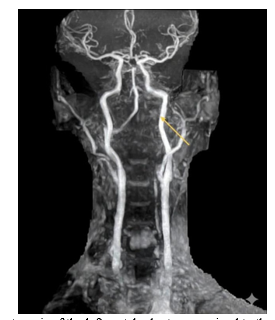
Figure 2 : MR Angiography showed severe stenosis of the left vertebral artery proximal to the posterior inferior cerebellar artery origin
Discussion
This case illustrates an uncommon but clinically meaningful association between lateral medullary infarction and SIADH, a link that has been described only in isolated reports and small literature reviews [5,9]. The likely mechanism is disruption of medullary pathways involved in autonomic and osmoregulatory control, particularly nuclei such as the nucleus tractus solitarius and related structures that modulate vasopressin release [5,9]. Retrograde tracing studies and pathophysiologic models support a connection between the dorsolateral medulla, the nucleus tractus solitarius, and hypothalamic vasopressin regulation, which provides a biologically plausible explanation for neurogenic SIADH in this setting [5]. The diagnosis of SIADH was strongly supported by the combination of hypotonic hyponatremia, inappropriately concentrated urine, elevated urine sodium, normal renal-thyroid-adrenal function, and documented euvolemia [3,10]. Exclusion of recurrent lung malignancy was especially important in this patient because of the previous history of adenocarcinoma and the well-known paraneoplastic association of SIADH [3,10]. The literature also emphasizes that SIADH must be distinguished from cerebral salt wasting because the treatment approach differs substantially, and misclassification can worsen sodium disturbance or volume status [1,11].
An important clinical lesson is that worsening confusion, persistent hiccups, and urinary dysfunction in a patient with brainstem stroke should not automatically be attributed to the neurological lesion alone [2,5]. Early electrolyte evaluation is essential because severe hyponatremia may be both a contributor to symptoms and a reversible therapeutic target [1,4]. In the published literature, lateral medullary syndrome with SIADH has been described only rarely, which makes this case useful for reinforcing a low threshold for electrolyte testing when the clinical picture is atypical or more symptomatic than expected [5]. The therapeutic response further strengthens the value of this report. Conventional measures, including isotonic saline, salt supplementation, and fluid restriction, were insufficient, whereas low-dose tolvaptan produced controlled aquaresis, safe sodium correction, and prompt symptomatic recovery without overcorrection or osmotic demyelination [7,12,13] . Tolvaptan has been shown to effectively raise serum sodium in SIADH and euvolemic hyponatremia in clinical trials and review data, but rapid correction is a recognized risk, therefore, inpatient initiation with frequent sodium checks is recommended [8,12,13]. In selected patients with neurogenic euvolemic SIADH, especially when conservative therapy fails, tolvaptan may provide an effective and physiologically rational option [7,8].
Conclusion
Lateral medullary syndrome may rarely be complicated by SIADH, and this association should be considered when acute brainstem stroke is accompanied by severe hyponatremia, persistent hiccups, or urinary dysfunction [1,5]. Careful biochemical assessment and exclusion of alternate causes are crucial for diagnosis, particularly in patients with a prior history of malignancy [2]. In this case, low-dose tolvaptan achieved rapid and sustained correction of hyponatremia with favorable clinical recovery after failure of conservative management, supporting its role in selected cases of neurogenic SIADH [5,7,12].
References
- Soiza, R. L., Cumming, K., Clark, A. B., Bettencourt-Silva, J. H., Metcalf, A. K., Bowles, K. M., ... & Myint, P. K. (2015). Hyponatremia predicts mortality after stroke. International Journal of Stroke, 10(SA100), 50-55.
- Day, G. S., Swartz, R. H., Chenkin, J., Shamji, A. I., & Frost,D. W. (2014). Lateral medullary syndrome: a diagnostic approach illustrated through case presentation and literature review. Canadian Journal of Emergency Medicine, 16(2), 164-170.
- Cuesta, M., & Thompson, C. J. (2025). Syndrome of Inappropriate Antidiuretic Hormone Secretion. In StatPearls. StatPearls Publishing. Retrieved from NCBI Bookshelf.
- Barkas F, Anastasiou G, Liamis G, Milionis H. A step-by-step guide for the diagnosis and management of hyponatraemia in patients with stroke. Ther Adv Endocrinol Metab. 2023 Apr 3,14:20420188231163806.PMID: 37033701, PMCID: PMC10074625.
- Nakano, H., Yanase, D., & Yamada, M. (2016). Syndrome of inappropriate secretion of antidiuretic hormone (SIADH) associated with lateral medullary syndrome: case report and literature review. Bmc Neurology, 16(1), 119.
- Ropper, A. H., Samuels, M. A., & Klein, J. P. (2014). Adams and Victor's principles of neurology (10th ed.). New York: McGraw-Hill Education.
- Torres, A. C., Wickham III, E. P., & Biskobing, D. M. (2011). Tolvaptan for the management of syndrome of inappropriate antidiuretic hormone secretion: lessons learned in titration of dose. Endocrine Practice, 17(4), e97-e100.
- Tzoulis, P. (2023). Therapy for SIAD: what does the future hold?. Therapeutic Advances in Endocrinology and Metabolism, 14, 20420188231166493.
- Hannon, M. J., & Thompson, C. J. (2010). The syndrome of inappropriate antidiuretic hormone: prevalence, causes and consequences. European journal of endocrinology, 162(Supplement_1), S5-S12.
- Ellison, D. H., & Berl, T. (2007). The syndrome of inappropriate antidiuresis. New England Journal of Medicine, 356(20), 2064-2072.
- Cerdà-Esteve, M., Cuadrado-Godia, E., Chillaron, J. J., Pont-Sunyer, C., Cucurella, G., Fernández, M., ... & Roquer, J. (2008). Cerebral salt wasting syndrome. European Journal of Internal Medicine, 19(4), 249-254.
- Schrier, R. W., Gross, P., Gheorghiade, M., Berl, T., Verbalis,J. G., Czerwiec, F. S., & Orlandi, C. (2006). Tolvaptan, a selective oral vasopressin V2-receptor antagonist, for hyponatremia. New England Journal of Medicine, 355(20), 2099-2112.
- Kleindienst, A., Georgiev, S., Schlaffer, S. M., & Buchfelder,M. (2020). Tolvaptan versus fluid restriction in the treatment of hyponatremia resulting from SIADH following pituitary surgery. Journal of the Endocrine Society, 4(7), bvaa068.