

Archives of Epidemiology & Public Health Research(AEPHR)
ISSN: 2833-4353 | DOI: 10.33140/AEPHR
Impact Factor: 1.98


Perspective Article - (2025) Volume 4, Issue 2
Wake Up Call: While We Sleep, China's Healthcare AI Revolution Quietly Overtakes the World-Leaving Indonesia in the Dark
2Indonesian College of Lifestyle Medicine, Indonesia
3Department of Cardiology, Faculty of Medicine, Prima University, Medan, Indonesia
Received Date: Apr 21, 2025 / Accepted Date: May 28, 2025 / Published Date: Jun 03, 2025
Copyright: ©Â©2025 Dasaad Mulijono. This is an open-access article distributed under the terms of the Creative Commons Attribution License, which permits unrestricted use, distribution, and reproduction in any medium, provided the original author and source are credited.
Citation: Mulijono, D. (2025). Wake Up Call: While We Sleep, China's Healthcare AI Revolution Quietly Overtakes the World-Leaving Indonesia in the Dark. Arch Epidemiol Pub Health Res, 4(2), 01-04.
Abstract
Artificial Intelligence (AI) and robotics are no longer optional enhancements in healthcare—they are seismic forces redefining the future of medicine, reshaping clinical decision-making, surgical precision, patient outcomes, and economic structures. While the United States struggles with entrenched bureaucracy, fractured systems, and policy paralysis, China has launched a strategic, coordinated offensive that is fast elevating it as the new global epicentre of medical technology. With government-backed research and development (R&D), streamlined regulations, and aggressive AI implementation across radiology, surgery, and diagnostics, China is poised to eclipse traditional Western dominance within the next decade. Meanwhile, countries like Indonesia risk being left behind, paralyzed by infrastructural gaps, outdated medical training, and fierce resistance from entrenched interest groups. Yet within this stagnation, one institution—Bethsaida Hospital, led by Prof. Dasaad Mulijono—offers a powerful counter-narrative. As the first in Indonesia to integrate Drug-Coated Balloon (DCB) ther- apy with a whole-food plant-based diet (WFPBD), Bethsaida has not only achieved unprecedented clinical outcomes (including restenosis rates below 2%) but now emerges as a credible pioneer for AI and robotic healthcare integration.
With the passage of the 2024 Omnibus Law aimed at reforming medical education, a narrow window of opportunity has opened. The question is whether Indonesia’s healthcare community will seize or squander it through inaction and internal discord. This paper issues a call to arms for Indonesian medical professionals and policymakers: the age of AI-powered healthcare is no lon- ger approaching—it is here. Failure to adapt will lead to irrelevance and dependency on more agile, technologically advanced nations. Only by embracing innovation, protecting reform, and scaling models like Bethsaida can Indonesia reclaim agency over its medical future and avoid becoming a passive consumer in the next healthcare revolution.
Keywords
Artificial Intelligence in Healthcare, Healthcare Robotics, China Medical Technology, U.S. Healthcare Challenges, Indonesia Medical Reform, Drug-Coated Balloon, Whole-Food Plant-Based Diet, Bethsaida Hospital, Prof. Dasaad Mulijono, Healthcare Policy and Regulation, Technological Disruption in Medicine, Omnibus Law 2024 Indonesia, Global Healthcare Competition, Medical Education Reform, AI Integration in Emerging Markets, Restenosis Prevention
Introduction
The global healthcare industry is experiencing a transformative shift through AI and robotic technologies, promising revolutionary improvements in diagnostics, patient care, surgical precision, and operational efficiency. China rapidly emerges as a global healthcare technology leader driven by targeted investments, aggressive R&D strategies, and supportive regulatory frameworks. In contrast, the
US faces declining dominance due to regulatory complexities, inconsistent healthcare policies, and fragmented infrastructure. Meanwhile, Indonesia remains significantly behind, despite recent attempts at reform, such as the 2024 Omnibus Law aimed at creating a fairer medical education environment. Persistent internal resistance and a lack of technological prioritization pose serious risks to healthcare quality, patient care, and medical professionals' career paths.
China’s Strategic Rise in Healthcare AI and Robotics
China has strategically prioritized AI and robotics through its national initiatives, including "Made in China 2025" and successive five-year plans. Leading Chinese tech companies like Baidu, Tencent, and Alibaba have invested heavily in medical AI applications, achieving global breakthroughs in radiological imaging, robotic-assisted surgery, and telemedicine.
The Chinese government's simplified regulatory processes, state- funded R&D, and vast patient data resources provide significant competitive advantages. This coordinated strategy positions China to eclipse the US and establish a new global healthcare technology benchmark.
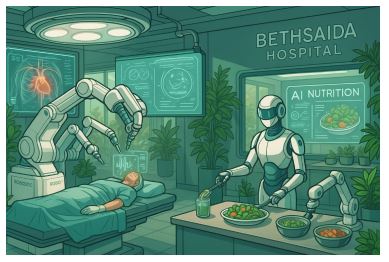
Challenges in Technological Integration in the US Healthcare System: Insights from Bethsaida Hospital, Indonesia Historically recognized as a global leader in healthcare innovation, the US faces substantial structural barriers hindering the rapid integration of AI and robotics into healthcare. These impediments include complex regulatory frameworks, rigorous and often prolonged FDA approval processes, stringent privacy concerns, fragmented healthcare infrastructure, and inconsistent healthcare policy implementations. In contrast to China's streamlined regulatory environment, the decentralized and intricate US regulatory landscape significantly delays technological adoption.
Moreover, inconsistent healthcare policies and varied reimburse- ment mechanisms further impede the widespread adoption of in- novative technologies, potentially eroding the US's technological superiority and leadership position in the global healthcare sector. A clear illustration of such delays is evident in the acceptance of DCB technology, which has been widely utilized in European med- ical practice for nearly two decades, yet has only recently gained acceptance in the US and other developing regions. In Indonesia, broader adoption of DCB technology has only occurred within the last two years, emphasizing global disparities in technological in- tegration timelines.
Bethsaida Hospital in Indonesia stands as a noteworthy exception, having proactively adopted DCB technology six years ago, becoming the nation's pioneering healthcare institution advocating for this advancement. This foresight has demonstrated significant benefits, underscoring the value of proactive technological integration. Additionally, Bethsaida Hospital has pioneered the integration of plant-based dietary programs, effectively reversing chronic conditions such as atherosclerosis, hypertension, type 2 diabetes mellitus, obesity, kidney dysfunction, and hyperlipidaemia. Bethsaida Hospital is the first globally to combine a WFPBD with DCB technology, achieving remarkable clinical outcomes, notably a restenosis rate of less than 2%. These successes highlight the importance of proactive adoption and integrating innovative healthcare practices.
Indonesia’s Lagging Integration and Recent Regulatory De-velopments
Indonesia's healthcare sector notably lags in AI and robotics adoption, burdened by infrastructure inadequacies, insufficient digital policies, limited technological investments, and poor professional awareness. Despite recent reforms, such as the 2024 Omnibus Law aiming to reform and restructure medical education and the health system, substantial internal resistance persists. Medical associations, unions, and organizations oppose these changes, diverting attention from critical technological advancements.
This resistance creates missed opportunities, exacerbating delays in essential technology integration. Indonesian medical professionals thus face a looming skills gap, threatening their future career stability and financial viability.
Discussion
China’s aggressive advancements in healthcare AI and robotics are reshaping global healthcare dynamics, highlighting severe challenges for the US and even more substantial risks for Indonesia.
Although initially rooted in genuine concerns, the ongoing internal resistance in Indonesia now threatens to overshadow the larger external technological threat posed by China's rapid advancements. Medical associations, unions, and organizations must quickly shift from internal disagreements to addressing the imminent global technological shift.
Bethsaida Hospital’s forward-thinking adoption of innovative healthcare technologies such as DCB and plant-based dietary interventions demonstrates the immense benefits of early technology integration. Building on this successful model, Bethsaida is strategically positioned to pioneer AI and robotic integration within Indonesia, setting a critical example for the broader healthcare community. Indonesia must foster collaborative initiatives between public institutions, private healthcare providers, and technology developers to rapidly scale AI and robotics capabilities to avoid future dependence on more technologically advanced countries.
Conclusion
China’s ascendancy in healthcare AI and robotics represents a transformative global shift, posing significant challenges to traditional leaders like the US and presenting urgent implications for countries lagging in technological integration, such as Indonesia. Persistent internal resistance to necessary reforms exacerbates these vulnerabilities, risking severe long-term impacts on healthcare quality, professional competencies, and economic stability. Indonesian healthcare professionals, policymakers, and institutions must urgently focus on embracing technological innovation. By proactively adopting successful examples like Bethsaida Hospital's pioneering initiatives, Indonesia can mitigate the risk of technological dependence and position itself as a competitive player in the rapidly evolving global healthcare landscape. Immediate strategic adaptation is vital to safeguarding the future of healthcare delivery and professional prosperity.
References
1. Khelimskii, D., Badoyan, A., Krymcov, O., Baranov, A., Manukian, S., & Lazarev, M. (2024). AI in interventional cardiology: Innovations and challenges. Heliyon.
2. Gocer, H., & Durukan, A. B. (2023). The use of artificial intelligence in interventional cardiology. Turk Gogus Kalp Damar Cerrahisi Dergisi-Turkish Journal of Thoracic and Cardiovascular Surgery.
3. Subhan, S., Malik, J., ul Haq, A., Qadeer, M. S., Zaidi, S. M. J., Orooj, F., ... & Majeedi, U. (2023). Role of artificial intelligence and machine learning in interventional cardiology. Current Problems in Cardiology, 48(7), 101698.
4. Sardar, P., Abbott, J. D., Kundu, A., Aronow, H. D., Granada, J. F., & Giri, J. (2019). Impact of artificial intelligence on interventional cardiology: from decision-making aid to advanced interventional procedure assistance. Cardiovascular interventions, 12(14), 1293-1303.
5. Rudnicka, Z., PrÄ?gowska, A., GlÄ?dys, K., Perkins, M., & Proniewska, K. (2024). Advancements in artificial intelligence- driven techniques for interventional cardiology. Cardiology Journal, 31(2), 321-341.
6. Itelman, E., Witberg, G., & Kornowski, R. (2024). AI- assisted clinical decision making in interventional cardiology: the potential of commercially available large language models. Cardiovascular Interventions, 17(15), 1858-1860.
7. Aminorroaya, A., Biswas, D., Pedroso, A. F., & Khera, R. (2025). Harnessing artificial intelligence for innovation in interventional cardiovascular care. Journal of the Society for Cardiovascular Angiography & Interventions, 4(3), 102562.
8. Alsharqi, M., & Edelman, E. R. (2025). Artificial Intelligence in Cardiovascular Imaging and Interventional Cardiology: Emerging Trends and Clinical Implications. Journal of the Society for Cardiovascular Angiography & Interventions, 4(3), 102558.
9. Chandramohan, N., Hinton, J., O'Kane, P., & Johnson, T. W. (2024). Artificial intelligence for the interventional cardiologist: powering and enabling OCT image interpretation. Interventional Cardiology: Reviews, Research, Resources, 19, e03.
10. De Silva, K., Myat, A., Strange, J., & Weisz, G. (2020). Iterative Improvement and marginal gains in coronary revascularisation: is robot-assisted percutaneous coronary intervention the new hope?. Interventional Cardiology Review, 15, e18.
11. Young, L., & Khatri, J. (2022). Robotic percutaneous coronary intervention: the good, the bad, and what is to come. US Cardiology Review, 16, e02.
12. George, J. C., Varghese, V., & Madder, R. D. (2025). Robot- assisted cardiovascular interventions. Journal of the Society for Cardiovascular Angiography & Interventions, 4(3Part B), 102568.
13. Moreno, P. R., Stone, G. W., Gonzalez-Lengua, C. A., & Puskas, J. D. (2020). The hybrid coronary approach for optimal revascularization: JACC review topic of the week. Journal of the American College of Cardiology, 76(3), 321-333.
14. Cook, C. M., Warisawa, T., Howard, J. P., Keeble, T. R., Iglesias,
J. F., Schampaert, E., ... & Davies, J. E. (2019). Algorithmic versus expert human interpretation of instantaneous wave-free ratio coronary pressure-wire pull back data. Cardiovascular Interventions, 12(14), 1315-1324.
15. Petraco, R., Bahl, R., Almeida, G., Bandeira, D., Seligman, H., Alloula, A., ... & Chamié, D. (2025). Can AI Capture and Quantify Clinical Expertise? Implications for Intracoronary Imaging in Percutaneous Coronary Intervention. Journal of the Society for Cardiovascular Angiography & Interventions, 4(3), 102523.
16. Samant, S., Panagopoulos, A. N., Wu, W., Zhao, S., & Chatzizisis, Y. S. (2025). Artificial Intelligence in Coronary Artery Interventions: Preprocedural Planning and Procedural Assistance. Journal of the Society for Cardiovascular Angiography & Interventions, 4(3), 102519.
17. Khokhar, A. A., Marrone, A., Bermpeis, K., Wyffels, E., Tamargo, M., Fernandez-Avilez, F., ... & Beyar, R. (2023). Latest developments in robotic percutaneous coronary interventions. Interventional Cardiology: Reviews, Research, Resources, 18, e30.
18. Biondi-Zoccai, G., D’Ascenzo, F., Giordano, S., Mirzoyev, U., Erol, Ç., Cenciarelli, S., ... & Versaci, F. (2025). Artificial Intelligence in Cardiology: General Perspectives and Focus on Interventional Cardiology. Anatolian Journal of Cardiology, 29(4), 152.
19. Åajczak, P., Eltawansy, S., Obi, O., Sahin, O. K., Ayesha, A., Almendral, J., ... & Schincariol, M. (2025). Robotic percutaneous coronary intervention and the clinical effectiveness debate: Is newer always better? A systematic review and frequentist network meta-analysis. Cardiovascular Revascularization Medicine.
20. Mulijono, D., Hutapea, A. M., Lister, I. N. E., Sudaryo, M. K., & Umniyati, H. (2024). Plant-Based Diets and Supplements in Mitigating COVID-19: Part 1. The Research Report. J Comm Med and Pub Health Rep 5 (08): https://doi. org/10.38207/ JCMPHR/2024/MAY05080572/A.
21. Mulijono, D., Hutapea, A. M., Lister, I. N. E., Sudaryo, M. K., & Umniyati, H. (2024). Plant-Based Diet and Supplements in Mitigating COVID-19: Part 2. The Mechanism behind Successful Intervention. J Comm Med and Pub Health Rep, 5(08).
22. Mulijono, D, Hutapea, A. M., Lister, I. N. E., Sudaryo, M. K., and Umniyati. (2024). H. Saving High-Risk Cardiac Patients from COVID-19 Severity, Hospitalization, and Death with Plant-Based Diets and Dietary Supplements. Archives of Clinical and Biomedical Research. 8: 245-252. DOI: 10.26502/acbr.50170406
23. Mulijono, D. (2024). Plant-Based Diets (PBDs): Challenges and Solutions. On J Cardio Res & Rep. 7(5): OJCRR. MS.ID.000672. DOI: 10.33552/OJCRR.2024.07.000672
24. Mulijono, D., & Albert, M. (2024). Hutapea, I Nyoman E Lister, Mondastri K Sudaryo, Helwiah Umniyati. Mechanisms Plant-Based Diets Reverse Atherosclerosis. Cardiology and Cardiovascular Medicine, 8, 290-302.
25. Mulijono, D. (2024). Plant-Based Diet in Regressing/ Stabilizing Vulnerable Plaques to Achieve Complete Revascularization. Archives of Clinical and Biomedical Research, 8(3), 236-244.
26. Mulijono, D., Hutapea, A. M., Lister, I. N. E., Sudaryo, M. K., & Umniyati, H. (2024). How a Plant-Based Diet (PBD) Reduces In-Stent Restenosis (ISR) and Stent Thrombosis (ST). Cardio Open, 9(1), 01-15.
27. Mulijono, D., & Albert, M. (2024). Hutapea, I Nyoman E Lister, Mondastri K Sudaryo, and Helwiah Umniyati. Plant- Based Diet to Reverse/Regress Vulnerable Plaque: A Case Report and Review. Archives of Clinical and Medical Case Reports, 8, 126-135.
28. Mulijono, D. (2025). Bethsaida Hospital: Pioneering Plant-Based Diet and Lifestyle Medicine Revolution in Indonesia. Arch Epidemiol Pub Health Res, 4(1), 01-03.
29. Mulijono, D. (2025). Prof. Dasaad Mulijono: The Plant- Based Guru Redefining Cardiology and Preventive Medicine. On J Cardio Res & Rep. 8(1): OJCRR.MS.ID.000676. DOI: 10.33552/OJCRR.2025.08.000676
30. Mulijono, D. (2025). Healing with Food or Managing with Injection? A New Era in Chronic Disease Care. Journal ISSN, 2766, 2276.
31. Mulijono, D. (2025). How a Plant-Based Diet and Ultra- Low LDL Levels Can Reverse Atherosclerosis and Prevent Restenosis: A Breakthrough in Heart Health. Journal ISSN, 2766, 2276.
32. Mulijono, D. (2025). Reclaiming Healing Through Nutrition: Resistance to Plant-Based Diets and the Biblical Call to Restoration. Arch Epidemiol Pub Health Res, 4(2), 01-03.
33. Mulijono, D. (2025). The Pitfalls of Relying Solely on Guidelines for Chronic Coronary Syndrome: A Warning for Cardiologists. Cardiology and Cardiovascular Medicine, 9, 97-99.
34. Mulijono, D. (2025). What Was Meant for Harm. A Testimony of Healing, Faith, and Medical Revolution. Arch Epidemiol Pub Health Res, 4(2), 01-05.