

Japanese Journal of Medical Science(JJMS)
ISSN: 2996-2536 | DOI: 10.33140/JJMS


Research Article - (2026) Volume 4, Issue 1
Vaccination Coverage and Immunization Status Against Hepatitis B Virus in Hemodialysis Patients: A Study Conducted at The Mohammed V Military Teaching Hospital in Rabat
2Virology Laboratory, Biomedical and Epidemiology Research Unit (URBE), Centre of Virology, Infectious and Tropical Diseases (CVMIT), Mohamed V Military Teaching Hospital, and Mohammed V University ,Rabat, Morocco
3Department of Nephrology Dialysis and Renal Transplantation, Mohammed, V Military Teaching Hospital and Mohammed V University, Rabat, Morocco
Received Date: Jan 02, 2026 / Accepted Date: Feb 05, 2026 / Published Date: Feb 17, 2026
Copyright: ©2026 R Abi. et al. This is an open-access article distributed under the terms of the Creative Commons Attribution License, which permits unrestricted use, distribution, and reproduction in any medium, provided the original author and source are credited.
Citation: Zaza, Q., Abi, R., Bahadi, A., Akhssas, A., Qadiri, K., et al. (2026). Vaccination coverage and immunization status against Hepatitis B Virus in hemodialysis patients: a study conducted at the Mohammed V Military Teaching Hospital in Rabat. Japan J Med Sci, 4(1), 01-05.
Abstract
Introduction: Hepatitis B represents a major threat to chronic hemodialysis patients due to their immunosuppression and repeated exposure to blood. Vaccination remains the most effective preventive strategy, however the immune response in this population is generally reduced. The objective of this study was to evaluate the rate of Hepatitis B Virus (HBV) immunization among chronic dialysis patients at the hemodialysis center of the Mohammed V Military Teaching Hospital in Rabat.
Materials and Methods: We conducted a cross-sectional study including 54 dialysis patients (39 on hemodialysis and 15 on peritoneal dialysis), with a mean age of 56.5 years. Serological markers of HBV infection (HBsAg, anti-HBc, anti-HBs) were tested using microparticle chemiluminescence immunoassay (CMIA) on Abbott's ARCHITECT i2000SR. Effective immunization was defined as an anti-HBs antibody (titer ≥ 100 IU/L in this population.
Results: Only 31.5% of patients (n=17) had received hepatitis B vaccination after the initiation of dialysis treatment. Among vaccinated patients, 94% were immunized, of whom 58.8% showed strong immunization (titer > 100 IU/L), 41.2% had moderate immunization (10–100 IU/L), and only one patient was a non-responder. Analysis of the vaccine response according to dialysis parameters revealed no statistically significant correlation.
Conclusion: Although the observed immunization rate is higher than the rate reported in many international studies, the insufficient vaccination coverage (31.5%) highlights a shortcoming in the implementation of prevention protocols. Improvements can be achieved through early vaccination (pre-dialysis stage), rigorous annual serological monitoring, and increased awareness among healthcare staff and patients regarding the importance of vaccination.
Keywords
Hepatitis B, Vaccination, Dialysis, Chronic Kidney Disease, Immunization
Introduction
Hepatitis B is a major infectious viral disease of global concern, caused by the hepatitis B virus (HBV), a DNA virus belonging to the Hepadnaviridae family [1]. It is a major public health problem due to its high morbidity and mortality rates, may progress to chronic forms, cirrhosis or hepatocellular carcinoma [2]. According to the World Health Organization (WHO), nearly 254 million people worldwide are living with chronic HBV infection in 2022, and approximately 1.1 million deaths per year are attributed to it [3]. HBV is transmitted through blood exposure, sexual contact or vertically (from mother to child). Certain populations have an increased risk of exposure to the virus, particularly healthcare professionals, polytransfused patients, those receiving invasive care and, above all, patients undergoing chronic hemodialysis [4]. The latter are a particularly vulnerable group due to the frequency of invasive procedures, repeated contact with blood and dialysis equipment, and immunosuppression associated with uremia [5]. Vaccination against hepatitis B is the most effective measure for preventing infection [6].
In immunocompetent individuals, it allows protective anti-HBs antibodies to be obtained at concentrations ≥ 10 IU/mL, which is considered the protective threshold [7]. In patients with chronic renal failure, vaccination is recommended in the early stages of kidney disease and should be systematically offered before starting dialysis treatment [8]. This approach aims to reduce the risk of nosocomial infection and limit the spread of the virus in dialysis units [9]. However, despite widespread vaccination and the implementation of prevention protocols, hepatitis B remains a threat in dialysis units, particularly in low- and middle-income countries where serological monitoring and post-vaccination follow-up are not always systematic [10,11]. It is therefore essential to regularly assess the immune status of dialysis patients in order to identify those who are unvaccinated or insufficiently immunized and to implement appropriate booster vaccinations [12]. The present study aims to evaluate the rate of immunization against hepatitis B among chronic dialysis patients at the hemodialysis center of the Mohammed V Military Teaching Hospital in Rabat.
Materials and Methods
Study Design
This was a descriptive and analytical cross-sectional study conducted in collaboration between the Virology Laboratory of the Center for Virology and Infectious and Tropical Diseases and the Nephrology Department of the Mohammed V Military Teaching Hospital in Rabat. The study included 54 patients undergoing chronic dialysis.
Inclusion and Exclusion Criteria
Inclusion criteria were as follows: age ≥ 18 years; presence of end- stage renal disease (ESRD) receiving renal replacement therapy by hemodialysis or peritoneal dialysis; and regular follow-up at the institution’s nephrology department. Patients under 18 years of age, those with acute renal failure, or those partially followed up at another dialysis center were excluded.
Data Collection
Data were collected through a review of medical records and bedside clinical interviews with patients. The information recorded included demographic data, medical history, underlying nephropathy, characteristics of dialysis treatment (duration, modality, and vascular access), and HBV serological results. Data collection was conducted in compliance with patient anonymity and confidentiality standards.
Serological Markers and Methodology
Three HBV serological markers were analyzed using a microparticle chemiluminescence immunoassay (CMIA) on the Alinity automated analyzer (Abbott): hepatitis B surface antigen (HBsAg), total anti-HBc antibodies, and anti-HBs antibodies [13]. Interpretation was based on the following thresholds: anti-HBs < 10 IU/L (absence of immunization); 10–100 IU/L (insufficient immunization); and > 100 IU/L (effective immunization against HBV) [13,14].
Statistical Analysis
Data were analyzed descriptively. Calculations were performed using Microsoft Excel to determine means, sex ratios, and to generate tables and graphs.
Results
The study included 54 dialysis patients (39 undergoing maintenance hemodialysis and 15 on peritoneal dialysis), comprising 26 men (48.1%) and 28 women (51.9%), with a sex ratio of 0.93. The mean age was 56.5 years (range: 21–88 years). Nephroangiosclerosis was the most frequent cause of nephropathy (identified in 41 patients), and 83% of patients had a medical history, with systemic hypertension being the most common comorbidity (44%).
The duration of dialysis ranged from 2 months to 27 years among hemodialysis patients (exceeding 5 years in 50% of cases) and from 2 months to 4 years among peritoneal dialysis patients. Vascular access consisted of an arteriovenous fistula (AVF) in 97.4% (n = 38) of hemodialysis patients and a central venous catheter in 2.6% (n = 1).
All hemodialysis patients underwent three sessions per week, while among peritoneal dialysis patients, 67% (n = 10) performed three exchanges per day and 33% (n = 5) performed two. Only 31% of patients (n = 17) had received hepatitis B vaccination after the initiation of dialysis (Figure 1), all following a triple-dose intramuscular protocol of ENGERIX-B 20 µg/mL. Among vaccinated patients, 58% (n = 10) achieved strong immunization (anti-HBs titer > 100 IU/L), 36% (n = 6) showed weak immunization (10–100 IU/L), and one patient (6%) was a non-responder (anti- HBs < 10 IU/L) (Figure 2).
Analysis of the vaccine response according to dialysis parameters revealed no statistically significant correlation, although patients with an arteriovenous fistula tended to show higher response rates than those dialyzed via a central venous catheter.

Figure 1: Distribution of Dialysis Patients According to Their Hepatitis B Vaccination Status
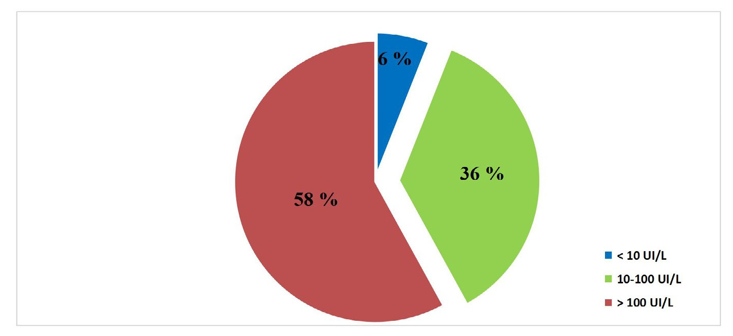
Figure 2: Distribution of Vaccinated Dialysis Patients Against Hepatitis B Virus According to Anti-Hbs Antibody Titer
Discussion
The hepatitis B virus (HBV) is a hepatotropic virus belonging to the Hepadnaviridae family and the genus Orthohepadnavirus [15]. It is one of the main causative agents of viral hepatitis worldwide and is distinguished from other hepatotropic viruses by several characteristics, including pronounced hepatotropism, a partially double-stranded DNA genome, and the ability to persist in the form of covalently closed circular DNA (cccDNA) within hepatocyte nuclei, creating a viral reservoir responsible for chronic infection even under effective antiviral therapy [16]. HBV is primarily transmitted via blood, sexual contact, and vertical routes, with perinatal transmission representing the main mode of infection in highly endemic regions, where the risk of chronicity can reach up to 90% in neonatal infection [17].
Acute hepatitis is asymptomatic in over 70% of adult cases, with spontaneous recovery in the majority, and the development of anti- HBs antibodies indicates protective immunity [18]. Conversely, chronic infection, defined by persistence of HBsAg for more than six months, affects less than 5% of infected adults but up to 90% of newborns, exposing them to an increased risk of progressive fibrosis, cirrhosis (20–30% of cases), and hepatocellular carcinoma [19,20]. In healthcare settings, hemodialysis patients constitute a particularly vulnerable population due to repeated exposure to blood and invasive equipment. Breaches in hygiene or biosafety protocols can lead to cross-contamination, justifying systematic vaccination of all patients at the start of dialysis and regular serological monitoring [21]. Patients with chronic kidney disease exhibit impaired humoral and cellular immunity associated with uremia, reducing their ability to mount an effective immune response after HBV vaccination [22].
This immunosuppression, combined with frequent comorbidities and a nosocomial environment conducive to cross-transmission, supports the use of intensified vaccination schedules, including double doses (40 µg instead of 20 µg) and a four-dose regimen (0, 1, 2, and 6 months) [23,24]. Seroconversion rates in dialysis patients (40–60%) remain substantially lower than in the general population (> 90%), and effective protection is generally defined as an anti-HBs titer ≥ 100 IU/L, higher than the threshold used in the general population [23,25]. Annual monitoring is recommended to detect declines in anti-HBs levels, with booster doses administered once titers fall below 100 IU/L [26]. In our study, the immunization rate was 94% among chronic dialysis patients who received post-dialysis vaccination, with 58.8% achieving strong immunity (anti-HBs > 100 IU/L).
These results exceed the seroconversion rates reported in the international literature, which generally range from 50% to 80% in dialysis patients despite intensified vaccination protocols. Our findings are comparable to those observed in Egypt (93%, including 89% with strong immunity), higher than in Marrakesh (88%), and substantially higher than rates reported in France (60%), Brazil (57%), and the United States (43.2%) [27]. Potential explanations include the use of a high-quality recombinant vaccine, strict adherence to the vaccination protocol, rigorous monitoring in a military setting with strict hygiene standards, and careful selection of patients eligible for vaccination. The lack of a statistically significant correlation between vaccine response and dialysis duration, treatment modality, or vascular access is consistent with the literature, which emphasizes the predominant influence of factors such as age, inflammatory status, and nutritional status [28].
The observed trend toward better responses in patients with arteriovenous fistulae may be attributed to a lower inflammatory state and reduced infection risk, promoting enhanced immunocompetence [29,30]. However, only 31.5% of patients were vaccinated after starting dialysis, indicating insufficient vaccination coverage despite international recommendations. This gap underscores inadequate implementation of prevention protocols and highlights the need for improved awareness, early screening, and systematic vaccination monitoring. Our study has several limitations: the small sample size (n = 54), the single-center design limiting generalizability, and the absence of longitudinal follow-up. Large multicenter studies are needed to confirm these results and to evaluate the efficacy of adjuvanted vaccines containing TLR-9 agonists (CpG-1018), particularly in non-responders [26].
Standardized pre-dialysis vaccination protocols—including systematic screening, early vaccination, and annual monitoring—are necessary to optimize coverage [31]. Ongoing training of healthcare personnel and patient awareness campaigns are essential to ensure effective prevention strategies in dialysis settings [32,33]. The study of additional factors, such as nutritional status and inflammatory markers (CRP, albumin), could improve understanding of their impact on vaccine response and guide adaptation of vaccination protocols to better target immunization interventions [34,35]. Despite these limitations, our results are encouraging and emphasize the critical importance of early vaccination, ideally before dialysis initiation, rigorous annual serological monitoring, and timely booster doses when anti-HBs levels fall below 100 IU/L to maintain optimal and durable protection.
Conclusion
Hepatitis B remains a major public health concern among chronic dialysis patients. Our study demonstrated a satisfactory immunization rate (94%) among vaccinated patients in our cohort, higher than that reported in many international studies. However, insufficient vaccination coverage (31.5%) reveals a significant gap in the implementation of prevention protocols. Improving immune protection in dialysis patients requires an integrated approach, including early vaccination (pre-dialysis stage), rigorous annual serological monitoring, systematic revaccination when anti-HBs levels fall below 100 IU/L, strict adherence to hygiene measures, ongoing healthcare personnel training, and increased patient awareness. Implementing these measures will substantially reduce the risk of HBV infection in dialysis environments.
References
- Seeger, C., & Mason, W. S. (2000). Hepatitis B virus biology. Microbiology and molecular biology reviews, 64(1), 51-68.
- World Health Organization. (2023). Hepatitis B Fact Sheet. WHO.
- World Health Organization. (2024). Global Hepatitis Report. Geneva: WHO.
- Shepard, C. W., Simard, E. P., Finelli, L., Fiore, A. E., & Bell,B. P. (2006). Hepatitis B virus infection: epidemiology and vaccination. Epidemiologic reviews, 28(1), 112-125.
- Centers for Disease Control and Prevention (CDC). (2001). Recommendations for preventing transmission of infections among chronic hemodialysis patients. MMWR Recomm Rep. 50(RR-05):1–43.
- Fabrizi, F., Martin, P., & Messa, P. (2017). Hepatitis B and hepatitis C virus and chronic kidney disease. Acta Gastroenterol Belg, 80(3):365–371.
- Zanetti, A. R., Van Damme, P., & Shouval, D. (2008). The global impact of vaccination against hepatitis B: a historical overview. Vaccine, 26(49), 6266-6273.
- Centers for Disease Control and Prevention (CDC). (2023). Pink Book: Hepatitis B Chapter.
- Kidney Disease: Improving Global Outcomes (KDIGO). (2020). Clinical practice guideline for the prevention, diagnosis, evaluation, and treatment of hepatitis B in CKD. Kidney Int Suppl.10(1):S1–S112.
- World Health Organization. Guide de bonnes pratiques pour la prévention de la transmission des infections dans les unités de dialyse. Geneva: WHO; 2019.
- Afzali M, Kalantar E, Azizi F, et al. (2022). Seroprotection after hepatitis B vaccination in hemodialysis patients: challenges and perspectives. J Prev Med Hyg, 63(2):E132–E138.
- Kallinowski, B., Werner, E., Schmitt, J., et al. (2021).Monitoring of hepatitis B immunity in dialysis patients: necessity and benefits. Nephrol Dial Transplant, 36(9):1658–1665.
- Chathuranga, L. S., Noordeen, F., & Abeykoon, A. M. S. B. (2013). Immune response to hepatitis B vaccine in a group of health care workers in Sri Lanka. International Journal of Infectious Diseases, 17(11), e1078-e1079.
- Al Saran, K., Sabry, A., Al Halawany, Z., & Ismail,M. (2014). Factors affecting response to hepatitis B vaccine among hemodialysis patients in a large Saudi Hemodialysis Center. Saudi Journal of Kidney Diseases and Transplantation, 25(1), 185-191.
- Revill, P. A., Chisari, F. V., Block, J. M., Dandri, M., Gehring,A. J., Guo, H., ... & Zoulim, F. (2019). A global scientific strategy to cure hepatitis B. The lancet Gastroenterology & hepatology, 4(7), 545-558.
- Nassal, M. (2015). HBV cccDNA: viral persistence reservoir and key obstacle for a cure of chronic hepatitis B. Gut, 64(12), 1972-1984.
- DaRoza, G., Loewen, A., Djurdjev, O., Love, J., Kempston, C., Burnett, S., ... & Levin, A. (2003). Stage of chronic kidney disease predicts seroconversion after hepatitis B immunization: earlier is better. American journal of kidney diseases, 42(6), 1184-1192.
- Fabrizi, F., Messa, P. (2021). Hepatitis B virus vaccination in chronic kidney disease: improved but still suboptimal. Nephron. 145(1):1–6.
- Eleftheriadis, T., Pissas, G., Antoniadi, G., Liakopoulos, V., Stefanidis, I. (2015). Factors influencing the immune response to hepatitis B vaccination in hemodialysis patients. World J Hepatol. 7(17):2090–2100.
- Girndt, M., Sester, U., Sester, M., Kaul, H., Köhler, H. (2001). Impaired cellular immune function in hemodialysis patients: the role of uremia and apoptosis. Clin Nephrol. 56(3):S23–S26.
- European Best Practice Guidelines. (2002). Vaccination in dialysis patients. Nephrol Dial Transplant.17(Suppl 7):48–55.
- Lampertico, P., Agarwal, K., Berg, T., Buti, M., Janssen, H. L., Papatheodoridis, G., ... & Tacke, F. (2017). EASL 2017Clinical Practice Guidelines on the management of hepatitis B virus infection. Journal of hepatology, 67(2), 370-398.
- McNulty, C.A., Callaghan, S. (2001). Hepatitis B immunisation in renal units: the case for booster doses. Commun Dis Public Health. 4(4):248–250.
- Janssen, H. L., Sonneveld, M. J., Brunetto, M. R. (2005). Review: Hepatitis B virus infection. Lancet. 365(9457):1237–1245.
- Hyun, J., Ko, H., Kim, M., et al. (2020). Immunogenicity of hepatitis B vaccine in patients with chronic kidney disease and dialysis. Clin Exp Nephrol. 24(7):573–581.
- Le Mire, M., Reesink, H.W., de Man, R.A., et al. (2011). Immunogenicity of hepatitis B vaccines in immunocompromised adults. J Hepatol. 55(6):1215–1223.
- HAFOUF, K. (2022). Evaluation du taux d’immunisation contre l’hépatite virale B chez les hémodialysés chroniques de Marrakech.
- Ma, B.M., Lim, J.Q., Lui, C.T. (2021). Hepatitis B vaccination in chronic kidney disease: efficacy, challenges, and future directions. Nephrology. 26(4):337–348.
- Héplisav-B (HepB-CpG). FDA/EMA Product Information – Hepatitis B Vaccine (Recombinant), Adjuvanted. 2020.
- Sit, D., KadiroÄ?lu, A.K., Yilmaz, M.E., et al. (2007). Seroconversion after hepatitis B vaccination in hemodialysis patients: results and prognostic factors. Turk J Med Sci. 37(6):371–377.
- Seeger, C., & Mason, W. S. (2000). Hepatitis B virus biology. Microbiology and molecular biology reviews, 64(1), 51-68.
- World Health Organization. Hepatitis B Fact Sheet. WHO; 2023.
- World Health Organization. Global Hepatitis Report 2024. Geneva: WHO; 2024.
- Zanetti, A. R., Van Damme, P., & Shouval, D. (2008). The global impact of vaccination against hepatitis B: a historical overview. Vaccine, 26(49), 6266-6273.
- Centers for Disease Control and Prevention (CDC). Pink Book: Hepatitis B Chapter. 2023.