

Journal of Applied Material Science & Engineering Research(AMSE)
ISSN: 2689-1204 | DOI: 10.33140/AMSE
Impact Factor: 0.98

Research Article - (2024) Volume 8, Issue 1
Utilization of Waste Chicken feathers as a Sustainable Resource for the Production of Bioplastic film with Keratin and Polyvinyl alcohol
Received Date: Jan 08, 2024 / Accepted Date: Jan 29, 2024 / Published Date: Feb 01, 2024
Copyright: ©Â©2024 Anurag Singh, et al. This is an open-access article distributed under the terms of the Creative Commons Attribution License, which permits unrestricted use, distribution, and reproduction in any medium, provided the original author and source are credited.
Citation: Singh, A., Maurya, S., D. (2024). Utilization of Waste Chicken feathers as a Sustainable Resource for the Production of Bioplastic film with Keratin and Polyvinyl alcohol. J App Mat Sci & Engg Res, 8(1), 01-15.
Abstract
Chicken being used as one of the major sources of food in tropical countries generates a huge amount of wastes in the form of feather which is generally discarded in the soil and water creating an enormous environmental pollution. Chicken feather are extensively found as waste material which takes a lot of time to degrade. This waste material can be extensively utilized for the extraction of a biopolymer from it. A sequence of chemical processes involving chemical method (alkaline hydrolysis) can be effectively used to extract Keratin from waste chicken feather. At present work is aimed to the obtained keratin is dispersed in varied proportions with Polyvinyl Alcohol (PVA) to produce biodegradable film by solvent casting method. The mechanical properties of film improved upto 5 wt% of keratin loading without compromising the properties. The water absorption percentage was found to have decreased drastically with the increment of Keratin in PVA. The morphological characteristics of the blend film were investigated by SEM. The presence of single peak via DSC implies that the blended film has good miscibility and the enhancement in thermal stability was extensively observed by TGA. The Keratin/PVA blended film shows good degradation when the concentration of keratin increases. The study provides the application of Keratin extracted from waste chicken feather which is most common waste. Hence their production in biodegradable film from waste can be efficiently used to reduce the environmental waste accumulation with the added advantage of biodegradable application.
Keywords
Chicken Feather, Keratin, Alkaline Hydrolysis, Pva, Biodegradable Film
Introduction
The food industry's poultry industry is a significant and varied subsector. Most people get a significant amount of their protein from poultry items such eggs, chicken, and turkey meat. An enormous amount of trash needs to be controlled due to the chicken industry's rising production. Along with producing a significant amount of waste biomass, the poultry business significantly complements the human diet with protein. The majority of the waste biomass produced takes the form of feathers, blood, bone fragments, lipids, and soft flesh material [1]. the rendering process now transforms these resources into meat and bone meal, feather meal, blood meal, and fats/oils.[2]. Feathers constitute a significant portion of the trash produced by the chicken business. Worldwide, there are about four million tons of feathers generated each year [3]. However, the majority are discarded into landfills or utilized as low-value animal food [4]. They also need a huge dump site and produce more diseases, chemicals, and heavy metals, all of which are bad for the environment and groundwater [5]. In contrast, utilization of this waste fraction as feed or fertilizer has been described in recent research, however there are still issues with significant energy consumption during disposal or conversion [1]. Utilizing biomass from feathers is therefore more necessary to preserve the environment and provide worthwhile goods. In order to create products for commercial usage, feathers must be used in an environmentally friendly manner. 90% of feathers are made of keratin, an insoluble, fibrous, and structural protein [6]. It is one of the most prevalent types of hard protein found in nature and is nutrient-dense and high in cysteine, arginine, threonine, and hydrophobic amino acids [7]. A variety of useful bio- based materials have been developed using research on feather keratin [8]. Feather keratin is employed in bioplastics and eco- composites, which is one of its intriguing uses [9]. A tough problem is still finding effective ways to extract keratin while causing the least amount of damage to the protein's secondary structure. The hard keratin has been reported to dissolve through a variety of chemical processes, including reduction or oxidation enzymatic and reactions in ionic liquids [10-12]. There are multiple effective ways to transform various biomass, including human hair and wool, and to create value-added biomaterials for use in various fields, such as tissue engineering [13]. In some earlier investigations, different types of keratins were utilized to alter the characteristics of various products, such as the production of a chitosan membrane to improve its wettability and tensile strength for biomedical purposes [14]. Similar to this, hydrolyzed keratin was applied to alter the soy protein film's physical characteristics [15]. Additionally, blend modification of feather keratin-based foams using sodium alginate was examined in a recent study, expanding the field's potential in the biomedical industries [16]. Like other protein-based films, films made exclusively of keratin have very low mechanical properties, are extremely fragile, and have a high moisture sensitivity. It has been the subject of numerous investigations to combine keratin with both natural and synthetic polymers in order to enhance the properties of keratin films [17-22]. However, because natural polymers have a high hydrophilicity, utilizing them in natural polymer/keratin blend films would only improve the film-forming ability rather than the water resistance in general. However, because the majority of synthetic polymers are not biodegradable, incorporating them in the keratin blends would not entirely solve the issue of environmental pollution. The alkaline hydrolysis method was used in this investigation to recover keratin from chicken feather waste biomass. To learn more about the keratin's physical and chemical characteristics, it was removed. In order to create bioplastic films based on FK, polyvinyl alcohol (PVA) was utilized as the coalescent agent together with the keratin particles. PVA is a synthetic, biodegradable, non-toxic polymer with excellent chemical stability and strong film-forming capabilities [23,24]. Materials for food packaging, tissue engineering, and medication delivery systems are made from PVA-protein films [25,26].
Introduction
The food industry's poultry industry is a significant and varied subsector. Most people get a significant amount of their protein from poultry items such eggs, chicken, and turkey meat. An enormous amount of trash needs to be controlled due to the chicken industry's rising production. Along with producing a significant amount of waste biomass, the poultry business significantly complements the human diet with protein. The majority of the waste biomass produced takes the form of feathers, blood, bone fragments, lipids, and soft flesh material [1]. the rendering process now transforms these resources into meat and bone meal, feather meal, blood meal, and fats/oils.[2]. Feathers constitute a significant portion of the trash produced by the chicken business. Worldwide, there are about four million tons of feathers generated each year [3]. However, the majority are discarded into landfills or utilized as low-value animal food [4]. They also need a huge dump site and produce more diseases, chemicals, and heavy metals, all of which are bad for the environment and groundwater [5]. In contrast, utilization of this waste fraction as feed or fertilizer has been described in recent research, however there are still issues with significant energy consumption during disposal or conversion [1]. Utilizing biomass from feathers is therefore more necessary to preserve the environment and provide worthwhile goods. In order to create products for commercial usage, feathers must be used in an environmentally friendly manner. 90% of feathers are made of keratin, an insoluble, fibrous, and structural protein [6]. It is one of the most prevalent types of hard protein found in nature and is nutrient-dense and high in cysteine, arginine, threonine, and hydrophobic amino acids [7]. A variety of useful bio- based materials have been developed using research on feather keratin [8]. Feather keratin is employed in bioplastics and eco- composites, which is one of its intriguing uses [9]. A tough problem is still finding effective ways to extract keratin while causing the least amount of damage to the protein's secondary structure. The hard keratin has been reported to dissolve through a variety of chemical processes, including reduction or oxidation enzymatic and reactions in ionic liquids [10-12]. There are multiple effective ways to transform various biomass, including human hair and wool, and to create value-added biomaterials for use in various fields, such as tissue engineering [13]. In some earlier investigations, different types of keratins were utilized to alter the characteristics of various products, such as the production of a chitosan membrane to improve its wettability and tensile strength for biomedical purposes [14]. Similar to this, hydrolyzed keratin was applied to alter the soy protein film's physical characteristics [15]. Additionally, blend modification of feather keratin-based foams using sodium alginate was examined in a recent study, expanding the field's potential in the biomedical industries [16]. Like other protein-based films, films made exclusively of keratin have very low mechanical properties, are extremely fragile, and have a high moisture sensitivity. It has been the subject of numerous investigations to combine keratin with both natural and synthetic polymers in order to enhance the properties of keratin films [17-22]. However, because natural polymers have a high hydrophilicity, utilizing them in natural polymer/keratin blend films would only improve the film-forming ability rather than the water resistance in general. However, because the majority of synthetic polymers are not biodegradable, incorporating them in the keratin blends would not entirely solve the issue of environmental pollution. The alkaline hydrolysis method was used in this investigation to recover keratin from chicken feather waste biomass. To learn more about the keratin's physical and chemical characteristics, it was removed. In order to create bioplastic films based on FK, polyvinyl alcohol (PVA) was utilized as the coalescent agent together with the keratin particles. PVA is a synthetic, biodegradable, non-toxic polymer with excellent chemical stability and strong film-forming capabilities [23,24]. Materials for food packaging, tissue engineering, and medication delivery systems are made from PVA-protein films [25,26].
Materials and Methods
Materials
Raw chicken feather collected from chicken shop of (Lucknow, India). Sodium sulfide, HCl, NaOH, Acetone was procured from LOBA Chemie Pvt. Ltd. (Mumbai, India). Polyvinyl Alcohol and Glycerol was generously given by Central Drug House Pvt. Ltd. (New Delhi, India). India). Distilled water a form of purified water, obtained by simple distillation free from impurities was of laboratory grade was used for washing and making solutions.
Pre-Treatment Process of Feathers
The used chicken feather was gathered from a Lucknow, Uttar Pradesh, chicken business. In this phase, discarded chicken feather that had been cleaned was first soaked in acetone then washed with soapy water to eliminate its impurities, then it was dried in an oven for 24 hours to remove any remaining grease, oil, strains, and bacteria. so that certain unnecessary components were eliminated and the offensive odor was reduced [27].
Extraction of keratin
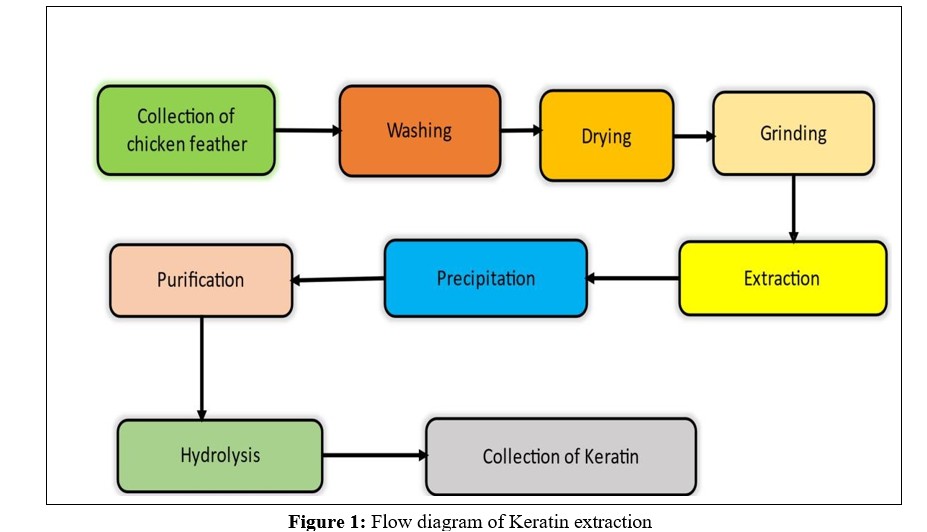
First, the dried waste chicken feather was accurately weighed for the extraction process. Next, a solution of 0.5 M sodium sulfide solution was made in a 1 L flask. The solution was then heated to 45°C, the pH was maintained between 10 and 13 in a basic medium, and the solution was properly stirred for 5 hours using a mechanical stirrer. Next, 20 g of weighted chicken feather were added to the produced solution. The solution was then centrifuged at 10,000 rpm for 5 minutes. After carefully gathering the supernatant liquid, the residual debris was filtered using filter paper. The 100 ml of HCl solution was made. Then, in a beaker, a filtrate solution that was previously obtained was continuously swirled while created HCl solution was added drop by precise ratio. The liquid supernatant was collected separately from the solid particles, and the entire procedure was meticulously repeated. Up until the pH was neutral, the solid particles were collected and repeatedly cleaned with deionized water. To obtain the dried sample, the solid particles underwent a drying process in a petri dish at a temperature of 45°C for 3-5 hours [28]. Keratin was the dried powder sample that was collected as shown in figure.1
Preparation of Keratin/Pva Based Biodegradable Film
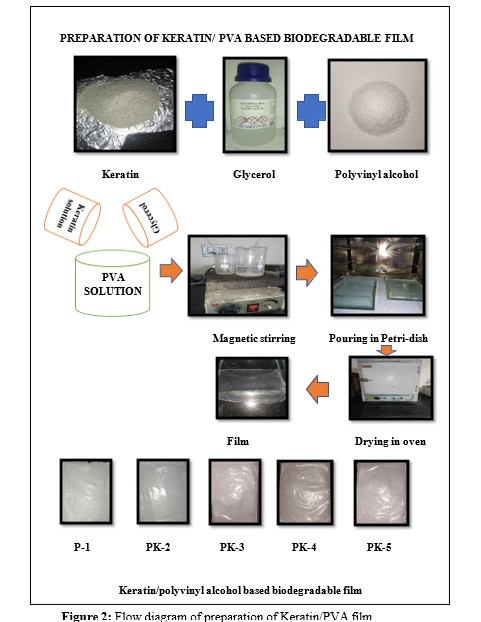
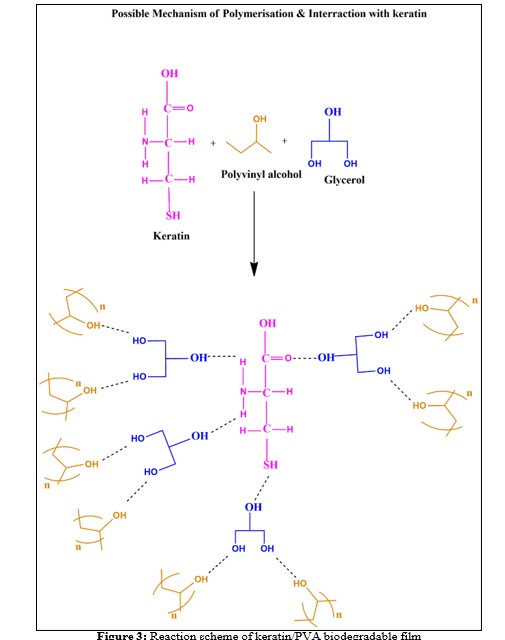
The solvent casting method was used to synthesized keratin/ PVA based biodegradable film and the process was depicted in figure.2. firstly, polyvinyl alcohol was dissolved in 100 ml of distilled water and stirred at 100°C for 30 minutes. Similarly, keratin (5%, 10%, 15%, 20%) was dissolved in 100 ml of 0.5 M of NaOH solution and stirred at 50°C for 15 minutes. After that the keratin solution were mixed with PVA solution and glycerol and continuously stirred at 60°C. the solution was stirred to get homogeneous solution at room temperature. The role of solution is very much important in the determination of final film structure, properties and performance. The various wt. ratios of Keratin/PVA are shown in table 1 below. The prepared mixture poured in a glass petri-dish and finally dried in oven at 50°C for 24 hours [29]. The possible reaction scheme is shown in figure.3 The prepared biodegradable film was carefully collected and kept in a foil for further analysis.
|
Sample code |
Keratin/PVA (wt.%) |
Glycerol (wt.%) |
|
P-1 |
0/100 |
40 |
|
PK-2 |
5/95 |
40 |
|
PK-3 |
10/90 |
40 |
|
PK-4 |
15/85 |
40 |
|
PK-5 |
20/80 |
40 |
Table 1: Proportion of Keratin/PVA film
Testing and Characterization
Density
The density of biodegradable film were determined as per ASTM D729 using Mettler Toledo instrument (Mettler-Toledo India Pvt. Ltd. Mumbai, India).
Mechanical Properties
The mechanical properties of Keratin/PVA biodegradable film were measured using a Universal Instron Tensile testing machine (Model 3382) according to ASTM D882.
Optical Properties
The percentage transmittance of film were measured using Haze meter (Model PTC/089/OP, RDNL ENGLAND) as per ASTM D 1003-07.
â??â??â??â??â??â??â??Water Absorption Test
Water absorption were measured as per ASTM D570. The given formula below used to calculate water absorption (%).
% Weight of absorption = wet weight−Conditioned weight × 100
conditioned weight
FTIR Analysis
The chemical structure and functional group present in Keratin/ PVA film were recorded at room temperature using a Thermo- Scientific Nicolet 6700. FT-IR Spectrometer (Thermo Nicolet Limited, USA) on a diamond disc in the range of 4000-400cm-1.
â??â??â??â??â??â??â??XRD Analysis
XRD analysis of Keratin/PVA film were performed using an X-ray diffractor unit (D8 Advance Eco Bruker, Germany) with Cu kα radiation (40KV, 30mA) at wavelength of 1.54A°.
â??â??â??â??â??â??â??Morphological Analysis
Morphology of biodegradable film was investigated using a scanning electron microscope (Model: JEOL-6490 LV, Make: Japan). Scanning electron microscope with high tension voltage of 20KV. The sample were conditioned for 1 hrs and coated with gold before imaging.
â??â??â??â??â??â??â??Differential Scanning Calorimetry (DSC) Analysis
The melting temperature of film were examined using a Perkin Elmer DSC 8000 (USA), from 25 to 250°C at a heating rate of 10°C/min in a nitrogen atmosphere and at 20 mL/min.
Thermo-Gravimetric Analysis (TGA)
The thermal analysis of keratin in the temperature range 10- 800°C was evaluated using Perkin Elmer Pyris 7.TGA (Waltham, Massachusetts USA) at a heating rate of 10°C/min in a nitrogen atmosphere
â??â??â??â??â??â??â??Biodegradability Test
For the determination of the biodegradability of plastics. One of the most appropriate methods i.e., soil burial. In this method the test is investigated in both natural and laboratory conditions. To study the biodegradation of film cut 5×5 cm2 from each sample and placed in pot prepared with compost. The pot is placed in environment for 14days. After the fixed interval of time remove the sample from soil clean and dried in oven. The percentage of weight loss of the specimen was calculated by given formula: Weight loss = [(M0 – M1)/M0] × 100%
Where,
M0 = Initial weight of film before soil burial test
M1 = Final weight of film after soil burial test and after drying so for constant weight at different times.â??â??â??â??â??â??â??
Results and Discussion
Results of keratin Yield
Yield percentage can be calculated by using the eq. stated as follows

Keratin is extracted with 81.1% yield from waste chicken feather which is relatively high in terms of converting waste raw material into value added product [30].
Solubility Determination
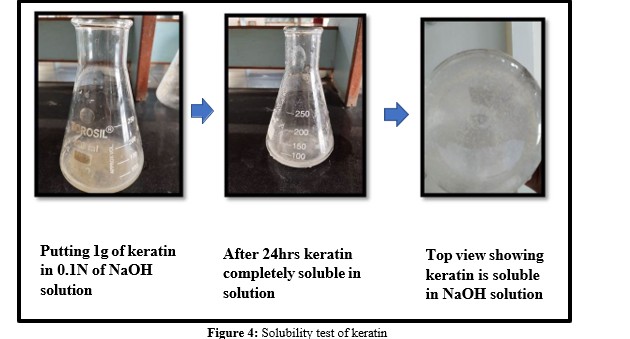
The solubility of keratin has depicted in figure.4 which displays the high solubility of keratin in a 0.1N NaOH solution. It is one of the most important factors to analyze the quality of keratin because higher solubility gives better keratin which can be easily mixed with different solvents to produce different matrix. The factors like particle size, temperature, time and % of alkali affect the solubility of keratin. Keratin contains large amount of amino group and carbonyl group which can create an attraction towards hydrogen bond for which it is soluble in alkaline acid [31].
Results of Keratin/PVA Film
Density Analysis
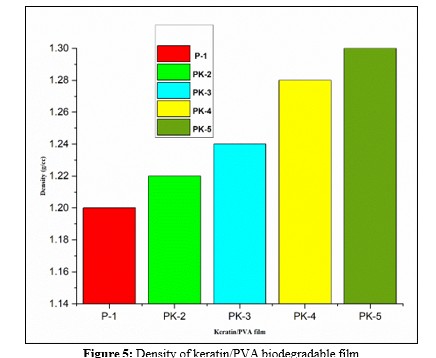
The density was tested as per ASTM D 792 of the prepared biodegradable film i.e., P-1, PK-2, PK-3, PK-4, PK-5 can be obtained from figure.5 from the graph, it is clearly observed that density increases in case of all samples and it is found to be 1.20g/cc, 1.22g/cc, 1.24g/cc, 1.28g/cc and 1.30g/cc etc. it is quite evident that the density of film increases with increasing the keratin weight% because keratin was denser (g/cc) than PVA. And it follows the rule of mixture [32].
Tensile Properties
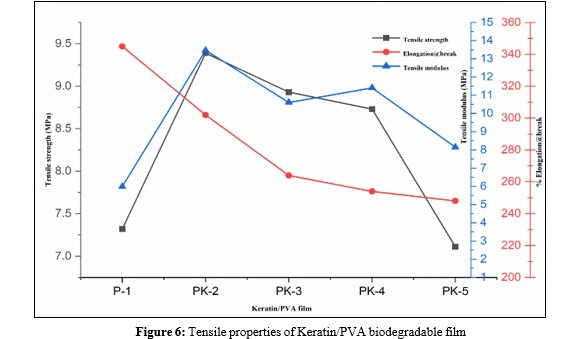
The prepared Keratin/PVA blended film was tested for mechanical properties using the Universal testing machine as per ASTM D 638 as shown in a, b and c below show tensile strength, percentage elongation and tensile modulus of different samples with varying weight percent of Keratin and PVA. It is clearly evident from figure.6 and there was decrease in tensile strength of specimen from 9.39Mpa to 7.11Mpa with increasing keratin weight percent. The tensile strength of sample P-1 is found to be 7.32Mpa, PK-2 is 9.39Ma, PK-3 is 8.93Mpa, PK-3 is 8.73Mpa and PK-4 is 7.11Mpa. whereas elongation at break of sample P-1, PK-2, PK-3, PK-4 and PK-5 are 345, 302, 264, 254 and 248 and. The sample P-1 has found with young modulus value of 5.99Mpa, PK-2 has 13.47Mpa, PK-3 has 10.61Mpa, PK-4 has 11.41Mpa and PK-5 has 8.15Mpa. hence PK-2 has highest young modulus value among all and PK-5 has lowest value. Therefore, it can be concluded that if we increase the level of keratin more than 10% the strength of film getting lowered. When Keratin and PVA are interacted by means of hydrogen bonding between H-atom of amine group (N-H) and hydroxy atom of PVA molecule results in declination of bond energy offered by PVA material, which affect the blended film on lowering mechanical strength [33]. The tensile properties of prepared film are shown in table 2.
|
Sample |
Tensile strength (Mpa) |
% Elongation at break |
Tensile modulus (Mpa) |
|
P-1 |
7.32 |
345 |
5.99 |
|
PK-2 |
9.39 |
302 |
13.47 |
|
PK-3 |
8.93 |
264 |
10.61 |
|
PK-4 |
8.73 |
254 |
11.41 |
|
PK-5 |
7.11 |
248 |
8.15 |
Table 2: Tensile data of Keratin/PVA biodegradable film
Optical Properties
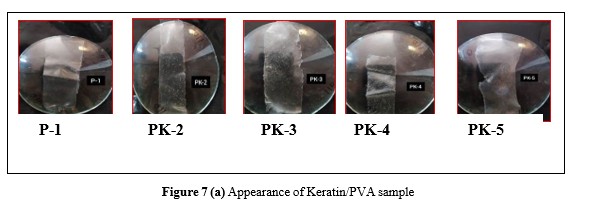
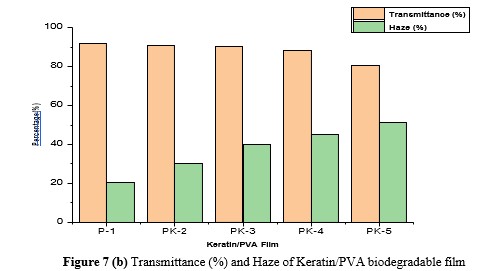
The prepared Keratin/PVA blended film was tested for optical properties using hazemeter as per ASTM D 1003 as shown in figure.7 shows the luminous transmittance(%) and haze of different sample with different weight % of Keratin and PVA It is clearly evident from fig. a and b the % transmittance of sample P-1 has 91.7%, PK-2 has 91%, PK-3 has 90.4%, PK-4 has 88.2 and PK-5 has 80.6% similarly, haze is 20.5, 37.5, 40.2, 45.4 and 51.2 respectively. It is well known that % transmittance is inversely proportional to haze. Here P-1 has highest % transmittance of 91.7% with a keratin loading of 20% the % transmittance of film significantly decreases to 80.6% at same time haze increases to 51.2 while maintaining a reasonably high value of 91% with 5% weight of keratin. Since transmittance is the ratio of total transmitted light and incident light. This phenomenon could be explained by light being reflected or refracted when it reaches opaque micron-size of keratin particles leading a loss of transmitted light. Additionally some agglomeration in polymer matrix, particular with high high keratin may protect light passing through film [34]. The optical properties of film given in table.3 belo.
|
Sample |
Transmittance (%) |
Haze |
|
P-1 |
91.7 |
20.5 |
|
PK-2 |
91 |
37.5 |
|
PK-3 |
90.4 |
40.2 |
|
PK-4 |
88.2 |
45.4 |
|
PK-5 |
80.6 |
51.2 |
Table 3: Optical properties data of Keratin/PVA film
Water Absorption Test
The water absorption test of prepared Keratin/PVA fim as per ASTM D 570. Different samples varying with different weight percent i.e P-1, PK-2, PK-3, PK-4 and PK-5. The water absorption percent of P-1 which is pure PVA film was found to be 68.12%. similarly, the water absorption decreases further with PK-2, PK-3, PK-4 and PK-5 are 60.10%, 48.14%, 35.13% and 29.12%. hence P-1 shows highest and PK-5 shows lowest water absorption % because PVA is water soluble polymer and it shows hydrophillic nature, it is quite evident that the water absorption % was decreasing as a result of the incorporation of keratin because keratin is hydrophobic in nature and there it by decreases its water absorption % with increasing keratin percent it reduces the hydroxyl group of PVA and it might have also acts as barrier to water molecules which penetrate Polyvinyl alcohol [35]. The water absorption of film are shown in table.4 below.
|
Sample |
Water absorption (%) after 24 hrs |
|
P-1 |
68.12 |
|
PK-2 |
60.10 |
|
PK-3 |
48.14 |
|
PK-4 |
35.13 |
|
PK-5 |
29.12 |
Table 4: Water absorption data of Keratin/PVA film
FTIR analysis
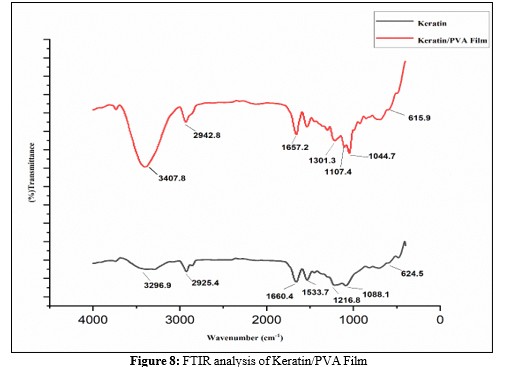
The major absorption bands were observed in order to identify the characteristics functional group of the samples with in range of 4000cm-1 to 400cm-1 figure.8 shows the infrared sectra of Keratin and Keratin/PVA biodegradable film. The keratin spectra display the characteristics peaks at 3296.9cm-1 signifies O-H stretching whereas the peak 2925.4cm-1 represents C-H stretching [36]. The peak 1660cm-1, 1533.7cm-1, 1216.8cm- 1 justify the existence of C=O stretch of Amide-I, C-H stretch and N-H stretching of Amide-II and CN stretch of Amide- III band respectively. and 418cm-1 C-S stretch associated with monosulphide and disulfide bond From the obtained characteristics peaks from FTIR spectra confirmed the quality of product [37]. Similarly It is clear that interactions between the hydroxyl groups in the PVA molecules and the amino acid functional groups in keratin molecules generated shifts in the spectra. i.e. The characteristics peak at 3407.8cm-1 represents the O-H stretching while peak 2942.8cm-1 corresonds to CH2 symmetric vibration respectively [38]. We can observe the presence of C=O stretch of Amide-I band at 1657.2cm- 1 similarly the apearance of absorption peak at 1301.3cm-1 attributes to NH bending and CN stretching of Amide-II band. The occurrence of peak at 1107.4cm-1 which are related to C-O stretching vibration of PVA. Similarly the peak 1044.7cm-1 and 615cm-1 indicate (S-O) stretch and (S-S) stretch of sulfoxide and disulfide bond of keratin. These absorption band at their respective characteristics peaks prove the presence of Keratin/ PVA blended film [38].
XRD analysis
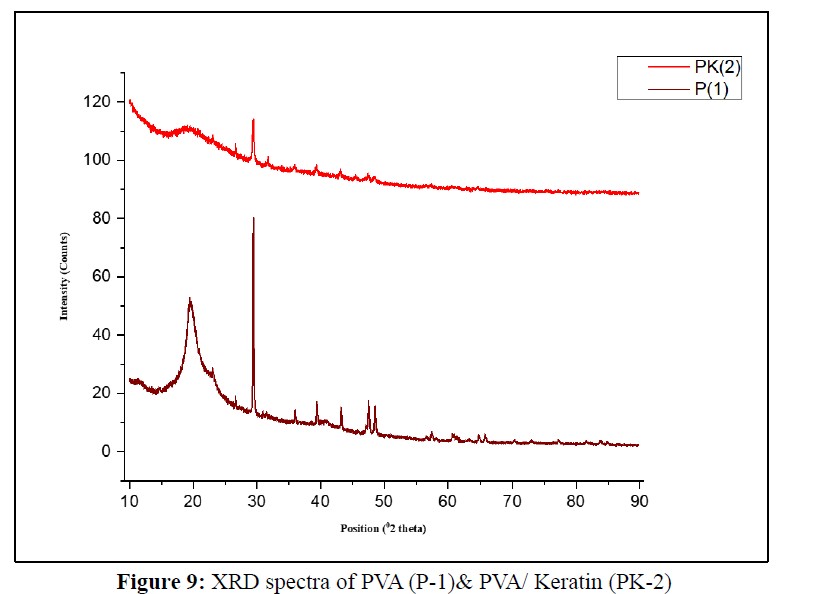
In XRD analysis when the sample represent a low intensity and broad peak to refers to amorphous in nature. And when the sample represent a high intensity and sharp peaks it refers to crystaline in nature in figure.9 represents the X-ray diffraction pattern of the resultant product of P-1 and PK-2 sample. The pattern shows that the obtained product P- 1 indicates the semi- crystalline nature in 2ÃÃÃÃÃÂ????ÂÃÃÃÂ???ÂÃÃÂ??ÂÃÂ?´ range of 20°-70° having relevants peaks observed at 23.10°, 26.56°, 36.07°, 39.40°, 43.20°, 47.55°, 48.50°, 57.46°, 64.59° and 65.69° respectively [39]. From the XRD spectra it is clearly illustrated that P-1 i.e virgin PVA film shows semiscrystalline nature. Similarly, the XRD spectra of sample PK-2 (Keratin/PVA film) that shows various sharp and broad peaks the occurrence of various peaks including 22.97°, 26.63°, 29.48°, 31.73°, 35.94°, 43.19°, 47.41° and 48.51° corresponds to 2ÃÃÃÃÃÂ????ÂÃÃÃÂ???ÂÃÃÂ??ÂÃÂ?´. From the diffraction pattern it is demonstrated that the existence of amorphous form as the hydroxyl and amine group are present that creates the intermolecular hydrogen bond. Therefore it can be concluded that the addition of keratin which has small crystalline and wide amorphous region the intensity of the peak is lower than the intensity obtained in virgin PVA film. It indicates that crystallinity of the blended film incorporated with keratin is slightly lower that shows amorphous nature [39].
SEM Analysis
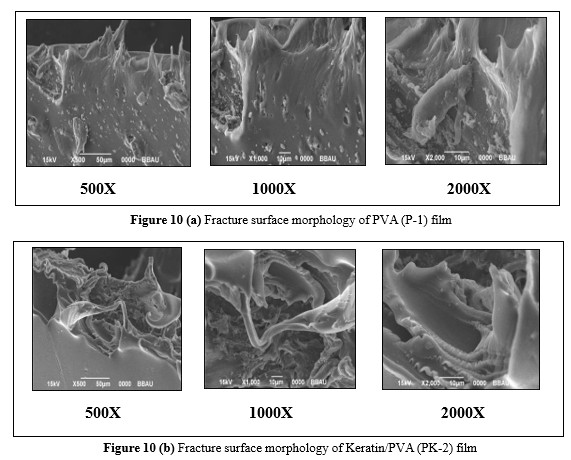
The fracture morphology of prepared film was examined by SEM in figure. 10 (a) and (b) the given sample P-1 and PK-2 shows different magnification range at 500x, 1000X and 2000X. it is observed that from fig.10 (a) i.e. pure PVA film depicted a clear and smooth fracture surface with cone shape and crack propagation [40]. Further it is observed for the Keratin/PVA blended film PK-2 in figure.10 (b) that are macroscopically homogeneous, yellowish optically semi-transparent film with smooth surface and less crack propagation. Furthermore despite that some particles of keratin agglomerates and strongly embedded in the PVA matrix. These characteristics of fracture surface of the film clearly, indicates good despersion and strong adhesion of keratin in PVA matrix at appropriate weight percent. In conclusion the morphological analysis of blend film revealed that the addition of keratin into pva enabled the development of well dispersed film with better interfaces and phase separation occured that shows the hydrogen bond are primarily responsible for the entaglement of PVA and Keratin polymer chain [41].
DSC Analysis
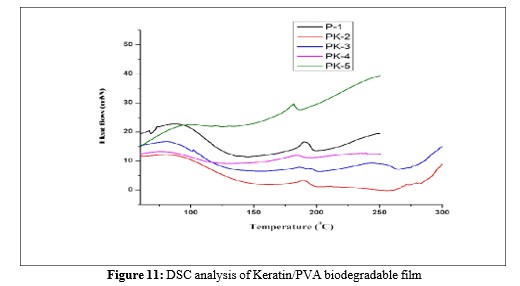
The primary goal of DSC analysis is to determine the temperature of the thermal glass transition of the prepared Keratin/PVA blended film that containing variable amount of keratin likely the sample are P-1, PK-2, PK-3, PK-4 and PK-5. During this analysis, derivatives are also produced mainly for the identification of endothermic phase change. We can observe the endothermic peak of the sample are shown in table 7 below. It may be assigned to be absorbed liquid material because of hygroscopic nature of PVA material from the graph in figure.11 it is clearly observed that the blended film had only one Tm peak indicating that the blend film was single phase. Keratin is a type of protein that has sixteen type of different amino acids that can be made hydrogen bond with hydroxyl group of PVA that decreases the melting energy which will improve the Tm of blend film. As compared to P-1 film showed Tm at 190.44°C and PK-2 at 190.36°C. it indicates the decrease in crystallinity. The addition of keratin reduces the ΔH values this indicates that blended film is less hydrophilic therefore it is concluded that prepared film is compatible and shows less crystalline nature as compared to virgin PVA film [42]. The endothermic peaks of keratin/PVA film of different samples are shown in table.5 below.
|
Sample |
Tm (°C) |
ΔH (J/g) |
XDSC (%) |
|
P-1 |
190.44 |
67.36 |
49.52 |
|
PK-2 |
190.36 |
39.53 |
29.10 |
|
PK-3 |
187.20 |
35.52 |
26.11 |
|
PK-4 |
183.40 |
31.75 |
23.34 |
|
PK-5 |
181.66 |
29.31 |
21.55 |
Table 5: DSC data of Keratin/PVA film
TGA Analysis
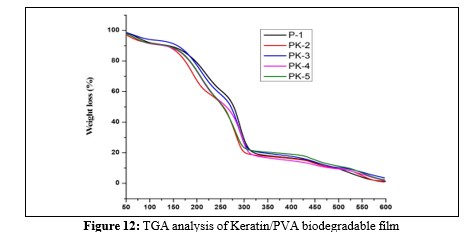
Thermo-gravimetric analysis of Keratin/PVA film blended film demonstrates its physical as well as chemical properties of proceeding and succeeding catalysation as a function of temperature with constant heating rate as a function of time with constant temperature or mass loss figure.12 shows TGA analysis of film having different amount of weight percent of keratin namely P-1, PK-2, PK-3, PK-4 and PK-5. We can observe Wt. loss in case of all samples at certain temperature from graph are
shown in Table.6 below. It is observed that there was declination in thermal stability of all the samples. Therefore, it is concluded that there was improvement in thermal stability of the sample as compared to virgin PVA sample. The enhancement is best seen at lower loading level of 5%. The increase in thermal stability can be attributed to the incorporation of keratin [43].
|
Sample |
T5% weight loss (°C) |
T10% weight loss (°C) |
T50% weight loss (°C) |
Onset temp. (°C) |
|
P-1 |
76.34 |
139.62 |
271.75 |
180 |
|
PK-2 |
85.23 |
158.47 |
280.86 |
191 |
|
PK-3 |
69.25 |
136.92 |
262.21 |
183 |
|
PK-4 |
68.74 |
133.15 |
256.12 |
175 |
|
PK-5 |
62.25 |
129.82 |
254.81 |
170 |
Table 6: TGA data of Keratin/PVA blend film
Biodegradability Test (Soil Burial Method)
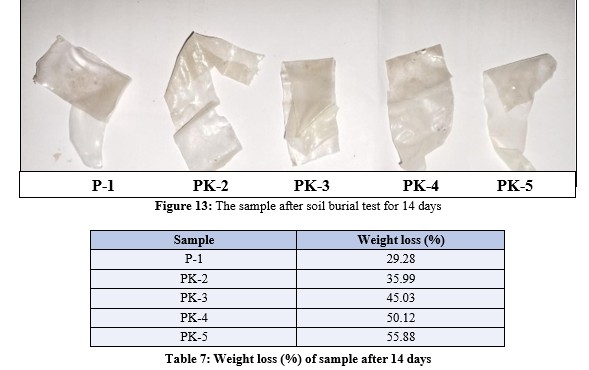
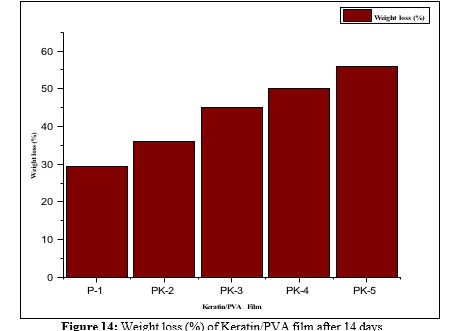
The soil burial test of prepared Keratin/PVA film are examined under compost soil which offered an environment where the humidity, temperature, PH and number of microorganisms etc. were mainly controlled the Weight loss% of the prepared film during 14 days w.r.t different concentration of keratin and PVA. depicted in figure.13. On 2 weeks this test analyses that how much weight of sample decreases in how many days. According to their decreasing values we can say how much degradation [43]. The weight loss of the prepared sample was investigated after 14 days as shown in fig.14. It is observed that PK-0 sample degraded slowly show less weight. loss as compared to other samples due to the addition of keratin. It is naturally occurring polymer that are highly susceptible to microbial attack as a result the blended film degrade at higher rate than neat PVA film [36]. The weight loss% of samples are shown in table 7 below. It is investigated through data when weight% of keratin increases there is a significant effect was found in the biodegradation of prepared film.
Conclusion
|
Weight loss (%) |
In order to create a bioplastic film, the highly porous keratin microparticles were chemically extracted and purified. In conclusion, we offered a strategy that would effectively use the waste biomass produced by the chicken business. Using the keratin that was removed from the chicken feathers, we were able to successfully create the bioplastic film in this case. Keratin obtained from waste chicken feather had a yield of 81.1% which is relatively high in case of waste raw material conversion into value added product. keratin is soluble in NaOH solution which defines its applicability to easily mixed with different solvent to produce different matrix. The obtained keratin was incorporated in varied proportion like 5%, 10%, 15% and 20% with Polyvinyl alcohol (PVA) to produce biodegradable film by solvent casting method in order to enhance the hydrophobicity of film. The fracture morphology was analysed by using SEM which confirmed the homogeneous dispersion of keratin in blended film. The blend film was observed to have smooth surface and less crack propagation as compared to virgin PVA film. With increase in the level of keratin above 15% in PVA material the mechanical properties like tensile strength, tensile modulus slightly decreased. The thermal analysis by DSC and TGA showed the sample with 5% keratin had best result with highest thermal stability. The blended film was characterized by FTIR and XRD techniques confirms that the absorption band at their characteristics peaks proves the presence of Keratin/PVA and XRD analysis indicated due to the incorporation of keratin crystallinity is slightly lower. The water absorption analyses the declination in % water absorption due to the incorporation of keratin. Soil burial test analyse that with increasing the percentage of keratin the weight loss % increases and shows good biodegradability. From the above test it is observed that the dispersion of keratin shows the best results obtained from this study shows that prepared blended film can be used for biomedical application. Hence this is an eco-friendly way to utilize waste material helping in reducing of environmental waste accumulation with added advantages for various applications [44].
References
- Brandelli, A., Sala, L., & Kalil, S. J. (2015). Microbial enzymes for bioconversion of poultry waste into added- value products. Food Research International, 73, 3-12.
- Lasekan, A., Bakar, F. A., & Hashim, D. (2013). Potential of chicken by-products as sources of useful biological resources. Waste management, 33(3), 552-565.
- Poole, A. J., & Church, J. S. (2015). The effects of physical and chemical treatments on Na2S produced feather keratin films. International Journal of Biological Macromolecules, 73, 99-108.
- Bertsch, A., & Coello, N. (2005). A biotechnological process for treatment and recycling poultry feathers as a feed ingredient. Bioresource technology, 96(15), 1703-1708.
- Cavello, I. A., Cavalitto, S. F., & Hours, R. A. (2012). Biodegradation of a keratin waste and the concomitant production of detergent stable serine proteases from Paecilomyces lilacinus. Applied biochemistry and biotechnology, 167, 945-958.
- Onifade A, Al-Sane N, Al-Musallam A, Al-Zarban S (1998) A review: potentials for biotechnological applications of keratin-degrading microorganisms and their enzymes for nutritional improvement of feathers and other keratins as livestock feed resources. Biores Technol 66:1–11
- Tiwary, E., & Gupta, R. (2010). Medium optimization for a novel 58 kDa dimeric keratinase from Bacillus licheniformis ER-15: biochemical characterization and application in feather degradation and dehairing of hides. Bioresource technology, 101(15), 6103-6110.
- Barone, J. R. (2009). Lignocellulosic fiber-reinforced keratin polymer composites. Journal of Polymers and the Environment, 17, 143-151.
- Pillai, C. K. S. (2010). Challenges for natural monomers and polymers: novel design strategies and engineering to develop advanced polymers. Designed Monomers and Polymers, 13(2), 87-121.
- Moritz, J. S., & Latshaw, J. D. (2001). Indicators of nutritional value of hydrolyzed feather meal. Poultry Science, 80(1), 79-86.
- Eslahi, N., Dadashian, F., & Nejad, N. H. (2013). An investigation on keratin extraction from wool and feather waste by enzymatic hydrolysis. Preparative Biochemistry and Biotechnology, 43(7), 624-648.
- Ji, Y., Chen, J., Lv, J., Li, Z., Xing, L., & Ding, S. (2014). Extraction of keratin with ionic liquids from poultry feather. Separation and Purification Technology, 132, 577-583.
- Lee, H., Hwang, Y. S., Lee, H. S., Choi, S., Kim, S. Y., Moon, J. H., ... & Bae, H. (2015). Human hair keratin- based biofilm for potent application to periodontal tissue regeneration. Macromolecular Research, 23, 300-308.
- Ma, B., Qiao, X., Hou, X., & Yang, Y. (2016). Pure keratin membrane and fibers from chicken feather. International journal of biological macromolecules, 89, 614-621.
- Garrido, T., Leceta, I., de la Caba, K., & Guerrero, P. (2018). Chicken feathers as a natural source of sulphur to develop sustainable protein films with enhanced properties. International journal of biological macromolecules, 106, 523-531.
- He, M., Zhang, B., Dou, Y., Yin, G., & Cui, Y. (2017). Blend modification of feather keratinâ?based films using sodium alginate. Journal of Applied Polymer Science, 134(15).
- Prasong, S., & Wasan, T. (2011). Preparation and characterization of hair keratin/gelatin blend films. Pakistan Journal of Biological Sciences: PJBS, 14(5), 351-356.
- Tanabe, T., Okitsu, N., Tachibana, A., & Yamauchi, K. (2002). Preparation and characterization of keratin–chitosan composite film. Biomaterials, 23(3), 817-825.
- Ke, T. Y., Li, D. X., & Yang, X. H. (2013). Preparation and properties of keratin/cmc blend membranes. Advanced Materials Research, 647, 190-194.
- Vasconcelos, A., Freddi, G., & Cavaco-Paulo, A. (2008). Biodegradable materials based on silk fibroin and keratin. Biomacromolecules, 9(4), 1299-1305.
- Kavitha, A., Boopalan, K., Radhakrishnan, G., Sankaran, S., Das, B. N., & Sastry, T. P. (2005). Preparation of Feather Keratin Hydrolyzateâ?Gelatin Composites and Their Graft Copolymers. Journal of Macromolecular Science, Part A, 42(12), 1703-1713.
- Akhlaghi, S., Sharif, A., Kalaee, M., Nouri, A., & Manafi, M. (2012). Morphology, nanomechanical and thermodynamic surface characteristics of nylon 6/feather keratin blend films: An atomic force microscopy investigation. Polymer international, 61(4), 646-656.
- Subramanian, U. M., Kumar, S. V., Nagiah, N., & Sivagnanam, U. T. (2014). Fabrication of polyvinyl alcohol- polyvinylpyrrolidone blend scaffolds via electrospinning for tissue engineering applications. International Journal of Polymeric Materials and Polymeric Biomaterials, 63(9), 476-485.
- Ye, M., Mohanty, P., & Ghosh, G. (2014). Biomimetic apatite-coated porous PVA scaffolds promote the growth of breast cancer cells. Materials Science and Engineering: C, 44, 310-316.
- Alves, P. M., Carvalho, R. A., Moraes, I. C., Luciano, C. G., Bittante, A. M. Q., & Sobral, P. J. (2011). Development of films based on blends of gelatin and poly (vinyl alcohol) cross linked with glutaraldehyde. Food hydrocolloids, 25(7), 1751-1757.
- Wang, X., Yucel, T., Lu, Q., Hu, X., & Kaplan, D. L. (2010).Silk nanospheres and microspheres from silk/pva blend films for drug delivery. Biomaterials, 31(6), 1025-1035.
- Gindaba, G. T., Filate, S. G., & Etana, B. B. (2019). Extraction and characterization of natural protein (deratin) from waste chicken feather. International Journal of Modern Science and Technology, 4(7), 174-179.
- Sharma, S., Gupta, A., Kumar, A., Kee, C. G., Kamyab, H., & Saufi, S. M. (2018). An efficient conversion of waste feather keratin into ecofriendly bioplastic film. Clean Technologies and Environmental Policy, 20, 2157-2167.
- Li, S., & Yang, X. H. (2014). Fabrication and characterization of electrospun wool keratin/poly (vinyl alcohol) blend nanofibers. Advances in materials science and engineering, 2014.
- Tesfaye, T., Sithole, B., & Ramjugernath, D. (2018). Valorisation of chicken feather barbs: Utilisation in yarn production and technical textile applications. Sustainable Chemistry and Pharmacy, 8, 38-49.
- Sinkiewicz, I., Å?liwiÅ?ska, A., Staroszczyk, H., & KoÅ?odziejska, I. (2017). Alternative methods of preparation of soluble keratin from chicken feathers. Waste and biomass valorization, 8, 1043-1048.
- Ramaraj, B. (2007). Crosslinked poly (vinyl alcohol) and starch composite films: Study of their physicomechanical, thermal, and swelling properties. Journal of applied polymer science, 103(2), 1127-1132.
- Liu, R., Li, L., Liu, S., Li, S., Zhu, X., Yi, M., & Liao, X.(2018). Structure and properties of wool keratin/poly (vinyl alcohol) blended fiber. Advances in Polymer Technology, 37(8), 2756-2762.
- Choi, J., Panthi, G., Liu, Y., Kim, J., Chae, S. H., Lee, C., ... & Kim, H. Y. (2015). Keratin/poly (vinyl alcohol) blended nanofibers with high optical transmittance. Polymer, 58, 146-152.
- Ooi, Z. X., Chan, K. L., Ewe, C. Y., Muniyadi, M., Teoh,Y. P., & Ismail, H. (2017). Evaluation of water affinity and soil burial degradation of thermoplastic film derived from oil palm ash-filled polyvinyl alcohol. BioResources, 12(2), 4111-4122.
- Obasi, H. C., Igwe, I. O., & Madufor, I. C. (2013). Effect of soil burial on tensile properties of polypropylene/plasticized cassava starch blends. Advances in Materials Science and Engineering, 2013.
- Li, X., Wei, Y., Jiang, S., Zhou, Y., Li, J., Li, K., ... & Li, J.(2021). Full Bioâ?Based Soy Protein Isolate Film Enhanced by Chicken Feather Keratin. Macromolecular Materials and Engineering, 306(5), 2100004.
- Aziz, S. B., Rasheed, M. A., Saeed, S. R., & Abdullah, O. G. (2017). Synthesis and characterization of CdS nanoparticles grown in a polymer solution using in-situ chemical reduction technique. Int. J. Electrochem. Sci, 12(4), 3263-3274.
- Chouhan, S., Bhatt, R., Bajpai, A. K., Bajpai, J., & Katare,R. (2015). Investigation of UV absorption and antibacterial behavior of zinc oxide containing poly (vinyl alcohol-g- acrylonitrile)(PVA-g-PAN) nanocomposites films. Fibers and Polymers, 16(6), 1243-1254.
- Wu, H., Xiao, D., Lu, J., Li, T., Jiao, C., Li, S., ... & Zhang,Z. (2020). Preparation and properties of biocomposite films based on poly (vinyl alcohol) incorporated with eggshell powder as a biological filler. Journal of Polymers and the Environment, 28, 2020-2028.
- Dou, Y., Zhang, B., He, M., Yin, G., Cui, Y., & Savina, I. N. (2015). Keratin/polyvinyl alcohol blend films cross-linked by dialdehyde starch and their potential application for drug release. Polymers, 7(3), 580-591.
- Dou, Y., Zhang, B., He, M., Yin, G., & Cui, Y. (2014).Preparation and physicochemical properties of dialdehyde starch crosslinked feather keratin/pva composite films. Journal of Macromolecular Science, Part A, 51(12), 1009- 1015.
- Ding, Y., Yang, Y., Ren, Y., Xia, J., Liu, F., Li, Y., ... & Tang,B. (2020). Extracellular production, characterization, and engineering of a polyextremotolerant subtilisin-like protease from feather-degrading Thermoactinomyces vulgaris strain CDF. Frontiers in microbiology, 11, 605771.
- Sharma, S., Gupta, A., Chik, S. M. S. T., Kee, C. Y. G., Podder, P. K., Subramaniam, M., & Thuraisingam, J. (2017). Study of different treatment methods on chicken feather biomass. IIUM Engineering Journal, 18(2), 47-55.