

Advances in Bioengineering and Biomedical Science Research(ABBSR)
ISSN: 2640-4133 | DOI: 10.33140/ABBSR
Impact Factor: 1.7

Research Article - (2020) Volume 3, Issue 3
Using GH-Method: Math-Physical Medicine to Investigate Different Contribution Margins of Fasting Plasma Glucose vs. Postprandial Plasma Glucose on HbA1C
Received Date: Apr 23, 2020 / Accepted Date: Apr 30, 2020 / Published Date: Sep 08, 2020
Copyright: ©Copyright: ©2020 Gerald C Hsu. This is an open-access article distributed under the terms of the Creative Commons Attribution License, which permits unrestricted use, distribution, and reproduction in any medium, provided the original author and source are credited.
Abstract
This paper displays results of the contribution margin calculation of fasting plasma glucose (FPG) vs. postprandial plasma glucose (PPG) on HbA1C. The dataset is provided by the author, who uses his own type 2 diabetes metabolic conditions control, as a case study via the “math-physical medicine” approach of a nontraditional methodology in medical research
Introduction
This paper displays results of the contribution margin calculation of fasting plasma glucose (FPG) vs. postprandial plasma glucose (PPG) on HbA1C. The dataset is provided by the author, who uses his own type 2 diabetes metabolic conditions control, as a case study via the “math-physical medicine” approach of a non-traditional methodology in medical research.
Math-physical medicine (MPM) starts with the observation of the human body’s physical phenomena (not biological or chemical characteristics), collecting elements of the disease related data (preferring big data), utilizing applicable engineering modeling techniques, developing appropriate mathematical equations (not just statistical analysis), and finally predicting the direction of the development and control mechanism of the disease.
Methods
The author has collected two sets of glucose data. The first set consists of finger-piercing (Figure 1: Finger) for a period of 1,484 days (5/1/2015 - 5/24/2019) with 5,936 data (four times a day, 1 FPG, 3 PPG). The second set involves the continuous monitoring sensor (Figure 2: Sensor) for a period of 385 days (5/5/2018 - 5/24/2019) with 28,105 data (73 times a day).
Based on wave theory and energy theory of physics, he conducted detailed glucose analyses (Figures 3 & 4) using both time-series (Time) and frequency-domain (Frequency) to calculate three sets of results:
1. Average glucose in Time
2. Energy based on square of glucose
3. Energy from Y-axis amplitude of Frequency
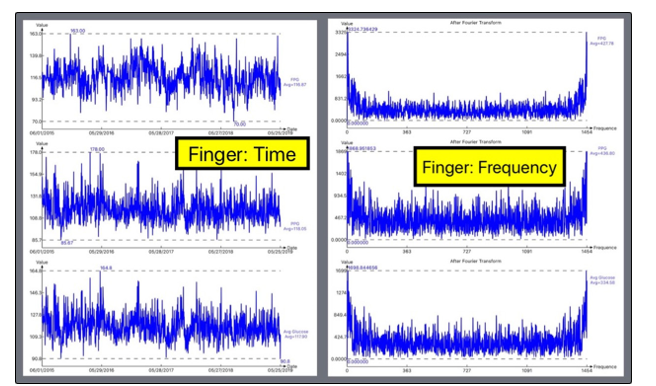
Figure 1: Finger (FPG, PPG, and Daily Glucose)
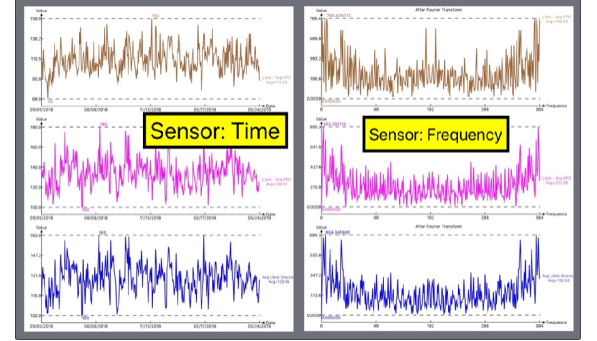
Figure 2: Sensor (FPG, PPG, and Daily Glucose)
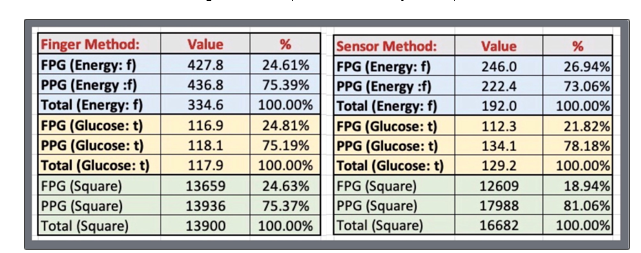
Figure 3: Contribution margin calculations based on Glucose and two Energy methods (Finger vs. Sensor)
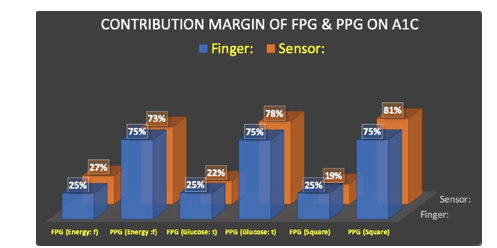
Figure 4: Contribution margin graphics based on Glucose and two Energy methods (Finger vs. Sensor)
Results
As depicted in Figure 4, the summarized results are as follows: FPG: Finger 25%, Sensor 19%-27% PPG: Finger 75%, Sensor 73%-81%
The Finger method provides more precise percentages due to the limited collection of four data per day (25% vs. 75%), while the Sensor method provides wider ranges of percentages due to a bigger collection of 73 data per day.
For the past five years, the author has frequently performed “dynamic re-adjusting via trial-and-error” analysis of glucose margins. From those repetitive patterns, he has already observed the contribution margin of FPG at about 20-30%, whereas the input for PPG at about 70-80%. This paper’s sophisticated physical and statistical analyses have further reconfirmed his earlier findings.
Conclusions
This analysis based on the GH-method: math-physical medicine can provide an accurate split of contribution margin between FPG and PPG. This particular knowledge on glucose is extremely practical and useful to help T2D patients on controlling their HbA1C [1-5].References
- Hsu Gerald C (2018) Using Math-Physical Medicine to Control T2D via Metabolism Monitoring and Glucose Predictions. Journal of Endocrinology and Diabetes 1: 1-6.
- Hsu Gerald C (2018) Using Math-Physical Medicine to Analyze Metabolism and Improve Health Conditions. Video presented at the meeting of the 3rd International Conference on Endocrinology and Metabolic Syndrome.
- Hsu Gerald C (2018) Using Signal Processing Techniques to Predict PPG for T2D. International Journal of Diabetes & Metabolic Disorders 3: 1-3.
- Hsu Gerald C (2018) Using Math-Physical Medicine and Artificial Intelligence Technology to Manage Lifestyle and Control Metabolic Conditions of T2D. International Journal of Diabetes & Its Complications 2: 1-7.
- Hsu Gerald C (2018) A Clinic Case of Using Math-Physical Medicine to Study the Probability of Having a Heart Attack or Stroke Based on Combination of Metabolic Conditions, Lifestyle, and Metabolism Index. Journal of Clinical Review & Case Report 3: 1-2.