

Current Trends in Business Management(CTBM)
ISSN: 2995-4010 | DOI: 10.33140/CTBM



Research Article - (2026) Volume 4, Issue 1
Understanding of Climate Change Awareness in Afghanistan: An Empirical Study
Received Date: Jan 19, 2026 / Accepted Date: Feb 17, 2026 / Published Date: Feb 20, 2026
Copyright: ©2026 Tawfiqullah Muradi, et al. This is an open-access article distributed under the terms of the Creative Commons Attribution License, which permits unrestricted use, distribution, and reproduction in any medium, provided the original author and source are credited.
Citation: Muradi, T., Sandhu, V. (2026). Understanding of Climate Change Awareness in Afghanistan: An Empirical Study. Curr Trends Business Mgmt, 4(1), 01-12.
Abstract
Climate change poses a significant threat to ecologically fragile and politically complex regions, such as Afghanistan. Despite its vulnerability to environmental degradation, droughts, and extreme weather events, public awareness and understanding of climate change remain limited in Afghan society. This study presents an empirical investigation into climate change awareness among Afghan citizens, utilizing a structured survey and quantitative analysis. A sample of 484 respondents was collected from four regions in Afghanistan: Kabul, Herat, Mazar, and Kunduz. The study employs the structural equation modelling (SEM) technique, using AMOS-24, to examine the impact of awareness, green products, and government policies on citizens' intentions and behaviors related to climate change. The findings show that green products affect the public's awareness of climate change, as well as the overall level of awareness among respondents. Limited exposure to government policies may reduce their impact on raising public awareness. Additionally, green products have a much greater influence than government regulations related to climate change. The study emphasizes the importance of integrating climate education into national curricula, enhancing media outreach, and implementing community-specific awareness campaigns, providing policy insights for environmental management and sustainable development in Afghanistan.
Keywords
Public Awareness, Green Products, Government Policy, Climate Change Behavior, Climate Change Intention, Afghanistan
Introduction
Climate Change is a phenomenon that may lead to natural disasters and refers to a significant shift in weather conditions over several decades or more, which can be caused by both natural and human activities [1]. Scientists have identified human activities from the 18th century to the present, including industrialization, development, deforestation, and combustion, as contributing factors to the rise in atmospheric carbon dioxide levels (Denchak & Turrentine, 2021). In Afghanistan, a pronounced incidence of climate change has occurred over the last decade, and its effects are expected to persist [2,3].Climate change in Afghanistan, particularly in central provinces like Parwan and Kapisa, has caused prolonged drought, impacting daily activities like farming. Strategic action is needed to mitigate future challenges [4].The National Policy on Climate Change aims to mobilize and guide government agencies, industries, communities, and stakeholders in addressing climate change challenges holistically. It complements existing policies and international conventions, focusing on strategic thrusts and increasing public awareness and involvement in climate change response. The policy complements existing policies and promotes global climate change goals.
This study investigates climate change by examining public awareness, green product usage, and government policies. It reveals an indirect relationship between variables, offering solutions for addressing climate change awareness. The study discusses theoretical context, methodology, and data analysis, and concludes with a summary and recommendations for future research. Afghanistan's National Adaptation Program Action (NAPA) focuses on sectors like agriculture, water resources, forestry, biodiversity, health, energy, and waste. A vulnerability measurement was created for each domain using socioeconomic assessment and climatic parameters. The Thomas Saaty weighting method was used to determine the harmful effects of climate change, with sub-sectoral vulnerability indices added together to create a sectoral vulnerability indicator [5].

Figure 1: Afghanistan, Vulnerability Ranking of Sectors to Climatic Hazards and Climatic Changes
(Source: https://www.nepa.gov.af )
Additionally, in Climate Change Scenarios, as the DRR Project has collected climate change data for the entire Afghanistan, these 114 image datasets cover the whole country. The data used also originates from the CHELSA project, which modelled climate change for the periods 2050 (average for 2041-2060) and 2070 (average for 2061-2080) at a resolution of 1km. It is a downscaled model based upon IPCC5 (Intergovernmental Panel on Climate Change – 5th edition) using the CM5A-MR model (mid-resolution version of the IPSL-CM5A Earth system model). Moreover, for each period (2050 and 2070), provide 3 potential climate change scenarios, using the so-called RCPs (Representative Concentration Pathways). These predict global average temperature change by 2100 in the range of " RCP2.6: 0.3 to 1.7 C°; RCP4.5: 1.1 to 2.6 C°; and RCP8.5: 2.6 to 4.8 C°. This data has been extracted for each settlement in Afghanistan. Additionally, the Automotive Skills Development Council (ASDC) provides timely insights into the current climate and climate change scenarios [6].
Theoretical Context
The climate change awareness theoretical framework can guide the creation of effective communication strategies for policymakers and stakeholders in educational settings, leveraging evidence-supported communication strategies such as language choices, narratives, emotions, and visual images, and utilizing health-framed information to engage people across the political spectrum [7-9]. Implementing a multi-platform approach to climate literacy, including storytelling, visual storytelling, podcasts, and community/network building, can effectively communicate the importance of climate change and drive action-oriented solutions, further enhancing awareness and engagement [10]. Moreover, prioritising advanced research, innovative strategies, and the effective use of language techniques can bridge the gap between scientific complexity and public understanding, facilitating the development of appropriate policies and sustainable solutions to address climate change effectively [11].

Figure 4: Proposed Model
Key climate change indicators include greenhouse gas emissions, radiative forcing, Earth's energy imbalance, surface temperature changes, human activities' warming, carbon budget, and global temperature estimates [12,13]. The indicators offer a comprehensive climate system overview, linking atmospheric changes to energy flows, enabling informed decisions and proactive climate crisis response, influenced by reason, and depict that reasoning is not just an abstract human ability but is applied to behaviour, enabling behaviour to be explained and predicted [14,15].
Hypothesis and Development Model
Public Awareness
The study reveals that public awareness of climate change is influenced by the understanding of green products and government policies, with these factors having an impact on public awareness [16]. High wind storms are influenced by global warming, but energy release is not solely attributed to it. Natural resources are essential for human survival, but their excessive use by a few individuals, including those involved in agriculture, urban settlements, industrial plants, and social infrastructure, contributes to climate change [17]. Additionally, Water acts as a temperature-stabilizing agent on the Earth's surface and as a source of clean Water for human life. Therefore, Human activities like deforestation can hurt the environment, causing heat islands, haze, ozone layer thinning, acid rain, drought, and soil erosion. These effects are particularly pronounced in areas with high population and active development. Tree cutting also contributes to heat island events, as many cut trees are replaced with paved surfaces and construction, especially in urban areas, resulting in no increase in temperature absorption by suspended matter and carbon dioxide gas. However, the quantity of carbon dioxide is also contributed to by the burning of fossil fuels from vehicles, and this further contributes to increased temperatures in urban areas.
H1: Public Awareness has a positive impact on climate change intention
H5: Public Awareness has a positive impact on climate change behavior
Green Product to Climate Change
Green marketing has a significant influence on consumer attitudes and awareness of climate change, promoting environmentally friendly products and behaviours [18]. Green products reduce ecological impact, promote sustainable development, boost competitiveness, and enhance business efficiency, driven by internal factors like environmental attitudes and media attention [19]. Green design methods, incorporating green technology and materials, can significantly reduce the environmental impact of product manufacturing, providing specific guidelines for sustainable production [20]. Furthermore, Green products, including enzymes, significantly reduce CO2 emissions and carbon and chemical demands, offering a sustainable solution to combat climate change [21]. Forest-based products like harvested wood help reduce climate change by acting as carbon sinks and reducing fossil fuel emissions by reducing the production of high-carbon alternatives like cement and steel [22]. These green innovations and practices collectively contribute to minimizing the adverse effects of climate change and promoting a more sustainable environment. These efforts have been made to raise awareness of green products (Ojo & Fauzi, 2020). Public awareness should be increased about the importance of environmentally friendly production using green products in daily life, rather than just as a commercial gimmick. Overall, embracing green products not only benefits the environment but also aligns with shifting consumer values, promoting Sustainability, and mitigating climate change in the long run.
H2: Green Product has a positive impact on climate change Intention
H6: Green Product has a positive impact on Behavior toward climate change
Government Policy Awareness
Government policies significantly impact public perception and behavior towards climate change mitigation, with initiatives like gasoline warning labels boosting self-efficacy and promoting sustainable transportation emissions policies [23]. Political ideology and affiliation significantly influence perceptions of government control over environmental behavior, which in turn predict climate change knowledge and public behavior [24]. Government policies for climate change adaptation, like planned power outages, can either positively or negatively impact public decarbonization behaviors, impacting mitigation and adaptation initiatives [25]. Understanding these dynamics is crucial for policymakers to develop effective climate change mitigation strategies that resonate with the public and promote sustainable behavior change [26]. In addition to this, Government policies promoting climate change behavior involve a combination of top-down and bottom-up approaches, incorporating behavioral science principles to encourage emission reduction and carbon pricing [27,28]. Successful policies often offer co-benefits, gain industry acceptance, and receive bipartisan support, as seen in regulations improving fuel economy and appliance efficiency standards (R. Karapin et al., 2023). By combining these strategies, Governments can promote climate-friendly behaviors. Still, most respondents are unaware of climate change policies, possibly due to the high awareness of policy targets or specific sectors. The hypothesis for the government policies is closely related to the intention and behavior, and its impact is:
H3: Government Policies have a positive impact on climate change Intention
H7: Government Policies have a positive impact on climate change behavior
Climate Change Intention
Public perceptions of effectiveness and disruptiveness influence climate action intentions and effective strategies for increasing public intention to take action against climate change include utilizing Protection Motivation Theory (PMT), and the messages are the target self-efficacy and response efficacy, as they have been shown to increase the intention to reduce fossil fuel use [29-31]. Moreover, Demographic factors, particularly those related to women and individuals with higher education, significantly influence the gap between climate change intention and behaviour (Raya et al., 2014; Raya et al., 2016) [32,33]. Education has a positive influence on both technical and behavioural changes, possibly due to increased effort and knowledge, while economic reasons drive efforts to conserve electricity and Water [33].
Additionally, residing in a community with a higher level of education can also increase individuals' concern about climate change [32]. Studies have shown that the intention to engage in climate-protective behaviors is related to beliefs about behavioral efficacy and moral beliefs, with a weak relationship between these beliefs and actual Behaviour [34]. Lastly, the restriction heuristic's dominance has been linked to lower-impact climate change mitigation intentions, emphasizing the importance of distinct heuristics and biospheric values in shaping individuals' climate action intentions [35]. The hypothesis for this variable is:
H4: Climate change intention has a positive effect on climate change Behavior
Climate Change Behavior
Social identification influences environmental movement engagement, promoting high-impact behaviours like reducing food waste and flying less, which can complement policy measures in effectively addressing climate change [36]. To promote sustainable climate change behaviours in urban populations, a combination of strategies, including integrating green infrastructure, is crucial for reducing energy costs and enhancing well-being [37]. Secondly, focusing on Active citizen participation in sustainable projects involving mobility, energy, public space, and housing is highly effective in mitigating the effects of climate change [38]. Additionally, raising climate change awareness and beliefs at both destination and individual levels can encourage sustainable behaviour among visitors, emphasizing the significance of nudge theory and creative practices [39]. Cities can foster resilient urban environments by integrating climate change mitigation strategies, with young adults' climate change awareness influencing their behavioral intentions, with climate change anxiety accurately predicting fear levels [40]. Negative emotions like fear, guilt, and anger are used in advertising campaigns to induce behavioral intentions and drive action, highlighting the significance of emotional appeals in raising climate change awareness among young adults [41].
Research Methodology
Study Area
Afghanistan is a country located in central Asia. It borders Pakistan to the south and east, Iran to the west, and Turkmenistan, Uzbekistan, and Tajikistan to the north. The northeast has a shared border with China. Afghanistan's main exports are dried fruits, carpets, cotton, and cereals; key imports include petroleum products, garments, peat, and wheat. Additionally, total exports reached $1.9 billion in 2023, representing a 0.4% increase from the previous year. Thus, it has $7.8 billion in imports, representing a 23% increase from the prior year [41]. We selected Afghanistan for our research study due to the significant changes in its climate over several years and the associated impact on climate change vulnerability. As a least-developed country, nearly 90% of the population derives the majority of their income from the agricultural sector and contributes significantly to the country's gross domestic product. It is located in an arid and semi-arid geographical region in terms of climate and is struggling with the phenomenon of global warming, which impacts "water scarcity" more than other countries in the area [42]. To sum up, agriculture is often referred to as the backbone of the economy, providing raw materials for industrial processing; thus, it plays a crucial role in alleviating poverty, ensuring food security, and promoting national development. However, the central states (Kabul, Herat, Mazar, and Kunduz) and provinces were chosen for this study to evaluate the significant factors that influence intention and behavior toward climate change.
Data Collection
To achieve these study objectives, a survey technique is employed for data collection. The dataset was used to collect data from the survey using a random sampling method. A total of 484 respondents cover Indigenous people, including students, government employees, non-government employees, and those who have already retired in four central states of Afghanistan, namely Kabul, Herat, Mazar, and Kunduz, involved in this study, using the safe (online) form. The online questionnaire was designed using Google Forms and sent and collected via email. The final questionnaire was received from 484 respondents from 500 targeted respondents, as presented in Table 1
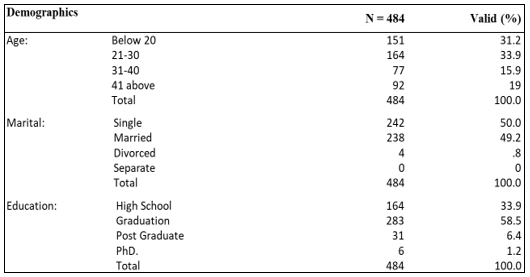
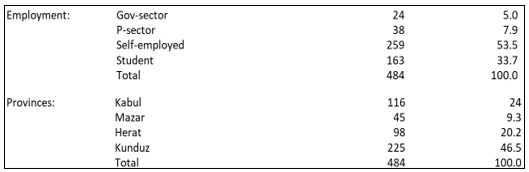
Table 1: Demographic Characteristics of Respondents
Measurement of Variables
This study comprised a total of five variables (constructs). This variable encompasses green products, government policy, public awareness, intention to address climate change, and actual climate change behavior. The entirety of the study's construct measures was taken from the existing literature and adapted to work in an investigation setting [43]. A five-point Likert-type scale was used to rate the measurements, with a range of "1 = strongly disagree" to "5 = strongly agree". Structural equation modelling (SEM) was employed to determine the relationship between variables [44,45]. Specifically, all variables were measured using five items: government policy awareness of climate change, public awareness of climate change, climate change intention and climate change behavior [43,46]. green product awareness on climate change, adapted from and the direct and indirect relationships as given in Figure 1 [47].
Data Analysis
Structural Equation Modelling (SEM) is a technique used to test models with latent variables [48]. In earlier studies, SEM is a common and recommended multivariate analysis method in behavioral and psychological research. Therefore, in this study, we adopted the SEM technique to test the proposed hypotheses. Analysis of Moment Structures (AMOS) software was used to analyze the data. SEM analysis involves two models: the measurement model and the structural model [49]. The measurement model was employed to establish the reliability and validity of the constructs, while the structural model was utilized to estimate the relationships between the hypothesized constructs. In the results section, we estimated these two models to achieve the study's objectives.
Results of the Study
Measurement Model, Reliability, and Validity
The fit of the measurement model is evaluated by confirmatory factor analysis (CFA) to determine the factor loading of the construct. The proposed constructs for studies include Green Product (GP), Government Policy (GP), Public Awareness (PA), Climate Change Intention (CCI), and Climate Change Behavior (CCB). Concurrently, the overall fit with the data and its validity were evaluated to verify the validity and reliability of the model. According to the preferred method for checking the internal consistency of each construct is to estimate the coefficient alpha for that construct [50,51]. To reference Table 2, Cronbach's alpha coefficients were estimated for internal validity, with values ranging from 0.770 to 0.939, which exceeds the benchmark value of 0.70 suggested by [52]. The values obtained, therefore, suggest the internal consistency and reliability of all the studied constructs. Besides, according to the ideal loading of factors is above 0.700 or 0.600, as proposed by [52,53]. All loadings were significant, ranging from 0.611 to 0.983. We tested the reliability of the constructs using a composite reliability measure, which assesses the extent to which items within the construct accurately measure the latent concept. The convergent validity of the confirmatory factor analysis results should be supported by composite reliability, as well as the computed average variance extracted [52]. The values of convergent validity and reliability are given in Table 2.
|
Construct |
Items |
Standardized factor loadings |
Cronbach’s Alpha |
CR |
AVE |
|
Climate Change |
CCB3 |
.611 |
0.770 |
0.777 |
0.540 |
|
Behavior (CCB) |
CCB4 |
.811 |
|
|
|
|
|
CCB5 |
.769 |
|
|
|
|
Public Awareness |
PA1 |
.975 |
0.939 |
0.931 |
0.696 |
|
(PA) |
PA2 |
.894 |
|
|
|
|
|
PA3 |
.678 |
|
|
|
|
|
PA4 |
.762 |
|
|
|
|
|
PA5 |
.698 |
|
|
|
|
|
PA6 |
.983 |
|
|
|
|
Green Product (GP) |
GP1 |
.804 |
0.929 |
0.930 |
0.729 |
|
|
GP2 |
.959 |
|
|
|
|
|
GP3 |
.915 |
|
|
|
|
|
GP4 |
.859 |
|
|
|
|
|
GP5 |
.660 |
|
|
|
|
Government Policy |
GovP1 |
.635 |
0.845 |
0.846 |
0.524 |
|
(GovP) |
GovP2 |
.646 |
|
|
|
|
|
GovP3 |
.808 |
|
|
|
|
|
GovP4 |
.761 |
|
|
|
|
|
GovP5 |
.692 |
|
|
|
|
Climate Change |
CCI1 |
.693 |
0.853 |
0.855 |
0.666 |
|
Intention (CCI) |
CCI2 |
.845 |
|
|
|
|
|
CCI3 |
.896 |
|
|
|
|
Note: two items from climate change behavior (CCB1 and CCB2) and 2 items from climate change intention (CCI4 and CCI5) have been removed due to the low loading during the exploratory factor analysis (EFA) |
|||||
Table 2: Convergent Validity and Reliability
|
Constructs |
Mean |
SD |
CCB |
PA |
GP |
Gov-P |
CCI |
|
Climate Change Behavior |
3.6073 |
1.15412 |
0.735 |
|
|
|
|
|
Public_ Awareness |
1.6059 |
0.79948 |
-0.090 |
0.834 |
|
|
|
|
Green _Product |
4.2337 |
0.65713 |
0.291 |
-0.174 |
0.854 |
|
|
|
Government _Policy |
3.6931 |
1.03155 |
0.104 |
0.419 |
-0.137 |
0.724 |
|
|
Climate Change Intention |
2.0289 |
1.00974 |
0.133 |
0.482 |
0.001 |
0.490 |
0.816 |
|
Note: Significance level at *P < 0.05, ** p < 0.01, *** p < 0.001 |
|||||||
Table 3: Correlation, Mean, and Standard Deviation
Moreover, composite reliability and average variance extracted must be above 0.700 and 0.500, respectively [52,53]. As depicted in Table 2, composite reliability values ranged from 0.777 to 0.931 and exceeded the 0.700 threshold value proposed by [51]. The average variance extracted results ranged from 0.524 to 0.729 and were above the benchmark value of 0.500 recommended by both [52,53]. These results mean that the measurement model has acceptable convergent validity. Additionally, Table 3 shows that the square roots of the average variance extracted for all constructs were above the correlations among constructs, validating the model's discriminant validity.
Testing of the Structural Model
Structural equation modelling (SEM) is used to test the causal effect between the primary constructs of a hypothesized model [54]. We examine a structural model equation in our study to investigate the relationships among Green Product (GP), Government Policy Awareness (GPA), Public Awareness (PA), Climate Change Intention (CCI), and Climate Change Behaviour (CCB). The model proposed had an adequate fit to the data presented in Table 4.
|
Measurement |
Index |
Criteria |
Structural Model |
|
Absolute fit measures |
RMSEA |
<0.80 |
0.042 |
|
GFI |
>0.90 |
0.932 |
|
|
AGFI |
>0.80 |
0.911 |
|
|
Incremental fit measure |
CFI |
>0.90 |
0.978 |
|
NFI |
>0.90 |
0.950 |
|
|
IFI |
>0.90 |
0.978 |
|
|
TLI |
>0.90 |
0.974 |
|
|
CMIN/DF |
<3.00 |
1.714 |
Table 4: Fit Measure for Structural Model
Where the adjusted goodness and fit index (AGFI) =.911 > 0.80, goodness of fit index (GFI) =.932 > 0.90, root mean square error of approximation (RMSEA) =.042 < 0.08, normed fit index (NFI) = 0.978 > 0.90, comparative fit index (CFI) = 0.978> 0.90, incremental fit index (IFI) = 0.978> 0.90, χ2 to the degree of freedom (CMIN/ DF) = 1.714< 3.00 [52]. Moreover, Table 5. shows the positive relationship among variables and shows that, in total, all seven hypotheses were supported. In addition to the positive relationship between public awareness and climate change intention (H1: β1 = 0.342, t = 7.797, p < .05), which supports H1, it is implied that H1 was supported. According to H6, the intention to purchase green products and climate change had positive impacts (H2: β2 = 0.122, t = 2.778, P = .005). the P<.05 and the H2 is significant and the study support the H6. Additionally, the relationship between government policy and climate change intention has a positive effect, as indicated by H3 (β3 = 0.306, t = 6.973, p < 0.001), which is highly significant. This indicates that the H3 has a positive and significant impact, as well as supporting study H4, such as public awareness of climate change behaviour (H4: β4 = -.173, t = -3.461, P = .000), which is significant, and H4 is also supported.
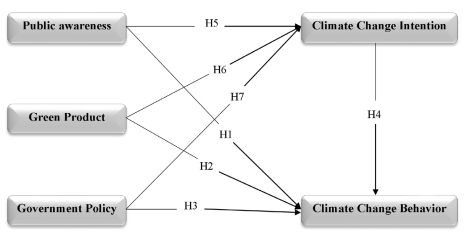
Figure 5: Path relations of the proposed research model. at ***p < .001, *p < 0.05
|
Path |
β |
t -value |
p-value |
Hypothesis |
Decision |
|
Public Awareness →CC intention |
.342 |
7.797 |
0.000 |
H1 |
Support |
|
Green _Product →CC intention |
.122 |
2.778 |
0.000 |
H2 |
Support |
|
Govt Policy→ CC intention |
.306 |
6.973 |
0.000 |
H3 |
Support |
|
Public Awareness →CC Behaviour |
-0.173 |
-3.461 |
0.000 |
H4 |
Support |
|
Green _Product →CC Behaviour |
0.243 |
5.165 |
0.000 |
H5 |
Support |
|
Govt Policy→ CC Behaviour |
0.124 |
2.512 |
0.012 |
H6 |
Support |
|
CC Intention →CC Behaviour |
0.132 |
2.484 |
0.013 |
H7 |
Support |
|
***p < .001, *p < 0.05 |
|||||
Table 5: Path Analysis of the Structural Model.
Additionally, H5 indicates the impact of green products on climate change behaviour (H5: β5 = 0.243, t = 5.165, P = .000), which is significant, and H2 is also supported. In addition to the H3, government policy on climate change behaviour (H6: β6 = 0.124, t = 2.512, P = 0.012) is significant, supporting H4. Additionally, H4, which examines the intention to climate change behaviour (H7: β7=0.132, t=2.484, P=0.013), is significant, and H7 is also supported.
Testing of the Mediating Effect
In testing the mediating effect, this study followed the steps proposed to examine the mediating effect of Climate Change Intention towards Climate Change Behavior
|
Direct effect |
Indirect effect |
|||||||
|
Path |
Estimate |
LLCI |
ULCI |
Estimate |
LLCI |
ULCI |
P-value |
Result |
|
Public _Awareness → CC_ Intention →CC_ Behaviour |
-0.173 |
-0.259 |
-0.056 |
0.040 |
0.008 |
0.079 |
0.011 |
Partial |
|
Green _Product → CC_ Intention →CC _Behaviour |
0.243 |
0.180 |
0.451 |
0.020 |
0.003 |
0.052 |
0.012 |
Partial |
|
Govt_ Policy → CC_ Intention →CC _Behaviour |
0.124 |
0.043 |
0.345 |
0.062 |
0.013 |
0.123 |
0.011 |
Partial |
|
LLCI = Lower-Level Confidence Interval; ULCI = Upper-Level Confidence Interval |
||||||||
Table 6: Direct & Indirect effect and 95% Confidence Interval
As presented in Table 6, only public awareness has a direct negative relationship with climate change behavior [55,56]. Still, it is a positively indirect relationship, and the P-value is significant; as a result, the 95% confidence interval partially supports this. The rest of the variables, both directly and indirectly, have substantial effects on climate behavior, which means that the study partially mediates the effect on climate behavior at a 95% confidence interval. In contrast, climate change intention has a direct impact on behavior.
Discussion and Conclusion
According to the IPCC (2001), Climate change is a significant environmental threat, causing rapid and catastrophic changes worldwide, prompting individuals to mitigate and adapt to its effects (Butt et al., 2019). Climate change, as highlighted in scientific literature, can result in various climatic issues such as global warming, weather variations, environmental degradation, ozone depletion, and ecological imbalance [57]. Thus, Afghanistan's vulnerability to climate-related disasters, including frequent droughts, storms, and earthquakes, necessitates increased climate change awareness. This can help communities prepare for and respond to these challenges, promoting resilience and adaptation strategies [58].
Political instability and economic hardship hinder climate change awareness in Afghanistan, despite low emissions [58]. Promoting education and community engagement can enhance citizens' awareness of climate change impacts, enabling them to take proactive measures and advocate for sustainable solutions [59]. International organizations and local NGOs are crucial in raising climate change awareness through programs focusing on environmental education, disaster preparedness, and sustainable agricultural practices [58].
The International Committee of the Red Cross is implementing initiatives on emission reduction from vehicles to raise climate change awareness and build resilience in Afghanistan, including improved water management, stable electricity supply, and agricultural livelihood protection [60,61]. Also, the UN has called for urgent, collaborative action to address climate change, emphasizing the need for long-term climate adaptation assistance and encouraging the Afghan government to collaborate (United Nations Climate Report, 2023). It includes promoting environmental education, disaster preparedness, and sustainable agricultural practices to help communities adapt to the impacts of climate change [61]. This study investigates Afghan people's awareness and intentions towards climate change, focusing on the impact of climate change initiatives and their potential for sustainable practices [17]. The above model reveals that green product usage significantly impacts public awareness of climate change, surpassing government policies. However, the effect is moderate due to its ease of implementation. Low exposure to related government policies may lower their impact on public awareness [62].
The study indicates Afghanistan's public awareness of climate change is average, with minimal understanding of green consumerism and government policy, suggesting the need for further education on green food consumption [40]. This study suggests that the Afghan government should promote climate change policies to meet the Sustainable Development Goals by 2030. This can be achieved through targeted campaigns, information dissemination, seminars, workshops, and capacity-building training, particularly in primary schools [63]. Lastly, to examine the impacts of public awareness on climate change more comprehensively, further studies are suggested to investigate the model based on respondent behavior and knowledge management related to climate change behavior.
Limitation of the Study
Addressing the enhancement of climate change awareness in Afghanistan is a multifaceted challenge, compounded by Political instability, economic constraints, and infrastructural deficiencies, among other factors, as presented in Table 7. These barriers significantly hinder the implementation and Sustainability of effective Climate Change initiatives. Political instability, marked by ongoing conflict and governance challenges, disrupts the continuity of programs and diminishes international support and investment. Economic constraints further limit the availability of resources necessary for comprehensive climate action, as immediate humanitarian needs often take precedence over environmental concerns. Additionally, infrastructural deficiencies, particularly in rural areas, impede the dissemination of educational materials and the execution of awareness campaigns, leaving many communities isolated and uninformed. Thus, overcoming these limitations requires coordinated efforts, substantial investment, and innovative solutions tailored to Afghanistan's unique context [61,64]. While there are significant efforts to raise Climate Change awareness and promote resilience in Afghanistan for this purpose, the GCF pledge is available for the LDC countries, and Afghanistan can be benefited by the financial assistance of this allocation [65]. These limitations are represented in Table 7.
The challenge of enhancing climate change awareness in Afghanistan is multifaceted, influenced by political instability, economic constraints, and infrastructural deficiencies. Political instability disrupts programs, economic constraints limit resources, and infrastructural deficiencies hinder awareness campaigns. Overcoming these limitations requires coordinated efforts, substantial investment, and innovative solutions tailored to Afghanistan's unique context [61,64]. These limitations are represented in Table.
|
Limitations of Climate Change Awareness in Afghanistan |
||
|
No. |
Limitations |
Description of Climate Change Awareness |
|
1 |
Conflict and Political Instability: |
Afghanistan's ongoing conflict and political instability have significantly hindered efforts to raise awareness of Climate Change. The focus on immediate survival and displacement issues often overshadows long-term environmental concerns |
|
2 |
Economic Hardship: |
Afghanistan's severe Economic challenges limit the resources available for Climate Change Education and initiatives. With half the population facing acute hunger and Economic hardship, Climate Change Awareness is not prioritized |
|
3 |
Lack of Representation: |
Afghanistan was not represented at the 2022 United Nations Climate Change Conference (COP27), so the country's specific Climate challenges and needs are not adequately addressed globally. |
|
4 |
Low Literacy Rates: |
Afghanistan has one of the lowest literacy rates in the world, which affects the dissemination of information about Climate Change and Environmental protection. |
|
5 |
Dependence on Agriculture: |
A significant part of the population relies on rain-fed Agriculture, making them highly vulnerable to Climate Change impacts such as Droughts and changing precipitation patterns. However, this dependence also means that there is limited capacity to invest in Climate Change Adaptation and Mitigation Strategies |
|
6 |
Water Scarcity: |
Rapidly rising temperatures and changing precipitation patterns have led to severe Water scarcity, impacting livelihoods and health. This makes it difficult to focus on Climate Change Awareness when immediate survival is at stake |
|
7 |
Infrastructure Deficiencies: |
The lack of robust infrastructure, particularly in rural areas, impedes the delivery of education and resources necessary for building climate resilience. Poor roads, limited access to clean water, and inadequate healthcare facilities make it hard to implement and sustain climate-related programs. |
|
8 |
Limited Institutional Capacity: |
Government agencies and local organizations often lack the technical expertise and institutional capacity to design, implement, and monitor Climate Change initiatives. Capacity-building efforts are essential to equip these institutions with the necessary Skills and Knowledge. |
|
9 |
Cultural Barriers: |
Traditional practices and beliefs can sometimes conflict with modern Climate Change Adaptation Strategies. Community engagement and culturally sensitive approaches are needed to gain the trust and cooperation of local populations. |
|
(Sources: [58,59]). |
||
Table 7: Afghanistan’s Limitations and Challenges Related to Climate Change Awareness
Hence, addressing these limitations requires coordinated efforts from the Afghanistan government, the international community, and local stakeholders. Comprehensive strategies that integrate political, economic, social, and educational dimensions are essential for building Afghanistan's resilient and sustainable future.
Suggestions
To address Climate Change awareness and its impacts in Afghanistan, several core suggestions and solutions can be implemented to make a positive impact on both the present and future:
|
Suggestions for Afghanistan Climate Change Awareness |
||
|
No. |
Suggestions |
Description of Key Suggestions |
|
1 |
Enhance Climate Education: |
Integration of Climate Change Education into School curricula and community programs can raise awareness and empower individuals to take action. This can include workshops, seminars, and educational materials tailored to local contexts. |
|
2 |
Promote Sustainable Agriculture: |
Supporting Farmers with Climate-resilient Agricultural practices, such as Drought-resistant crops and efficient irrigation techniques, can help mitigate the impacts of Climate Change on Food security. |
|
3 |
Improve Water Management: |
Implementing effective Water Management Strategies, such as building check dams, canals, and gabion walls, can help conserve water resources and prevent erosion. This can also involve rainwater harvesting and the use of Solar-powered Water pumps |
|
4 |
Invest in Renewable Energy: |
Transmission to Renewable energy sources, such as Solar and Wind Power, can reduce Carbon emissions and provide stable Electricity to Communities. This can also create job opportunities and stimulate Economic growth. |
|
5 |
Strengthen Community Resilience: |
Building the capacity of local communities to respond to Climate-related disasters through training and the provision of resources can enhance their resilience and ability to adapt to changing conditions. |
|
6 |
Engage in International Cooperation: |
Collaborating with international organizations and donors to secure funding and technical support for Climate Adaptation and Mitigation projects can help address the financial and technical challenges faced by Afghanistan. |
|
7 |
Encourage Policy Reforms: |
Advocating for policy reforms prioritizing Climate Change Adaptation and Mitigation can create a supportive environment for implementing Sustainable practices and initiatives. |
|
(Sources: [59,61]). |
||
The above suggestions can help Afghanistan address the immediate challenges faced by climate change while building a more sustainable and resilient future.
References
- Ferranti, E. J., Yan Wong, J. H., & Dhesi, S. (2021). A comparison of government communication of climate change in Hong Kong and United Kingdom. Weather, Climate, and Society, 13(2), 287-302.
- Savage, M., Dougherty, B., Hamza, M., Butterfield, R., & Bharwani, S. (2009). Socio-economic impacts of climate change in Afghanistan.
- Oskorouchi, H. R., & Sousaâ?Poza, A. (2021). Floods, food security, and coping strategies: Evidence from Afghanistan. Agricultural Economics, 52(1), 123-140.
- Wendling, Z. A., Emerson, J. W., De Sherbinin, A., Esty,D. C., Hoving, K., Ospina, C. D., ... & Schreck, M. (2020). Environmental performance index. Yale Center for Environmental Law & Policy, New Haven. epi. yale. edu.
- SNC. (2017). Second National Communication under the United Nations Framework Convention on Climate Change (UNFCCC). National Environmental Protection Agency.
- Emlyn Hagen (2017). Climate and Climate Change Data of Afghanistan.
- KaracaoÄ?lu, B., & Akbaba, M. F. (2024). Multidisciplinary perspective: A review of the importance of communication in managing climate change challenges. Environmental Research and Technology, 7(3), 457-470.
- Mona, S., Edward, M. (2024). Communicating the Health Relevance of Climate Change.
- Mehmood, T. (2024). Investigating effective communication strategies employed by school principals to convey the significance of climate change education to students, staff, and parents.
- Buonocore, M., Santin, S., Carlon, O., Mazzai, A., Michielin, D., Acierno, A., ... & Bassetti, F. (2023, May). Increasing climate awareness through science/communication collaboration: The CMCC multi-platform approach. In EGU General Assembly Conference Abstracts (pp. EGU-10926).
- Peters, E., Boyd, P., Cameron, L. D., Contractor, N., Diefenbach, M. A., Fleszar-Pavlovic, S., ... & Stephens, K. K. (2022). Evidence-based recommendations for communicating the impacts of climate change on health. Translational behavioral medicine, 12(4), 543-553.
- Forster, P. M., Smith, C. J., Walsh, T., Lamb, W. F., Lamboll, R., Hauser, M., ... & Zhai, P. (2023). Indicators of Global Climate Change 2022: annual update of large-scale indicators of the state of the climate system and human influence. Earth System Science Data, 15(6), 2295-2327.
- Zong-Ci, Z. H. A. O., L. U. O. Yong, and H. U. A. N. G. Jian-Bin. "Global climate indicators, climatic-impact drivers and global warming." Advances in Climate Change Research 20.3 (2024): 384.
- Greenberg, J., Baron, R. A. (1995). Behavior in Organization (New Jersey: Prentice-Hall).
- Gronroos, C. (1990). Relationship approach to marketing in service contexts: The marketing and organizational behavior interface. Journal of business research, 20(1), 3-11.
- Emanuel, K. (2012). What we know about climate change (Cambridge: The MIT Press).
- Muradi, T., & Sandhu, V. (2023). Climate Change Convention: COP27 Activities and Study of GCF Pledged. World Economics, 24(3), 25.
- M Sabu, A., & Sreekumar, S. (2023). Greening the Market: Strategies for Combating Climate Change with Sustainable Products and Marketing. Sreyes, Greening the Market: Strategies for Combating Climate Change with Sustainable Products and Marketing (September 8, 2023).
- Hu, J., Li, X., Wang, N., Jiang, B. (2022). Green Product Design.
- Ko, Y. T. (2020). Modeling an innovative green design method for sustainable products. Sustainability, 12(8), 3351.
- Molina-Espeja, P., Sanz-Aparicio, J., Golyshin, P. N., Robles-Martín, A., Guallar, V., Beltrametti, F., ... & FuturEnzyme Consortium). (2023). Enzymes for consumer products to achieve climate neutrality. Oxford Open Climate Change, 3(1), kgad003.
- Hurmekoski, E., Seppälä, J., Kilpeläinen, A., & Kunttu, J. (2022). Contribution of wood-based products to climate change mitigation. In Forest bioeconomy and climate change (pp. 129-149). Cham: Springer International Publishing.
- Brooks, J. R., & Ebi, K. L. (2021). Climate change warning labels on gas pumps: the role of public opinion formation in climate change mitigation policies. Global Challenges, 5(10), 2000086.
- Sanders, C. E., Gibson, K., & Lamm, A. J. (2022). Perceived government control and its influence on climate change knowledge and perceptions: Applications for effective communication. Journal of Applied Communications, 87(3), 8.
- Mildenberger, M., Howe, P. D., Trachtman, S., Stokes, L. C., & Lubell, M. (2022). The effect of public safety power shut-offs on climate change attitudes and behavioural intentions. Nature Energy, 7(8), 736-743.
- Basiru, I., Liu, G., Arkorful, V. E., Lugu, B. K., Yousaf, B., Hussain, M., & Jama, O. M. (2022). Indigenous perceptions of factors influencing behavioral intentions towards climate change mitigation: An assessment. International Journal of Public Administration, 47(1), 1-13.
- Jenny, M. A., & Betsch, C. (2022). Large-scale behavioural data are key to climate policy. Nature human behaviour, 6(11), 1444-1447.
- Heller, K., Berger, M., Gagern, A., Rakhimov, A., Thomas, J., & Thulin, E. (2021). Six behaviors policymakers should promote to mitigate climate change. Behavioral Science & Policy, 7(2), 63-73.
- Forster, P. M., Smith, C., Walsh, T., Lamb, W. F., Lamboll, R., Hall, B., ... & Zhai, P. (2024). Indicators of Global Climate Change 2023: annual update of key indicators of the state of the climate system and human influence. Earth System Science Data, 16(6), 2625-2658.
- von Gal, A., Fabiani, G., & Piccardi, L. (2024). Climate change anxiety, fear, and intention to act. Frontiers in psychology, 15, 1341921.
- Afghanistan Future. (2024). Afghanistan economic monitor, World bank.
- Muttarak, R., & Chankrajang, T. (2014). Demographic Differentials in the Concern about Climate Change and Engagement in Climate-friendly Behaviours.
- Muttarak, R., & Chankrajang, T. (2016). Who is concerned about and takes action on climate change? Gender and education divides among Thais. Vienna Yearbook of Population Research, 193-220.
- Kojan, L., Halbey, L., Ziefle, M., & Calero, A. (2024). Applying an integrated model of behaviour change to sustainable consumer behaviour and COVID-19 protective behaviour.
- Matthies, E., de Paula Sieverding, T., Engel, L., & Blöbaum,A. (2023). Simple and smart: investigating two heuristics that guide the intention to engage in different climate-change-mitigation behaviors. Sustainability, 15(9), 7156.
- Parkes, I., Thomas-Walters, L., Sabherwal, A., O’Dell, D., & Shreedhar, G. (2023). Social identification predicts behavioural engagement with environmental activist movements, but does not moderate the collective climate action intention-behaviour gap. Center for Open Science.
- Matthias, Sroczinski. (2023). Climate Change and Urban Environment Sustainability: Issues and Challenges. Disaster Resilience and Green Growth.
- Marquez-Ballesteros, M. J., Navas-Carrillo, D., Mora-López, L., Sidrach-de-Cardona, M., Enciso-Martínez, E., & Rico-Pinazo, P. (2023). Citizens and local administration in climate change mitigation. Urban strategies and local actions applicable to neighborhoods. In Resilient and Sustainable Cities (pp. 495-517). Elsevier.
- Olya, H., Kim, N., & Kim, M. J. (2024). Climate change and pro-sustainable behaviors: application of nudge theory. Journal of Sustainable Tourism, 32(6), 1077-1095.
- Surianshah, S. (2021). Environmental awareness and green products consumption behavior: A case study of Sabah State, Malaysia. Biodiversitas Journal of Biological Diversity, 22(7).
- Chalkiadaki, S. E., & Vaida, S. (2023). The Role of Negative Emotions in Climate Change Awareness Advertising. Educatia 21, 120-130.
- Karimi, D. M., Bayrac, A., & Kahraman, A. (2024). Financial development and sustainable agriculture: Perspective on Afghanistan. Assoc. Prof. Dr. GülÅ?ah Bengisu. IKSAD Publishing House, Ankara, Turkey. Pp, 3-43.
- Liwan, A., Surianshah, N. S., Surianshah, S., & Hwang, J. Y.T. (2022, November). Level of public awareness on climate change in Sabah. In IOP Conference Series: Earth and Environmental Science (Vol. 1103, No. 1, p. 012001). IOP Publishing.
- Gao, L., Wang, S., Li, J., & Li, H. (2017). Application of the extended theory of planned behavior to understand individual’s energy saving behavior in workplaces. Resources, conservation and recycling, 127, 107-113.
- Kanwal, S., Chong, R., & Pitafi, A. H. (2019). China–Pakistan economic corridor projects development in Pakistan: Local citizens benefits perspective. Journal of Public Affairs, 19(1), e1888.
- Yu, T. K., Lin, F. Y., Kao, K. Y., Chao, C. M., & Yu, T. Y.(2019). An innovative environmental citizen behavior model: Recycling intention as climate change mitigation strategies. Journal of environmental management, 247, 499-508.
- Ansu-Mensah, P. (2021). Green product awareness effect on green purchase intentions of university students’: an emerging market’s perspective. Future Business Journal, 7(1), 48.
- Chin, W. W. (1998). The partial least squares approach to structural equation modeling. In Modern methods for business research (pp. 295-336). Psychology Press.
- Anderson, J. C., & Gerbing, D. W. (1988). Structural equation modeling in practice: A review and recommended two-step approach. Psychological bulletin, 103(3), 411.
- Chen, Y. S., Lin, C. Y., & Weng, C. S. (2015). The influence of environmental friendliness on green trust: The mediation effects of green satisfaction and green perceived quality. Sustainability, 7(8), 10135-10152.
- Tang, M. L. (2015). Evaluating green hotels in Taiwan from the consumer’s perspective. International Journal of Management Research and Business Strategy, 4(1), 1-15.
- Hinkin, T. R. (1998). A brief tutorial on the development of measures for use in survey questionnaires. Organizational research methods, 1(1), 104-121.
- Hair, J., Anderson, R., Tatham, R., & Black, W. (1998). Conjoint analysis. In Multivariate data analysis (5th ed., pp. 387- 441). Pearson Education.
- Fornell, C., & Larcker, D. F. (1981). Evaluating structural equation models with unobservable variables and measurement error. Journal of marketing research, 18(1), 39-50.
- Kline, R. B. (2010). Principles and practice of structural equation modelling. Guilford publications.
- Zhao, C., Yan, Y., Wang, C., Tang, M., Wu, G., Ding, D., & Song, Y. (2018). Adaptation and mitigation for combating climate change–from single to joint. Ecosystem health and sustainability, 4(4), 85-94.
- Preacher, K. J., & Hayes, A. F. (2008). Asymptotic and resampling strategies for assessing and comparing indirect effects in multiple mediator models. Behaviour Research Methods, 40(3), 879–891.
- Masud, M. M., Akhatr, R., Nasrin, S., & Adamu, I. M. (2017). Impact of socio-demographic factors on the mitigating actions for climate change: a path analysis with mediating effects of attitudinal variables. Environmental Science and Pollution Research, 24(34), 26462-26477.
- OCHA. (2023). Afghanistan: The alarming effects of climate change. Ofice for the Coordination of Humanitarian Affairs (OCHA).
- Mayar, M. A. (2022). The Climate Change Crisis in Afghanistan: The Catastrophe Worsens—What Hope for Action. Afghanistan Analysts Network—English, 28.
- Dhankhar, S., Sandhu, V., & Muradi, T. (2024). E-Mobility Revolution: Examining the types, evolution, government policies and future perspective of electric vehicles. Current Alternative Energy, 6(1), E24054631308595.
- ICRC. (2024). Afghanistan: Assisting communities grappling with the impact of climate change. International Committee Read of the Cross:
- Jainudin, N. A., Jugah, I., Ali, A. N. A., & Tawie, R. (2017, August). The acceptance of green technology: A case study in Sabah Development Corridor. In AIP Conference Proceedings (Vol. 1875, No. 1, p. 030001). AIP Publishing LLC.
- Fisman, L. (2005). The effects of local learning on environmental awareness in children: An empirical investigation. The journal of environmental education, 36(3), 39-50.
- United Nations Climate Report. (2023). Urgent Action Needed for Climate Change Adaptation in Afghanistan. Retrieved from UN Climate Report:
- Muradi, T., Kaur, H., Pateer, S., & Sandhu, V. (2025). Exploring Green Climate Fund Allocations: A Study of its Project/Program. Advances in Consumer Research, 2(1).
- Klöckner, C. A., Brenner-Fliesser, M., Carrus, G., De Gregorio, E., Erica, L., Luketina, R., ... & Sokka, L. (2024). What triggers individual climate actions in different neighbourhoods? Individual, collective, cultural, and socio-structural factors.
- Russo, F., Veropalumbo, R., & Oreto, C. (2023). Climate change mitigation investigating asphalt pavement solutions made up of plastomeric compounds. Resources, Conservation and Recycling, 189, 106772.
- Change, I. P. O. C. (2001). Climate change 2007: Impacts, adaptation and vulnerability. Genebra, Suíça.
- Holloway, K., Ullah, Z., Ahmadi, D., Hakimi, E., & Ullah, A. (2022). Climate change, conflict and internal displacement in Afghanistan. HPG Case Study, ODI.
- Silvi, M. (2024). Behavioral economics and climate policy. In Elgar Encyclopedia of Climate Policy (pp. 19-24). Edward Elgar Publishing.
- Ojo, A. O., & Fauzi, M. A. (2020). Environmental awareness and leadership commitment as determinants of IT professionals engagement in Green IT practices for environmental performance. sustainable production and consumption, 24, 298-307.
- Karapin, R., & Vogel, D. (2023). Federal climate policy successes: Co-benefits, business acceptance, and partisan politics. Business and Politics, 25(4), 450-475.