

International Journal of Women's Health Care(IJWHC)
ISSN: 2573-9506 | DOI: 10.33140/IJWHC

Impact Factor: 1.011

Research Article - (2016) Volume 1, Issue 1
Umbilical Cord Blood
Received Date: Jul 01, 2016 / Accepted Date: Jul 15, 2016 / Published Date: Jul 22, 2016
Copyright: ©Carlo Pafumi. This is an open-access article distributed under the terms of the Creative Commons Attribution License, which permits unrestricted use, distribution, and reproduction in any medium, provided the original author and source are credited.
Abstract
Umbilical cord blood (UCB) is widely considered as a potential alternative to bone marrow for haematopoietic stem cells. Efforts on UCB research have now taken a step further with the establishment of numerous cord blood banks throughout the world.
In 15 months (from December 1999 to February 2001) we obtained 863 cord blood units by withdrawing residual blood from the placenta.The method of blood collection consisted of puncturing, with an 18-gauge needle, the umbilical cord vein and withdrawing the blood into a sterile bag immediately after clamping and newborn assistance. The blood was collected when the placenta was still in utero. Analysis of the blood was also performed to exclude any bacterial contamination. Among them 429 were collected from newborns delivered vaginally (Group 1) and 434 were collected from caesarean sections (Group 2).
In this study we evaluated the volume of blood collected and the number of CD34+ cells contained in the foetal cord blood and we demonstrated that these two parameters were similar between the two groups; The higher median volume of blood collected from infant delivered through a caesarean section seems mainly due to the different clamping time rather than to the kind of delivery
Keywords
Haematopoietic stem cells, Umbilical cord, Cryopreservation, Cord blood bank, Nucleated cell counts.
Introduction
A lot of research has been performed all over the world on umbilical cord blood (UCB), and many UCB banks have been instituted in the U.S.A. and Europe, since Gabutti, for the first time, collected and isolated several foetal haematopoietic progenitor cells from the residual placental blood, after delivery and ligation of the umbilical cord. In Italy, also, UCB banks belonging to the GRACE group of Milan connected to the European Netcord have been established. Recently, a new UCB bank has been instituted in Sicily, particularly in Sciacca. It is currently waiting for the official affiliation to the GRACE group (ISO 9002 certification).
Considered as an alternative source of haematopoietic stem cells to bone marrow, UCB is becoming more common in the treatment of malignant and non-malignant haematologic and immunologic diseases. Rubinstein argues that UCB confers some additional advantages when compared to hematopoietic stem cells taken from bone marrow. For example, there is a lower risk of graft-versus-host disease despite HLA mismatch in transplantation with UCB, and there is no risk or pain for the donor. However, some disadvantages have been noted, like a relatively lower amount of stem cells acquired.
Materials and Methods
Since the beginning of its activity, the Obstetrics and Gynaecology Department of the University of Catania has been involved in the collection of UCB samples. From December 1999 to February 2001, 863 UCB units had been collected and sent to Sciacca’s bank. Among them, 429 were collected from newborns delivered vaginally, while the remaining were collected from caesarean sections.
All vaginal deliveries were done under epidural or local infiltration anaesthesia and uterotonic drugs were not given before cord clamping. Significant obstetric complications were not recorded. All infants were in the 38th-41st week of gestation, with an Apgar score of 7 or more at the 1st and 5th minute, and remained healthy in the newborn nursery. We measured the time elapsed between birth of the buttocks and the moment when the umbilical cord was clamped. Indications for a caesarean section were previous caesarean sections, or in some cases, cephalopelvic disproportion. Four mothers were in early labour at the time of the section. All infants were at term and none suffered any cardiopulmonary distress during the neonatal period. All sections were performed under epidural anesthesia. At delivery, infants were held above of the level of the surgical table and below the height of maternal abdomen. This level was similar to the level at which vaginally delevered infants were held. The cord was handled carefully so as to stretch it as little as possible, but it was often necessary to unwind it from the infant’s neck or legs. We measured the time elapsed from the birth of the buttocks in a vertex, cephalic presentation when the breech was first delivered through the uterine incision to the first cry and the time when the umbilical cord was clamped. We evaluated the volume of blood collected and the number of CD34+ cells contained in the foetal cord blood according to the birth route: caesarean section or vaginal delivery.
The method of blood collection consisted of puncturing, with an 18-gauge needle, the umbilical cord vein and withdrawing the blood into a sterile bag immediately after clamping and newborn assistance (Figure 1). The blood was collected when the placenta was still in utero. In fact, as shown by Dunn, after vaginal delivery of an infant, the compression of the placenta due to uterine contractions forces blood from the placenta to the infant and hastens placenta transfusion. The blood contained in placenta flowes by gravity from the umbilical cord to the sterile collection bag. Collection was approved by the local ethical commitee and an informed consent was obtained from the mother before each collection. The indications for a caesarean delivery were independent from the study. UCB clamping times, independently from the research, were obviously different in the two groups, owing to the technical reasons based on the type of delivery. Clamping times were particularly shorter in caesarean sections with respect to vaginal deliveries. This is particularly important because the time allowed between delivery of an infant and clamping of his/her umbilical cord is the principal determinant of the distribution of blood between the infant and the placenta.
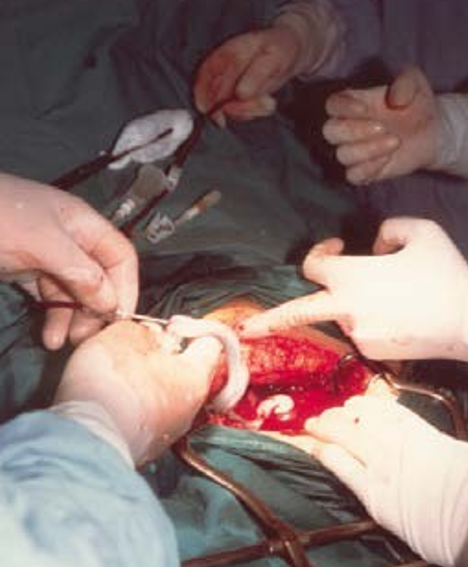
Figure 1: Umbilical cord blood collection in cesarea section