

Journal of Traditional Medicine & Applications(JTMA)
ISSN: 2833-1389 | DOI: 10.33140/JTMA
Impact Factor: 1.02


Research Article - (2025) Volume 4, Issue 1
Traditional Healing Wisdom: Exploring the Ethnomedicinal Knowledge of the Bondo Tribe
Received Date: Apr 08, 2025 / Accepted Date: Jan 20, 2025 / Published Date: Apr 10, 2025
Copyright: ©©2025 Sagarika Nayak, et al. This is an open-access article distributed under the terms of the Creative Commons Attribution License, which permits unrestricted use, distribution, and reproduction in any medium, provided the original author and source are credited.
Citation: Nayak, S., Pradhan, J., Nayak, T. (2025). Traditional Healing Wisdom: Exploring the Ethnomedicinal Knowledge of the Bondo Tribe. J Traditional Medicine & Applications, 4(1), 01-12.
Abstract
This paper delves into the ethno-medical knowledge of the Bondo tribe, offering a comprehensive exploration of their traditional healing practices and the utilization of medicinal plants. The paper elucidates the Bondo belief system regarding diseases’ superficial and deep nature, influencing the choice of treatments. The unique form of surgery, such as intramuscular administration of paste, is discussed, differentiating Bondo’s practices from those of other tribes. The paper stresses the need for documenting all medicinal ingredients used by Bondo tribes and proposes measures for refining and propagating this knowledge. The goal is to improve healthcare practices, make medicines widely available, and in still a sense of responsibility for environmental conservation. A comprehensive review of existing literature on Bondo ethno medicine, tribal healthcare practices, and medicinal plant use was conducted to establish a foundational understanding of the subject. Extensive fieldwork was conducted in Bondo tribal areas in Odisha to directly engage with the community and gather primary data. Ethnographic methods, including participant observation and in-depth interviews, were employed to understand the Bondo medicinal practices and the utilization of medicinal plants. Botanical surveys were conducted to identify and document the medicinal plants. The unlettered tribal communities breed and conserve valuable medicinal and food plants, contributing significantly to ethno medicinal practices. The intellectual property of Bondo medicinal knowledge needs protection and fair compensation for the contributions made by the tribal communities. Efforts should be directed towards documenting and preserving this knowledge.
Keywords
Bondo, Ethno Medicines, Indigenous, Tribal, Wild Plants, Health Care Practice
Introduction
Tribes of Odisha
Orissa is a state in India that is home to a large forest-dependent tribal population, representing 22.5% of the total population. Odisha, located on the eastern coast of India, is known for its rich cultural heritage and diverse tribal communities. The state is home to several primitive tribes, often referred to as “Adivasis,” who have preserved their unique traditions, customs, and way of life for centuries. These tribes reside in the remote and inaccessible regions of Odisha, living close to nature and maintaining a deep connection with their land.
The tribes of Orissa are comprised of 62 different ethnic groups, which can be classified into six socio-economic categories: hunters and food gatherers, pastoral tribes, artisans, shifting cultivators, agriculturists, and industrial workers. Of these groups, seven main groups and five sub-groups have been declared primitive tribal communities. These primitive groups and sub-groups are all forest dwellers and are regarded as primitive from administrative and developmental points of view. However, the term ‘primitive’ does not necessarily mean poverty-stricken; it only relates to an earlier stage of economic evolution as distinct from a lower level in economic structure that is co-terminus with the stage of poverty. Primitive tribes may belong to the pre-agricultural level of technology, but they are not necessarily poor. They are as intelligent and skilled as those occupying higher levels of economic development. The more primitive a community is the more adaptive capacity it has to master its surrounding environment for its livelihood.
Health and Sustenance among the Bondo Tribe
Like other primitive tribes, Bondos inhabit the Malkangiri district. They have a great attachment to nature. They fulfill their basic needs from the surrounding landscape. They stay on high land at 3,500 feet. The perennial streams full fill the water requirements of Bondos. The population growth rate shows marginal declination, though they are exposed to modern medicinal systems. The cause of the decrease in population growth may be the homicidal tendency of males or the marriage between young males and older females. They generate their livelihood by selling forest products, domestic animals, and birds, or by catching fish, both male and female. The Bondo women collect more products than the men. They depend on forests for food, fodder, tubers, fiber, leaves, timber, medicines, etc. They generally practice shifting cultivation. They divide the land into three categories: agricultural land, homestead land, a kitchen garden within the village boundaries, and forest land over which the bondo exerts a communal relationship. They have an idea of festive food [1]. They do not have any conceptions regarding better, nutritive, hygienic, or sacred food. They do not know or even feel the deficiency of vitamins and minerals in their menus. A few food taboos are observed concerning the observance of socio-religious rites or the ceremonial consecration of new crops. Food items are grown in two crop seasons. In the rainy season, land is used for kharif crops. Paddy and smaller millets are grown in the kharif season. Vegetables are also grown in the kharif season (Figure 1). The rabi crop, also known as dry crop, chait crop, or winter crop, is grown in the months of October and November and harvested in the months of February and March. Ragi gruel is the staple food of the Bondo people. Rice is the second-most important staple food in the community. Usually, they consume boiled rice prepared from paddy [2,3].

Figure 1: Agricultural Practice in Bondo Tribe
Bondos are very fond of non vegetarian food items they often consume beef. Apart from pork, the meat of fowl and mutton is equally important to them on different occasions. Eggs, fish, insects, and meat from different kinds of birds are additional non-vegetarian items that they eat when they are available. Not only the surplus grains are preserved on the ceiling rack of the house, but several other food items are also preserved. They also preserve certain kinds of leaves for future consumption. It is dried, powdered, and preserved. Tender leaves of the tamarind are also kept in the same process. Mango pickles are kept in earthen pots. Dry fish and meat are usually used after two to three months of storage. Beer and sago palm saps cannot be preserved for more than a week. Wine is kept for special occasions. It can be kept without any waste for months together. Females keep an eye on the preserved food materials.
Tribal communities generally inhabit hilly areas; some also live in rural interiors. The hallmark of their lives is that they are shut off from intense interaction with several other communities. Their techno-economic level is low and simple; they live under marginal and sub-marginal economic conditions. They depend on more than one economic pursuit. Hunting and gathering activities are inalienable components of their economy. Their respective cultures are homogeneous, social structures are segmentary, kinship systems are temperedly classificatory, and villages are, by and large, of uni-clan composition. Their ideological system centers around supernaturalism, and they are animists and fatalists. They believe that everything is predetermined and that all that happens is inevitable. Gods, goddesses, presiding deities, and spirits determine the nature of things that happen to humans, and some specialists act as intermediaries between supernatural beings on the one hand and humans on the other. The levels of their awareness and aspiration are comparatively lower because they lack education and exposure. After fifty years of independence, the nation has not been able to achieve total literacy. Education for all and health services for all have remained hollow political slogans. In Odisha, most of them live in sub-human physical conditions. They often live in the same house with their livestock, which does not have ventilation facilities. In many villages, both humans and cattle bathe in the same pond or stream. Tribal people have adapted to their environments by means of their biological and cultural endowments. Their health and sickness are influenced by a combination of biological, cultural, and environmental factors [4]. They depend on traditional herbal medicine for the treatment of their diseases. They believe in naturopathy.
Materials and Methods
Study Area
The study was conducted in the Khairaput block of Malkangiri district. Encompassing an area of 5,791 square kilometers, the district is situated between latitudes 17°45’N to 18°40’N and longitudes 81°10’E to 82°E (Figure 2). Malkangiri District has a sparse population with a balanced gender ratio. Urban areas host only a small portion of the population, as the majority resides in expansive, dense forests (Figure 3). The district can be divided into two main physical divisions. The eastern part comprises steep hills, plateaus, and valleys and is home to indigenous tribes like Bondas, Koyas, Porajas, and Didayis. The climate is characterized by cold winters and hot summers, with temperatures ranging between 13°C and 47°C. The average annual rainfall is approximately 1700 mm, leading to high relative humidity, especially during the monsoon and post-monsoon periods. Heavy floods during the rainy season often render parts of the district inaccessible, and the region falls within a malaria-prone zone.

Figure 2: Bonda Hill
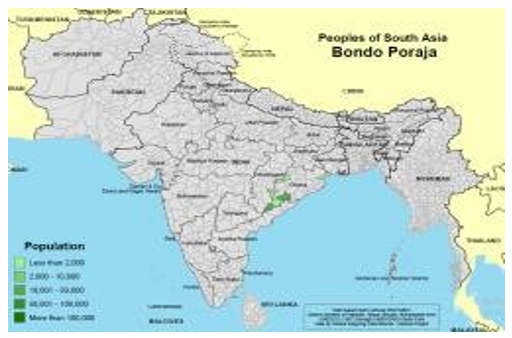
Figure 3: Bondo Population in Odisha
Survey Method
Field investigations were carried out to gather information from tribal medicine practitioners and community members who knew the local plants, their names, how they were used for herbal remedies, the way they were prepared, administered, and dosed, and their various applications for different health issues. This ethnobotanical study focused on the Bondo tribe in the Mlkangiri area. We engaged traditional healers who agreed to participate, as well as conducted interviews with 100 elderly individuals.
Prior informed consent was obtained orally from each participant. The interviews were conducted in the local dialect. Structured questionnaires were used during the interviews to gather information about medicinal plants, including their local names, the diseases they were used for, and the parts of the plants used. Informants were also asked to show these plants in their natural habitat. We collected specimens of all the plants, which were later identified at the Herbarium of the Department of Botany at the university. Plant identification was based on specimen vouchers deposited at the university’s Botany Department.
Results and Discussion
Plants Used as Medicine by Bondo
Tribe Odisha boasts a significant wealth of medicinal plant diversity. Various investigations have been conducted into the utilization of medicinal plants by indigenous communities in districts like Koraput, Kalahandi, Kandhamal, and Mayurbhanj in Odisha [5,6]. Various plant parts are used by tribals as herbal medicine (Figure 4, Table). Several scientists works on extraction of secondary metabolites from plants. However, research into the diversity of medicinal plants, particularly in the context of ethnomedicine, has been somewhat neglected over time. It is currently of utmost importance to take immediate action to prevent additional genetic loss and the depletion of vegetation in tribal regions. This action should focus on safeguarding the invaluable indigenous knowledge and establishing a legal framework to protect intellectual property rights [7].

Figure 4
|
Botanical name of plant |
Local name |
Oriya name |
Parts used |
Disease ailment |
Methods of medicine preparation |
Methods of administration |
Restrictions |
|
Vitis quadrangularis |
Adsang |
Hada sinkala |
Roots and branches |
Bone fracture |
A thick paste is prepared from the roots and branches |
A tiny incision is created close to the broken area, and the paste is applied into the cut. Afterward, the wound is wrapped with a bandage. |
------ |
|
Datura alba |
Dhala datura |
Dhala datura |
Latex |
Stung by bee or hornet |
The freshly plucked leaves are used |
First, the bee or hornet’s sting is carefully extracted from the patient’s body. Then, a couple of leaves are used to rub against the stung area. |
------- |
|
Eucaliptus globulus |
Neelgiri |
Neelgiri |
Leaf |
Nose bleeding |
The leaves are crushed, and their juice is extracted. |
A small amount of the juice is ingested orally, while raw cow dung is inhaled. |
---------- |
|
Mallotus phillipensis |
Sindur |
Sindur |
Leaf |
Irregular mensturation or excessive discharge |
Ragi powder is used to prepare dough, which is then wrapped with a sindur leaf and roasted to make a cake. |
The cake is taken orally |
--------- |
|
Phyllanthus emblica
Buchanania lanzaz
Holarrhena antidysenterica |
Sinkhar Jarab
Kringe |
Amla
Cherkoli Keruan |
Bark
Bark
Bark |
Stomachache |
The three types of barks are powdered in equal amounts and then boiled in water. |
Once the water cools down, it is filtered and consumed orally twice a day. |
-------- |
|
Musa paradisiaca |
Kadali |
Kadali |
Shoot |
Removal of placenta |
|
The shoot is gently tied to the neck, and the woman is closely monitored. As soon as the placenta is expelled, the shoot is removed. |
------- |
|
Tamarindus Indica |
Tentuli |
Tentuli |
Root |
Difficult in deliverying the child |
|
A small tamarind tree root is attached to the woman’s ear. |
The patient is instructed to lie flat on a mat while sleeping. |
|
Tamarindus Indica |
Tentuli |
Tentuli |
Fruit pulp |
Consumption of poison |
A thin paste of tamarind is prepared |
The patient is compelled to drink tamarind water until they vomit. This process is repeated several times. |
|
|
Racenus communis |
Jada |
Jada |
Leaf |
Hydrosil |
The castor leaf is positioned in front of smoldering charcoal to cause it to dry out. After that, castor oil is spread on the leaf, and then it is applied to the swollen scrotum. |
Surface application.When the leaf is not put the patient is advise to wear loin cloth tightly |
The treatment involves applying the leaf directly to the affected area. When the leaf is not used, the patient is instructed to wear tight loin cloth instead. |
|
Carica Papaya |
Amruta bhanda |
Amruta bhanda |
Fruit latex |
Ring worm |
The immature fruit is injured to release a milky fluid with enzymatic properties. |
The affected area is gently scraped using a clean and dry stone or wood. Once it starts to bleed or release fluid, the milky substance is applied to it. |
|
|
Ficus bengalensis |
Bara |
Bara |
Latex |
Boils |
The latex is obtained from the tree and used in its fresh form. |
The latex is promptly applied to the boil and then covered with a piece of paper. |
|
|
Terminalia chebula |
Harida |
Harida |
Seed |
Cough |
The seed is roasted and powdered |
Approximately a quarter of a palmful of the powder is chewed and ingested orally at night. |
|
|
Schleichera trijuga |
Kusum |
Kusum |
oil |
Infection occurring between the toes of the foot. |
|
The affected area is cleansed with warm water, dried, and then treated with kerosene oil. Afterward, it is coated with Kusum oil. |
|
|
Vernonia anthelmintica |
Sindhrisemu |
Nanda |
|
|
|
|
|
|
baguli |
Leaf |
Toothache |
Several mature yet green leaves are compressed using the palm and thumb. |
The compressed mixture is placed at the base of the affected tooth. |
|
|
|
|
Schleichera trijuga
Pongamia glabra |
Kusum
Karanja |
Kusum Karanja |
oil |
Scabies |
The two oils are combined and heated. |
The impacted area is cleansed using hot water and then coated with the oil mixture. |
Dry meat is avoided |
|
Bambusha Vulgarish |
Baunsa |
Baunsa |
Dust |
Ear infection |
Bamboo is rapidly split, and the dust is gathered from the knot. |
The dust is blended with clean water, and a few drops of the resulting mixture are applied to the ear. |
|
|
Mangifera indica |
Amba |
Amba |
Leaf |
Malaria |
The patient is given a mixture of mango and Eugenia jambolana leaves, which is then boiled. They are encouraged to inhale the resulting vapor, combined with the smoke from burning sal regin. |
The patient is exposed to both vapor and smoke, and to further aid the treatment, a small amount of water is sprinkled over their head. |
|
|
Diospyres melanoxylon |
Kendu |
Kendu |
Leaf |
Loose motion with blood and mucos |
The process involves grinding a few kendu leaves together with tender guava and tender punica fruits until a thick paste is formed. |
After preparing the paste, it is diluted with water to achieve a thinner consistency. Then, half a cup of this diluted mixture is ingested orally three times a day. |
Heavy and fibrous food is prohibited |
|
Actinopteris dichotoma |
Mayurchulia |
Mayurchulia |
Root |
Snake bite |
-------- |
Seven root-like strands are chewed and ingested. |
Running is prohibited for the patient. The consumption of hot food is discouraged. |
|
Tridax porcumbens
Latena camara |
Bisalyakarani
Naguari |
Bisalyakarani
Naguari |
Leaf
Flower |
Common wound |
A paste-like substance is prepared by rubbing four to six leaves and two to three flowers together on the palm. This substance is then used as medicine. |
After preparing the paste, it is applied externally to the wound. A piece of cloth is then tied over the applied paste. |
|
|
Diospyros melanoxyon
Bryophyllum pinnatum |
Kendu
Amara poi |
Kendu
Amara poi |
Tender leaf |
Blood dysentery |
Tender leaves of Diospyrus and Bryophyllum are ground together in equal amounts, and then their juice is extracted. |
The juice is taken twice, each time in a quantity of half a cup. |
Dry fish and dry meet is prohibited |
Table: List of Plants Used By Bondo Tribe as Herbal Medicine
Bondo Concept of Disease
The World Health Organization (WHO) has recognized health as an essential human right, encompassing complete physical, mental, and social well-being rather than simply the absence of disease or infirmity. Health is not something inherited but acquired through cultural and learned processes, unrelated to biological inheritance. When there is a lack of harmony between a person’s internal environment and their external physical, chemical, and biological surroundings, it can lead to the occurrence of disease. The disease is a departure from a state of health and has been described as a condition that restricts life in terms of power, duration, and enjoyment. Ailment and illness represent different manifestations of disease, while deficiencies in the body’s systems can either trigger a disease in its initial stage or make the body more susceptible to other diseases in subsequent stages.
The Bondo tribe’s perception of disease is as ancient as their civilization. According to their beliefs, anyone unable to engage in income-linked work is considered to be suffering from a disease. They view ailments as physical conditions that require rest for recovery, while deficiencies are seen as a lack of sufficient food to satisfy hunger. Gender and age play a role in the Bondo School of thought concerning disease and its different forms. For instance, a male with an open wound or joint pain who can still participate in economic activities is not regarded as diseased. Similarly, a young man with a strong physique who fails to deliver expected work output due to unseen reasons is labeled lazy rather than diseased. In the case of Bondo women of various age groups, their health is measured not only by their economic productivity but also by their performance of household tasks. Failing to perform household duties adequately or seeking help from others classifies them as diseased.
The Bondo tribe considers mentally retarded individuals, lunatics, insomniacs, and those affected by polio as diseased, but they also view them as recipients of divine curses. The Bondo people have a comprehensive classification of diseases based on their causes and response to treatments. Their categorization includes (a) Natural diseases like arthritis, obesity, liver issues, obstructions, and other bodily ailments, (b) Supernatural diseases caused by the will of Gods, punishment by Gods or God, and the will of Saints, (c) Interpersonal diseases like the evil eye, and (d) Emotional diseases such as susto and bilis. Susto results from fright or emotional shock, while bilis stems from uncontrolled anger. Both the folk curer and the patient share a common belief system and similar socio-cultural and economic backgrounds, leading to the same understanding of diseases. Bondo highlanders classify the diseases into two categories: (a) Physical diseases, which encompass the natural diseases and (b) Spiritual diseases, including the supernatural, interpersonal, and emotional diseases.
The Bondo people have a comprehensive classification of diseases based on their causes and responses to treatments. Their categorization includes (a) natural diseases like arthritis, obesity, liver issues, obstructions, and other bodily ailments; (b) supernatural diseases caused by the will of God, punishment by God, or the will of saints; (c) interpersonal diseases like the evil eye; and (d) emotional diseases such as susto and bilis. Sus to results from fright or emotional shock, while bills stems from uncontrolled anger. Both the folk curer and the patient share a common belief system and similar socio-cultural and economic backgrounds, leading to the same understanding of diseases. Bondo highlanders classify the diseases into two categories: (a) physical diseases, which encompass the natural diseases; and (b) spiritual diseases, including the supernatural, interpersonal, and emotional diseases.
The Bondos hold a special affinity for green and leafy vegetables, as well as semi-ripe fruits. They believe that the green color in these foods signifies the retention of life from the plants they come from. Additionally, when it comes to meat, they gauge its quality based on the degree of redness it exhibits. They are not hesitant to consume coagulated blood and raw pieces of liver because these items are even more red than the meat itself. This intake of caked blood and raw liver serves as a means of assimilating colloidal iron into their body systems.
The Bondo people categorize diseases into two main groups based on their response to therapies: (a) physical diseases, which can be treated with material medicines, and (b) spiritual diseases, which can be addressed through psychosomatic medicines or psychotherapy. Interestingly, there is a delicate and adaptable boundary between these two treatment systems. Due to increased cultural contact, the Bondo community has become more open to including additional diseases, particularly those affecting women and children, in the spiritual category. This suggests a willingness to expand their understanding and approach to various ailments.
The prevalence of diseases and ailments in the Bondo Highlands can often be attributed to an imbalanced interaction between the human body and the natural environment. However, diseases like yaws, leprosy, filarial, and venereal diseases, which are more severe consequences of such imbalances, are not commonly reported among the Bondo. Despite their reputation for not prioritizing personal hygiene, these specific diseases are not widespread in their community. Outbreaks of epidemics such as cholera and smallpox are also rare in the Bondo Hills. Instead, the Bondo commonly experience ailments like malaria, skin and eye diseases, gastrointestinal disorders, worm infections, cuts, wounds, and bronchitis. Modern or civilized diseases like sexually transmitted infections, AIDS, nervousness, insomnia, and so-called rich men’s diseases like cardiac failure, high blood pressure, and diabetes are not commonly observed in their habitat. However, individuals from the lower Bondo and a few from the upper Bondo, who have more socio-economic and symbiotic contact, are aware of these diseases. The change in food habits and the adoption of lifestyles that are considered taboo in Bondo society have contributed to the increased incidence of ailments.
Ethno medicinal knowledge of Bondo Tribes
The Bondo tribe has its own pharmacopeia to treat various diseases such as malaria, yaws, leprosy, scabies, venereal diseases, bowel complaints, ophthalmic, cholera, smallpox, influenza, etc. Despite unhygienic living conditions, the spread of dreaded diseases is limited in the Highlands. The Bondo pharmacopeia is not heavily influenced by diseases common among civilized societies. Instead, it is enriched with medicine suitable for treating common ailments. The Bondo indigenous medicine includes psychotherapy but does not incorporate physiotherapy. While the Bondo indigenous medicine is diagnostic in nature; it lacks systematization and revolves around a single concept: healing the patients from their maladies. The medicines used are usually derived from different parts of plants, and sometimes other ingredients are mixed in to enhance medicinal qualities or minimize side effects. Although the Bondo society is gradually moving towards more complex medicines, it remains rooted in simplicity.
The Bondo people rely on wild-collected plants for their medicinal needs rather than cultivating them. These plants possess various properties, but the highland medicine men focus on harnessing one or two specific properties. For instance, the Adamant creeper has multiple properties like digestive, depurative, hemostatic, aphrodisiac, and union-promoting. However, the Bondo medicine men have identified its potential for promoting bone fracture healing and use it exclusively for that purpose. Bondo patients avoid using prepared and stored medicines for an extended period. They prefer freshly prepared medicines, which are typically used for no more than three applications or doses. Surprisingly, the majority of medicines used by the Bondo are of plant origin, with very few coming from animals.
Bondo medicines are characterized by their simplicity and lack of complex formulations. The preparation involves pressing, grinding, decanting, incinerating, and filtering the medicinal ingredients. Some medicines may include additives to enhance medicinal quality or retain potency during storage. Most Bondo medicines are water-based. The essential tools used by a Bondo medicine man are a knife, a digging stick, and a grinding stone, typically made of a grained stone like chloride stone or granite. Dried roots, barks, seeds, and fruits with medicinal properties are stored in gourd shell containers by traditional medicine men. Interestingly, the oil-based medicines do not actually contain any oil. Instead, the affected area is managed with oil, and then the medicinal extract is applied. Orally administered medicines do not contain oil or essential oils either.
Bondo patients receive treatment at their own homes, and Gurus, Dissaris, or secular medicine men do not use their houses as dispensaries. The medicine men rely on their experience to determine the number or quantity of medicinal ingredients required for preparation. They also consider the patient’s body condition, body weight, and the time of disease occurrence mentally before administering the medicine. The effectiveness of a medicine is judged based on the positive results achieved in the shortest amount of time.
One of the significant advantages of Bondo medicine is its absence of side effects on patients. According to Bondo’s beliefs, strict adherence to the medicine man’s advice leads to a cure. However, if the patient doubts the medicine or has committed offenses against deities, the medicine may fail to produce the desired results.
Traditional medicine men use two methods to administer medicine. Firstly, they transmit invisible medicine through uttering words addressed to unseen forces or through body gyration. Secondly, they use physical medicine, which has mass and volume, applied externally or taken internally. External application of physical medicines involves strong medicines with repetitive use. These medicines are assimilated into the body through massage, anointment, or pressure application. They are used to treat ailments like sprains, wounds, fractures, and body pains. Internal administration of medicine occurs through inhalation or ingestion. Inhalation of medicated fumes or smoke is used to treat colds, coughs, and certain types of headaches. Soft medicines that are believed to have the ability to heal internal body organs are taken orally, although their number is limited.
Bondo people believe that diseases can be either superficial or deep. For superficial diseases, a wide variety of treatments are recommended, while for deep ailments, they turn to psychotherapy, such as exorcism and similar practices. They also believe that external administration of medicine is suitable for superficial diseases, while internal administration is reserved for more serious or deep-seated ailments. This belief system has led Bondo medicine men to resort to a unique form of surgery. For instance, they may inflict a minor wound above a bone fracture and fill it with a paste of ‘adsang’, a semisolid medicine. This intramuscular administration of paste is uncommon among other tribes in the state.
In rural and tribal India, the practice of medicine comes into action when someone falls ill. The healers, known as medicine men, provide their services to drive out illnesses from the patient’s body and sometimes take measures to prevent future disorders. Unlike modern medicine, which focuses on the pathophysiology of diseases and uses pharmaceutical, immunological, or surgical approaches, these traditional medicine men rely on crude medicines made from dried plant materials and animal-derived substances. They blend pharmacy with psychopathy, not only prescribing medicines but also imparting advice on leading a meaningful life.
A Bondo medicine man not only prescribes medicine but also acts as a chemist and druggist, preparing the medicines for the patients. Traditional medicine men often hold patents for specific formulations and pass down the secrecy of these medicines to their eldest sons or close confidants. More open-minded secular medicine men provide oral prescriptions to patients or their relatives and instruct them on the preparation and use of the medicines. Some medicinal plants are found only in deep woods, and secular medicine men readily share the locations where they can be found.
Gurus and Dissaris request animals, birds, edible items, and utility items like incense sticks, coconuts, areca nuts, vermilion, turmeric powder, peacock feathers, and pieces of cloth in their prescriptions. They may also prefer certain colors, patterns, and other specific items. However, due to the availability of substitutes, these preferential attitudes have been somewhat diluted.
In the present environment, traditional medicine acts as a link between diseases and clinical medicine and is sometimes used as first aid in certain places. Both the medicine men and the patients are now influenced by scepticism. The Bondo people are gradually embracing a broader definition of health and its maintenance, understanding the importance of regularities in behaviour related to diet, exercise, rest, and medication when necessary. This shift has led to the phasing out of some taboos, the introduction of new ones, and the strengthening of existing taboos.
Almost all Bondo people have used traditional medicines or sought consultation from traditional medicine men at some point in their lives. Bondo medicine, which is primarily herbal-based, not only utilizes locally available plants but has also incorporated materials from other plant species. Medicine men now prescribe coconut shells, betel leaves, lantana leaves, and bark, as well as eucalyptus leaves, for treating specific ailments. Some previously overlooked plants, like Actinioptesis dichotomy, were integrated into Bondo medicine after interactions with a government official from Central Orissa, who introduced its medicinal use for snakebites. The Bondo materia-medica has also been enriched with the inclusion of ingredients like kerosene oil and white mud. Additionally, certain animal remnants, such as snails and dogs, are incorporated into traditional medicines.
Despite these enrichments, the preparation of medicines, method of administration, and rituals followed by medicine men remain unchanged. They still prescribe simple medicines like pastes, extracts, and powders derived from various herbs, creepers, and trees. More complex compound medicines obtained through processes like sublimation, distillation, absorption, and adsorption are still unfamiliar to traditional Bondo medicine men. Some Bondo individuals with more exposure to the plains and education up to 9th grade now prepare extracts of mixed plants using basic mechanical processes. They emphasize personal hygiene and prefer to approach patients with clean hands and bodies while offering their healing services on a philanthropic basis.
Although these enlightened medicine men do not follow customary rituals and offerings, they respect the beliefs of very old and hereditary Bondo medicine men, particularly in cases involving psychiatric patients or those with unknown diseases. Their prescriptions are accepted by people who may be sceptical about herbal medicines or critical of the appearance and habits of traditional medicine men. It is noteworthy that the Bondo medicine men have identified only a small number of plants, animals, and other objects with medicinal properties, and the quantification of ingredients for treating ailments is yet to be done. Interestingly, some so-called enlightened medicine men, influenced by non-Bondo populations, have added different plants to the list of medicinal ingredients, claiming to have seen them in visions [8].
To improve the management of healthcare practices in traditional Bondo medicine, a crucial first step is to document all the medicinal ingredients used across the entire Bondo region. The analysis should give due importance to the primitive knowledge possessed by traditional medicine men. The goal should be to propagate this existing knowledge in a refined form through trained resource persons who are part of the Bondo tribe. Efforts should focus on making preventive and after-care medicines widely available to as many Bondos as possible. This approach will enable Bondos to access healthcare facilities at a reduced cost and with shorter waiting periods. Additionally, it will in still a sense of responsibility among the Bondo people to conserve the trees, bushes, and herbs they typically burn during shifting cultivation practices.
In parallel with streamlining the medical system, modernity should also influence the practices of medicine men. Implementing a code of conduct for medicine men is essential. Individuals with acute homicidal tendencies or a habit of being intoxicated on simple occasions should be prohibited from prescribing herbal medicines. Their wrong diagnosis and prescriptions could lead patients to suffer the consequences of incorrect treatments for the rest of their lives, and in severe cases, patients may even succumb to the mistakes made by such medicine men. Ensuring a responsible and ethical approach in the practice of traditional medicine is crucial for the well-being and safety of the Bondo community.
Conclusion
The ethno medicinal knowledge of the Bondo Tribe, deeply rooted in their cultural practices and connection with nature, reveals a rich tapestry of healing traditions. The ethno medicinal practices of the Bondo Tribe showcase a unique blend of traditional wisdom, environmental stewardship, and cultural beliefs. Efforts to document, protect, and ethically modernize these practices can contribute to the well-being and safety of the Bondo community while preserving their invaluable indigenous knowledge [9-12].
References
- Mohanty, B. N. (Ed.). (2010). Population profile of scheduled tribes in Orissa. Scheduled Castes and Scheduled Tribes Research and Training Institute, Government of Orissa.
- Sahu, R. N. (2007). Bonda Highlanders: Tradition and Development. Adivasi, XXXXVII (1), 59-66.
- Ota, A. B., Mohanty, B. N., & Mohanty, S. C. (2021). Particularly vulnerable tribal groups of Odisha.
- Singh, K. S. (1994). The scheduled tribes. People of India National Series, vol. III. Delhi: Oxford University Press. (Anthropological Survey of India).
- Das, P. K., & Misra, M. K. (1988). Some ethnomedicinal plants of Koraput district Orissa. Ancient science of life, 8(1), 60-67.
- Nayak, S., Behera, S. K., & Misra, M. K. (2004). Ethno-medico-botanical survey of Kalahandi district of Orissa.
- Zaidi, M. A., & Crow Jr, S. A. (2005). Biologically active traditional medicinal herbs from Balochistan, Pakistan. Journal of ethnopharmacology, 96(1-2), 331-334.
- Jain, S. K. (1991). Dictionary of Indian folk medicine and ethnobotany.
- Fasold, R. W. (1984). The sociolinguistics of society. (No Title).
- Patnaik, N. (Ed.). (1989). The Juang (Vol. 2). Tribal and Harijan Research-cum-Training Institute, H. & TW Department.
- Palit, D., & Gurung, S. (2008). Some phytoremedies used traditionally by Gurungs in Darjeeling, West Bengal, India. Pleione, 2(2), 171-174.
- Prasad, R. R. (1996). Encyclopaedic profile of Indian tribes(Vol. 1). Discovery Publishing House.