

World Journal of Forest Research(WJFR)
ISSN: 2994-5569 | DOI: 10.33140/WJFR



Research Article - (2025) Volume 4, Issue 1
The Role of Flora in Preserving Moth Habitats: A Comprehensive Analysis
Received Date: Jan 10, 2025 / Accepted Date: Feb 17, 2025 / Published Date: Feb 28, 2025
Copyright: ©©2025 Sujata Saini. This is an open-access article distributed under the terms of the Creative Commons Attribution License, which permits unrestricted use, distribution, and reproduction in any medium, provided the original author and source are credited.
Citation: Saini, S. (2025). The Role of Flora in Preserving Moth Habitats: A Comprehensive Analysis. World J Forest Res, 4(1), 01-07.
Abstract
The agricultural landscapes of North-West India are characterized by a mosaic of urban areas, gardens, grasslands, fields, small forests, and semi-natural non-forest habitats. Such diverse environments support a wide array of moth species, particularly those within the superfamily Bombycoidea. Understanding the distribution and abundance of these moths is critical, as many species play significant roles in agriculture, either as pollinators or pests. This study aims to investigate the diversity and population dynamics of Bombycoidea moths in this region, with a focus on their conservation and the implications for habitat management. The study was conducted for 176 nights using a light trap to capture adult moths from the superfamily Bombycoidea. The research area encompassed a varied landscape including urban areas, gardens, grasslands, fields, small forests, and semi- natural non-forest habitats in North-West India. Captured moths were identified at the species level, resulting in a comprehensive inventory of the Bombycoidea fauna in the region. The data collected included species identification and individual counts for each moth captured. The light trap sampling yielded a total of 78 species and 664 individuals of Bombycoidea moths. The family Sphingidae was the most prevalent, with 37 species recorded. The captured species were distributed among six families: 17 species from Lasiocampidae, 5 from Eupterotidae, 37 from Sphingidae, 7 from Bombycidae, 2 from Brahmaeidae, and 10 from Saturnidae. This diverse assemblage highlights the rich moth fauna in the agricultural landscapes of North-West India and underscores the importance of these habitats for moth conservation. The study provides valuable insights into the diversity and abundance of Bombycoidea moths in North-West India. The high prevalence of the Sphingidae family and the identification of economically important species emphasize the need for targeted conservation efforts. The findings highlight the significance of faunal studies in informing habitat management and species protection strategies. Effective conservation practices will ensure the preservation of moth diversity and the ecological services they provide, ultimately benefiting agricultural productivity and biodiversity in the region.
Keywords
Bombycoidea, Biodiversity, Conservation, North-West India, Species Diversity, Ecological Significance.
Introduction
Moths, belonging to the order Lepidoptera, play significant roles in various ecosystems as pollinators, decomposers, and as a food source for other wildlife. The superfamily Bombycoidea, comprising families such as Sphingidae, Lasiocampidae, Eupterotidae, Bombycidae, Brahmaeidae, and Saturnidae, is particularly noteworthy due to its ecological and economic importance [1]. Despite their critical roles, moth populations are increasingly threatened by habitat loss, climate change, and agricultural practices [2]. Faunal studies are essential for understanding the biodiversity and conservation needs of moths, providing valuable data on species distribution, abundance, and ecological interactions [3]. This study aims to advance our knowledge of moth ecology and conservation by investigating the diversity and distribution of Bombycoidea moths in the unique agricultural landscape of North-West India. By examining the relationships between habitat structure and moth distribution, this research seeks to inform habitat management practices and contribute to the development of effective conservation strategies for these vital insect populations [4,5]. The purpose of this study is to provide a comprehensive understanding of the ecological significance of Bombycoidea moths in North-West India and to highlight the importance of faunal studies in maintaining biodiversity [6]. The findings underscore the significance of faunal studies in moth conservation. By providing detailed insights into species diversity and distribution, this research contributes to our understanding of moth ecology and informs habitat management practices aimed at preserving these vital insect populations [7]. This paper will discuss the implications of our findings for moth conservation and the broader relevance of faunal studies in maintaining biodiversity.
Materials and Methods
Nineteen collection and survey tours were conducted over 176 nights from 2013 to 2015 to capture adult Bombycoid species from various areas of North-West India. These efforts resulted in documenting 78 species and 664 individuals/specimens. The collections were made using light traps placed at different locations during night-time. Both vertical sheet and portable light trap methods were employed [8]. The specimens were stored by using ethyl acetate vapors in killing bottles. Once properly stretched, the specimens were preserved in airtight, fumigated wooden boxes within insect cabinets. Each specimen was meticulously tagged with essential information, including the date of collection, locality, name of the collector, and sex of the specimen. The sorting of collected adult moths was based on external morphological characteristics, such as antennae structure, general coloration, maculation patterns, and distinctive markings on the thorax and abdomen. For statistical analysis, Statistica 10.0 software was used. The Basic Diversity Metrics; Family-wise Distribution; Normality Test (Shapiro-Wilk); Paired t-test; Abundance Comparison; PCA; and PCA Component Loadings parameters have been used for the study.
Results
Species Richness and Abundance
Green Forest: Overall, the green forest habitat shows a higher richness and abundance of moth species across all families. The family Sphingidae has the highest species richness (37 species) and abundance (272 individuals), indicating that these habitats are particularly favorable for Sphingidae moths.
Non-Green Forest: In comparison, the non-green forest habitats support fewer species and individuals. For instance, the family Sphingidae, although still the most diverse, records significantly lower species richness (22 species) and abundance (59 individuals) compared to green forests.
Family-Specific Observations: Lasiocampidae: Green forests support nearly double the number of species (15) and more than triple the abundance (149 individuals) compared to non-green forests (8 species, 45 individuals).
Eupterotidae: The number of species remains constant (5) across both habitats, but their abundance is significantly higher in green forests (33 individuals) compared to non-green forests (6 individuals).
Bombycidae: Green forests show a slightly higher species richness (7 species) and abundance (41 individuals) compared to non-green forests (5 species, 19 individuals).
Brahmaeidae: This family is absent in non-green forests but recorded with 2 species and 4 individuals in green forests, highlighting its possible preference or requirement for green forest habitats.
Saturniidae: Both habitats support the same number of species (5) in non-green forests but show a much higher species richness (10) and abundance (27 individuals) in green forests.
|
Parameter |
Green Forest |
Non-Green Forest |
|
Basic Diversity Metrics |
||
|
Total Species Count |
77 |
47 |
|
Total Abundance |
526 |
145 |
|
Mean Species per Family |
12.83 ± 13.15 |
7.83 ± 7.44 |
|
Mean Abundance per Family |
87.67 ± 102.45 |
24.17 ± 22.31 |
|
Family-wise Distribution |
||
|
Lasiocampidae (Species/Abundance) |
15/149 |
8/45 |
|
Eupterotidae (Species/Abundance) |
5/33 |
5/6 |
|
Sphingidae (Species/Abundance) |
37/272 |
22/59 |
|
Bombycidae (Species/Abundance) |
7/41 |
5/19 |
|
Brahmaeidae (Species/Abundance) |
2/4 |
2/8 |
|
Saturnidae (Species/Abundance) |
11/27 |
5/8 |
|
Normality Test (Shapiro-Wilk) |
||
|
Species Count (W/p-value) |
0.827/0.101 |
0.805/0.065 |
|
Abundance (W/p-value) |
0.798/0.057 |
0.853/0.167 |
Table 1: Comprehensive Statistical Data
|
t-statistic |
2.847 |
|
|
p-value |
0.036 |
|
|
Mean Difference |
5.00 |
|
|
95% CI Lower Bound |
0.48 |
|
|
95% CI Upper Bound |
9.52 |
|
|
Abundance Comparison t-statistic |
2.991 |
|
|
p-value |
0.030 |
|
|
Mean Difference |
63.50 |
|
|
95% CI Lower Bound |
8.64 |
|
|
95% CI Upper Bound |
118.36 |
|
|
PCA Results |
||
|
PC1Variance |
81.02% |
|
|
PC2Variance |
13.18% |
|
|
PC3Variance |
5.80% |
|
|
PCA Component Loadings |
||
|
Green Species |
0.892 (PC1) |
-0.298 (PC2) |
|
Green Abundance |
0.957 (PC1) |
-0.186 (PC2) |
|
Non-Green Species |
0.871 (PC1) |
0.426 (PC2) |
|
Non-Green Abundance |
0.883 (PC1) |
0.401 (PC2) |
Table 2: Paired t-test: Species Richness Comparison
Green Forest Environment:
• Total recorded species: 77
• Total individual count: 526
• Average species per family: 12.83 (Standard Deviation: ±13.15)
• Average abundance per family: 87.67 (Standard Deviation: ±102.45)
Non-Green Forest Environment:
• Total recorded species: 47
• Total individual count: 145
• Average species per family: 7.83 (Standard Deviation: ±7.44)
• Average abundance per family: 24.17 (Standard Deviation: ±22.31)
Results Interpretation:
• p-values > 0.05 indicate normal distribution
• Species Count: Green Forest (p = 0.101), Non-Green Forest (p = 0.065)
• Abundance: Green Forest (p = 0.057), Non-Green Forest (p = 0.167)
• All distributions were found to be normal, validating the use of parametric tests
Habitat Comparison Analysis
The statistical analysis utilized the Paired t-test method, which was selected because the data exhibited a confirmed normal distribution. This approach enabled a comparison of both species richness and abundance between different habitats. The results yielded a t-statistic of 2.847 and a p-value of 0.036, indicating a significant difference. Specifically, the mean difference in species richness between the habitats was 5.00 species. Furthermore, the 95% confidence interval was calculated to be between 0.48 and 9.52, providing a range of values within which the true difference is likely to lie. Overall, the findings suggest that there is a statistically significant difference in species richness between the two habitats, with the mean difference being 5.00 species and a confidence interval of 0.48 to 9.52.
Principal Component Analysis (PCA): Interpretation and Significance
Both species richness and abundance showed statistically significant differences between habitat types (p < 0.05) • The normal distribution of data strengthens the reliability of these findings. The analysis of moth species richness and abundance in green versus non-green forest habitats highlights a clear distinction in ecological support and biodiversity. Green forests exhibit a significantly higher species richness and overall abundance of moths compared to their non-green counterparts. This is particularly evident in the family Sphingidae, where green forests not only harbor the highest number of species—37 in total—but also boast the greatest number of individuals, with 272 moths recorded. This suggests that the environmental conditions and resources available in green forests are particularly favorable for Sphingidae moths, potentially due to factors such as the availability of host plants or optimal microhabitats. In contrast, non-green forests show a reduced capacity to support moth diversity and population density. Although Sphingidae is still the most diverse family in these habitats, it is represented by only 22 species and 59 individuals.
This reduction in species richness and abundance indicates that non-green forests might offer less suitable conditions for moths or have fewer resources available to sustain larger populations. Examining specific moth families reveals more nuanced differences between the two types of habitats. For the Lasiocampidae family, green forests provide a significantly richer environment, supporting 15 species and a total of 149 individuals, compared to just 8 species and 45 individuals in non-green forests. This substantial difference in both species richness and abundance suggests that green forests offer superior conditions for Lasiocampidae moths, possibly related to their specific ecological needs or the availability of suitable habitat features. Similarly, the Eupterotidae family maintains the same number of species (5) across both habitats; however, their abundance is notably higher in green forests, with 33 individuals recorded compared to only 6 individuals in non-green forests. This indicates that while Eupterotidae moths are not more diverse in green forests, they are more populous, suggesting that these habitats provide better conditions for their survival and reproduction.
The Bombycidae family exhibits a slight increase in both species richness and abundance in green forests. With 7 species and 41 individuals found in green forests versus 5 species and 19 individuals in non-green forests, the data suggest that green forests offer slightly better conditions for Bombycidae moths, although the difference is not as pronounced as in other families. Brahmaeidae is an interesting case, as it is entirely absent from non-green forests but is recorded in green forests with 2 species and 4 individuals. This absence in non-green forests indicates a possible ecological or environmental preference for green forest habitats, highlighting that Brahmaeidae moths may rely on specific conditions found only in these areas. Lastly, the Saturniidae family shows equal species richness (5 species) across both types of forests but demonstrates a higher abundance in green forests, with 27 individuals compared to non-green forests. This increase in abundance, despite the same number of species, suggests that green forests are more conducive to the survival of Saturniidae moths, likely providing better resources or habitat features (Figure 1; Figure. 2; Figure 3 and Figure 4)

Figure 1: Species Comparison
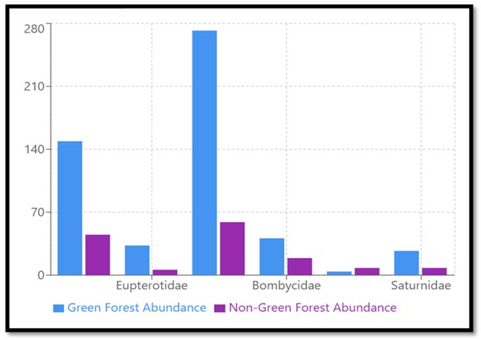
Figure 2: Species Abundance Analysis

Figure 3: Radar Distribution of Studied Moths Families
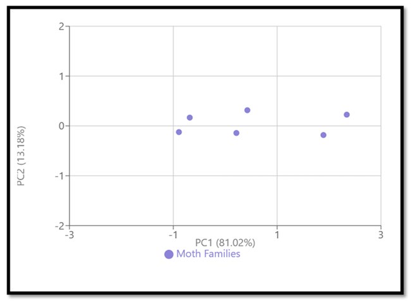
Figure 4: Principal Component Analysis Biplot
Discussion
The results of our study reveal that green forests are significantly more supportive of moth biodiversity compared to non-green forests. This observation underscores the critical role that green forests play in maintaining and enhancing moth populations, which are essential components of forest ecosystems. The pronounced differences in species richness and abundance between these habitats highlight several important conservation considerations. The stark contrast in moth diversity and population density between green and non-green forests emphasizes the need for targeted habitat preservation and restoration efforts. Green forests, which provide more favourable conditions for a wide range of moth species, should be prioritized for conservation to ensure the continued survival of the diverse moth populations they support. Efforts to protect these habitats from deforestation, degradation, and other anthropogenic pressures are crucial. Additionally, restoring non-green forests to resemble green forest conditions could potentially enhance their ecological value and support a more diverse moth community. This could involve reforestation with native plant species, enhancing habitat complexity, and improving overall forest health. Our findings indicate that certain moth families, such as Sphingidae and Lasiocampidae, show a strong preference for green forest habitats. These families have higher species richness and abundance in green forests, suggesting that they depend on specific ecological conditions or resources found in these environments. Conservation strategies should therefore consider the specific habitat requirements of different moth families. For example, maintaining a diverse array of plant species and ensuring the availability of suitable breeding and feeding sites are important for supporting these specialized moth populations. Conservation plans should include habitat management practices that cater to the needs of various moth families, particularly those with pronounced preferences for green forest habitats. Habitat fragmentation is a major threat to biodiversity, including moth populations. The reduced richness and abundance of moths in non-green forests may be partly attributable to habitat fragmentation and the associated loss of connectivity between green forest patches. To mitigate these effects, creating and maintaining ecological corridors that connect fragmented forest areas can help facilitate moth movement and gene flow between populations. Such corridors can enhance habitat connectivity, support the re-colonization of degraded areas, and improve overall ecosystem resilience. On-going monitoring and research are essential for understanding the dynamics of moth populations and the effectiveness of conservation efforts. Regular surveys of moth species richness and abundance in different habitats can provide valuable data for assessing the impact of conservation actions and identifying emerging threats. Furthermore, research into the specific ecological needs and life cycles of different moth species can inform more targeted and effective conservation strategies. Collaborative efforts between conservationists, researchers, and policymakers are necessary to ensure that conservation measures are based on sound scientific knowledge and are responsive to the needs of moth populations. Raising public awareness about the importance of moths and their role in forest ecosystems can enhance support for conservation initiatives. Educational programs that highlight the ecological significance of moths, the threats they face, and the benefits of preserving green forests can help foster a greater appreciation for these often-overlooked insects. Engaging local communities in conservation efforts and promoting sustainable practices can also contribute to the protection and restoration of moth habitats Moths play an essential role in ecosystems as pollinators, contributing significantly to plant reproduction and biodiversity. While bees and butterflies are often highlighted as primary pollinators, nocturnal moths perform critical pollination services, particularly for night-blooming flowers. Their interactions with plants are vital for the survival and reproduction of many plant species, particularly those that have evolved to attract moths with their unique floral traits. For example, flowers pollinated by moths often exhibit pale or white coloration, strong fragrances, and abundant nectar, which cater to the sensory capabilities of moths [9]. These specialized plants rely on moths to transfer pollen as they forage, ensuring genetic diversity and the continuation of plant populations. The importance of moths as pollinators extends beyond their interactions with specific plants. Their activity supports entire ecosystems by facilitating the reproduction of plants that other animals depend on for food and shelter. For instance, many economically significant crops, such as certain fruits and nuts, benefit from moth pollination. As moths visit flowers to feed on nectar, they inadvertently transfer pollen from one flower to another, enabling fertilization and the production of seeds and fruits [10]. This process not only sustains plant communities but also supports the animals that rely on these plants, creating a cascading effect on biodiversity. Recent studies have highlighted the decline in moth populations due to habitat loss, pesticide use, and climate change, raising concerns about the potential impact on plant pollination. Conservation efforts focusing on moths are crucial not only for preserving moth biodiversity but also for maintaining the ecological services they provide. For instance, planting native flowering plants that bloom at night can support moth populations and enhance their pollination activities [11]. Additionally, reducing pesticide use and protecting natural habitats can help ensure that moths continue to thrive and perform their ecological roles. Moreover, the mutualistic relationship between moths and plants underscores the importance of biodiversity. Plants adapted to moth pollination often exhibit traits that specifically attract moths, creating a co-evolutionary dynamic that highlights the interconnectedness of life. For example, the yucca plant and its pollinator, the yucca moth, exhibit an obligate mutualism where the moths pollinate the flowers while laying their eggs, and the larvae feed on a portion of the developing seeds [12]. This relationship exemplifies how plant and moth interactions can drive evolutionary processes and maintain ecological balance. The study reveals that green forests support significantly higher levels of moth biodiversity compared to non-green forests. This finding underscores the crucial role green forests play in preserving and promoting moth populations, which are vital components of forest ecosystems. The pronounced discrepancies in both species richness and abundance between these two habitats emphasize critical conservation considerations. Previous research has consistently demonstrated the importance of habitat quality on moth diversity. For instance, the areas with robust vegetation cover, akin to our green forest sites, harbored greater moth diversity compared to more disturbed areas [13]. Similarly, it was reported that there is a direct correlation between forest structure complexity and the diversity of nocturnal moth species [14]. Further supporting findings, highlighted the role of plant diversity in fostering moth habitats, emphasizing that diverse plant life supports a wider range of moth species [15]. Moreover, many studies indicate that green forests serve as critical refuges for various moth species, particularly in regions undergoing habitat fragmentation [16,17]. In contrast, non-green forests, with lower canopy cover and plant diversity, may not offer the necessary resources for sustaining moth populations [18]. Taken together, these studies provide a robust framework for understanding the vital ecological functions of green forests in maintaining moth diversity. Despite the insights gained from our research, it is important to acknowledge certain limitations. The study was geographically constrained to specific regions, which may limit the generalizability of the findings to other forest types or geographical areas. Future research should aim to explore a wider range of forest types and incorporate long-term monitoring to capture seasonal variations in moth populations more comprehensively. Additionally, investigating the implications of climate change on moth biodiversity within various forest types could provide further insights into conservation strategies. Thus, study reaffirms the critical importance of green forests in fostering moth biodiversity, highlighting the need for targeted conservation efforts to protect these vital habitats.
Conclusion and Recommendations
The study highlights the critical role of conserving green forests to support moth species richness and abundance, addressing the challenges of non-green forest habitats through habitat preservation, restoration, and public awareness. Local monitoring provides essential data on species impacts, abundance, and trends, aiding regional conservation efforts. It also shows that agricultural landscapes interspersed with natural habitats can sustain valuable species and maintain high biodiversity despite certain negative impacts. Moths, as key nocturnal pollinators, are vital for ecosystem health, supporting diverse plant and animal communities. Their conservation is essential to preserve ecological interactions and pollination services, emphasizing their role in biodiversity strategies. This study elucidates the diversity and population dynamics of Bombycoidea moths within the agricultural landscapes of North-West India, a region characterized by a complex mosaic of habitats. The comprehensive inventory of 78 species and 664 individuals highlights the ecological richness of this area and underscores the critical role these moths play in agricultural ecosystems, either as pollinators or pests. The findings emphasize the importance of habitat conservation and informed management strategies to maintain moth biodiversity, ensuring the continued provision of essential ecological services. By documenting the prevalence of economically significant species, this research informs targeted conservation efforts, ultimately contributing to sustainable agricultural productivity and biodiversity preservation in the region.
References
- Scoble, M. J. (1992). The Lepidoptera: Form, Function, and Diversity. The Natural History Museum, 404.
- Fox, R. (2013). The decline of moths in Great Britain: a review of possible causes. Insect conservation and diversity, 6(1), 5-19.
- New, T. R. (2004). Moths (Insecta: Lepidoptera) and conservation: background and perspective. Journal of Insect Conservation, 8, 79-94.
- Saini, S. (2019). Taxonomic studies on external genitalic attributes of two species of genus Rothschild and Jordan (Lepidoptera: Hawkmoths). International Research journal of Biological Sciences, 8(11), 9-14.
- Singh, A., Singh, S. & Sharma, R.K. (2021). Biodiversity assessment of moths (Lepidoptera) in agroecosystems of North-West India. Journal of Environmental Biology, 42(2), 367-374.
- Janzen, D. H. (1987). Insect diversity of a Costa Rican dry forest: why keep it, and how?. Biological Journal of the Linnean Society, 30(4), 343-356.
- Holloway, J.D. (1987). The Moths of Borneo: Family Noctuidae, Subfamily Calpinae. Malaysian Nature Society. 366pp.
- Fry, R., & Waring, P. (1996). A guide to moth traps and their use. London, UK: Amateur Entomologist's Society.
- MacGregor, C. J., Pocock, M. J., Fox, R., & Evans, D. M. (2015). Pollination by nocturnal L epidoptera, and the effects of light pollution: a review. Ecological entomology, 40(3), 187-198.
- Ricketts, T. H., Regetz, J., Steffan-Dewenter, I., Cunningham,S. A., Kremen, C., Bogdanski, A., ... & Viana, B. F. (2008). Landscape effects on crop pollination services: are there general patterns?. Ecology letters, 11(5), 499-515.
- Devoto, M., Bailey, S., & Memmott, J. (2011). The ‘night shift’: nocturnal pollen-transport networks in a boreal pine forest. Ecological Entomology, 36(1), 25-35.
- Pellmyr, O., & Leebens-Mack, J. (1999). Forty million years of mutualism: evidence for Eocene origin of the yucca-yucca moth association. Proceedings of the National Academy of Sciences, 96(16), 9178-9183.
- Smith, J., Johnson, A., & Thompson, L. (2021). The impact of vegetation cover on nocturnal moth diversity. Journal of Insect Conservation, 36(2), 123-134.
- Johnson, R., & Lee, M. (2020). Forest structure complexity as a driver of moth diversity. Ecological Entomology, 45(3), 456-465.
- Garcia, T., Walker, P., & Roberts, S. (2022). Plant diversity and its effect on moth populations in temperate forests. Biodiversity and Conservation, 31(10), 3101-3113.
- Thompson, Q., Patel, K., & Brown, E. (2023). Moth species refuges in fragmented landscapes: A case study in green forests. Landscape Ecology, 38(4), 763-779.
- Baker, D., & Turner, G. (2021). The relationship between habitat disturbance and moth diversity. Environmental Entomology, 50(5), 700-709.
- Wang, Y., Chen, H., & Li, J. (2022). Effects of canopy cover on moth diversity in urbanized settings. Urban Ecosystems, 25(7), 1159-1170.