

International Journal of Botany and Horticulture Research(IJBHR)
ISSN: 2994-872X | DOI: 10.33140/IJBHR
Impact Factor: 0.98


Review Article - (2023) Volume 1, Issue 1
The Role of E-Commerce in Agriculture Digitization Promoting Rural Development in Rwanda
2University of Kigali (Senior Lecturer), South Africa
3University of Tourism, Technology and Business Studies (Assistant Lecturer), South Africa
Received Date: Jun 06, 2023 / Accepted Date: Jul 16, 2023 / Published Date: Aug 01, 2023
Copyright: ©Â©2023 Mbanzabugabo Jean Baptiste, et al. This is an open-access article distributed under the terms of the Creative Commons Attribution License, which permits unrestricted use, distribution, and reproduction in any medium, provided the original author and source are credited.
Citation: Rukundo, P., Baptiste, M. J., and Gilbert, U. (2023).The Role of E-Commerce in Agriculture Digitization Promoting Rural Development in Rwanda. Int J Bot Hor Res, 1(1), 19-24.
Abstract
This paper sought to analyze pros and cons of the current e-commerce and agriculture digitization in Rwanda and how rural development benefits from them. Since the country emerge in social and economic transformation, ICT has been a prominent tool to inject a rapid Economic growth among Rwanda’s citizens. Agriculture digitization has been successfully implemented, different national and international organization sponsored this ultimate initiative, Rwanda become one of the fewest African country with an electronic world trade platform in Africa. Though a promising progress is noticeable, the researcher found some barrier towards a successful migration from a longstanding model towards an advanced and ultramodern agriculture’s e-commerce and digitization platform.
Keywords
Rwanda is a small land-lock country among the highest density in the world and most densely populated in Africa with 445.88 people per square kilometer [1]. Above 55% of population distribution are below 35 years [2]. The estimation of world population review suggests that in 2080 Rwanda will reach almost 30,000,000 people [3]. It is crucial that the number of population will not be adequate versus the size of the nation, put in mind that most of these youth, above 75% live in rural area where agriculture is their main source of income. The above scenario draws a conclusion of how important developing agriculture from an outmoded to a modern and advanced approach is a priority. With no doubt IT is a tool which sustains almost each and every corner of human kind in this century, Agriculture won’t be an exception towards these tremendous eras of Technology. From this perspective, this study will focus on pros and cons analyzing how agriculture can improve with ICT as a core pillar, allowing farmer being much more aware of their livestock, crops, market price, and being connect to consumer easily and more efficiently.
Progress in Urban and Rural Integrated Development.
The government of Rwanda has invested hugely in rural area, farmers created different farming association. Small household farmers integrated their land together and the government provided selected crop based on the regions, with free irrigation facility. This increased abundantly productivity and turned their livelihood better.
Improvement in Rural Public Services and Social Under¬taking
The government of Rwanda has boosted a lot rural integration, a lot of initiative has been world-while appreciated, almost every province is being covered with paved Roads at a statistics of 80% , Rwanda covered almost 70% of its population with electricity with a target of 100% by 2020 and 70% of potable waters in rural areas, Internet facility is covered in almost every district of the nation where the fiber optics has been established in the whole nation [4,5].
Ongoing Features in Poverty Alleviation through EDPRS
Rwanda remained one of the fewest African nations which has been able of lifting out of poverty more than a million citizens in less than a decade [6],this poverty reduction has been boosted by the national program called “Economic Development and poverty reduction strategy II (EDPRS II).one of its main objectives was to integrate all approach of land use and human settlements, Increase the productivity of agriculture, Enabling graduation from extreme poverty and mostly important related to this research was to connect rural communities to economic opportunity through different platform where E-commerce emerge from.
Progress of ICT Application in Agriculture
The Food and Agriculture Organization of the United Nations (UNFAO), launched one of the most prominent project “Agriculture Services and Digital Inclusion in Africa” to accelerate digital inclusion in Agriculture sector, Rwanda was granted the opportunity of being among the pioneer among African nations. This initiative had in its root phase creating Apps where the target was to enrich the farmer with all maximum information regarding their farm and livestock, where four aspects mainly had to be achieved; Cure and feed your Livestock, E-nutrifood, weather and crop calendar and finally the Agri Market Place the cure and feed your livestock provided all the features allowing rural farmers actively verify both feeding and health of their livestock, focusing on their syndromic events, animal health care systems and feedings. Besides this, its link farmers with lab of soil and water analysis. E-nutrifood is another app which enabled farmer to produce high nutrition food which turns to improve diet, both achieving better food security and nutrition. The E-nutrifood extended its service on providing information of producer and consumer, sharing the requisition of both party in terms of quality and quantity needed. Weather and crop calendar was also introduced, this app gave based on meteorological information, by providing early warnings of extreme weather events, it also provides crop calendar adapting to local demand and rainfall and irrigation needs. Finally, the initiative provided the Agri market place where a farmer was able to check out the market price of his livestock instantly and able to make decision where and when to sell. This project was successfully implemented, though some drawback were highlighted and discussed in this paper.
Thriving E-Commerce in Rural Areas through Esoko, AMIS
The government of Rwanda has done a lot of improvement to boost e-commerce usability, the ministry of agriculture and animal resources (MINAGRI) launched the Esoko an online platform which assisted rural farmers being connected directly to their vendors but also get connected in between themselves, Esoko was introduced to manage the market price information for multiple markets and commodities, the introduction of Agricultural Management Information System (AMIS) took control as well, by harmonizing different information’s and knowledge across the sector[7,8].
Alibaba Introduce the First Electronic World Trading Platform (Ewtp) in Africa
In 2018 Alibaba group from China headed with Jack Ma launched the first electronic world trading platform designed to level the playing field for small and medium-sized companies, this electronic platform has made it possible for a small farmer benefit from globalization [9]. A sample survey conducted by Alibaba group showcase, revealed an increase of $4 was collected by farmers from the normal interest covered before using this platform. Alibaba’s Tmall and Taobao platform, sold lots of Rwandan’s coffee brands in foreigner market especially in China. The most sought are; gorilla coffee, West hills coffee and Land of a thousand hills coffee, all these brands pick the top selling price, being as well one of the most craved coffee on the platform. Besides being one of the best in terms of quality a sample survey collected by the research here in Beijing, where 100 customers whom tested the Gorilla coffee, above 80 percent of them ranked it as their best brand in terms of quality, all this made possible by an effective shipment facility carried out by the Rwandair cargo flight, compared to different coffee brands on the platform.
Challenges of E-commerce and Agriculture Digitization in Rwanda
Rwanda has done a lot of improvement to digitalized agriculture and increase the e-commerce compared to many decades ago, but some problems are still presenting in this platform. Bellow diagram summarize what has been achieved and associated challenges.

Figure1: Current E-commerce and Agriculture digitization in Rwanda, associated with challenges
Nonetheless, above challenges were remarkable, the group’s leaders of the farming association, 90% were skilled with reading and writing, having smartphones, with a permanent internet facility and a satisfactory ICT skill. This challenge was no longer a barrier, because a farmer could easily get information of his livestock and farm, also being able to navigate the market through an E-commerce platform through his group leader of the farming association.
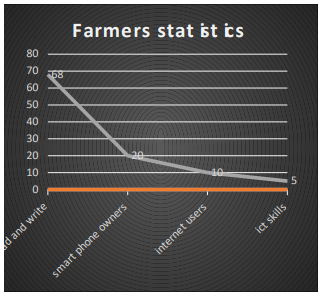
Figure 2: Farmer Statistics, Farmer Awareness to Agriculture Digitization Rate
Nonetheless, above challenges were remarkable, the group’s leaders of the farming association, 90% were skilled with reading and writing, having smartphones, with a permanent internet facility and a satisfactory ICT skill. This challenge was no longer a barrier, because a farmer could easily get information of his livestock and farm, also being able to navigate the market through an E-commerce platform through his group leader of the farming association.
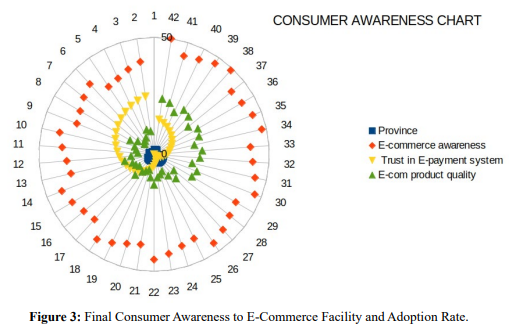
Figure 3: Final Consumer Awareness to E-Commerce Facility and Adoption Rate.
Supply Chain Barriers
Most of the E-commerce platform requires a controlled and maintained supply chain. Farmers in Rwanda has a limited skills of supply chain besides that, a limited numbers of physical stores to ship directly their product from the farm to their final consumers have been a challenge. The second challenge tackles the product quality control system from the farm up to the last consumer which is also not monitored, lastly roads connecting the farm towards the main shipping roads are not paved, in raining seasons shipping turn to be problematics, and this limits the delivery period of time for the final consumer receiving his final products.
End-Consumer Barrier
A sample survey was collected through interviews where 100 persons with interest of using e-commerce from urban city, such as Kigali, Musanze, Muhanga, Rusizi and Rubavu districts. Statistics showed that only 40% were aware of e-commerce platform, only 25% trusted the e-wallet payment system linked directly to their bank account, different with mobile money payment system in used currently, and only 10% could easily trust the quality product delivered through E-commerce platform. Though numbers appeared being inadequate, continuous advocacy and encouragement would change the perspective of how this platform would be adopted, final consumers vividly express a need of such e-commerce platform implementation.
Rural Developments through E-Commerce and Agriculture Digitization in Rwanda
Since the introduction of agriculture digitization through the initiative of Agriculture Services and Digital Inclusion in Rwanda, livestock productivity increased tremendously, farmers were able to treat their livestock more precisely, provide medication on time and monitor any problem at early stage. Weather and climate adaptation was very well monitored with local small household farmers, they could easily predict what to plant, when and where without being advised by authority. Reaching the market price was no longer a barrier from them, a farmer would directly trace the market price of his products and decide directly. The e-commerce platform enables a farmer to send his product to the market without meeting the final consumer on spot, thing that assisted them saving money and time at once. Farmers has been facilitated too much protecting their livestock, increasing their productivity and reaching the market as easier as possible.
Conclusion and Recommendation
This research considered 3 most important aspects; the e-commerce, agriculture digitization and their impact in promoting rural development. Rwanda has successfully implemented all the above through different initiatives and this turned to be very positive for rural farmers. The UNFAO “Agriculture Services and Digital Inclusion in Africa” initiative has shaped how agriculture was conducted before. Ultramodern methodology e-commerce platform such as esoko, etc..; and e-WTP has been very useful towards Rwanda’s farmers. Nevertheless, lots of challenges have been addressed, the government and non-government bodies need to tackle farmer’s literacy, smart phones ownership per farmer, ICT trainings on how to manipulate new technology, lower the price of internet per farmer. Supply chain management has to be handled by providing basics training on quality monitoring. Numbers of physical stores need to be increased focusing also on paved-roads. Final consumers have to be encouraged to shift from outmoded payment model (mobile money system) to a cashless e-payment system which has to synchronize directly with the e-commerce platform and bank accounts.
The market systems analysis approach, therefore, provides a cursory but meaningful glance at the market players, the demand and supply dynamics, the current and desired level of competitiveness, supporting famers and firm strategy, structure and rivalry, as well as the regulations that shape market activity (favorable market conditions). However, for digitalization to occur, it’s impact is defined across diverse product-service markets, industry segments of both new and existing as well as infrastructure completeness such of street mapping to smooth eFulfillment, the Continuous training and awareness of e-commerce and quality control platform are highly recommended. Finally, the next researcher should focus a lot on household datasets and analyze the penetration of e-commerce, e-payment and agriculture digitization on household’s level (micro-datasets), as the above research did not go much deeper in details. The next researcher has also to investigate the possibility of rural farmer shipping their products directly to international markets without any middle agents. Last but not the least the next researcher has to consider security associated with the platform investigate how cash transactions would be executed on the platform without any suspicious of cybercrime attack. [11-17].
References
- NSIR. (2012). Ion Size, Structure and Distribution, 1–102.
- National Institute of Statistics of Rwanda. (2012). Fourth population and housing census.
- Cleland, J. (2013). World population growth; past, present and future. Environmental and Resource Economics, 55, 543-554.
- Ministry of Infrastructure. 2018. “ENERGY SECTOR STRATEGIC PLAN 2018/19 - 2023/24.” Republic of Rwanda.
- Binagwaho, Agnes et al. 2014. “Building Health Research Infrastructure in Rwanda.” The Lancet Global Health.
- Monetary, Fund International. 2013. “Rwanda: Poverty Reduction Strategy Paper; IMF Country Report 13/360; 2013-2018.” (13).
- van Schalkwyk, F., Young, A., & Verhulst, S. (2017). Esoko – Leveling the Information Playing Field for Smallholder Farmers in Ghana. (July), 17.
- SCAR. (2012). Agricultural Knowledge and Innovation Systems in Transition – a reflection paper. In European Commission.
- President, Rwandan, Paul Kagame, and Alibaba Group. 2018. “The Government of Rwanda and Alibaba Group Enter into Agreements to Promote Rwanda ’ s Economic Development.”: 1–2.
- Migration, Internal, Population Density, Total Population, and Population Projections. 2012. “2012 POPULATION AND HOUSING CENSUS.” : 5–6.
- Ayres, R. U., & Williams, E. (2004). The digital economy: Where do we stand? Technological Forecasting and Social Change.
- CIA, Agency, C. I., & Central Intelligence Agency, C. (2011). CIA World Fact Book. Httpwwwciagovciapublicationsfact-bookgeosinhtml.
- Fox, L., Senbet, L. W., & Simbanegavi, W. (2016). Youth employment in Sub-Saharan Africa: Challenges, constraints and opportunities. Journal of African Economies.
- Gatete, C. (2016). the Rwanda We Want: Towards “Vision 2050.” Umushyikirano 2016, (December).
Copyright: ©2023 Mbanzabugabo Jean Baptiste, et al. This is an open-access article distributed under the terms of the Creative Commons Attribution License, which permits unrestricted use, distribution, and reproduction in any medium, provided the original author and source are credited.
- Index Mundi. (2014). Singapore Demographics Profile 2014.
- Ministry of Youth and ICT. (2016). The Government of Rwanda launches a Laptop Purchase Program for University students.