

Archivos de Ciencia e Investigación(ADCI)
ISSN: 3068-014X | DOI: 10.33140/ADCI


Review Article - (2026) Volume 2, Issue 1
‘The Role and Importance of Women in the History of Medicine’: A Scoping Review Article

Received Date: Feb 17, 2026 / Accepted Date: Apr 14, 2026 / Published Date: May 13, 2026
Copyright: ©2026 Gustavo Gomez Barbieri. This is an open-access article distributed under the terms of the Creative Commons Attribution License, which permits unrestricted use, distribution, and reproduction in any medium, provided the original author and source are credited.
Citation: Barbieri, G. G. (2026). The Role and Importance of Women in the History of Medicine. Arch Cienc Investig, 2(1), 01-13.
Abstract
Within the history of medicine, women have played a key role in a masculine and patriarchal paradigm, innovating and developing areas of medical knowledge that men had considered limited for ethical, cultural, anthropological or religious reasons. Therefore, the aim of this publication is to explain and describe the role of women into the Medical system and their contribution to the history of medicine, and how their discoveries and innovations have changed the world.
Keywords
Medicine, Woman, History of Medicine, Gender Equity and Social Justice
Introduction
With regard to the origins of human history, we highlight the social role and figure of women, which proved to be constitutive and substantial elements of the family. Womankind has played critical roles as a procreator, protector, educator, guardian of children, chamana, doctor and healer, contributing decisively to the formation of the fundamental unity of human society. Cultural relativism and functionalism have enabled the identification of female behavioural patterns over historical time. The customs and usages of different communities or cultural clans have undergone transformations over time. The society under consideration shows matriarchal characteristics, similar to what can be observed among the ancient Celts and Britons, where the mother had endogamous relationships with the father, children and grandchildren. Currently, the figure of the matriarch and clan, the chief chaman of the community is found in Germania, as evidenced by the remains of Chamann women and the V relation of the Britannia campaign described by Julius Caesar. This analysis makes it possible to delineate the type of social and family structure that characterised the Britons before the Roman conquest and the phenomena of Romanisation. The woman in question held not only the role of chieftain, but also that of sorceress and warrior within the clan. Otherwise, the figure of the founding matriarch woman, known as the she-wolf, the figure of the founding matriarch, known as the she-wolf, who nurtured the twins Romulus and Remus, not only represents the symbolism associated with the rise of monarchical Rome and the she-wolf herself, but also embodies the founding myth of the city. The goddess Gula, also known as Cane or Spako, is a figure of Mesopotamian origin who represents healing and health. According to mythology, she is directly descended from Aeneas and Aphrodite. The she-wolf's milk is a symbol of life force and healing, and the Greek Teriakia, later adopted in the Middle Ages as the source of Juventus, is associated with health and healing. The she-wolf, as a symbol of donna mater (Mater romanorum), represents the source of youth, health and the path to healing and virtue, as well as the source of immortality [16,17].
The conception of femininity, motherhood and health is diametrically opposed, steeped in ethnocentrism and cultural relativism. The influence of the cultural system on the generation was found to be significant. No one can ignore the fact that the maternalist rootedness, mediated by capitalist materialism, makes women from the 19th century onwards make use of the materialities provided by the industrial revolution in a cognitive-technical development that ensures the subsistence of cultural lineages and intellectual productions. So, from the protective metaphor, the woman is reproduced in the other matriarchal technique. How can this be explained? In that, in a protective eagerness of the family nuclei to seek an alternative reading that allows it to ensure the security of the clan and to increase the availability of resources within the family through the diversification of industrial and cultural resources based on knowledge and technological know-how whose use requires a 'sensitization' of the why and the wherefore. In the field of medical technology, epistemologically 'small hands' are able to develop artefacts based on big ideas. Access to restricted fields requires care and application, making respect in the treatment of tissues and organs an assertively more natural quality of feminine gestures. Brain-eye-hand interface develops more naturally in the female mimetic technique, whereas in masculinity, precision and strength are defined by automatizations derived from the dominant hunting trait. Intellectuality, inherent to the culture of patriarchal societies, relegated the mine to the ambit of collectivism. Intellectuality, which is inert to the culture of patriarchal societies, has relegated the domain of the home, but the need to broaden the cultural Mission demands 'broadened participation' in which discourse has had to be modified with renewed visions that allow the integration of know-how and know-how to be. That is to say, a non-competitive rationality between the sexists but a coadjuvant rationality which allows to re-establish a corporative structure of the human being.
In this sense the integration of the disciplines social anthropology, philosophy and epistemology interconnected with the discipline of History of medicine could be explained what's the role of the woman doctor assigned by the society, the medical system and the cultural system in our society, and the actually implication to the organization and assigned the works on the occupation the women in the medical society [28-30].
Evidence Acquisition
This literature review aims to illustrate, compare, and discuss the role and the importance of the figure of the woman in the development of the Medical system. To achieve this goal, we adopted the Preferred Reporting Items for Systematic Reviews and Meta-Analyses [PRISMA] methodology. First, we defined a list of keywords that express the main aspects of the concepts of ("Female History, Ancient* Humans Midwifery / history* Natural Childbirth / history Nurse's Role / history* Roman World. Only articles in languages other than English, Spanish, and Italian were excluded. Once the information was obtained, two independent observers, whose names were concealed, carried out a critical analysis of the referenced documents. The original documentary archives of the Congress Library of USA and Ambrosian Bibliotheque were consulted to obtain primary sources for a more in-depth analysis (You can see box and fig.1 for more information).
|
Question Research |
Mesh terms |
Citation |
|
¿What's the role of women in the medical systems around the history of medicine? |
Medical doctor/woman Health system |
1-10 |
|
¿What are the principal discoveries and supports who developed in the history of medicine? |
Humans Midwifery / history* Natural Childbirth / history Nurse's Role/history |
11-20 |
|
¿What are the principal cultural factor who determines the role of the women in the health system? |
History of Medicine anthropology philosophy epistemology |
1-20 |
Box No. 1: Research Question Based on the Scoping Review Methodology
Methods
We conducted a scoping review of the literature on the role of the women in the medicine , following the Preferred Reporting Items for Systematic review and Meta-Analysis extension for Scoping Reviews (PRISMA -ScR) guidelines. A pre-search scoping protocol was designed based on the approach suggested by Arksey and O'Malley (Arksey & O'Malley, 2005) and The Joanna Briggs Institute (2015). The PRISMA-ScR checklist and protocol are available in the supplementary materials [27].
Eligibility Criteria
Current recommendations are as follows: the inclusion criteria of scoping reviews should be based on the mesh terms that can answer the study questions, the concept to be examined, and the context in which the review takes place. In our review, we applied the following inclusion criteria:
• Primary Historical Studies: Three main questions were structured. What's the effect of the cultural system in the generation and role of the woman doctor in history? How to influence the organization of the healthy system and the relevance and impact of the envelopments realized by the woman in the medical clerks? We took into account the terms of the mesh:
History, Ancient* Woman
Humans
Woman in medicine
Midwifery / history*
Natural Childbirth / history
Nurse's Role / history*
Roman World.
Greek World .
Egypt World.
Islamic civilization, Medieval medicine, Obstetric practice,
History
Only articles in languages other than English, Spanish, Latin, Greek, French & Italian . Once the information was obtained, two independent observers, whose names were concealed, carried out a critical analysis (Please review box 1 and 2)
• Secondary historical studies: Autobiographies, historical writings (books and articles/letters) and comments, tributes, photographic archives, legal codes of the time and their translations, study articles, and academic programs following the scoping review methodology with the questions raised were considered among this group.
Anticipating a low number of studies, we kept our review as inclusive as possible; therefore, we have included any type of study design, including qualitative analyses, ethnographies, case studies, and observational and analytical studies.
Information Sources
Our research included standard databases as well as other sources of information. The standard databases included PubMed, Epistemonikos, Lilacs, Scopus, and Google Shopping Review. A Scoping Review has been conducted over the past 70 years. We also search Memories, the National Archives, the Library of the Congress Library with unpublished books and documents, and Sky. Finally, we established direct contact with local mental health stakeholders, including policymakers, clinicians, and service users via email.
Search Strategy
To make our search as complete as possible, we include terms with no language or time restrictions. We use diverse terms like ("Story/ Medicine" AND "Woman") OR ("Obstetric" AND "Midwifery"). (Figure: 1)
Selection Process
Two assessors independently reviewed the titles and abstracts and compared them to the inclusion criteria. Disagreements were settled by consensus or by a discussion with a third reviewer if no consensus was reached.
Data Extraction and Management
An extract of data was developed from the Implementation Studies Checklist for Reporting Standards (Pinnock et al., 2017) and the framework developed by Proctor et al. (Proctor et al., 2011). Accordingly, for each included study we extracted general characteristics, such as study type, country, and participants, as well as implementation methods and outcomes, such as acceptability, feasibility, fidelity measures, effectiveness, profitability, and sustainability. A detailed taxonomy is included in the supplemental documents. The data were extracted by one team member and verified by another writer.[42,43]
Body of Evidence
Ruolo della Medica nell'Antico Egitto
Egyptian Female Doctors Over a 2,500-year span, between the Old Kingdom and the Late Period, approximately 150 female healers are known. Among them is Peseshet, who lived during the Fourth Dynasty of the Old Kingdom (2620–2500 BC) and is recognized as both the "chief physician" and the "chief healer." This suggests she was not the only one, although she is the first for whom there is tangible evidence: her name appears on the tomb of her son Akhet-Hetep, a Fourth Dynasty official buried at Saqqara in 2400 BC. The stele dedicated to her mother reads: "She has reached a very advanced age, obtaining honor before the great god [1]."
Otherwise, the existence of the supposed first female internist in the history of medicine, Merit Ptah, deserves a historical explanation as the first king's doctor, although she did not exist in the form presented but as a cultural construct in the 1930s when Kate Campbell Hurd-Mead misinterpreted a report about an authentic ancient Egyptian healer. Merit Ptah gradually became a prominent figure in popular historical accounts during the second wave of eminism [2].
The influence of feminist movement to ament are repetitive in different figures in the history of medicine and religion, such as how the creation of Hypatia transformed into Saint. Catalina of Siena is like a historical personage, this is a religious actor repeating and assuming roles in different times in the involvement of the personalities repeating in the history. Moreover in ancient Egypt, women were considered special workers, assisting physicians in their roles as healers, nurses, and medical assistants. There were also women who prepared medicines and magical potions to treat patients that men were unable to cure. Medicine was eminently magical and religious, associated with the design of the Gods and their will beyond men. Men had only to accept their destiny; they could not reveal the contraries of their creation, so priests were mere constraints on the cure that the god wished for them. The development, creation, and fraternization in medical specialties arose in the fields of gynecology and obstetrics, internal medicine, and infectious diseases.
Ruolo della Donna nella Medicina grecca
'' ... Il centauro Chirone invento la chirurgia Apollo invento l'oculistica
Asclepio invento la clinica Una ragazza di nome Agnodice fu la prima ostetrica...''
[Igino astronomo (oppure Gaio Giulio Igino): ''Fabulae'']

Figure 1: Agnodice , Greek Medical Doctor, The Creator of Obstetric
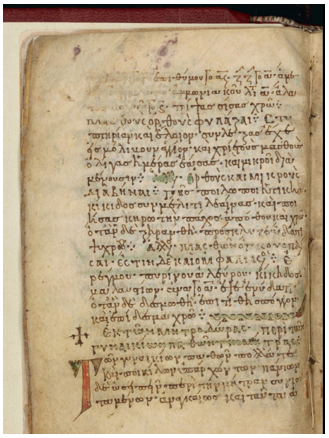
Figure 2: Metrodoras text of the role of the Metrodoras in the Anticle Greek Medicine

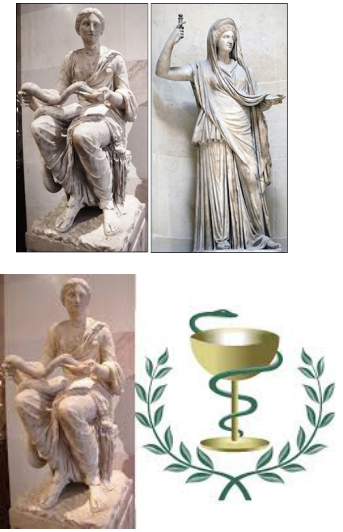
Figure 3: Proskenion e Incubatio Temple of Delphos, Atenas.Sculpture of Hygeia and Panacea; Epidaurus Temple & Cup of Healthy Symbol of the Pharmacist Panacea
In ancient Greece, medicine was characterized by a patriarchal and omphalocentric structure, underpinned by a strong tradition and experiential basis. This approach is inherently empirical and allopathic in nature, founded on the systematic examination of signs and symptoms, with diseases categorised into clinical entities known as 'grand clinical syndromes'. The patron deity was Aesculapius, who was associated with Hygiene. His daughter Hygeia, the hygienist, helped to cure men and prevent all infectious and chronic diseases that could be prevented by a thorough cleansing of the body, constant bathing and the consumption of clean water and food, as well as housing and space free of dirt and waste. Furthermore, the panacea that was his youngest daughter, the miracle medicine known as the Triaka, which was reputed to cure all diseases, assisted her father and her sisters in the healing process of the sick in the sanctuaries. The father's role as a protector and healer positions him at the core of curative medicine and therapeutics, rather than occupying a marginal or subsidiary position. This is in contrast to the father's status as the deity of health and medicine, who is assisted by his daughters in the healing and curing of his patients, thereby achieving immortality. However, this state of eternal life is ultimately brought to an end by the intervention of Zeus, because the number of souls to must be arrive to Hades are decline at very low level and the god Hades , master of the underground are sorrow and preoccupates, because non exist population into the Death World and the equilibrium and wellness of the reaction are interrupted, because Asclepius or Esculapius acknowledge the key of immortality. The key concept in this last lines are defined the diametral role of the Medicine in the life expectancy and the importance of the daughters of Asclepius to reach the healthy, the wellness and the immortality, because if not exist the two deities are not possible to materialize the work and sanitation into the material world of Humans. The uranic influences into the human world are manifested through the origins of farmacology, chirurgic and internal medicine applied to the therapeutic and healing.
In Athens the practicality of medicine and the life are prohibited in the geniceo, they are protected and limited by the wife and his parents, in opposition in the spartan society. The woman is independent,she has the possibility to vote and express her opinion freely in the cohort of gerlusians and popular assambles, are protected by the spartan law and she has a proprietary legal personality.

Figure 4: Archaeological Museum of Athens Kouros and kore, represent the masculine and feminine ideal of Greek society, the kouros; as a child, he represents strength, virility, and power as expressed in the funerary monument of the deceased Krousos: “Stand and lament before the memory of the dead Kroisos. He, once, among the first fighters, struck down the impetuous Ares.”Koré it's the perfectly role of women , wife and fertility, housekeeping and rich of a house
Ruolo della Donna nella Medicina della Antica Roma
Kingdom of Rome Monarchy (753 a.c-510 a.c)
The medical system in Rome is patriarchal and based in tradition. The king Numa Pompilius (753-653 BC) issued the Royal laws (leges regiae) which dictate that a fetus should be removed from the uterus in case the pregnant woman is seriously ill or in case of death during childbirth. Abortion, miscarriage and perinatal death would be investigated for malpractice, with this measure used intensively in times when the roman population was decreased. The role of midwives and nurseries in this period is institutionalized as a method to demographic control and public health [16].
The existence of female doctors in Rome civilization are remounted at the time of conformation of the Lates with the existence of women god named Vacuna, who represented the healthy and sanitation in the paludine of Rieti and are one manifestation of god Eracles in the sabine land, who controlled the water, the fertility and the forest with all their creatures. The curative power of Rea Silva and the primarily medical doctors in Rome are transferred to the midwives of patrician family , for example, Livia Drusila, Giulia, and Ottavia, who can recognize the principal extracts or plants for the healing and cure and in the another had created poisoning and venom against the enemies of the family [17].
Republic of Rome Senates Populesques Romanorum (SPQR) (510 a.c-40a.c)
How aforementioned Caton the Censor, is the obligation of pater familias , to maintain the knowledge of cure and medicine. The use of potions and other medical extracts in the cure and the venoms. The constitution, the order of merit in the age of Augusto and the legalization and acceptance of free citizens by the medical doctors in the age of Giulio Caesar must accept the social role of the medicas servitori in the society. The military medicine had been structured in campaign hospital leadership by a medical doctor who was attending a team of work formed by military surgeons, centurions and legionaries, to confront a medical urgency in the battlefield. Overall the process of transcultural between oriental (sasanid imperial, Damian, Persian,nabateus,and civilization of India), envelopment the use of narcotics like opium,mirra, incenso, belladonna and hiperico) adopted by greeks and taught to medical romans.
Imperial Era 40a.c a 476 de.c
During the Roman empire, the role of midwives and nurseries were institutionalized and established by the laws and costumes. The career of the obstetrician is recognized by the state and taught by male medical doctors. Soranus of Ephesus, recognized and enumerated the characteristics of the nurseries and midwives and the important role in the demography and protection of the human being and newborn, they must be study after the knowledge with old curanders and chamans who knows the herbs and medicines and to practice the techniques of parturients, prolapsus and hysterectomies. Recognized these practical elements continue her formation in the semiology and medical science to recognize and treat these diseases and perfect her arts in the puericulture science. The gynecologist and obstetrics are different. The nurseries yatros i le ostetriche obstetrica are different specialities and de medicus o doctrix are the continuation of the studies in medicine and puericulture. The greek formation influenced obstetric roman practice in the study and systematization of the presentation of the fetuses and the embryonic development. The preventive methods of the conception and the fecundation are recognized and the abortive substance. The inscriptions found in the crypt and tombs of Ostia Antica demonstrate this level of organization and the high rate of maternal and perinatal mortality caused by the deficiency in the antiseptic and the invasive surgeries affected the woman. Overall in the late era the parts are a lethality to oscillate at 25% to 80% of parts and cesarean with a high rate of mortality ,rather than the technical knowledge existing at the time Inclusive in the tombs are inscriptions who explained this problem:
Latin inscription of Ostia Antica Tomb.
H(uic) M(onumento) D(olus) M(alus) A(besto) D(is) M(anibus)
SCRIBONIA ATTICE
FECIT SIBI ET M(arco) VLPIO AMERIMNO CONIVGI ET
SCRIBONIAE CALLI
TYCHE MATRI ET DIOCLI ET SVIS
ET LIBERTIS LIBERTABVSQVE POSTE RISQVE EORVM
PRAETER PANARA
TVM ET PROSDOCIA H(oc) M(onumentum) H(eredem) E(exterum) N(on) S(equetur)
Transcription:
''May this monument be protected against intentional evil! Scribonia Attice has built this monument for herself and for Marcus Ulpius Amerimnus, her husband, for Scribonia Callityche, her mother, for Diocles, and for her family, and for her freed slaves, and the descendants, with the exception of Panaratus and Prosdocia.
The monument cannot be inherited by strangers''.
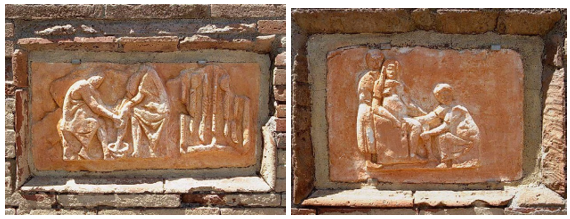
On both sides of the inscription is a terracotta relief. The left one shows a surgeon in a sitting position treating the leg of a patient. The latter is sitting on a high chair. Next to the patient we see all kinds of medical equipment.
On the other medical relief we see a midwife in action. The expectant mother sits nude on a chair while she is held by a third woman. In front of her, on a low stool, sits the midwife. These were probably the professions of Marcus Ulpius Amerimnus and Scribonia Attice.
In the late imperial Era the medical care, treatments and therapies are effectuated in medical centers and Hospitals with the practical application of charity was probably the single most powerful cause of Christian success. The pagan comment (reported by Tertullian): "See how these Christians love one another", was not ironic. Christian charity was expressed in care for the poor, widows and orphans, in visits to brethren in prison or to those condemned to a living death, in work in the mines, and in social action in times of calamity, such as famine, earthquake, pestilence or war [18,19].
How to express San Girolamo in his theological tractates: ...(Fabiola) was the first to build a hospital to take in all the sick people she found in the streets: corroded noses, empty eyes, dry feet and hands, swollen bellies, skeletal legs, rotting flesh with a swarm of maggots. How many times she personally carried the leprosy patients She fed them and made those living corpses drink a cup of broth. Saint Gerollamo [9,10].
The role of the Women doctor in the Medieval Era
In the Late Roman Era and in the beginnings of Middle Age the women were associated at labours of barbery (barbitonsores) medicines, nursery and midwifery , hereditases of the Roman imperium. The labour is applied in the xenodochyum and scriptorium depending on the bishop and the church. In the case of medieval jews medical doctors, women are at abilitation for proceed with the medicine, for example, Na Bellaire e Na Pla, two medical women of Lerida, Aragona (1387).Although the women (guaritrice) can practice the medicine. This fact was deducted by the terms to identify. The distinction between doctor and healer is probably related to the amount of authority the woman possessed, the economic status of the population she served, the power of the medical establishment of her area, and whether the population she served was urban or rural.
During the medieval era the practice of medicine was rarely a full-time occupation. Medieval women (like medieval Jews in general) had weak work identities. In the case of medieval women doctors, their medical work was often sporadic and fitted in with their other work.
Since they were not allowed into the medical schools, Jewish doctors, both male and female, learned through apprenticeship to other doctors, often members of their own families. This could lead to family groupings of doctors. Both Benedictus, the father of Mayrona of Manosque (1343), Fisica, and possibly her husband, Leo Frances, were physicians. The surgica, Fava, of Manosque, Provence (1321) who will be mentioned again later was the daughter of Astrugus, a surgeon. She had a son and two grandsons who were also surgeons. There is also a possible mother-daughter pair. Sarre, la mirgesse (the doctor), is listed in the Paris tallage of 1292. According to Melanie Lipinska, a historian of women doctors, Sarre's daughter Florion also practiced medicine.
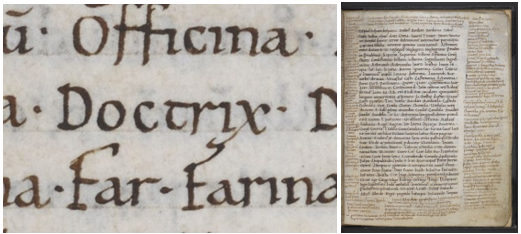
Detail of ‘Doctrix’, from a copy of Priscian’s Grammar, possibly made at Abingdon, 11th century: Add MS 32246, f. 11r
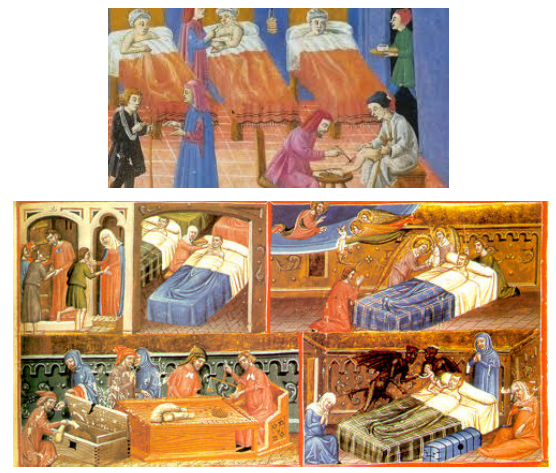
Figure 5: Medical Medieval Hospitals. The first Hospital are in Capadocia actual Turkey. Here medical doctors jews, arabians, byzantines and christians developed a mixed medical system based in the correct observation and classification of symptoms and the application the terapy in the rehabilitations of the patients, the first form of leprosy and therapeutic centre of rehabilitation in the World. The role of the women medical doctors are cured and applied to the therapy
In another hand the medieval cristian medicine are development in the churches and clusters, where the monks provided cure and teaching the salasso and the theory of 4 humours of Galen and Hippocrates. The nurseries and the monks were institutionalized in the early monasteries for the commandment and the lectures of the Good Samaritan and the cure of Jesus Christ. Example is the Hildegard Von Bingen mother of the Internal medicine in Germany canonized by Benedictus XVI in 2006 , Who represents the model of Benedict monks second the ''Regula Benedicti'', founded by Benedetto from Norcia, who wrote, in the chapter XXXVI: ''Infirmis ante omnia et super omnia cura adhibenda est'' (first of all and overall, we must take care of sick people, who applicated the scientific method in the study of the principal disease like epilepsy, premenstrual syndrome, depression, kidney stones, and classificate the signs and symptoms in categories, explained second aristotelian method and philosophic sense. The protection of soul its equal important like the physical body and it's a unit, in these The Salernitana School,where found the important medical doctor Trotula de Ruggiero, a female doctor of the 11th century teaching and working inside the illustrious ''Medical School of Salerno,'' who devoted particular attention to the promotion of female care, beauty, and well''being, applying the cultural concept Greek, Byzantine, Egyptian and Roman culture in the creation of cosmetic in : ''De passionibus mulierum ante in et post partum'' also known as ''Trotula Maior,'' an important medical treatise dedicated to the pathologies of women, and ''De Ornatu Mulierum,'' also known as ''Trotula Minor'' explained the council and the cosmetic protection in the woman. She was a very famous lady-physician and, in someone's opinion, she was representative of 7 Salernitan lady-physicians: Abella, Calenda, Costanza, Francesca, Guarna, Mercuriade and Rebecca. As such, she could also be considered like a mythical confluence of several traditions.[24] Anyway, she was the founder of modern Obstetrics and Gynecology, and wrote the book ''De mulierium passionibus ante, in et post partum. This treatment with the Regimen Sanitaria Salernitarum, marked the beginning of modern medicine and the Universitas studiorum founded the modern concept of University.
Islamic Medicine in early Era (700 b.c- 1300b.c)
In early Islamic history, women were actively involved in various aspects of medicine, including nursing, midwifery, and even as physicians and surgeons. They played crucial roles in caring for the wounded during battles, providing healthcare in their communities, and contributing to the advancement of medical knowledge. The role of the women are established in the sura of Quran the women and in Baqqara, who explained the important role in the constitution and the protection of the family and her proper protection by the masculine parents and her husband. In these sense the medical doctors are named nurseries and muslim midwives with the intention to treat and protect, other women, the exercise in gynecology and obstetric medicine, where the privacy and autonomous of the patients must be protected with more intensity are administered the therapy by the nursery women , for example in the rites of circumcision and puerperic and gynecological disease under the supervision of a male doctor.Al-Majusi in his book Kamil al-Sina'ah al-Tibbiyyah (The complete Medical Profession), was the first to describe uterine contractions as the cause of delivery. Before that, it was thought that contractions are only the indication of onset of labor but subsequently the fetus swims its way out of the womb.
The principal proponent of nursery is Rufaida Al-Aslamia, a contemporary of the Prophet Muhammad, is recognized as the first Muslim nurse. She established a mobile field hospital and trained other women in nursing and medical care. During battles, she provided first aid and care to the wounded.
Women in Military Medicine. Several women, like Hazrat Fatima Zahra, Hammanah bint Jahsh, and Umm Attieh, were actively involved in nursing and providing medical support during battles. They treated the wounded, provided water and supplies, and ensured the well-being of soldiers. Their presence and contributions were acknowledged and valued within the military context.
The Midwifery and Obstetrics Women were the primary providers of midwifery services in the early Islamic era. They were known as "dayas" (midwives) and often worked independently or under the supervision of male physicians. Some women, like Ibn Zuhr's daughter and granddaughter, were renowned for their expertise in obstetrics. Illustrations from the 13th century depict women performing gynecological surgeries and assisting with childbirth.
Result
Evidence Table
|
Woman Figure in the history of the medicine |
Principal works and Approvals |
Cite |
|
Peshehet |
She has been the chief medical of all internal medicine her time. |
[1] |
|
(2500pc) |
Revolutions the area of medicine, diagnostic and treatments with the study of the endometriosis, pelvic pain and pregnancy.king's acquaintance, and overseer of funerary-priests of the king's mother |
|
|
Agnodice |
First female midwife or physician in ancient Athens. Developed Gynecology and Obstetric for the treatment of female disease in related the birth and newborn. |
[3] |
|
Midwives Ottavia, Giulia (figlia de Augusto Cesar), Livia Drusilla (sposa di. Augusto Cesar) (I secolo prima Cristo- I secolo dopo Cristo)
Matrona Santa Fabiola (390 d.c) |
The general order of matronna of ancient Rome enrolled three renowned healers and matrons: Livia Drusilla, Octaviana and Julia. She was well-versed in various treaties on the formulation of potions, poisons and antidotes, as well as the use of plant extracts to treat gynaecological and obstetrical illnesses. During the imperial era, when doctors were recognised as free individuals and independent workers, they studied Dioscorides' and Sorano di Efeso's treaties on the female body and pregnancy. Together with Saint Fabiola Roman with the Roman senator Panonius, she was the founder of the world's first Nosocomium, ushering in a new era for western civilisation. Having sold all her material possessions and property, she decided to convert to Christianity, working as a matron, nursery and physician. The nosocomium founded by Fabiola constitutes the first documented antecedent of “social medicine” in the West, and made her one of the most famous women in nursing for the care of terminally ill, leprosy-ridden and malnourished patients. |
[8-10] |
|
Saint Hildegard Von Bingen |
Doctrix, benedictean abbasey and mother of physicians in Germany. Represented the maximum exponents in medicine and ecclesiastic and moral support in the Medieval times. She classified and explained diverse diseases to affected women and created a systemic form of classification disease. Hildegard of Bingen, a 12th-century Benedictine abbess, a visionary, a composer, a poet, and a healer, was one of the few medieval women who produced treatises on medical topics. The principal opera is Physics and Causae et Curae where describe the fundamentals of epilepsy, kidney stones, hysteria and alterations of menstrual. |
[11-15] |
|
Trotula of Salerno |
She was a Norman noble woman of the Ruggero in Salerno a very famous lady-physician and, in someone’s opinion, she was representative of 7 Salernitan lady-physicians: Abella, Calenda, Costanza, Francesca, Guarna, Mercuriade and Rebecca. As such, she could also be considered like a mythical confluence of several traditions. |
[23,24] |
|
Ubartum(2050pc) |
She was a a female physician who lived in Garšana, a town in Mesopotamia. Ubartum came from an influential family. Both brothers were physicians too and one of them was married to a daughter of king Shulgi. Ubartum is only known from about fifty cuneiform texts; eleven of them call her physician. The texts naming her are all of an economical nature. They mostly just provide the information that Ubartum received goods. |
[2,3] |
|
Agemenide |
She was a female physician who lived in Garšana, a town in Mesopotamia. Ubartum came from an influential family. Both brothers were physicians too and one of them was married to a daughter of king Shulgi. Ubartum is only known from about fifty cuneiform texts; eleven of them call her physician. The texts naming her are all of an economical nature. They mostly just provide the information that Ubartum received goods.
Greek physician acquainted with the healing powers of all the plants that grow upon the earth. She was born in Elis, a princess as the eldest daughter of Augeas, King of the Epeans, was possibly the author of an ancient Greek medical text, On the Diseases and Cures of Women |
[20,21] |
|
Metrodora Claeopatra VII (Medical physician not the wife of Caesar or Mark Antony 4.-Women in Islamic Medicine |
She was possibly the author of an ancient Greek medical text, On the Diseases and Cures of Women The text then discusses general diseases of the womb, conception and contraception, and childbirth. It also includes discussions of aphrodisiacs and love-potions, diseases of the breasts, and cosmetics. In the jumble of legends and traditions that arose during the centuries after her death, the Egyptian queen Cleopatra was often linked to the preparation of cosmetics and drugs. Her name was also associated with two medical texts: the first was written by a woman named Cleopatra who lived in the Roman imperial period, around the second century AD; the second is Metrodora’s On the Diseases of Women and Their Cures, attributed to the Egyptian ruler because of the “Berenice who was later renamed Cleopatra” of chapter 53. But we can explain this error. At an unknown time, Metrodora’s Greek text was translated into Latin, and medieval scribes who copied the text must have circulated the Latin version –or exc Al-Shifa bint Abdullah, was known for her medical knowledge and public administration skills, and was even requested by Muhammad to train other women in her methods.
Nusayba bint Ka'ab al-Mazneya offered her medical services on the battlefield, providing care for the wounded. Umm-e-Sinan Al-Islami also requested permission to assist wounded soldiers and provide water.
Umm Warqa bint Harith, known for compiling the Quran, also provided nursing care during battles.
Nusaybah bint al-Harith, also known as Umm al-Athia, cared for casualties, providing food, water, and first aid, and even performed circumcisions. Some women, like Umm al-Hasan bint Abu Ja'far, were also renowned for their literary and religious knowledge while also practicing medicine |
|

Discussion
The history of medicine shows facts that are verifiable over time, the role of women in medicine is subject to the patriarchal structure and the structures of masculinities realised that Buttler explains by defining roles dependent and subordinated to the power of male structures, although the initial deities were feminine like the goddess Isis for the Egyptians and the goddess Gula for the Babylonians and Mesopotamians, the one who has the power of the medical structures is the man, who in many cases was the one who examined and validated the woman, there were particular cases in each of the examined societies like Pesheset, Agnodice, Fabiola, who had a complete capacity of self-management and control of the sanitary structures they released in their times always associated to socioeconomic determinants and urban-rural distribution, since they all enjoyed a high socio-economic level and possessed property and money to be able to afford studies and health structures, why it was they who by their own means designed hospitals and care systems in hidden populations that had no care, where access was not guaranteed and much less the quality and quantity of medical care even less if territorial dispensation [28,29].
On the other hand, authors such as Kwiecinski, explains the existence of historical characters that have been created by feminist movements as a source of ideological creation and language, in order to strengthen and propose representatives that give foundations and strength to the ideas of feminist movements, such as Merit Ptah, an issue that is increased by the movements of the mercification of science and assembly and the excess of existing information, A phenomenon that wikipedia has increased by not verifying the truthfulness and primary sources based on criteria of fallacy of authority and by biases of confirmation of information, the well-known Dunning-Kruger effect that in turn overvalues the own knowledge and its own self-creation will generate a post-truth and an alternative reality to the original as in the case of the character Merit Ptah and Metrodora [1,31].
The quality of the evidence found is of moderate to low quality, based on the analysis of primary sources such as codices, treatises and papyri that were compiled and translated for subsequent reworking into reviews and scientific articles, editorials, short articles and books with a gender focus and that analyse this type of problem, which could be improved in the future by incorporating new publications that allow narrative reviews and meta-analysis of this issue.
Only three narratives reviews to 41 articles analyzed were found on the subject and on specific topics related to women doctors and their lives and schools where the role of women in medicine was discussed, which in turn demonstrates the patriarchal model in the generation of knowledge structures in relation to this subject.
We found only one review of the role of women's medicine in Islamic culture and only one site on Jewish women's medicine that answered our research questions.
The role of women during the Middle Ages is key to understanding modern healthcare structures as a source of medical care and therapeutic supplies based on the ecclesial structure and monastery hospital foundations where medicines were administered and patients were cured of infectious diseases such as leprosy and the Black Death, chronic diseases such as cancer and traumatic illnesses.
Conclusion
The women in medicine marked a continuing evolution between the roles of the women in the engagement to rights in social justice and gender equality, developing new innovations and techniques that would not have been possible without the male and female complement. The patriarchal system has tended to prevent these innovations from flourishing, but women's capacity for adaptation and resilience has allowed them to conquer these spaces that humanity needs.
References
- Kwiecinski, J. M. (2020). Merit Ptah,“The first woman physician”: crafting of a feminist history with an ancient Egyptian setting. Journal of the History of Medicine and Allied Sciences, 75(1), 83-106.
- Alexandra Kleinerman: Doctor Šu-Kabta’s Family Practice, in: A. Kleinerman and J. M Sasson (Hrsg.): Why should someone who knows something conceal it? Cuneiform studies in honor of David I. Owen. Bethesda, ISBN 978-1-934309-30-8, 177-1813.
- King H. Agnodice. Pract Midwife. 2015 Feb;18(2):46. PMID:26333254.
- Graves, R. (2017). The Greek myths: The complete and definitive edition (Vol. 1).
- Bell, R. E. (1991). Women of classical mythology: A biographical dictionary. ABC-Clio.
- Homer, Iliad 11.740
- Storti, G. (2018). Metrodora’s Work on the Diseases of Women and their Cures. Revista de Estudios Bizantinos, 6, 89-110.
- Chadwick, Henry (1993). The Early Church (eninglés). London (United Kingdom): Penguin Books.
- Worth Jr, R. H. (2010). Shapers of Early Christianity: 52 Biographies, AD 100-400. McFarland.
- CREMONA, C. (1996). La atención al enfermo en los Padres de la Iglesia. Dolentium Hominum, 41.
- Sakalauskaite–Juodeikiene, E., & Eling, P. (2021). Hildegard of Bingen (c. 1098–1179) on sleep and dreams in her Causae et curae and Physica: a historical perspective. Sleep Medicine, 88, 7-12.
- Stefanidis, I., Eleftheriadis, T., Efthymiadi, M., Kalientzidou, M., & Valiakos, E. (2023). Remedies for Kidney Ailments in Physica by Hildegard von Bingen (1098-1179). Experimental and Clinical Transplantation: Oficial Journal of the Middle East Society for Organ Transplantation, 21(Suppl 2), 53-56.
- Brigo, F., Trinka, E., Brigo, B., Bragazzi, N. L., Ragnedda, G., Nardone, R., & Martini, M. (2018). Epilepsy in Hildegard of Bingen's writings: A comprehensive overview. Epilepsy & Behavior, 80, 135-143.
- Uehleke, B., Hopfenmueller, W., Stange, R., & Saller, R. (2012). Are the correct herbal claims by Hildegard von Bingen only lucky strikes? A new statistical approach. Forschende Komplementärmedizin/Research in Complementary Medicine, 19(4), 187-190.
- Riethe, P. (2012). Referenzbeziehungen zwischen Mensch und Tier bei Hildegard von Bingen: Ausgewählte Kapitel aus dem„Buch von den Tieren “, dem Liber VII—De animalibus—imLiber simplicis medicinae. Sudhoffs Archiv, 39-63.
- Karabatos, I., Tsagkaris, C., & Kalachanis, K. (2021). All roads lead to Rome: Aspects of public health in ancient Rome. Le infezioni in medicina, 29(3), 488.
- Tennant, P. M. W. (1988, January). The Lupercalia and the Romulus and Remus legend. In Acta Classica: Proceedings of the Classical Association of South Africa (Vol. 31, No. 1, pp. 81-93). Classical Association of South Africa (CASA).
- Bianchi F, Dal xenodochium all’hospitale. Origini e sviluppi delle istituzioni ospedaliere nel medioevo. In: Bianchi F, Silvano G (eds), Saggi di storia della salute. Medicina, ospedali e cura fra medioevo ed età contemporanea. Milano: FrancoAngeli; 2020. pp. 11-54.
- Bianchi, F. (2024). Healthcare and Medicine in Medieval Western Hospitals. Medicina nei Secoli: Arte e Scienza, 36(1).
- Al-Majusi in his book Kamil al-Sina’ah al-Tibbiyyah (The complete Medical Profession), was the first to describe uterine contractions as the cause of delivery. Before that, it was thought that contractions are only the indication of onset of labor but subsequently the fetus swims its way out of the womb.
- Abouleish, E. (1979). Contributions of Islam to medicine. J Islamic Med Assoc.
- Tallan Ch. Doctors: Medieval; in The Shalvi Hyman. TheEncyclopedia of Women. Themedieval doctors. https:// jwa.org/encyclopedia/article/doctors-medieval. Visited at: 08/08/2025
- Pisanti, S., Mencherini, T., Esposito, T., D'Amato, V., Re, T., Bifulco, M., & Aquino, R. P. (2023). The medieval skincare routine according to the formulations of Madgistra Trotula and the Medical School of Salerno and its reflection on cosmetology of the third millennium. Journal of Cosmetic Dermatology, 22(2), 542-554.
- Bayon, H. P. (1940). Trotula and the Ladies of Salerno: A contribution to the knowledge of the transition between ancient and mediæval physick (Abridged).
- Cilione, M., Iorio, S., & Gazzaniga, V. (2025). The medical origins of a gender stigma: the underestimation of women’s pain. Cogent Arts & Humanities, 12(1), 2469456.
- Marco Cilione, Silvia Iorio & Valentina Gazzaniga (2025) The medical origins of a gender stigma: the underestimation of women’s pain, Cogent Arts & Humanities, 12:1, 2469456, DOI: 10.1080/23311983.2025.2469456
- Haddaway, N. R., Page, M. J., Pritchard, C. C., & McGuinness,L. A. (2022). PRISMA2020: An R package and Shiny app for producing PRISMA 2020-compliant flow diagrams, with interactivity for optimised digital transparency and Open Synthesis. Campbell systematic reviews, 18(2), e1230.
- Butler, J. (2007). El género en disputa: el feminismo y la subversión de la identidad. Ediciones Paidós Ibérica.
- LEVI-STRAUSS, C. (1990). La estructura de los mitos. [En Línea] Disponible en: file:///Users/daniloaraya/Downloads/ La%20estructura%20de%20los%20mitos- %20Levi-Strauss. pdf (Última vista el 5 de mayo de 2023).
- Marcuse, H. The unidimentional man. Boston (1964) [ online] https://www.marcuse.org/herbert/pubs/64onedim/ odmcontents.html
- Salgado, J. T. (2021). El montaje en ciencias y las fake news: las dos caras de la desinformación en democracia. Revista Iberoamericana de Ciencia, Tecnología y Sociedad-CTS.