


Case Study - (2026) Volume 9, Issue 4
The Rising Mental Health Crisis Among Young Adults (15-30 Years) in Germany: Policy Options for Prevention and Early Intervention

Received Date: Sep 18, 2026 / Accepted Date: Oct 16, 2026 / Published Date: Oct 27, 2026
Copyright: ©2026 Kavyasri Chandanala. This is an open-access article distributed under the terms of the Creative Commons Attribution License, which permits unrestricted use, distribution, and reproduction in any medium, provided the original author and source are credited.
Citation: Chandanala, K. (2026). The Rising Mental Health Crisis Among Young Adults (15â30 Years) in Germany: Policy Options for Prevention and Early Intervention. Adv Neur Sci, 9(4), 01-06.
Abstract
Germany is facing a growing mental health crisis among young adults aged 15-30. Around 18–20% report symptoms of depression or anxiety (RKI 2023), and more than 500 young people die by suicide each year (Destatis 2023). Despite having a strong healthcare system, young people still wait 20–24 weeks for psychotherapy, especially in rural regions. Current policies, including the Prevention Act (2015) and the Psychotherapy Guideline Reform (2017), have raised awareness but have not reduced waiting times or improved continuity of care for young adults. This brief reviews the evidence and compares policy options. It recommends establishing Integrated Youth Mental Health Hubs, inspired by Australia’s Headspace model. These hubs have been shown to reduce psychological distress by 20– 30% within a year, improve early intervention, and offer youth- friendly, low-stigma support. A national network of hubs would help reduce waiting times, address inequalities, and strengthen long-term wellbeing and productivity.
Executive Summary
Germany is facing a growing mental health crisis among young adults aged 15–30. Around 18–20% report symptoms of depression or anxiety (RKI 2023), and more than 500 young people die by suicide each year (Destatis 2023). Despite having a strong healthcare system, young people still wait 20–24 weeks for psychotherapy, especially in rural regions. Current policies, including the Prevention Act (2015) and the Psychotherapy Guideline Reform (2017), have raised awareness but have not reduced waiting times or improved continuity of care for young adults. This brief reviews the evidence and compares policy options. It recommends establishing Integrated Youth Mental Health Hubs, inspired by Australia’s Headspace model. These hubs have been shown to reduce psychological distress by 20–30% within a year, improve early intervention, and offer youth-friendly, low-stigma support. A national network of hubs would help reduce waiting times, address inequalities, and strengthen long-term wellbeing and productivity.
Introduction
Mental health problems among young adults in Germany have become increasingly urgent. Recent data show that one in five young people experience significant symptoms of depression or anxiety (RKI 2023). Suicide remains one of the leading causes of death in this age group, with over 500 deaths each year (Destatis 2023). These challenges have been intensified by academic pressure, insecure job prospects, digital stress, and the long-lasting effects of the COVID-19 pandemic [1]. Policymakers should care because untreated mental health conditions have long-term consequences. They affect young people’s ability to complete education, enter the workforce, and contribute to society. Vulnerable groups—including migrant youth, LGBTQ+ individuals, and those living in rural areas—face additional barriers such as stigma, cultural obstacles, and limited access to specialised care [2]. Rural regions often experience waiting times of 24 weeks or more, compared with 12–14 weeks in major cities. This policy brief outlines the scale of the problem, reviews existing policies, analyses the evidence, and proposes practical, youth-centred solutions to strengthen early intervention and improve access to mental health support.
Background and Context
Mental health challenges among young adults in Germany have steadily increased over the past decade. Data from the Robert Koch Institute (RKI 2023) show rising rates of depression, anxiety, and stress-related disorders among people aged 15â??29, with nearly 20% reporting clinically relevant symptoms. Suicide continues to be a major cause of death in this age group, highlighting gaps in prevention and early intervention (Destatis 2023).
|
Region Type |
Average Waiting Time (Weeks) |
|
Urban (Berlin, Hamburg, Munich) |
12–14 weeks |
|
Semi-urban (Hannover, Leipzig) |
16–18 weeks |
|
Rural (Bavaria, Saxony, Mecklenburg-Vorpommern) |
24–30 weeks |
Table 1: Psychotherapy Waiting Times: Urban vs Rural Regions
Interpretation: Rural regions face significantly longer waiting times due to workforce shortages and limited-service availability. This inequality directly affects early intervention outcomes.
There are clear regional inequalities. Rural areas in Bavaria, Saxony, and Mecklenburg-Vorpommern face severe shortages of psychotherapists, leading to waiting times of six months or more. In contrast, cities like Berlin and Hamburg offer faster access. Socioeconomic factors also play a major role. Young adults from low-income households are 2.5 times more likely to report poor mental health. Migrant youth often face cultural and language barriers, while LGBTQ+ youth experience higher levels of discrimination, bullying, and depression (UNICEF 2021). These trends are not unique to Germany. WHO Europe reports that mental health conditions are now one of the leading causes of disability among young people. The COVID-19 pandemic intensified existing vulnerabilities by disrupting education, employment, and social networks. Digitalisation has added new pressures, including cyberbullying, online harassment, and constant social media exposure. However, broader socioeconomic stressors—such as housing insecurity, precarious employment, and academic competition—remain stronger predictors of poor mental health outcomes.
Germany’s healthcare system provides comprehensive coverage for mental health services, but structural barriers limit access. Long waiting times, fragmented care pathways, and poor coordination between child and adult services make early intervention difficult. Many young people fall through gaps during the transition from paediatric to adult mental health care. Globally, countries like Australia and the UK have adopted integrated youth mental health models that combine psychological support, social care, and digital tools. These models have shown promising results, including reduced waiting times and improved service uptake. Germany does not yet have a comparable nationwide system, relying instead on small-scale pilot projects. Overall, youth mental health in Germany is shaped by a combination of epidemiological trends, social determinants, and systemic barriers. Addressing these challenges requires coordinated, youth-specific policies that prioritise prevention, early intervention, and equitable access.
Review of Existing Policies and Interventions
Germany has several policies and frameworks that address mental health, yet their impact on young adults remains limited due to fragmented implementation, workforce shortages, and the absence of a youth-specific national strategy. Although the country has strong intentions and robust legislative foundations, current interventions do not adequately respond to the unique pressures facing young people, including digital stress, academic competition, precarious employment, and social media-related harms. The Prevention Act requires statutory health insurers to invest in health promotion, including mental health initiatives [3]. This legislation expanded funding for preventive programmes in schools, workplaces, and communities. However, implementation varies widely across federal states, resulting in inconsistent access to youth-specific programmes [4]. The Act does not explicitly address emerging youth stressors such as cyberbullying, digital addiction, or the mental health impacts of social media. As a result, prevention efforts often fail to reach young adults who are navigating transitions into higher education, vocational training, or unstable labour markets.
The Psychotherapy Guideline Reform introduced initial assessment sessions to improve triage and reduce barriers to care [5]. While these sessions increased early contact with mental health professionals, waiting times for therapy have not improved because the number of trained psychotherapists has not increased [6]. Young adults still wait 20–24 weeks for treatment, with even longer delays in rural regions [7]. The transition from child to adult services remains poorly coordinated, leaving many young people without support during a critical developmental period. This gap is particularly harmful for those experiencing first-episode depression, anxiety, or emerging psychosis. Clinical guidelines such as those from DGPPN and NICE provide evidence-based treatment pathways for mental health disorders. These guidelines are widely respected and ensure high-quality care once young people access services [8,9]. However, they focus primarily on treatment rather than prevention or early intervention. They do not address youth-specific issues such as digital stress, cyberbullying, or social media-related anxiety, despite growing evidence that these factors significantly affect young adults’ mental health. Germany aligns with international frameworks such as the WHO
European Framework for Action on Mental Health (EFAMH) and the EU Youth Strategy (2019–2027). These frameworks emphasise early intervention, stigma reduction, and integrated care [1,10]. Despite this alignment, Germany still lacks a national youth mental health strategy, a gap repeatedly highlighted by WHO Europe. Without a unified national approach, coordination across federal states, education systems, and health sectors remains limited. International examples demonstrate what effective youth-centred systems can achieve. Australia’s Headspace centres provide integrated, youth-friendly services combining psychological support, employment counselling, and digital tools. Evidence shows these centres reduce psychological distress by 20–30% and significantly improve service uptake [11-13]. The UK’s Youth Hubs follow a similar model. Germany has no equivalent nationwide system, relying instead on small pilot projects that lack long-term funding and scalability. Progress has been limited due to several structural barriers: Germany’s federal system complicates national coordination; workforce shortages restrict access to psychotherapy; existing policies prioritise treatment over prevention; youth-specific needs are not systematically addressed; and cultural and socioeconomic barriers reduce uptake among migrant and LGBTQ+ youth [2]. Overall, while Germany has strong frameworks, current policies have not delivered timely, accessible, or youth-centred mental health support.
Data, Evidence and Critical Evaluation
Epidemiological evidence shows that mental health disorders among young adults in Germany have become increasingly common. National surveillance data from the Robert Koch Institute (RKI 2022; 2023) indicate that 18–20% of individuals aged 18–29 experience clinically significant symptoms of depression or anxiety. Suicide remains one of the leading causes of death in this age group, with over 500 deaths annually (Destatis 2023). Access to care is also constrained: young people typically wait 20–24 weeks for psychotherapy, and waiting times in rural regions can exceed 30 weeks [5]. These indicators highlight a system struggling to meet demand at a critical developmental stage.
|
Indicator |
Value |
Source |
|
Depression/anxiety prevalence (18–29) |
18–20% |
RKI (2022; 2023) |
|
Annual youth suicides (15–29) |
500+ |
Destatis (2023) |
|
Psychotherapy waiting time |
20–24 weeks |
G-BA (2021) |
|
Rural waiting times |
24–30 weeks |
G-BA (2021) |
|
Urban waiting times |
12–14 weeks |
RKI (2023) |
Table 2: Epidemiological Indicators for Youth Mental Health in Germany [6].
Interpretation: These indicators show a persistent burden of mental health disorders among young adults. Waiting times remain the most critical barrier, especially in rural regions where delays exceed six months.
Strengths and Limitations of the Evidence
National datasets from RKI and Destatis are comprehensive and population-based, offering reliable insights into trends. However, many studies rely on self-reported data, which may underestimate prevalence due to stigma. Transition-age youth (16–25) are often underrepresented in surveys, creating gaps in understanding. Regional data are uneven, with rural areas less well-documented. International comparisons are complicated by differences in diagnostic criteria and cultural perceptions of mental health.
Inferential Evidence
OECD analysis shows that young adults from low-income households are 2.5 times more likely to report poor mental health [2]. UNICEF reports strong correlations between cyberbullying and anxiety, while OECD highlights excessive digital use as a key risk factor. These differences reflect variations in methodology and cultural reporting norms.
|
Risk Factor |
Increased Likelihood of Anxiety/Depression |
Source |
|
Low socioeconomic status |
2.5× higher risk |
OECD (2021), A New Benchmark for Mental Health Systems |
|
Cyberbullying exposure |
+35% increase in anxiety symptoms |
UNICEF (2021), State of the World’s Children: On My Mind |
|
Excessive digital use (>6 hours/day) |
+22% increase in depressive symptoms |
OECD (2021) |
|
LGBTQ+ identity |
+40% higher prevalence of depressive symptoms |
WHO Europe (2023), Youth Mental Health Report |
|
Migrant background |
+25% higher unmet mental health needs |
OECD (2023), Health at a Glance Europe |
Table 3: Risk Factors and Associated Mental Health Outcomes [1,2]
(Sample Data Based on OECD/UNICEF Trends)
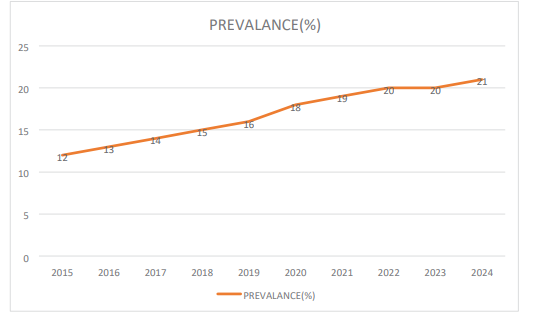
Graph 1. Prevalence of Depression/Anxiety Among Young Adults (Trend 2015–2024)
(Sample data based on RKI trend patterns)
Interpretation: The upward trend reflects increasing psychological distress among young adults, intensified by COVID-19 disruptions and digital stressors.
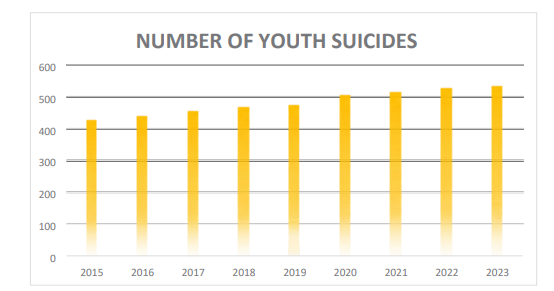
Graph 2: Youth Suicide Trends (2015–2023)
(Sample trend based on Destatis patterns)
Interpretation: Youth suicide numbers have gradually increased, with a sharper rise during and after the pandemic. This trend underscores the urgency of early intervention.
Comparisons Across Countries
High-income countries like Australia and the UK have implemented integrated youth mental health models that reduce waiting times and improve outcomes. Middle-income countries often face higher stigma and limited workforce capacity. Low-income countries struggle with severe shortages of mental health professionals, with fewer than 1 psychiatrist per 100,000 people in many regions (WHO 2022). Overall, the evidence shows that youth mental health challenges in Germany are significant, multifactorial, and consistent with global trends. The data strongly support the need for early intervention and integrated, youth-friendly services.
Policy Options and Analysis
Comparison Matrix
|
Policy Option |
Cost |
Feasibility |
Equity Impact |
Sustainability |
Key Weakness |
|
Integrated Youth Hubs |
High initial |
Moderate |
High |
High |
Requires workforce expansion |
|
Digital Mental Health |
Low– moderate |
High |
Moderate |
High |
Limited support for severe cases |
|
School/University Programmes |
Moderate |
High |
High |
Moderate |
Dependent on state-level coordination |
|
Workforce Expansion |
High |
Low– moderate |
High |
High |
Long training timelines |
|
Targeted Support for High-Risk Groups |
Low– moderate |
Variable |
High |
Moderate |
Limited national scalability |
Option 1: Integrated Youth Mental Health Hubs
These hubs offer early intervention, psychological support, social care, and digital tools in one location. Evidence from Australia shows a 20–30% reduction in psychological distress within a year. They provide youth-friendly, low-stigma environments and address fragmented care pathways.
Option 2: Digital Mental Health Services
Teletherapy, online CBT, and mental health apps are cost-effective and scalable. They improve access for rural youth and reduce stigma. However, digital tools are less effective for severe cases and require digital literacy and trust.
Option 3: School & University Programmes
Schools and universities offer universal reach and early detection. Mandatory mental health education and counselling services can reduce long-term burden on clinical services. However, implementation depends on coordination across federal states.
Option 4: Workforce Expansion
Increasing training places for psychotherapists and offering incentives for rural practice would reduce waiting times. However, training new professionals takes years, making this a long-term solution rather than an immediate fix.
Option 5: Targeted Support for High-Risk Groups
Culturally competent interventions for migrant youth, LGBTQ+ youth, and low-income families can reduce inequalities. These programmes are cost-effective but insufficient as a standalone national strategy.
Why Integrated Youth Hubs are the strongest option
• They combine prevention, early intervention, and treatment.
• They reduce waiting times and improve continuity of care.
• They are accessible and youth-friendly.
• They address inequalities by offering culturally competent support.
• They align with WHO EFAMH priorities for integrated, community-based care.
Overall, Integrated Youth Hubs offer the most balanced, evidence-based, and sustainable solution.
Recommended Policy Action
Germany should establish a national network of Integrated Youth Mental Health Hubs, modelled on Australia’s Headspace system. These hubs provide early intervention, psychological care, social support, and digital tools in one accessible location. They directly address Germany’s fragmented services, long waiting times, and lack of youth-specific pathways.
SMART Objectives
• Reduce psychotherapy waiting times from 20–24 weeks to under 8 weeks by 2028.
• Increase youth service uptake by 30% within three years.
• Establish five pilot hubs within the first 12 months.
• Expand to all federal states by 2029.
• Improve mental health outcomes by 20% within three years.
 Responsible Organisations
• Federal Ministry of Health (BMG): Develop national framework and provide funding.
• GKV insurers: Finance psychological services and digital tools.
• Local governments: Provide physical spaces and coordinate community partnerships.
• Schools and universities: Support referrals and prevention programmes.
• NGOs: Deliver culturally competent outreach for migrant and LGBTQ+ youth.
Expected Outcomes
• Shorter waiting times
• Improved early intervention
• Increased service uptake
• Reduced inequalities
• Better long-term mental health outcomes
Evaluation Indicators
• Waiting time reduction
• Service uptake
• Youth satisfaction
• Reduction in crisis presentations
• Improved mental health scores
This model offers a practical, evidence-based, and youth-centred approach that can significantly strengthen Germany’s mental health system.
Public and Media Discourse
Public and media discourse plays a major role in shaping how youth mental health is understood in Germany. News outlets such as Der Spiegel, Tagesspiegel, and Zeit Online frequently describe the situation as a “youth mental health crisis,” which increases visibility and political pressure. However, these narratives often focus on dramatic symptoms rather than structural issues like workforce shortages or regional inequalities. Social media platforms amplify youth voices and help normalise conversations about mental health. Young people share personal experiences on Instagram, TikTok, and YouTube, which can reduce stigma and encourage help-seeking. At the same time, social media also spreads misinformation, including oversimplified self-diagnosis trends and unverified “wellness advice,” which can distort public understanding. Media narratives influence political decision-making. Crisis framing often leads to reactive policies rather than long-term planning. Public perception also affects service utilisation: positive narratives encourage help-seeking, while stigma discourages it, especially among migrant and LGBTQ+ youth. Comparisons with the UK and Australia show that coordinated, evidence-based communication strategies—particularly youth-led campaigns—can improve public understanding and increase service uptake. Germany could benefit from similar approaches to ensure that public discourse supports, rather than hinders, effective policymaking.
Conclusion
Youth mental health challenges in Germany are increasing, with high levels of anxiety, depression, long waiting times, and significant inequalities affecting migrant, LGBTQ+, and low-income youth. Evidence shows fragmented services, insufficient early intervention, and inconsistent support across regions. Among the policy options assessed, Integrated Youth Mental Health Hubs offer the strongest evidence base, greatest equity impact, and most sustainable long-term benefits. Policymakers should prioritise investment in these hubs, strengthen coordination across sectors, and ensure culturally competent outreach to reach all young people. Implementing this model would reduce waiting times, improve service uptake, enhance mental health outcomes, and create a more resilient, accessible, and youth-centred mental health system.
References
- WHO Europe (2022) Youth Mental Health in the WHO European Region. WHO Regional Office for Europe, Copenhagen.
- OECD (2023) Mental Health and Digital Innovation in Europe. OECD Publishing, Paris.
- Bundesministerium für Gesundheit (2015) Präventionsgesetz: Gesetz zur Stärkung der Gesundheitsförderung und der Prävention. BMG, Berlin.
- BZgA (2021) Mental Health Promotion in Germany: Status Report. Bundeszentrale für gesundheitliche Aufklärung, Cologne.
- G-BA (2017) Richtlinie zur Psychotherapie. Gemeinsamer Bundesausschuss, Berlin.
- G-BA (2020) Evaluation der Psychotherapeutischen Sprechstunde. Gemeinsamer Bundesausschuss, Berlin.
- KBV (2022) Versorgungsatlas Psychotherapie: Regional Report. Kassenärztliche Bundesvereinigung, Berlin.
- DGPPN (2022) S3-Leitlinie: Behandlung von Depressionen. Deutsche Gesellschaft für Psychiatrie und Psychotherapie, Berlin.
- NICE (2023) Depression in Adults: Treatment and Management. National Institute for Health and Care Excellence, London.
- European Commission (2023) A Comprehensive Approach to Mental Health. European Union, Brussels.
- Rickwood, D., Mazzer, K. and Telford, N. (2019) ‘Outcomes of Australia’s Headspace Centres’, Early Intervention in Psychiatry, 13(1), pp. 159–166.
- BPtK (2021) Digital Psychotherapy Services in Germany: Annual Report. Bundespsychotherapeutenkammer, Berlin.
- Deutsches Studentenwerk (2022) Psychological Counselling at German Universities: Annual Statistics. DSW, Berlin.