

Current Trends in Mass Communication(CTMC)
ISSN: 2993-8678 | DOI: 10.33140/CTMC




Review Article - (2026) Volume 5, Issue 1
The Intersection of Higher Education, the Knowledge Economy, and Sustainable Development in Namibia
Received Date: Sep 17, 2026 / Accepted Date: Jan 20, 2026 / Published Date: Feb 18, 2026
Copyright: ©2026 Simon Eno Akpo. This is an open-access article distributed under the terms of the Creative Commons Attribution License, which permits unrestricted use, distribution, and reproduction in any medium, provided the original author and source are credited.
Citation: Akpo, S. E. (2026). The Intersection of Higher Education, the Knowledge Economy, and Sustainable Development in Namibia, Curr Trends Mass Comm, 5(1), 01-06.
Abstract
Undoubtedly, higher education has a significant role in the acquisition of information, as well as the development and sustainability of a nation's human capital. These factors are essential prerequisites for fostering economic growth and development, among other contributing variables. The development of this concept is closely associated with the knowledge economy. The quality of knowledge provided plays a crucial role in facilitating economic development. In order to maintain competitive relevance in the global economy, it is imperative for African nations to acquire and generate knowledge. Higher education institutions must enhance their operational efficiency and align themselves with the requirements of the knowledge economy and the sustainable development of national capability. This review, thus, undertook an examination of the provision of higher education in Namibia, and deliberated on the issues associated with its implementation. One of the recommendations suggested is advocating for a comprehensive approach that encompasses both access to education and the assurance of its quality, among other factors. The discussions are around the implementation of policies in the context of higher education, with a specific focus on capacity building. This is of utmost importance because the Higher Education (Ke) is a function of the development of a knowledge economy (Ke) and the achievement of sustainable development (Sd).
Keywords
Higher Education Institutions, Sustainable Development, Capacity Building, Information Economy
Introduction
Tertiary education encompasses the provision of higher learning in many institutions, including universities, colleges of education, polytechnics, and establishments that offer distance learning programs. As outlined in the government National Development Plans the objectives of tertiary education encompass the following aims: (i) to contribute to the advancement of the nation through the provision of comprehensive training for highly skilled personnel; (ii) to cultivate and instill appropriate values that are essential for the well-being of both the individual and society; (iii) to enhance the intellectual capacity of individuals, enabling them to comprehend and appreciate their local and global surroundings; (iv) to acquire both physical and intellectual competencies that will empower individuals to be self-sufficient and valuable contributors to society; (v) to foster and promote scholarly pursuits and engagement in community service; (vi) to foster and strengthen national unity; and (vii) to facilitate national and international understanding and collaboration [1,2].
Higher education possesses significant potential to foster the ad¬vancement of a nation's socio-economic progress and the devel¬opment of its human capital. The concept and conviction that allo¬cating resources to education positively impacts economic growth was initially expounded by human capital theorists during the ear¬ly [3-5]. Through their diverse studies, these theorists demonstrat¬ed the substantial contribution of education to economic growth by enhancing the skills and productive capabilities of the workforce. The aforementioned development has given rise to the notion of a knowledge economy (KE). Knowledge Economy (KE) refers to the production and provision of goods and services that are based on activities requiring a high level of knowledge. These activities contribute to the rapid advancement of technology and science, while also leading to quick obsolescence of existing knowledge. According to, a knowledge economy is characterized by a height-ened emphasis on intellectual capacities rather than physical in-puts or natural resources [6-8]. The key concepts of this economic model revolve around knowledge and education. In order for a nation to enhance its significance in the context of globalization and competition, it is imperative that its institutions of higher ed¬ucation effectively equip the younger generation with the neces¬sary skills and knowledge to meet the demands of the labor market [4,5]. In essence, it is imperative that the content and context of curriculum are aligned with the societal needs and ambitions. The increasing integration of economies on a worldwide scale has led to a reevaluation of the significance of higher education in fos¬tering development and facilitating economic growth. In the past, there was a prevalent perception that this particular public service was characterized by high costs and inefficiency, mostly benefit¬ing individuals of higher socioeconomic status and privilege. It is now recognized that making a requisite contribution, in conjunc¬tion with other variables, is crucial for the advancement of national endeavors aimed at enhancing productivity, competitiveness, and economic growth [5]. Sustainable development can be defined as a form of development that effectively addresses the current de¬mands of society while ensuring that the capacity of future genera¬tions to fulfill their own needs remains intact (World Commission on Environment and Development, 1987).
The Africa Action Plan for 2006-2008, implemented by the World Bank, has duly recognized and integrated this comprehension. The aforementioned plan emphasizes several functions of higher education within its strategic goal of fostering the development of skills to promote growth and enhance competitiveness. These factors encompass the imparting of pertinent skills to meet the demands of the job market, the ability to comprehend and apply global knowledge in the fields of science and technology, specifically in relation to agriculture, the proficiency to evaluate existing information and generate novel insights through research, and a significantly enhanced collaboration with the productive sectors of the economy.
The plan additionally underscores the basic significance of en-hancing primary education and establishing connections between secondary education and a diverse array of employment oppor-tunities. In summary, there is a growing desire to adopt a more equitable and well-planned approach to the development of human capital in Africa, with the aim of enhancing the potential for eco¬nomic advancement. Despite significant advancements in our un¬derstanding of the development process over the past five decades, a notable knowledge gap remains. One of the problems pertains to the interplay between educational attainment, output productivi¬ty, and enhanced national economic prosperity. The objective of this study is to conduct a comprehensive evaluation of the existing knowledge regarding the theoretical foundations that support the involvement of higher education in development initiatives. Ad¬ditionally, the study aims to evaluate the available data that could contribute to a more profound comprehension of the practical mechanisms by which these interactions operate.
The Role of Higher Education Institutions in Promoting
Sustainable Development
The significant impact of education on fostering economic devel¬opment and its contribution to alleviating poverty is widely rec¬ognized [5]. Furthermore, it is widely acknowledged that higher education possesses the capacity to bolster socio-economic ad¬vancement and contribute to the production of human capital. It serves as the bedrock for democratic and knowledge-based societ¬ies, and assumes a pivotal role in the attainment of national devel¬opment objectives. Consequently, numerous policy frameworks place significant emphasis on the role of higher education in effec¬tively tackling the obstacles associated with economic growth and social development, with the ultimate goal of attaining a knowl¬edge-based economy and fostering national progress. The insuffi¬cient advancement of numerous African nations in the pursuit of two primary domains poses a challenge for their higher education institutions in terms of increased engagement and commitment to foster improved outcomes [9].
It is important to emphasize that higher education has undergone significant transformations over the last twenty years, and indi¬viduals engaged in the academic sphere have not fully addressed the consequences of these changes. Academic institutions and systems have encountered various challenges, including a rise in student enrollment, shifts in demographics, calls for increased ac¬countability, reevaluation of the societal and economic function of higher education, ramifications of the conclusion of the Cold War, and the influence of emerging technologies, among other factors. Academic systems operate within a national context; however the difficulties they face have implications that extend beyond national boundaries.
There is an undeniable consensus that the significance of educa¬tion as a tool for fostering the socio-economic, political, and cul¬tural advancement of a nation cannot be overstated (UN, 2019). It is widely acknowledged that the progress and advancement of a nation heavily relies on its current human capital. It is noteworthy to mention that higher institutions have been identified as having the primary significance of providing essential human resources to expedite economic growth and development. Consequently, higher education plays a crucial part in influencing the manner in which forthcoming cohorts acquire the necessary skills to navigate the intricacies of societal progress.
Universities and other institutions of higher learning fulfill the im¬portant function of educating and preparing individuals with ad¬vanced skills and knowledge. These individuals are expected to possess the qualities of adaptability and accountability, enabling them to effectively address the diverse demands across various do¬mains of human endeavors. These institutions additionally offer avenues for advanced and continuous education, generate and dis¬tribute information through scholarly inquiry, and offer pertinent skills to support cultural, social, and economic progress in nations.
Furthermore, they contribute to the preservation, enrichment, pro¬motion, and dissemination of national, regional, and historical cultures within the framework of cultural plurality and diversity. Additionally, they play a crucial role in safeguarding and enhanc¬ing societal values by imparting the principles that underpin dem¬ocratic citizenship to the younger generation. Moreover, they play a significant role in fostering the advancement and enhancement of education across many levels, encompassing the preparation and instruction of educators.
Sustainable development, in this context, entails a dynamic notion that embraces a novel perspective on education, aiming to enable individuals of all age groups to accept accountability for the creation and enjoyment of a sustainable future. The overall aim of sustainable development is to empower citizens to act for positive environmental and social changes, implying a participatory and action-oriented approach (UN, 2019)
This approach incorporates theoretical frameworks and analytical methodologies from diverse academic fields, facilitating a com¬prehensive comprehension of the socio-cultural and environmen¬tal dynamics that shape individuals' lived experiences. The pursuit of sustainable development via education necessitates educators and learners engaging in critical reflection on phenomena within their own communities. This entails identifying components that are not sustainable in their lives and examining places where op¬posing values and aims create tensions. Furthermore, this phenom¬enon instills a fresh impetus for educational pursuits, as individ¬uals are enabled to cultivate and assess different conceptions of a sustainable future, and collaborate towards the realization of these conceptions [8].
While skills and knowledge can be obtained in a variety of sit-uations, formal education systems hold significant importance in this regard [10]. Economic and sustainable developments are progressively propelled by the progression and use of knowledge. Education, both in its broad sense and specifically in the context of higher education, plays a crucial role in the establishment and de¬velopment of a knowledge-based economy and society across all countries [8]. The potential of higher education has demonstrated that sustainable development is facilitated by the enhancement of capacity, as evidenced by practical illustrations from Brazil, Chi¬na, India, and South-East Asia. In their efforts to enhance produc¬tivity, they progressively became the cornerstone of their nation's competitive edge, prioritizing investments in the knowledge base of the country such as research and development, higher educa-tion, and computer software, surpassing investments in physical equipment [10].
The Interconnection Between Higher Education Institutions, the Knowledge Economy, and Sustainable Development
The significance of higher education in fostering and advancing both individuals and the nation cannot be overstated. Education enables individuals to gain knowledge, skills, insight, and the ca¬pacity to independently sustain themselves and contribute to their communities and country. Language serves as both a tool for main¬taining stability and facilitating change. It contributes to stability by preserving and transmitting valuable traditions through docu¬mentation, education, internalization, and application. Simultane¬ously, language enables individuals to adapt and respond to novel circumstances, thus fostering [3,10].
The significance of higher education institutions in Nigeria is gain¬ing recognition for their significant contribution to national inno¬vation systems and their ability to stimulate social and economic transformation. Healthy and well-equipped institutions of higher education play a crucial role in driving the knowledge economy. They not only generate knowledge, but also serve as important societal institutions that provide public goods through various ex¬ternal influences. Ideally, it is desirable for these significant insti¬tutions to exhibit governance that is accountable and transparent, utilization of resources that is efficient and effective, collection of data that is accurate and timely, decision making that is based on evidence, as well as the capacity to adapt to the evolving needs of various stakeholders and external circumstances.
The argument posits that there is a need to enhance higher education in this particular direction. This endeavor is expected to yield favorable outcomes and contribute to the advancement of the knowledge economy and sustainable development. The 2030 agenda for Sustainable Development was endorsed by United Nations Member States, including Nigeria, at the sustainable development Summit held on September 25th, 2015. The set of 17 Sustainable Development Goals (SDGs) were encompassed inside the framework (UNDP/Namibia 2018). The significance of higher education in the realization of the Sustainable Development Goals (SDGs) cannot be overstated.
Based on the preceding argument, it may be posited that the efficacy of higher education plays a crucial role in achieving a knowledge-based economy and promoting sustainable development, as indicated by the functional notation employed.
Ke, Sd = f (He) --------------------------------- Equation 1
Where:
Ke = Knowledge Economy
Sd = Sustainable development
He = Higher education
f = function notation
From equation 1, while ‘He’ is an independent variable, ‘Ke’ and ‘Sd’ are dependent variables. It can also be presented in a linear curve thus
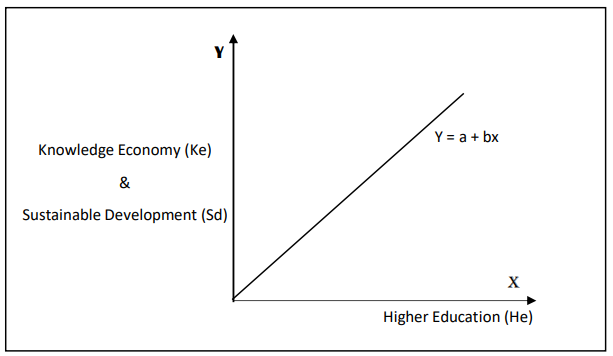
Figure 1: Higher Education, Knowledge Economy and Sustainable Development Curve
Namibian Educational System and Challenges Confronting Higher Education in Namibia
Namibia Educational System
During the era preceding Namibia's independence, the significance of education was not firmly established within the country's soci-ety or its governmental institutions. The presence of lecturers with limited educational qualifications, insufficient financial resources, inadequate infrastructure Directorate of Planning and Develop-ment (DPD) 2017), and the implementation of apartheid policies that segregated education based on skin color, collectively con-tributed to the development of a subpar human capital within Na¬mibia's society [11,12]. Following the attainment of national inde¬pendence in 1990, the educational initiative known as 'Education for All' (EFA) was implemented, thereby incorporating education under the revised constitution. Subsequently, the domestic govern¬ment has incorporated educational goals of access, equity, quality, and democracy into its National Development Plans (NPDs) and Vision 2030 [2].
The recognition of education as a fundamental right for all individ-uals has resulted in an increased commitment of resources to the education sector. The allocation of public funds towards education had a significant increase, resulting in a fivefold growth in gov¬ernment spending. This substantial investment in education con¬tributed to the attainment of an adult literacy rate of 80% during the 21st century. The developed human capital of Namibia plays a crucial role in their efforts to combat poverty, reduce dispari¬ties, and enhance their response to AIDS/HIV [2]. According to the constitution of Namibia, every citizen is entitled to the right and opportunity to get a comprehensive education. The education system commonly referred to as the 7-3-2 model encompasses a seven-year primary school phase, followed by three years of ju¬nior secondary education, and concluding with two years of senior secondary education. Additionally, university education is includ¬ed within this framework [1,2]. It is argued that this system, as outlined in, should facilitate the desired level of educational acces¬sibility [13].
The schooling system in Namibia, known as 7-3-2, is officially designated as being "free of charge." However, it is important to note that impoverished families still carry the bur-den of hidden costs associated with school uniforms, hostels, and transportation [12]. The allocation of government cash for fam¬ilies in need varies across different regions and has experienced reductions in past years. Other factors that contribute to children's non-attendance in schools include illness, maternal mortality, and being sent to other houses for labor purposes [13]. Over the past decade, there has been significant focus on the importance of higher education in Namibia, as it plays a crucial role in research and development as well as many forms of innovation [6]. According to the cited source, a total of 40 newly founded higher educational institutions (HEIs) were introduced in the year 2016. These institutions provided opportunities for individuals to pursue tertiary degrees and post-graduate diplomas. The bulk of universities in Namibia, such as the International University of Management (IUM), Namibian University of Science and Technology (NUST), and University of Namibia (UNAM), are primarily situated in Windhoek [6]. Education has become an integral component inside the Republic of Namibia. It serves as a crucial component in the country's progression towards a Knowledge Economy (Kamerika, 2020 cited in, and is expected to contribute to the attainment of sustainable economic growth [6,14]. According to recent data, there has been a consistent rise in government spending on education, as well as an increase in enrollment rates and the number of educational institutions [15].
From 2007 to 2015, there was a modest increase in the proportion of governmental expenditures allocated to education, with the percentage rising from 21.7% to 22.4%. In the year 2015, the Ministry of Innovation, Arts, and Culture apportioned a significant portion of its financial resources, specifically 88% of its budget, towards supporting the three distinct levels of education. The observed rise in costs suggests that Namibia, a nation classified as upper-middle-income, is facing limitations in terms of affordability [13]. In the fiscal year 2017/18, Namibia allocated a total of USD 1.02 billion towards expenditures in the education sector, as indicated by the most recent data. However, according to reference (UN, 2019), only a total of USD 208 million has been designated for tertiary education.
Challenges Confronting Higher Education in Namibia
Introduction
Undoubtedly, the advent of the twenty-first century has presented significant challenges to the essence, principles, and governance of higher education on a global scale. There are significant trans¬formations occurring in societal norms and the allocation of gov¬ernmental resources towards higher education. The nature of the academy is being transformed by several internal and external fac¬tors. These factors encompass changes in its student body, faculty, governance structure, curriculum, functions, and societal role. Ad¬ditionally, the academy is experiencing shifts in its research focus towards commercialization, as well as changes in institutional au¬tonomy and public oversight.
The Increasing Engagement of the Private Sector in Higher Education Institutions (HEIs)
The rise of private involvement in the education sector in Nigeria can be attributed to a growing demand for education and the limit¬ed capacity of governmental institutions to meet this need. Accord¬ing to National Council on Higher Education (NCHE,2016), as of November 2016, there were a total of 40 privately registered insti¬tutions of which over 25 offer qualifications on National qualifica¬tion framework (NQF) of 4 and above as well as and one private and two public universities (inclusive). These institutions were established in response to the growing need for education among a population of approximately 2 million individuals. Stated other¬wise, there exists a situation when the quantity demanded exceeds the quantity supplied. Of course, this should be an added advan¬tage, but the proliferation has made it less relevant and quantity oriented. The majority of private institutions lack trained teaching professionals and so relies on adjunct employees from state insti¬tutions. This has made it difficult to carry out the normal function of teaching, research and community service as the convention in HEIs. The phenomenon of increased private participation in higher education has been observed for the past two decades, particularly in developed nations' institutions. However, the current economic pressures on state revenues and expenditures for various services are expected to further expedite this trend. Nevertheless, the lev¬el of participation in these institutions is hindered by the limited number of students enrolled, primarily due to the relatively high fees required for admission. As a result, some proprietors have re¬sorted to employing adjuncts in order to maintain financial stabil¬ity. However, the smaller number of graduates produced by these institutions ultimately restricts their ability to contribute to the knowledge economy.
Insufficient Collaboration Between Institutions and Industries Hinders Research Efforts and Fails to Effectively Address the Issue of Unemployment Among Graduates of Higher Education Institutions (HEIs).
As stated in Namibia's Fifth National Development Plan (NDP 5), the issue of the quality and applicability of university education has been a significant concern for employers in both the private and public sectors. This concern arises from the insufficient connections between the education system and the labor market, particularly the industry, which has resulted in a negative impact on the relevance of training programs and the ability of graduates to secure employment [2].
According to the Government of Namibia (2017), the implemen¬tation of this initiative would result in the establishment of an ed¬ucation system that effectively addresses the requirements of the industrial sector by the year 2021/2022. However, it is imperative for the government to formulate a comprehensive national policy for postgraduate education, as well as a strategic plan for postdoc¬toral research, in order to provide guidance to higher education institutions (HEIs) and enhance expertise in crucial fields. This will help ensure that postgraduate programs are aligned with the requirements of the business and not viewed as disconnected from its demands. The National Commission for Research, Science, and Technology (NRCST) was founded in 2012 with the aim of addressing financing and research collaboration difficulties that exist within and outside Namibia's higher education institutions (HEIs). This initiative was undertaken in order to improve the overall research landscape in the country. The results have been low publications in internationally peer reviewed journals. This is the reason why higher education institutions (HEIs) in Namibia are not included in prominent university rankings. The establish¬ment of the National Program for Research, Science, Technology, and Innovation has been facilitated through a consultation process. Over a span of three years, a total of N$15 million has been al¬located and distributed to Higher Education Institutions (HEIs) within the country [13]. Furthermore, a comprehensive assessment of innovation policy has been conducted. The potential positive transition, which is currently at risk due to the negative economic conditions in the country, has the potential to enhance the strength of the country's higher education institutions (HEIs) and systems if provided with adequate funding. The question that still needs to be addressed is which instruments will be utilized and how they will be employed to guide higher education towards the attainment of Vision 2030, while also ensuring Namibia's advancement as a significant contributor to higher education.
The Increasing Trend of Privatization and Commercialization Inside Public Higher Education Institutions (HEIS)
Higher education institutions have recently madethe decision to seek alternative sources of funding, in addition to government subsidies, to support their academic programs and projects. In contemporary times, governments have assumed the role of "minority partners" in the schools and universities that are commonly associated with their names. On average, public universities' income are currently mostly derived from government funding, accounting for little over one-third of the total [14]. However, it is important to note that government financing continues to play a crucial role in public institutions, as these monies often cover essential instructional expenses, including faculty and staff salaries.
In the forthcoming decade, it is anticipated that the confluence of various factors, including limited government revenue, conflicting resource allocations, and evolving public sentiments towards high¬er education, would lead to a sustained reduction and uncertain nature of state funding for institutions of higher learning While private universities are currently encountering significant financial challenges as a result of escalating expenses, tuition limitations imposed by the market, decreased private donations, and diminish¬ing endowment income, public institutions, which typically have limited access to private funding, may see more severe repercus¬sions [13,14].
Both public and private universities have implemented commercial technology transfer and other profit-driven relationships with industries. In recent times, most higher education institutions have increasingly resorted to the practice of "outsourcing" various institutional operations to other entities, such as private vendors or other educational institutions [14]. These functions encompass a wide range of areas, including the management of residential dormitories, provision of employment training, and even the facilitation of academic activities like remedial education and introductory language instruction [17].
Conclusion
This study has explored a range of topics pertaining to the knowledge economy and sustainable development. The paper use functional notation and a model to express the relationship among the three variables under consideration. The study also investigated the obstacles that Higher Education Institutions (HEIs) in Nigeria face, which hinder the attainment of a knowledge-based economy and sustainable development. After discussing the objectives of various tiers of tertiary education in previous sections, it is worth noting that tertiary education plays a crucial role in fostering economic growth and national development, promoting the growth of small and medium-sized enterprises, and cultivating a skilled workforce. The study thus concludes that institutions of higher education play a crucial role in the achievement of a knowledge-based economy and sustainable development. Consequently, these institutions should enhance their research capabilities in order to produce pertinent knowledge, effectively apply global knowledge to local contexts, and facilitate economic growth driven by knowledge
References
- Government Republic of Namibia (GRN). (2004). Namibia vision 2030: Policy framework for long-term. National Development.
- Government Republic of Namibia (GRN). (2017). Namibia’s 5th National Development Plan (NDP). Available on dl=294.
- Okebukola, P. (2004). The state of University Education in Nigeria. Ibadan. Heinemann
- Adepoju, T. L., Fadokun, J. B. (2009). Higher Education and youth preparation for labour market: Higher Education for Economic growth in Nigeria. Journal of Educational Review (JER), 2(2), 185-190.
- Adepoju, T. L. (2015). Higher Education and Economic growth in developing World: The case of Nigeria. The journal of Industry and Higher Education
- Marope, M. T. (2005). Namibia human capital and knowledge development for economic growth with equity. Washington, DC: World Bank.
- World Bank. (2002). World development Report: knowledge for development. Washington, D.C. The World bank.
- The World Bank (2020). Open Data.
- African Union. (2016). Agenda 2063: African critical technical skills.
- Odekunle, K., Okeke, F. (2012). Public –private partnership in Nigeria. Ibadan. NISER
- Directorate of Planning and Development. (2017). A public Expenditure Review of the Basic Education Sector in Namibia, 1st ed., Ministry of Education, Arts, and Culture: Windhoek, Namibia.
- Kamupingene, T. (2002). Education for All, National Plan of Action 2002- 2015; Ministry of Basic Education, Sport, and Culture: Windhoek, Namibia.
- Hangula, L., Matengu, K. K., Likando, G., & Shanyanana,R. N. (2018). Higher education systems and institutions, Namibia. In Encyclopedia of international higher education systems and institutions (pp. 1-7). Springer, Dordrecht.
- Jellenz, M., Bobek, V., & Horvat, T. (2020). Impact of education on sustainable economic development in emerging markets—the case of Namibia’s tertiary education system and its economy. Sustainability, 12(21), 8814.
- Kandjaba, T. O. (2018). Investigating financing and affordability of higher education at University of Namibia (Doctoral dissertation, University of Namibia).
- Millennium Challenge Corporation. (2020). Addressing Barriers to Education in Namibia; Millennium Challenge Corporation USA: Washington, DC.USA.
- Government Republic of Namibia (GRN) 2005a. (2005). Namibia Students Financial Assistance Fund (NSFAF) Policy. http://www.moe.gov.na/files/download/c4d_NSFAF%20 POLICY.pdf.Accessed
- Lungu, L.R. (2019).Country Report on Namibia University Education. National Research Foundation: Cape Town, South Africa.
- OECD. (2019). Education at a Glance OECD Indicator; OECD Publishing: Paris, France,
- United Nations Development Programmed (UNDP). (2019). Human Development Report 2019, Inequalities in Human Development in the 21st Century, Namibia; United Nations Development Programme: New York, NY, USA.