

Annals of Civil Engineering and Management(ACEM)
ISSN: 3065-9779 | DOI: 10.33140/ACEM


Research Article - (2025) Volume 2, Issue 2
The Impact of Eco-Vernacular Architectural Elements on Enhancing the Contemporary Residential Areas of Baghdad - “An Analytical Comparative Study Between Traditional Vis Contemporary Design Approaches”
Received Date: Feb 12, 2025 / Accepted Date: May 19, 2025 / Published Date: May 28, 2025
Copyright: ©©2025 Othman A I Al-Mashhadani et al. This is an open-access article distributed under the terms of the Creative Commons Attribution License, which permits unrestricted use, distribution, and reproduction in any medium, provided the original author and source are credited.
Citation: Al-Mashhadani, O. A. I., Eryildiz, D. I. (2025). The Impact of Eco-Vernacular Architectural Elements on Enhancing the Contemporary Residential Areas of Baghdad -
Abstract
This study investigates the impact of eco-vernacular architectural elements on enhancing the contemporary residential areas of the city of Baghdad, Iraq, with a focus on comparing the eco-levels of two housing types - traditional, and contemporary. The research problem is defined by an examination of using some selected eco-vernacular architectural elements that are part of Baghdad’s traditional architecture as a design approach to overcome harsh climates. The study aims to understand how a compatible climatic environment was achieved in these traditional structures and try to compare it with a contemporary residential housing type. The research is structured into three main sections: a theoretical framework, which works as analyzing Iraq’s main climatic element characteristics, defining eco- vernacular architectural elements that enhance the built environment of the Baghdadi house, and comparing it with the Contemporary Iraqi house through observation fieldwork. Key findings, including the multifunctional nature of eco-vernacular architectural elements within traditional houses designed to serve its users, are presented. Finally, recommendations for how to enhance contemporary areas within the city of Baghdad through using eco-vernacular architecture elements and sustainable design approaches.
Keywords
Baghdadi House, Eco-Vernacular Architectural Elements, Traditional Architecture Vise Contemporary, Sustainably Design, and Architectural Design Approaches
Introduction
This study will explore some of the climatic elements of Iraq’s environmental sittings, on both the built environment and its occupants when translated as an Eco-vernacular architectural element. The compatibility of traditional architecture in Baghdad with these elements is evaluated, with particular attention to the climate impact on the building design and the formation of its eco-vernacular elements. The objective is to understand how a comfortable interior environment was achieved through design strategies in traditional Baghdadi houses. Traditional architecture, by its nature, is influenced by the prevailing climate of its location. Therefore; Solutions mitigate climatic effects through using locally sourced materials that are adapted to the harsh climate and help improve the user’s comfort, which creates a closed bioclimatic environment. Also, by busing Eco-vernacular elements as a design Strategy when employed to reduce temperatures, and humidity levels and maintain it. The Observation Field phase of traditional houses has identified that some date back to the 17th century, which through continuous maintenance, maintained its climatic adaptation features. Therefore, this fat can be used as a starting point when comparing it with contemporary design approaches, through areas; Adhamiya as a traditional district, vies AL Mansoor as a contemporary district, within Baghdad, as shown in Figure 1.

Figure 1: Study Area within Baghdad Source (Adapted by the Author)
• Research Problem: "The research aims to explore the Eco-vernacular element's influence on enhancing design approaches. Specifically, it investigates how these elements affect the built environment, and its sustainability, posing the research question: How can Eco vernacular architectural design approaches contribute to the adaptation and improvement of contemporary design approaches in Baghdad?"
• Research Hypothesis: The use of eco-vernacular architectural elements can enhance the built environment of contemporary residential areas of Baghdad, resulting in a more functional form characterized by harmony with these changing eco- factors.
• Research Objectives: To develop a comprehensive and empirical understanding of the impact of using Eco vernacular architectural elements within Baghdad’s traditional houses and compare it with a house constructed with contemporary design approaches.
• Research Importance: This research contributes to providing empirical insights about Eco vernacular elements and their resilience against harsh natural factors to enhance the contemporary design approaches ecologically.
• Research Justifications: Lack of empirical studies specifically addressing the use of eco-vernacular architectural elements as a contemporary design approach.
• Research Methodology: A mixed-methods approach, combining field observations and analytical analysis, was employed to investigate the research gap.
• Research Plan: The research is structured into three main sections: a theoretical framework, which works as an analysis of Iraq’s main climatic element characteristics, an examination of the impact of eco-vernacular architectural elements on enhancing the contemporary residential areas of the city of Baghdad, and comparative observation fieldwork between the Baghdadi traditional houses and Contemporary Iraqi house. Followed by a discussion and ending conclusion.
Characteristics of Iraq’s Climatic Elements
The built environment in Iraq has historically adapted to local climatic conditions, by using architectural features to mitigate its harsh effects. Environmental factors naturally affect architecture and traditional urban patterns show these effects in the way spaces are organized, the materials used, and the ways they are designed [1,2]. The following Table 1 examines the main climatic elements that crosslink with traditional design approaches.
|
Climatic Element |
Characteristics |
Impact on Traditional House Architecture |
Sources |
|
Solar Radiation & Brightness |
by (absorption, conductivity, convection).
highest in Jul/Aug (347–353 hrs). |
brightness variations. |
Kamoona, Feilden, Sheikh, Mosa, Appendix A [1,3-5] |
|
Temperature |
- Hot-dry climate: have high summer and low winter temperatures. - July and August are hottest; January is the coldest. |
|
Sa’adallah, Janabi, Appendix A: [6,7] |
|
Wind |
influence wind patterns.
|
|
World Weather Online, Appendix A [8] |
|
Humidity & Rain |
mm over 3 days). |
gypsum, and mud walls.
|
Al-Rawi & AlSamarraee, Appendix A [9] |
Table 1: Characteristics of Iraq’s Climatic Elements and Their Impact on Architecture Source: (Adapted by Author)
We can establish that climatic elements have significantly influenced Iraqi architecture, therefore; local architects utilize local materials and shading structures to mitigate intense solar glare and heat gain, which varies seasonally. Temperature fluctuations, with hot summers and cold winters, drive the use of thick walls and appropriate materials to regulate indoor temperatures. Wind patterns, strongest in summer, prompt the integration of passive cooling elements like wind towers and courtyards for natural ventilation. Finally, humidity and 4 rainfall, with distinct seasonal variations, necessitate architectural adaptations to manage moisture levels, particularly in basements, and incorporate water management strategies.
Analyzing Characteristics of Climatic Elements
According to the climatic factor’s elements and through the initial analysis we can notice its influence on Baghdad's architecture, which underscores its critical role in shaping building design. Solar radiation is a significant factor forcing the use of locally sourced materials that are resilient to heat and thermal expansion. Daylight hours reveal seasonal variations, which contribute to prolonged thermal gain, thereby influencing overall temperature (see Figure 2). Taking temperature data, the hottest months are July and August, and the coldest month is January, which is overcome by using Thick walls and materials that provide thermal comfort with high insulated value. On the other hand, wind velocity data reveal that the highest wind speed is during the summer, indicating that the use of eco-vernacular elements was a smart strategy to optimize airflow reduce the environment's dependency on AC systems, and improve energy efficiency.

Figure 2: Baghdad’s Average Rainfall Source [8]
Humidity and cloud cover data indicate seasonal fluctuations, with higher humidity in winter and lower in summer, which emphasizes the need for architectural solutions that maintain indoor comfort during high temperatures and low humidity days. Lastly, modest rainfall amounts, with less precipitation levels, make the summer season drier and harsher. These underline the importance of water management strategies and improved drainage systems, ensuring the resilience of traditional Baghdadi houses in changing conditions. These insights inform a sustainable architectural practice that adapts to the climatic challenges of its local environment. The following Table 2, summarizes the main crosslinking points of all studied climatic elements.
|
Climatic Element |
Characteristics |
Architectural Responses |
|
Solar Radiation & Brightness |
-High seasonal variation with peak values in summer. -Influences temperature, material selection, and thermal comfort. |
-Thick walls for insulation.
-Wind towers for natural ventilation. |
|
Temperature |
|
|
|
Wind |
-Seasonal variations with higher speeds in summer. - Impacts cooling and heating. |
-Wind towers and courtyards to capture prevailing winds.
overheating. |
|
Humidity |
- Low humidity in summer, higher in winter. |
|
|
Rainfall |
- Seasonal rainfall, primarily in winter. -Impacts Water Management and Drainage. |
|
Table 2: Baghdad’s Climatic Elements and Architectural Responses Source (Author)
Baghdad’s Eco-Vernacular Design Approaches Vis Contemporary
Environmental Treatments in Traditional Housing in Baghdad. The region's climate significantly influences the spatial configuration of traditional Baghdadi houses, necessitating designs that foster thermal comfort for inhabitants. This architectural approach, refined through iterative processes, effectively mitigates the adverse effects of extreme temperatures, enhancing both physiological and psychological well-being. The following key architectural elements exemplify this eco-vernacular design:
1. Bent Corridor or “Al-Majaz”: This roofed corridor connects the exterior to the inner courtyard, providing shade and facilitating natural ventilation through strategically placed windows. It is a buffer against noise and airflow, creating a comfortable microclimate [10-12]. The design incorporates local materials, including a large wooden door that enhances insulation and raised doorways that prevent rainwater ingress (see Figure 3A).
2. Courtyard or “Al-Hosh”: Serving as a central feature since the Babylonian era, the courtyard is crucial for light and air circulation, promoting passive cooling and creating a distinct microclimate [13-16]. It also fulfills social functions, acting as a gathering space and often featuring gardens with local flora. The incorporation of fountains enhances cooling through evaporative processes (see Figure 3B).
3. "Basement": Traditional basements, designed for thermal comfort, utilize brick flooring and vaulted ceilings to maintain cooler temperatures during the summer. The “BadGeer” system enhances natural ventilation by drawing cooler air from above ground, exemplifying a sophisticated understanding of thermal dynamics (see Figure 3C) [10,16-18].
4. Wind Catcher or “Bad-Geer”: These structures, oriented toward prevailing winds, promote natural ventilation and cooling, thereby reducing energy consumption They also contribute to food preservation by ventilating water pools in basements (see Figure 3D) [16,18,19].
5. “Al-Shanasheel” or “Al-Mashrabiya”: These projecting windows, often intricately carved, provide shade and enhance passive cooling while facilitating courtyard ventilation. They also provide women with privacy, enabling them to observe the outside world without being visible (see Figure 3E) [18,20-23]. Therefore, traditional Baghdadi houses exemplify a profound integration of climatic, social, and cultural considerations, reflecting the ingenuity of vernacular architecture in creating sustainable living environments adapted to local conditions.

Figure 3: Environmental Treatments in Baghdad’s Traditional Housing Source; A: AlMajaz [24]. Source B: Al-Hosh [25]. Source: C: levels of the Baghdadi House source [26]. D: The “Bad-Geer” and the connection to AlSaardab. Source (Author) and E: “Al-Shanasheel” within the Baghdadi House. Source [27].
Comparative Study Traditional Baghdadi House vs. Contemporary Iraqi House (01-30 July)
Observation Phase
Through this stage of the study, a comparative analysis was conducted in July to assess the thermal conditions of traditional Baghdadi and contemporary Iraqi houses in Baghdad. The collected temperature and relative humidity data were collected by using HOBO Temperature/Relative Humidity Data Loggers placed in each house to monitor both indoor and outdoor environments. The traditional Baghdadi house, featuring some of the selected vernacular elements like "Shanasheel," "Bad-Geer," and "Al- Hosh," was compared to a contemporary house built with modern design principles. This analysis aimed to evaluate how these architectural styles influence indoor thermal comfort during the extreme summer heat, which will help us test efficient levels of the built environments.
Instrumentation
The Data Logger device (see Appendix B for manufacture details), deployed in both house types simultaneously, within two urban areas from 1st to 30th July 2024, recorded hourly measurements of temperature, humidity, and wind velocity. The traditional house, described initially, utilized eco-vernacular elements, while the contemporary house, constructed in 2020, represented modern architectural trends.
House Descriptions
• Traditional Baghdadi House Located in Al-A'dhamiyah (see Figure 4), the traditional Baghdadi house employs passive cooling strategies to adapt to the hot/dry climate of Baghdad. Its central courtyard, "AlHosh," aids in creating a cooler microclimate, while thick mud-brick walls provide excellent thermal insulation. Features like the "Shanasheel" and "Bad-Geer" enhance ventilation and reduce solar heat gain, showcasing a harmony between architecture and environment, optimized for thermal comfort without mechanical cooling.

Figure 4: Baghdadi House - Location Al-A'dhamiyah Source (Author)
• Contemporary Iraqi House: The contemporary house is located at Al-Mansoor (see Figure 5) which relies on modern construction materials like concrete and steel that are less effective in managing heat. Its design lacks traditional passive cooling techniques, instead depending on air conditioning for thermal comfort. This house exemplifies current architectural trends that prioritize aesthetics over environmental adaptation, resulting in higher energy consumption and less sustainable living conditions.

Figure 5: Selected Contemporary House - Al-Mansoor location Source (Author)
According to the comparative study, the traditional houses have superior thermal performance drawn from passive means; via the modern house design approach that relies on mechanical systems in most cases. Therefore, this points out the need to integrate some traditional architectural practices with contemporary designs to achieve sustainable and energy-efficient housing solutions.
Data Collection
The data Logger used through the observation phase was used for its accuracy, stability, and ability to monitor microclimate variations, which is essential for comparative analysis studies. We strategically positioned the devices in both study areas to replicate real-life housing conditions. In the traditional Baghdadi house, we placed sensors near the "Al-Hosh" courtyard, and in rooms with "Shanasheel," and "Bad-Geer" for wind paths, to evaluate the effectiveness of vernacular architectural elements in reducing temperature and improving humidity levels and air circulation enhancement. In contrast, the data loggers used at the contemporary Iraqi house were positioned in rooms with extensive glazing and thin sun-exposed walls, and at rooms that depend on mechanical cooling systems. The positioned sensors measured thermal variations resulting from solar gains and limited passive cooling. During Baghdad's peak summer period, we recorded data at 15-minute intervals, capturing severe temperature fluctuations. This data can facilitate an empirical analysis of architectural elements’ impact on indoor climate. We analyzed the collected data to identify patterns, trends, and differences, that highlighted the traditional house’s efficiency in maintaining comfortable indoor conditions with minimal reliance on AC systems, as summarized in Table 3.
|
Date |
Traditional Baghdadi House (°C) |
Modern Iraqi House (°C) |
Traditional House Humidity (%) |
Modern House Humidity (%) |
|
01 July |
33.5 |
38.2 |
38.0 |
23.0 |
|
07 July |
32.0 |
39.0 |
37.0 |
22.0 |
|
14 July |
34.0 |
40.5 |
39.5 |
24.0 |
|
21 July |
35.5 |
41.0 |
40.0 |
25.5 |
|
30 July |
36.0 |
42.5 |
41.5 |
26.0 |
Table 3: Summary of Collected Data Source (Author)
Results and Analysis
Temperature Analysis
The comparative temperature analysis reveals significant differences in thermal performance, as shown in Figure 6 and (Appendix C). The traditional Baghdadi house effectively regulated internal temperatures despite external heat. It ranged from 29°C at dawn to 35°C in the afternoon, demonstrating the benefits of thick walls and the "Al-Hosh" courtyard design. These features reduced daytime heat gain and maximized nighttime heat loss, stabilizing the internal environment. In contrast, the contemporary Iraqi house experienced greater internal temperature fluctuations, ranging from 30°C in the morning to 40°C during the hottest hours. The modern design, characterized by thin walls and large windows, was more sensitive to external temperature variations, resulting in less comfortable interiors, particularly at noon when heat gain peaked. On July 15, the hottest day with external temperatures reaching 48°C, the traditional house maintained an indoor temperature of 34.5°C, while the modern house, even with active cooling systems, saw temperatures rise to 41.5°C. Therefore, these comparing points highlight the efficiency level of passive cooling methods in traditional settings, such as the use of "Al-Hosh", "Shanasheel" and "Bad-Geer" for shading and airflow. These elements functioned as a thermal flywheel, critical for maintaining lower internal temperatures in harsh summers. This points out, that integrating some eco-vernacular elements into contemporary design approaches could help reduce cooling demand and improve overall thermal comfort, especially in hot climates like Baghdad.

Figure 6: The Temperature Fluctuations for (1st to 30th of July) Source (Author)
Humidity Analysis
The comparative humidity analysis also highlights the effectiveness of eco-vernacular design approaches. The traditional house consistently maintained a comfortable indoor humidity level, averaging 44.8%, with variations between 44% and 46.2%, as shown in Figure 7 and (Appendix D), this was achieved by Natural ventilation, thick walls, and the courtyard's evaporative cooling effects are responsible for this stability. In contrast, the contemporary house experienced greater fluctuations, with less humidity levels ranging from 32% to 33.5%. The thinner walls and reduced ventilation in modern designs allowed increased moisture ingress during the night and early morning, while mechanical cooling systems caused a noticeable drop in humidity during peak heat. On July 20, when external humidity peaked at 70%, the traditional house maintained an indoor humidity level of 44.5%, while the modern house's moisture dropped to 32.8%, creating a less comfortable indoor environment. The natural ventilation facilitated by the “Al-Hosh” and “Bad-Geer” in the traditional house played a crucial role in regulating humidity, promoting better air circulation, with moisture evaporation, thereby preventing excessive humidity buildup.

Figure 7: The Relative Humidity Only for (July 1st to 30th) Source (Author)
Conversely, contemporary residences depend more on active systems, which increase energy consumption, diminish stability, and are not environmentally friendly. As a result, the AC system in modern homes removes moisture, leading to a drier indoor condition, and lead to more occupant discomfort. Therefore, we indicated that traditional houses can effectively manage internal humidity, which decreases the dependence on mechanical AC systems. This fact offers the possibility of integrating eco-vernacular strategies into contemporary designs, such as sustainable living that is aligned with local identity.
Indoor Air Velocity Analysis
The research analyzes indoor air velocity performance in both selected areas, emphasizing eco-vernacular architectural elements like “Al-Hosh,” “Shanasheel,” and “Bad-Geer.” Systematic measurements were performed to evaluate the efficacy of these passive components. We collected data from three areas within the Baghdadi house: zone 1, “AlHosh”; zone 2, as Room 1, which includes “Shanasheel”; and zone 3, as Room 2, which uses “Bad- Geer.” We gathered the data at various times during the day to document fluctuations in wind speed, as shown in Table 7. The findings indicated noticeable variations in airflow performance depending on the selected architectural element. The “Bad- Geer” zone attained the highest air velocities, particularly during afternoon peak hours, followed by the “Shanasheel’’ and the “Al- Hosh” zones. This demonstrates the effectiveness of traditional design in channeling airflow, by balancing high/low pressure, enhancing energy efficiency, and creating self-regulating settings tailored to Iraq's dry climate. The analysis assesses the advantages and drawbacks of selected components, proposing their possible incorporation into a modern sustainable design. Although “Bad-Geer” provides significant passive cooling efficiency its effectiveness is contingent upon the presence of wind. On the other hand, “Shanasheel” provides a balanced design that incorporates shading and ventilation, while “Al-Hosh” creates a microclimate with moderate airflow, which may not be as effective in intense heat conditions.
|
Date July |
Date July |
Traditional Element |
Morning (m/s) |
Afternoon (m/s) |
Evening (m/s) |
Average (m/s) |
|
1 |
Courtyard |
“Al-Hosh” |
0.8 |
1.5 |
1.0 |
1.1 |
|
Room-1 |
“Shanasheel” |
1.2 |
2.5 |
1.8 |
1.8 |
|
|
Room-2 |
“Bad-Geer” |
1.8 |
3.5 |
2.3 |
2.5 |
|
|
7 |
Courtyard |
“Al-Hosh” |
0.6 |
1.2 |
0.9 |
0.9 |
|
“Al-Hosh” |
“Shanasheel” |
1.0 |
1.2 |
1.5 |
1.6 |
|
|
Room-1 |
“Bad-Geer” |
1.5 |
3.0 |
2.1 |
2.2 |
|
|
Room-2 |
“Al-Hosh” |
0.7 |
1.3 |
0.8 |
0.9 |
|
|
14 |
Courtyard |
“Shanasheel” |
1.3 |
2.6 |
1.7 |
1.9 |
|
Room-1 |
“Bad-Geer” |
1.6 |
3.7 |
2.5 |
2.6 |
|
|
Room-2 |
“Al-Hosh” |
0.5 |
1.1 |
0.7 |
0.8 |
|
|
21 |
Courtyard |
“Shanasheel” |
1.1 |
2.4 |
1.6 |
1.7 |
|
“Al-Hosh” |
“Bad-Geer” |
1.4 |
3.3 |
2.2 |
2.3 |
|
|
Room-1 |
“Al-Hosh” |
0.6 |
1.4 |
1.0 |
1.0 |
|
|
“Shanasheel” |
“Shanasheel” |
1.2 |
2.7 |
1.8 |
1.9 |
|
|
Room-2 |
“Bad-Geer” |
1.7 |
3.8 |
2.6 |
2.7 |
|
|
28 |
Courtyard |
“Al-Hosh” |
0.6 |
1.4 |
1.0 |
1.0 |
|
Room-1 |
“Shanasheel” |
1.2 |
2.7 |
1.8 |
1.9 |
|
|
Room-2 |
“Bad-Geer” |
1.7 |
3.8 |
2.6 |
2.7 |
Table 7: Indoor Air-Velocity - Vernacular House (July 2024) Source (Author)
The airflow tests for the traditional house revealed how vernacular features perform in three different zones. The collected data showed that the "Al-Hosh" zone achieved air velocities of 0.8 to 1.1 m/s, while the "Shanasheel" zone ranged from 1.6 to 2.7 m/s, and the "Bad-Geer" zone recorded the highest, averaging 2.2 to 2.7 m/s with peaks of 3.8 m/s in the afternoon. According to these results, the outside environment and the way the building's parts work have a big effect on how air flows through it. Also, Analysis reveals the significant role of traditional element design in enhancing natural ventilation and improving thermal comfort. Following the studied elements, Room 2 was identified as the most effective, showing high air velocities during peak afternoon hours and providing substantial cooling loads. However, its performance is dependent on prevailing wind conditions. A balanced airflow with shading was observed in Room 1, contributing to passive cooling while minimizing heat gain. Moderate airflow rates were recorded in the “Al-Hosh,” which functioned as a regulated microclimate and contributed to overall house air circulation. On the other hand, the data Analysis from the contemporary house (see Table 8), has proved more complex due to the absence of using traditional architectural elements. The air circulation in the living room, bedroom, and central corridor was assessed to evaluate their environmental efficacy. In contrast to traditional designs, contemporary houses lack passive cooling strategies and vernacular elements, therefore, Modern materials and compartmentalized layouts are prevalent, often resulting in reduced ventilation and increased reliance on AC cooling systems. This highlights the differences in thermal comfort and airflow dynamics between traditional and modern designs, emphasizing opportunities for improving the built environment to be more sustainable and comfortable.
|
Date July |
Location |
Design Aspect |
Morning (m/s) |
Afternoon (m/s) |
Evening (m/s) |
Average (m/s) |
|
2 |
Living Room |
Large Windows |
0.3 |
0.8 |
0.5 |
0.5 |
|
Bedroom |
Thin Walls |
0.1 |
0.4 |
0.2 |
0.2 |
|
|
Central Corridor |
Open Layout |
0.2 |
0.6 |
0.4 |
0.4 |
|
|
8 |
Living Room |
Large Windows |
0.4 |
0.9 |
0.6 |
0.6 |
|
Bedroom |
Thin Walls |
0.2 |
0.5 |
0.3 |
0.3 |
|
|
Central Corridor |
Open Layout |
0.3 |
0.7 |
0.7 |
0.5 |
|
|
15 |
Living Room |
Large Windows |
0.3 |
1.0 |
0.7 |
0.7 |
|
Bedroom |
Thin Walls |
0.2 |
0.6 |
0.4 |
0.4 |
|
|
Central Corridor |
Open Layout |
0.3 |
0.8 |
0.6 |
0.6 |
|
|
22 |
Living Room |
Large Windows |
0.4 |
1.2 |
0.8 |
0.8 |
|
Bedroom |
Thin Walls |
0.3 |
0.7 |
0.5 |
0.5 |
|
|
Central Corridor |
Open Layout |
0.3 |
0.9 |
0.9 |
0.9 |
|
|
29 |
Living Room |
Large Windows |
0.5 |
1.3 |
0.9 |
0.9 |
|
Bedroom |
Thin Walls |
0.3 |
0.8 |
0.6 |
0.6 |
|
|
Central Corridor |
Open Layout |
0.4 |
1.0 |
0.8 |
0.7 |
Table 8: Indoor Air-Velocity in a Contemporary Iraqi House (July 2024) (Author)
Low air velocities, averaging between 0.2 m/s and 0.9 m/s, were consistently recorded in all studied locations within modern homes, indicating limited continuous airflow. Slightly elevated air velocities were observed in the living area, likely due to large unshaded windows. A minor increase in airflow was noted during afternoon measurements, attributed to changing external wind conditions. However, the absence of effective passive cooling features, such as a “Bad-Geer” or “Al-Hosh” restricts natural air circulation. This issue is exacerbated by thin walls and modern design approaches which limit cross-ventilation and contribute to heat retention. Analysis of air velocity measurements from the observed contemporary house reveals its insufficient adaptation to Baghdad’s hot/dry climate. Despite providing visual appeal and functional spaces, the house neglects crucial environmental factors. Reliance on thin walls, unshaded windows, and closed layouts significantly impedes natural ventilation and exacerbates heat gain. Unlike traditional homes, which use passive cooling elements to great effect, these modern designs do not promote thermal comfort or sustainability. The integration of eco-vernacular elements with contemporary design approaches offers the potential for creating visually appealing, environmentally responsive, energy-efficient, and climate-appropriate houses. By incorporating these traditional features, we can enhance thermal comfort, reduce reliance on mechanical systems, and promote a climate-responsive urban environment. We recommend further research to refine these findings and optimize the integration of eco-vernacular elements in future contemporary settings.
Discussion
Incorporating eco-vernacular elements into contemporary design approaches is a viable path-line to enhance energy efficiency and level up inhabitant comfort, particularly in regions such as Baghdad, where extreme weather conditions prevail. The research highlights the role of eco-vernacular features, and natural materials, in enhancing a building's thermal comfort and diminishing dependence on mechanical cooling systems. Traditional houses have exceptional efficacy in regulating indoor temperatures and humidity, largely attributable to their multipurpose architecture and the utilization of local materials. Conversely, modern houses face challenges in temperature control, resulting in heightened energy use and discomfort for residents. Also, the incorporation of eco-vernacular architectural elements in contemporary designs to foster more sustainable and climate-appropriate habitats. The research offers empirical evidence of vernacular design efficacy in regulating heat retention, humidity, and airflow. The observation phase indicates that traditional homes employ natural ventilation and passive cooling techniques, to maintain stable internal temperature, and enhance airflow, contrasting significantly with the considerable fluctuations in temperature and humidity observed in contemporary homes that regularly need air conditioning with an active energy source. The results emphasize the necessity of including eco-vernacular components to alleviate the detrimental impacts of severe weather and decrease energy consumption. Architects and urban planners can develop more resilient and climate-responsive structures by borrowing inspiration from traditional designs. The studies together endorse a paradigm shift in architectural practice, emphasizing sustainability and occupant well-being over aesthetic concerns. This strategy not only tackles the urgent issues presented by climate change but also cultivates a stronger relationship between constructed spaces and their natural environments, thereby enhancing the inhabitants’ quality of life.
Conclusions
The findings indicate that traditional designs promote a positive relationship with the environment while offering pragmatic solutions for sustainable living in the face of climate challenges. In contrast, contemporary Iraqi homes, reliant on mechanical cooling systems and sophisticated materials, exhibit greater temperature fluctuations and reduced indoor comfort. The study advocates for the integration of eco-vernacular elements of Baghdadi houses into local contemporary architectural practices, which enables modern designs to enhance thermal efficiency, reduce energy consumption, and align more effectively with regional climatic conditions, which reevaluates historical architectural knowledge to inform sustainable urban planning. Researchers should prioritize the integration of eco-vernacular methods into contemporary systems and investigate their efficacy in addressing the challenges of climate change and urban sustainability. The results offer valuable information for architects and urban planners aiming to create resilient and environmentally adaptive residential zones in Baghdad [28].
References
- Kamoona, Haidar Abdul-Razzaq, (1989). “Architectural Heritage and City Privacy”, National Privacy in Contemporary Arab Architecture.
- Jouda, Jabur Abd, (2002). “The Role of Climate Treatment in Arab Home Models”, Journal of the College of Arts, University of Baghdad, Issue 55.
- Feilden, B, (1982). “Conservation of historic building”.
- Sheikh, Ahmed, (2004). “Meteorologyâ??, Cairo”.
- Mosa, Ali Hassan, (1982). “Brief in the Applied Climate”,Dar-alfikr, Damascus, Syria.
- Sa'adallah, Ghazi Ismail, (1988). “The Role of Climate in City Planning”, Geographical Society Magazine, Issue II.
- Janabi, Salah Hameid, (1997). The Problem of Decay and Collapse in the Contemporary City Specialization and Etiology, a study of causesâ??, Journal of the Geographical Association, issue No.35, 1997.
- World Weather online, (2024), â??Baghdad Annual Weather Averagesâ??, available online.
- Al-Rawi, A., & Al-Samarraee, Q., (2005) “Applied Climate”, Baghdad University.
- Abdul-Rasool, Salema, (1987). “Heritage Buildings in Baghdad, an Analytical Study of Al-Kerkh Side”, Ministry of Culture and Information, General Establishment for Antiquities and Heritage, Baghdad.
- Haw-Change, S.-S. (1986). “The spatial organization and social-culture basis of traditional courtyard houses”. University of Edinburgh, UK.
- Bahauddin, D. K. A. A. (2015). Analysis of the architectural elements in traditional courtyard houses in Irbid, Jordan. Adv. Environ. Biol, 9, 112-116.
- Hakim, B. S. (1986). Arabic-Islamic cities: Buildingand Planning Principles, Kegan Paul International, London. Hatam, Gholamali (2000), Islamic architecture in saljugi period, Majed publication, Tehran.
- Muhaisen, A. S. (2006). Shading simulation of the courtyard form in different climatic regions. Building and environment, 41(12), 1731-1741.
- El-Shorbagy, A. M. (2010). Traditional Islamic-Arab house: vocabulary and syntax. International Journal of Civil & Environmental Engineering IJCEE-IJENS, 10(4), 15-20.
- Al-Hafith, O., BK, S., Bradbury, S., & De Wilde, P. (2018). Thermally comfortable housing in Iraq—prospects of the courtyard pattern in achieving energy efficiency. In Proceedings of 3rd International Sustainable Buildings Symposium (ISBS 2017) Volume 1 3 (pp. 904-917). Springer International Publishing.
- Al-Azzawi, S. H. A. (1984). A descriptive, analytical and comparative study of traditional courtyard houses and modern non-courtyard houses in Baghdad: in the context of urban design in the hot-dry climates of the subtropics. (No Title).
- Al-Zubaidi, M. S. (2002, June). The Efiiciency of Thermal Performance of the Desert Buidings–The Traditional House of Ghadames/Libya. In Annual Conference of the Canadian Society for Civil Engineering, Montréal, Québec, Canada (Vol. 5, No. 8).
- Al-Sa'adi, Mona Salman Mohammed, (2001). “Architectural Design of Baghdadi houses”, Heritage Magazine, Issue 3, Public Cultural Affairs House.
- Mullah-Hawish, Aqeel Nouri, (2009). “Traditional Mahalla, Evolution and Contemporary Living Standards”, General Culture Press, Mini Encyclopedia series.
- Toulan, N. A. (1980). Climatic considerations in the design of urban housing in Egypt.
- Al-Kaissi, S. M. (1984). The influence of natural and cultural environment on the fabric of the city, with special reference to Iraq (Doctoral dissertation, University of Sheffield).
- Warren, J.; & Fethi. (1982) Traditional Houses in Baghdad. England. Coach Publishing House Limited, Horsham.
- Qaradaghi, A. M. A. (2021). The effect of traditional house patterns on changing privacy treatments: traditional houses in the city of sulaymaniyah, as case study. Sulaimania Journal for Engineering Sciences, 8(1).
- Ahmed, W. H. Y., (2017), The effect of the location of the courtyard on the efficiency of housing in Arab heritage architecture,” Journal of Urban Research, vol. 25, July 2017.
- Salman, M., (2020), "Sustainability and Vernacular Architecture: Rethinking What Identity Is",
- Shawawra, Ali Salem, (2012). “Geography of Weather and Climate Science”, AlMacerah, Publishing Distribution House, Oman,
- Weather & Climate, (2024), “Average Monthly Sunshine in Bagdad”.

Appendix A: Baghdad’s Average Climate Factors. Source (Adapted by Authors)
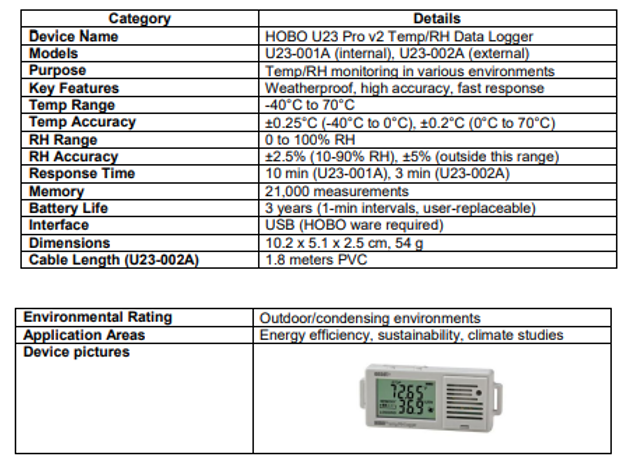
Appendix B: Device Details (Author Based on the Manufacturer’s Website)

Appendix C: Average Changes in Temperature Levels for Observed Houses. Source (Author)
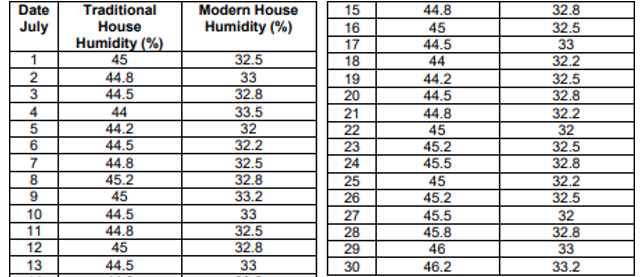
Appendix D: Relative Humidity Average Variations of the Observed Houses. Source (Author)