

COVID Research: Open Access(CROA)
ISSN: 2995-7826 | DOI: 10.33140/CROA


Research Article - (2024) Volume 2, Issue 3
The Impact of Digital Literacy on Digital Trust During Covid-19 Pandemic and the Effect of Information Sources on Trust
Received Date: Oct 07, 2024 / Accepted Date: Nov 05, 2024 / Published Date: Nov 30, 2024
Copyright: ©©2024 Aarushi Pradhan, et al. This is an open-access article distributed under the terms of the Creative Commons Attribution License, which permits unrestricted use, distribution, and reproduction in any medium, provided the original author and source are credited.
Citation: Pradhan, A., Singh, A. (2024). The Impact of Digital Literacy on Digital Trust During Covid-19 Pandemic and the Effect of Information Sources on Trust. COVID Res OA, 2(3), 01-05.
Abstract
The world is becoming digitized at a rampant speed. The emergence of digital technologies have made it possible for people around the world to connect easily with each other. Digital platforms such as Facebook, Whatsapp, and other social media sites have become deeply embedded in the daily lives of millions of people around the world. This is increasingly shaping how people engage with their connections as citizens of a particular country as well as consumers of that platform [1]. However, the potential uses of user data benefit such companies in ways that may not be visible to users. Recently, digital literacy is becoming increasingly important to understand and control one’s personal data. Information on social media platforms spreads rapidly through family, friends or other people that we trust. Over centuries several varieties of information sources have come up. Information sources are now available both in tangible and intangible forms [2]. This difficulty in distinguishing between reliable and unreliable sources causes the spreading of confusion and anxiety in the population [3]. Trust plays a crucial role in our lives. It is a very complicated phenomena attached to multiple disciplines and influenced by many measurable and non-measurable factors [4]. COVID-19 pandemic was a new global problem that engulfed the entire world and affected all aspects of society. The threat of infection with the SARS-CoV-2 virus caused fear and uncertainty throughout the population and it had a major influence on public behaviour [5]. Thus, the information on vaccines acquired through different media platforms instilled a new kind of uncertainty within the people. This paper talks about the affect of digital literacy on people’s trust regarding the information spread on Covid-19 vaccines during the Covid-19 pandemic, particularly in the US, the UK and India. The paper also includes the role of information source hierarchies on people trusting the information.
Keywords
Digital Literacy, Information Source Hierarchies, Trust/Digital Trust, Covid-19 Vaccines, Covid-19 Pandemic, United Kingdom (Uk), United States (Us), India, Sentiment AnalysisIntroduction
Digital literacy, which refers to the necessary skills and competencies to perform tasks and solve problems in digital environments, has become the most important necessity in the contemporary world. According to Fu (2013) digital literacy is a set of skills required by 21st century individuals to use digital tools to support the achievement of goals in their life situations [6-8]. Social media platforms have become a source of engagement and making connections worldwide. As Gillespie (2010) argues, these platforms consider themselves as ‘platforms’ because they have pre-thought out aims and goals to achieve with the help of their audiences and users. These platforms use their users’ most basic information to be able to provide them with curated content that meets their needs, which in turn makes more profit for them. The evolution of digital technology has changed the way people interact with one another. The internet, which was first used to store information, has become a way for people to connect in a virtual environment.
Thus, it has become necessary for the users to understand how, why and where their data is being used and be aware of it to protect themselves from mishaps which is basically called digital literacy in simple terms [9]. During the Covid-19 pandemic, the people were compelled to remain shut in their homes due to the enforcement of lockdown around the world. The only source of engagement and connection of people with the world were the social media platforms. There was uncertainty everywhere. People were hesitating to get vaccinated as there were misinformation and conspiracy theories often spread online including through social media. World Health Organisation (WHO) defines vaccine hesitancy as a ‘delay in acceptance or refusal of safe vaccines despite availability of vaccine services [10]. In such times, it became difficult to distinguish between reliable and unreliable sources thus leading to the wavering of trust. Trust or more specifically digital trust, which refers to the level of confidence that people have in the ability of digital technologies, services, and organizations to protect their interests and uphold societal values [11,12] have become of the utmost importance in the contemporary world. During the pandemic, this digital literacy and trust became the weapons of the people to protect themselves from any online misinformation so that they do not get scammed. All sorts of information were spreading on different media platforms without any filtering in different parts of the world. The US and India were especially highly affected due to this. The UK was seemingly at a better position than both of the earlier mentioned countries. Information source hierarchies also play a major role in the spread of such information and build of trust on them. Any object that provides information can be called an information source. Information sources in tangible form are mainly traditional print sources, while those in intangible form are digital sources [2]. Here, we are talking about the digital sources. It is essential to understand what is the source of the information and who is spreading it. Whether it is spread by people who are your primary contacts, or belong to secondary or tertiary sources which will be explained later in the article.
Literature Review
There have been multiple studies on the impact or assistance of digital literacy on different things during the Covid-19 pandemic. One of them was based on how digital literacy helped in coping with stress during the pandemic, how it became beneficial in preventing any misinformation and thus in reducing stress related to it [5]. A study, somewhat similar to ours was conducted in Indonesia where people were interrogated on the basis of their digital literacy and how the lack of this literacy made the residents of East Java susceptible to trusting fake information spreading on the internet [13]. Research has also been performed on spreading health literacy through information sources and how much these sources are trusted during the pandemic [14]. Then there is another paper that talks about whom to trust in the age of rapidly spreading misinformation and fake news on digital platforms. The article specifically talks about the role of trust and how it has become difficult to trust the information sources, especially the social media platforms as they have become nothing but a source of rapid income for the company owners by selling data and personal information of their users without their prior consent and knowledge [15]. There have also been numerous studies on how information sources play a role in building of trust in the digital realm. One of the articles based on this kind of research is a Romanian case study where the article explores actual levels of trust in various sources of information such as government websites, social media, interpersonal communications and others [16]. There is a study conducted in China which examines the perceived trust of different Covid-19 information sources such as health professionals, academic institutions, government agencies, news media, social media, family, and friends and sharing of Covid-19 information. The study specifically investigates how beliefs about sharing and emotions mediate the effects of perceived source trust on source- specific information sharing intentions [17].
To the best of our knowledge, we could say that a study similar or in congruence to ours have not yet been conducted. This paper which is based on studying the impact of both digital literacy and information sources on trust within the countries of the US, the UK and India and their comparison is original.
Theoretical Framework
Here are the main concepts that contain the essence of this paper:
1) Digital literacy - Digital literacy is an individual's ability to find, evaluate, and communicate information using typing or digital media platforms. It is a combination of both technical and cognitive abilities in using information and communication technologies to create, evaluate, and share information [18]. Digital literacy is also said to be the ability to access, manage, understand, integrate, communicate, evaluate and create information safely and appropriately through digital technologies for employment, decent jobs and entrepreneurship. It includes competencies that are variously referred to as computer literacy, ICT literacy, information literacy and media literacy [19].
2) Trust / Digital trust - Digital trust is the expectation that digital technologies and services will protect the interests of stakeholders and uphold societal values. It also refers to the confidence that individuals have in the organizations that provide these technologies and services. Digital trust can also refer to the infrastructure that allows people to identify themselves online and communicate confidentially with others [11, 12].
3) Information sources (hierarchies) - These are the kinds of information sources. There are usually three types: primary, the ones that are very close to the information seeker, for example, family, relatives or friends; secondary sources, comprises of connections that share some similarity with our identity, like people from our school, institution or offices that we know are there but we have not directly interacted with. Tertiary sources are the rest of the sources of information that are not directly linked to us, like some random person from another country or state. Our level of trust in information is strongly linked to the source from which it originates; we tend to place more confidence in information from a primary source compared to that from a tertiary source [20,21].
4) Sentiment analysis - Sentiment analysis is a natural language processing (NLP) technique that automatically determines the emotional tone of a text as positive, negative, or neutral [22, 23].
Research Question and Methodology
In this study, we explore how people trust the information they receive on social media platforms such as Twitter, WhatsApp, and Instagram. Our primary focus is on examining two key factors: source hierarchy and digital literacy. We define source hierarchy by classifying information sources into three categories: primary sources (information from friends and family), secondary sources (information from people with whom respondents share some history, such as acquaintances or former classmates), and tertiary sources (information from unknown or unfamiliar individuals) [24]. We hypothesize that trust in information will likely decrease from primary to tertiary sources [25]. To test this hypothesis, we directly assess participants' responses through survey questions.
The second component of our work examines how digital literacy influences trust in accurate information [26]. We anticipate that higher levels of digital literacy will correlate with a greater ability to identify and trust accurate information, while lower levels may contribute to misinformation acceptance [27]. To study this, we analyse responses to COVID-19 vaccine information posted by official Twitter accounts of vaccine distributors. By conducting sentiment analysis on responses from users in different countries, we aim to observe patterns of trust or distrust. For example, if a group with high digital literacy consistently demonstrates positive sentiment toward reliable information, we may attribute this trust to their digital literacy. This two-part approach allows us to assess the multi-dimensional nature of trust, incorporating both personal connections and the ability to critically evaluate digital information [28].
Findings
To test our methodology, we conducted a survey primarily focused on assessing the importance of source hierarchy in establishing trust. In our findings, approximately 69.69% of respondents reported that they would trust messages sent by friends and family. Around 42.42% indicated they would trust messages from people they’ve met once or twice, such as classmates or college acquaintances. Meanwhile, 26.6% acknowledged that they only trust information seen on social media platforms like Twitter or Instagram. These findings align with our initial hypothesis.
So far, we have demonstrated how source hierarchy plays a crucial role in shaping trust in digital information. While these are significant factors, numerous others also influence digital trust. To investigate this further, we conducted an experiment to assess the impact of these factors on public trust.
We analysed tweets from the official Twitter accounts of several Covid-19 vaccine developers, including Pfizer/BioNTech, Sinopharm, Sinovac, Moderna, and Oxford/AstraZeneca, focusing on how users from different countries engaged with these tweets through retweets and comments.
By aggregating this data, we examined how people accepted or rejected the information, considering retweets as an indication of trust and acceptance.
Our findings revealed that approximately 78% of users expressed trust in the information by positively engaging with the tweets. A significant insight from our analysis was the variation in trust levels across countries. People in the UK showed the highest trust in these official announcements, followed by India, with the USA displaying the lowest levels of trust.
This was particularly notable, given that the USA has a higher digital literacy rate than India and accessed the information through the same official channels. This discrepancy suggests that factors beyond digital literacy and source hierarchy play a role. For instance, in the USA, the timing of Covid-19 coincided with the 2020 presidential election, which led to political polarization and likely diminished public trust. In contrast, in India, the government actively promoted the vaccination drive, which may have fostered greater trust despite lower digital literacy. These findings underscore that while digital literacy and source hierarchy are influential, other contextual factors also significantly shape public trust in digital information.

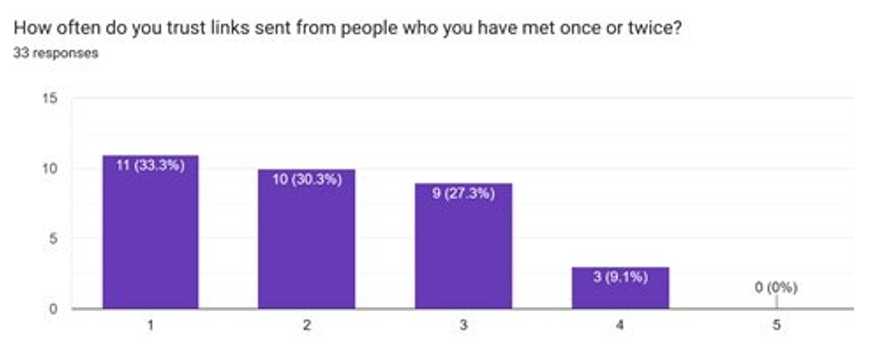

Figure 1: This Figure Shows the Results of our Survey that we Conducted in Order to Test the Effects of Source Order Hierarchy.
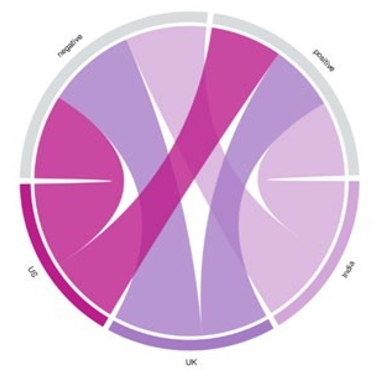
Figure 2: This Figure Shows the Radial Chart of the Behaviour of Tweets Observed from Different Countries.
Discussion
Our data clearly highlights a hierarchy in source credibility, where primary sources—such as information from close friends and family—are generally regarded as more trustworthy than secondary sources like acquaintances or public figures. This source order reflects a pattern in trust, showing that individuals place greater confidence in information from personal connections. Additionally, our results reveal the role of digital literacy in shaping trust: respondents in the UK, where digital literacy levels are comparatively high, demonstrated a greater tendency to trust accurate information than respondents in India, where digital literacy is generally lower.
However, our findings also suggest that trust is a complex, multi- dimensional concept that extends beyond just source hierarchy and digital literacy [29, 30]. For example, in the United States, where digital literacy is high, trust levels in certain sources were still relatively low, likely influenced by political polarization and other contextual factors. This indicates that while digital literacy supports trust in reliable information, other social, cultural, and political factors can also play a significant role. By examining and discussing these diverse influences on trust, we aim to provide a more transparent understanding of the factors that shape trust in information sources.
Conclusion
In conclusion, our work provides insights into the factors that shape trust in information shared on social media, particularly focusing on source hierarchy and digital literacy. Our findings confirm that people generally place greater trust in information from primary sources, such as friends and family, with trust diminishing when information comes from secondary or tertiary sources. This hierarchy underscores the importance of personal connections in shaping trustworthiness perceptions online.
Furthermore, we demonstrate that digital literacy plays a significant role in individuals’ ability to identify and trust accurate information, as shown through our analysis of responses to COVID-19 vaccine information. While higher digital literacy is associated with increased trust in reliable sources, our results also highlight the influence of contextual factors, such as political and cultural influences, which can complicate the impact of digital literacy alone. Ultimately, trust is a multi-dimensional concept shaped by both relational and cognitive factors, and our study contributes to a clearer understanding of this process by illuminating how people engage with digital information. This work underscores the importance of enhancing digital literacy and promoting source transparency to support informed, critical engagement with online content.
References
- Mohan, S., & Punathambekar, A. (2019). Introduction: Mapping Global Digital Cultures. In Global Digital Cultures: Perspectives from South Asia. University of Michigan Press.
- Chatterjee, A. (2016). Elements of information organization and dissemination. Chandos Publishing.
- Fu, J. (2013). Complexity of ICT in education: A critical literature review and its implications. International Journal of education and Development using ICT, 9(1), 112-125.
- Yan, Z., & Holtmanns, S. (2008). Trust modeling and management: from social trust to digital trust. In Computer security, privacy and politics: current issues, challenges and solutions (pp. 290-323). IGI Global.
- Bosanac, D., & Luic, L. (2021). Importance of digital literacy in the process of confronting the stress during COVID-19 pandemic. In Public Health and Informatics (pp. 1041-1045). IOS Press.
- Sarkar, S. (2012). The role of information and communication technology (ICT) in higher education for the 21st century. Science, 1(1), 30-41.
- Martin, A., & Grudziecki, J. (2006). DigEuLit: Concepts and tools for digital literacy development. Innovation in teaching and learning in information and computer sciences, 5(4), 249-267.
- Reddy, P., Sharma, B., & Chaudhary, K. (2020). Digital literacy: A review of literature. International Journal of Technoethics (IJT), 11(2), 65-94.
- LEE, J. Y., & Al Khaldi, N. (2020). Exploring the ethical implications of new media technologies: A survey of online platform users’ digital literacy and its effects on digital trust and privacy awareness. In 70th Annual International Communication Association Conference (ICA 2020): Open Communications.
- Razai, M. S., Osama, T., McKechnie, D. G., & Majeed, A. (2021). Covid-19 vaccine hesitancy among ethnic minority groups. bmj, 372.
- Launer, M., Çetin, F., & Paliszkiewicz, J. (2022, March). Digital trust in the workplace: Testing a new instrument on a multicultural sample. In Forum Scientiae Oeconomia (Vol. 10, No. 1, pp. 30-47).
- Jansen van Rensburg, S. J., Viviers, W., Parry, A., Strydom,P. D., Kühn, M. L., Orkoh, E., ... & Joubert, B. (2021). Africa's digital future: From theory to action (p. 420). AOSIS.
- Harisanty, D., Srirahayu, D. P., Anna, N. E. V., Mannan, E. F., Anugrah, E. P., & Dina, N. Z. (2021). Digital literacy for Covid 19 information in Indonesian society. Library Philosophy and Practice, 2021, 1-14.
- De Gani, S. M., Berger, F. M. P., Guggiari, E., & Jaks, R. (2022). Relation of corona-specific health literacy to use of and trust in information sources during the COVID-19 pandemic. BMC Public Health, 22(1), 42.
- Bunker, D. (2020). Who do you trust? The digital destruction of shared situational awareness and the COVID-19 infodemic. International Journal of Information Management, 55, 102201.
- Buturoiu, R., Corbu, N., Oprea, D. A., & BoÈ?an, M. (2022). Trust in information sources during the COVID-19 pandemic. A Romanian case study. Communications, 47(3), 375-394.
- Lu, L., Liu, J., Yuan, Y. C., Burns, K. S., Lu, E., & Li, D.(2021). Source trust and COVID-19 information sharing: the mediating roles of emotions and beliefs about sharing. Health Education & Behavior, 48(2), 132-139.
- Remmik, M., Siiman, A., Reinsalu, R., Vija, M., & Org, A. (2024). Using Wikipedia to Develop 21st Century Skills: Perspectives from General Education Students. Education Sciences, 14(1), 101.
- Hostetter, T. (2015). The capital markets. International Journal of Economics and Accounting, 6(2),168-178.
- Flanagin, A., & Metzger, M. J. (2017). Digital media and perceptions of source credibility in political communication. The Oxford handbook of political communication, 417(2017), 417-436.
- Sperber, D., Clément, F., Heintz, C., Mascaro, O., Mercier, H., Origgi, G., & Wilson, D. (2010). Epistemic vigilance. Mind & language, 25(4), 359-393.
- Qaisi, L. M., & Aljarah, I. (2016, July). A twitter sentiment analysis for cloud providers: A case study of Azure vs. AWS. In 2016 7th International Conference on Computer Science and Information Technology (CSIT) (pp. 1-6). IEEE.
- Marreddy, M., & Mamidi, R. (2023). Learning sentiment analysis with word embeddings. In Computational Intelligence Applications for Text and Sentiment Data Analysis (pp. 141-161). Academic Press.
- Samek, J., & Zboril, F. (2010, July). Hierarchical model of trust in contexts. In International Conference on Networked Digital Technologies (pp. 356-365). Berlin, Heidelberg: Springer Berlin Heidelberg.
- Castes, C., Ghosn, A., Kalani, N. S., Qian, Y., Kogias, M., Payer, M., & Bugnion, E. (2023, June). Creating Trust by Abolishing Hierarchies. In Proceedings of the 19th Workshop on Hot Topics in Operating Systems (pp. 231- 238).
- AbdulKareem, A. K., & Oladimeji, K. A. (2024). Cultivating the digital citizen: trust, digital literacy and e-government adoption. Transforming Government: People, Process and Policy, 18(2), 270-286.
- Haider, J., & Sundin, O. (2022). Information literacy challenges in digital culture: conflicting engagements of trust and doubt. Information, communication & society, 25(8), 1176-1191.
- Mattila, J., & Seppälä, T. (2016). Digital trust, platforms, and policy. ETLA Brief No, 42.
- Veselov, Y. V. (2020). Trust in a digital society.
- Guo, Y. (2022). Digital trust and the reconstruction of trust in the digital society: An integrated model based on trust theory and expectation confirmation theory. Digital Government: Research and Practice, 3(4), 1-19.