

Advances in Theoretical & Computational Physics(ATCP)
ISSN: 2639-0108 | DOI: 10.33140/ATCP
Impact Factor: 2.6

Research Article - (2025) Volume 8, Issue 4
The Essence of Force Is the Redistribution of Spatial Expansion
Received Date: Aug 11, 2025 / Accepted Date: Oct 13, 2025 / Published Date: Oct 24, 2025
Copyright: ©2025 Gan Sun. This is an open-access article distributed under the terms of the Creative Commons Attribution License, which permits unrestricted use, distribution, and reproduction in any medium, provided the original author and source are credited.
Citation: Sun, G. (2025). The Essence of Force Is the Redistribution of Spatial Expansion. Adv Theo Comp Phy, 8(4), 01-14.
Abstract
We propose a new cosmological model, based on which the essence of all forces in the universe is derived from the redistribution of spatial expansion. We discuss the interpretations of this model for the mass-energy formula, the photoelectric effect, quantum entanglement, and other astronomical observational phenomena. Those descriptions successfully unified relativity and quantum theory. These would be directions that could significantly expand both science and mathematics, connecting all levels of scale.
Introduction
This paper proposes a novel cosmological model called the Perfecting Cosmological Model, from which hypotheses about the nature of the universe are drawn. According to this model, the actual universe is an expanding, closed space over time, where mass is converted into space [1-3]. The cognitive universe represents the tangent space of the real universe at the point of observation. Variations in the distribution of mass-to-space transformation and discrepancies in how the cognitive universe perceives the actual universe leads to diverse physical phenomena.
Cosmological Method
In Figure 1, the lines illustrate three-dimensional space, the circles symbolize actual universes at specific times, and the tangent lines denote the cognitive universe at those times for each node. The actual universe is an expanding closed space, and our perception of it can occur only at a single moment along its tangential direction.
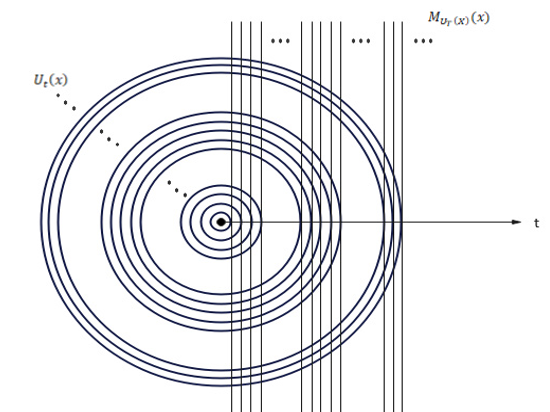
Figure 1: Actual Universe and Cognitive Universe
Figure 2 depicts the ongoing expansion of the universe, similar to continuously pouring a set number of beads into a gradually widening Dalton board. The base of that Dalton board must have a layer of beads that forms the foundation and maintains space. This foundational layer is called as implicit mass, whereas the remaining beads that make up substances are called as explicit mass. The conversion capability of explicit mass into expanding space is referred to as energy. All substances must contribute mass to the expanding space.
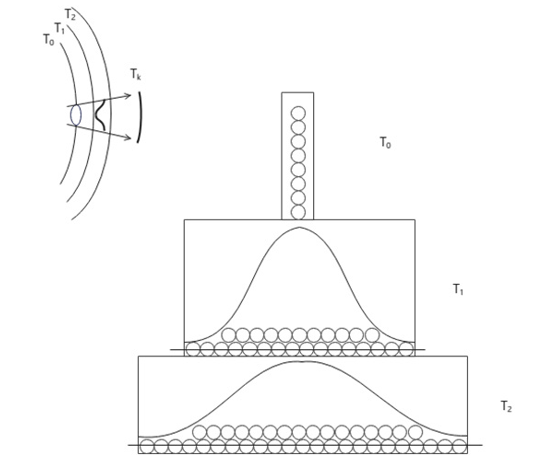
Figure 2: Transformation of Mass in An Expanding Universe.
In Figure 2, a mass without external energy support would disperse into space, losing its explicit mass. In contrast, Figure 3 shows that an object that absorbs additional energy retains its explicit mass. This extra energy fulfills the spatial expansion need, allowing the object to fit within a smaller Dalton plate than initially required.]
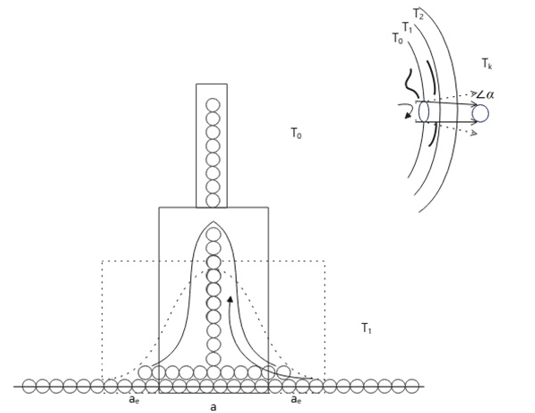
Figure 3: Object That Absorbs Additional Energy Retains Its Explicit Mass.
Explanation of Physical Phenomena
Spin and Charge Properties
Expanding the view to two-dimensional and three-dimensional spaces, filling the newly expanded space inevitably leads to uneven diffusion around the edges. Imagine a Dalton plate in the shape of a cube rather than a cylinder; after expansion, the distribution in different directions is uneven. This is one reason particles typically have spin, with balance among different spin directions manifesting as different charge types. As shown in Figure 4, the uneven diffusion caused by the shape of the expansion requirement results in different diffusion for particles. The figures from left to right represent particles with two different charges and a neutral particle.
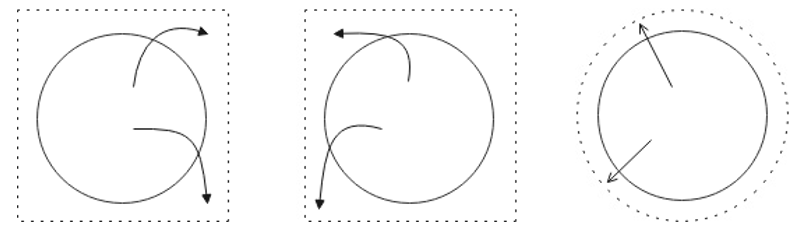
Figure 4: Different Expansion Requirement Shape
Figure 5 depicts attraction, where the expanding space requirement between two objects is shared, leading to the apparent convergence of their centers of mass. We can also say that the reason for the attraction is that the mass - specific contribution in the central part is lower than in other regions.
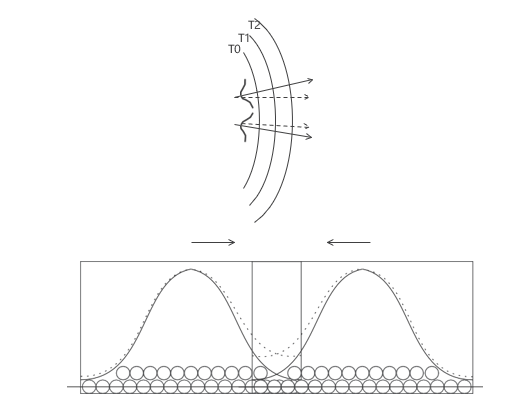
Figure 5: Explanation of Attraction
Figure 6 presents an extreme situation in which the mass - specific contribution in the middle amounts to zero.

Figure 6: Extreme Attraction
In Figure 7, objects a and b, with object b being more massive, undergo an extra mass transformation c at time T1. When the same amount of c is added, the force exerted on the Dalton board by a is greater. In the actual universe, this positional or angular change happens only once; it is the continuous expansion of the universe that appears as speed in the cognitive universe. This includes the variation in expansion speed in the cognitive universe due to this angle change. In the cognitive universe, the farther the distance, the faster the expansion.
Based on the explanation of charge properties, attraction, and motion, the essence of force lies in the redistribution of spatial expansion.
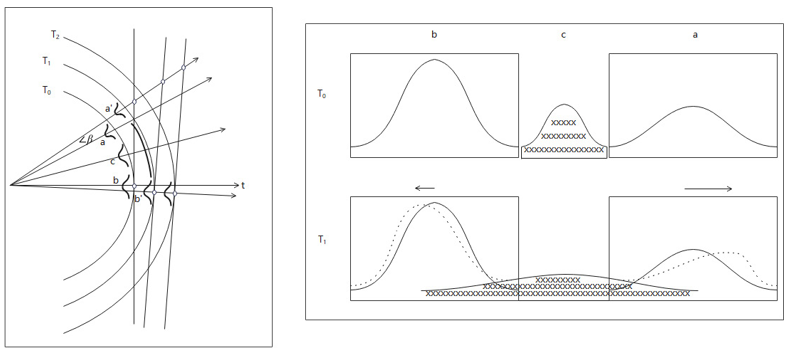
Figure 7: Explanation of Motion
Explanation of The Speed of Light
Figure 8 shows the accelerated expansion of the cognitive universe and the absolute but variable nature of the speed of light. The change at point a on the actual universe timeline T3 is perceived immediately upon reception by the cognitive universe T3 after being received. However, in the cognitive universe, it is believed that the change at point a occurs on the time line T0, leading to the conclusion of a finite maximum speed, the speed of light. In the cognitive universe, the speed of light is C = 
In the upper part of Fig.8, the speeds between the three points are also c, meaning that objects moving at the speed of light in the Cognitive universe, whether approaching or receding from each other, maintain a speed of c relative to each other which is the theory of the absolute speed of light. From different time points' in the upper part of Figure 8 it can be seen that the cognitive speed of light based on the same pair of points increases with the expansion of the universe or the extension of the timeline. From the two sets of points in the lower part of Figure 8, it can be observed that the cognitive speed of light based on different points increases as the distance decreases, which corresponds to Hubble's law [4].
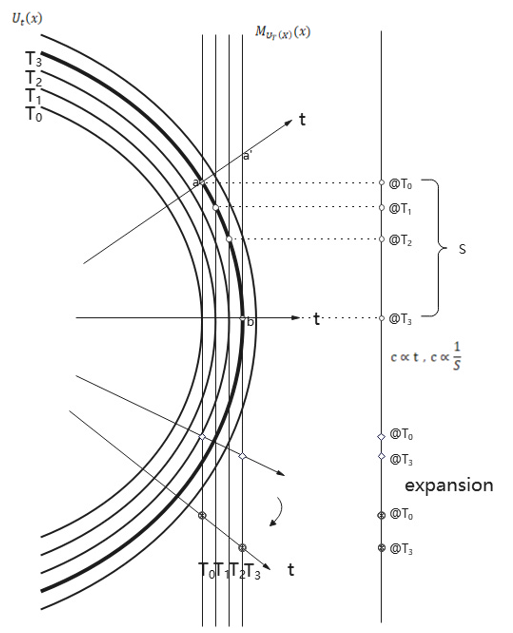
Figure 8: Speed of Light.
Hubble's Law
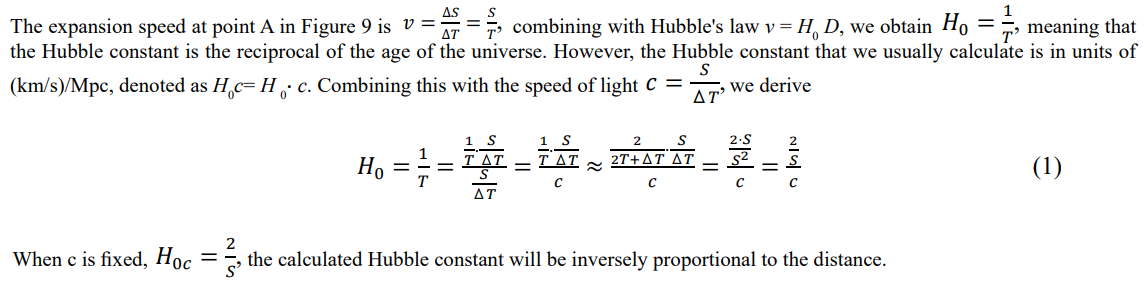

Figure 9: Hubble's Law.
Mass-Energy Equivalence Equation [5]
Figure 10 shows the formula E = mc2.
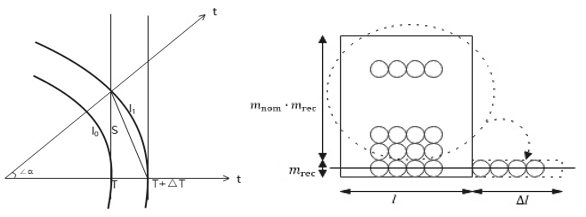
Figure 10: Formula E = mc2

where l is the substance occupied space, Δl is its expanding space, mrec is the implicit mass per space, mnom ⋅ mrec ⋅ l is the explicit mass of the substance. Energy can be interpreted as the ability to achieve spatial expansion. When Δl= mnom ⋅ l, E = 1, indicating that the explicit mass of the substance has been precisely converted to the required expanding space, it has no external influence.
Meaning of The Measured Speed of Light
The premise of observation is that the energy converted at the source end is greater 1.

mnomi is the normalized mass of the converted photon per unit time per unit space, and li is the photon space. Figure 11 shows the measured speed of light.

Within the proposed framework, Equation (6) demonstrates that measured light speed fundamentally represents the temporal derivative of normalized photon mass. This interpretation bridges classical electrodynamics and quantum field theoretic descriptions of photon interactions.
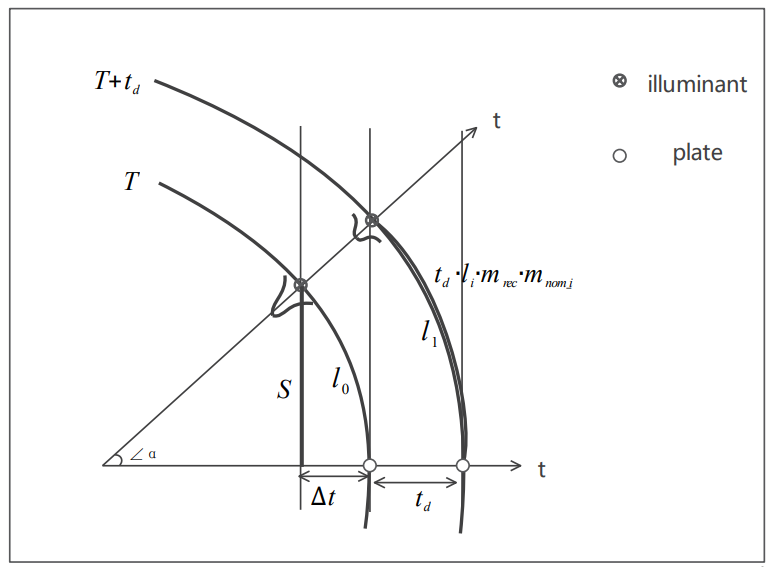
Figure. 11. The measured speed of light
Redshift and Blueshift Phenomenon [6,7]
The conversion of mass into space takes various forms, appearing as light with different wavelengths. In Figure 12, wavelengths gradually decrease from left to right. Represented by vectors, shorter wavelengths correspond to smaller angles with the relative direction and higher energy.
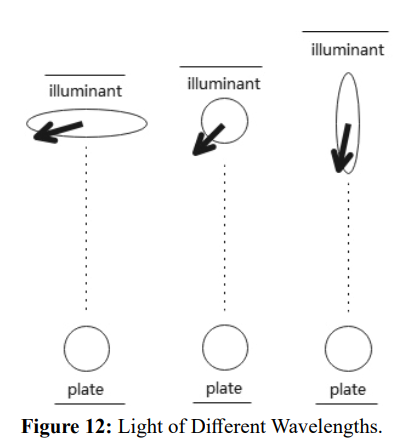
Figure. 12. Light of different wavelengt
Figure 13 illustrates the effect of source displacement in different directions on wavelength, known as redshift and blueshift phenomena.

Figure 13: Redshift and Blueshift Due to Motion.
Figure 14 shows the redshift and blueshift during expansion. The points B0 and B1 experience displacement due to gravitational effects, resulting in redshifts and blueshifts during expansion. Point C experiences a redshift due to interference from the opposite direction that causes displacement. Point A, despite expanding away, does not exhibit redshifts or blueshifts.
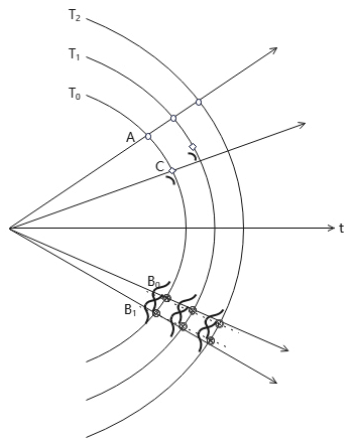
Figure. 14. Redshift and blueshift during expansion
Figure 15 and Figure 16 provide a detailed explanation of the cosmological redshift and blueshift observed.

Figure 15: Redshift and Blueshift Observed Under High-Mass Density.
Figure 15 demonstrates two observational phenomena when spatial expansion consumption is negligible, i.e. under high-mass density conditions. In case A, pure expansion does not cause redshift or blueshift. In case B, since there is typically an unobstructed path between observed celestial bodies and observation points, additional sources likely present near this path contribute to the horizontal component of spatial expansion, equivalent to a larger angle with the relative direction, detecting redshift. The longer the path, the higher the probability of surrounding extra energy, manifested as an observed redshift positively correlated with distance
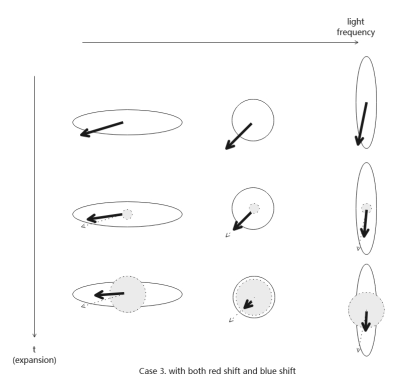
Figure 16: Redshift and Blueshift Observed Under Low-Mass Density
Figure 16 illustrates observational phenomena when spatial expansion consumption cannot be neglected, i.e. under low-mass density conditions. Because different directional expansion consumption is different, the transmitted energy varies, leading to an observed reduction in intermediate wavelengths and an increase at both ends.
Double-Slit Interference Phenomenon [8]
Figure 17 explains the double-slit interference experiment. Photons received by the T2 time imaging plate are considered to be emitted at the T0 timeline of the cognitive universe, whereas the actual universe only occurs up to the T2 timeline. Therefore, whether observation is introduced between T0 and T2 or between T1 and T2 makes no difference; the distinction lies in whether there is observation near the T2 timeline. Case A indicates no observation, Case B shows the observation stronger than the alteration, and Case C shows the observation weaker than the alteration. Observation alters the image rather than the light. Observation is achieved through feedback analysis, which includes applying detection, receiving feedback, and analyzing the feedback. The application of detection involves imposing a focusing disturbance on the image, which means investing in observational energy. If the observational energy is greater than the light energy, the image focuses on a point. If the observational energy is less than the light energy, the image retains more distributed characteristics.
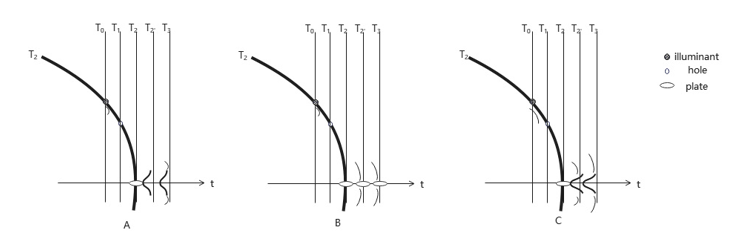
Figure 17: The Double-Slit Interference Experiment
Quantum Information
The transformation of explicit and implicit mass on the same timeline in the actual universe can be considered simultaneous. However, the relationship between this transformation and observational energy affects when the information can be read. Figure 18 and Figure 19 shows that quantum entanglement is a state where a pair of quantum entities remains in equilibrium with the observational energy. Because observational energy intervenes early and maintains balance, the instantaneous realization of the reading is deemed feasible. For example, in Figure 20, hunter A shoots an arrow at flying eagle B. Without any observational energy, the hunter releases the arrow at T1, and the eagle is hit at T3+. If the eagle continuously emits low-intensity observational energy, the 'hit by arrow expectation' information sent by the hunter at T1 is read by the eagle at T1, and then at T3+, it reads the 'hit by arrow' information, which includes the information that there was no additional interference from T1 to T3+. However, if the eagle continuously emits high-intensity energy, the hunter's 'hit by arrow expectation' information will not be read, as the eagle does not believe it will be hit. If the eagle emits high intensity energy from T1 to T3+, the 'hit by arrow expectation' information is read, but the 'hit by arrow' information fails. But if the eagle misjudges the hunter's shooting energy and the observational energy is less than the information energy, the information is still successfully read. For example, if the hunter replaces the bow and arrow with a laser cannon, it can be considered that the 'hit by arrow' information is also instantaneously read. However, if the eagle is instantly killed and does not emit observational energy, the 'hit by arrow' information will become a probability due to the expansion of universe. The main difference between quantum information and non-quantum information lies in the relationship between observational energy and information energy including intensity and intervention time.
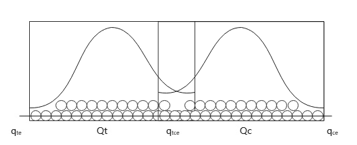
Figure 18: Quantum Entanglement.
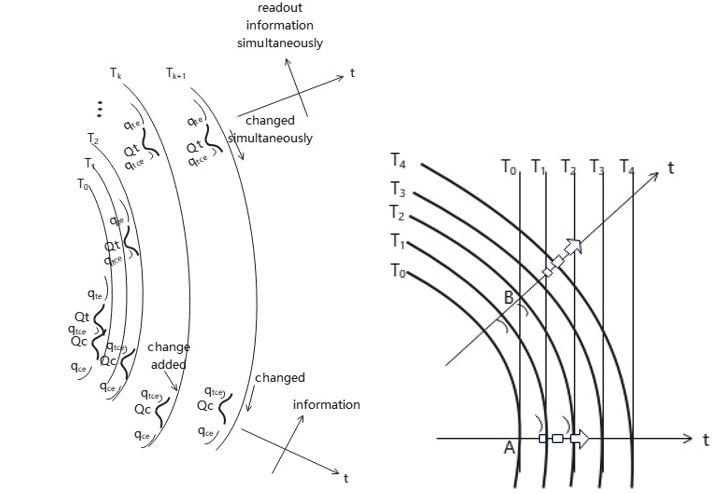
Figure 19: Quantum Information. Figure 20: Non-Quantum Information
Photoelectric Effect [9]
In this model, light is generated by redistributing objects based on spatial expansion back to the source. In multidimensional space, a vector angle between the source and the receptor represents the wavelength.
In Figure 21, electrons are compared in a convergent equilibrium state with a spinning gyroscope, redistribution affects them only if the angle relative to the center of the gyroscope is below a certain threshold. Different metals have different equilibrium for their electrons, similar to different gyroscopes, each with unique angular or frequency thresholds. Under conditions of extreme perturbation, this threshold frequency changes.
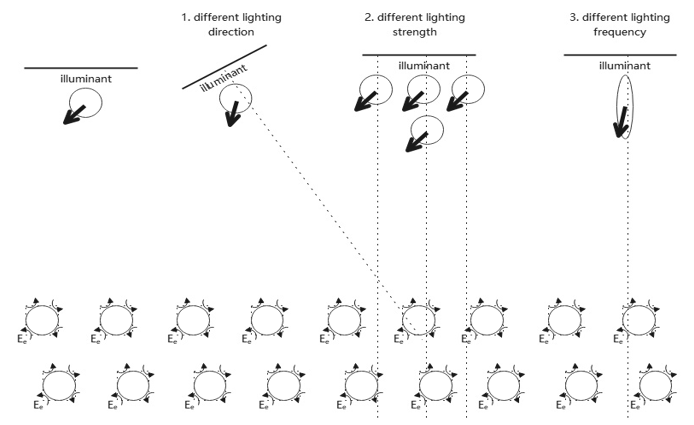
Figure 21: Photoelectric Effect — Direction, Intensity, And Frequency of Light.
Figure 22 shows that the interaction of light with metal is like two piles of beads being compressed downward, creating a small peak at the edges, with the probability increasing in the opposite direction of metal density, regardless of the light's direction.
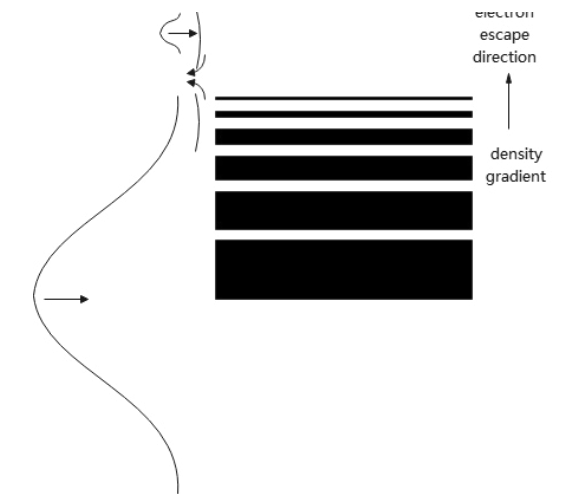
Figure 22: Photoelectric Effect — Direction, Intensity, And Frequency of Light
Other Phenomena
Figure 23 and Figure 24 depict quantum fluctuations [10] and repetitive cognition diagrams [11-13]. Quantum fluctuations occur when the implicit mass is expelled into explicit mass and then falls back into implicit mass with expansion. Repetitive cognition tends to occur over long distances. Point B in Figure 24 is easily perceived as a massive object composed of B, B', and B''.
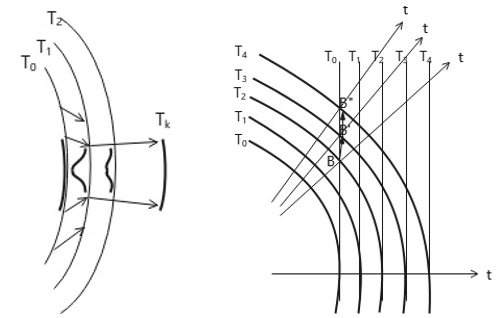
Figure 23: Quantum Fluctuation. Figure 24: Repetitive Cognition.
In the actual universe, the ratio of total explicit substance to space varies over time, leading to different requirements for the expansion of space for explicit substance at different times. Consequently, physical experiments are not time-translatable along the time axis. Since the actual universe is inhomogeneous, the distribution of space expansion requirements between any two points will never be exactly the same, making physical experiments non-translatable along the spatial axis as well. This phenomenon is known as parity non-conservation.
Speculations on A Higher-Level Universe
A uniformly expanding universe can be considered to have no information change and thus does not exist as an expansion. Therefore, if there is an expanding universe, then it must be an unevenly expanding one. The actual universe with observational energy must be unevenly expanding, and the observational energy is a manifestation of consciousness. It can be said that consciousness originates from the unevenness of the universe. Just like blowing a sugar figure attempting to shape a perfect sphere, one constantly adjusts and blows because one always finds uneven spots. If we equate non-uniformity with generalized consciousness, then the existing substance inherently possesses consciousness, and the existence of consciousness inherently has substance.
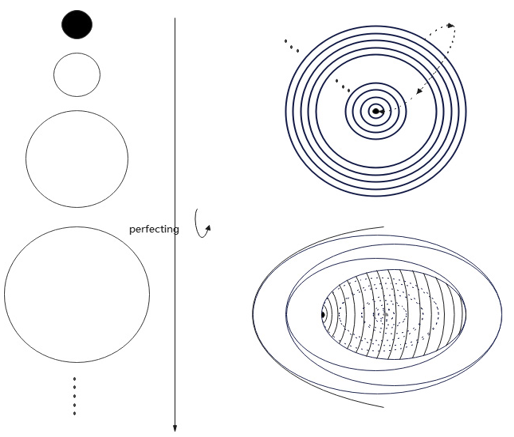
Figure 25: Higher-Level Universe.
Figure 25 presents a conjecture of a higher-level universe. The initial impetus of the universe is the pursuit of uniform perfection, which is referred to as the Perfecting Cosmological Model.
References
- Friedman, A. (1922). Über die krümmung des raumes. Zeitschrift für Physik, 10(1), 377-386.
- Guth, A. H. (1981). Inflationary universe: A possible solution to the horizon and flatness problems. Physical Review D, 23(2), 347.
- Linde, A. D. (1982). A new inflationary universe scenario: a possible solution of the horizon, flatness, homogeneity, isotropy andprimordial monopole problems. Physics Letters B, 108(6), 389-393.
- Hubble, E. (1929). A relation between distance and radial velocity among extra-galactic nebulae. Proceedings of the national academy of sciences, 15(3), 168-173.
- Einstein, A. (1905). Does the inertia of a body depend on its energy content? (Original work: Ist die Trägheit eines Körpers von seinem Energieinhalt abhängig?, Annalen der Physik, 323(18), 639–641). In Einstein’s Miraculous Year (Princeton University Press, 1998).
- Doppler, C. (1842). On the coloured light of the double stars and certain other stars of the heavens. Proceedings of the Royal Bohemian Society of Sciences, 2, 103.
- Dashtdar, M., & Tavassoly, M. T. (2009). Redshift and blueshift in the spectra of lights coherently and diffusely scattered fromrandom rough interfaces. Journal of the Optical Society of America A, 26(10), 2134-2138.
- Young, T. (1807). A course of lectures on natural philosophy and the mechanical arts: in two volumes (Vol. 2). Johnson.
- Einstein, A. (1905). Concerning an heuristic point of view toward the emission and transformation of light. Annalen der Physik, 17, 132–148.
- Tryon, E. P. (1973). Is the universe a vacuum fluctuation?. Nature, 246(5433), 396-397.
- Gott, J. R. (2016). A slice of the universe—the Great Wall of Geller and Huchra. In The cosmic web: Mysterious architecture of the universe (pp. 135–143). Princeton University Press.
- Einasto, M., Liivamägi, L. J., Tempel, E., Saar, E., Tago, E., Einasto, P., ... & Nurmi, P. (2011). The Sloan great wall. Morphology and galaxy content. The Astrophysical Journal, 736(1), 51.
- Horváth, I., Bagoly, Z., Hakkila, J., & Tóth, L. V. (2015). New data support the existence of the Hercules-Corona Borealis Great Wall. Astronomy & Astrophysics, 584, A48.