

Current Research in Environmental Science and Ecology Letters(CRESEL)
ISSN: 2997-3694 | DOI: 10.33140/CRESEL

Review Article - (2025) Volume 2, Issue 1
The Effects of Climate Change on Agricultural Sustainability in Somalia
2Department of Plant Protection, Faculty of Agriculture, Selcuk University 42250 Campus, Turkey
Received Date: Oct 07, 2025 / Accepted Date: Oct 27, 2025 / Published Date: Nov 05, 2025
Copyright: ©Â©2025 Ibrahim Isse Ali, et al. This is an open-access article distributed under the terms of the Creative Commons Attribution License, which permits unrestricted use, distribution, and reproduction in any medium, provided the original author and source are credited.
Citation: Mohamednur, A. M., Ali, I. I. (2025). The Effects of Climate Change on Agricultural Sustainability in Somalia. Curr Res Env Sci Eco Letters, 2(1), 01-08.
Abstract
Securing agricultural sustainability and food security is a major significant challenge facing developed and undeveloped countries. Rising temperatures, changing precipitation patterns, sea level rise, ocean acidification, and increased extreme weather events, which are climate change properties, are the main barriers to achieving them. This study investigates the perceived effects of climate change on agricultural sustainability in Somalia through a survey approach. The survey targets farmers, students, environmental researchers, and academicians related to agriculture fields. It aims to assess how farmers perceive changes in temperature, rainfall patterns, and drought frequency and how these changes affect agricultural practices, crop yields, and overall farm productivity. The survey also explores farmers' knowledge of climate change and their current adaptation strategies. Descriptive statistics were statistical techniques employed for this study and analysed using SPSS (version 25). According to the results, 80.4%, 75%, and 70% of the respondents strongly declared that changes in rain patterns, increasing temperature, and less water available for irrigation, respectively, existed in recent years in Somalia. These changes not only affected agriculture but also livestock production, as agreed by 71.4% of the participants. Ultimately, this study highlights key strategies that can be implemented for achieving agricultural sustainability in the face of climate change.
Keywords
Agricultural Sustainability, Climate Change, Environmental Challenges, Somalia
Introduction
Agricultural sustainability refers to methods that fulfill the com- munity's current food and fiber requirements without compromis- ing future generations' capacity to meet their needs. Agricultural sustainability is the vice versa of conventional farming, which re- lies heavily on high input, synthetic chemical pesticides, mechani- zation, extensive land use, and monoculture farming and often pri- oritizes quantity over quality [1-4]. It encompasses environmental, economic, and social dimensions, which are the three main keys to ensuring long-term agricultural viability, reducing reliance on syn- thetic fertilizers and pesticides, protecting natural resources, and increasing production [5-7]. Integrated pest management (IPM), crop rotation, biodiversity conservation, polyculture, sustainable livestock farming, and use of renewable energy are primary prin- ciples of Agricultural sustainability [8-13]. Agricultural sustain- ability is an essential pathway to achieving global food security but faces many problems including soil degradation, depletion of nutrients, water scarcity, and loss of pollinators and beneficial in- sects [14-19]. Climate change is the biggest obstacle contributing to the above challenges by intensifying droughts, floods, and ex- treme weather events. Consequently, this can lead to crop failures, livestock death, increased pest problems, and lower yields, which harm sustainable agriculture in the long run [20-23].

Figure 1: Effects of Climate Change on Agricultural Production through Direct, Indirect, and Socioeconomic Means [24]
Globally, climate change directly influences cereal crops and le- gume yield through water and heat stresses and indirectly affects pests, rise in sea level, irrigation and fertilizer availability, and pathogens, as shown in Figure 1 [24,25]. In Africa, agriculture rep- resents 30-40% of the GDP and is the primary economic activity of more than 70% of the poorest individuals on the continent [26- 28]. There are significant concerns regarding agriculture in Africa, even in the absence of climate change, due to conflict, degraded soil, and irregular water supplies [29-31]. Over three decades have seen a rise in the severity and frequency of floods and droughts. For example, the Sahelian drought was a series of droughts that hit the Sahel region of Africa, stretching from West Africa to Ethiopia [8]. Due to this drought, millions of animals and nearly 300,000 people died [32,33]. Several African countries are experiencing more frequent droughts and floods, which are increasingly nega- tively impacting the population [34].
The agricultural sector in Somalia continues to be the foundation of the nation's economy, accounting for over 75% of the GDP and 93% of all earnings from exports [35]. However, several political, economic, and environmental barriers hinder the development of a strong agriculture sector [36-38]. Additionally, Somalia is one of the world's most vulnerable countries to climate change. The agricultural production of Somalia is negatively impacted by the rising temperatures. In addition to decreasing soil moisture and increasing evaporation, it also results in drier weather and rain fail- ures. This would ultimately result in less water being available for irrigation, which would further significantly reduce the yield of crops [39,40]. In recent years, due to recurrent floods and droughts that reduce crop productivity, damage property, and uproot house- holds, a quarter of Somalia’s population (4.3 million people) is in danger of “crisis-level hunger or worse” [41-43]. This research aims to evaluate the effects of climate change on agricultural sus-tainability in Somalia. Additionally, we declare the distribution of perceptual statements of climate change impacts through qualitative and quantitative methodologies. Finally, we examined the best solutions to Somalia's climate change challenges.
Materials & Methods
Study Design and Area
The research was designed as a descriptive study that utilizes quantitative data to explore the effects of climate change (rainfall decrease, temperature increase, and recurring floods) on agricul- tural sustainability in Somalia, providing a snapshot of current conditions and perceptions. Structured questionnaires, which are a classic and widely used method for data collection, were employed to gather information on the population's knowledge, opinions, be- haviours, and other details [44,45].
Population and Sample
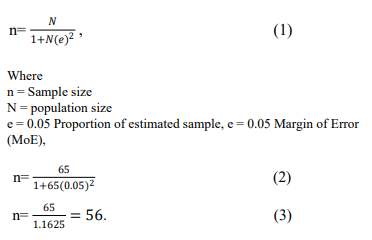
The survey targeted local farmers, agricultural experts, students, environmental activists, and residents significantly impacted by climate change, with a research population of 65 people. To ensure representation across demographics such as gender, age, marital status, and occupation, the study group was chosen through a ran- dom selection process from the population. Three different factors were taken into consideration to determine the sample size. Firstly, the intended confidence level (95%), followed by the sample's estimated proportion, and lastly, the margin of error. 56 participants in total were surveyed using Yamane's sample size formula [46].
The data collected through this study was analysed using the Statistical Package for Social Sciences (SPSS) version 25. To ensure ethical considerations were addressed, informed consent was obtained from all participants.
Results & Discussion
The demographic data of the fifty-six (56) participants is shown in Figure 2. 71.4% of the respondents were male, while 28.6% were females. In marital status, most of the respondents were single (42.9%), compared to 35.7% and 21.4% for married and divorced respondents, respectively. Among the respondents, the largest group were those with graduate (42.9%) and non-formal (25.0%) qualifications. Secondary (17.9%) and primary (14.2%) qualifications represent the smallest groups. Additionally, 42.9% of participants fell within the 18-25 age range, followed by 25.0% between 26-33, 17.8% between 34-44, and 14.3% over 50 years old.
Figure 2: Demographic Profile of the Participants
In this study, researchers surveyed students (28.6%), farmers (35.7%), researchers/academician (25.0%), and unemployed individuals (10.7%).
|
Variable |
n |
% |
|
Have you observed any recent changes in the patterns of rainfall in Somalia? |
||
|
Yes |
45 |
80.4 |
|
No |
11 |
19.6 |
|
Total |
56 |
100.0 |
|
As you have observed, has the temperature increased in Somalia? |
||
|
Yes |
42 |
75 |
|
No |
14 |
25 |
|
Total |
56 |
100.0 |
|
Is there less water available in Somalia for irrigation because of climate change? |
||
|
Yes |
39 |
70 |
|
No |
17 |
30 |
|
Total |
56 |
100.0 |
Table 1: People’s Perceptions of Climate Change
According to the people’s perceptions of climate change, as illustrated in Table 1, a significant majority of respondents (80.4%) have observed the changes in the patterns of rainfall in Somalia, while a smaller percentage (19.6%) reported that they have not observed any changes in rainfall patterns in Somalia. Three-quarters of the participants (75%) expressed that temperatures have increased in Somalia in recent years. Various studies have expressed the existence of decreasing rainfall and rising temperatures in Somalia [47-50]. A 2023 survey in Somalia highlighted changes in rainfall patterns and temperature. 63% of respondents reported experiencing irregular rainfall, while 65% indicated increasing temperatures [51]. In Somalia, climate change has not only led to observed changes in temperature and rainfall, but it has also caused a significant increase in water scarcity for irrigation [52-54]. 70% of the respondents also strongly supported that there is less water availability for irrigation, which can be devastating for agricultural production, potentially leading to food insecurity and malnutrition [55-57]. Additionally, due to climate change, agricultural intensification, and urbanization, the degradation of freshwater and the rise in water demand have become major concerns, particularly in areas already experiencing water stress [58,59].
|
Variable |
n |
% |
|
Rising temperatures, floods, and droughts typically impact agricultural activities |
||
|
Agree |
38 |
67.8 |
|
Disagree |
10 |
17.9 |
|
Neutral |
8 |
14.3 |
|
Total |
56 |
100.0 |
|
Climate change not only damages agriculture but also livestock production |
||
|
Agree |
40 |
71.4 |
|
Disagree |
8 |
14.3 |
|
Neutral |
8 |
14.3 |
|
Total |
56 |
100.0 |
|
Agricultural instability in Somalia is largely caused by land degradation, deforestation, and drought, which climate change makes more severe |
||
|
Agree |
34 |
60.7 |
|
Disagree |
12 |
21.4 |
|
Neutral |
10 |
17.9 |
|
Total |
56 |
100.0 |
|
Using organic farming techniques in Somalia can improve soil health and resilience to climate change |
||
|
Agree |
36 |
64.2 |
|
Disagree |
10 |
17.9 |
|
Neutral |
10 |
17.9 |
|
Total |
56 |
100.0 |
Table 2: Distribution of Perceptual Statements of Climate Change Impacts
Climate change can cause soil degradation, deforestation, salini- zation, pollution from fertilizers and pesticides, and the reduction of pollinators, which in turn impact agricultural activities and production [60-63]. Additionally, as 67.9% of participants in the survey agreed, rising temperatures, floods, and droughts typically impact agricultural activities. Livestock not only provides us with essential food sources like meat, milk, and eggs, but also gives us valuable resources like wool, leather, and manure, and even helps with tasks like plowing and transportation [64,65]. Howev- er, climate change is a major threat to this century and damages it worldwide. In Somalia, 71.4% of respondents agreed it's a prob- lem. The remaining respondents had differing views, with 14.3% disagreeing and 14.3% remaining neutral. A study conducted in 2022 also emphasized that climatic effects hinder the production of livestock in Somalia [66]. Over half of the participants (60.7%) agreed that land degradation, deforestation, and drought, all of which are made severe by climate change, are major contributors to agricultural instability in Somalia. The remaining participants were divided, with 21.4% disagreeing and 17.9% offering a neu- tral response. Previous studies have highlighted how deforestation, drought, floods, agricultural land expansion, and land degradation contribute to agricultural instability in developed and developing countries [67-72].
|
Variable |
n |
% |
|
What is the most common consequence of climate change in Somalia? |
||
|
Crop failure |
34 |
60.7 |
|
Livestock death |
14 |
25.0 |
|
Increased pest problems |
8 |
14.3 |
|
Total |
56 |
100.0 |
|
What factors contribute to soil erosion and food insecurity in Somalia? |
||
|
Deforestation |
26 |
46.4 |
|
Drought |
22 |
39.3 |
|
Overgrazing |
8 |
14.3 |
|
Total |
56 |
100.0 |
|
What is the best solution to climate change to achieve agricultural sustainability and food security in Somalia? |
||
|
Expanding climate-smart agriculture |
26 |
46.4 |
|
Enhancing market access for sustainable agriculture 16 28.6 Investing in Early Warning Systems 14 25.0 Total 56 100.0 |
Table 3: Climate Change Challenges and Solutions in Somalia
Climate change is the primary factor affecting agricultural sus- tainability in Somalia. More than half of the participants (60.7%) identified crop failure as the most common consequence of climate change in Somalia, followed by livestock death (25.0%) and in- creased pest problems (14.3%). The USA and China, the largest agricultural crop producers, have seen increased crop failures be- cause of climate change [73,74]. Sub-Saharan countries, including Somalia, Ethiopia, Kenya, and South Sudan, are also experiencing the impacts of climate change on their agricultural production [75- 79]. Soil erosion is a global concern caused by climate change. It contributes to food insecurity and agricultural instability in many areas. Many factors accelerate soil erosion, such as deforestation, recurrent droughts, and overgrazing. Our study found that 46.4% of respondents declared deforestation as the most significant con- tributor to soil erosion. Drought (39.3%) and overgrazing (14.3%) were also recognized as major factors.
In this survey, solutions to climate change for achieving agricul- tural sustainability and food security in Somalia found that 46.4% of respondents recommended expanding climate-smart agriculture as the best solution. Enhancing market access for sustainable agri- culture and investing in early warning systems were also identified as important measures, suggested by 28.6% and 25.0% of partici- pants, respectively. As shown in Table 2, more than half of the par- ticipants (64.3%) agreed that adopting organic farming techniques in Somalia can improve soil health and strengthen resilience to climate change. According to Ali. I. I. [80], agroecology represents one of the key approaches to achieving food security by reducing dependence on chemical inputs, preserving biodiversity, promot- ing diverse cropping systems, improving soil health, and ensuring better water management. This approach is increasingly being ad- opted in developing countries, including Somalia, to promote food security and agricultural sustainability.
Conclusion
Somali agriculture and livestock production are heavily affect- ed by climate change. Rising temperatures, recurrent floods, and increased frequency of droughts pose a significant threat to food security and rural livelihoods. This study combines qualitative and quantitative research methods to explain the severe effects of climate change on agricultural sustainability in Somalia. Our study highlighted a concerning pattern of rising temperatures and decreasing precipitation. This combination leads to increased evaporation, reducing soil moisture. Consequently, less water is available for irrigation, potentially causing significant reductions in crop yields and livestock production. Solving all these issues takes more time, but it is mandatory to do so rapidly through or- ganic practices like composting and cover cropping, which in- crease organic matter in the soil. This acts like a sponge, holding more water and reducing evaporation during dry periods, which is crucial in Somalia's arid climate. Additionally, it reduces reli- ance on chemical fertilizers and improves soil structure, promot- ing healthy microbial populations that contribute to long-term soil fertility. Implementing and expanding climate-smart agriculture is crucial in adapting to climate change problems, as agreed by near- ly half (46.4%) of respondents in this survey. Enhancing market access for sustainable agriculture can facilitate adaptation to cli- mate change challenges while investing in early warning systems can strengthen resilience. Promoting sustainable land management practices, sowing drought-resistant crop varieties, investing in wa- ter-efficient irrigation systems, and encouraging diversification of agricultural activities can also mitigate major climate change is- sues. Finally, we recommend that future researchers conduct com- prehensive studies related to flood and drought solutions, which are the most exacerbated factors of agricultural sustainability and food security in Somalia.
Author Contributions
Each author contributed to different aspects of the study, such as conceptualization, design, data collection, investigation, analysis, reviewing, and editing. All authors have reviewed the results and approved the final version of the manuscript.
Data Availability
Data used to support the findings of this study are available from the corresponding author upon request.
References
- Aslam, W., Shahzad Noor, R., Ullah, S., & Chen, H. (2020). Comparative economic analysis of crop yield under organic and conventional farming systems in Punjab, Pakistan. Asian Journal of Agriculture and Biology, 8(2).
- Dantsis, T., Loumou, A., & Giourga, C. (2009). Organic agriculture’s approach towards sustainability; its relationship with the agro-industrial complex, a case study in Central Macedonia, Greece. Journal of Agricultural and Environmental Ethics, 22(3), 197-216.
- Mäder, P., Edenhofer, S., Boller, T., Wiemken, A., & Niggli,U. (2000). Arbuscular mycorrhizae in a long-term field trial comparing low-input (organic, biological) and high-input (conventional) farming systems in a crop rotation. Biology and fertility of Soils, 31(2), 150-156.
- Å?rednicka-Tober, D., ObiedziÅ?ska, A., Kazimierczak, R., & RembiaÅ?kowska, E. (2016). Environmental impact of organic vs. conventional agriculture-a review. Journal of Research and Applications in Agricultural Engineering, 61(4), 204-211.
- Dönmez, D., Isak, M. A., Ä°zgü, T., & Å?imÅ?ek, Ö. (2024). Green horizons: navigating the future of agriculture through sustainable practices. Sustainability, 16(8), 3505.
- Bathaei, A., & ŠtreimikienÄ?, D. (2023). A systematic review of agricultural sustainability indicators. Agriculture, 13(2), 241.
- Sahraei, S., Pakravan-Charvadeh, M. R., Gholamrezai, S., & Rahimian, M. (2022). Assessing the association of sustainable agriculture with rural household food security (considering ecological, economic, and social aspects). Frontiers in Nutrition, 9, 899427.
- Pretty, J., & Pervez Bharucha, Z. (2015). Integrated pest management for sustainable intensification of agriculture in Asia and Africa. Insects, 6(1), 152-182.
- Shah, K. K., Modi, B., Pandey, H. P., Subedi, A., Aryal, G., Pandey, M., & Shrestha, J. (2021). Diversified crop rotation: an approach for sustainable agriculture production. Advances in Agriculture, 2021(1), 8924087.
- Scherr, S. J., & McNeely, J.A. (2008). Biodiversity conservation and agricultural sustainability: towards a new paradigm of ‘ecoagriculture’landscapes. Philosophical Transactions of the Royal Society B: Biological Sciences, 363(1491), 477-494.
- Adamczewska-SowiÅ?ska, K., & SowiÅ?ski, J. (2019). Polyculture management: A crucial system for sustainable agriculture development. In Soil Health Restoration and Management (pp. 279-319). Singapore: Springer Singapore.
- Lebacq, T., Baret, P. V., & Stilmant, D. (2013). Sustainability indicators for livestock farming. A review. Agronomy for sustainable development, 33(2), 311-327.
- Chel, A., & Kaushik, G. (2011). Renewable energy for sustainable agriculture. Agronomy for sustainable development, 31(1), 91-118.
- Viana, C. M., Freire, D., Abrantes, P., Rocha, J., & Pereira, P. (2022). Agricultural land systems importance for supporting food security and sustainable development goals: A systematic review. Science of the total environment, 806, 150718.
- Arora, N. K. (2018). Agricultural sustainability and food security. Environmental Sustainability, 1(3), 217-219.
- Maleksaeidi, H., Jalali, M., & Eskandari, F. (2021). Challenges threatening agricultural sustainability in the West of Iran: viewpoint of agricultural experts. Sustainability, 13(6), 3537.
- Singh, R., Singh, H., & Raghubanshi, A. S. (2019). Challenges and opportunities for agricultural sustainability in changing climate scenarios: a perspective on Indian agriculture. Tropical Ecology, 60(2), 167-185.
- Kevan, P. G., Clark, E. A., & Thomas, V. G. (1990). Insect pollinators and sustainable agriculture. American Journal of Alternative Agriculture, 5(1), 13-22.
- Falkenmark, M. (2013). Growing water scarcity in agriculture: future challenge to global water security. Philosophical Transactions of the Royal Society A: Mathematical, Physical and Engineering Sciences, 371(2002), 20120410.
- Goulart, H. M., Van Der Wiel, K., Folberth, C., Balkovic, J., & Van Den Hurk, B. (2021). Weather-induced crop failure events under climate change: a storyline approach. Earth Syst. Dyn, 12, 1503-1527.
- Cheng, M., McCarl, B., & Fei, C. (2022). Climate change and livestock production: a literature review. Atmosphere, 13(1), 140.
- SkendžiÄ?, S., Zovko, M., ŽivkoviÄ?, I. P., LešiÄ?, V., & LemiÄ?, D. (2021). The impact of climate change on agricultural insect pests. Insects, 12(5), 440.
- Wang, J., Vanga, S. K., Saxena, R., Orsat, V., & Raghavan, V. (2018). Effect of climate change on the yield of cereal crops: A review. Climate, 6(2), 41.
- Raza, A., Razzaq, A., Mehmood, S. S., Zou, X., Zhang, X., Lv, Y., & Xu, J. (2019). Impact of climate change on crops adaptation and strategies to tackle its outcome: A review. Plants, 8(2), 34.
- Porter, J., Xie, L., Challinor, A. J., Howden, M., Iqbal, M. M., Lobell, D. B., & Travasso, M. I. (2014). Food security and food production systems.
- Mondiale, B. (2013). Unlocking Africa’s Agricultural Potential. Washington, DC: World Bank. World Bank. Natural Resources Institute. Washington, DC.
- Cleaver, K. M., Donovan, W. G., & Mundial, B. (1995). Agriculture, poverty, and policy reform in Sub- Saharan Africa (Vol. 280, p. 49). Washington, DC: World Bank.
- Brooks, K., Zorya, S., Gautam, A., & Goyal, A. (2013). Agriculture as a sector of opportunity for young people in Africa. World Bank Policy Research Working Paper, (6473).
- Nchuchuwe, F. F., & Adejuwon, K. D. (2012). The challenges of agriculture and rural development in Africa: the case of Nigeria. International Journal of Academic Research in Progressive Education and Development, 1(3), 45-61.
- Banson, K. E., Nguyen, N. C., & Bosch, O. J. (2016). Systemic management to address the challenges facing the performance of agriculture in Africa: case study in Ghana. Systems Research and Behavioral Science, 33(4), 544-574.
- Mwaniki, A. (2006). Achieving food security in Africa: Challenges and issues. UN Ofice of the Special Advisor on Africa (OSAA).
- Epule, E. T., Peng, C., Lepage, L., & Chen, Z. (2014). The causes, effects and challenges of Sahelian droughts: a critical review. Regional environmental change, 14(1), 145-156.
- Fields, S. (2005). Continental divide: why Africa’s climate change burden is greater.
- Ringius, L., Downing, T., Hulme, M., Waughray, D., & Selrod, R. (1996). Climate change in Africa: issues and challenges in agriculture and water for sustainable development. Cicero report.
- MEMORANDUM, C. E. Rebuilding Resilient and Sustainable Agriculture in Somalia.
- Warsame, A. A., Mohamed, J., & Mohamed, A. A. (2023). The relationship between environmental degradation, agricultural crops, and livestock production in Somalia. Environmental Science and Pollution Research, 30(3), 7825-7835.
- Mohamed, A. A., & Nageye, A. I. (2021). Measuring the effect of land degradation and environmental changes on agricultural production in Somalia with two structural breaks. Management of Environmental Quality: An International Journal, 32(2), 160-174.
- Ali, I. I., & Ahmed, A. H. (2024). Agricultural Supply Chains: Challenges and Opportunities for Agribusiness in Afgoye, Lower Shabelle, Somalia. Scientific Research Communications, 4(2).
- Warsame, A. A., Sheik-Ali, I. A., Ali, A. O., & Sarkodie, S. A. (2021). Climate change and crop production nexus in Somalia: an empirical evidence from ARDL technique. Environmental Science and Pollution Research, 28(16), 19838-19850.
- Abdi, A. H., Sugow, M. O., & Halane, D. R. (2024). Exploring climate change resilience of major crops in Somalia: implications for ensuring food security. International Journal of Agricultural Sustainability, 22(1), 2338030.
- Nations, U. Floods Hit Somalis Recovering from Prolonged Drought, 2023.
- Meeking, E. J. (2013). A Study of Climate Change Induced Migration in Somalia. E International Students.
- Said, M. A., & Hassan, A. (2024). Advanced assessment of socioeconomic impacts resulting from flooding: A case study of Beledweyne, Hiran, Somalia. Journal of Earth & Environmental Waste Management, 2(2), 1-9.
- Yaddanapudi, S., & Yaddanapudi, L. N. (2019). How to design a questionnaire. Indian journal of anaesthesia, 63(5), 335-337.
- Dalati, S., & Marx Gómez, J. (2018). Surveys and questionnaires. In Modernizing the Academic Teaching and Research Environment: Methodologies and Cases in Business Research (pp. 175-186). Cham: Springer International Publishing.
- Yamane, T. (1973). Statistics: An introductory analysis.
- Ogallo, L. A., Ouma, G., & Omondi, P. (2017). Changes in rainfall and surface temperature over lower Jubba, Somalia. Journal of Climate, 1(2), 1-10.
- Ogallo, L. A., Omondi, P., Ouma, G., & Wayumba, G. (2018). Climate change projections and the associated potential impacts for Somalia.
- Rees, D. J., Omar, A. M., & Rodol, O. (1991). Implications of the rainfall climate of southern Somalia for semi- mechanized rain-fed crop production. Agricultural and forest meteorology, 56(1-2), 21-33.
- Billi, P. (2022). Climate variability in the Horn of Africa eastern countries: Eritrea, Djibouti, Somalia. In Landscapes and landforms of the horn of Africa: Eritrea, Djibouti, Somalia (pp. 1-39). Cham: Springer International Publishing.
- Said, M., & Bashir, A. (2023). Analysis of climate change impacts on food security in Somalia. International Journal of Media and Networks, 1(1), 101-107.
- Mohamed, D. (2022). The Impact of Water Scarcity on Rural Livelihoods in Belet Hawo County, Somalia (Doctoral dissertation, University of Nairobi).
- Sharmarke, A. M. (2018). Assessing the impact of water scarcity on agriculture productivity: A case study of Gabiley District, Somalia (Doctoral dissertation, Kampala International University).
- Ali, A. M., Adam, A. M., Said Abdullahi, A., Yusuf, A. M., & Osman, Y. A. (2024). Climate change adaptation and integrated water resource management in the water sector, Mogadishu-Somalia. Int Res J Eng Technol.
- Abdullahi, A. A., & Arısoy, H. (2022). Agricultural structure in Somalia. Eurasian Journal of Agricultural Economics (EJAE), 2(1), 1-14.
- Omar, A. A. (2018). Assessment of irrigation water supply losses in major irrigation canals in Bal’ad District of Middle Shabelle Region in Somalia (Doctoral dissertation, university of nairobi).
- Chakkaravarthy, D. N., & Balakrishnan, T. (2019). Water scarcity-challenging the future. International Journal of agriculture, environment and Biotechnology, 12(3), 187-193.
- Saraiva, A., Presumido, P., Silvestre, J., Feliciano, M., Rodrigues, G., Silva, P. O. E., ... & Oliveira, M. (2020). Water footprint sustainability as a tool to address climate change in the wine sector: A methodological approach applied to a Portuguese case study. Atmosphere, 11(9), 934.
- Saraiva, A., Rodrigues, G., Mamede, H., Silvestre, J., Dias, I., Feliciano, M., ... & Oliveira, M. (2019). The impact of the winery's wastewater treatment system on the winery water footprint. Water Science and Technology, 80(10), 1823-1831.
- Ali, I. I., Ahmed, I. A., Kheire, A. M., Abdi, A. W. M., Hassan, I. A., Ibrahim, I. A., ... & Abdullahi, Y. M. (2024). Comparative study of the effects of organic and inorganic fertilizers on the growth and yield of onion (Allium cepa L.) in Somalia. International Journal of Agricultural and Natural Sciences, 17(1), 100-110.
- Malhi, Y., Roberts, J. T., Betts, R. A., Killeen, T. J., Li, W., & Nobre, C. A. (2008). Climate change, deforestation, and the fate of the Amazon. science, 319(5860), 169-172.
- Jeppesen, E., BeklioÄ?lu, M., Özkan, K., & Akyürek, Z. (2020). Salinization increase due to climate change will have substantial negative effects on inland waters: a call for multifaceted research at the local and global scale. The Innovation, 1(2).
- Oppenheimer, M. (1989). Climate change and environmental pollution: physical and biological interactions. Climatic Change, 15(1), 255-270.
- Kaasschieter, G. A., De Jong, R., Schiere, J. B., & Zwart, D. (1992). Towards a sustainable livestock production in developing countries and the importance of animal health strategy therein. Veterinary Quarterly, 14(2), 66-75.
- Devendra, C., & Thomas, D. (2002). Crop–animal systems in Asia: importance of livestock and characterisation of agro- ecological zones. Agricultural systems, 71(1-2), 5-15.
- Warsame, A. A., Sheik-Ali, I. A., Hassan, A. A., & Sarkodie, S. A. (2022). Extreme climatic effects hamper livestock production in Somalia. Environmental Science and Pollution Research, 29(27), 40755-40767.
- Azare, I. M., Abdullahi, M. S., Adebayo, A. A., Dantata, I. J., & Duala, T. (2020). Deforestation, desert encroachment, climate change and agricultural production in the Sudano- Sahelian Region of Nigeria. Journal of Applied Sciences and Environmental Management, 24(1), 127-132.
- Kong, R., Diepart, J. C., Castella, J. C., Lestrelin, G., Tivet, F., Belmain, E., & Bégué, A. (2019). Understanding the drivers of deforestation and agricultural transformations in the Northwestern uplands of Cambodia. Applied Geography, 102, 84-98.
- Liu, X., Zhu, X., Pan, Y., Li, S., Liu, Y., & Ma, Y. (2016).Agricultural drought monitoring: Progress, challenges, and prospects. Journal of Geographical Sciences, 26(6), 750-767.
- Banerjee, L. (2010). Effects of flood on agricultural productivity in Bangladesh. Oxford Development Studies, 38(3), 339-356.
- Barbier, E. B. (2004). Explaining agricultural land expansion and deforestation in developing countries. American Journal of Agricultural Economics, 86(5), 1347-1353.
- Megerssa, G. R., & Bekere, Y. B. (2019). Causes, consequences and coping strategies of land degradation: evidence from Ethiopia. Journal of Degraded and Mining Lands Management, 7(1), 1953.
- Challinor, A. J., Simelton, E. S., Fraser, E. D., Hemming, D., & Collins, M. (2010). Increased crop failure due to climate change: assessing adaptation options using models andsocio- economic data for wheat in China. Environmental Research Letters, 5(3), 034012.
- Kim, S. M., & Mendelsohn, R. (2023). Climate change to increase crop failure in US. Environmental Research Letters, 18(1), 014014.
- Warsame, A. A., Sheik-Ali, I. A., Jama, O. M., Hassan, A. A., & Barre, G. M. (2022). Assessing the effects of climate change and political instability on sorghum production: Empirical evidence from Somalia. Journal of Cleaner Production, 360, 131893.
- Wubie, A. A. (2015). Review on the impact of climate change on crop production in Ethiopia. Journal of Biology, Agriculture and Healthcare, 5(13), 103-111.
- Kipkemboi, K. B., Kumar, L., & Koech, R. (2021). Climate change and variability in Kenya: a review of impacts on agriculture and food security. Environment, development and sustainability, 23(1), 23-43.
- Tiitmamer, N., Mayai, A. T., & Mai, N. H. (2018). Climate Change and Conflicts in South Sudan. Sudd Institute.
- Ahmed, A. H., & Ali, I. I. (2024). The Impact of Drought on Food Security in Somalia: A Comprehensive Review. Curr Res Env Sci Eco Letters, 1(2), 01-09.
- Ali, I. I. (2024). The Role of Agroecology in Food Security in Developing Countries. International Journal of Advanced Natural Sciences and Engineering Researches, 8(9), 455, 462.