



Research Article - (2026) Volume 11, Issue 2
The Effect of Regional Anesthesia on Pulmonary Complications after Video-Assisted Thoracoscopic Surgery: A Systematic Review and Meta-Analysis
 , Grant Weiderman 1 , Philopateer Messeha 1 , John Paul Lemchak 1 and Stefanie Vallancourt 2
 2AdventHealth New Smyrna Beach, New Smyrna Beach, USA
Received Date: Feb 16, 2026 / Accepted Date: Mar 19, 2026 / Published Date: Jun 30, 2026
Copyright: ©2026 Jake Belli, et al. This is an open-access article distributed under the terms of the Creative Commons Attribution License, which permits unrestricted use, distribution, and reproduction in any medium, provided the original author and source are credited.
Citation: Belli, J., Weiderman, G., Messeha, P., Lemchak, J. P., Stefanie, V. (2026). The Effect of Regional Anesthesia on Pulmonary Complications after Video-Assisted Thoracoscopic Surgery: A Systematic Review and Meta-Analysis. J Anesth Pain Med, 11(2), 01-10.
Abstract
Postoperative pulmonary complications (PPCs) are relatively uncommon following video-assisted thoracoscopic surgery (VATS), but their occurrence is associated with significant morbidity and mortality. One of the primary focuses of decreasing pulmonary complications is adequately controlling pain to facilitate effective ventilation and pulmonary hygiene. Regional anesthesia is commonly utilized in VATS to sufficiently control pain, but their effects on PPCs have widely conflicting results. This systematic review and meta-analysis aimed to analyze the relative risk of developing PPCs after receiving regional anesthesia and general anesthesia compared to general anesthesia alone. A total of ten studies and 1043 patients were included. There was a 68% relative risk reduction of developing pneumonia in patients who received regional anesthesia and general anesthesia compared to general anesthesia alone (RR = 0.32, 95% CI 0.22 to 0.45, p = 0.0008). There was no decreased risk of developing atelectasis (RR = 0.41, 95% CI 0.10 to 1.68, p = 0.14) or hypoxia (RR = 0.76, 95% CI = 0.32 to 1.81, p = 0.45) when given regional anesthesia. There was no statistically significant mean difference in length of stay (LOS) between the regional anesthesia and general anesthesia group compared to general anesthesia alone (MD = -0.79, 95% CI = -1.75 to 0.17, p = 0.09). The findings suggest that regional anesthesia may reduce the risk of developing postoperative pneumonia, but further high-quality studies are needed to confirm these findings.
Keywords
Regional Anesthesia, General Anesthesia, Vats, Pneumonia, Atelectasis, Hypoxia, Thoracic Surgery, Postoperative Pain, Nerve Block, Thoracic Anesthesia
Introduction
Postoperative pulmonary complications (PPCs) remain one of the leading causes of postoperative morbidity and mortality following thoracic surgery [1]. Video-assisted thoracoscopic surgery (VATS) is one of the most common thoracic surgical procedures, but it can be associated with significant postoperative pain. In order to combat pain levels, the current literature recommends the use of a paravertebral block and erector spinae plane block, systemic analgesics like acetaminophen, non-steroidal anti-inflammatory drugs (NSAIDs), or cyclooxygenase 2 inhibitors, and general analgesics intra-operatively [2]. Opioids are considered appropriate as rescue analgesics in the postoperative period. However, opioid-induced respiratory depression (OIRD) is a common and often underdiagnosed cause of postoperative respiratory depression [3]. Opioids depress minute ventilation by targeting the pre-Bötzinger complex in the ventrolateral medulla which reduces the respiratory rate [4]. The decrease in respiratory rate increases the risk of developing PPCs, including atelectasis, pneumonia, and hypoxia. Similarly, the use of certain volatile anesthetics and neuromuscular blockade agents can induce diaphragmatic dysfunction and impaired functional residual capacity [5]. The use of general anesthetics and opioids carry a significant potential to cause PPCs.
Thoracic paravertebral block (TPVB) is a regional anesthetic method that involves the injection of a local anesthetic into the paravertebral space adjacent into the thoracic vertebral column [6]. Similarly, the serratus anterior block targets the nerves that innervate the muscle in the anterior chest wall and the intercostal block targets the intercostal nerves which run between the ribs. The use of regional anesthesia for postoperative pain control following thoracic surgery has gained increasing popularity in recent years. The analysis of PPCs following VATS is often overlooked, as studies primarily focus on pain outcomes rather than respiratory function. However, in a recent retrospective case-control study, the use of regional anesthesia in VATS decreased the risk of postoperative complications and opioid consumption [7]. In contrast, a 2024 retrospective cohort study found that regional anesthetics decreased the length of stay (LOS) with no effect on the incidence of PPCs [8]. Most studies have conflicting evidence regarding the effect of regional anesthesia versus general anesthesia on the incidence of PPCs [9-18]. To address this uncertainty, the central objective of this systematic review and meta-analysis was to analyze the effects of regional anesthesia and general anesthesia versus general anesthesia alone on PPCs in patients undergoing VATS.
Methods
Literature Search and Selection
This research paper was conducted following the Preferred Reporting Items for Systematic Review and Meta-Analyses (PRISMA) 2020 guideline and Cochrane checklist to complete the systematic review and meta-analysis [19,20]. The online databases that were utilized for this research paper included PubMed, Scopus, and Cochrane Library. The keywords utilized for this project were “thoracic paravertebral,” “serratus anterior,” “intercostal,” “pulmonary complications,” “VATS,” “nerve blocks,” and “regional anesthesia”. Three reviewers performed study screening independently and in duplicate (JB, GW, PM). All articles were assessed to determine if they fulfilled the inclusion criteria listed below. All relevant data from each article was added to data sheets and displayed in the systematic review. Any disagreements were resolved through discussion until a consensus was reached.
Eligibility Criteria The inclusion criteria consisted of randomized controlled trials (RCTs) and subgroup analyses that compared either thoracic paravertebral, serratus anterior, or intercostal nerve blocks to a control analgesic in VATS. The control group was treated with a mixture of general anesthetics, whereas the experimental group was treated with the same general anesthetic mixtures plus a nerve block with local anesthesia. The use of ropivacaine or bupivacaine as the local anesthetic was acceptable. Each article was required to report at least one PPC including atelectasis, pneumonia, hypoxia, respiratory failure, or pneumothorax. The primary outcome of the study was PPC including pneumonia, atelectasis, and hypoxia, whereas the secondary outcome was LOS. We excluded review articles, articles published before 2019, those that did not undergo VATS, those that did not use general anesthesia as the control group, and articles that did not have full-text accessibility.
Statistical Analysis
All forest plots were conducted using Rstudio (version 4.3.0, 2023) [21]. Random-effects models were utilized to account for heterogeneity among the studies. Clinical variability was anticipated across each study due to differences in patient ages, comorbidities, and perioperative factors which can influence the development of postoperative pulmonary complications [22]. Therefore, the random-effects model was used to allow for a more conservative pooled estimate and reduce the chances of having false-positive findings in the data. For dichotomous outcomes, such as the development of pneumonia, atelectasis, and hypoxia, pooled relative risk (RR) with 95% confidence intervals (CIs) were calculated. For length of stay, the mean differences between the regional anesthesia group and control group were calculated with 95% CI. The heterogeneity of each variable was determined to be high if the I2 statistic was greater than 50% [23]. The risk of bias was assessed using the Cochrane risk of bias tool for randomized trials RoB1 (Figure 1) [24]. Funnel plots were not conducted due to the limited number of articles in the study [25].

Figure 1: Graphs Showing the Risk of Bias in the Included Studies
Results
Screening
A total of 541 articles were identified from the three databases utilized. After removal of duplicate articles, 411 articles were left for screening. After reviewing the titles and abstracts, 302 articles were excluded and 109 articles were sought for retrieval. 37 articles were assessed for eligibility, but only 10 articles fully satisfied the inclusion criteria. The 10 articles were fully relevant to the research topic and are included in the systematic review (Table 1). Figure 2 shows the PRISMA 2020 guidelines that were followed during the retrieval of each article. Of the 10 articles analyzed, there were a total of 1043 patients.
|
Authors |
Study Design |
Type of Surgery |
Nerve Block |
Nerve Block Anesthetic |
General Anesthetic Control Group |
Pulmonary Outcomes |
Main Pulmonary Findings |
|
Chu et al., 2020 [9] |
RCT |
Lobectomy |
Thoracic Paravertebral |
Ropivacaine |
Propofol, Sufentanil, and Sevoflurane |
Pneumonia, Atelectasis, and LOS |
Pneumonia - no difference Atelectasis - no difference LOS - no difference |
|
Copik et al., 2024 [10] |
Subgroup analysis of previously published RCT |
Wedge resection |
Thoracic Paravertebral |
Bupivacaine |
Propofol, Fentanyl, Midazolam, and Cistracurium |
Hypoxia |
Hypoxia - no difference |
|
Dongjie et al., 2023 [11] |
RCT |
Lobectomy |
Thoracic Paravertebral |
Ropivacaine |
Propofol, Sufetanil, and Cistracurium |
Hypoxia |
Hypoxia - no difference |
|
Gao et al., 2022 [12] |
RCT |
Lobectomy, Segmentectomy, and Wedge resection |
Serratus Anterior |
Ropivacaine |
Propofol, Remifetanil, Flurbiprofen, and Sufetanil |
Pneumonia, Atelectasis, Hypoxia, and LOS |
Pneumonia - lower in regional anesthesia group Atelectasis - lower in regional anesthesia group Hypoxia - lower in regional anesthesia group LOS - lower in regional anesthesia group |
|
Huang et al., 2025 [13] |
RCT |
Lobectomy |
Serratus Anterior |
Ropivacaine |
Propofol, Remifetanil, and Rocuronium |
Hypoxia |
Hypoxia - no statistical significance reported |
|
Kang et al., 2020 [14] |
RCT |
Lobectomy |
Thoracic Paravertebral |
Ropivacaine |
Propofol, Remifetanil, and Cistracurium |
Hypoxia and LOS |
Hypoxia - no difference LOS - no difference |
|
Lee et al., 2024 [15] |
RCT |
Wedge resection |
Serratus Anterior |
Ropivacaine |
Propofol and Sevoflurane |
Hypoxia |
Hypoxia - no difference |
|
Li et al., 2023 [16] |
RCT |
Lobectomy, Segmentectomy, and Wedge resection |
Intercostal |
Ropivacaine |
Propofol, Rocuronium, and Dexmedetomidine |
Pneumonia and LOS |
Pneumonia - no difference LOS - no difference |
|
Zheng et al., 2023 [17] |
RCT |
Lobectomy, Wedge resection, and Pleural lesions |
Thoracic Paravertebral |
Ropivacaine |
Propofol, Remifetanil, Dexmedetomidine, and Cistracurium |
Pneumonia, Atelectasis, and LOS |
Pneumonia - lower in regional anesthesia group Atelectasis - lower in regional anesthesia group LOS - lower in regional anesthesia group |
|
Zhu J et al., 2025 [18] |
RCT |
Lobectomy, Segmentectomy, and Wedge resection |
Thoracic Paravertebral |
Ropivacaine |
Sufentanil and Ondansetron |
Pneumonia, Atelectasis, and LOS |
Pneumonia - lower in regional anesthesia group Atelectasis -no difference LOS - lower in regional anesthesia group |
|
RCT = randomized controlled trial LOS = length of stay |
|||||||
Table 1: Systematic Review of Articles Analyzed

Figure 2: PRISMA Flow Diagram
Pulmonary Outcomes and Length of Stay
A total of five articles and 649 patients [9,12,16-18] reported the incidence of patients developing postoperative pneumonia following VATS. The forest plot shows a statistically significant reduction in pneumonia when using regional anesthetic techniques compared to general anesthesia alone (RR = 0.32, 95% CI 0.22 to 0.45, p = 0.0008, Figure 3). There was no significant heterogeneity which suggests the effect of regional anesthesia on pneumonia risk was consistent across the five studies included. A total of four articles and 530 patients reported the incidence of developing postoperative atelectasis [9,12,17,18]. The forest plot shows no statistically significant difference in the incidence of developing atelectasis between the regional anesthesia group and the general anesthesia control group (RR = 0.41, 95% CI 0.10 to 1.68, p = 0.14, Figure 4). The heterogeneity among the articles analyzed for atelectasis was low, indicating little variation in the effects of characteristics across the studies. A total of six articles and 514 patients reported the incidence of developing postoperative hypoxia [10-15]. The forest plot shows no statistically significant difference in the incidence of developing postoperative hypoxia between the regional anesthesia group and the general anesthesia control group (RR = 0.76, 95% CI = 0.32 to 1.81, p = 0.45, Figure 5). There was significant heterogeneity across the articles analyzed for hypoxia (I2 = 56.1%), indicating variability across the studies. A total of six articles and 724 patients reported the mean length of hospitalization in days among all patients who underwent VATS [9,12,14,16-18]. While the regional anesthesia group had a lower length of stay by 0.79 days, this result was not statistically significant (MD = -0.79, 95% CI = -1.75 to 0.17, p = 0.09, Figure 6). There was significant heterogeneity across this analysis (I2 = 87.1%) which may reflect differences in protocols or patient populations. This heterogeneity reduces the precision of the pooled estimate which can affect the interpretation of how regional anesthesia affects postoperative length of stay.
Figure 3: Forest Plot Showing the Relative Risk of Developing Postoperative Atelectasis Following Video-Assisted Thoracoscopic Surgery (VATS)
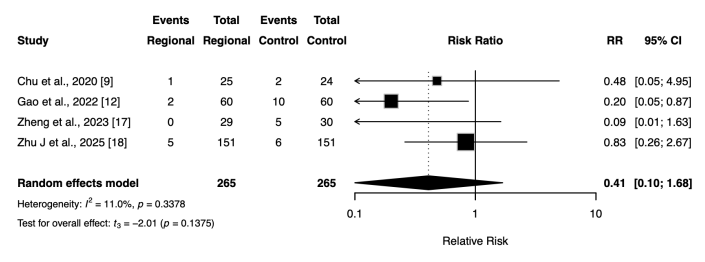
Figure 4: Forest Plot Showing the Relative Risk of Developing Postoperative Atelectasis Following Video-Assisted Thoracoscopic Surgery (VATS)

Figure 5: Forest Plot Showing the Relative Risk of Developing Postoperative Hypoxia Following Video-Assisted Thoracoscopic Surgery (VATS)
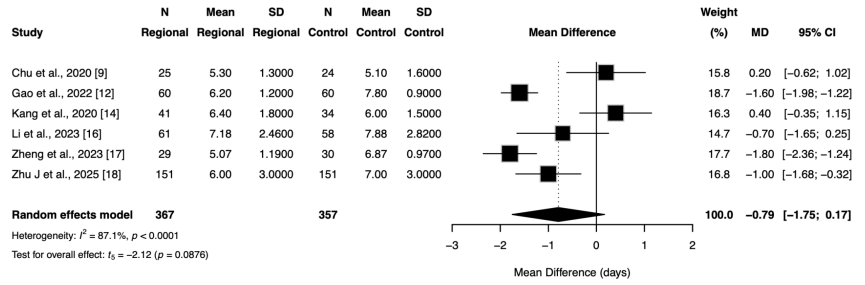
Figure 6: Forest Plot Showing the Mean Difference in Postoperative Length of Stay (LOS) between Regional Anesthesia and Control Groups Following Video-Assisted Thoracoscopic Surgery (VATS)
Discussion
Pulmonary complications following VATS are rare with an incidence of 3-4% [26]. The most frequently reported complication was postoperative air leak, but infections and pain at the port site are also common [26]. Due to the rarity of pulmonary complications following VATS, these complications are often secondary outcomes in analyses which tend to focus on pain outcomes. Across 1043 patients from 10 studies, there was a statistically significant reduction in the incidence of pneumonia in patients who received regional anesthesia compared to the patients who only received general anesthesia, which supports the findings seen by Gao et al., Zheng et al., and Zhu J et al. [12,17,18]. There was no statistically significant difference in incidence of hypoxia, atelectasis, or LOS between patients who received regional anesthesia and general anesthesia for VATS compared to patients who only received general anesthesia. The lack of statistical significance observed when analyzing hypoxia supports the conclusion of Coplik et al., Dongjie et al., Kang et al., and Lee et al. [10,11,14,15]. The lack of statistical significance observed when analyzing atelectasis supports the conclusion of Chu et al., and Zhu J et al [9,18]. For LOS, the observed lack of statistical significance only supported three out of the six articles’ findings, which were Chu et al., Kang et al., and Li et al. [9,14,16].
Regional anesthesia is a common approach to VATS to reduce the surgical stress response, improve analgesia, and reduce opioid consumption [27]. The three most common regional anesthetic techniques for VATS include thoracic paravertebral, serratus anterior, and intercostal nerve blocks. In utilizing one of these three blocks, the goal is to ultimately provide segmental analgesia of the chest wall while maintaining the forced expiratory volume (FEV1) [28]. FEV1 is an important preoperative and postoperative pulmonary function test. It provides an assessment of airway function and ventilatory capacity which can help monitor recovery after VATS. A decrease in FEV1 is expected after VATS, especially when more lung segments are resected [29]. However, in healthy individuals, regional anesthesia should not affect pulmonary function tests due to pain control which will ultimately allow patients to breathe deeper and cough effectively [30]. In theory, regional anesthesia should decrease the incidence of all postoperative pulmonary complications, but only the decrease in pneumonia was observed.
The observed reduction in pneumonia likely reflects the increased ability to control pain. The segmental chest wall analgesia enables patients to breathe deeply, cough effectively, and use incentive spirometry [30]. Due to the absence of a standardized rescue analgesic regimen in the included studies, rescue analgesia was not a specific parameter measured in this study. However, the findings in Copik et al., Dongjie et al., Gao et al., Huang et al., Kang et al., Li et al., and Zhu J et al. all showed a statistically significant reduction in rescue analgesic dose in the regional anesthesia group [10-14,16-18]. While the regional anesthesia group may have received opioids during general anesthesia, the use of regional anesthesia decreases the need for postoperative rescue analgesia which can decrease the chances of developing OIRD [3]. This preserves ventilatory drive and maintains airway clearance, both of which are key factors for the prevention of pneumonia.
Despite the decreased incidence of pneumonia, there was no statistically significant reduction in the incidence of atelectasis. There have been discrepancies among the literature with a mixture of results. In the four articles that were analyzed in this study, two concluded that there were no differences and two concluded that there was a decreased incidence in the regional anesthesia group [9,12,17,18]. In a 2022 sub-analysis of a prospective study, Bartels et al. found a decreased incidence of atelectasis and hypoxia in the regional anesthesia group with no effect on pneumonia [31]. These inconsistent results may be explained by the physiological impact of general anesthesia on respiratory mechanics. The contribution of general anesthesia to PPCs plays an important role. After the patient is under general anesthesia, the functional residual capacity decreases and ventilation/perfusion mismatch increases which can promote atelectasis and hypoxia [32]. In this study, both the experimental group and control groups received general anesthesia. Therefore, the lack of a significant difference in atelectasis and hypoxia may be explained through reasoning that both groups received general anesthesia.
Although the mean difference in LOS was decreased in the regional anesthesia group, this finding was not statistically significant (p = 0.09). LOS is a multifactorial variable that relies upon surgical complexity, preexisting comorbidities, functional status, and age. Enhanced recovery after surgery (ERAS) protocols for thoracic surgery are specific guidelines that are followed after VATS; these protocols promote early mobilization, early chest tube removal, and standardized pain management, all of which can affect length of stay [33]. Postoperative factors including pulmonary complications, infectious complications, and arrhythmias often play a greater role in determining length of stay than the type of anesthetic used. The significant heterogeneity among the articles that reported LOS may limit the ability to detect a statistically significant difference among the groups.
Limitations
This study has several limitations that should be acknowledged. Heterogeneity among perioperative protocols has the ability to affect outcomes. While heterogeneity was low for the pneumonia and atelectasis outcomes, heterogeneity was high when measuring hypoxia and LOS. Another limitation was the use of opioids. While both groups received opioids during their surgery, the decreased risk of pneumonia in the regional anesthesia group cannot be solely attributed to the opioid use. Third, the definitions of pulmonary complications and LOS were not standardized across each article which limits the comparability of the pooled outcomes. Finally, the number of studies utilized in this meta-analysis was small. Further high-quality randomized controlled trials are needed to support or deny the findings in this study.
Conclusion
Our meta-analysis shows a decreased risk of developing pneumonia following VATS when receiving regional anesthesia and general anesthesia versus only receiving general anesthesia. However, the risk of developing atelectasis or hypoxia does not appear to differ between patients receiving regional anesthesia with general anesthesia and those receiving general anesthesia alone. The type of anesthesia administered did not affect LOS which is more likely affected by perioperative factors and preexisting comorbidities. Continued research is necessary to determine the precise role of regional anesthesia within VATS and postoperative pulmonary complications.
References
- Admass, B. A., Ego, B. Y., Tawye, H. Y., & Ahmed, S.A. (2023). Post-operative pulmonary complications after thoracic and upper abdominal procedures at referral hospitals in Amhara region, Ethiopia: a multi-center study. Frontiers in Surgery, 10, 1177647.
- Feray, S., Lubach, J., Joshi, G. P., Bonnet, F., Van de Velde, M., PROSPECT Working Group* of the European Society of Regional Anaesthesia and Pain Therapy, ... & Frey, S. (2022). PROSPECT guidelines for video-assisted thoracoscopic surgery: a systematic review and procedure-specific postoperative pain management recommendations. Anaesthesia, 77(3), 311-325.
- Ayad, S., Khanna, A. K., Iqbal, S. U., & Singla, N. (2019). Characterisation and monitoring of postoperative respiratory depression: current approaches and future considerations. British journal of anaesthesia, 123(3), 378-391.
- Palkovic, B., Marchenko, V., Zuperku, E. J., Stuth, E. A., & Stucke, A. G. (2020). Multi-level regulation of opioid-induced respiratory depression. Physiology, 35(6), 391-404.
- Paul, M., Fokt, R. M., Kindler, C. H., Dipp, N. C., & Yost, C.S. (2002). Characterization of the interactions between volatileanesthetics and neuromuscular blockers at the muscle nicotinic acetylcholine receptor. Anesthesia & Analgesia, 95(2), 362-367.
- Jiang, L., Zhang, D., Wu, X., Yang, G., & Yu, D. (2025).The impact of ultrasound-guided thoracic paravertebral nerve block on the quality of recovery after video-assisted thoracoscopic surgery: a meta-analysis of randomized controlled trials. Perioperative Medicine, 14(1), 83.
- Shi, Z., Shao, G., Zhang, X., Shi, Y., Rong, G., Xu, D., ... & Yin,D. (2025). Effectiveness of combining thoracic paravertebral nerve block and serratus anterior plane block in non-intubated spontaneous-ventilation video-assisted thoracoscopic surgery: a retrospective case-control study. Journal of Inflammation Research, 11125-11137.
- Singla, P., Brenner, B., Tsang, S., Elkassabany, N., Martin, L. W., Carrott, P., ... & Mazzeffi, M. (2024). Anesthetic technique and postoperative pulmonary complications (PPC) after Video Assisted Thoracic (VATS) lobectomy: A retrospective observational cohort study. Plos one, 19(12), e0310147.
- Chu, H., Dong, H., Wang, Y., & Niu, Z. (2020). Effects of ultrasound-guided paravertebral block on MMP-9 and postoperative pain in patients undergoing VATS lobectomy: a randomized, controlled clinical trial. BMC anesthesiology, 20(1), 59.
- Copik, M. M., Sadowska, D., Smereka, J., Czyzewski, D., Misiolek, H. D., & Bialka, S. (2024). Assessment of feasibility of opioid-free anesthesia combined with preoperative thoracic paravertebral block and postoperative intravenous patient-controlled analgesia oxycodone with non-opioid analgesics in the perioperative anesthetic management for video-assisted thoracic surgery. Anaesthesiology intensive therapy, 56(2), 98-107.
- Dongjie, Q., Longbiao, Z., Peng, L., Li, J., Hongmeng, X., Zhiyan, C., & Long, Y. (2023). Effects of thoracic paravertebral nerve block on postoperative pain and postoperative delirium in elderly patients undergoing thoracoscopic lobectomy. Medicine, 102(8), e32907.
- Gao, W., Yang, X. L., Hu, J. C., Gu, H., Wu, X. N., Hu, S.S., ... & Wang, D. (2022). Continuous serratus anterior plane block improved early pulmonary function after lung cancer surgical procedure. The Annals of Thoracic Surgery, 113(2), 436-443.
- Huang, Y., Qin, F., Lian, Z., Ge, Z., Sun, X., Yang, J., & Tian,D. (2025). Effect of multimodal preventive analgesia based on serratus anterior plane block and oxycodone on postoperative analgesia in elderly patients undergoing thoracoscopic lobectomy: a randomized controlled trial. Scientific Reports, 15(1), 24459.
- Kang, K., Meng, X., Li, B., Yuan, J., Tian, E., Zhang, J., & Zhang, W. (2020). Effect of thoracic paravertebral nerve block on the early postoperative rehabilitation in patients undergoing thoracoscopic radical lung cancer surgery. World journal of surgical oncology, 18(1), 298.
- Lee, S., Sung, T. Y., Cho, C. K., Lee, G., & Kwon, W. (2024).Effects of a Serratus Anterior Plane Block After Video-Assisted Lung Wedge Resection: A Single-Center, Prospective, and Randomized Controlled Trial. Medicina, 61(1), 11.
- Li, S., Feng, J., Fan, K., Fan, X., Cao, S., & Zhang, G. (2023). The effect of ultrasound-guided intercostal nerve block on postoperative analgesia in thoracoscopic surgery: a randomized, double-blinded, clinical trial. Journal of Cardiothoracic Surgery, 18(1), 128.
- Zheng, Y. F., Jiang, Y. S., Liu, H. T., Chen, F. Z., Shao, A. Z.,Zhu, J. F., ... & Sun, C. X. (2023). Thoracic paravertebral nerve block combined laryngeal mask airway with preservation of spontaneous breathing can accelerate postoperative recovery. European Review for Medical & Pharmacological Sciences, 27(22).
- Zhu, J., Wei, B., Wu, L., Li, H., Zhang, Y., Lu, J., ... & Wang, G.(2025). Effect of thoracic paravertebral block on postoperative pulmonary complications after video-assisted thoracoscopic surgery: a dual-center randomized clinical trial. Therapeutics and Clinical Risk Management, 691-703.
- Page, M. J., McKenzie, J. E., Bossuyt, P. M., Boutron, I.,Hoffmann, T. C., Mulrow, C. D., ... & Moher, D. (2021). The PRISMA 2020 statement: an updated guideline for reporting systematic reviews. bmj, 372.
- Higgins, J. P. T., Thomas, J., Chandler, J., Cumpston, M., Li, T., Page, M. J., & Welch, V. A. Cochrane handbook for systematic reviews of interventions version 6.5 [updated August 22, 2024]. Cochrane.(2024).
- Schwarzer, G. (2022). Meta-analysis in R. Systematic reviews in health research: meta-analysis in context, 510-534.
- Ergün, M. O., Zengin, S. Ü., Dinçer, P. Ç., Umuroglu, T., & Aykaç, Z. (2022). Determining the factors affecting the development of perioperative complications according to aging stages. Bagcilar Medical Bulletin.
- Thorlund, K., Imberger, G., Johnston, B. C., Walsh, M., Awad, T., Thabane, L., ... & Wetterslev, J. (2012). Evolution of heterogeneity (I2) estimates and their 95% confidence intervals in large meta-analyses. PloS one, 7(7), e39471.
- Sterne, J. A., Savovic, J., Page, M. J., Elbers, R. G., Blencowe,N. S., Boutron, I., ... & Higgins, J. P. (2019). RoB 2: a revised tool for assessing risk of bias in randomised trials. bmj, 366.
- Macaskill, P., Walter, S. D., & Irwig, L. (2001).Acomparison of methods to detect publication bias in meta-analysis. Statistics in medicine, 20(4), 641-654.
- Lochowski, M. P., & Kozak, J. (2014). Video-assisted thoracic surgery complications. Videosurgery and Other Miniinvasive Techniques, 9(4), 495.
- Sertcakacilar, G., Tire, Y., Kelava, M., Nair, H. K., Lawin-O’Brien, R. O., Turan, A., & Ruetzler, K. (2022). Regional anesthesia for thoracic surgery: a narrative review of indications and clinical considerations. Journal of Thoracic Disease, 14(12), 5012.
- Agyei-Fedieley, M. K., Darkwa, E. O., Hayfron-Benjamin,C. F., Olufolabi, A., Atito-Narh, E., Agudogo, J., & Dzudzor,B. (2024). Reduction in FEV1 following spinal anesthesia is associated with intraoperative complications: A prospective study. Health Science Reports, 7(10), e70073.
- Dai, S. Y., Tseng, Y. L., Chang, C. C., Huang, W. L., Yen, Y. T.,Lai, W. W., & Chen, Y. Y. (2023). Pulmonary-function changes after uniportal video-assisted thoracoscopic anatomical lung resection. Asian Journal of Surgery, 46(4), 1571-1576.
- Ho, S. C., Chiang, L. L., Cheng, H. F., Lin, H. C., Sheng, D. F., & Kuo, H. P. (2000). The effect of incentive spirometry on chest expansion and breathing work in patients with chronic obstructive airway diseases: comparison of two methods. Chang Gung medical journal, 23(2), 73-79.
- Bartels, K., Frendl, G., Sprung, J., Weingarten, T. N., Subramaniam, B., Martinez Ruiz, R., ... & Fernandez-Bustamante, A. (2022). Postoperative pulmonary complications with adjuvant regional anesthesia versus general anesthesia alone: a sub-analysis of the PerioperativeResearch Network study. BMC anesthesiology, 22(1), 136.
- Rock, P., & Rich, P. B. (2003). Postoperative pulmonary complications. Current Opinion in Anesthesiology, 16(2), 123-131.
- Batchelor, T. J., Rasburn, N. J., Abdelnour-Berchtold, E., Brunelli, A., Cerfolio, R. J., Gonzalez, M., ... & Naidu, B. (2019). Guidelines for enhanced recovery after lung surgery: recommendations of the Enhanced Recovery After Surgery (ERAS®) Society and the European Society of Thoracic Surgeons (ESTS). European journal of cardio-thoracic surgery, 55(1), 91-115.