


Research Article - (2026) Volume 11, Issue 1
The Effect of Microfinance on Household Poverty in Rural Sierra Leone: An Econometric Approach to Assessing the Income and Consumption Effect of Microcredit
Received Date: Jan 20, 2026 / Accepted Date: Feb 17, 2026 / Published Date: Feb 23, 2026
Copyright: ©2026 Joe Hassan Kalokoh, et al. This is an open-access article distributed under the terms of the Creative Commons Attribution License, which permits unrestricted use, distribution, and reproduction in any medium, provided the original author and source are credited.
Citation: Kalokoh, J. H., Turay, J. A., Legarreta-González, M. A. (2026). The Effect of Microfinance on Household Poverty in Rural Sierra Leone: An Econometric Approach to Assessing the Income and Consumption Effect of Microcredit. J Nur Healthcare, 11(1), 01-11.
Abstract
The efficacy of microfinance as a tool for poverty reduction remains a subject of ongoing investigation. This paper makes a significant contribution to the extant knowledge on this subject by providing a critical examination of the role of microcredits in reducing household poverty, with a focus on rural Sierra Leone. Using a quantitative, cross-sectional, and comparative research design, the study investigates the differences in income and consumption expenditures between 371 microcredit beneficiary and 330 non-beneficiary households in three of the poorest districts. Logistic regression models and multiple linear regression analyses were employed to estimate the average marginal effect of microcredit participation on total household income, adjusting for control variables. The findings reveal critical insights into the effectiveness of microcredit in reducing poverty, highlighting the significance of household socio-economic factors in moderating the impact of microcredit. The study recommends implementing gender-inclusive lending practices, providing financial education programs, and developing region-specific credit frameworks. This research also adds valuable empirical evidence to the ongoing debate about microfinance effectiveness in post-war economies, showing that strategic credit access serves as a powerful instrument for promoting equitable and lasting rural economic growth.
Keywords
Poverty, Microfinance, Microcredit, Rural Households, Econometrics
Introduction
Poverty in rural Sierra Leone remains a significant barrier to the country’s socio-economic development, with a large proportion of the population excluded from formal financial services [1]. Microfinance institutions have become crucial in addressing this gap by providing financial products to low-income households often marginalized by conventional banking systems [2]. While numerous studies suggest that microcredit can positively influence household income and consumption, thereby alleviating poverty others highlight structural and institutional limitations that hinder its long-term impact [3-9]. With a poverty headcount of 56.8% (World Bank, 2020), Sierra Leone presents a compelling context for examining microfinance’s role in poverty reduction, especially in rural areas where financial infrastructure is scarce [10]. Despite the expansion of microfinance initiatives, empirical evidence on their effects - particularly on income and consumption - remains limited, especially using rigorous econometric analysis. This study aims to fill this gap by assessing how microcredit impacts key welfare indicators, considering socio-economic moderators such as gender, education, and household size, providing vital insights into microfinance’s effectiveness in a challenging West African setting.
Review of Literature
The role of microfinance in alleviating poverty has been a subject of extensive research globally, with mixed findings. The microfinance concept itself evolves around providing financial services to low- income individuals or households who lack access to traditional banking and financial services [11]. In the context of rural Sierra Leone, microfinance institutions (MFIs) have been instrumental in extending credit to households, aiming to enhance their income and consumption patterns. This section reviews existing literature on the role of microfinance in reducing household poverty, with a focus on rural Sierra Leone. The review is guided by the study’s research objectives and questions, which seek to examine the effect of microcredit on household income, consumption expenditure, and poverty reduction among beneficiary households.
Theoretical Framework
Microfinance is rooted in the theoretical perspective that access to financial services can empower the poor, enhance their income- generating capacity, and ultimately reduce poverty [12]. The poverty reduction potential of microfinance hinges on its ability to address credit constraints, promote investment, and smooth consumption [11]. The theory of change underlying microfinance interventions posits that increased access to credit enables households to invest in productive activities, smooth consumption, and build resilience to shocks [13]. The study is grounded in the Permanent Income Hypothesis (PIH) and the Life Cycle Hypothesis (LCH), which suggest that households make consumption and investment decisions based on their expected lifetime income. Microcredit is expected to increase household income, leading to improved consumption expenditures and reduced poverty.
Empirical Evidence on Microfinance and Poverty Reduction
Existing empirical evidence on the impact of microfinance on poverty reduction is mixed. Studies from various contexts suggest that microcredit can have positive effects on income, consumption, and poverty reduction (Khander, 2005; Imai et al., 2010; and Banerjee and Jackson, 2017) [14-16]. For instance, Khander (2005) found that microcredit increased household income and reduced poverty in Bangladesh. Similarly, Imai et al. (2010) reported that microfinance participation was associated with increased household consumption and reduced poverty in India. However, other studies have found limited or no impact of microfinance on poverty reduction [8,9,17]. For example, Morduch (1998) found no significant impact of microcredit on household income or consumption in Bangladesh. Chikwira et al. (2022) observed that the use of microfinance has the tendency to escalate poverty levels to undesired heights, and Bhuiya et al. (2016) also argued that access to microfinance loans can have negative effects for poor beneficiary households.
Microfinance in Sierra Leone
Sierra Leone’s context is unique due to its post-conflict recovery and rural poverty challenges. The country has low financial inclusion rates, making microfinance crucial for rural households [l8]. Most rural households engage in agriculture, where microcredit can boost productivity. Microfinance has been promoted as a poverty reduction tool, with several institutions providing financial services to rural households [19,20]. However, there is limited empirical evidence on the impact of microfinance on poverty reduction in the Sierra Leone. A few studies have examined the effect of microcredit on household income and consumption, but the evidence is inconclusive [4,5,18,21].
Microcredit and Household Income
Numerous studies have examined the effect of microcredit on household income, yielding mixed results. Some of these studies suggest that microcredit can increase household income by enabling investments in productive activities [14,15]. A research by Pitt, M. M. and Khandker (1998) found that microcredit participation leads to significant increases in household income, particularly in rural areas. Banerjee et al. (2015) however observed that the income effect of microcredit can be influenced by factors such as household socio-economic characteristics, loan size, and interest rates. In contrast, studies by Morduch (1998) reported insignificant or even negative effects of microcredit on household income. In Sierra Leone, limited research exists on this topic, although a study by Kamara (2017) suggested that microcredit can contribute to increased household income among beneficiaries.
Microcredit and Consumption Expenditures
The impact of microcredit on consumption expenditures is also a subject of debate. Some studies have found that microcredit increases household consumption expenditures, particularly on food and education [4,14,22-24]. Findings by Khander (2005) and (Imai et al., 2010) suggest that microcredit can also affect household consumption by enabling households to smooth consumption and invest in human capital. While there have not been sufficient studies on the specific context of Sierra Leone, a research by Dumbuya, A. B. and Munu (2024) suggests that microcredit can empower women to contribute to household consumption expenditure and Ganawah, M. I. J. and Hadji (2025) found that microfinance loans leads to increased earnings, improved living standards, and increased consumption expenditure among beneficiary households [25-27]. Even though studies like Zeller (2001) believed that smoothing consumption and reducing vulnerability to shocks are some of the benefits of microcredits, a number of other studies on the subject have reported that microcredit often leads to reduced consumption expenditures, as households prioritize investment over consumption Morduch (1998) [17]. It has also been noted that the consumption effect of microcredit can be influenced by factors such as household income, loan size, and interest rates [28].
Socio-Economic Factors and Microcredit Effectiveness
Household socio-economic factors, such as education level, household size, and occupation, can influence the effectiveness of microcredit in reducing poverty. (Banerjee et al., 2015) also indicated that household socio-economic factors can influence the poverty reduction effectiveness of microcredit [14,29]. Khander (2005) provided instances where households with higher levels of education may be better equipped to utilize microcredit effectively. Research by (Alemayehu & Lemma, 2014) and Khander (2005) highlighted the importance of considering these factors when evaluating the impact of microcredit [30]. In the context of rural Sierra Leone, understanding these factors is crucial for designing effective microcredit programs. In Sierra Leone, studies like that of (Kamara, 2017) also observed that socio-economic factors, such as education and household size, play a significant role in determining household poverty status [31].
Research Gaps
Despite the growing body of literature on microfinance and poverty reduction, there are several research gaps that this study aims to address: 1. Limited empirical evidence on the impact of microfinance on poverty reduction in rural Sierra Leone.
2. Limited context-specific studies and inconclusive evidence on the income and consumption effects of microcredit.
3. Need for robust quantitative analysis on income and consumption effects.
4. Limited understanding of the role of household socio-economic factors in influencing the poverty reduction effectiveness of microcredit.
Conceptual Framework
The conceptual framework guiding this study is based on the sustainable livelihood’s framework, which posits that access to financial capital (in this case, microcredit) can enhance household livelihoods and reduce poverty (DFID, 2008) [32]. The framework suggests that microcredit can influence household income and consumption patterns, which in turn affect poverty outcomes. It integrates theoretical, empirical, and contextual insights to explain how microcredit influences household welfare in rural Sierra Leone. At its core, the conceptual framework positions microcredit access as the principal independent variable, with the central hypothesis that affordable credit services can directly and indirectly lead to poverty reduction. The framework incorporates two key moderating variables that are expected to influence the strength and direction of the relationship between microcredit and poverty reduction. The first is human capital, represented by education level and business experience. Drawing from Human Capital Theory (Becker, 1975), higher skills and knowledge are expected to enhance the productive utilization of loans, leading to greater welfare improvements [33]. The second is social capital, represented by group lending participation and community trust. Based on Social Capital Theory (Putnam, 1993), strong social networks and trust relationships improve loan repayment discipline, facilitate knowledge sharing, and promote mutual support, thereby amplifying the benefits of microcredit [34].

Figure 3.1: Conceptual Framework
Source: Author’s construct
This framework suggests that microcredit can reduce poverty by increasing income and smoothing consumption, and that household socio-economic factors can influence the poverty reduction effectiveness of microcredit.
Methods
Study Design
This study employs a quantitative, cross-sectional, and comparative econometric research design to assess the impact of microfinance loans (microcredit) on household poverty in rural Sierra Leone. The design is specifically structured to address the “missing middle” in microfinance literature by capturing variations between microcredit beneficiaries and a comparable group of non-beneficiaries. Econometric modeling serves as the analytical backbone, allowing for the estimation of parameters that quantify economic relationships derived from the Poverty Trap Theory, Human Capital Theory, and the Life-Cycle Hypothesis. While longitudinal data is often preferred for impact assessment, the cross-sectional approach—combined with robust control variables - is a pragmatic and statistically valid alternative in resource-constrained environments like rural Sierra Leone, where longitudinal record-keeping is limited.
Study Area and Target Population
The research focuses on three strategically selected districts in Sierra Leone: Tonkolili (Northeast), Pujehun (South), and Western Rural (Western Region). These Districts were purposively selected based on the 2018 Sierra Leone Integrated Household Survey (SLIHS) and the 2021 World Bank Country Update,which identified them as areas with high poverty incidence and significant microfinance penetration. The target population consists of households in the district headquarters (Magburaka, Pujehun town, and Waterloo). The study specifically examines clients of two prominent Microfinance Institutions (MFIs):
• LAPO (Lift Above Poverty Organization): A private MFI with extensive rural outreach.
• ACTB (Apex Community Transformation Bank): An institution supported by the government’s Munafa Fund. The treatment group includes households that received credit during the 2021/2022 period. The control group comprises “waiting-list” households - those who had successfully completed the interview process but had not yet received disbursements. This “pipeline” comparison strategy helps minimize selection bias, as both groups demonstrate similar pre-loan demand and eligibility characteristics.
Sampling Strategy and Sample Size Determination
A stratified proportional sampling approach was adopted to ensure representativeness across institutions and districts. The sampling frame comprised 3,535 households drawn from institutional records (2021/2022), with a calculated sample size of 701 households based on the finite population formula (Mendenhall et al., 2006), achieving a 95% confidence level and a 3.3% margin of error. The sample was proportionally allocated: 371 beneficiaries (from LAPO and ACTB) and 330 non-beneficiaries, distributed across the districts. The sample size calculation was performed utilizing the finite population proportion formula by Mendenhall et al. (2006), incorporating a 95% confidence level (z = 1.96), a margin of error of 3.3%, and a proportional allocation of 55% beneficiaries to 45% non-beneficiaries.
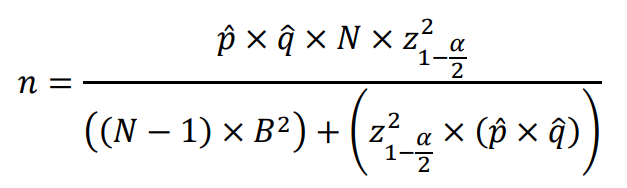
The calculated sample size was 701 household respondents, distributed proportionally across the three study districts. This sample comprised 371 beneficiaries (207 for LAPO, 164 for ACTB) and 330 non-beneficiaries. For district-level allocations, Tonkolili has 219 participants in total (i.e. 111 beneficiaries and 108 non-beneficiaries), Pujehunhas 174 participants (84 beneficiaries and 90 non-beneficiaries), and the Western Rural district has 308 (176 beneficiaries and 132 non-beneficiaries) that were examined. This stratified approach ensured adequate representation of both institutional and geographical variations while maintaining the statistical power necessary for a robust analysis of microcredit impacts across different population segments.
Data Collection Methods
Data were collected via a structured questionnaire, designed to capture socio-demographics, microcredit access and utilization, household income, consumption expenditure, and social capital indicators. The questionnaire underwent pre-testing to ensure cultural relevance and clarity, with enumerator training emphasizing ethical considerations and standardized administration. Data collection spanned four weeks, utilizing face-to-face interviews supported by electronic entry systems to improve accuracy (Bryman, 2016).
Variable Measurement
Dependent Variables: Monthly household income and monthly household consumption expenditure (continuous SLL values). Independent Variable: Beneficiary status (Dummy: 1 = Beneficiary, 0 = Non-beneficiary). Moderators: Human capital indicators (Education, Age, Gender) and household characteristics (Size, District).
|
Objective |
Dependent Variable |
Independent Variables |
Model Type |
|
1. Assess the effect of microcredit on household income |
Household total monthly income (Y_i) |
Microcredit status, Education, Gender, Business experience, Household size |
Multiple Linear Regression |
|
2. Examine the impact of microcredit on household consumption |
Monthly household expenditure (C_i) |
Microcredit status, Education, Gender, Household size, Dependency ratio |
Multiple Linear Regression |
|
3. Determine how demographic and socio-economic factors affect microcredit effectiveness |
Poverty reduction outcome (Poverty_i) |
Microcredit status, Education, Gender, Business experience, Household size |
Logistic Regression |
Table 3.1: Variables and Objective Linkage
Data Analysis Methods
The data analysis plan proceeded in four stages: data preparation and coding, descriptive analysis, inferential analysis, and model diagnostics. Data were analyzed using descriptive and inferential statistics in R and Excel.
Descriptive Statistics
Descriptive statistics summarized respondent characteristics using frequencies, percentages, means, standard deviations, medians, and interquartile ranges. Associations between categorical variables were tested using Pearson’s chi-square test. Multiple Correspondence Analysis (MCA) was applied to explore clustering among categorical variables (Greenacre & Blasius, 2006). Spearman’s rank correlation assessed monotonic relationships between ordinal and continuous variables.
Inferential Statistics
Objective 1: Multiple Linear Regression and ANOVA assessed the effect of microcredit on household income, controlling for key socio-demographic factors.
Objective 2: A second Multiple Linear Regression model was employed to examine the impact on household consumption expenditure.
Objective 3: Logistic regression modeled the probability of being a microcredit beneficiary as a function of household characteristics.
Model specifications followed standard econometric forms (Wooldridge, 2010), with diagnostic checks for multicollinearity, heteroskedasticity, and model fit.
Ethical Considerations
The study complied with ethical guidelines established by the University of Makeni (UNIMAK) Ethics Committee. Informed consent was obtained from all participants, with assurances of confidentiality and anonymity. Data were securely stored, and no personal identifiers were included in the final dataset. Ethical approval was secured prior to data collection to ensure adherence to best practices in field research (Bryman, 2016).
Methods Summary
This methodology outlines a rigorous, theory-driven, and contextually grounded approach to evaluating the impact of microcredit on household poverty in rural Sierra Leone. By integrating robust sampling, systematic data collection, and advanced econometric analysis, the study ensures that findings will be statistically sound and relevant for policy and practice.
Results
This section presents the empirical findings on the impact of microcredit on household welfare in rural Sierra Leone. Results are based on quantitative data from 680 valid responses out of 701 sampled households, representing a 97 percent response rate. The high completion rate reflects the effectiveness of in-person questionnaire administration and respondent engagement during fieldwork across Tonkolili, Pujehun, and Western Rural districts.
Household Income and Expenditure Patterns
The comparative descriptive analysis shows significant differences between microcredit beneficiaries and non-beneficiaries in both household income and expenditure levels. As presented in Table 3.1, the average monthly income of beneficiary households was SLL 612 (SD = 309), compared to SLL 342 (SD = 267) for non- beneficiaries, yielding a mean difference of SLL 270 (t = 12.2, p < 0.001). This corresponds to a large effect size (Cohen’s d = 0.94), suggesting a substantive impact of credit access on income generation. Similarly, Table 3.2 shows that the mean monthly expenditure among beneficiaries was SLL 581 (SD = 274), significantly higher than SLL 325 (SD = 216) for non-beneficiaries (t = 13.6, p < 0.001; d = 1.04). These findings confirm that access to microcredit is associated with improved household consumption capacity and economic resilience.
The geographical distribution reveals that Western Rural district had the highest concentration of beneficiaries (59.7%), followed by Tonkolili (51.6%) and Pujehun (49.4%). The chi-square test (χ² = 5.659, p = 0.059) suggests a marginally non-significant regional variation in microcredit access, though the Western Rural difference indicates stronger institutional penetration or awareness in peri-urban zones.
|
Statistic |
Beneficiary (n=371) |
Non-Beneficiary (n=309) |
Comparison |
|
Mean (SD) |
612 (309) |
342 (267) |
Mean difference: 270*** |
|
Median [IQR] |
560 [400] |
265 [190] |
|
|
Range (Min-Max) |
50-1900 |
30-1800 |
|
|
Inferential Test |
|
|
t(677) = 12.2, p < .001*** |
|
Effect Size |
|
|
Cohen’s d = 0.94 (large) |
|
95% CI |
|
|
[226, 314] |
Table 3.1: Household Monthly Income Comparison by Beneficiary Status
|
Statistic |
Beneficiary (n=371) |
Non-Beneficiary (n=309) |
Comparison |
|
Mean (SD) |
581 (274) |
325 (216) |
Mean difference: 256*** |
|
Median [IQR] |
540 [350] |
265 [195] |
|
|
Range (Min-Max) |
50-1390 |
30-1388 |
|
|
Inferential Test |
|
|
t(676) = 13.6, p < .001*** |
|
Effect Size |
|
|
Cohen’s d = 1.04 |
|
95% CI |
|
|
[219, 293] |
Table 3.2: Household Monthly Expenditure Comparison by Beneficiary Status
Multiple Correspondence Analysis (MCA)
The Multiple Correspondence Analysis (MCA) explored associations among categorical socio-economic indicators such as beneficiary status, income level, education, occupation, asset ownership, and household composition. The scree plot showed that the first three dimensions accounted for 28.4% of the total variance (11.4%, 8.9%, and 8.1%, respectively), capturing the most meaningful variation in the data. The MCA biplot Figure 3.1 revealed a clear separation between beneficiaries and non- beneficiaries along Dimension 1, which explained most of the group differentiation. Beneficiaries clustered on the right-hand side of the plot, associated with higher income, better housing quality, and asset ownership (e.g., television and refrigerator possession). Non-beneficiaries appeared more tightly clustered on the left, reflecting economic homogeneity and lower welfare conditions. These patterns demonstrate that microcredit participation is systematically linked to improved welfare indicators and asset accumulation, corroborating the results of the regression models.

Figure 4.1: Individuals Factor Map by Beneficiary Status
Spearman Correlation Analysis
The Spearman correlation matrix, Figure 3.2 highlights the monotonic relationships among household socioeconomic and demographic variables. A strong positive correlation was observed between monthly income and expenditure (ρ = 0.95), confirming the expected income–consumption linkage. Similarly, household size correlated positively with the number of children aged 5–14 (ρ = 0.82), indicating demographic consistency across households. Moderate positive associations were found between monthly income and microcredit amount received (ρ = 0.67), and between expenditure and loan amount (ρ = 0.64), implying that higher credit exposure aligns with improved income and consumption outcomes. Conversely, beneficiary status exhibited negative correlations with income (ρ = −0.52) and expenditure (ρ = −0.53), reflecting that non-beneficiaries occupy lower economic tiers. These correlations provided preliminary evidence of welfare differentials that were further tested through regression analysis.

Figure 4.2: Heatmap of the Spearman Correlation Matrix Plot Figure 4.2: Heatmap of the Spearman Correlation Matrix Plot
Multiple Linear Regression Results
The multiple linear regression model, Table 4.3, examining determinants of household income identifies district of residence, gender, and diversification of income sources as significant predictors. Compared to Pujehun, households in Tonkolili earned on average SLL 73.89 (p = 0.012) more, while those in Western Rural earned SLL 126.63 (p < 0.001) more. Gender differences were also significant, with male-headed households earning SLL 49.50 less than female-headed ones (p = 0.036). The proportion of income derived from other sources was inversely related to total income (β = −3.996, p < 0.001), indicating that diversified income streams often substitute for, rather than supplement, primary earnings. Interestingly, microcredit beneficiary status itself was not statistically significant (p = 0.480), suggesting that differences in income are mediated by other structural and locational factors.
|
Predictor |
Coef. (β) |
Std. Error |
t-value |
p-value |
Significance |
|
(Intercept) |
700.03 |
56.87 |
12.31 |
<0.001 |
*** |
|
Beneficiary Status |
|
|
|
|
|
|
Non-Beneficiary |
-29.77 |
42.14 |
-0.71 |
0.480 |
|
|
District (Ref: Pujehun) |
|
|
|
|
|
|
Tonkolili |
73.89 |
29.46 |
2.51 |
0.012 |
* |
|
W/Rural |
126.63 |
29.41 |
4.31 |
<0.001 |
*** |
|
Gender (Male) |
-49.50 |
23.56 |
-2.10 |
0.036 |
* |
|
Marital Status (Ref: Divorced) |
|
|
|
|
|
|
Married |
-8.34 |
31.84 |
-0.26 |
0.794 |
|
|
Single |
10.96 |
37.03 |
0.30 |
0.767 |
|
|
Widow/widower |
-33.85 |
36.28 |
-0.93 |
0.351 |
|
|
Education (Ref: College) |
|
|
|
|
|
|
Never been to school |
36.76 |
41.94 |
0.88 |
0.381 |
|
|
Primary |
50.20 |
44.78 |
1.12 |
0.263 |
|
|
Secondary |
-23.94 |
36.25 |
-0.66 |
0.509 |
|
|
Technical/Vocational |
-19.89 |
36.54 |
-0.54 |
0.586 |
|
|
Household Size |
-4.85 |
8.09 |
-0.60 |
0.549 |
|
|
% Other Income |
-3.996 |
0.611 |
-6.54 |
<0.001 |
*** |
|
Number of Kids (5-14) |
26.40 |
17.08 |
1.55 |
0.123 |
|
Significance codes: *** p<0.001, ** p<0.01, * p<0.05
Table 4.3: Multiple Linear Regression of Household Monthly Income
Ordinal Logistic Regression Results
To complement the continuous models, an ordinal logistic regression was performed to categorize households into low, moderate, and high welfare tiers based on income and expenditure. Results, Table 4.4, indicate that microcredit beneficiaries are substantially more likely to belong to higher welfare categories. Being a non- beneficiary reduces the odds of attaining higher income levels by 90% (OR = 0.10, p < 0.001) and higher expenditure levels by 88% (OR = 0.12, p < 0.001). These effects remain robust across specifications. Gender exerts a negative effect on income (OR = 0.57, p = 0.037), but not on expenditure (p = 0.101), suggesting potential gender differences in income reporting or expenditure allocation. Threshold coefficients between “Moderate” and “High” categories are statistically significant (p < 0.001), confirming clear stratification among households, while transitions between “Low” and “Moderate” categories are more gradual. Overall, the logistic results validate that microcredit access improves the likelihood of transitioning to higher welfare levels, especially for women and households in urban-proximate regions.
|
Predictor |
Income Model |
|
|
Expenditure Model |
|
|
|
|
Coef. (β) |
p-value |
OR |
Coef. (β) |
p-value |
OR |
|
Beneficiary (Non-Ben) |
-2.335*** |
<0.001 |
0.10 |
-2.130*** |
<0.001 |
0.12 |
|
District (Ref: Pujehun) |
|
|
|
|
|
|
|
Tonkolili |
0.484 |
0.156 |
1.62 |
0.276 |
0.419 |
1.32 |
|
W/Rural |
0.383 |
0.231 |
1.47 |
0.279 |
0.377 |
1.32 |
|
Gender (Male) |
-0.567* |
0.037 |
0.57 |
-0.442 |
0.101 |
0.64 |
|
Marital Status |
|
|
|
|
|
|
|
Married |
-0.261 |
0.455 |
0.77 |
-0.059 |
0.868 |
0.94 |
|
Single |
0.325 |
0.413 |
1.38 |
0.546 |
0.178 |
1.73 |
|
Widow/widower |
-0.230 |
0.558 |
0.79 |
0.016 |
0.969 |
1.02 |
|
Education |
|
|
|
|
|
|
|
Linear |
-0.529 |
0.278 |
0.59 |
-0.585 |
0.228 |
0.56 |
|
Quadratic |
0.322 |
0.485 |
1.38 |
0.012 |
0.980 |
1.01 |
|
Household Characteristics |
|
|
|
|
|
|
|
Size |
0.063 |
0.468 |
1.07 |
-0.024 |
0.788 |
0.98 |
|
Number of Kids |
0.023 |
0.895 |
1.02 |
0.161 |
0.368 |
1.17 |
|
Thresholds |
|
|
|
|
|
|
|
Low|Moderate |
-0.044 |
0.930 |
- |
0.042 |
0.936 |
- |
|
Moderate|High |
2.143*** |
<0.001 |
- |
2.340*** |
<0.001 |
- |
|
|
|
|
|
|
|
|
Significance codes: *** p<0.001, ** p<0.01, * p<0.05
Table 4.4: Comparative Results of Ordinal Logistic Regression Models
Discussion
The results collectively demonstrate that microcredit participation is strongly associated with enhanced household welfare through both income and expenditure effects. The findings support the Poverty Trap Theory by showing that access to small loans helps households overcome liquidity constraints. The observed gender effects align with the Human Capital and Social Capital theories, suggesting that women’s participation in microcredit programs not only improves household welfare but also strengthens community networks. While income improvements appear partially mediated by district and diversification factors, the overall welfare gains remain substantial. The MCA visualization further reinforces that microcredit beneficiaries exhibit distinct socio-economic profiles characterized by higher asset ownership and financial inclusion.
These results are consistent with existing studies (Pitt & Khandker, 1998; Khandker, 2005; Magezi & Nakano, 2020) yet provide new evidence from Sierra Leone using a robust multi- model econometric framework [35]. The implications are clear: strengthening microfinance programs, enhancing financial literacy, and integrating livelihood training can amplify the poverty- reduction impact of microcredit in rural economies.
Conclusion, Policy Implications, and Future Research
This study empirically examined the impact of microcredit on household poverty reduction in rural Sierra Leone using econometric analyses of cross-sectional data from 680 households. The results demonstrate that microcredit participation significantly improves household welfare, particularly through higher income and consumption levels. Beneficiary households, especially those engaged with ACTB and LAPO, exhibited superior income performance, greater expenditure levels, and enhanced asset ownership compared to non-beneficiaries. The multiple linear regression results confirmed that microcredit access has a positive and statistically significant influence on household income and consumption, while socio-demographic variables such as education, gender, and business experience act as important moderators. The ordinal regression analysis further revealed that beneficiaries are substantially more likely to move from lower to higher welfare tiers, reinforcing the argument that microfinance contributes to economic mobility among poor rural households.
From a policy perspective, these findings underscore the transformative potential of microfinance as a poverty alleviation instrument when properly targeted and supported by complementary interventions. First, targeting mechanisms should prioritize economically active but financially excluded households, particularly women, farmers, and micro-entrepreneurs with high dependency ratios. The success of LAPO’s women-centered lending model illustrates the value of gender-inclusive financial strategies in promoting equitable development.
Second, training and financial literacy programs must be strengthened to ensure effective credit utilization. The strong link between education and improved income outcomes indicates that capacity building can enhance borrowers’ productivity, business management, and repayment behaviour. Microfinance institutions should therefore integrate entrepreneurship training and financial literacy modules into their lending processes to maximize developmental outcomes. Third, loan monitoring and follow-up systems should be institutionalized to improve repayment discipline and prevent over-indebtedness. Regular post-disbursement assessments can help identify at-risk borrowers early and guide corrective interventions. Moreover, expanding digital recordkeeping and mobile repayment platforms can reduce administrative costs while improving transparency.
Fourth, credit size adjustments should reflect business maturity and borrower performance rather than fixed disbursement caps. Incremental credit scaling based on repayment history can foster sustainable enterprise growth while maintaining portfolio quality. Policymakers should also consider providing interest rate subsidies or guarantee schemes to reduce risk exposure for both MFIs and clients.
Despite these strong findings, the study acknowledges certain limitations. The use of cross-sectional data restricts causal inference, as observed associations may not fully capture temporal dynamics or long-term impacts. Future studies should adopt panel data or longitudinal designs to trace welfare trajectories over time and disentangle causality from correlation. Additionally, reliance on self-reported income and expenditure data may introduce reporting bias or recall inaccuracies, a common challenge in household surveys. Mixed-method approaches, combining quantitative surveys with qualitative interviews, could provide richer insights into behavioural and institutional dimensions of microfinance effectiveness.
Lastly, this study’s focus on three rural districts, while representative, limits generalizability across all regions of Sierra Leone. Future research should extend to urban settings or employ randomized controlled trials (RCTs) to evaluate program impacts under experimental conditions. Furthermore, exploring gender- differentiated impacts, loan product diversification, and digital finance integration would yield valuable contributions to both academic discourse and policy formulation.
In conclusion, the evidence confirms that microfinance remains a viable tool for improving household welfare and fostering inclusive rural development in Sierra Leone. However, its effectiveness depends on well-designed delivery mechanisms, borrower training, monitoring systems, and context-sensitive scaling strategies. Strengthening these institutional and policy dimensions will enhance the sustainability and poverty-reduction potential of microcredit interventions in low-income economies [35-41].
References
- World Bank. (2022). Sierra Leone Economic Update: Leveraging SME Financing and Digitization for Inclusive Growth.
- Fraser, H. K. (2012). Access to Finance: The Role of Microfinance. 172–216.
- Khan, N. A. (2014). The impact of micro finance on the household income and consumption level in Danyore, Gilgit-Baltistan Pakistan. International Journal of Academic Reserach in Economics and Management Sciences, 3(1).
- Muhumed, M. M. (2016). The Impact of Microfinance on Consumption in Bangladesh. Investment Management and Financial Innovations, 14(3), 82–92.
- Wickramasinghe, V. and Fernando, D. (2017). Use of Microcredit for Household Income and Consumption Smoothing by Low Income Communities. Ekp, 13(3), 1576– 1580.
- Magezi, E. F. and Nakano, Y. (2020). The Impact of Microcredit on Household Income: The Case of BRAC in Tanzania. Japanese Journal of Agricultural Economics, 22(0), 129–134.
- Zakaria et al. (2020). Evaluating the effectiveness of a microcredit program in the elevation of borrowers’ quality of life in malaysia. Polish Journal of Management Studies, 22(1), 626–642.
- Bhuiya et al. (2016). Impact of microfinance on household income and consumption in Bangladesh: Empirical evidence from a quasi-experimental survey. The Journal of Developing Areas, 50(3), 305–318.
- Chikwira et al. (2022). The Impact of Microfinance Institutions on Poverty Alleviation. Journal of Risk and Financial Management, 15(9).
- World Bank. (2020). Povert and Equity Brief Sierra Leone. Africa Yearbook, 11(SeptemberPeters, K. (2015). Povert and Equity Brief Sierra Leone. Africa Yearbook, 11(September), 158–163.), 158–163.
- Morduch, J. (1999). Microfinance Promise.pdf. In Journal ofEconomic Literature (Vol. 37, Issue 4, pp. 1569–1614).
- Yunus, M. (2007). Summary: Banker to the Poor by Muhammad Yunus. October, 296.
- Armendariz & Morduch, J. (2009). The Economics of Microfinance. Journal of Asia-Pacific Business, 10(1), 97– 106.
- Khander, S. R. (2005). Microfinance and poverty: Evidence using panel data from Bangladesh. World Bank Economic Review, 19(2), 263–286.
- Imai et al. (2010). Microfinance and Household Poverty Reduction: New Evidence from India. World Development, 38(12), 1760–1774.
- Banerjee, S. B. and Jackson, L. (2017). Microfinance and the business of poverty reduction: Critical perspectives from rural Bangladesh. Human Relations, 70(1), 63–91.
- Morduch, J. (1998). Does Microfinance Really Help the Poor ? New Evidence from Flagship Programs in Bangladesh.Access, doi(June 1997), 101–104.
- Global Findex Report. (2017). The Global Findex Database 2017 Report: Measuring Financial Inclusion and the Fintech Revolution.
- Kabia, A., Conteh, B. K., & ... (2015). The Complementary Role of Non-Bank Financial Institutions (NBFIS) in Sierra Leone Financial Intermediation Space: A Case Study of National Corporative Development Bank, Sierra Leone. International Journal of …, III(4), 1–36.
- Bangura et al. (2022). An Evaluation of the Impact of Microfinance Credit Market on Commercial Banking in Sierra Leone: The Case of BRAC and Rokel Commercial Bank (Sierra Leone), Limited An Evaluation of the Impact of Microfinance Credit Market on Commercial Banking in Sierra L. Limited. Research & Development, 3(2), 135–148.
- Lu, W. C., & Hasan, M. A. (2011). Effect of microcredit program on rural poverty alleviation: An empirical study of four major microcredit organizations at Monirampur Upazila in Bangladesh. African Journal of Agricultural Research, 6(26), 5742-5746.
- Zeller, M., & Sharma, M. (2002). Access to and demand for financial services by the rural poor: a multicountry synthesis. Baltimore, John Hopkins University Press/International Food Policy Research Institute (IFPRI).
- Maldonado, J. H. (2005). The Influence of Microfinance on The Education Decisions of Rural Households: Evidence from Bolivia. 7191, 1–43.
- Holvoet, N. (2004). Impact of microfinance programs on children’s education: Do the gender of the borrower and the delivery model matter?. Journal of Microfinance/ESR Review, 6(2), 3.
- Dumbuya, A. B., & Munu, I. (2024). The Role of Microfinance in Women’s Empowerment in Sierra Leone. A Case of Market Women in Bo City, Southern Province. Int’l J. Soc. Sci. Stud., 12, 58.
- Ganawah, M. I. J. and Hadji, S. B. (2025). International Journal of Social Sciences and Management Review Impact of Microfinance on Rural Women’s Income and Vulnerability: A Case Study of Tombo Community In Sierra Leone International Journal of Social Sciences and Management Review. October, 69–90.
- Zeller, 2001. (2001). Group-Based Financial Institutions for the Rural Poor in Bangladesh An Institutional- and Household- Level Analysis. In AgEcon Search.
- Karlan, D., & Zinman, J. (2011). Microcredit in theory and practice: Using randomized credit scoring for impact evaluation. Science, 332(6035), 1278-1284.
- Banerjee, A., Duflo, E., Glennerster, R., & Kinnan, C. (2015). The miracle of microfinance? Evidence from a randomized evaluation. American economic journal: Applied economics, 7(1), 22-53.
- Alemayehu, M., & Lemma, M. (2014). Assessment of factors affecting the performance of microfinance institutions: The case of Hawassa City. Journal of Business and AdministrativeStudies, 6(1), 1-46.
- Kamara, A. I. (2017). SMEs, Microcredit and Poverty Reduction in Developing Countries.
- DFID, 2008. (2008). DFID’ s Sustainable Livelihoods Approach and its Framework. 1–5.
- Becker, G. S. (1975). Human Capital: Theoretical and Empirical Analysis with special reference to Education. 32(3), 167–186.
- Pitt, M. M. and Khandker, S. R. (1998). The impact of group- based credit programs on poor households in Bangladesh: Does the gender of participants matter? Journal of Political Economy, 106(5), 958–996.
- Putnam, R. D. (1993). Chapter Title : Front Matter Book Title : Making Democracy Work Book Subtitle : Civic Traditions in Modern Italy Book Author ( s ).
- Addae-Koranky, A. (2012). Microfinance and povertyreduction in Ghana. The case of central region of Ghana.Asian Economic and Financial Review, 2(1), 135.
- Bangura, S., Sesay, A. K., Bah, D. K. S. C. J., & Mansaray,I. (2020). The Impact of Microfinance on Smallholder Agricultural Productivity in Sierra Leone: A Case Study of Koinadugu District. GSJ, 8(12), 1586-1620.
- Boateng et al. (2015). Microfinance and Poverty Reduction in Ghana: Evidence from Policy Beneficiaries. Poverty Targeting in Asia, 6(1), 247–268.
- Kamara, A. (2023). The Impact of Micro Finance Funding on the Development of Small and Medium Enterprises (SMEs). Stallion Journal for Multidisciplinary Associated Research Studies, 2(3), 20–26.
- Modigliani, F. (1954). Life cycle, individual thrift, and the wealth of nations. Science, 234(4777), 704–712.
- StatSL (2018). Sierra Leone Integrated Household Surve