



Research Article - (2022) Volume 7, Issue 1
The Effect of Iron Deficiency and Supplementation on Players Performance: In Case of Lemo and Ambericho Super League Football Clubs
2Department of sport science, Gambella University, P.O. Box 1888, Gambella, Ethiopia
Received Date: Dec 18, 2021 / Accepted Date: Jan 15, 2022 / Published Date: Feb 15, 2022
Copyright: ©Samson Getu. This is an open-access article distributed under the terms of the Creative Commons Attribution License, which permits unrestricted use, distribution, and reproduction in any medium, provided the original author and source are credited.
Citation: Samson Getu, Gezahegn Tsegaye (2022) The Effect of Iron Deficiency and Supplementation on Players Performance: In Case of Lemo and Ambericho Super League Football Clubs. Cardio Open, 7(1): 180-185.
Abstract
This study was aimed to examine the effect of iron deficiency and supplementation on player’s performance: in case of lemo and Ambericho super league football clubs. Experimental study design was employed. Sampling size determination and sampling technique was used purposive sampling technique method and sampling size was determined by classifying player’s age level. The instrument of data collection was anthropometric (age, height, weight and BMI) measured by meter and kilogram, cardiovascular endurance test measured by 12-minute run test and Astrand tridmile test resting heart rate measured by counting heart beat after interval training. The analyses were carried out by using paired sample T test to analyze player’s hematological change and performance change before and after supplementations by using. The result show that there is significant change was scored on hematological and performance efficiency after supplementation of Iron and 12-week training. Based on the result football players in addition to daily food menu they should have supplement iron with managed training intensity.
Keywords
Iron, Performance, Soccer player, Hemoglobin
Introduction
Good performance in soccer consists of many factors, including excellence in games skills, cognitive abilities to make correct de- cisions within the game, moderate to high aerobic and anaerobic power. Endurance performance at reduced exercise intensities, however, is more closely related to tissue iron concentrations because of the strong association between the ability to maintain prolonged sub maximal exercise and the activity of iron-depen- dent oxidative enzymes [1]. Having to this idea football player mostly used cardiovascular endurance or high aerobic capaci- ty during extensive training and loses minerals via sweeting so they need iron supplementations to maintain performance. Sev- eral studies have examined the effect of iron supplementation on iron stores and on parameters characterizing changes in aerobic capacity or physical fitness [1-4]. As far as individuals with iron deficiency anemia are concerned, there is no question as to the benefit of iron-containing medications, because even mild ane- mia decreases the capacity for performance of physical exercise substantially and mainly cardiovascular endurance of football players decrease dramatically [5,6]. Some investigators also identified objective signs of improved fitness such as increased VO2max longer endurance time to exhaustion and decreased blood lactate levels and subjective parameters, for example in- creased training motivation [7-11]. However, it is possible that some of the athletes were slightly anemic at study entry and that the positive effects noted in these studies were evaluated the baseline iron and randomly and equally categorized in to high and moderate intensity groups before iron supplement and en- durance trainings.
The physiological roles of minerals are importance to the ath- lete’s muscle contraction, normal heart rhythm, nerve impulse conduction, oxygen transport, oxidative phosphorylation, en- zyme activation, immune functions, antioxidant activity, bone health, and acid-base balance of the blood [12]. In elite athlete’s daily iron losses are often increased and especially daily iron losses of football players increased due to extensive training and competitions, but this is usually compensated by enhanced ab- sorption of dietary iron [13]. The concentration of myoglobin in skeletal muscle is drastically reduced (40-60%) following iron deficiency, thus limiting the rate of oxygen. Therefore, iron de- ficiency may have detrimental effects, especially on endurance performance which is susceptible to, and negatively affected by disturbances in skeletal muscle’s iron concentrations [5].
Thus, we hypothesized that iron supplement and daily training could have positive effects on iron deficiency and increasing he- moglobin concentration which is the protein in red blood cells that carries oxygen to the working tissues. Therefore, the pur- pose of this study was to examine the effect of iron deficiency and supplementation on player’s performance.
Material and Method
Study Design: The researcher used experimental research de sign to examine the effect of iron deficiency and supplementa- tion on player’s performance.
Study Population: The study population includes football play- ers which are found in Hadiya-lemo and Ambericho football clubs. The number of study population found in each football clubs 30, then which is equal to (n=60)
Sampling Size and Sampling Techniques
Purposive sampling: Ten (10) players selected purposively from total population (n=60). The selection based on age cate- gory of the football players and the range of age min 22- max 26.
Data Collection Instrument
The data collection instrument was used to collect from player’s performance efficiency of cardiovascular endurance measured by using a strand Treadmill Test and cooper test measured by 12-minute run test of Vo2 max of football players. The objective of this test is to monitor the development of the athlete's general endurance (VO2max). Iron status was measured by taking blood from the players and tested by laboratory of hematological test. Resting heart rate measured by counting pulse rate of sample players. The instrument used to measure the BMI meter and weight mashen.
Experimental Design Procedures
Before starting the test Participant cheeked risk factors associ- ated with injury and were not engaged in other regular training program. Other exclusion criteria included medication usage and smoking.
Step 1: Giving all necessary information about exercise protocol performing performance efficiency of cardiovascular endurance to test Vo2 max of football players. A strand Treadmill test used treadmill mashed which is found in gymnasium. From the total running time an estimate of the athlete's VO2max can be calcu- lated as follows: VO2max = (Timex1.444) + 14.99
Step 2: Measuring football players Vo2 Max by using a strand Treadmill and cooper test of Vo2 max of football players before iron supplementation and recording data carefully. Resting heart rate measured by using counting pulse rate.
Step 3: Checkup iron status from sample football players. Iron status was carefully checked by laboratory technicians to test hematology by taking blood from sample football players. Wachemo University specialized hospital certified laboratory technicians conducted all the laboratory test procedures includ- ing collection and handling of materials carry out in accordance with standard protocols. The researcher and laboratory techni- cian checked the expired date of all the reagents and keep them from contamination when using and store in favorable tempera- ture.
Step 4: Iron was Supplied 3mg of iron with folic acid in tablet form three days per week for 12 weeks of the study period.
Step 5: After they supplied iron with folic acid measured cardio- vascular endurance Vo2 Max by using A strand Treadmill.
Step 6: Comparing the result before and after iron supplement of sample football players of Vo2 Max performance and effect of iron supplement on player’s performance by comparing the result with hypothesis of this study.
Methods of Data Analysis
Descriptive statistics mean and standard deviation and paired sample t test was employed to analyze the data gathered before and after from hematological changes and performance efficacy by using SPSS statistical software version 20. with A p-value < 0.05.
Ethical Issues
The study was conducted under the auspices of Wachemo Uni- versity rules, policies and code of conduct governing research activities and ethical issues and also obtained approval from the Institutional Research Ethics Review Committee (IRERC) of Wachemo University College of Natural and computational Science, stationed at Main campus.
Result and Discussion
Table 1 showed that significance mean age of Hadiya Lemo super league football players from 10 respondents were 24.9 ± 1.78. Mean value height of the football players were 1.67 ± 0.061 and the mean difference weight of football players were 69.1 ± 2.51. Ambericho super league football players have sam- ple size 5 players from this age mean value of the player were 25.1 ± 2.47, mean value of height of the player were 1.69 ± 0.06 and mean difference of weight of the football players were 64.2 ± 5.17.
Table 1: Characteristic of Football Players (Mean ±SD)
|
Hadiya Lemo super league football players |
|||
|
|
N |
Percent |
Mean ± SD |
|
Age of the players(years) |
26 |
100.0% |
24.9±1.78 |
|
Height of the players(m) |
26 |
100.0% |
1.67±0.061 |
|
Weight of the players(kg) |
26 |
100.0% |
69.1±2.51 |
|
Ambericho super league football players |
|||
|
|
N |
Percent |
Mean ± SD |
|
Age of the players(years) |
26 |
100.0% |
25.1±2.47 |
|
Height of the players(m) |
26 |
100.0% |
1.69±0.06 |
|
Weight of the players(kg) |
26 |
100.0% |
64.2±5.17 |
Table 2 explain that Age of sample football players 22.1 ± 0.73, average height of sample players was 1.78 ± 0.04, average weight (kg) of sample football players were 59.6 ± 5.7 and aver- age BMI (Kg/m2) were 18.64 ± 1.25.
Table 2: Characteristics of the Players Before and After Supplement (Mean ± SD)
|
|
Before Supplement |
After Supplement |
|
Age (years) |
22.1 ± 0.73 |
22.1 ± 0.73 |
|
Height (m) |
1.78 ± 0.04 |
1.78 ±0.04 |
|
Weight (Kg) |
59.6 ± 5.7 |
60.4 ± 6.39 |
|
BMI (Kg/m2) |
18.64 ± 1.25 |
18.71 ± 1.33 |
Sample football players were after supplement the characteris- tics of the sample football players were as follows the average age (year) of sample players were 22.1 ± 0.73, average height of sample players was 1.78 ± 0.04, average weight (kg) of sam- ple football players were 60.4 ± 6.39 and average BMI (Kg/m2) were 18.71 ± 1.33. The results show that there is iron supple- ment effect on weight and BMI of sample football players. Play- er’s weight gives 0.8 kg difference from the weight they have before iron supplement. BMI of sample football players gives 0.07 differences after they supplement iron.
The result in Table 3 explain the mean RBC difference of sample players before supplement was 4.28 ± 0.132. The mean RBC difference of sample players after supplement was 5.26 ±0.132 therefore sample players gives RBC mean difference were 0.98 ml/cm3 iron supplementation and endurance training. Hb of sample football players has 14.38g/dl before supplement and 17.73g/dl has after supplement iron.
Table 3: Mean Value of Hematological Test of Players Before and After Iron Supplementation
|
Treatments |
RBC |
Hb |
|
Before supplement |
4.28 ± 0.132 |
14.38 ± 0.209 |
|
After supplement |
5.26 ±0.132 |
17.73 ± 0.377 |
|
Mean diff. |
-0.9840* |
-3.350* |
|
Sig. |
0.000 |
0.000 |
|
Means ± in the same column in each parameter with different *superscripts are significantly differ- ent (p<0.05) RBC = red blood cell and HB = hemoglobin. |
||
Endurance athletes with normal hemoglobin status who attempt to increase their red blood cells (RBC) and hemoglobin levels may benefit from iron supplementation [10]. Iron absorption is the main mechanism through which iron balance is maintained. Iron plays a critical role in oxygen transport as it is necessary for the formation of Hb, the oxygen transport protein that is critical for aerobic capacity. Table 4 explains that resting heart rate of sample football has mean deference 3.7 beat/minute after supplement iron. Cooper test of players have mean deference of 580 meters after supple- ment iron. A strand Treadmill test of players have mean differ- ence 5.72 mls/kg/min after supplement and 35.65 mls/kg/min.
Table 4: Mean Effects of Physiological and Performance Efficiency Test
|
Treatments |
RHR |
Cooper |
Astrand Treadmill |
|
Before supplement |
60.90±3.54 |
2740±134.99 |
29.93±3.173 |
|
After supplement |
57.20±3.29 |
3320±257.33 |
35.65±5.145 |
|
Mean diff. |
3.70* |
-580.00* |
2.70* |
|
Sig. |
0.021 |
0.000 |
0.000 |
|
Mean ± SD in the same columns in each parameter with different * superscripts are significantly different (p<0.05), RHR (beat/min) = resting heart rate in beat per minute. |
|||
Figure 1 show that sample football players have RHR before supplementations 60.9 beat/minute and after supplementation 57.2 beat/minute.
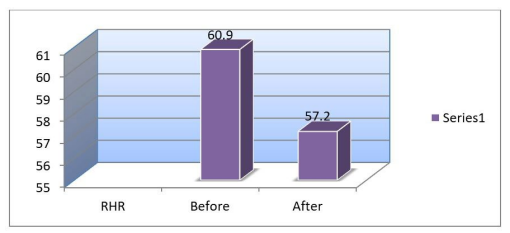
Figure 1: RHR of Players Before and After Supplementation
Figure 2 show that sample football players have cooper before supplementations 2,740 meters and after supplementation 3,320 meter. This result show that sample football players have change after supplementing the iron because it enhances hemoglobin to carry out more oxygen this enables to get more energy and in- crease endurances.
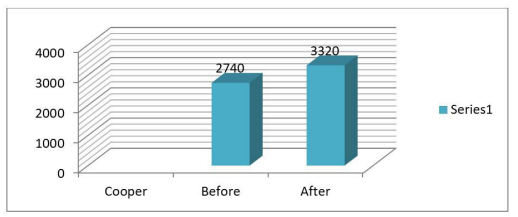
Figure 2: Cooper Test Before and After Supplementation
Figure 3 shows that sample football players have Astrand Tread- mill before supplementations 29.93 mls/kg/min and after sup- plementation 35.65 mls/kg/min. This result show that sample football players have change after supplementing the iron be- cause it enhances hemoglobin and players have Vo2 max.
H0: There is no difference on the effect of iron deficiency and supplementation on player’s performance.
Ho hypothesis set goal that there is no difference on the effect of iron deficiency and supplementation on player’s performance. This fact is rejected according to the result of this study there is iron deficiency on Hadiya lemo and Ambericho sample players and effect of iron supplementation on player’s hematology and physiology.
HI: There is difference on effect of iron deficiency and supple- mentation on player’s performance
According to the result alternative hypothesis is accepted. The result shows that there is effect of iron deficiency on player’s performance and effect of iron supplementation on player’s he- matology and physiology.
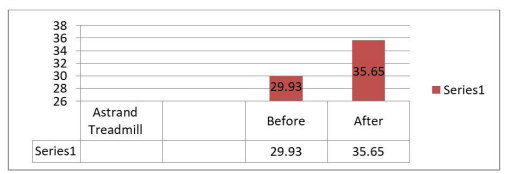
Figure 3: Astrand Treadmill Test Before and After Supplemen- tations.
Discussion
The result show that RBC of sample players before supplement was 4.28 ± 0.132. The means RBC difference of sample play- ers after supplement was 5.26 ±0.132 therefore sample players gives RBC mean difference show increase by 0.98mm3 iron supplementation and endurance training. Hb of sample football players has 14.38g/dl before supplement and 17.7g/dl has after supplement iron.3.35g/dl.
Endurance athletes with normal hemoglobin status who attempt to increase their red blood cells (RBC) and hemoglobin levels may benefit from iron supplementation [14]. Iron absorption is the main mechanism through which iron balance is maintained. Iron plays a critical role in oxygen transport as it is necessary for the formation of Hb, the oxygen transport protein that is critical for aerobic capacity.
The result show that Astrand Treadmill test before supplementa- tions 29.93 mls/kg/min and after supplementation 35.65 mls/kg/ min. Mean difference show that 5.72 mls/kg/min after supple- mentation. This result supported by that Exercise and/or physi- cal activity is characterized by a substantial increase in oxygen needs [1]. Iron is an essential factor for the formation of Hb, the protein responsible for oxygen transport from the respiratory organs to the peripheral tissues [1]. Increases in central O2 de- livery (cardiac output) and peripheral O2 uptake (arteriovenous oxygen difference) contribute to training induced improvements in cardiorespiratory fitness.
The improvement of iron status due to iron supplementation has been accompanied by an improvement in endurance capacity [7]. However, in Astrand treadmill test improvements have been observed in sample football players. RBC and Hb level have change on endurance group of Hadiyas lemo and Ambericho soccer players. Iron supplementation to soccer players with high intensity endurance exercise is necessary to RCB and Hb concentration increment. High intensity group highly improved physiological RHR, Hb and endurance performance efficiencies endurance group of both Ambericho and Hadiya lemo soccer players. Iron is essential for endurance exercise for the forma- tion of hemoglobin and oxygen carrying capacity. Acute stren- uous physical activity may alter several indices of iron status. A significant reduction in serum iron levels of 12.2 μmol/L was reported after a triathlon completion [2]. The authors proposed that heavy sweating or a prelate iron deficiency may explain the observed severe reduction of serum iron. However, sweat iron concentration does not correlate with the increased whole body sweat rates [15]. A slight increase in exercise although within the normal range, has also been recorded after incremental run- ning to exhaustion, but not after 45 min of submaximal exercise or after 3 consecutive days of aerobic training in highly trained endurance cyclists [16]. This idea supported by finding of table 4.1.4 explain that RHR before supplementations 60.9 beat/min- ute and after supplementation 57.2 beat/minute. Cooper before supplementations 2,740 meters and after supplementation 3,320 meter. Astrand Treadmill before supplementations 29.93 mls/kg/ min and after supplementation 35.65 mls/kg/min resting heart rate of sample football has mean deference 3.7 beat/minute after supplement iron, Cooper test of players have mean deference of 580 meters after supplement iron and Astrand Treadmill test of players have mean difference 5.72 mls/kg/min after supplement.
This result show that enhance and bring change on significant reduction in serum iron Lack of adequate amounts of iron for the formation of Hb due to iron deficiency, can strongly affect physical work capacity, by reducing oxygen conveyance to the exercising muscles. The result show that sample football play- ers measuring data has change RHR, Hb after supplementing iron and it show increase. Astrand treadmill test and Cooper 12-minute test increase than they test before iron supplement. Therefore, Hadiya hosanna and Ambericho football players has extensive training and competition this can strongly affect phys- ical work capacity, by reducing oxygen conveyance to the exer- cising muscles. The result showed that change on hematology and physiology after them supplementing iron [17-20].
Acknowledgements
The authors first like to acknowledge almighty GOD then all of the staff members, advisors Dr. Asim Kahan, Mr. Amanu Eba, Fkreyesus Daniel (PhD), Jimma university research directorate and Jimma city Handball team, coaches staff Contributors for their efforts in the process of publishing this article.
Ethical Requirement
The study was conducted under the auspices of Wachemo Uni- versity rules, policies and code of conduct governing research activities and ethical issues and also obtained approval from the Institutional Research Ethics Review Committee (IRERC) of Haramaya University College of Public Health and Medical Sci- ence. Written informed consent to participate in this study was provided by the participants’ legal guardian/next of kin.
Funding
This work supported by Wachemo University from research block grant for the financial support of the experiment and data collections.
Authors Contribution
Fkreyesus Daniel (PhD) contributed in analysis and interpreta- tion of data. Dagle Shamoros (PhD) contributed in conception and a critical revision of the article. All authors read and ap- proved the final manuscript.
References
- Beard, J., & Tobin, B. (2000). Iron status and exercise. The American journal of clinical nutrition, 72(2), 594S-597S.
- Blee, T., Goodman, C., Dawson, B., & Stapff, A. (1999).The effect of intramuscular iron injections on serum ferritin levels and physical performance in elite netballers. Journal of science and medicine in sport, 2(4), 311-321.
- Dressendorfer, R. H., Keen, C. L., Wade, C. E., Claybaugh,J. R., & Timmis, G. C. (1991). Development of runner's ane- mia during a 20-day road race: effect of iron supplements. International journal of sports medicine, 12(03), 332-336.
- Hood, D. A., Kelton, R., & Nismo, M. L. (1992). Mitochon- drial actaptations to chronic muscle use: effect of iron defi- ciency. Comparative Biochemistry and Physiology Part A: Physiology, 101(3), 597-605.
- Gardner, G. W., Edgerton, V. R., Barnard, R. J., & Bernauer,E. M. (1975). Cardiorespiratory, hematological and physical performance responses of anemic subjects to iron treatment. The American journal of clinical nutrition, 28(9), 982-988.
- Rowland, T. W., Deisroth, M. B., Green, G. M., & Kelle- her, J. F. (1988). The effect of iron therapy on the exercise capacity of nonanemic iron-deficient adolescent runners. American Journal of Diseases of Children, 142(2), 165-169.
- Karamizrak, S. O., IÅ?legen, C., Varol, S. R., TaÅ?kiran, Y., Yaman, C., & et al. (1996). Evaluation of iron metabolism indices and their relation with physical work capacity in athletes. British journal of sports medicine, 30(1), 15-19.
- LaManca, J. J., & Haymes, E. M. (1993). Effects of iron re- pletion on VO2max, endurance, and blood lactate in wom- en. Medicine and science in sports and exercise, 25(12), 1386-1392.
- Risser, W. L., Lee, E. J., Poindexter, H. B., West, M. S., Pivarnik, J. M., & et al. (1988). Iron deficiency in female athletes: its prevalence and impact on performance. Med- icine and Science in Sports and Exercise, 20(2), 116-121.
- Magazanik, A., Weinstein, Y., Abarbanel, J., Lewinski, U., Shapiro, Y., & et al. (1991). Effect of an iron supplement on body iron status and aerobic capacity of young training women. European journal of applied physiology and occu- pational physiology, 62(5), 317-323.
- Nachtigall, D., Nielsen, P., Fischer, R., Engelhardt, R., & Gabbe, E. E. (1996). Iron deficiency in distance Runners A reinvestigation using 59Fe-Labelling and non-invasive liver iron quantification. International journal of sports medicine, 17(07), 473-479.
- Scobie, B. A. (1985). Recurrent gut bleeding in five long-distance runners. The New Zealand Medical Journal, 98(790), 966.
- Schoene, R. B., Escourrou, P., Robertson, H. T., Nilson, K. L., Parsons, J. R., & et al. (1983). Iron repletion decreases maximal exercise lactate concentrations in female athletes with minimal iron-deficiency anemia. The Journal of labo- ratory and clinical medicine, 102(2), 298-305.
- Speich, M., Pineau, A., & Ballereau, F. (2001). Minerals, trace elements and related biological variables in athletes and during physical activity. Clinica chimica acta, 312(1-2), 1-11.
- Aruoma, O. I., Reilly, T., MacLaren, D., & Halliwell, B. (1988). Iron, copper and zinc concentrations in human sweat and plasma; the effect of exercise. Clinica Chimica Acta, 177(1), 81-87.
- Åstrand, P. O., & Slating, B. (1961). Maximal oxygen up- take and heart rate in various types of muscular activity.Journal of Applied Physiology, 16(6), 977-981.
- Fogelholm, M., Jaakkola, L., & Lampisjärvi, T. (1992). Ef- fects of iron supplementation in female athletes with low serum ferritin concentration. International journal of sports medicine, 13(02), 158-162.
- Klingshirn, L. A., Pate, R. R., Bourque, S. P., Davis, J. M., & Sargent, R. G. (1992). Effect of iron supplementation on endurance capacity in iron-depleted female runners. Medi- cine and science in sports and exercise, 24(7), 819-824.
- Williams, M. H. (1999). Nutrition for health, fitness and sport (No. Ed. 5). WCB/McGraw-Hill.
- Klingshirn, L. A., Pate, R. R., Bourque, S. P., Davis, J. M., & Sargent, R. G. (1992). Effect of iron supplementation on endurance capacity in iron-depleted female runners. Medi- cine and science in sports and exercise, 24(7), 819-824.