

Advances in Bioengineering and Biomedical Science Research(ABBSR)
ISSN: 2640-4133 | DOI: 10.33140/ABBSR

Impact Factor: 1.7

Research Article - (2018) Volume 1, Issue 1
The Discovery of the Skipping Generations Phenomenon
Received Date: May 10, 2018 / Accepted Date: May 17, 2018 / Published Date: May 25, 2018
Copyright: ©Copyright: ©2018 Mouza Mohammed AlFashti AlAleeli. This is an open-access article distributed under the terms of the Creative Commons Attribution License, which permits unrestricted use, distribution, and reproduction in any medium, provided the original author and source are credited.
Abstract
Statement of the Problem: The demanding need to discover someone’s identity is not possible with the nuclear DNA especially when the traces are highly degraded, since the nuclear DNA is destroyed in these conditions. Only the mitochondrial DNA that is inherited maternally can survive in these compromised conditions. The purpose of this study is to find a genetic commonality between UAE nationals.
Methodology and Theoretical Orientation: 150 buccal swabs of unrelated UAE female students (approved by the UAE ID) of Sharjah Higher Colleges of Technology were collected and kept at room temperature for a period of three months or longer; to destroy the nuclear DNA, so only the mtDNA is present. mtDNA testing was performed on these buccal swabs, and it’s consisting of DNA Extraction, Real-Time quantitative PCR, Cycle sequencing and Capillary electrophoresis. The ABI PRISM®310 Genetic Analyzer capillary autosequencer [ABI PRISM® SeqScape® Soft-ware Version 2.6] was used to generate the mitochondrial DNA profiles.
Findings: From these haplotype data, a total of 229 polymorphisms were observed carefully. 106 different polymorphisms were identified out of them, and classified into unique and common polymorphisms. Interestingly, two individuals from the study subjects lacked unique polymorphisms.
Conclusion and Significance: It’s impossible for anyone to preserve their mtDNA from their great ancestors till now. The discovery of the remains of the Romanov family back in 1991 concluded that the comparison of mtDNA that is more than three generations old is more likely to get at least one mutation in the current generation. Therefore, if a vertical study is done on those two individuals with their older generations, definitely they will have unique polymorphisms compared to their older generations. Those two individuals are the effect of “Skipping Generations” phenomenon, the term that I have invented to solve the mystery of having two individuals with no unique polymorphisms.
Keywords
Haplotype, Mitochondrial DNA, Polymorphisms, "Skipping Generation" phenomenon
Introduction
The mitochondrion is a two-walled organelle that is present within the cytoplasm of a human cell. Tao reports, in the 1840s, Carl Benda is the one who discovered the mitochondria, when he was examining a living cell by a light microscope, and named them as such so [1]. The mitochondrion is like a factory that produces cellular energy. Tao adds that in the 1930s, Hans Krebs is the one who stated the function of the mitochondria through a process called oxidative phosphorylation, which is a process that produces ATPs that can transport chemical energy that fuels the entire cell [1]. The mitochondrion has its own DNA that is different from the nuclear DNA, as described in Figure 1.Tao writes, Margit Nass and Sylvan Nass were the ones who noted the presence of small circular double-stranded DNAs within the mitochondria in the 1960s [1].
The mitochondrial DNA has two regions, which are the coding and non-coding regions. Evans observes that the coding region of the mitochondrial DNA has 37 transcribed genes that code for products that are used in the oxidative phosphorylation process and these are 13 proteins, 2 ribosomal RNAs and 22 transfer RNAs [2]. Butler points out, the non-coding region of the mitochondrial DNA that doesn’t code for any gene products is called as the control region, which has Hypervariable Region 1 and Hypervariable Region 2 that most of the forensic DNA studies are focused on [3]. The mitochondrial DNA is strictly inherited from the mother. Reid describes that during spermatogenesis, the sperm mitochondria are tagged with ubiquitin, which is a protein that signals for degradation, as a consequence, if any sperm mitochondria entered a fertilized egg, they will be selectively destroyed, and that explains the maternal inheritance of the mitochondrial DNA [4]. The mitochondrial DNA can survive in highly degraded biological samples. Butler contends, heat and humidity has no effect on getting the mitochondrial DNA to be damaged due to two main reasons; first, a single cell can accommodate hundreds of mitochondria and each mitochondrion contains 5 copies of the mitochondrial DNA, second, exonucleases cannot break the mitochondrial DNA because of its circular nature, these two reasons increase the rate of survival in highly degraded biological samples compared to the nuclear DNA [3]. Mitochondrial DNA testing takes advantage of the mitochondrial DNA’s exceptional characteristics; to successfully identify unknown compromised biological remains. All mitochondrial DNA profiles are compared to the Anderson sequence, and any base change in the mitochondrial DNA profile that is different from the Anderson sequence is considered as a polymorphism. Butler emphasizes that in 1981, Anderson is the one who first sequenced the whole mitochondrial genome, and the Anderson sequence is called now a days as the revised Cambridge Reference Sequence, which is all the mitochondrial DNA profiles are compared to [3]. The mitochondrial DNA has a high mutation rate due to having few DNA repair mechanisms. Butler confirms, because of the high mutation rate of the mitochondrial DNA, there is an increased variability between individuals, so they can be classified into haplogroups according to their common polymorphisms [3]. The aim of the work undertaken is to find a similarity between the UAE nationals that is unique enough to recognize them as a haplogroup. But through looking at the differences, we have discovered the “Skipping Generations” phenomenon.

Figure 1: The structure of the mitochondrial DNA. It is a circular genome that has a heavy strand from the outside and a light strand from the inside, it is about 16569 base pair long, and it has a coding region and non-coding region, and the non-coding region is called the control region that contains Hypervariable Region 1 (HV1) and Hypervariable Region 2 (HV2), which are most targeted by the forensics [5]
Materials and Methodology
Data Collection
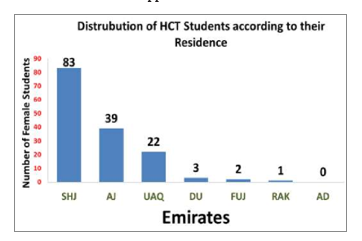
Buccal swabs of 150 unrelated UAE female students (approved by the Emirates identity card) of Sharjah Higher Colleges of Technology were collected from each individual’s cheek in a period from 26/10/2014 to 16/10/2014. Some of those students were from Sharjah, Ajman, Umm Al Quwain, Dubai, Ras Al Khaimah and Fujairah (Appendix D). 148 of them were 18 year old to 28 year old, whereas the other two were 35 year old (Appendix E). 67 different surnames were identified and 7 students don’t have any family name, as shown in Figure 2. The inclusion and exclusion criteria are listed in Table 1, since only 86 of the 150 students were accepted to be enrolled in our study. The sample size estimation of our research is based on the Confidence interval-based formula, and according to this formula, we are targeting only 11% of the whole UAE population, as explained in Figure 3. All the buccal swabs were air-dried at room temperature in a safety cabinet overnight. Then, in the following morning, all the samples were tightly closed and kept on the bench at room temperature for a period of three months or longer; to destroy the nuclear DNA. Therefore, the only DNA that will be present in those samples is the mitochondrial DNA.
Appendix D
Appendix E

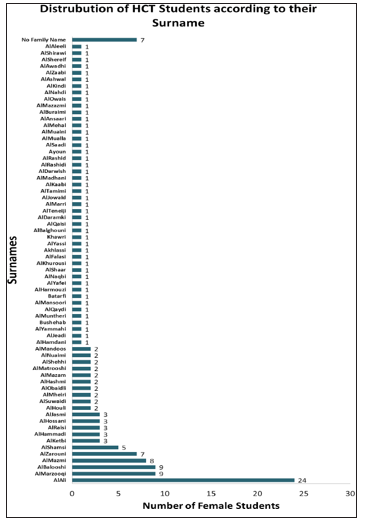
Figure 2: List of all the different family names that were identified: The largest group was from AlAl
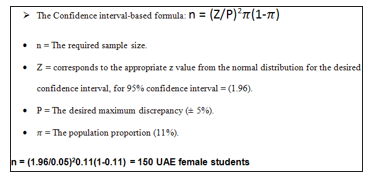
Figure 3: Sample Size Estimation: The number of UAE female students that should be enrolled in our study is based on the Confidence interval-based formula
Table 1: The Inclusion and Exclusion Criteria
|
Inclusion Criteria |
Exclusion Criteria |
Children won’t understand the purpose of this research and they won’t give useful or correct information about the origin of their family. However, elderly people won’t cooperate with us; they won’t tell us about their real age as they are going to pretend that they are from a younger generation, and this is may affect the whole outcome of the research.
We have the access to the student schedule for any female student from Sharjah Women’s College only. Therefore, female students will be available in the college according to their schedule, so if there is any further investigation, we know how to reach them. Male students who are from Sharjah Men’s College are not part of our study due to the lack of availability, since we don’t have the access to their student schedule. |
In our study, we are required to get some personal information, as a rule we are not allowed to get any personal information from any teacher in our college.
For example, sisters are maternally related; they have the same mitochondrial DNA, which was inherited from their mother. As a result, the outcome of the study will be bias toward one family name than the other. |
|
|
3. Refuse to give informed consent. Any individual who don’t want to be informed about the purpose of the study, the possible outcomes of the study and the meanings of the outcomes is immediately excluded from the study, because that individual won’t cooperate with us if there is any further investigation. |
DNA Extraction
Randomly, out of the 86 buccal swabs, 50 buccal swabs were extracted along with extraction negative controls. The extraction process is done by the AutoMate Express™ Instrument by using the PrepFiler Express™ Forensic DNA Extraction kit (Appendix F). The addition of proteinase K is not included in the Our DNA extraction protocol, because our AutoMate Express™ Instrument works by the Magnetic Beads technology. Proteinase K is an enzyme that digests proteins, which is used to remove contaminating proteins that are present in the sample that needs to be purified, or t destroy a cellular matrix that is made of proteins, such as the structure of the bone. In our case, we don’t have cellular matrixes that are made of proteins, since they are only buccal cells. However, contaminating proteins are major risk that treatns ourspecimens, and the agnetc Beads technology eliminates this risk without the use of proteinase K. The concept ofthe Manetic Beads technology relies on the attraction of te apposite charges and the repulsion of the same charges. The DNA is always negatively charged, while the protein can be negatively orpositively charged depends on the pH environment of the aqueous wash buffer (whether it is low or high pH). Therefore, the DNA that is negatively charged will attract to the magnetic bead that is positively charged, and the pH environment of the aqueous wash buffer will be low, so the protein will be positively charged, as a consequence, the protein will repel from the magnetic bead. As a result, the DNA purification will be free from any contaminating proteins.
Appendix F
DNA Extraction Protocol
DNA Extraction
1. Change the previous laboratory coat and wear a new one just for the Pre-PCR section (Name it as Pre-PCR laboratory coat).
2. Wear a mask and double gloves.
3. Disinfect the inner part of the Safety cabinet with 70% Isopropyl Alcohol wipes.
4. Disinfect the 300µL pipette, the two racks, the outside of the tips boxes and the marker pen with 70% Isopropyl Alcohol wipes
5. Remove the double gloves, and wear new double gloves. Then, wash the double gloved hands with 95% Ethanol solution.
6. Use the marker pen to label the Filter tubes (on the top and the side of the tubes) and the Elution tubes (on the top of the tubes only) to their corresponding code number.
7. Choose an area in the Safety cabinet where the buccal swabs can be cut (Name it as the Cutting area).
8. Disinfect the Cutting area with 5% Sodium hypochlorite solution, and followed by with 95% Ethanol solution.
9. Place a filter paper on the Cutting area.
10. Take out the desired buccal swab from its transport tube and place it vertically on the center of the filter paper (the cotton area of the buccal swab is faced down).
11. Use the other hand to grape a sterile surgical blade to cut one fourth of the cotton area of the buccal swab (Name it as the desired portion).
12. Put the buccal swab into its transport tube.
13. Use the same surgical blade to catch the desired portion and place it into its corresponding Filter tube.
14. Place the surgical blade that has been used in the center of the filter paper; to cover it with the filter paper in order to discard it into its appropriate discarding bin.
15. Wash the double gloved hands with 95% Ethanol solution.
16. Disinfect the Cutting area with 5% Sodium hypochlorite solution, and followed by with 95% Ethanol solution.
17. Repeat step 9, 10, 11, 12, 13, 14, 15 and 16 for the next buccal swab.
18. Dispense 300µL of the Lysis Buffer solution into each Filter tube.
19. Place the Filter tubes in the ThermoMixer at 70OC for 20 minutes.
20. At the meantime, prepare the AutoMate Express™ Instrument by disinfecting the Cartridge rack and the Tip&Tube rack with 70% Isopropyl Alcohol wipes.
21. Take out one reagent Cartridge for each sample tube, and shake them for 15 seconds.
22. Load the desired number of reagent Cartridges in the Cartridge rack.
23. Insert the loaded Cartridge rack into the AutoMate Express™ Instrument.
24. Place the Elution tubes in the E-row of the Tip&Tube rack, and open them.
25. On the same rack, place the Tips that are inserted into the Tip Holders in the front of each Elution tube in T1-row.
26. After the ThermoMixer is finished, centrifuge the Filter tubes for 3 minutes at 400 rpm [Revolutions Per Minute].
27. After the centrifugation is finished, take out the filter part of each the Filter tube, and discard it into its appropriate discarding bin.
28. On the Tip&Tube rack, place the other parts of the Filter tubes in front of their corresponding Elution tube in S-row.
29. Insert the loaded Tip&Tube rack into the AutoMate Express™ Instrument.
30. Set up the right protocol for the AutoMate Express™ Instrument by pressing ENTER, No.1, ENTER. Then, start the process by pressing START. The DNA Extraction process will take 30 minutes.
31. After the DNA Extraction process is finished, place the Elution tubes in the refrigerator at 4°C until the next step.
Mito-PCR
Out of the 50 samples that have been extracted, only 21 samples were selected to be proceeding to the rest of the Mitochondrial DNA test. We have used the AmpliTaq Gold® 360 Master Mix kit from the Applied Biosystems® to prepare a polymerase chain reaction (PCR) for those 21 samples (Appendix G). We have targeted Hypervariable Region 1 and Hypervariable Region 2 of the mitochondrial genome to perform our research on (Appendix H). The design of the forward primers and reverse primers for Hypervariable Region 1 and Hypervariable Region 2 are listed in Table 2. We have used the MultiGene Thermal Cycler to do our PCR reaction on, which is mainly consist of 34-38 cycles of denaturation at 94°C; to separate the double-stranded DNA, primer annealing at 56°C; to let the primers attach to the DNA, and extension by DNA polymerase at 72°C; to let the DNA to be synthesized. This technique is used to double the amount of the DNA.
Appendix G
Mito-PCR Protocol
1. Wear the Pre-PCR laboratory coat.
2. Wear a mask and double gloves.
3. Disinfect the inner part of the PCR WorkStation with 70% Isopropyl Alcohol wipes.
4. Disinfect the pipettes, the PCR racks, the outside of the tips boxes and the marker pen with 70% Isopropyl Alcohol wipes.
5. Remove the double gloves, and wear new double gloves. Then, wash the double gloved hands with 95% Ethanol solution.
6. Use the marker pen to label the PCR tube (on the top and the side of the tube) as HV1 with the sample code number. Take another PCR tube and label it as HV2 with the same sample code number. So, each sample must have two PCR tubes, one for HV1 and the other one for HV2.
7. Repeat step 6 for the next sample.
8. Dispense 12.5 µL of AmpliTaq Gold® 360 Master Mix, 1.25 µL of Forward Primer [HV1], 1.25 µL of Reverse Primer [HV1] and 9 µL of Nuclease-Free Water into each (HV1) PCR tube.
9. Dispense 12.5 µL of AmpliTaq Gold® 360 Master Mix, 1.25 µL of Forward Primer [HV2], 1.25 µL of Reverse Primer [HV2] and 9 µL of Nuclease-Free Water into each (HV2) PCR tube.
10. Take 1 µL of each extracted DNA, and put them into their corresponding PCR tubes [according to their sample code numbers].
11. Centrifuge the (HV1) and (HV2) PCR tubes for 1 minute at 14.1 rcf [Relative Centrifugal Force].
12. Remove the Pre-PCR laboratory coat (to enter the Post-PCR section) and wear a new one just for the Post-PCR section (Name it as Post-PCR laboratory coat).
13. Put the (HV1) and (HV2) PCR tubes in the MultiGene Thermal Cycler. Run the “Mito-PCR” protocol, after typing the total volume = 25 µL. The “Mito-PCR” process will take 2 hours and 41 minutes.
14. After the “Mito-PCR” process is finished, place the (HV1) and (HV2) PCR tubes in the refrigerator at 4°C until the next step.
Appendix H
The selected regions of the Mitochondrial DNA from Anderson sequence
Hypervariable Region 2 (15-484)
|
1 |
gatcacaggtctatcaccctattaaccactcacgggagctctccatgcatttggtatttt |
|
61 |
cgtctggggggtgtgcacgcgatagcattgcgagacgctggagccggagcaccctatgtc |
|
121 |
gcagtatctgtctttgattcctgcctcattctattatttatcgcacctacgttcaatatt |
|
181 |
acaggcgaacatacctactaaagtgtgttaattaattaatgcttgtaggacataataata |
|
241 |
acaattgaatgtctgcacagccgctttccacacagacatcataacaaaaaatttccacca |
|
301 |
aacccccccctccccccgcttctggccacagcacttaaacacatctctgccaaaccccaa |
|
361 |
aaacaaagaaccctaacaccagcctaaccagatttcaaattttatctttaggcggtatgc |
|
421 |
acttttaacagtcaccccccaactaacacattattttcccctcccactcccatactacta |
|
481 |
atctcatcaatacaacccccgcccatcctacccagcacacacacaccgctgctaacccca |
Hypervariable Region 1 (15971-16451)
|
15961 |
agaaaaagtctttaactccaccattagcacccaaagctaagattctaatttaaactattc |
|
16021 |
tctgttctttcatggggaagcagatttgggtaccacccaagtattgactcacccatcaac |
|
16081 |
aaccgctatgtatttcgtacattactgccagccaccatgaatattgtacggtaccataaa |
|
16141 |
tacttgaccacctgtagtacataaaaacccaacccacatcaaaccccccccccccatgct |
|
16201 |
tacaagcaagtacagcaatcaaccttcaactatcacacatcaactgcaactccaaagcca |
|
16261 |
cccctcacccactaggataccaacaaacctacccacccttaacagtacatagtacataaa |
|
16321 |
gtcatttaccgtacatagcacattacagtcaaatcccttctcgtccccatggatgacccc |
|
16381 |
cctcagataggggtcccttgaccaccatcctccgtgaaatcaatatcccgcacaagagtg |
|
16441 |
ctactctcctcgctccgggcccataacacttgggggtagctaaagtgaactgtatccgac |
Table 2: Primer Sequences for PCR and Sequencing Reactions for Hypervariable Region 1 and Hypervariable Region 2 of the Mitochondrial Genome
|
Region of the Mitochondrial Genome |
Position |
Primer Type |
Primer Sequence |
|
Hypervariable Region 1 |
15971 |
Forward |
5´-TTAACTCCACCATTAGCACC-3´ |
|
Hypervariable Region 1 |
16451 |
Reverse |
5´-GCGAGGAGAGTAGCACTCTTG-3´ |
|
Hypervariable Region 2 |
15 |
Forward |
5´-CACCCTATTAACCACTCACG-3´ |
|
Hypervariable Region 2 |
484 |
Reverse |
5´-TGAGATTAGTAGTATGGGAG-3´ |
EXO-SAP
The EXO-SAP solution mainly consists of Exonuclease I and Shrimp Alkaline Phosphatase, which are hydrolytic enzymes. The Exonuclease I will degrade the remaining single-stranded primers and any accidental single-stranded DNA that were produced by the PCR. From the PCR mixture, there will be residual dNTPs that will interfere with the sequencing reaction, and the Shrimp Alkaline Phosphatase will hydrolyze those dNTPs. Therefore, after the PCR reaction is finished, the EXO-SAP solution is added to the PCR products (Appendix I). We have used the MultiGene Thermal Cycler to incubate the EXO-SAP tubes for 15 minutes at 37°C for treatment and another 15 minutes at 80°C for inactivation.
Appendix I
EXO-SAP Protocol
1. Wear the Post-PCR laboratory coat.
2. Wear a mask and double gloves.
3. Disinfect the inner part of the Compact Vertical Laminar Flow Bench(Telstar Mini-V/PCR) with 70% Isopropyl Alcohol wipes.
4. Disinfect the pipettes, the PCR racks, the outside of the tips boxes and the marker pen with 70% Isopropyl Alcohol wipes.
5. Remove the double gloves, and wear new double gloves. Then, wash the double gloved hands with 95% Ethanol solution.
6. Use the marker pen to label the EXO-SAP tube (on the top and the side of the tube) as HV1 with the sample code number. Take another EXO-SAP tube and label it as HV2 with the same sample code number. So, each sample must have two EXO-SAP tubes, one for HV1 and the other one for HV2.
7. Repeat step 6 for the next sample.
8. Dispense 2 µL of the EXO-SAP solution into each EXO-SAP tube.
9. Take 5 µL from each PCR reaction, and put them into their corresponding EXO-SAP tubes [according to their sample code numbers and Hypervariable regions].
10. Put the EXO-SAP tubes in the MultiGene Thermal Cycler. Run the “EXO-SAP” protocol, after typing the total volume = 7 µL. The “EXO-SAP” process will take 30 minutes.
11. After the “EXO-SAP” process is finished, place EXO-SAP tubes in the refrigerator at 4°C until the next step.
Gel Electrophoresis
We have performed gel electrophoresis for the PCR products of Hypervariable Region 1 and Hypervariable Region 2 by using 3% Agarose gel, which is recommended for small PCR products of less than 150 nucleotides (Appendix J). The purpose of performing gel electrophoresis is to decide whether we should dilute the EXO-SAP tubes or not, based on the thickness of each band; if the bands are too thick, they must be diluted. This decision will tell us the exact amount that we should take from each EXO-SAP tube, in order to do the sequencing reaction, as explained in Figure 4-10.
Appendix J
Gel Electrophoresis Protocol
1. Wear the Post-PCR laboratory coat.
2. Wear a mask and double gloves.
3. Disinfect the working area, the pipettes and the outside of the tips boxes with 70% Isopropyl Alcohol wipes.
4. Place the pre-prepared 3% Agarose gel (3 g of Agarose powder + 100 mL of the 1X TAE (Tris-acetate-EDTA) buffer + 1 µL of the 10 mg/mL Ethidium Bromide (EtBr)) inside the electrophoresis chamber (in the center where the wells are near to the negative side and far away from the positive side of the electrophoresis).
5. Pour the right amount of 1X TAE buffer in the electrophoresis chamber (the right amount means that the gel is submerged under about 2 mm of buffer).
6. Add the desired number of tiny separated drops of the 10 mg/ mL Ethidium Bromide on the Parafilm sheet (each drop of the 10 mg/mL Ethidium Bromide is for one PCR product).
7. For each PCR product ((HV1) and (HV2) PCR tubes), pipette 6 µL of the PCR product and dispense it into any drop of the 10 mg/mL Ethidium Bromide. Then, re-take it and mix it few times immediately. After that immediately load it into the well in the gel.
8. After loading all the wells, close the electrophoresis chamber with its lid.
9. Run the gel at 140 volts for 45 minutes.
10. After the running is finished, take out the gel and place it inside the Gene Flash Syngene Bio Imaging, which works with the Ultraviolet (UV) light.
11. After the photograph is displayed on the screen, decide the amount that we should take from each PCR product (which is present in the EXO-SAP tube) for the Sequencing step. The decision must consider the thickness of the bands (because if they are too thick, they must be diluted).

Figure 4: Gel electrophoresis photograph for HCT-1 HV1, HCT-1 HV2, HCT-7 HV1 and HCT-7 HV2

Figure 5: Gel electrophoresis photograph for HCT-22 HV1, HCT-22
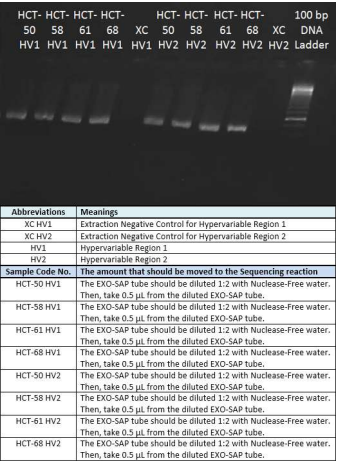
Figure 6: Gel electrophoresis photograph for HCT-50 HV1, HCT-50 HV2, HCT-58 HV1, HCT-58 HV2, HCT-61 HV1, HCT-61 HV2, HCT-68 HV1 and HCT-68 HV2v
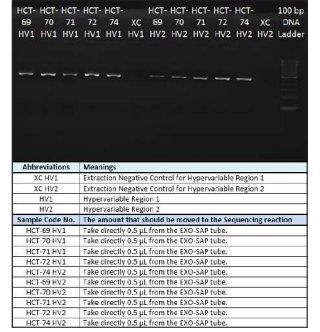
Figure 7: Gel electrophoresis photograph for HCT-69 HV1, HCT-69HV2, HCT-70 HV1, HCT-70 HV2, HCT-71 HV1, HCT-71 HV2, HCT-72 HV1, HCT-72 HV2, HCT-74 HV1 and HCT-74 HV2

Figure 8: Gel electrophoresis photograph for HCT-87 HV1, HCT-97 HV1, HCT-98 HV1, HCT-103 HV1, HCT-133 HV1 and HCT-150 HV1
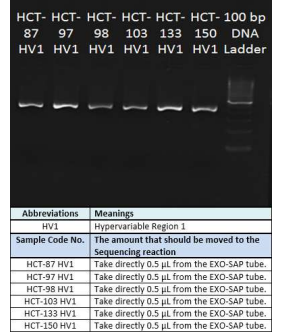
Figure 9: Gel electrophoresis photograph for HCT-87 HV2, HCT-97 HV2, HCT-98 HV2 and HCT-103 HV
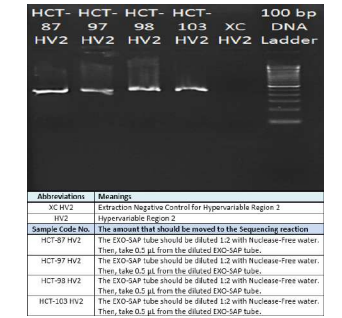
Figure 10: Gel electrophoresis photograph for HCT-87 HV2, HCT-97 HV2, HCT-98 HV2 and HCT-103 HV2
Sequencing
The sequencing reaction is done by the Sanger method for DNA sequencing by using Big Dye X Terminator Cycle Sequencing kit from the Applied Biosystems® (Appendix K). The sequencing reaction differs from the PCR reaction in one thing that is the addition of the chain terminators, which are the dideoxyribonucleotide triphosphates (ddNTPs). Those are capable of generating fragments of single nucleotide resolution, as described in Figure 11.
Appendix K
Sequencing Protocol
1. Wear the Pre-PCR laboratory coat.
2. Wear a mask and double gloves.
3. Disinfect the inner part of the PCR WorkStation with 70% Isopropyl Alcohol wipes.
4. Disinfect the pipettes, the PCR racks, the outside of the tips boxes and the marker pen with 70% Isopropyl Alcohol wipes.
5. Remove the double gloves, and wear new double gloves. Then, wash the double gloved hands with 95% Ethanol solution.
6. Use the marker pen to label the PCR tube (on the top and the side of the tube) as HV1 F (Forward) with the sample code number. Take a second PCR tube and label it as HV1 R (Reverse) with the same sample code number. Take a third PCR tube and label it as HV2 R (Forward) with the same sample code number. Take a fourth PCR tube and label it as HV2 R (Reverse) with the same sample code number. So, each sample must have four PCR tubes, two for HV1 (Forward and Reverse) and the other two for HV2 (Forward and Reverse).
7. Repeat step 6 for the next sample.
8. Dispense 5.25 µL of Nuclease-Free Water, 2 µL of RRM (Ready Reaction Mix), 1 µL of Sequencing buffer and 1.25 µL of Forward Primer [HV1] into each (HV1 F) PCR tube.
9. Dispense 5.25 µL of Nuclease-Free Water, 2 µL of RRM (Ready Reaction Mix), 1 µL of Sequencing buffer and 1.25 µL of Reverse Primer [HV1] into each (HV1 R) PCR tube.
10. Dispense 5.25 µL of Nuclease-Free Water, 2 µL of RRM (Ready Reaction Mix), 1 µL of Sequencing buffer and 1.25 µL of Forward Primer [HV2] into each (HV2 F) PCR tube.
11. Dispense 5.25 µL of Nuclease-Free Water, 2 µL of RRM (Ready Reaction Mix), 1 µL of Sequencing buffer and 1.25 µL of Reverse Primer [HV2] into each (HV2 R) PCR tube.
12. Remove the Pre-PCR laboratory coat (to enter the Post-PCR section) and wear the Post-PCR laboratory coat for the Post-PCR section.
13. Wear a mask and double gloves.
14. Disinfect the inner part of the Compact Vertical Laminar Flow Bench(Telstar Mini-V/PCR) with 70% Isopropyl Alcohol wipes.
15. Disinfect the pipettes, the PCR racks, the outside of the tips boxes and the marker pen with 70% Isopropyl Alcohol wipes.
16. Remove the double gloves, and wear new double gloves. Then, wash the double gloved hands with 95% Ethanol solution.
17. Take 0.5 µL from each EXO-SAP tube (from the original or the diluted EXO-SAP tube according to the gel electrophoresis), and put them into their corresponding PCR tubes [according to their sample code numbers and Hypervariable regions].
18. Centrifuge the (HV1 F), (HV1 R), (HV2 F) and (HV2 R) PCR tubes for 1 minute at 14.1 rcf [Relative Centrifugal Force].
19. Put the (HV1 F), (HV1 R), (HV2 F) and (HV2 R) PCR tubes in the MultiGene Thermal Cycler. Run the “Cycle Sequencing” protocol, after typing the total volume = 10 µL. The “Cycle Sequencing” process will take 2 hours and 37 minutes.
20. After the “Cycle Sequencing” process is finished, place the (HV1 F), (HV1 R), (HV2 F) and (HV2 R) PCR tubes in the refrigerator at 4°C until the next step.

Figure 11: The Sanger sequencing process. With one primer, the sequencing reaction splits into separate reactions by the ddNTPs that are labeled with four different colored fluorescent dyes [5]
Clean-Up
After the sequencing reaction is finished, a Clean-up step should be encountered before loading the samples into the ABI PRISM®310 Genetic Analyzer capillary autosequencer. The Clean-up step is done by using the Big Dye X Terminator Purification kit from the Applied Biosystems® (Appendix L).This kit contains two solutions, which are X Terminator and SAM solutions that are capable of isolating the free salts, dNTPs and unincorporated dye terminators at the bottom of a microcentrifuge tube, so by this technique, it will prevent them from being co-injected with the dye-labeled extension fragments from the sequencing reaction. The ABI PRISM®310 Genetic Analyzer capillary autosequencer is a single capillary electrophoresis, the negatively charged DNA will be moved through the capillary that is filled with a viscous liquid gel (POP-7) by an electrokinetic injection to the positive electrode. According to the size of the fragments, a laser beam will be excited on the smallest fragment first and will be detected by the fluorescent detector, and the largest fragment will be last one to be detected, Figure 12 shows the inner parts of the ABI PRISM®310 Genetic Analyzer capillary autosequencer.
Appendix L
Clean-up Protocol
1. Wear the Post-PCR laboratory coat.
2. Wear a mask and double gloves.
3. Disinfect the inner part of the Compact Vertical Laminar Flow Bench (Telstar Mini-V/PCR) with 70% Isopropyl Alcohol wipes.
4. Disinfect the pipettes, the PCR racks, the outside of the tips boxes and the marker pen with 70% Isopropyl Alcohol wipes.
5. Remove the double gloves, and wear new double gloves. Then, wash the double gloved hands with 95% Ethanol solution.
6. Use the marker pen to label the microcentrifuge tube (on the top only) as HV1 F (Forward) with the sample code number. Take a second microcentrifuge tube and label it as HV1 R (Reverse) with the same sample code number. Take a third microcentrifuge tube and label it as HV2 R (Forward) with the same sample code number. Take a fourth microcentrifuge tube and label it as HV2 R (Reverse) with the same sample code number. So, each sample must have four microcentrifuge tubes, two for HV1 (Forward and Reverse) and the other two for HV2 (Forward and Reverse).
7. Repeat step 6 for the next sample.
8. Dispense 10 µL of Big Dye X Terminator solution and 45 µL of SAM solution into each labeled microcentrifuge tube.
9. Take 10 µL from each sequenced DNA, and put them into their corresponding labeled microcentrifuge tubes [according to their sample code numbers, Hypervariable regions and the type of the primer].
10. Mix the labeled microcentrifuge tubes by using the ThermoMixer at room temperature for 35 minutes at 1400 rpm [Revolutions Per Minute].
11. At the meantime, use the marker pen to label the Genetic Analyzer tubes as the labeled microcentrifuge tubes (each Genetic Analyzer tube represents one labeled microcentrifuge tube).
12. After the ThermoMixer is finished, centrifuge the labeled microcentrifuge tubes for 2 minutes at
14.1 rcf [Relative Centrifugal Force].
13. After the centrifugation is finished, take 20 µL of the supernatant from each labeled microcentrifuge tube, and put them into their corresponding labeled Genetic Analyzer tubes [according to their sample code numbers, Hypervariable regions and the type of the primer].
14. Secure the Genetic Analyzer tubes with Genetic Analyzer septa.
15. Place the secured labeled Genetic Analyzer tubes in the ABI PRISM®310 Genetic Analyzer capillary autosequencer. Each Genetic Analyzer tube will take 1 hour to get processed. Use the ABI PRISM® SeqScape® Software Version 2.6 to create a “Mutation Report”, which will contain the profile for all the specimens.
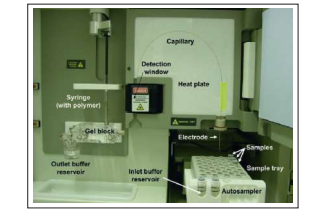
Figure 12: Photograph of the inner parts of the ABI PRISM®310 Genetic Analyzer capillary autosequencer with a single capillary, for a single sequencing reaction, the electrophoresis separation takes 1 hour to be processed [3]
Results
We have used the ABI PRISM® SeqScape® Software Version 2.6 to create a “Mutation Report”, which will contain the mitochondrial DNA profile for all the 21 specimens (Appendix M). We have created a list of the polymorphisms that are needed to be BioEdited due to the presence of insertions (Appendix N).
Appendix M
Mutation Repo
SeqScape 2.6.0 Mutation Report
Generated at: 30 Apr 2015 at 12:35:23 GST
Summary
|
Active Layer |
Layer 1 |
Project |
HCT |
|
Project Creation Date |
07 Apr 2015 at 09:38:04 GST |
Project Modification Date |
23 Apr 2015 at 14:17:39 GST |
|
Project Template (PT) |
MITO |
PT Creation Date |
25 Nov 2013 at 13:30:03 GST |
|
PT Modification Date |
23 Apr 2015 at 14:17:39 GST |
Reference Date Group (RDG) |
MITO |
|
RDG Creation Date |
25 Nov 2013 at 13:19:58 GST |
RGD Modification Date |
23 Apr 2015 at 14:17:39 GST |
|
Display Settings Date |
MITO |
DS Creation Date |
25 Nov 2013 at 13:24:56 GST |
|
DS Modification Date |
23 Apr 2015 at 14:17:39 GST |
Analysis Defaults (AD) |
MITO |
|
AD Creation Date |
25 Nov 2013 at 13:28:48 GST |
AD Modification Date |
23 Apr 2015 at 14:17:39 GST |
|
Specimens in Report |
|
103HV1, 103HV2, 133HV1, 133HV2, 150HV1, 150HV2, 1HV1, 1HV2, 22HV1, 22HV2, 23HV1, 23HV2, 24HV1, 24HV2, 36HV1, 36HV2, 50HV1, 50HV2, 58HV1, 58HV2, 61HV1, 61HV2, 68HV1, 68HV2, 69HV1, 69HV2, 70HV1, 70HV2, 71HV1, 71HV2, 72HV1, 72HV2, 74HV1, 74HV2, 7HV1, 7HV2, 86HV1, 86HV2, 97hv1, 97hv2, 98HV1, 98HV2 |
Mutations
|
Specimen |
Base Change |
ROI |
Position |
Length |
Type |
QV |
Known |
Effect |
Aa Change |
|
103HV1 |
16093t>C |
r CRS |
16093 |
1 |
Sub |
36 |
no |
missense |
F5365L |
|
103HV1 |
16192c>T |
r CRS |
16192 |
1 |
Sub |
48 |
no |
missense |
P5398S |
|
103HV1 |
16201c>T |
r CRS |
16201 |
1 |
Sub |
41 |
no |
missense |
Q5401* |
|
103HV1 |
16223c>T |
r CRS |
16223 |
1 |
Sub |
46 |
no |
missense |
P5408L |
|
103HV2 |
73a>G |
r CRS |
73 |
1 |
Sub |
47 |
no |
missense |
M25V |
|
103HV2 |
189a>G |
r CRS |
189 |
1 |
Sub |
46 |
no |
silent |
- |
|
103HV2 |
195t>C |
r CRS |
195 |
1 |
Sub |
44 |
no |
silent |
- |
|
103HV2 |
204t>C |
r CRS |
204 |
1 |
Sub |
46 |
no |
silent |
- |
|
103HV2 |
207g>A |
r CRS |
207 |
1 |
Sub |
45 |
no |
silent |
- |
|
103HV2 |
210a>G |
r CRS |
210 |
1 |
Sub |
46 |
no |
silent |
- |
|
103HV2 |
263a>G |
r CRS |
263 |
1 |
Sub |
46 |
no |
missense |
H88R |
|
103HV2 |
315-316insC |
r CRS |
315 |
1 |
Ins |
48 |
no |
frameshift insertion |
- |
|
133HV1 |
16223c>T |
r CRS |
16223 |
1 |
Sub |
48 |
no |
missense |
P5408L |
|
133HV1 |
16240a>G |
r CRS |
16240 |
1 |
Sub |
48 |
no |
missense |
N5414D |
|
133HV2 |
146t>C |
r CRS |
146 |
1 |
Sub |
48 |
no |
missense |
L49P |
|
133HV2 |
235a>G |
r CRS |
235 |
1 |
Sub |
37 |
no |
missense |
I79V |
|
133HV2 |
263a>G |
r CRS |
263 |
1 |
Sub |
41 |
no |
missense |
H88R |
|
133HV2 |
315-316insC |
r CRS |
315 |
1 |
Ins |
47 |
no |
frameshift insertion |
- |
|
150HV1 |
16126t>C |
r CRS |
16126 |
1 |
Sub |
45 |
no |
missense |
Y5376H |
|
150HV1 |
16185c>T |
r CRS |
16185 |
1 |
Sub |
47 |
no |
silent |
- |
|
150HV1 |
16355c>T |
r CRS |
16355 |
1 |
Sub |
37 |
no |
missense |
P5452L |
|
150HV1 |
16362t>C |
r CRS |
16362 |
1 |
Sub |
42 |
no |
silent |
- |
|
150HV2 |
58t>C |
r CRS |
58 |
1 |
Sub |
20 |
no |
missense |
F20L |
|
150HV2 |
64c>T |
r CRS |
64 |
1 |
Sub |
44 |
no |
silent |
- |
|
150HV2 |
146t>C |
r CRS |
146 |
1 |
Sub |
45 |
no |
missense |
L49P |
|
150HV2 |
263a>G |
r CRS |
263 |
1 |
Sub |
35 |
no |
missense |
H88R |
|
150HV2 |
310t>C |
r CRS |
310 |
1 |
Sub |
37 |
no |
missense |
|
|
150HV2 |
310-311insTC |
r CRS |
310 |
2 |
Ins |
34 (avg) |
no |
frameshift insertion |
- |
|
1HV1 |
15983t>A |
r CRS |
15983 |
1 |
Sub |
12 |
no |
missense |
- |
|
1HV1 |
16223c>T |
r CRS |
16223 |
1 |
Sub |
47 |
no |
missense |
P5405L |
|
1HV2 |
235a>G |
r CRS |
235 |
1 |
Sub |
42 |
no |
missense |
I79V |
|
1HV2 |
263a>G |
r CRS |
263 |
1 |
Sub |
41 |
no |
missense |
H88R |
|
1HV2 |
315-316insC |
r CRS |
315 |
1 |
Ins |
45 |
no |
frameshift insertion |
- |
|
22HV1 |
16069c>T |
r CRS |
16069 |
1 |
Sub |
50 |
no |
missense |
H5357Y |
|
22HV1 |
16093t>C |
r CRS |
16093 |
1 |
Sub |
38 |
no |
missense |
F5365L |
|
22HV1 |
16126t>C |
r CRS |
16126 |
1 |
Sub |
44 |
no |
missense |
Y5376H |
|
22HV1 |
16145g>A |
r CRS |
16145 |
1 |
Sub |
47 |
no |
silent |
- |
|
22HV1 |
16222c>T |
r CRS |
16222 |
1 |
Sub |
47 |
no |
missense |
P5408S |
|
22HV1 |
16261c>T |
r CRS |
16261 |
1 |
Sub |
44 |
no |
missense |
P5421S |
|
22HV1 |
16300a>G |
r CRS |
16300 |
1 |
Sub |
43 |
no |
missense |
T5434A |
|
22HV2 |
73a>G |
r CRS |
73 |
1 |
Sub |
36 |
no |
missense |
M25V |
|
22HV2 |
183a>G |
r CRS |
183 |
1 |
Sub |
48 |
no |
silent |
- |
|
22HV2 |
263a>G |
r CRS |
263 |
1 |
Sub |
44 |
no |
missense |
H88R |
|
22HV2 |
295c>T |
r CRS |
295 |
1 |
Sub |
45 |
no |
missense |
P99S |
|
22HV2 |
315-316insC |
r CRS |
315 |
1 |
Ins |
48 |
no |
frameshift insertion |
- |
|
22HV2 |
462c>T |
r CRS |
462 |
1 |
Sub |
40 |
no |
missense |
S154L |
|
23HV1 |
16093t>C |
r CRS |
16093 |
1 |
Sub |
36 |
no |
missense |
F5365L |
|
23HV1 |
16148c>T |
r CRS |
16148 |
1 |
Sub |
47 |
no |
missense |
P5383L |
|
23HV1 |
16172t>C |
r CRS |
16172 |
1 |
Sub |
42 |
no |
missense |
I5391T |
|
23HV1 |
16187c>T |
r CRS |
16187 |
1 |
Sub |
47 |
no |
missense |
P5396L |
|
23HV1 |
16188c>G |
r CRS |
16188 |
1 |
Sub |
47 |
no |
missense |
P5396L |
|
23HV1 |
16189t>C |
r CRS |
16189 |
1 |
Sub |
45 |
no |
missense |
S5397P |
|
23HV1 |
16223c>T |
r CRS |
16223 |
1 |
Sub |
48 |
no |
missense |
P5408L |
|
23HV1 |
16230a>G |
r CRS |
16230 |
1 |
Sub |
45 |
no |
silent |
- |
|
23HV1 |
16311t>C |
r CRS |
16311 |
1 |
Sub |
42 |
no |
silent |
- |
|
23HV1 |
16320c>T |
r CRS |
16320 |
1 |
Sub |
43 |
no |
silent |
- |
|
23HV2 |
64c>T |
r CRS |
64 |
1 |
Sub |
28 |
no |
silent |
- |
|
23HV2 |
93a>G |
r CRS |
93 |
1 |
Sub |
48 |
no |
silent |
- |
|
23HV2 |
152t>C |
r CRS |
152 |
1 |
Sub |
47 |
no |
missense |
L51P |
|
23HV2 |
189a>G |
r CRS |
189 |
1 |
Sub |
38 |
no |
silent |
- |
|
23HV2 |
204t>C |
r CRS |
204 |
1 |
Sub |
44 |
no |
silent |
- |
|
23HV2 |
207g>A |
r CRS |
207 |
1 |
Sub |
40 |
no |
silent |
- |
|
23HV2 |
236t>C |
r CRS |
236 |
1 |
Sub |
46 |
no |
missense |
I79T |
|
23HV2 |
247g>A |
r CRS |
247 |
1 |
Sub |
48 |
no |
missense |
E83K |
|
23HV2 |
263a>G |
r CRS |
263 |
1 |
Sub |
44 |
no |
missense |
H88R |
|
23HV2 |
315-316insC |
r CRS |
315 |
1 |
Ins |
47 |
no |
frameshift insertion |
- |
|
24HV1 |
16051a>G |
r CRS |
16051 |
1 |
Sub |
38 |
no |
missense |
T5351A |
|
24HV1 |
16093t>C |
r CRS |
16093 |
1 |
Sub |
38 |
no |
missense |
F5365L |
|
24HV1 |
16209t>C |
r CRS |
16209 |
1 |
Sub |
48 |
no |
silent |
- |
|
24HV1 |
16239c>T |
r CRS |
16239 |
1 |
Sub |
47 |
no |
silent |
- |
|
24HV1 |
16305a>G |
r CRS |
16305 |
1 |
Sub |
47 |
no |
silent |
- |
|
24HV1 |
16352t>C |
r CRS |
16352 |
1 |
Sub |
43 |
no |
missense |
I5451T |
|
24HV1 |
16353c>T |
r CRS |
16353 |
1 |
Sub |
46 |
no |
missense |
I5451T |
|
24HV2 |
26c>A |
r CRS |
26 |
1 |
Sub |
13 |
no |
missense |
T9N |
|
24HV2 |
73t>C |
r CRS |
73 |
1 |
Sub |
39 |
no |
missense |
M25V |
|
24HV2 |
146t>C |
r CRS |
146 |
1 |
Sub |
49 |
no |
missense |
L49P |
|
24HV2 |
152t>C |
r CRS |
152 |
1 |
Sub |
45 |
no |
missense |
L51P |
|
24HV2 |
234a>G |
r CRS |
234 |
1 |
Sub |
45 |
no |
missense |
I78M |
|
24HV2 |
263a>G |
r CRS |
263 |
1 |
Sub |
46 |
no |
missense |
H88R |
|
24HV2 |
315-316insC |
r CRS |
315 |
1 |
Ins |
47 |
no |
frameshift insertion |
- |
|
36HV1 |
16219a>G |
r CRS |
16219 |
1 |
Sub |
47 |
no |
missense |
N5407D |
|
36HV1 |
16261c>T |
r CRS |
16261 |
1 |
Sub |
44 |
no |
missense |
P5421S |
|
36HV2 |
146t>C |
r CRS |
146 |
1 |
Sub |
46 |
no |
missense |
L49P |
|
36HV2 |
263a>G |
r CRS |
263 |
1 |
Sub |
43 |
no |
missense |
H88R |
|
36HV2 |
310t>C |
r CRS |
310 |
1 |
Sub |
39 |
no |
missense |
- |
|
36HV2 |
310-311insTC |
r CRS |
310 |
2 |
Ins |
42 (avg) |
no |
frameshift insertion |
- |
|
50HV1 |
16051a>G |
r CRS |
16051 |
1 |
Sub |
36 |
no |
missense |
T5351A |
|
50HV1 |
16278c>T |
r CRS |
16278 |
1 |
Sub |
38 |
no |
silent |
- |
|
50HV2 |
30t>A |
r CRS |
30 |
1 |
Sub |
7 |
no |
missense |
- |
|
50HV2 |
143g>A |
r CRS |
143 |
1 |
Sub |
40 |
no |
missense |
C48Y |
|
50HV2 |
263a>G |
r CRS |
263 |
1 |
Sub |
44 |
no |
missense |
H88R |
|
50HV2 |
309c>T |
r CRS |
309 |
1 |
Sub |
47 |
no |
silent |
- |
|
50HV2 |
310t>C |
r CRS |
310 |
1 |
Sub |
43 |
no |
missense |
- |
|
50HV2 |
310-311insTC |
r CRS |
310 |
2 |
Ins |
47 (avg) |
no |
frameshift insertion |
- |
|
58HV1 |
16278c>T |
r CRS |
16278 |
1 |
Sub |
39 |
no |
silent |
- |
|
58HV2 |
73a>G |
r CRS |
73 |
1 |
Sub |
36 |
no |
missense |
M25V |
|
58HV2 |
263a>G |
r CRS |
263 |
1 |
Sub |
40 |
no |
missense |
H88R |
|
58HV2 |
310t>C |
r CRS |
310 |
1 |
Sub |
43 |
no |
missense |
- |
|
58HV2 |
310-311insTC |
r CRS |
310 |
2 |
Ins |
43 (avg) |
no |
frameshift insertion |
- |
|
61HV1 |
16069c>T |
r CRS |
16069 |
1 |
Sub |
44 |
no |
missense |
H535Y |
|
61HV1 |
16145g>A |
r CRS |
16145 |
1 |
Sub |
44 |
no |
silent |
- |
|
61HV1 |
16261c>T |
r CRS |
16261 |
1 |
Sub |
43 |
no |
missense |
P5421S |
|
61HV2 |
60delt |
r CRS |
60 |
1 |
Del |
14 (avg) |
no |
frameshift deletion |
- |
|
61HV2 |
73a>G |
r CRS |
73 |
1 |
Sub |
34 |
no |
missense |
M25C |
|
61HV2 |
151c>T |
r CRS |
151 |
1 |
Sub |
45 |
no |
missense |
L51H |
|
61HV2 |
152t>C |
r CRS |
152 |
1 |
Sub |
47 |
no |
missense |
L51H |
|
61HV2 |
263a>G |
r CRS |
263 |
1 |
Sub |
47 |
no |
missense |
H88A |
|
61HV2 |
295c>T |
r CRS |
295 |
1 |
Sub |
45 |
no |
missense |
P99H |
|
61HV2 |
310t>C |
r CRS |
310 |
1 |
Sub |
44 |
no |
missense |
- |
|
61HV2 |
310-311insTC |
r CRS |
310 |
2 |
Ins |
45 (avg) |
no |
frameshift insertion |
- |
|
61HV2 |
462c>T |
r CRS |
462 |
1 |
Sub |
42 |
no |
missense |
S154L |
|
68HV1 |
16213g>a |
r CRS |
16213 |
1 |
Sub |
45 |
no |
missense |
A5405T |
|
68HV1 |
16224t>C |
r CRS |
16224 |
1 |
Sub |
48 |
no |
silent |
- |
|
68HV1 |
16301c>T |
r CRS |
16301 |
1 |
Sub |
44 |
no |
missense |
T5434I |
|
68HV1 |
16311t>C |
r CRS |
16311 |
1 |
Sub |
41 |
no |
silent |
- |
|
68HV2 |
73a>G |
r CRS |
73 |
1 |
Sub |
30 |
no |
missense |
M25V |
|
68HV2 |
146t>C |
r CRS |
146 |
1 |
Sub |
45 |
no |
missense |
L49P |
|
68HV2 |
152t>C |
r CRS |
152 |
1 |
Sub |
43 |
no |
missense |
L51P |
|
68HV2 |
263a>G |
r CRS |
263 |
1 |
Sub |
33 |
no |
missense |
H88R |
|
68HV2 |
310t>C |
r CRS |
310 |
1 |
Sub |
33 |
no |
missense |
- |
|
68HV2 |
310-311insTC |
r CRS |
310 |
2 |
Ins |
36 (avg) |
no |
frameshift insertion |
- |
|
69HV1 |
16069c>T |
r CRS |
16069 |
1 |
Sub |
41 |
no |
missense |
H5357Y |
|
69HV1 |
16093t>C |
r CRS |
16093 |
1 |
Sub |
41 |
no |
missense |
F5365L |
|
69HV1 |
16126t>C |
r CRS |
16126 |
1 |
Sub |
44 |
no |
missense |
Y5376H |
|
69HV1 |
16145g>A |
r CRS |
16145 |
1 |
Sub |
45 |
no |
silent |
- |
|
69HV1 |
16222c>T |
r CRS |
16222 |
1 |
Sub |
47 |
no |
missense |
P5408S |
|
69HV1 |
16261c>T |
r CRS |
16261 |
1 |
Sub |
45 |
no |
missense |
P5421S |
|
69HV1 |
16300a>G |
r CRS |
16300 |
1 |
Sub |
43 |
no |
missense |
T5434A |
|
69HV2 |
73a.G |
r CRS |
73 |
1 |
Sub |
43 |
no |
missense |
M25V |
|
69HV2 |
263a>G |
r CRS |
263 |
1 |
Sub |
45 |
no |
missense |
H88R |
|
69HV2 |
295c>T |
r CRS |
295 |
1 |
Sub |
44 |
no |
missense |
P99S |
|
69HV2 |
315-316insC |
r CRS |
315 |
1 |
Ins |
48 |
no |
frameshift insertion |
- |
|
69HV2 |
462c>T |
r CRS |
462 |
1 |
Sub |
50 |
no |
missense |
S154L |
|
70HV1 |
16126t>C |
r CRS |
16126 |
1 |
Sub |
38 |
no |
missense |
Y5376H |
|
70HV1 |
16163a>G |
r CRS |
16163 |
1 |
Sub |
18 |
no |
missense |
K5388R |
|
70HV1 |
16186c>T |
r CRS |
16186 |
1 |
Sub |
40 |
no |
missense |
P5396S |
|
70HV1 |
16189t>C |
r CRS |
16189 |
1 |
Sub |
39 |
no |
missense |
S5397P |
|
70HV1 |
[16193-16193delC]+[=] |
r CRS |
16193 |
1 |
HIM |
15 |
no |
heterozygous deletion |
- |
|
70HV1 |
16263t>c |
r CRS |
16263 |
1 |
Sub |
6 |
no |
silent |
- |
|
70HV1 |
16263-16264insT |
r CRS |
16263 |
1 |
Ins |
36 |
no |
frameshift insertion |
- |
|
70HV1 |
16294c>T |
r CRS |
16294 |
1 |
Sub |
48 |
no |
missense |
P5432I |
|
70HV2 |
73a>G |
r CRS |
73 |
1 |
Sub |
34 |
no |
missense |
M25V |
|
70HV2 |
263a>G |
r CRS |
263 |
1 |
Sub |
44 |
no |
missense |
H88R |
|
70HV2 |
310t>C |
r CRS |
310 |
1 |
Sub |
45 |
no |
missense |
- |
|
70HV2 |
310-311insTC |
r CRS |
310 |
2 |
Ins |
48 (avg) |
no |
frameshift insertion |
- |
|
71HV1 |
16260c>T |
r CRS |
16260 |
1 |
Sub |
47 |
no |
silent |
- |
|
71HV1 |
16399a>G |
r CRS |
16399 |
1 |
Sub |
34 |
no |
missense |
T5467A |
|
71HV2 |
152t>C |
r CRS |
152 |
1 |
Sub |
41 |
no |
missense |
L51P |
|
71HV2 |
263a>G |
r CRS |
263 |
1 |
Sub |
36 |
no |
missense |
H88R |
|
71HV2 |
310t>C |
r CRS |
310 |
1 |
Sub |
38 |
no |
missense |
S104P |
|
71HV2 |
312-313insTCCC |
r CRS |
312 |
4 |
Ins |
33 (avg) |
no |
frameshift insertion |
- |
|
71HV2 |
438-439insC |
r CRS |
438 |
1 |
Sub |
22 |
no |
frameshift insertion |
- |
|
72HV1 |
16366c>T |
r CRS |
16366 |
1 |
Sub |
45 |
no |
missense |
H5456Y |
|
72HV2 |
55t>C |
r CRS |
55 |
1 |
Sub |
24 |
no |
missense |
Y19L |
|
72HV2 |
56a>T |
r CRS |
56 |
1 |
Sub |
44 |
no |
missense |
Y19L |
|
72HV2 |
57t>C |
r CRS |
57 |
1 |
Sub |
29 |
no |
missense |
Y19L |
|
72HV2 |
263a>G |
r CRS |
263 |
1 |
Sub |
35 |
no |
missense |
H88R |
|
72HV2 |
310t>C |
r CRS |
310 |
1 |
Sub |
43 |
no |
missense |
S104P |
|
72HV2 |
310-311insCTC |
r CRS |
310 |
3 |
Ins |
38 (avg) |
no |
frameshift insertion |
- |
|
74HV1 |
16126t>C |
r CRS |
16126 |
1 |
Sub |
47 |
no |
missense |
Y5376H |
|
74HV1 |
16234c>T |
r CRS |
16234 |
1 |
Sub |
44 |
no |
missense |
H5412Y |
|
74HV1 |
16355c>T |
r CRS |
16355 |
1 |
Sub |
43 |
no |
missense |
P5452L |
|
74HV1 |
16362t>C |
r CRS |
16362 |
1 |
Sub |
44 |
no |
silent |
- |
|
74HV2 |
146t>C |
r CRS |
146 |
1 |
Sub |
46 |
no |
missense |
L49P |
|
74HV2 |
263a>G |
r CRS |
263 |
1 |
Sub |
42 |
no |
missense |
H88R |
|
74HV2 |
309-310insCT |
r CRS |
309 |
2 |
Ins |
36 (avg) |
no |
frameshift insertion |
- |
|
74HV2 |
310deit |
r CRS |
310 |
1 |
Del |
36 (avg) |
no |
frameshift deletion |
- |
|
74HV2 |
310-311insC |
r CRS |
310 |
1 |
Ins |
43 |
no |
frameshift insertion |
- |
|
7HV1 |
15956t>G |
r CRS |
15956 |
1 |
Sub |
26 |
no |
missense |
I5319K |
|
7HV1 |
15957c>A |
r CRS |
15957 |
1 |
Sub |
34 |
no |
missense |
I5319K |
|
7HV1 |
15959g>C |
r CRS |
15959 |
1 |
Sub |
34 |
no |
missense |
R5320E |
|
7HV1 |
15963a>G |
r CRS |
15963 |
1 |
Sub |
30 |
no |
missense |
E5321Q |
|
7HV1 |
15966a>T |
r CRS |
15966 |
1 |
Sub |
17 |
no |
missense |
K5322R |
|
7HV1 |
15967g>A |
r CRS |
15967 |
1 |
Sub |
16 |
no |
missense |
V5323I |
|
7HV1 |
15968t>G |
r CRS |
15968 |
1 |
Sub |
15 |
no |
missense |
V5323I |
|
7HV1 |
15969c>T |
r CRS |
15969 |
1 |
Sub |
19 |
no |
missense |
V5323I |
|
7HV1 |
15972t>A |
r CRS |
15972 |
1 |
Sub |
8 |
no |
missense |
F5324V |
|
7HV1 |
15981-15982insC |
r CRS |
15981 |
1 |
Ins |
19 |
no |
frameshift insertion |
- |
|
7HV1 |
16051a>G |
r CRS |
16051 |
1 |
Sub |
27 |
no |
missense |
T5351A |
|
7HV1 |
16278c>T |
r CRS |
16278 |
1 |
Sub |
36 |
no |
silent |
- |
|
7HV2 |
73a>G |
r CRS |
73 |
1 |
Sub |
42 |
no |
missense |
M25V |
|
7HV2 |
263a>G |
r CRS |
263 |
1 |
Sub |
44 |
no |
missense |
H88R |
|
7HV2 |
310t>C |
r CRS |
310 |
1 |
Sub |
38 |
no |
missense |
- |
|
7HV2 |
310-311insTC |
r CRS |
310 |
2 |
Ins |
40 (avg) |
no |
frameshift insertion |
- |
|
86HV1 |
16188c>T |
r CRS |
16188 |
1 |
Sub |
45 |
no |
silent |
- |
|
86HV1 |
16223c>T |
r CRS |
16223 |
1 |
Sub |
45 |
no |
missense |
P5408L |
|
86HV1 |
16231t>C |
r CRS |
16231 |
1 |
Sub |
47 |
no |
missense |
S5411P |
|
86HV1 |
16362t>C |
r CRS |
16362 |
1 |
Sub |
43 |
no |
silent |
- |
|
86HV1 |
16390g>A |
r CRS |
16390 |
1 |
Sub |
50 |
no |
missense |
G5464S |
|
86HV2 |
73a>G |
r CRS |
73 |
1 |
Sub |
42 |
no |
missense |
M25V |
|
86HV2 |
146t>C |
r CRS |
146 |
1 |
Sub |
49 |
no |
missense |
L49P |
|
86HV2 |
263a>G |
r CRS |
263 |
1 |
Sub |
46 |
no |
missense |
H88R |
|
86HV2 |
315-316insC |
r CRS |
315 |
1 |
Ins |
47 |
no |
frameshift insertion |
- |
|
86HV2 |
461c>T |
r CRS |
461 |
1 |
Sub |
34 |
no |
missense |
S154L |
|
97hv1 |
46051a>G |
r CRS |
16051 |
1 |
Sub |
31 |
no |
missense |
T5351A |
|
97hv1 |
16278c>T |
r CRS |
16278 |
1 |
Sub |
44 |
no |
silent |
- |
|
97hv2 |
73a>G |
r CRS |
73 |
1 |
Sub |
32 |
no |
missense |
M25V |
|
97hv2 |
200a>G |
r CRS |
200 |
1 |
Sub |
44 |
no |
silent |
- |
|
97hv2 |
263a>G |
r CRS |
263 |
1 |
Sub |
42 |
no |
missense |
H88R |
|
97hv2 |
309-310insCT |
r CRS |
309 |
2 |
Ins |
44 (avg) |
no |
frameshift insertion |
- |
|
97hv2 |
310delt |
r CRS |
310 |
1 |
Del |
44 (avg) |
no |
frameshift deletion |
- |
|
97hv2 |
310-311insC |
r CRS |
310 |
1 |
Ins |
44 |
no |
frameshift insertion |
- |
|
98HV1 |
16051a>G |
r CRS |
16051 |
1 |
Sub |
39 |
no |
missense |
T5351A |
|
98HV1 |
16145g>A |
r CRS |
16145 |
1 |
Sub |
46 |
no |
silent |
- |
|
98HV1 |
16206a>C |
r CRS |
16206 |
1 |
Sub |
47 |
no |
silent |
- |
|
98HV1 |
16319g>A |
r CRS |
16319 |
1 |
Sub |
45 |
no |
missense |
S5440N |
|
98HV2 |
73a>G |
r CRS |
73 |
1 |
Sub |
35 |
no |
missense |
M25V |
|
98HV2 |
146t>C |
r CRS |
146 |
1 |
Sub |
48 |
no |
missense |
L49P |
|
98HV2 |
150c>T |
r CRS |
150 |
1 |
Sub |
48 |
no |
silent |
- |
|
98HV2 |
152t>C |
r CRS |
152 |
1 |
Sub |
45 |
no |
missense |
L51P |
|
98HV2 |
194c>T |
r CRS |
194 |
1 |
Sub |
45 |
no |
missense |
T65I |
|
98HV2 |
195t>C |
r CRS |
195 |
1 |
Sub |
45 |
no |
missense |
T65I |
|
98HV2 |
263a>G |
r CRS |
263 |
1 |
Sub |
40 |
no |
missense |
H88R |
|
98HV2 |
315-316insC |
r CRS |
315 |
1 |
Ins |
46 |
no |
frameshift insertion |
- |
For research use only, not for use in diagnostic procedures.
Project Creator: SeqScape: Shj Pol
Printed by SeqScape
Appendix N
BioEdit List
|
No. |
Specimen |
Base Change |
Position |
Length |
Effect |
BioEdit |
|
1 |
103HV2 |
315-316insC |
315 |
1 |
frameshift insertion |
315.1C |
|
2 |
133HV2 |
315-316insC |
315 |
1 |
frameshift insertion |
315.1C |
|
3 |
133HV2 |
310-311insTC |
310 |
2 |
frameshift insertion |
310.1T-310.2C |
|
4 |
1HV2 |
315-316insC |
315 |
1 |
frameshift insertion |
315.1C |
|
5 |
22HV2 |
315-316insC |
315 |
1 |
frameshift insertion |
315.1C |
|
6 |
23HV2 |
315-316insC |
315 |
1 |
frameshift insertion |
315.1C |
|
7 |
24HV2 |
315-316insC |
315 |
1 |
frameshift insertion |
315.1C |
|
8 |
36HV2 |
310-311insTC |
310 |
2 |
frameshift insertion |
310.1T-310.2C |
|
9 |
50HV2 |
310-311insTC |
310 |
2 |
frameshift insertion |
310.1T-310.2C |
|
10 |
58HV2 |
310-311insTC |
310 |
2 |
frameshift insertion |
310.1T-310.2C |
|
11 |
61HV2 |
60delt |
60 |
1 |
frameshift deletion |
60DEL |
|
12 |
61HV2 |
310-311insTC |
310 |
2 |
frameshift insertion |
310.1T-310.2C |
|
13 |
68HV2 |
310-311insTC |
310 |
2 |
frameshift insertion |
310.1T-310.2C |
|
14 |
69HV2 |
315-316insC |
315 |
1 |
frameshift insertion |
315.1C |
|
15 |
70HV1 |
[16193- 16193delC]+[=] |
16193 |
1 |
heterozygous deletion |
16193DEL |
|
16 |
70HV1 |
16263-16264insT |
16263 |
1 |
frameshift insertion |
16263.1T |
|
17 |
70HV2 |
310-311insTC |
310 |
2 |
frameshift insertion |
310.1T-310.2C |
|
18 |
71HV2 |
312-313 insTCCC |
312 |
4 |
frameshift insertion |
312.1T-312.2C- 312.3C-312.4C |
|
19 |
71HV2 |
438-439insC |
438 |
1 |
frameshift insertion |
438.1C |
|
20 |
72HV2 |
310-311insCTC |
310 |
3 |
in-frame insertion |
310.1C-310.2T-310.3C |
|
21 |
74HV2 |
309-310insCT |
309 |
2 |
frameshift insertion |
309.1C-310.2T |
|
22 |
74HV2 |
310delt |
310 |
1 |
frameshift deletion |
310DEL |
|
23 |
74HV2 |
310-311insC |
310 |
1 |
frameshift insertion |
310.1C |
|
24 |
7HV1 |
15981-15982insC |
15981 |
1 |
frameshift insertion |
15981.1C |
|
25 |
7HV2 |
310-311insTC |
310 |
2 |
frameshift insertion |
310.1T-310.2C |
|
26 |
86HV2 |
315-316insC |
315 |
1 |
frameshift insertion |
315.1C |
|
27 |
97HV2 |
309-310insCT |
309 |
2 |
frameshift insertion |
309.1C-309.2T |
|
28 |
97HV2 |
310delt |
310 |
1 |
frameshift deletion |
315DEL |
|
29 |
97HV2 |
310-311insC |
310 |
1 |
frameshift insertion |
310.1C |
|
30 |
98HV2 |
315-316insC |
315 |
1 |
frameshift insertion |
315.1C |
Discussion
Two regions only from the whole mitochondrial DNA were selected to do our study on, which are Hypervariable Region 1 that is 481 base pair long and Hypervariable Region 2 that is 469 base pair long. Our study was on 21 unrelated UAE female students that were 20 year old to 25 year old, and some of them live in Sharjah, Ajman, Umm Al Quwain, Dubai and Ras Al Khaimah. Those 21 students were originally Emiratis, which means that their maternal grandmothers were also Emiratis. We have created mitochondrial DNA profiles for the 21 students, as shown in Table 3 and Table 4, we called them as haplotype data. A total of 229 polymorphisms were observed carefully from those haplotype data. Among the 229 polymorphisms, 93 polymorphisms were in Hypervariable Region 1 and 136 polymorphisms were in Hypervariable Region 2, as illustrated in Figure 13. Therefore, polymorphisms are more likely to occur more in Hypervariable Region 2 than Hypervariable Region 1. Out of the 229 polymorphisms, we have identified 106 different polymorphisms. Then, from the 106 different polymorphisms, we classified them into unique and common polymorphisms, as explained in Figure 14. In Figure 15, there is a list of the 34 common polymorphisms with their frequencies to each of the 21 students. The term “Common Polymorphism” means that if there is a polymorphism that 2 individuals or more share it, we call it as a common polymorphism, which is not necessary all the 21 students should have it. Interestingly, there is a polymorphism at position 263 from Adenine to Guanine that all the 21 students have it, as described in Figure 15. Moreover, there are unique polymorphisms that represent each individual of the 21 students, which are listed in Table 5. However, out of the 21 students, two of them don’t have any unique polymorphism, and they are HCT-58 and HCT-69.
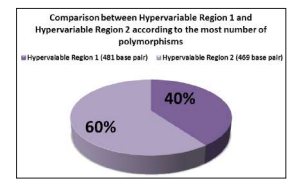
Figure 13: Comparison between Hypervariable Region 1 and Hypervariable Region 2 according to the most number of polymorphisms. 60% of Hypervariable Region 2 were polymorphic, while 40% of Hypervariable Region 1 were polymorphic
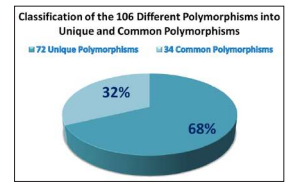
Figure 14: The classification of the 106 different polymorphisms into unique and commonpolymorphisms. Unique polymorphisms are unique representatives for each family name, whereas, common polymorphisms are the ones that are found in each family name

Figure 15: The distribution of the 21 UAE female students according to their common polymorphisms. Between the brackets are the last numbers of the code number thatrepresents each student. For example, (72,74) means that HCT-72 and HCT-74
Table 3: The Haplotype Data of HCT-1, HCT-7, HCT-22, HCT-23, HCT-24, HCT-36, HCT-50, HCT-58, HCT-61, HCT-68 and HCT-69
|
Code No. |
Family Name* |
Residence |
Region of Mitochondrial Genome** |
Haplotype Data*** |
|
HCT-1 |
AlKaabi |
Umm Al Quwain |
Hypervariable region 1 |
15983A–16223T |
|
Hypervariable region 2 |
235G–263G–315.1C |
|||
|
HCT-7 |
AlKetbi |
Sharjah |
Hypervariable region 1 |
15956G–15957A–15959C–15963G–15966T–15967A–15968G– 15969T–15972A–15981.1C–16051G–16278T |
|
Hypervariable region 2 |
73G–263G–310C–310.1T–310.2C |
|||
|
HCT-22 |
AlOwais |
Sharjah |
Hypervariable region 1 |
16069T–16093C–16126C–16145A–16222T–16261T–16300G |
|
Hypervariable region 2 |
73G–183G–263G–295T–315.1C–462T |
|||
|
HCT-23 |
AlShamsi |
Umm Al Quwain |
Hypervariable region 1 |
16093C–16148T–16172C–16187T–16188G–16189C–16223T– 16230G–16311C–16320T |
|
Hypervariable region 2 |
64T–93G–152C–189G–204C–207A–236C–247A–263G– 315.1C |
|||
|
HCT-24 |
AlKetbi |
Sharjah |
Hypervariable region 1 |
16051G–16093C–16209C–16239T–16305G–16352C–16353T |
|
Hypervariable region 2 |
26A–73G–146C–152C–234G–263G–315.1C |
|||
|
HCT-36 |
AlMejlad |
Umm Al Quwain |
Hypervariable region 1 |
16219G–16261T |
|
Hypervariable region 2 |
146C–263G–310C–310.1T–310.2C |
|||
|
HCT-50 |
AlShamsi |
Ajman |
Hypervariable region 1 |
16051G–16278T |
|
Hypervariable region 2 |
30A–143A–263G–309T–310C–310.1T–310.2C |
|||
|
HCT-58 |
AlKhasoni |
Sharjah |
Hypervariable region 1 |
16278T |
|
Hypervariable region 2 |
73G–263G–310C–310.1T–310.2C |
|||
|
HCT-61 |
AlSuwaidi |
Ajman |
Hypervariable region 1 |
16069T–16145A–16261T |
|
Hypervariable region 2 |
60Deletion–73G–151T–152C–263G–295T–310C–310.1T– 310.2C–462T |
|||
|
HCT-68 |
AlDafri |
Sharjah |
Hypervariable region 1 |
16213A–16224C–16301T–16311C |
|
Hypervariable region 2 |
73G–146C–152C–263G–310C–310.1T–310.2C |
|||
|
HCT-69 |
AlSuwaidi |
Sharjah |
Hypervariable region 1 |
16069T–16093C–16126C–16145A–16222T–16261T–16300G |
|
Hypervariable region 2 |
73G–263G–295T–315.1C–462T |
*The family name of the sample’s maternal grandmother.
**The Mitochondrial Genome has many regions, and in our case, we are targeting only two regions (Hypervariable region 1 and Hypervariable region 2).
***A profile that contains a set of polymorphisms, which tends to be inherited from a single parent (In case of mtDNA, it is a maternal inheritance).
Table 4: The Haplotype Data of HCT-70, HCT-71, HCT-72, HCT-74, HCT-86, HCT-97, HCT-98, HCT-103, HCT-133 and HCT-15
|
Code No. |
Family Name* |
Residence |
Region of Mitochondrial Genome** |
Haplotype Data*** |
|
HCT-70 |
AlFalasi |
Ajman |
Hypervariable region 1 |
16126C–16163G–16186T–16189C–16193Deletion–16263C– 16263.1T–16294T |
|
Hypervariable region 2 |
73G–263G–310C–310.1T–310.2C |
|||
|
HCT-71 |
AlTamimi |
Ras Al Khaimah |
Hypervariable region 1 |
16260T–16399G |
|
Hypervariable region 2 |
152C–263G–310C–312.1T–312.2C–312.3C–312.4C–438.1C |
|||
|
HCT-72 |
AlKaabi |
Sharjah |
Hypervariable region 1 |
16366T |
|
Hypervariable region 2 |
55C–56T–57C–263G–310C–310.1C–310.2T–310.3C |
|||
|
HCT-74 |
AlKaabi |
Ajman |
Hypervariable region 1 |
16126C–16234T–16355T–16362C |
|
Hypervariable region 2 |
146C–263G–309.1C–310.2T–310Deletion–310.1C |
|||
|
HCT-86 |
AlSuwaidi |
Dubai |
Hypervariable region 1 |
16188T–16223T–16231C–16362C–16390A |
|
Hypervariable region 2 |
73G–146C–263G–315.1C–461T |
|||
|
HCT-97 |
AlAleeli |
Umm Al Quwain |
Hypervariable region 1 |
16051G–16278T |
|
Hypervariable region 2 |
73G–200G–263G–309.1C–309.2T–310Deletion–310.1C |
|||
|
HCT-98 |
AlSuwaidi |
Ajman |
Hypervariable region 1 |
16051G–16145A–16206C–16319A |
|
Hypervariable region 2 |
73G–146C–150T–152C–194T–195C–263G–315.1C |
|||
|
HCT-103 |
AlShamsi |
Sharjah |
Hypervariable region 1 |
16093C–16192T–16201T–16223T |
|
Hypervariable region 2 |
73G–189G–195C–204C–207A–210G–263G–315.1C |
|||
|
HCT-133 |
AlSuwaidi |
Umm Al Quwain |
Hypervariable region 1 |
16223T–16240G |
|
Hypervariable region 2 |
146C–235G–263G–315.1C |
|||
|
HCT-150 |
AlAleeli |
Ajman |
Hypervariable region 1 |
16126C–16185T–16355T–16362C |
|
Hypervariable region 2 |
58C–64T–146C–263G–310C–310.1T–310.2C |
*The family name of the sample’s maternal grandmother.
**The Mitochondrial Genome has many regions, and in our case, we are targeting only two regions (Hypervariable region 1 and Hypervariable region 2).
***A profile that contains a set of polymorphisms, which tends to be inherited from a single parent (In case of mtDNA, it is a maternal inheritance).
Table 5: Unique Polymorphisms that represent each individual
|
Code No. |
Unique Polymorphisms |
|
HCT-1 |
15983A |
|
HCT-7 |
15956G-15957A-15959C-15963G-15966T-15967A-15968G-15969T-15972A-15981.1C |
|
HCT-22 |
183G |
|
HCT-23 |
16148T-16172C-16187T-16188G-16230G-16320T-93G-236C-247A |
|
HCT-24 |
16209C-16239T-16305G-16352C-16353T-26A-234G |
|
HCT-36 |
16219G |
|
HCT-50 |
30A-143A-309T |
|
HCT-58 |
None* |
|
HCT-61 |
151T-60Deletion |
|
HCT-68 |
16213A-16224C-16301T |
|
HCT-69 |
None** |
|
HCT-70 |
16163G-16186T-16263C-16294T-16263.1T-16193Deletion |
|
HCT-71 |
16260T-16399G-312.1T-312.2C-312.3C-312.4C-438.1C |
|
HCT-72 |
16366T-55C-56T-57C-310.3C |
|
HCT-74 |
16234T |
|
HCT-86 |
16188T-16231C-16390A-461T |
|
HCT-97 |
200G-309.2T |
|
HCT-98 |
16206C-16319A-150T-194T |
|
HCT-103 |
16192T-16201T-210G |
|
HCT-133 |
16240G |
|
HCT-150 |
16185T-58C |
*Because all HCT-58’s polymorphisms were found in HCT-7’s common polymorphisms, and with other families, but with different proportions.
** Because all HCT-69’s polymorphisms were found in HCT-22’s common polymorphisms, and with other families, but with different proportions.
Is it possible that HCT-58 and HCT-69 are from the “Established Group” that the other 19 students came from them, and even if they were from the “Established Group”, why they still preserve their mitochondrial DNA and why they did not establish any unique polymorphism?
Butler declares that because of the high rate of mutations in the mitochondrial DNA, comparing individuals of the same maternal line could be so difficult depends on if those individuals were distant maternal relatives or close maternal relatives [5]. Butler adds, mitochondrial DNA tests were performed between Tsarina Alexandra and Prince Philip, who is the third generation of Tsarina Alexandra, and between Tsar Nicholas II and Xenia Cheremeteff-Sfiri, who is the fourth generation of Tsar Nicholas II, and the tests revealed that there is a 100% match between Tsarina Alexandra and Prince Philip, and 99% match between Tsar Nicholas II and Xenia Cheremeteff-Sfiri [5]. This means that comparison of mitochondrial DNA that is more than three generations old is more likely to get at least one mutation in the current generation. Therefore, if we did a vertical study on HCT-58 and HCT-69 with their older generations, we will find out that HCT-58 and HCT-69 have unique polymorphisms compared to their older generations.
“Skipping Generations” is a term that I have invented to solve the mystery of having two individuals with no unique polymorphisms compared to the other 19 students. For instance, the grandmother represents the 1st generation, the mother represents the 2nd generation and the granddaughter represents the 3rd generation, in normal circumstances, the aunt is close to the mother’s generation in terms of age, but sometimes that doesn’t happen. For example, instead, the aunt is actually close to the granddaughter’s generation in terms of age, this phenomenon is called as Skipping Generations, as explained in Figure 16. In that case, whoever relates to the aunt will have less unique polymorphisms than those who relate to the granddaughter. Therefore, HCT-58 and HCT-69 are effects of Skipping Generations phenomenon. Our research reveals that there is a commonality between the 21 unrelated UAE female students.

Figure 16: Skipping Generations. The study selection illustrates three different individuals that represent three different families, but all of them are close to each other in terms of age. Number 1 and Number 3 have their own unique polymorphisms, except for Number 2 who doesn’t have any unique polymorphism compared to Number 1 and Number 3. Because Number 1 and Number 3 are from the same generation, while Number 2 actually relates to an older generation
Conclusion
It's impossible for anyone to preserve their mtDNA from their great ancestors till now. The discovery of the remains of the Romanov family back in 1991 concluded that the comparison of mtDNA that is more than three generations old is more likely to get at least one mutation in the current generation. Therefore, if a vertical study is done on those two individuals with their older generations, definitely they will have unique polymorphisms compared to their older generations. Those two individuals are the effect of "Skipping Generations" phenomenon, the term that I have invented to solve the mystery of having two individuals with no unique polymorphisms
Acknowledgement
As the writer of this research, I would like to express my thanks to my darling college, which is Sharjah Higher Colleges of Technology (Sharjah Women’s College), for having me as a student in Medical Laboratory Science program from 2011 to 2015. Moreover, I’m so grateful to my college for letting me perform my research at the forensic laboratory of Sharjah police, which was a challenging one and unique, since it is never done in the UAE before. Their acceptance for letting me perform my research means that my college believes in my abilities to get the job done. If the information contained in this research provides help for forensic investigations, I will have succeeded in passing on this composite knowledge to the next generation of students and teachers.
My special thanks go to my college professors, Dr. Nishi Singh, Dr. Muhammad Zaman, Mrs. Ban AlToumah and Mrs. Rula ElMuhtadi, for their outstanding contributions. Their encouragement led to the completion of this research.
I thank the Sharjah Police Headquarters, including the Major General Humaid AlHadidi the commander-in-chief, the Colonel Dr. Abdulqader AlAmeri the head of the forensic laboratory, the Colonel Ahmed AlSerkal the head of the biological analysis and DNA fingerprinting section at the forensic laboratory, the forensic scientist Dr. Burae Abdulrahman Taher the specialist in forensic DNA studies and the forensic scientist Mr. Sridhar Baratam the specialist in Mitochondrial DNA studies; they are outstanding professionals.
Above all, my special thanks go to my family and the 150 female students from Sharjah Higher Colleges of Technology (Sharjah Women’s College) for their support during this extensive research. I could never have undertaken this challenge without their help and understanding.
References
- Tao M, You C, Zhao R, Liu S, Zhang Z, et al. (2014) Animal mitochondria: evolution, function, and disease (Research Report No. 10). Changsha, China: Hunan Normal University.
- Evans JM (2008) Basic molecular biology and genetics. In DH Szar (Ed.), Cell biology and genetics (3rd ed.). Elsevier 91-126.
- Butler JM (2012) Mitochondrial DNA analysis. In Advanced topics in forensic DNA typing: Methodology, Elsevier Academic Press 405-456.
- Reid RS (2013) Evaluation of mitochondrial DNA typing in a forensically relevant population of self-identified U.S. African Americans (Research Report No. 18). University of Connecticut.
- Butler JM (2005) Mitochondrial DNA analysis. In M Listewnik (Ed.), Forensic DNA typing: Biology, technology, and genetics of STR markers x (2nded.). Elsevier Academic Press 241-298