

Advances in Bioengineering and Biomedical Science Research(ABBSR)
ISSN: 2640-4133 | DOI: 10.33140/ABBSR
Impact Factor: 1.7

Research Article - (2024) Volume 7, Issue 5
Synergistic Effects of Natural Extracts and Probiotics on Hair Care: A Study on a Novel Complex Formulation
Received Date: Sep 26, 2024 / Accepted Date: Oct 14, 2024 / Published Date: Oct 25, 2024
Copyright: ©©2024 Chi-Fu Chiang, et al. This is an open-access article distributed under the terms of the Creative Commons Attribution License, which permits unrestricted use, distribution, and reproduction in any medium, provided the original author and source are credited.
Citation: Lin, Y. K., Lin, Y. H., Chiang, C. H. (2024). Synergistic Effects of Natural Extracts and Probiotics on Hair Care: A Study on a Novel Complex Formulation. Adv Bioeng Biomed Sci Res, 7(5), 01-08.
Abstract
With the aging population and increasing life stress, the demand for hair care and anti-hair loss products is rising. Antioxidants play a crucial role in neutralizing free radicals, reducing oxidative stress on hair follicles, and improving scalp health. Current hair loss treatments rely on medications and supplements, but medications often have side effects, and clinical evidence for natural ingredients remains insufficient. This study aims to evaluate the potential effects of the commercially available product, Probiotics Chlorella Pyrenoidesa Powder, on promoting hair growth and preventing hair loss. The results show that the test product has significant antioxidant and hair care effects. In vitro, the product reduced reactive oxygen species (ROS) by 87.7% and modulated gene expression by decreasing androgen receptor (AR) by 38% and increasing vascular endothelial growth factor (VEGF) by 45%, suggesting its potential to prevent hair loss and support hair growth. In human trials, the product reduced hair loss by 37.3% compared to the placebo and increased hair density, with 30.8% of subjects experiencing over a 50% reduction in hair loss. These findings confirm its efficacy in improving hair health.
Keywords
Antioxidant, Banana stamen extract, Fish collagen, Hair loss, Lactobacillus Plantarum
Introduction
With the aging global population and increasing life stress, the demand for hair care and anti-hair loss products continues to grow. According to market research data, the hair care market is expanding at a rate of over 5% annually and is expected to reach tens of billions of dollars in the coming years. Consumers' needs for hair care products have evolved beyond basic cleaning and maintenance, with a growing focus on products that prevent hair loss, enhance hair volume, and improve hair quality [1].
Antioxidants play a crucial role in hair care and preventing hair loss. Oxidative stress is one of the main causes of scalp aging and follicle dysfunction, leading to brittle, dry, and thinning hair [2]. Antioxidants such as Vitamin C, Vitamin E, plant polyphenols, and marine collagen can neutralize free radicals, reducing oxidative damage to hair follicles, thereby slowing hair aging and promoting healthy hair growth [3]. Additionally, antioxidant components help improve the scalp environment, enhance the scalp’s barrier function, and reduce inflammation, which significantly contributes to preventing hair loss [4]. Studies show that antioxidants can be supplemented through diet and also serve as active ingredients in hair care products, effectively improving overall hair health [5]. Therefore, antioxidant capacity is closely linked to hair care and hair loss prevention, making it an important consideration in the development of hair care products. Current treatment strategies for hair loss mainly include medication and functional food supplements [6]. Medications such as Finasteride and Minoxidil are common prescription options; the former reduces follicle shrinkage by inhibiting the production of dihydrotestosterone (DHT), while the latter promotes scalp blood circulation by dilating blood vessels [6]. However, these drugs often come with side effects, such as reduced sexual function and scalp irritation, affecting patient compliance and treatment continuity. Natural ingredients like plant extracts, probiotics, and marine collagen have become key drivers in the emerging market due to their natural, safe, and multifunctional properties [7]. However, their effectiveness varies among individuals, and sufficient clinical evidence is often lacking. Additionally, market regulation of these products is insufficient, leading to inconsistent quality. Given the large variability among individuals, developing hair care and anti- hair loss solutions that are side-effect-free and have consistent efficacy remains a major challenge for the industry.
Lactobacillus Plantarum TCI999, banana stamen extract, fish collagen, chlorella, zinc gluconate, ascorbic acid, and Weizmannia Coagulans Spore—this formulation (product name is Probiotics Chlorella Pyrenoidesa Powder) is developed by TCI Co., Ltd. This study aims to explore the potential effects of this natural complex formulation on hair growth and hair loss prevention. Each component is selected for its unique properties: L. plantarum TCI999 for its probiotic benefits [8], banana stamen extract for its traditional use in enhancing hair health [9], fish collagen for supporting hair structure and strength [10], and chlorella for its high antioxidant content [11]. Additionally, zinc gluconate plays a critical role in hair follicle function [12], while ascorbic acid (Vitamin C) boosts collagen synthesis and scalp health [13]. W. coagulans Spore contributes to gut health, potentially influencing overall hair wellness [14]. By combining these natural ingredients, the study seeks to assess their synergistic effects on promoting hair growth and reducing hair loss, providing a holistic approach to hair care through natural supplementation.
Materials and Methods
Cell Culture
Hair Follicle Dermal Papilla Cells (HFDPC) (C12071, Promocell, Heidelberg, Germany) were purchased from the ATCC, and cultured in Follicle Dermal Papilla Cell Growth Medium (C26501, Promocell), which contains fetal calf serum, bovine pituitary extract, bFGF and insulin, supplemented with L-Glutamine (X0550, Biowest, Nuaillé, France) and 1% (w/v) Penicillin/Streptomycin (P/S) (L0022, Biowest) in a humidified incubator of 5% CO2 at 37°C.
Quantification of Gene Expressions by Real-Time PCR
The treated HFDPC were harvested, and the total RNA was isolated from cells using an RNA purification kit (Geneaid, Taiwan). DNA-free total RNA was reversely transcribed to cDNA using a SuperScript™ Reverse Transcriptase kit (Invitrogen, Life Technologies Co., CA, USA). Quantitative real-time PCR was conducted using an ABI StepOnePlus™ Real-Time PCR System (Thermo Fisher Scientific, Inc., CA, USA) and the SYBR Green Master Mix (KAPA Biosystems, MA, USA) for the transcript measurements. The gene-specific primers used in this study are listed in Table 1. The GAPDH gene was used as a normalization control.
|
Gene |
Species |
Direction |
Sequence |
|
VEGF |
Human |
F |
ATGAACTTTCTGCTGTCTTGGGTG |
|
VEGF |
Human |
R |
TCACCGCCTTGGCTTGTCACAT |
|
AR |
Human |
F |
GGTGAGCAGAGTGCCCTATC |
|
AR |
Human |
R |
GCAGTCTCCAAACGCATGTC |
|
GAPDH |
Human |
F |
ACAACTTTGGTATCGTGGAAGG |
|
GAPDH |
Human |
R |
GCCATCACGCCACAGTT |
Table 1: Species-specific quantitative PCR (qPCR) primers
Detection of ROS Production
HFDPC cells are first cultured and treated according to experimental conditions. After treatment, cells are washed with PBS to remove residual medium and incubated with DCFH-DA (10 µM) in serum-free medium at 37°C for 30 minutes in the dark. Following incubation, cells are washed again with PBS to remove excess dye. The fluorescence intensity, which correlates with ROS levels, is measured using a fluorescence microscope or a flow cytometer with excitation at 485 nm and emission at 535 nm. The mean fluorescence intensity is recorded and analyzed to assess ROS generation in the treated cells.
Clinical Trial Design
This trial is a double-blind, placebo-controlled study, and was approved by the Shanghai ethics committee for clinical research (Approval No. SECCR2023-100-01). This trial recruited a total of 52 subjects, divided into a placebo group and a test product group, with 26 subjects in each group. Inclusion criteria for subjects: 1. Subjects should be healthy males or females aged 18-60 years.ï¼?2.Hair length should be between 5-40 cm.ï¼?3. Subjects experiencing noticeable hair loss or mild hair thinning. Based on the 60-stroke combing method, hair loss count should exceed 10 strands, and after a 2-week washout period, the hair loss count should still be greater than 10 strands.ï¼?4. No hair dyeing, perming, styling, or other special hair treatments in the past month.ï¼?5. Subjects must commit to refraining from spa treatments, swimming, and bathing activities during the trial period.ï¼?6. No history of allergic conditions, and no allergies to cosmetics, skincare products, or other topical formulations.ï¼?7. No systemic diseases affecting the heart, immune system, blood vessels, liver, gallbladder, or kidneys.ï¼?8. Ability to maintain a consistent lifestyle during the study period.ï¼?9. Willing and able to use the product properly, understand and complete the study questionnaires, and cooperate with study personnel. ï¼?10. Subjects must understand the trial procedures, voluntarily agree to participate, and sign a written informed consent form. Exclusion criteria for subjects: 1. Women who are pregnant, breastfeeding, or planning to conceive in the near future.ï¼?2. Individuals with severe androgenic alopecia, alopecia areata, inflammatory scarring alopecia, or other scalp/hair disorders. ï¼?3. Subjects with psychiatric or psychological disorders, or those with long-term sleep or emotional control issues.ï¼?4. Those who have used hair loss prevention or hair growth products in the past three months.ï¼?5. Individuals who have taken or topically used any medications affecting hair growth in the past six months.ï¼?6. Subjects who have undergone hair transplant treatment.ï¼?7. Individuals with curly hair. ï¼?8. Subjects who are highly sensitive.ï¼?9. Individuals known to have allergies or sensitivities to food, skincare products, cosmetics, or topical medications.ï¼?10. Subjects who need to use any medications, either systemic or topical, that affect skin surface parameters during the trial period.ï¼?11. Individuals with skin abnormalities at the test site, such as birthmarks, scratches, vitiligo, moles, or keloids, that could affect the trial.ï¼?12. Subjects with a history of acute or chronic skin diseases or any health conditions that might impact the trial results.ï¼?13. Individuals with conditions such as hay fever or pollen allergies.ï¼?14. Subjects who have participated in other clinical trials within the last two months. ï¼?15. Individuals deemed unsuitable for the trial based on clinical evaluation.
Subjects are required not to wash their hair within 48±4 hours before each visit during screening and the trial period, and the time interval of not washing hair should be consistent before each visit. On the day of the visit, subjects are not allowed to comb their hair. Subjects should not get a haircut within 2 weeks before each visit evaluation during the trial. No hair care or beauty treatments are allowed, and subjects should not receive any anti-hair loss or hair growth treatments during the trial. Subjects should maintain their usual lifestyle and avoid significant emotional fluctuations during the trial period.
Preparation of Test Sample for Clinical Trial
The test product (SYRINX, Probiotics Chlorella Pyrenoidesa Powder, Hangzhou Yosto Cosmetics Co., Ltd, Hangzhou, China) contains L. plantarum TCI999, banana stamen extract, fish collagen, chlorella, zinc gluconate, ascorbic acid, W. coagulans Spore, erythritol, lemon juice powder, isomalt, sucralose, milk minerals, and flavor. The placebo powder contains erythritol, lemon juice powder, isomalt, sucralose, milk minerals, and flavor. Both the trial product and the placebo are taken orally, with one sachet taken after breakfast and one after dinner each day, continuously for 12 weeks. Hair assessments are conducted before intake, and after 4, 8, and 12 weeks of intake.
Hair Loss Count
At each visit, trained staff use the 60-stroke combing method to comb the subject's hair and count the number of hairs that fall out. The hair loss count is recorded.
Overall Hair Density
The subject’s hair on the top of the head is symmetrically combed to the sides and kept smooth. During each visit evaluation, the same hairstyle is maintained (refer to the initial full-head hair photo). A 0-7 scale assessment chart is used to evaluate hair density in the top region of the head. Overall hair density assessment includes clinical evaluation and image evaluation, and the average of the two assessments is calculated as the overall hair density. Clinical evaluation: A dermatologist conducts an on-site evaluation of hair density during each visit and records the score. Image evaluation: During each visit, a full-head hair photo is taken.
Local Hair Density
A hair-shaved area of at least 1.5 cm × 1.5 cm (located at the top of the head, slightly off to the side of the crown) is fixed for each subject, ensuring consistency in the shaved region at each visit. The hair is cut to a residual length not exceeding 1 mm. During image acquisition, the operator positions the subject in a comfortable posture and places a dermatoscope centrally over the shaved area to capture localized hair images. The dermatoscope lens is fully in contact with the scalp and kept perpendicular during imaging, and the clarity of the captured images is checked. Image analysis software or manual counting methods are used to calculate and record the local hair count and density.
Statistical Analysis
Statistical analysis software is used to perform data analysis. Measurement data are presented as mean ± standard deviation, and normality tests are conducted. If the data meet the normal distribution requirements, comparisons between the trial product and the control group are made using an independent samples t-test or rank-sum test. All statistical analyses are two-tailed, with a significance level of α = 0.05.
Results
Probiotics Chlorella Pyrenoidesa Powder Shows Antioxidant and Hair Care Effects in Vitro
First, we investigate whether the test product can reduce oxidative stress. Hydrogen peroxide (H2O2 is a widely used oxidizing agent in cell biology research to simulate oxidative stress conditions within cells [15]. When introduced to the cellular environment, H2O2 generates reactive oxygen species (ROS) such as hydroxyl radicals, superoxide anions, and other free radicals [16]. The results show that treatment of HFDPC with H2O2 induces ROS generation, while treatment with the test product significantly reduces free radical production by 87.7% compare to H2O2 group (Figure 1A), indicating that the test product possesses strong antioxidant activity. The androgen receptor (AR) is a key factor in male pattern baldness and other forms of hereditary hair loss. High expression levels of the AR gene accelerate follicular miniaturization, leading to increased hair loss [17]. High expression levels of the VEGF (Vascular endothelial growth factor) gene can help strengthen scalp capillaries, extend the hair follicle growth phase, and slow down hair loss [18]. The results show that the test product significantly reduced the expression level of the hair loss-associated gene AR by 38% and significantly activated the expression of the hair growth-associated gene VEGF by 45% compare to control group (Figure 1B and 1C). These findings indicate that the test product may help prevent follicular miniaturization, extend the hair follicle growth phase, and reduce hair loss.

Figure 1: Probiotics Chlorella Pyrenoidesa Powder has antioxidant and hair care effects in vitro.(A) HFDPC were treated with the test product for 1 hour, followed by the addition of Hâ??Oâ?? to induce oxidative stress. The ROS levels were measured usingthe fluorescent dye DCFH-DA. p values < 0.05 to claim statistical significance. *** p < 0.001, compared to Hâ??Oâ?? groupï¼?### p <0.001, compared to control. (B, C) HFDPC were treated with the test product for 24 hours, and then examined AR and VEGF genesthrough real-time PCR. p values < 0.05 to claim statistical significance. * p < 0.05, *** p < 0.001, compared to control. Error bars represent ± standard deviation.
Probiotics Chlorella Pyrenoidesa Powder can Reduce Hair Loss and Increase Hair Density in Human
Second, explore whether the test product can improve hair loss and hair density in human. Table 2 shows the subjects' height, weight, and blood values. It can be observed that after consuming the test product, there are no changes compared to before consumption. In the hair loss analysis, it was found that after 12 weeks of consuming the test product, hair loss was significantly reduced by 37.3% compared to the placebo group. Notably, 30.8% of the subjects experienced a reduction in hair loss of over 50% (Figure 2). Further analysis through local or overall hair density imaging showed that the test product can enhance hair density (Figure 3).
|
Test items |
Test product group (n=26) |
Placebo group (n=26) |
||
|
week 0 |
week 12 |
week 0 |
week 12 |
|
|
Height (cm) |
157.14±4.92 |
156.90±4.89 |
159.18±7.03 |
159.25±7.36 |
|
Weight (Kg) |
65.83±10.97 |
65.39±10.19 |
63.54±10.80 |
63.69±11.20 |
|
White blood cells (109/L) |
6.92±2.42 |
6.03±1.99 |
6.30±1.84 |
5.38±1.48 |
|
Red blood cells (1012/L) |
4.49±0.34 |
4.31±0.29 |
4.48±0.32 |
4.25±0.32 |
|
Hemoglobin (g/L) |
132.34±13.00 |
129.69±12.24 |
137.14±9.86 |
131.86±9.79 |
Table 2. Physiological and blood information of subjects before and after consumption

Figure 2. Probiotics Chlorella Pyrenoidesa Powder improves hair loss. (A) Subjects took test product for 12 weeks, and then examined amount of hair loss. (B) Proportion of subjects with improved hair loss. * p < 0.05, ** p < 0.01, *** p < 0.001, compared to baseline (week 0). ### p < 0.001, compared to placebo. Error bars represent ± standard deviation.
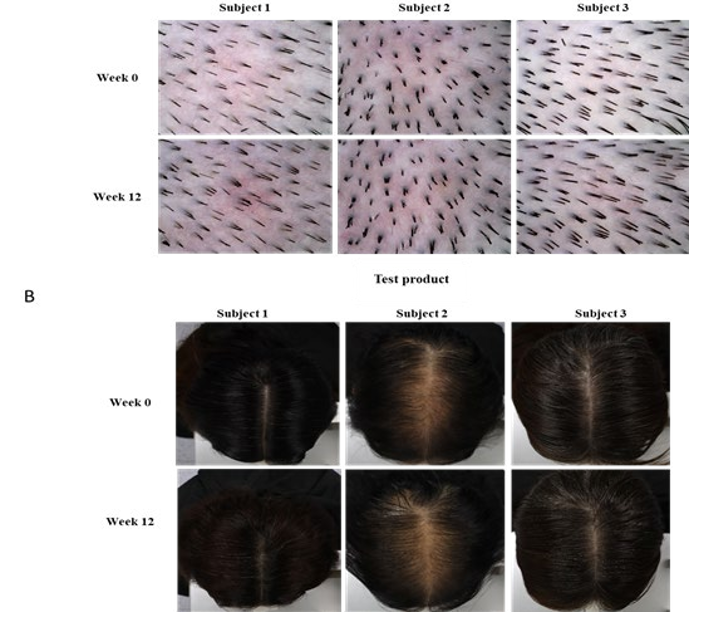
Figure 3: Probiotics Chlorella Pyrenoidesa Powder increase hair density. (A) Subjects took test product for 12 weeks, and then examined local hair density by dermatoscope, and (B) whole hair density by photo.
Discussion
This study, through cell experiments and clinical trials, confirmed that test product (Probiotics Chlorella Pyrenoidesa Powder) has antioxidant effects, reduces hair loss, and increases hair density. L. plantarum is a probiotic strain known for its strong antioxidant capabilities, primarily through the activation of Nrf2, a key transcription factor that regulates the expression of antioxidant genes [19]. By enhancing the production of antioxidant enzymes such as superoxide dismutase (SOD) and glutathione peroxidase, L. plantarum helps reduce oxidative stress, which can damage hair follicles and lead to hair loss [20]. This strain also modulates inflammation by downregulating pro- inflammatory cytokines like IL-6 and TNF-α, creating a healthier scalp environment that supports hair follicle function and growth [21]. Clinical studies have shown that L. plantarum TCI999 significantly enhances mitochondrial activity and promotes hair cell growth, while significantly reducing the expression of SRD5A1, AR, and TGF-β genes in vivo [22]. A 12-week treatment with L. plantarum TCI999 notably increased hair root diameter, contributing to the improvement of hair loss. TCI999 decreased the pro-inflammatory bacterial phase (Negativicutes, Gammaproteobacteria, Verrucomicrobia, Deltaproteobacteria, and Fusobacteria) and increased the anti-inflammatory bacterial phase (Actinobacteria, Bacteria, Clostridia). Banana stamen contains a variety of bioactive compounds that contribute to its antioxidant, anti-inflammatory, and hair growth-promoting effects [9]. Key active substances include polyphenols, such as flavonoids and phenolic acids, which possess strong antioxidant properties that neutralize free radicals, reducing oxidative stress on hair follicles and supporting healthy hair growth [23]. Flavonoids also exhibit anti-inflammatory effects, protecting the scalp and hair follicles from damage caused by inflammation and oxidative stress [24]. Alkaloids present in banana stamen have antimicrobial and anti-inflammatory properties, helping to improve scalp conditions by reducing dandruff and follicle inflammation [25]. Tannins provide astringent effects, regulating scalp oil production and maintaining a clean and healthy follicular environment [26].
Fish collagen is rich in essential amino acids that are critical for synthesizing keratin, the main structural protein of hair [10]. It provides the building blocks needed for hair shaft strength, elasticity, and resilience, directly enhancing hair density. Fish collagen also stimulates fibroblasts to produce more collagen in the scalp, which improves the extracellular matrix and supports hair follicle anchorage [27]. The peptides in fish collagen have been shown to reduce oxidative stress in hair follicles by enhancing the skin’s antioxidant defenses, protecting hair from environmental damage such as UV exposure [28]. Chlorella is a nutrient-dense microalga that contains high levels of chlorophyll, carotenoids, and other antioxidants that help combat oxidative stress in hair follicles [29]. These antioxidants neutralize ROS, protecting hair follicles from damage and prolonging the anagen (growth) phase [30]. Chlorella also contains growth- promoting factors that enhance cellular regeneration in the scalp, contributing to improved hair density. Its anti-inflammatory compounds help soothe the scalp, reducing conditions that could exacerbate hair loss [31]. Zinc gluconate plays a critical role in regulating hair follicle health through its anti-inflammatory and antioxidant properties [32]. It inhibits 5-alpha reductase, an enzyme that converts testosterone to DHT (dihydrotestosterone), a key factor in androgenic alopecia [33]. Zinc also enhances hair follicle immune function and stabilizes the hair growth cycle, reducing the catagen phase and prolonging the anagen phase, which supports increased hair density [34]. Additionally, zinc is crucial for protein synthesis and DNA repair, processes that are essential for maintaining healthy hair growth and preventing hair loss due to follicular damage [35].
Ascorbic acid is a potent antioxidant that plays a vital role in collagen synthesis, which is essential for maintaining the structure and integrity of hair follicles [36]. By neutralizing free radicals, vitamin C protects hair follicles from oxidative stress that can disrupt hair growth and lead to thinning [37]. It also enhances iron absorption, which is crucial for delivering oxygen to hair follicles, thereby supporting healthy hair growth. Ascorbic acid’s role in maintaining a healthy scalp environment through its antioxidant properties directly contributes to reducing hair loss and promoting denser hair [38]. W. coagulans is a spore- forming probiotic that supports gut health, indirectly benefiting hair by enhancing nutrient absorption, particularly of vitamins and minerals critical for hair growth [39]. By modulating the gut microbiota, W. coagulans helps reduce systemic inflammation, which can negatively affect hair follicles. Its antioxidant effects also contribute to reducing oxidative stress, supporting a healthier scalp environment [40]. Research suggests that probiotics like W. coagulans can improve overall scalp and hair follicle health by balancing inflammatory responses and promoting conditions conducive to hair growth and density improvement [14]. The above studies support the findings of this research, demonstrating that the test product (Probiotics Chlorella Pyrenoidesa Powder), containing a complex formulation, can reduce oxidative stress and enhance the expression of hair growth-related genes. Furthermore, human trials have observed that the test product significantly reduces hair loss and increases hair density. This limitation is that more research is needed to elucidate the underlying mechanisms and to distinguish between the individual and synergistic effects of each component in the formulation. The study sample predominantly consisted of female subjects, with very few male subjects, highlighting the need for additional clinical trials to validate the findings in a male population.
Conclusion
This study, utilizing both cell experiments and clinical trials, confirmed that the test product, Probiotics Chlorella Pyrenoidesa Powder, exhibits significant antioxidant properties, effectively reduces hair loss, and increases hair density. These findings suggest that the test product could be a promising natural intervention for hair care, providing a multifaceted approach to managing hair thinning and loss through oxidative stress reduction and hair growth promotion.
Conflict of interest
The authors declare no conflict of interest.
References
- Nayak, B. S., Ann, C. Y., Azhar, A. B., Ling, E. C. S., Yen,W. H., & Aithal, P. A. (2017). A study on scalp hair health and hair care practices among Malaysian medical students. International journal of trichology, 9(2), 58-62.
- Trüeb, R. M., Henry, J. P., Davis, M. G., & Schwartz, J. R. (2018). Scalp condition impacts hair growth and retention via oxidative stress. International journal of trichology, 10(6), 262-270.
- Ponnampalam, E. N., Kiani, A., Santhiravel, S., Holman, B. W., Lauridsen, C., & Dunshea, F. R. (2022). The importance of dietary antioxidants on oxidative stress, meat and milk production, and their preservative aspects in farm animals: Antioxidant action, animal health, and product quality— Invited review. Animals, 12(23), 3279.
- Davis, M. G., Piliang, M. P., Bergfeld, W. F., Caterino, T. L., Fisher, B. K., Sacha, J. P., ... & Schwartz, J. R. (2021). Scalp application of antioxidants improves scalp condition and reduces hair shedding in a 24-week randomized, double-blind, placebo-controlled clinical trial. International Journal of Cosmetic Science, 43, S14-S25.
- Guo, E. L., & Katta, R. (2017). Diet and hair loss: effects of nutrient deficiency and supplement use. Dermatology practical & conceptual, 7(1), 1.
- Liu, D., Xu, Q., Meng, X., Liu, X., & Liu, J. (2024). Status of research on the development and regeneration of hair follicles. International Journal of Medical Sciences, 21(1), 80.
- Choi, H. Y., Lee, Y. J., Kim, C. M., & Lee, Y. M. (2024).Revolutionizing Cosmetic Ingredients: Harnessing the Power of Antioxidants, Probiotics, Plant Extracts, and Peptides in Personal and Skin Care Products. Cosmetics, 11(5), 157.
- Yin, C. S., Nguyen, T. T. M., Yi, E. J., Zheng, S., Bellere, A. D., Zheng, Q., ... & Yi, T. H. (2024). Efficacy of probiotics in hair growth and dandruff control: A systematic review and meta-analysis. Heliyon.
- Liang, C. H., Lin, Y. H., Lin, Y. K., & Chiang, C. F. (2023).Hair growth-promotion effects and antioxidant activity of the banana flower extract HappyAngel®: double-blind, placebo-controlled trial. Food Science and Human Wellness, 12(5), 1917-1923.
- Hwang, S. B., Park, H. J., & Lee, B. H. (2022). Hair-growth-promoting effects of the fish collagen peptide in human dermal papilla cells and C57BL/6 mice modulating Wnt/β-catenin and BMP signaling pathways. International journal of molecular sciences, 23(19), 11904.
- Mtaki, K., Kyewalyanga, M. S., & Mtolera, M. S. (2020). Assessment of antioxidant contents and free radical- scavenging capacity of chlorella vulgaris cultivated in low cost media. Applied Sciences, 10(23), 8611.
- Almohanna, H. M., Ahmed, A. A., Tsatalis, J. P., & Tosti,A. (2019). The role of vitamins and minerals in hair loss: a review. Dermatology and therapy, 9(1), 51-70.
- DePhillipo, N. N., Aman, Z. S., Kennedy, M. I., Begley,J. P., Moatshe, G., & LaPrade, R. F. (2018). Efficacy of vitamin C supplementation on collagen synthesis and oxidative stress after musculoskeletal injuries: a systematicreview. Orthopaedic journal of sports medicine, 6(10),2325967118804544.
- Zhang, S., Li, P., Lee, S., Wang, Y., Tan, C., & Shang, N. (2024). Weizmannia coagulans: an ideal probiotic for gut health. Food Science and Human Wellness, 13(1), 16-26.
- Ransy, C., Vaz, C., Lombès, A., & Bouillaud, F. (2020). Use of H2O2 to cause oxidative stress, the catalase issue. International journal of molecular sciences, 21(23), 9149.
- de Almeida, A. J. P. O., de Oliveira, J. C. P. L., da Silva Pontes, L. V., de Souza Júnior, J. F., Gonçalves, T. A. F., Dantas, S. H., ... & de Medeiros, I. A. (2022). ROS: basic concepts, sources, cellular signaling, and its implications in aging pathways. Oxidative medicine and cellular longevity, 2022(1), 1225578.
- Kaliyadan, F., Nambiar, A., & Vijayaraghavan, S. (2013). Androgenetic alopecia: an update. Indian journal of dermatology, venereology and leprology, 79, 613.
- Yano, K., Brown, L. F., & Detmar, M. (2001). Control of hair growth and follicle size by VEGF-mediated angiogenesis. The Journal of clinical investigation, 107(4), 409-417.
- Aboulgheit, A., Karbasiafshar, C., Zhang, Z., Sabra, M., Shi, G., Tucker, A., ... & Sellke, F. W. (2021). Lactobacillus plantarum probiotic induces Nrf2-mediated antioxidant signaling and eNOS expression resulting in improvement of myocardial diastolic function. American Journal of Physiology-Heart and Circulatory Physiology, 321(5), H839-H849.
- Ge, Q., Yang, B., Liu, R., Jiang, D., Yu, H., Wu, M., &Zhang, W. (2021). Antioxidant activity of Lactobacillus plantarum NJAU-01 in an animal model of aging. BMC microbiology, 21(1), 182.
- Kageyama, Y., Nishizaki, Y., Aida, K., Yayama, K., Ebisui, T., Akiyama, T., & Nakamura, T. (2022). Lactobacillus plantarum induces innate cytokine responses that potentially provide a protective benefit against COVID 19: A single arm, double blind, prospective trial combined with an in vitro cytokine response assay. Experimental and Therapeutic Medicine, 23(1), 1-13.
- Yin, C. S., Nguyen, T. T. M., Yi, E. J., Zheng, S., Bellere, A. D., Zheng, Q., ... & Yi, T. H. (2024). Efficacy of probiotics in hair growth and dandruff control: A systematic review and meta-analysis. Heliyon.
- Sun, M., Deng, Y., Cao, X., Xiao, L., Ding, Q., Luo, F., ... & Zhao, H. (2022). Effects of natural polyphenols on skin and hair health: a review. Molecules, 27(22), 7832.
- Al-Khayri, J. M., Sahana, G. R., Nagella, P., Joseph, B. V., Alessa, F. M., & Al-Mssallem, M. Q. (2022). Flavonoids as potential anti-inflammatory molecules: A review. Molecules, 27(9), 2901.
- Savitri, D., Wahyuni, S., Bukhari, A., Djawad, K., Hatta, M., Riyanto, P., ... & Rifai, Y. (2023). Anti-inflammatory effects of banana (Musa balbisiana) peel extract on acne vulgaris: In vivo and in silico study. Journal of Taibah University Medical Sciences, 18(6), 1586.
- Sargsyan, L., Vill, V., & Hippe, T. (2020). Investigations of vegetable tannins as hair dyes and their interactions with pre-bleached hair fibres. International Journal of Cosmetic Science, 42(4), 320-327.
- Edgar, S., Hopley, B., Genovese, L., Sibilla, S., Laight, D., & Shute, J. (2018). Effects of collagen-derived bioactive peptides and natural antioxidant compounds on proliferation and matrix protein synthesis by cultured normal human dermal fibroblasts. Scientific Reports, 8(1), 10474.
- Michalak, M., Pierzak, M., Krecisz, B., & Suliga, E. (2021). Bioactive Compounds for Skin Health: A Review. Nutrients 2021, 13, 203.
- Lorenzo, K., Santocildes, G., Torrella, J. R., Magalhães, J., Pagès, T., Viscor, G., ... & Ramos-Romero, S. (2023). Bioactivity of macronutrients from chlorella in physical exercise. Nutrients, 15(9), 2168.
- Du, F., Li, J., Zhang, S., Zeng, X., Nie, J., & Li, Z. (2024).Oxidative stress in hair follicle development and hair growth: Signalling pathways, intervening mechanisms and potential of natural antioxidants. Journal of Cellular and Molecular Medicine, 28(12), e18486.
- Choi, J. Y., Boo, M. Y., & Boo, Y. C. (2024). Can Plant Extracts Help Prevent Hair Loss or Promote Hair Growth? A Review Comparing Their Therapeutic Efficacies, Phytochemical Components, and Modulatory Targets. Molecules, 29(10), 2288
- Jarosz, M., Olbert, M., Wyszogrodzka, G., Mlyniec, K., & Librowski, T. (2017). Antioxidant and anti-inflammatory effects of zinc. Zinc-dependent NF-κB signaling. Inflammopharmacology, 25, 11-24.
- Escamilla-Cruz, M., Magaña, M., Escandón-Perez,S., & Bello-Chavolla, O. Y. (2023). Use of 5-Alpha Reductase Inhibitors in Dermatology: A Narrative Review. Dermatology and Therapy, 13(8), 1721-1731.
- Natarelli, N., Gahoonia, N., & Sivamani, R. K. (2023). Integrative and mechanistic approach to the hair growth cycle and hair loss. Journal of clinical medicine, 12(3), 893.
- Lalosevic, J., Gajic-Veljic, M., Misovic, J. L., & Nikolic, M. (2023). Serum Zinc Concentration in Patients with Alopecia Areata. Acta Dermato-Venereologica, 103.
- Muzumdar, S., & Ferenczi, K. (2021). Nutrition and youthful skin. Clinics in Dermatology, 39(5), 796-808.
- Trüeb, R. M. (2009). Oxidative stress in ageing of hair.International journal of trichology, 1(1), 6-14.
- Sung, Y. K., Hwang, S. Y., Cha, S. Y., Kim, S. R., Park,S. Y., Kim, M. K., & Kim, J. C. (2006). The hair growth promoting effect of ascorbic acid 2-phosphate, a long-acting Vitamin C derivative. Journal of dermatological science, 41(2), 150-152.
- Maresca, E., Aulitto, M., & Contursi, P. (2024). Harnessing the dual nature of W. coagulans for sustainable production of biomaterials and development of functional food. Microbial Biotechnology, 17(4), e14449.
- Kunst, C., Schmid, S., Michalski, M., Tümen, D., Buttenschön, J., Müller, M., & Gülow, K. (2023). The influence of gut microbiota on oxidative stress and the immune system. Biomedicines, 11(5), 1388.