

Advances in Theoretical & Computational Physics(ATCP)
ISSN: 2639-0108 | DOI: 10.33140/ATCP
Impact Factor: 2.6

Research Article - (2026) Volume 9, Issue 2
Supreme Theory of Everything: The New Standard Model of Particle Physics is Coming

Received Date: Apr 06, 2026 / Accepted Date: Jun 02, 2026 / Published Date: Jun 25, 2026
Copyright: ©2026 Ulaanbaatar Tardad. This is an open-access article distributed under the terms of the Creative Commons Attribution License, which permits unrestricted use, distribution, and reproduction in any medium, provided the original author and source are credited.
Citation: Tardad, U. (2026). Supreme Theory of Everything: The New Standard Model of Particle Physics is Coming. Adv Theo Comp Phy, 9(2), 01-14.
Abstract
The Standard Model (SM) of particle physics is widely accepted as the most successful scientific theory in history. In a broad sense, the Standard Model can not only be optimized but also developed into a vast scientific framework that encompasses everything from elementary particles to the universe. If we imagine this as a building, we have already collected a large amount of building materials and tested and prepared the inputs, norms, standards, and quantities. But the first and most important task, the building blueprint, is not optimal and is too general. The force carriers cannot represent the Standard Model's internal interaction mechanisms. Consequently, many puzzles remain unsolved. This article aims to show that hysteresis, a well-studied scientific phenomenon that can solve these puzzles, is a viable new candidate for the Standard Model. Based on the theory of hysteresis, Gordon Kane's study of particle masses, and the Hertzsprung-Russell diagram in astronomy, a new penetrating approach to the SM was developed, and the similarities and differences between the SM and hysteresis were compared. The results were in perfect agreement. Therefore, the properties of the SM were interpreted by the theory of hysteresis. It was shown that the internal processes of the SM are carried out not by force carriers but by a complete mechanism of hysteresis interactions.
Lagrange's formula is a set of physical laws, so it does not give precise results, but can only give one, two, or a few answers in the end. On the contrary, the law of hysteresis is the fundamental law that governs all types of interactions within the SM and provides practical results, explanations, comparisons, and applications. Based on this, auxiliary laws outside the SM can work separately and actively.
Introduction
The development of modern science is defined by the dialectical, simultaneous trends of differentiation (specialization) and integration (synthesis). The major theories of integration are the Theory of Everything and the SM. Integration is a more difficult problem, arising from differentiation. Therefore, neither theory has been fully resolved.
The theories and discoveries of thousands of physicists since the 1930s have resulted in a remarkable insight into the fundamental structure of matter: everything in the universe is found to be made from a few basic building blocks called fundamental particles, governed by four fundamental forces. Our best understanding of how these particles and three of the forces are related to each other is encapsulated in the SM of particle physics [1]. Forty years ago, scientists pulled everything they knew about quantum physics into one massive equation — the SM [2]. Technically, quantum field theory provides the mathematical framework for the SM, in which a Lagrangian controls the dynamics and kinematics of the theory. Each kind of particle is described in terms of a dynamical field that pervades space-time [3]. The construction of the SM proceeds following the modern method of constructing most field theories: by first postulating a set of symmetries of the system, and then by writing down the most general renormalizable Lagrangian from its particle (field) content that observes these symmetries. The global Poincaré symmetry is postulated for all relativistic quantum field theories. It consists of the familiar translational symmetry, rotational symmetry, and the inertial reference frame invariance central to the theory of special relativity. The local SU(3) × SU(2) × U(1) gauge symmetry is an internal symmetry that essentially defines the SM. Roughly, the three factors of the gauge symmetry give rise to the three fundamental interactions. The fields fall into different representations of the various symmetry groups of the SM. Upon writing the most general Lagrangian, one finds that the dynamics depend on 19 parameters, whose numerical values are established by experiment.
Technically, the SM can be written in several different formulations, but, despite appearances, the Lagrangian is one of the easiest and most compact ways of presenting the theory [4]. The SM of particle physics is generally expressed as one main, compact Lagrangian equation, which mathematically describes the interactions of all known 17 fundamental particles. This single "master equation" summarizes thousands of particle interactions by combining gauge invariance and Lorentz invariance to govern the behavior of forces.
This monstrosity here is known as the “Standard Model Lagrangian”. It's an equation that encapsulates everything we currently know about particle physics [5]. The connection between the Lagrangian and force carriers is foundational to modern physics, defined through Quantum Field Theory (QFT) and gauge symmetry [6].
Researchers are well aware of the SM's strengths and weaknesses, so there is no need for lengthy explanations. For now, we think it's appropriate to postpone the issues of gravity, dark mass, dark energy, antimatter/matter, the accelerating expansion of the universe, galactic rotation, galactic lensing, the nature of neutrino masses, and discuss whether the hysteresis is the new SM we expected.
If this problem is solved, other topics can be identified by linking the SM to hysteresis, and there is no need to look for another scientific model.
The problem of force carriers in quantum field theory has not been completely resolved. Virtual particle pairs are fleeting, particle-antiparticle pairs that spontaneously emerge and annihilate within a vacuum due to quantum field fluctuations, allowed by the Heisenberg uncertainty principle. They are not "real" particles but rather temporary disturbances that mediate forces and contribute to vacuum energy, with measurable effects such as the Casimir effect [7,8].
As of May 2026, the SM of particle physics remains the most accurate theory for describing subatomic particles and three of the four fundamental forces (electromagnetism, weak force, strong force), yet it is definitively considered an incomplete theory. It operates on a quantum level, making it incompatible with the general theory of relativity, which describes gravity, creating a major, long-standing gap in theoretical physics [9].
The mysterious internal interaction mechanisms of the Standard Model cannot be explained by a few force carriers, with the expectation of further discovery on the one hand, and by the extremely large Lagrangian equations on the other. This can all be solved simultaneously in a comprehensive manner with a single hysteresis formula (Equation 1).
Structure of The Standard Model
Hysteresis in The Stillness of Dawn
The closed loop called hysteresis is printed in every textbook, so it's probably a boring issue. No one is interested in or knows about hysteresis. For a century, dozens of famous scientists and Nobel laureates tried to open the hysteresis loop, but without success. Consequently, hysteresis research fell out of fashion and became a waste. Everyone thinks there's nothing there. Ops! But there's something.
More than 100 years ago, research into electromagnetic fields established that the state of a system depends on its history and that when the output lags behind the input and changes in the opposite direction, the system takes a different path. It was a closed hysteresis (Figure 1) [10].

Figure 1: The Closed Hysteresis [10].
Fortunately, in 2018, I was able to open the hysteresis loop for the first time completely.
Equation 1 is the formula for opening a hysteresis loop (Figure 1 and Figure 2), [11-17] and has the following form (See Figure 1):

Where e is the eccentricity of the ellipse and β is the angle between the circle and the ellipse in the cylindrical coordinate system, x0 denotes the polarization, and x is the angle of the circle.
If we choose eccentricity e =0.995, the hysteresis will take the following form:



Figure 2: Open Hysteresis Spectrum with Different Phases
The intensity of the hysteresis varies with each period due to its memory.
In Equation 2, c(x) shows a right-handed hysteresis, and c2(x) is a left-handed hysteresis, and both are polarized (Figure 2). In Figure 3, the electric and magnetic hysteresis are separate. Two different hysteresis loops are also perpendicular to each other.


Figure 3: Open Hysteresis: a) Magnetic and b) Electric [18].
a) Relations of ferromagnetic, antiferromagnetic, ferrimagnetic, and paramagnetic, and
b) ferroelectric, antiferroelectric, ferrielectric, and paraelectric (Note that this Figure is not computational)
If you're a fan of formulas, you'll probably find it boring because the entire article is an explanation, except for Equation 1. I'm also a fan of formulas, but I would say that hysteresis theory has the advantage of explaining everything in a single formula and its minor variations, and that anyone can understand it, and that it's for everyone. Nature seems to operate according to a single law.
Let's briefly review some results from hysteresis theory, just before the SM.
The opening of closed hysteresis has allowed many topics to be understood, redefined, modified, and explained, including the laws of electricity and magnetism, earthquakes, superconductivity, non-ohmic resistance, radioactive decay, planetary science, astronomy, cosmology, information theory, entanglement, teleportation, and the Many-Worlds interpretation. Comparison of hysteresis theory calculations with paleoclimatic studies has shown that it is possible to reconstruct climate variability since the formation of the Earth with an accuracy of 60-65 percent, and changes in the Greenland ice sheet with an accuracy of 80-85 percent. It is also predicted that warm years will continue from 2020 to 2035, and normal years from 2035 to 2050. The origin of the universe, the Big Bang, fate, the largest structure, and the rapid expansion of the universe are explained. This shows that the diameter of the entire universe is approximately 60,000 Mpc, or 195.7 billion light-years. Also, a new Cosine-Scale, an Alternative Fermi-Dirac Distribution (AFDD) of the Cumulative Distribution of information, a new relationship between the cosine and sine axes of a circle, and the definition of polarizations were developed. In the article “Hysteretic Description of Non-Keplerian Orbits in Two-Body Space Mechanics,” a new theory was developed that simultaneously explains the eccentricity, amplitude, phase shift, angular momentum, polarization, radial trajectory, and orbital energy of two-body orbital mechanics, eliminating the difficulties encountered in this field. The spacetime described by the Special Theory of Relativity is not relative. Space is relative, but time is absolute. The concept of time has been redefined. There are no past and future times, only the present. All of this is a result of Equation 1 [18-34]. Like the constitution of a country, nature is governed by a single fundamental law, but it seems to be accompanied by an infinite number of subsidiary laws. If there were many unrelated, separate, independent laws in nature, they would conflict and lead to destruction.
A Possibility to Access the Secrets of the Standard Model
The Standard Model is a kind of periodic table of the elements for particle physics. But instead of listing the chemical elements, it lists the fundamental particles that make up the atoms that make up the chemical elements, along with any other particles that cannot be broken down into any smaller pieces [35].
Our Attempt to Penetrate the Secrets of the SM
The really big deal with the SM is that it didn't just describe particles that were already known, like the electron and quarks that make up atoms [2].
The SM is a form of open hysteresis and is perhaps its most basic model. So we propose three ways to unlock the secrets of the SM of particle physics.
1. Gordon Kane's work on the masses of elementary particles [36], [36] Gordon Kane, 2003, The dawn of physics beyond the, Scientific American, https://sites.lsa.umich.edu/gordonkane/wp- content/uploads/sites/117/2014/07/Kane5p.pdf
2. The Hertzsprung-Russell Diagram (HRD) is a scatter plot of stars [20,37],
3. The properties of left- and right- handed particles in the SM [38].
At first glance, the plot of Gordon’s particle mass [36] was the same as the right-hand side of the hysteresis curve (Figure 4). I've been studying how close the hysteresis theory is to the SM of particle physics. The results are really very good. So, I believe that the SM can be explained in terms of hysteresis. The SM is a kind of periodic table of the elements for particle physics. But instead of listing the chemical elements, it lists the fundamental particles that make up the atoms that make up the chemical elements, along with any other particles that cannot be broken down into any smaller pieces [36].
In Figure 4, the chirality and left- and right-hand sides of the SM are shown by a bold black curve.
The concept of left and right hands in hysteresis theory is not new. Why are there three generations of particles, rather than fewer or more? Nobody knows for certain. It’s one of the great unexplained mysteries of modern physics. While there’s only one copy of each of the bosons, for some reason, there are three copies of each of the fermionic particles: they come in three generations. Although it’s long been accepted and robustly experimentally verified, the three-generational nature of the SM is one of the great puzzles of nature [39].
Three categories of particles form the SM. Matter, which makes up only 4 percent of the universe, is composed of quarks and leptons. The fundamental bosons provide three forces: electromagnetism, the strong nuclear force, and the weak nuclear force. Currently, the SM is incomplete and does not explain many important features of the known universe, such as gravity, dark matter (27% of the universe), and dark energy (68% of the universe) [40].
This explanation is reminiscent of the Hertzsprung-Russell Diagram (HRD) in astronomy [20]. So, we see that the left side of the SM is the HRD, and the right side is the three fermion periods (Figure 4). The left side is astronomical, and the right side is the issue of particle physics.
For this reason, we should be grateful that Gordon Kane's work on the masses of elementary particles has given us a remarkable insight into the secrets of the SM of particle physics.


Figure 4: Hysteresis of Fermions in the SM.
The Figure was transformed based on the image of Gordon Kane [36],
a) The right-hand side of the hysteresis curve shows the mass of the particles [38].
b) The curves that occur during a complete hysteresis cycle, with the formula
The Equation of the new SM is the following:

Figure 4 is drawn without a proper scale, so the coefficients in Equation 3 need to be refined.
It has been a long time since we found that the SM is a chiral theory, i.e., left and right-handed particles have different properties. Though it could be a natural or simple feeling, to claim that a beautiful model should be left-right symmetric, it does not seem cautious to impose this symmetry when we consider beyond SM (BSM) physics until we find some really solid reason. Fortunately, there is a problem, known as the strong CP problem, that can be solved elegantly under the left-right symmetry, or known in a more professional phrase, parity symmetry [39].
This modified Figure 4 will be a great way to understand the SM, particle physics, and HRD in a broader sense. In Figure 5(b), the horizontal axis represents time in terms of angular momentum, while the vertical axis represents the mass of the particle.
A third way to describe left-handed and right-handed particles, written by Isaac R. Wang, is that the SM is a proof of hysteresis.
It is conceivable that the two hands could be combined in a hysteresis or SM after adjusting the energy units of stars and particles. Both hands have units of energy, but it is questionable whether the mass of a particle can be expressed in terms of energy, because it itself is subject to constant criticism.
Key Structures of the SM in Hysteresis Theory
According to hysteresis theory, the structural properties of the SM are described as follows.
Impossibility of breaking the hysteresis and the SM
Hysteresis cannot be separated into singularities and hysteresis loops, as it is represented by a circle (Figure 5(b)).
The three generations of fermions
The full complexity of our daily world is constructed from just a few articles. The rest of the particles are evanescent, decaying away so quickly that we don’t encounter them in normal circumstances. But they may hold the keys to secrets of the universe that continue to elude us at the moment [41,42].
The SM of particle physics has three nearly identical copies of particles: generations. And nobody knows why. Why are there three generations of particles, rather than fewer or more? Nobody knows for certain. It’s one of the great unexplained mysteries of modern physics [39].
The left-hand of a hysteresis is between 900 and 2700 of the circle, while its right-hand is between 2700 and 900 (Figure 4 and 5(b)). At 2700 of a circle, the black singularity of the hysteresis dominates. Many interesting physical phenomena occur here, including a temperature of 0 Kelvin, particle-like behavior of wave-particle duality, superconductivity, superfluidity, the Meissner effect, and magnetic levitation. It is believed that the number of particle types in the 3rd generation of fermions can continue to increase. On the contrary, around 900, there is a white singularity where wave characteristics dominate. Therefore, based on the wave-particle duality, the right-hand side of the SM can be divided into three generations.
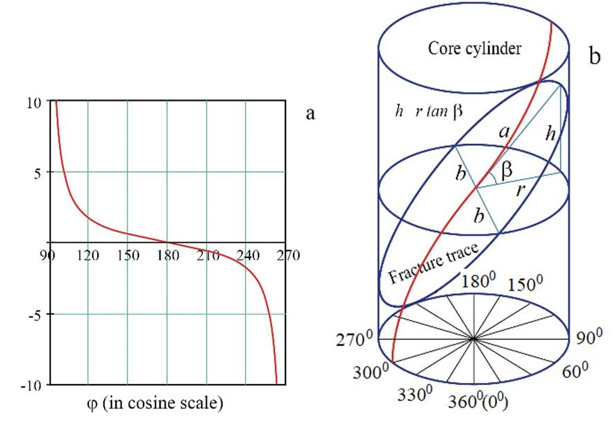
Figure 5: (a) The left-hand side (red-colored) of the hysteresis, and the wave-particle duality, and (b) the space and time in a 3D cylindrical coordinate system.
We explain the 3-generations as follows: There is a 1st generation of particles (2700-3300) that changes exponentially in particle-like behavior, a 2nd generation (3300-300) that changes slowly, and a 3rd generation of particles (300-900) that changes exponentially into wave-like behavior. The right-hand inflection points of the hysteresis are at 3300 and 300, which divide the particles into 3 generations.
Concept of space and time
In quantum mechanics, time is a background parameter, and the flow of time is universal and absolute. In general relativity, time is one aspect of spacetime and is one aspect and is relative and dynamical. The incompatibility of these concepts of time in our best theories is a deeply unsolved issue [43].
The reason our understanding of space and time is inadequate is that we are 2D-minded. The 2D image is misleading, covering the sector between 900 and 2700 (Figure 5(a)), while the 3D image is clearer because it can show the entire circle (Figure 5(b)). For example, there are no past and future times, only the present. Therefore, we need to use a cylindrical coordinate system. Its advantage is that the circle, which is the cross-section of the cylinder, represents time in angles, while space is located along the vertical axis and is defined by the eccentricity of the ellipse.
What if yesterday, today, and tomorrow are all happening right now, and you're just not equipped to perceive it? Quantum physics and relativity converge on a disturbing conclusion: time as we experience it—a river flowing from past to future—may be fundamentally illusory. The actual structure of reality might be a "block universe" where all moments coexist simultaneously, frozen in a four-dimensional crystalline structure that contains everything that ever happened and ever will happen in one eternal present. The evidence is mounting: quantum experiments show particles that seem to know their future states before those states occur [44].
An additional explanation for Figure 5 is that the horizontal circle represents time and the vertical axis represents space, ranging from 0 to infinity. So, time is absolute, and space is relative.
Vertical Structure of The Hysteresis in The Cylinder
If we cut along the vertical axis of the cylinder in Figure 5(b), we get Figure 5(a) and Figure 6 on the resulting plane.


Figure 6: (a) Hysteretic 2D Eccentricity and its ellipse in the cylinder, (b) Dynamic intensities (amplitude) of hysteretic ellipses, with their strengths described by the Alternative Fermi-Dirac Distribution [33].
We use the Alternative Fermi-Dirac distribution (a) instead of the traditional Fermi-Dirac distribution (b) in hysteresis theory. We can make some very interesting derivations and conclusions in the SM.
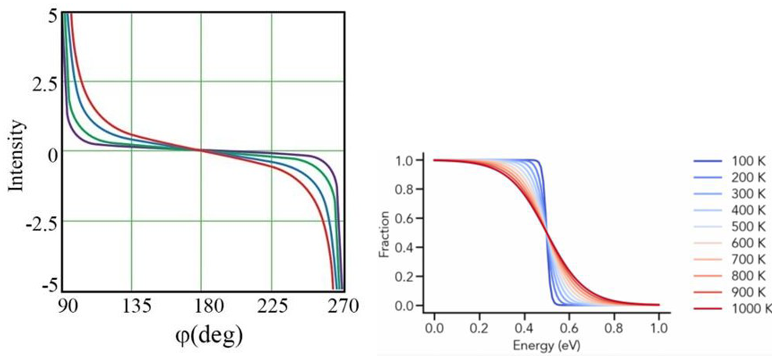
Figure 7: Alternative Fermi-Dirac Distribution
(a) which is more suitable for hysteretic applications than the conventional Fermi-Dirac Distribution [29].
(b) The fermion particles obey the rules of Fermi–Dirac Statistics and follow the Pauli Exclusion Principle [45,46] .
While the traditional Fermi-Dirac statistics is a type of quantum statistics that applies to the physics of systems consisting of many non-interacting, identical particles [46], the Alternative Fermi-Dirac distribution is derived from hysteresis theory [21] and does not require any conditions (Figure 7a) [6,21,23,24]. The AFDD is easier and more intuitive to use in particle physics than in the SM. There is no center of charge in hysteresis, but the distance between the two saturations of hysteresis (90, 270), or the magnetization, or the radius of the circle is (Figure 5) [15, 21-23]. The opposite saturations of hysteresis, or the mass axes of particles, are never on the same line, and they do not intersect, neither on the scale of the universe nor on the quark level.
The big physics problem that occurs on the vertical axis of hysteresis is infinity (1/0). The main reasons are, first, that research results sometimes give "infinite" answers, and second, that researchers avoid such answers, considering them to be incorrect or non-physical because they violate the laws of classical physics. Therefore, when a study yields an infinite answer, a mathematical method called renormalization is used to remove the infinite. The renormalization method is also used in other areas of physics, such as the SM and Lagrangian equations.
Infinity is a law of nature, a part of natural continuity, and the fault lies not in nature but in the laws of physics we have made. We need to revise the laws of physics, not correct the answers.
Nowadays, scientific development has become necessary to work with the edge values. Using renormalization in the SM will not yield good results. This is because in this model, the extreme values of CRT and hysteresis are connected to infinity.
Renormalization is a collection of techniques in quantum field theory, statistical field theory, and the theory of self-similar geometric structures that is used to treat infinities arising in calculated quantities by altering values of these quantities to compensate for the effects of their self-interactions. But even if no infinities arose in loop diagrams in quantum field theory, it could be shown that it would be necessary to renormalize the mass and fields appearing in the original Lagrangian [48,49].
It systematically handles self-interaction effects, such as a particle interacting with its own cloud of virtual particles, by redefining parameters like mass and charge [49].
Why is the muon 200 times heavier than the electron, while the top quark is almost 350000 times heavier than the electron? Why are the neutrinos a million times lighter? We have no idea, and no way of predicting these masses other than by measuring them in experiments. By the end, I hope you’ll have some intuition for how all of the parts fit together to create the fundamental building blocks of our universe [50].
The total energy of the stars recorded on the left-hand side of the HRD (SM) varies between 10-10 and 1010, and the particles are also in this interval. The vertical axis of Figure 5 is usually on a logarithmic scale, so this is not a problem. Physical phenomena that extend beyond this interval may be discovered in the future. We do not need to worry about infinity.
The Chirality
An independent decomposition (x) is that into chirality components:
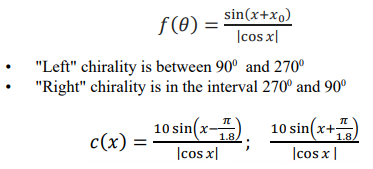


Figure 8: Chirality in the open hysteresis
In any case, the hysteresis has chirality (Figure 8).
CPT Symmetry
In the SM, the neutron's electric dipole moment is predicted to be a factor of ten billion larger than our observational limits show [51]. The only explanation is that somehow, something beyond the SM is protecting this CP symmetry in the strong interactions. We can demonstrate a lot of things in science, but proving that CP is conserved in the strong interactions can never be done. However, solving the strong CP problem may be closer on the horizon than almost anyone realizes [51].
When hysteresis is not polarized, or when superparamagnetism occurs, the CRT is preserved without loss (Equation 5).

However, the classic form of hysteresis occurs during polarization, meaning that C and T are always broken, except for P.
CP can appear at positive and negative infinities of hysteresis angles of 900 and 2700 (Equations 5 and 6).
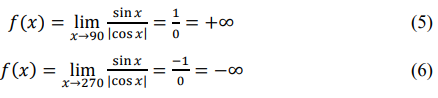
Therefore, in the SM, the electric dipole moment is infinite. In a strong physical field, a strong CP may not be broken or may not be detected by measurement (Figure 8). This is because, in the case of polarization, the left and right arms of the hysteresis shift to positions where one is raised or lowered relative to the other. However, chirality is present whether or not there is polarization. In the case of unpolarized hysteresis, there is superparamagnetism. Based on Figure 5, we see that the time is counterclockwise, which is a time reversal symmetry T that is violated. This is related to entropy.
The Bizarre Neutrinos
According to hysteresis theory, neutrinos have mass, as can be seen from the 270-degree axis in Figure 4, because the vertical axis is the axis of mass. It is also possible to detect particles with masses even lower than neutrinos.
One of the best-known problems is that it predicts that one family of particles — neutrinos — should have zero mass. But as the recipients of the 2015 Nobel Prize in Physics can attest, these ridiculously small particles that travel at near light speed have very tiny, but not zero, masses [2]
The Internal World of the Standard Model
In this section, we will consider the mechanism of particle interactions within the SM, which is one of the most difficult problems in particle physics.
Lagrange's theory is a long-standing work of theoretical physicists. The mathematical basis of hysteresis theory, which describes the interactions of elementary particles within the SM, is radically different from Lagrangian formulations.
Problems of Force Carriers
Electromagnetic waves are the most common phenomenon in the universe, and their opposite charges are unique in that they can constantly affect everything. Physics textbooks say that opposite charges, and the poles, are connected by chains or force carriers, or in some way. However, such a mechanical understanding of electromagnetism and elementary particles is problematic. It is not important what level of explanation the theory of particle physics has, or how developed it is, but what is considered the "force carrier" that is the beginning of all physics.
The interaction mechanism that can bind opposite charges on the universe-scale and subatomic level is important for both particle physics and the SM. Otherwise, the charges would fall into chaos, and as a result, neither the atom, nor the universe, nor we would exist. Therefore, the problem of “force carrier” should be recognized as the most important and unsolved problem in physics, put at the forefront of research, and studied in depth. The inclusion of the word “force carrier” in parentheses indicates that the concept is currently unclear.
Nowadays, the following concept of the “force carrier” prevails.
The prevailing view in modern physics is not that particles interact without a medium, but that they interact by exchanging virtual particles (gauge bosons) within quantum fields, rather than through a tangible, mechanical medium [52].
The virtual particle delivers momentum from one particle to the other. A force between two particles can be described either as the action of a force field generated by one particle on the other, or in terms of the exchange of virtual force-carrier particles between them [53-55].
Virtual particles may be mesons or vector bosons; they may also be fermions. However, in order to preserve quantum numbers, most simple diagrams involving fermion exchange are prohibited. The image to Figure 9 shows an allowed diagram, a one-loop diagram. [56,57]. The solid lines correspond to a fermion propagator, the wavy lines to bosons.

Figure 9: One-loop diagram with fermion propagator [56,57].
Subsection IIIc will show that Figure 9 fits the “force carrier” interpretation of hysteresis theory. The photon, which carries electromagnetic energy, is unique in that it has no charge. The photon has no electric charge, is generally considered to have zero rest mass, and is a stable particle [58-60].
This means that the particles involved in the interaction are allowed to be uncharged. Virtual particles are best understood as temporary, non-observable disturbances or fluctuations within quantum fields [61,62].
In quantum field theory, a force carrier is a type of particle that gives rise to forces between other particles. They serve as the quanta of a particular kind of physical field [63,64]. Force carriers are also known as messenger particles, intermediate particles, or exchange particles [65,66]. In particle physics, the Yukawa interaction is an interaction between particles according to the Yukawa potential.
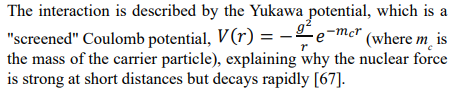
According to the hysteresis law, the Yukawa potential is nothing more than Coulomb's inverse square law, only "screened" [22]. So, while the Yukawa potential is quite close to our imagination, it cannot become a "force carrier."
Nowadays, we are looking for some kind of "force carrier," and it is called by many different names, such as force carrier, messenger particle, intermediate particle, mediator particle, interaction particle, exchange particle, virtual particle, and so on. The reason why any problem is named and explained differently in scientific practice is that the subject is controversial, and there is no unified understanding.
To answer this, we need to go into the infinitesimally small spaces near the endpoints of almost everything, and we want to ask and clarify even more questions about what exactly happens between charges.
1. What connects opposite charges? Does one well-behaved particle stand out from the crowd and give, take, or even generate and distribute force?
2. How does a force carrier acquire, store, and carry its force?
3. Is there such a thing as a permanent “force carrier”?
4. Under what conditions does a “force carrier” not work?
5. Can force be transmitted between particles of the same type?
6. Does the “force carrier” give up his power and then walk away?
7. Do charges exist at a certain distance?
8. Is there a chargeless “force carrier"?
9. What mechanism made him act like this?
There was a previous hypothesis that such an interaction mechanism should exist, and it was called ether, but this was later disproved.
From the above, what complex mechanism could there be in particle physics that binds particles like ether rather than "force carriers"? In any case, I doubt that virtual particles can be "force carriers". Because, first, the quantum field itself is based on probability theory, and second, the virtual particles that transmit forces within it are temporary, unobservable phenomena, no reliable and robust explanations, and results cannot emerge from such "uncertainties."
This article aims to revive the concept similar to the ether, consider that the above mechanism may be hysteresis, and compare it with the progress and achievements of the SM of particle physics. Hysteresis theory explains everything from elementary particles to the universe, and its key findings are consistent with the SM and some of its expected predictions [18-34].
Ether
The concept of messenger particles dates back to the 18th century when the French physicist Charles Coulomb showed that the electrostatic force between electrically charged objects follows a law similar to Newton's Law of Gravitation [68].
The aether was used in one of Sir Isaac Newton's first published theories of gravitation, Philosophiæ Naturalis Principia Mathematica (the Principia, 1687). He based the whole description of planetary motions on a theoretical law of dynamic interactions. He renounced standing attempts at accounting for this particular form of interaction between distant bodies by introducing a mechanism of propagation through an intervening medium [69,70]. He calls this intervening medium aether.
As conventionally interpreted, Newton's theory of motion modelled a central force without a communicating medium [71]. In an exchange of letters with Richard Bentley, Newton stated that "it is inconceivable that inanimate brute matter should, without the mediation of something else which is not material, operate upon and affect other matter without mutual contact" [72,73].
Michael Faraday argued against "action at a distance", and proposed that interactions between objects occur via space-filling "lines of force". This description of fields remains to this day [74-76] . In the history of physics, aether theories (or ether theories) proposed the existence of a medium, a space-filling substance or field as a transmission medium for the propagation of electromagnetic or gravitational forces. Using a substantial aether fell out of use in modern physics after experiments like the Michelson–Morley experiment of July 1887, which failed to detect an aether. The development of special relativity theories made aether theory unnecessary [77]. Einstein's use of the word "aether" found little support in the scientific community, and played no role in the continuing development of modern physics [78].
The gravitational and electromagnetic interactions produce long-range forces whose effects can be seen directly in everyday life. The strong and weak interactions produce forces at subatomic scales and govern nuclear interactions inside atoms. Some scientists hypothesize that a fifth force might exist, but these hypotheses remain speculative. Fifth forces have also been suggested to explain phenomena such as CP violations, dark matter, and dark flow [78].
The Hysteresis as An Ether
Why can hysteresis be generated by ether? Its explanation is too long.
Let's go anyway, together to the end of the paper.
We have shown the closed and open hysteresis in Section II.

Figure 10: The Connection of Closed Hysteresis Between Charges.
In hysteresis theory, the basic condition for the occurrence of hysteresis is determined not by the distance between the centers of the charges, but by the hysteresis saturations, or magnetization (Figure 10). In other words, the diameter of the circle on the horizontal axis of the open hysteresis graph is equal to the magnetization of the magnetic field. It can be understood that particles interact at this distance.
This circle also contains transverse waves, in which the electric and magnetic fields are perpendicular to each other (Figure 3).
The vertical axis represents the amplitude, intensity, and energy on a logarithmic scale.
Hysteresis is a fundamental law not only in electromagnetism, but also in all phenomena of physics, biology, chemistry, technology, nature, society, and spirituality, as can be seen in Wikipedia [79] and many other works [11-34].
The most amazing property of hysteresis is its ability to not only connect opposites, such as opposite charges, polarity, or spin-up and spin-down, but also to encompass everything. In addition to being similar to the lesser-known ether, it can be believed that this ability can also act as a "force carrier."
Hysteresis is not only a "force carrier" but also a complex mechanism that carries energy and information.
In any case, the physical conditions of the “force carrier” in the aspect of hysteresis theory can be as follows:
1. The hysteresis saturations, or mass axes of particles, are never on the same line, they are parallel to each other, and they do not intersect, neither on the scale of the universe nor on the quark level (See Section II).
2. Once opposite charges are connected, they never separate, and they have the ability to re-form if some force is used to separate them. This mechanism is similar to how a mirror is formed by the number of cracks it breaks. This is a mechanism similar to how, when a bar magnet breaks, the fragments form a new magnet that already has a north and south pole.
3. Force carriers do not necessarily have to be charged.
In addition, if possible, the "force carrier" should have the capabilities and advantages of hysteresis, as well as be able to explain the following:
1. They must have memory,
2. They show chirality,
3. Explain time and space
4. In a 3-generation environment, they must connect not only charge and polarity, but also all opposites
5. Universal Duality of Everything, which includes wave-particle duality,
6. Covering the entire sea of particles
7. To express radioactivity
8. CPT symmetry
Now I would like to draw attention to another general and important issue.
Hysteretic Explanation of the Particle Interaction in the SM
The term "New SM of Fundamental Interactions" is more appropriate than the SM of particle physics, because it sounds closer to the interactions between particles [1].
As can be seen from Figure 4, hysteresis is nothing more than two right and left hands, or the saturation limit of magnetization, but there is real particle interaction between them. See what’s inside?
The black singularity and white singularity of hysteresis are the wave-particle duality. The wave-particle duality is a most universal phenomenon in quantum and cosmological worlds. So, we call it the Universal Duality of Everything (UDE), which is described by the hysteresis and the sine function [34].
One unique feature of the wave-particle duality is that they cannot be separated from each other.
At each point on the wave-particle curve (in red), both reality and wave (emptiness) coexist (Figure 11).

Figure 11: Duality of Everything at A Given Point
The black singularity is almost a wave-like property because of the flow of Cooper pairs. A particle is not a point, but a wave packet distributed in space. Therefore, given the Universal Duality of Everything, reality and emptiness do not exist separately. This means that the real is not absolutely real, and the empty is not absolutely empty.
Fundamental particles do not actually exist. Instead of tiny, solid spheres, the universe is entirely composed of invisible, fluid-like fields. This is the core of Quantum Field Theory (QFT). Light is sometimes a continuous wave and sometimes a particle (a photon). Electrons are taught as tiny spheres orbiting a nucleus, yet they also exhibit wavelike interference patterns. This framework suggests a universe split into two confusingly overlapping phenomena: discrete, solid matter and continuous energy. QFT collapses this distinction entirely. The true building blocks of nature are continuous, dynamic fields. Imagine a perfectly calm, invisible ocean spanning the entire cosmos. That is a quantum field in its lowest energy state. If something imparts energy to that ocean and kicks up a localized wave, that concentrated ripple is what instruments detect as a "particle." Every type of elementary particle has its own dedicated field permeating the universe:
• The Electromagnetic Field: A photon is not a tiny glowing ball; it is simply a localized ripple in the electromagnetic field.
• The Electron Field: The entire cosmos is permeated by an electron field. Every single electron in the universe is just an excited vibration of this same, underlying ocean.
• The Higgs Field: The famous Higgs boson is a temporary ripple in the space-filling Higgs field, which constantly interacts with other fields to give their respective ripples mass.
This model elegantly resolves how matter and energy interact and transform. When an atom emits a photon of light, a tiny solid sphere is not suddenly creating a smaller sphere out of nothing. Instead, the underlying fields are interacting. An excited state in the electron field transfers a discrete packet—or "quantum"— of energy into the overlapping electromagnetic field, creating a new ripple. Under Quantum Field Theory, the universe is not a collection of isolated objects, but an intricate, interwoven tapestry of vibrating fields [80].
We live in a cosmos with quantum physics, relativity, gravity, and a bunch of elementary fields, whose ripples we call elementary particles. These “elementary particles” include objects like electrons, photons, quarks, Higgs bosons, etc. Now, if, in ordinary conversation in English, we heard the words “elementary” and “particle” used together, we would probably first imagine that elementary particles are tiny balls, shrunk down to infinitesimal size, making them indivisible and thus elementary — i.e., they’re not made from anything smaller because they’re as small as could be. As mere points, they would be objects whose diameter is zero.
But that’s not what they are. They can’t be [81]. Many physicists consider that particles are just excitations in quantum fields that permeate the universe.
Everything in our universe is made up of atoms, which are made up of electrons, neutrons, and protons, which are made up of quarks. And electrons are made up of leptons, but what are quarks and leptons made of? They’re made of nothing. Quarks and leptons are just pure energy. Quarks and leptons are fast-moving points of pure energy. They’re made up of literally nothing. They are nothing. So, that means that at the fundamental core of the atom, and therefore the fundamental core of everything in our universe. There is no material there. It’s just pure energy [82].
Independent elementary particles and force carriers are unlikely to act at the microscopic level. On the other hand, it is wrong to assume that physical processes occur through the interaction of macroscopic objects. In other words, there are no microscopic or macroscopic interactions that occur independently of the elementary particles. Therefore, the following processes occur in the Standard Model and hysteresis:
1. The relationship between electric and magnetic fields, the processes that occur when they are transferred from one medium to another, [14-18][21-23]
2. Exchange interaction in Electromagnetism [29]
3. Spintronics [29]
4. Photoelectric effect [24]
5. Superconductivity [28]
6. The Fundamental Forces in Quantum Hysteresis [29]
7. Thermodynamics, entropy, negentropy [30]
8. Information in entropy and negentropy [32]
9. Space and time [33]
10. Non-Kepler’s orbit [33]
11. Fermi-Dirac distribution [29]
12. The spectral density of EMR emitted by a black body [20]
13. The Open Hysteresis in Place of Inverse-Square Law [19]
13. The turn-off point, the unstable strip of stars and galaxies [18]
13. Cumulative distribution functions, hysteretic distribution of information [32]
These are not processes that occur outside of the Standard Model, and hysteresis. Thus, the Standard Model of elementary particles can become the Standard Model of everything.
Conclusion
Based on the study of hysteresis, a new approach to accessing SM was developed, and the similarities and differences between SM and hysteresis were identified. They were in perfect agreement. It is believed that this comparative study will help to indicate where the SZ can develop in the future. The properties of the SM were reinterpreted based on hysteresis theory. The shortcomings of the concept of force carriers, and the interactions within the SM, as well as some uncertainties, are shown. The explanation that opposite charges, polarity, spin-up, and spin-down are directly connected is a weakness of both classical and modern physics. The mediator is not a force carrier, but a wave-like interaction that takes place in a continuous sea of hysteresis information. Based on the content of the above article, hysteresis, and the SM, we conclude the following
1. Hysteresis is the new SM.
2. There is no need for a 5th force and physics beyond the SM if the hysteresis theory is used for the SM.
3. The three fermions in the SM lie on the right-hand side of the hysteresis between 2700 and 900.
4. The hysteresis saturation limit and the mass axes of the SM particles are identical and never lie on the same line; they are parallel and do not intersect, neither on the scale of the universe nor on the quark level.
5. The C (charge) and parity (P) are not disturbed by any environmental changes. T is broken always. Chirality exists regardless of whether there is polarization or not.
References
- Ramsey-Musolf, M. J. (2012). Beyond the Standard Model: The particle physics frontier. University of Wisconsin-Madison.
- Hobbs, B. (2017, July 15). The Standard Model is brilliant and completely flawed. ABC News.
- Jaeger, G. (2021). The elementary particles of quantum fields. Entropy, 23(11), 1416.
- Shivni, R. (2016). The deconstructed Standard Model equation. Symmetry Magazine.
- Reddit. (2021). This “Standard Model Lagrangian” discussion.
- Gauge theory. (n.d.). Wikipedia.
- Reddit. (2023). What does “virtual particle” really mean?Virtual particle. (n.d.).
- Wikipedia. https://en.wikipedia.org/wiki/Virtual_particle
- Miyamoto Gomez, O. (2018). Five mysteries the Standard Model cannot explain. CERN.
- Hysteresis. (n.d.). Wikipedia.
- Ulaanbaatar, T. (2018a). About the singularity that tends to zero. Scientific Transactions, MUST, 1(228), 50–58.
- Ulaanbaatar, T. (2018b). Supreme theory of everything. 4th International Conference on Astrophysics and Particle Physics, Chicago, USA.
- Ulaanbaatar, T. (2018c). Supreme theory of everything.Journal of Astrophysics & Aerospace Technology, 6.
- Ulaanbaatar, T. (2019a). Supreme theory of everything.Advances in Theoretical & Computational Physics, 2(2), 1–6.
- Ulaanbaatar, T. (2019b). Formula extraction in supreme theory of everything. Advances in Theoretical & Computational Physics, 2(4), 1–3.
- Ulaanbaatar, T., Narmandakh, J., Baltin, B., & Deleg, S. (2021a). A new opportunity to break the hysteresis loop. Scientific Bulletin, Institute of Physics and Technology, 47, 116–125.
- Ulaanbaatar, T., Narmandakh, J., Baltin, B., & Deleg, S. (2021b). Supreme theory of everything: A new possibility to open the hysteresis. London Journal of Research in Computer Science and Technology, 21(1).
- Ulaanbaatar, T. (2020). Supreme theory of everything: Whole universe in a simple formula. London Journal of Research in Science: Natural and Formal, 20(5), 73–90.
- Ulaanbaatar, T. (2021c). Supreme theory of everything: Open hysteresis in place of inverse-square law. London Journal of Research in Science: Natural and Formal, 21(2), 55–69.
- Ulaanbaatar, T. (2021d). Spectral density of electromagnetic radiation from a nonblack body. Advances in Theoretical & Computational Physics, 4(2), 191–196.
- Ulaanbaatar, T. (2021e). Geometric methods for complex analysis. Journal of Current Trends in Physics Research and Applications, 2(1), 1–7.
- Tarzad, U. (2022a). Formula extraction of open hysteresis. In New trends in physical science research (Vol. 1, pp. 117–122).
- Ulaanbaatar, T. (2022b). Formula extraction in supreme theory of everything. In Research highlights in mathematics and computer science. B P International.
- Ulaanbaatar, T. (2022c). A new concept of the photoelectric effect. London Journal of Research in Science: Natural and Formal, 22(14), 1–12.
- Ulaanbaatar, T. (2022d). Special theory of relativity was lost from the beginning. Journal of Applied Mathematics and Physics, 10(12).
- Ulaanbaatar, T. (2023a). Time to discuss Hubble’s law. London Journal of Research in Science: Natural and Formal, 23(1), 21–29.
- Ulaanbaatar, T. (2023b). A descriptive study of the supreme theory of everything. In New frontiers in physical science research (Vol. 6, pp. 53–69).
- Ulaanbaatar, T., Deleg, S., & Chuluunbaatar, A. (2023c). Superconductivity and non-ohmic resistivity. Nano Technology & Nano Science Journal, 5, 341–352.
- Ulaanbaatar, T. (2023d). Fundamental forces in quantum hysteresis. Journal of Applied Mathematics and Physics, 11, 3274–3285.
- Tardad, U. (2024). Deep mysteries of thermodynamics.Applied Physics Research, 16(1), 155–179.
- Tardad, U. (2025a). Imaginary numbers: Necessity or absurdity? London Journal of Research in Science: Natural & Formal, 25(1), 43–46.
- Tardad, U. (2025b). Hysteresis in information theory. Advances in Theoretical & Computational Physics, 8(3), 1–21.
- Tardad, U. (2025c). Non-Keplerian orbit description. Journal of Applied Mathematics and Physics, 13(11).
- Ulaanbaatar, T. (2026). God-like sine waves. Advances in Theoretical & Computational Physics, 9(1), 1–30.
- Riesselmann, K. (2015). The Standard Model. SymmetryMagazine.
- Kane, G. (2003). The dawn of physics beyond the Standard Model. Scientific American.
- Hertzsprung–Russell diagram. (n.d.). Wikipedia.
- Wang, I. R. (2023). Introduction to the strong CP problem.
- Siegel, E. (n.d.). Why three generations of particles? Big Think.
- Stanford University, Los Alamos National Laboratory, &CERN. (n.d.). The particle adventure.
- Strassler, M. (n.d.). Elementary particles overview.
- Strassler, M. (2011). The known elementary particles.
- Pinterest. (n.d.). The problem of time.
- Facebook. (n.d.). Time perception post.
- Facebook. (n.d.). Standard Model image.
- Fermi–Dirac statistics. (n.d.). Wikipedia.
- Weinberg, S. (n.d.). Quantum theory of fields (Vol. 1).
- Renormalization. (n.d.). Wikipedia.
- Renormalization. (n.d.). Wikipedia.
- YouTube. (n.d.). Standard Model video.
- Siegel, E. (2019). Strong CP problem. Forbes.
- Elementary particle. (n.d.). Wikipedia.
- Force carrier. (n.d.). Wikipedia.
- Jaeger, G. (2019). Are virtual particles less real? Entropy, 21(2), 141.
- Bacciagaluppi, G., & Valentini, A. (2009). Quantum theory at the crossroads. Cambridge University Press.
- One-loop Feynman diagram. (n.d.). Wikipedia.
- Virtual particle. (n.d.). Wikipedia.
- Frisch, D. H., & Thorndike, A. M. (1964). Elementary particles.
- Kobychev, V. V., & Popov, S. B. (2005). Photon charge constraints. Astronomy Letters, 31(3), 147–151.
- Baez, J. (n.d.). Photon mass discussion.
- Elementary particle. (n.d.). Wikipedia.
- Strassler, M. (n.d.). Virtual particles explanation.
- Jaeger, G. (2021). Exchange forces in particle physics.Foundations of Physics, 51(1).
- Weinberg, S. (1993). Dreams of a final theory.
- Exchange particles. (n.d.).
- Force carrier. (n.d.). Wikipedia.
- Yukawa potential. (n.d.). Wikipedia.
- Force carrier. (n.d.). Wikipedia.
- Aether. (n.d.). Wikipedia.
- Rosenfeld, L. (1969). Newton’s aether views. Archive for History of Exact Sciences, 6(1), 29–37.
- Nauenberg, M. (2018). Central force orbits. American Journal of Physics, 86(10), 765–771.
- Hobson, A. (2013). Fields vs particles. American Journal of Physics, 81, 211–223.
- Quantum field theory. (n.d.). Wikipedia.
- Heilbron, J. L. (Ed.). (2003). Oxford companion to modern science.
- Thomson, J. J., & Maxwell, J. C. (1893). Electricity and magnetism.
- Aether theories. (n.d.). Wikipedia.
- Aether theories. (n.d.). Wikipedia.
- Fundamental interaction. (n.d.). Wikipedia.
- Hysteresis. (n.d.). Wikipedia.
- Quora. (n.d.). Quantum field theory explanation.
- Strassler, M. (2025). Elementary particles do not exist.
- Pinterest. (n.d.). Humans not physical beings.