

Autism Spectrum Disorders: Open Access(ASDOA)
Impact Factor: 0.98

Research Article - (2021) Volume 1, Issue 1
Study of the Level of Social Accessibility in Children with Autism
Received Date: Oct 01, 2021 / Accepted Date: Oct 12, 2021 / Published Date: Oct 18, 2021
Copyright: ©Copyright: ©2021 Veronika Ivanova. This is an open-access article distributed under the terms of the Creative Commons Attribution License, which permits unrestricted use, distribution, and reproduction in any medium, provided the original author and source are credited.
Citation: Veronika Ivanova (2021) Study of the level of social accessibility in children with autism. Auti Spec Disord Open, 1(1), 01-05
Abstract
The purpose of this study is to propose a method of complementing data combined from both objective methods such as CARS-2 and direct monitoring and intervention when working on a socio-communicative development scale in autistic children. The study aims to show the interrelationship between the Socio-Communicative Development scale and the other characteristics of autistic behavior. Methods: CARS-2 (Childhood Autism Rating Scale, Second Edition), “Early sociocommunication scale ESCS”, statistical analysis (descriptive statistics, correlation analysis, a frequency distribution of data). Sample: 260 children diagnosed with autism (38% girls) were studied between the ages of 3 and 16 years (X= 6.26, SD = 3.16), comparative analysis and the correlations between clinical surveillance data, interview with parents, contact with the child and methodologies used are derived. Results: To establish the linear combination between the “Early socio-communication scale ESCS” and the CARS-2 rocks, multiple linear regression analysis was carried out. The combination of CARS-2 variables and the scale is statistically significant. (F = 7.51, p < 0.05, R = 8.541). Adjusted R2 = 6.27, this shows that 62% of the variable "Soci-communicative development" variables can be explained by the regression model presented. Conclusion: The results show that direct monitoring and reporting methods, the sociocommunicative development scale has a highly statistically significant correlation level and interrelations with more objective evaluation methods for autism.
Keywords
Autism, Diagnosis, Psychotherapy, Communication
Introduction
The diagnosis of autism spectrum disorders (ASD) comprises a wide variety of patients who, in spite of having individual differ-ences, show two main characteristics: a limited social interaction, and restricted and repetitive behavioral patterns [1]. Basic concepts of the emotional process and its development during childhood are reviewed by Reyna, focusing on the particularities that are man¬ifested in children with ASD [2]. The interrelation of the theory of intersubjectivity and the theory of mind is highlighted, which allows a more precise image of this alteration to be obtained. ASD is a condition that is currently internationally recognized, given by numerous researches conducted in the health context. Most psychiatrist and psychologist subscribe to the idea that autism is caused by a defect in brain development [3]. A number of cognitiv-ist theories of autism propose that the triad of impairments, includ¬ing failures of emotional relatedness, stem from cognitive deficits caused by a brain defect [4]. In contrast to cognitive theories, Hobs and Trevarthen stress the primacy of emotional relatedness. They made videos with face-to-face contact between mothers and their babies and document the musical rhythms of their communica¬tion without words. Hobson argues that cognitive developments grow out of the sharing of emotional states between mother and baby. In psychoanalytic practice, researchers such as Laznik, they are studying the "mother's principle," talk about the need to talk to children who do not understand the words, but understand the emotional, affective component, it recommends short songs, mel¬odies that the child with autism immediately perceives, even in a language that is incomprehensible to it, this is the power of the human speech's affective component [5-7]. It is important for child psychotherapist working with children on the autistic spectrum to be familiar with many different theories such as psychoanalytic, cognitive, and neurological ones, among others. It is important be¬cause findings of child development could enrich the psychothera-peutic theory and technique. The work of Alvarez et al. abundantly illustrates the world of the children with autism [8-10]. This work raises the need to explore the interconnections between the level of communicative accessibility and other autistic characteristics. Parents must be helped in the way of recognizing an interlocutor in their child, meeting their fears and anger, acknowledging their difficulty in communicating with the child, which is related not only to his specificity of contact. This study attempts to system¬atize children diagnosed with autism by examining their contact accessibility. Several large groups are obtained, the first is the one in which the child is dominated by his sensory experiences and experiences and gets to know the world mainly through any of the modalities-vision, hearing, tactility, or movement [11]. Basic hy¬pothesis would be the Hypersensitivity to environmental signals, ignorance of "affective rules" and misunderstanding of the "affec¬tive meanings" of what is happening act in one direction, hindering the development of the possibility of active interaction with the environment and creating prerequisites for strengthening self-de-fence. Since the main thrust in the world, which is formed in the early years of life in children with autism, is disturbed, separation with the mother quickly begins to acquire the traits of autism. The purpose of the study is to consider the interdependencies for au¬tism children, and the specific types of connecting to the world and others, which are at the heart of understanding and improving ways of contacting these children. In other words, the focus is to present and systematize children with autism compared to the type of contact they admit.
Results of a synthesis of research studies published in the last ten years on interventions to increase social skills for children and adolescents with ASD varied widely both between intervention types, and with the different studies within each intervention type [12].
Materials and Methods
The study was conducted in a child and adolescent psychiatric clinic, the study is in the presence of one or both of the parents.
The psychodiagnostics method includes an examination of chil¬dren with mental development stairs, assessing cognitive, commu¬nicative, socioemotional and sensorimotor functioning. It is used 15-item rating scales completed by the clinician CARS 2 Child¬hood Autism Rating Scale, Second Edition. Scales of CARS 2: 1. Socio-emotional understanding; 2. Expression and regulation of emotions; 3. Relationships with others; 4. Use of the body; 5. Use items in the game; 6. Adaptation to change, limited interests; 7. Visual response; 8. Listening; 9. Olfactory-taste and tactile senses; 10. Fear and anxiety; 11. Verbal communication; 12. Non-verbal communication; 13. Thinking; 14. Intelligence;15. Total. CARS 2 helps to identify children with autism and determine symptom severity through quantifiable ratings based on direct observation. (X = 41,54 SD = 9,17). Reliability was measured with Cronbach Alpha coefficient of .87. The interrater reliability (r) for each of the 15 scales based on 260 children ranged from .45 to .84 with an average of .62. Data analysis: includes data processing with the SPSS19 program. Ethics of the study: For the study, a consent was received with an outbound number 335 from the local Ethical commission of the “Saint Marina Hospital”, Bulgaria Varna.
Results
Procedure and characteristics of the sample are presented on the table. In a clinical environment, observation, diagnostic assess¬ment, interview with parents on both scales was carried out, the level of social accessibility and the rating scale for assessing chil¬dren's autism of children from 3 to 18 years of age. 260 children aged 3 to 16 diagnosed with childhood autism were examined.
Table 1: Characteristics of the sample: Descriptive Statistics
|
|
N |
Minimum |
Maximum |
Mean |
Std. Deviation |
|
Age |
260 |
2.00 |
16.00 |
6.27 |
3.17 |
|
Sex |
260 |
1.00 |
2.00 |
1.30 |
0.46 |
By the play therapy method and by parent data and clinical moni¬toring with the socio-emotional scale adapted from the “Early so¬cio-comunication scale ESCS” at the level of contact, children are divided into groups [13]. The socio-emotional scale includes “so-cial interaction”, “shared attention”, “behauvior regulation”. The result is reported in levels of development from simple-1, compre- hensive: 2, done: 3, symbol: 4. We divided the children into four groups, relative to the clinical picture of the the ability to contact, and examined the basic specifics of each group.
At the next stage, the average values of the Cars 2 rocks are pre¬sented on the table 2, for each of the contact rate groups:
Table 2: Comparison of averages of different groups
|
Levels of develop-ment-So-cio-comuni-cation scale |
Cars 2-1 |
Cars 2-2 |
Cars 2-3 |
Cars 2-4 |
Cars 2-5 |
Cars 2-6 |
Cars 2-7 |
Cars 2-8 |
Cars 2-9 |
Cars 2-10 |
Cars 2-11 |
Cars 2-12 |
Cars 2-13 |
Cars 2-14 |
Cars 2-15 |
|
1 |
3.2 |
3.4 |
3.5 |
3.2 |
3.1 |
3.3 |
3.8 |
3.8 |
3.5 |
2.3 |
3.5 |
3.1 |
2.7 |
2.8 |
3.25 |
|
2 |
2.6 |
2.6 |
2.7 |
5.5 |
2.7 |
2.7 |
3.1 |
3.2 |
3.5 |
2.5 |
3.0 |
2.6 |
2.5 |
2.3 |
2.6 |
|
3 |
2.6 |
2.6 |
2.7 |
2.5 |
2.4 |
2.2 |
2.9 |
3 |
3.0 |
2.0 |
3 |
2.3 |
2 |
1.8 |
2.6 |
|
4 |
2.1 |
1.8 |
2 |
2 |
2 |
1.8 |
1.7 |
2 |
1.6 |
1.9 |
2.3 |
1.75 |
1.7 |
1.1 |
2.1 |
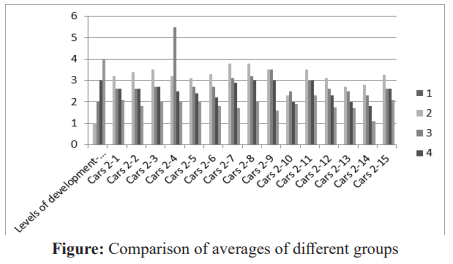
Table 3: Corelation analisys between total score of Socio-comunication scale and CARS -2
|
Total score of So-cio- comunication scale |
Cars 2-3 |
Cars 2-4 |
Cars 2-7 |
Cars 2-8 |
Cars 2-9 |
Cars 2-10 |
Cars 2-13 |
Cars 2-14 |
Cars 2-15 |
|
1 |
-4.2 |
-3.8 |
-5.7 |
-5.5 |
-5.4 |
-1.9 |
-5.0 |
-.6.7 |
-6.9 |
The results shows that children in the group with the most severe contact disorder show high scores on most items, especially visual and auditory contact with the world, but lower fears. The second group, mean levels of contact disorder severity, mainly showed disturbances in the touch rocks, children with a slight degree of contact disorder, and those who had only autistic scars in contact had lower sensory disorders and higher cognitive skills scores.
Regresion analisys
Table 3: Model Summary
|
Model |
R |
R2 |
Adjusted R2 |
Std. Error of the Estimate |
|
1 |
.851 |
.724 |
.627 |
.62209 |
To establish the linear combination between the “Early socio-com-munication scale ESCS” and the CARS-2 rocks, multiple linear regression analysis was carried out. The combination of CARS-2 variables and the scale is statistically significant. (F = 7.51, p < 0.05, R = 8.541). Adjusted R2 = 6.27, this shows that 62% of the variable "Soci-communicative development" variables can be ex¬plained by the regression model presented. According to Cohen, this is large or greater than the typical effect size [14].
The correlation analysis has shown that the prerequisites for nor-mality, linearity and homogeneity are not breached. From .50 Cohen's indicates that the association is large, between .30 and .49 medium and below .30 small. We can see that the correlations between the level of contact and sensory disorders (-5.4) in differ¬ent modalities-vision, hearing, sense of smell, movement. Signifi¬cantly negative, the greater the sensory dysfunction, the lower the accessibility to contact and this group of children need a different touch channel for accessibility. Correlations between emotional expression and accessibility of contact are also negative(-4.2). The less emotional manifestation directed at the other, the lower the level of contact. There are no correlations with the presence or absence of fears, which is an important conclusion that indi¬cates that it is not the child's fears of communication, but the fears and resistances of the adult can be an obstacle in the realization of communication. Significant are the correlations with the level of coherence of the intellectual response (-6.7), the correlation is negative, that is, the more integrated and comprehensive the cog¬nitive profile, the easier contact with the child, these are the group of so-called highly functioning children. In them, the focus is on eccentric interests and low levels of empathy that make them cum¬bersome in a social situation. The regression analysis shows that the analysis of the interrelation between more subjective evalua¬tion methods, such as the “Early Socio-Communication Scale”, are important in the overall assessment of children being autis¬tic and showing a high correlation with the results obtained from more objective rocks such as CARS 2.
Limitation of the study: Diagnosis of autism says little or almost nothing about the specifics of the child's accessibility level. CARS 2 was often misused as a parent questionnaire; it was designed as a clinician rating scale to be completed after a direct observation of the child [15]. Any clinical monitoring and study at the level of contact is also included the personality of psychologist and its preparation, the level of acceptance and openness are factors that need to be taken into account in working with autism and their families.
Discussion
The Childhood Autism Rating Scale (CARS) was factor analyzed to determine if distinct and independent “subgroups” of symptoms from Stella J [16]. Results suggest that social orienting impair¬ments may contribute to difficulties in shared attention found in autism. Social relationship deficits in small children with autism usually manifest themselves through the lack of social play and imitation, in later age, children insist on playing the same games with the same rules [17]. Social behaviour is always manifested in communication-the desire for communication is a major form. For many parents there is a mystery why sometimes children with autism have accumulated a large stock of words they understand and demonstrated their ability to speak them, they do not use them to communicate. Different aspects of behaviour that serious¬ly influence social functioning are important areas of evaluation. When conducting the assessment of socio-communicative skills, it should be borne in mind that different information (specialists or parents) is willing to give different assessments of the degree of severity of social behaviour [18]. At the same time, specialists appreciate symptoms as heavier than parents. When standardized evaluation tools are used, they need to combine with an interview and surveillance, explicitly stating the source of information. What is essential to achieve in assessing the socio-communicative skills of autistic children is agreement on the main problem areas to be put into the therapeutic plan. The assessment of the socio-com-municative skills of a child with autism is compressed, different factors should be taken into account, which the current comparison with CARS 2 data. The areas of violation of typical autistic func¬tioning show broad borders and therefore need to be relished, set up the most significant working goals. The socio-communicative skills of people with autism is a challenge for any specialist as a representative of the non-autistic Part of humanity for which inter-action with other people is a basic need. One of the different views of the problem puts [19]. If we say they are difficult to understand our thoughts and feelings, whether we are easy to understand their feelings and thoughts? If people with autism have a deficit in the theory of mind, it is likely to say that we have a deficit in the theory of automatical mind.
Conclusion
The assessment of socio-communicative skills in autism is a key area, meaningful both diagnostic and planning an appropriate ther¬apeutic plan. The study of links and dependencies between indi¬vidual levels of social skills and other symptoms helps individual¬ize the approach to autistic children and reduces stigmatization of families with a child with such a state.The results in this research testify to the strong dependence of autistic manifestations of key interaction and binding capabilities and give hope that the remain¬ing autistic symptoms can be affected by the short psychotherapy consultations with the parent. This study addresses both clinical psychologists and psychotherapists looking for their ways to com¬municate with autism children, recognizing the subject. But also, we should not forget that the behavior of psychologist and thera¬pist becomes a training model for the parent and his / her commu¬nication with the child [20,21].
I thank the whole team of the children's and adolescent clinic of psychiatry, as well as my colleagues from the Department of Psy¬chiatry and Medical Psychology for the support of my long-stand-ing clinical and research projects. Thanks, my sister who is a lecturer in Spanish and helped me with a lot of translation and correspondence.
Bulgaria, clinical sample of 260 children, with autism, studies were conducted in a clinic of child psychiatry.
References
- Arróniz-Pérez ML, Bencomo-Pérez R (2018) Treatment alternatives in autism spectrum disorders: A bibliographic review between 2000 and 2016. Journal of Clinical Psychology with Children and Adolescents 5: 23-31.
- Reyna C (2011) Emotional development and autism spectrum disorders. Journal of Research in Psychology 14: 273-280.
- Bondy AS, Frost LA (1994) The Picture Exchange Communication System. Focus on Autistic Behavior 9: 1-19.
- Cautilli JD, Hancock MA, Thomas CA, Tillman C (2002) Behavior therapy and autism: Issues in diagnosis and treatment. The Behavior Analyst Today 3: 229-242.
- Laznik MC (2004) Could we think about prevention of autistic syndrome? En: The mermaid's voice. Autism and impasses in the constitution of the subject 20-35.
- Laznik MC (1995) Towards speech. Three autistic children in psychoanalysis. Buenos Aires, Argentina: New Vision.
- Laznik MC (1992) From failure in assembling the body image to failure in assembling the drive circuit. In: the autism clinic: its psychoanalytic teaching. Buenos Aires, Argentina: Kliné. Recovered from: https://www.scribd.com/docu-ment/270689683/La-Clinica-Del-Autismo
- Alvarez A, Reid S (1999) Autism and personality: Findings from the Tavistock Autism Workshop. Taylor & Frances/ Routledge.
- Alvarez A, Lee A (2004) Early Forms of Relatedness in Autism: A Longitudinal Clinical and Quantitative Single-Case Study. Clinical Child Psychology and Psychiatry 9: 499-518.
- Álvarez P, Tendlarz S (2013) What is Autism? Childhoods and Psychoanalysis. Buenos Aires: Diva Collection.
- Tendlarz S (1996) What do children suffer from? Psychosis in childhood. Buenos Aires, ISBN: 978-950-892-192-5.
- Wang P, Spillane A (2009) Evidence-Based Social Skills Interventions for Children with Autism: A Meta-analysis. Education and Training in Developmental Disabilities 44: 318-342.
- Manolova Harieta, Staykova Svetla, Hristova Mihaela, Ter-ziev, Dimiter, Markova, Galina (2017) Early Assessment of Mental Development in Children with Autism Spectrum Disorder (ASD) and other Neurodevelopmental Disorders-Shar-ing of Clinical Experience. Journal of Intellectual Disability- Diagnosis and Treatment 5: 102-112.
- Cohen J (1988) Statistical power analysis for the behavioral science, Second Edition. Hillsdale, NJ: Erlbaum.
- Garfin DG, McCallon D, Cox R (1988) Validity and reliability of the Childhood Autism Rating Scale with autistic adolescents. Journal of Autism and Developmental Disorders 18: 367-378.
- Stella J, Mundy P, Tuchman R (1999) Social and Nonsocial Factors in the Childhood Autism Rating Scale. J Autism and Dev Disord 29: 307-317.
- American Psychiatric Association. (2013). Anxiety disorders. In Diagnostic and statistical manual of mental disorders (5th ed.)
- Klin A (1991) Young autistic children's listening preferences in regard to speech: A possible characterization of the symptom of social withdrawal. Journal of Autism and Developmental Disorders 21: 29-42.
- Jacobs Diane W, Amanda L Richdale (2013) Predicting literacy in children with a high-functioning autism spectrum disorder. Research in Developmental Disabilities 34: 2379-2390.
- Ammar Mahdhaoui, Mohamed chetouani, Raquel S Cassel, Catherine Saint-Georges, Erika Parlato, et al. (2011) Comput-erized home video detection for motherese may help to study impaired interaction between infants who become autistic and their parents. International Journal of Methods in Psychiatric Research 20: 6-18.
- Spitz R. (1965) The first year of life: a psychoanalytic study of normal and deviant development of object relations. New York: International Universities Press.