

International Journal of Women's Health Care(IJWHC)
ISSN: 2573-9506 | DOI: 10.33140/IJWHC
Impact Factor: 1.011

Research Article - (2019) Volume 4, Issue 2
Study of Knowledge, Attitudes and Practices (Kap) of Jordanian Women Aged 20-65 Years towards Early Detection and Screening of Breast Cancer
2Isra’a Abbadi, BA Pharmacy, Monitoring and Evaluation Assistant of Jordan Breast Cancer Program, King Hussein Cancer Foundation, Jordan
3Tala Hamadeh, BA Pharmacy, Monitoring and Evaluation Coordinator of Jordan Breast Cancer Program, Ki, Jordan
Received Date: Jul 08, 2019 / Accepted Date: Jul 17, 2019 / Published Date: Jul 26, 2019
Copyright: ©Jordan Breast Cancer Program. This is an open-access article distributed under the terms of the Creative Commons Attribution License, which permits unrestricted use, distribution, and reproduction in any medium, provided the original author and source are credited.
Abstract
Breast cancer has been the most common cancer in the world with nearly 1.7 million new cases diagnosed in 2012. Particially in Jordan, a developing country with limited resources, breast cancer incidence and mortality rates have been doubling in the last decade The study of the knowledge, attitude, and practices of Jordanian women aged 20-65 years towards early detection and screening of breast cancer clearly highlights the level of awareness in the community and provide organizations a clear vision on how to effectively increase awareness and transform the concept of screening and early detection to practice.
Objective: The study is aimed to explore the knowledge, attitude and practices (KAP) of the female population of Jordan ages from 20 to 65 years towards early detection and screening of breast cancer by assessing the overall awareness regarding breast cancer as well as their practices on detecting and screening for the disease.
Method: A qualitative and quantitative interview was conducted with individuals (n=1502) that were randomly selected according to geographical distribution of female Jordanian nationals ages between 20 and 65 years old. The interview was done by the ‘Random Walk’ method and was aided by a Computer-Assisted Personal interviewing (CAPI). The data collected was analyzed using SPSS software, and tested for significance using t-test.
Results: The study outcomes showed that 85% of the participants are aware of breast cancer. The source of their awareness was mainly through TV (72%) and the majority (73%) was not actively looking to increase their knowledge. Only 19% of participants are aware and underwent clinical breast examination (CBE) within the past year while only13% is familiar with mammogram and were subject to it. As for the visit to early detection clinics, 56 % of the Jordanians are welling to visit the clinic if they have doubt about breast cancer, while physician’s recommendation for detection and screening was only 9%. Finally, only 30% of participants believe greatly that breast cancer can be detected in early stages.
Conclusion: The study shows that although most of the participants are familiar with breast cancer but the majority had little detailed knowledge while others had misconceptions and both are not seeking improvement leading to low acknowledgement and practices of early detection and screening.
Introduction
Breast Cancer is becoming a pandemic disease worldwide where fatality rates are increasing greatly not just in Jordan but in the Arab world as well. The Jordan Cancer Registry has noted a 17% increase in new cases and a 24% increase in mortality due to breast cancer in only two years interval [1]. The mortality rate due to breast cancer can be decreased by the practice of screening and early detection methods. Screening and early detection resulted in increased early- stage tumor detection with lower rates of late-stage tumors incidence. Moreover, the mortality rate has decreased by 31.6% [2]. As a result, it is vital that the community is aware and knowledgeable regarding the screening and early detection methods .The Jordan Breast Cancer program (JBCP) was established in 2007 as a result of the breast cancer epidemic that is affecting and causing more mortality cases among women, even young aged ones. JBCP has acknowledged the importance of community awareness regarding breast cancer and its impact on late stage diagnosis. It was shown that knowledge of breast cancer and its screening and early detection methods, such as self-breast examination, clinical breast examination, and mammography, positively impact in lowering late stage diagnosis by the patient’s decision in seeking early medical care [3]. JBCP had three phases in which by end of the last phase, they were able to reach the whole Kingdom that includes mass campaigns to reach the community, in addition to understand people’s awareness, their uptake and knowledge about breast cancer.
The uptake level in the United Arab Emirates, particularly in Al Ain for SBE, CBE, and mammography did not exceed 50% (48.6%, 48.4%, and 44.9% respectively). The low uptake was attributed due to the lack and misconception of knowledge among the participants. Similarly in the Kingdom of Saudi Arabia, the practices of CBE and mammography were as low as 5% and 3% respectively due to the same reasons [4,5].Thus JBCP is highly focused in understanding the core of the lack of screening and early detection practices in Jordan which was initiated after witnessing the result of the increase of women (55%) diagnosed at earlier stages of the disease after the program establishment. An in depth insight is further needed to assess the overall awareness levels of breast cancer as a disease along with attitudes towards early screening , risk factors & preventive measures and explore the practices and what is hindering early diagnosis and determine how can this be enforced.
Method
The sample (n=1502) was randomly selected according to geographical distribution of Jordanian nationals across 12 governorates targeting specifically females from the ages 20-65 years old
Table 1: Sample Size of Participants in Each Governorate
|
Governorate |
Target |
Achieved |
|
Amman |
582 |
577 |
|
Balqa |
99 |
106 |
|
Zarqa |
222 |
217 |
|
Madaba |
38 |
39 |
|
Irbid |
269 |
269 |
|
Mafraq |
71 |
74 |
|
Jarash |
45 |
46 |
|
Ajloun |
35 |
32 |
|
Karak |
60 |
58 |
|
Tafiela |
21 |
21 |
|
Ma’an |
29 |
33 |
|
Aqaba |
30 |
30 |
|
Total |
1500 |
1502 |
Quantitative face-to-face interviews were carried out among the target group where the data was collected using CAPI (Computer Aided Personal Interviews) through Confirm it Software. The interviews were done based on random selection technique called “Random Walk” method. While data analysis and significance testing (t-test with 2 tails) was conducted through Quantum IBM software which was also used for checking, validating, editing and correcting data.
Results
Breast Cancer Information
Assessing the participant’s general knowledge about cancer, it was shown that 85% have initially stated breast cancer followed by as cervical, leukemia, bone, and brain cancers follow yet with a long margin.
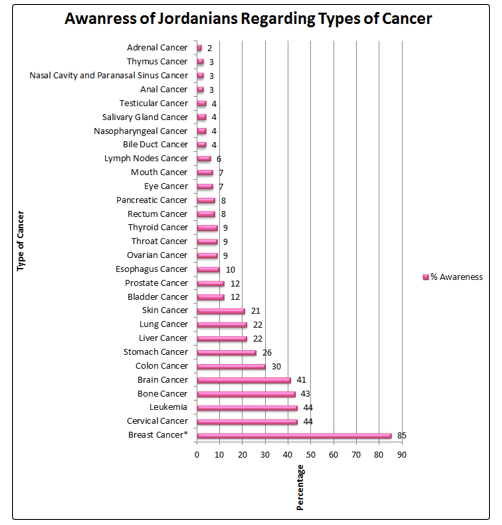
Figure 1: Percentage of All Cancer Awareness among Jordanians
When investigating the family history of breast cancer, results have shown that only 4 in every 10 Jordanians know a family member suffering from breast cancer while 34% of the participants knew a non-family member suffering from breast cancer. A more in-depth enquiry was conducted to explore the participant’s specific knowledge about breast cancer where it was discovered that 85% of the participants stated that breast cancer is the most common cancer in Jordan and 89% believe it is most common in women. The participants (89%) stated that it can be discovered at early stages whereas only 86% believe it is 90% curable. They were also questioned regarding the symptoms of breast cancer and it was shown that most (74%) are aware that finding a lump is the main symptom of breast cancer as shown in Figure 2.
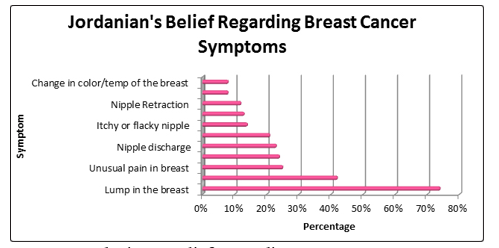
Figure 2: Jordanian’s Belief Regarding Breast Cancer Symptoms
The participants were asked to state their views on the causes of breast cancer. The majority (56%) believed that breast cancer was mainly passed down heritage/medical history while 25% stated it was caused by advanced age. Even though smoking is highly affiliated to cancer among the community, only 21% listed it as one of the potential causes of breast cancer. After assessing their general knowledge, it was crucial to know to whom would they turn to when they suspect someone is suffering from breast cancer and the 57% stated that they would consult early detection clinics while 25% stated they would consult a gynecologist and a minority of 9% would consult an internist.
All the participant’s knowledge about breast cancer was mainly (72%) gained from TV while 27% was gained from word of mouth and only 8% was gained from a healthcare provider. Only 1 in every 4 Jordanian females is willing to get more knowledge about breast cancer, however the majority are not actively looking for information due to many reasons mainly the lack of time (48%) followed by disease irrelevancy to them (36%).
Screening and Early Detection Methods
The primary source of information regarding the screening and early detection methods attained by the participants was through family and friends. The information attained by a healthcare professional was moderately low considering that the received information would be most accurate as shown in Figure 3
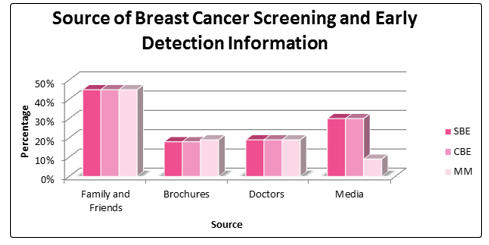
Figure 3: Source of Breast Cancer Screening and Early Detection Information
General Awareness and Practice of the Screening and Early Detection Methods
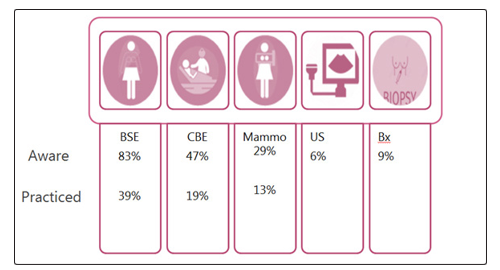
Figure 4: Participant’ Level of Awareness and Practice of the Breast Cancer Screening and Early Detection Methods
The participant’s general knowledge and practice was assessed where results have shown that BSE had the highest awareness and practice (83% and 39% respectively) compared to the other examination methods.
Self-Breast Examination (SBE)
Most of the participants (60%) were aware that the SBE must be conducted at the age of 20 years and above and 77% knew that it should be done on monthly basis. However, when asked about their practice of SBE, only 52% of the participants abided and only 16% would recommend doing the SBE. The lack of practice can be due lack of demonstration where only 28% of the participants received demonstration mainly by physicians (46%) followed by family and friends(31%) as well as JBCP brochures and lectures resulting 15% and 13% respectively.
Clinical Breast Examination (CBE)
Results have revealed that only 9% of the doctors recommended the clinical breast exam for the participants that reflected the reason why only 19% underwent the CBE. During their physician visit, 66% of the participants were okay with undergoing CBE while 19% went for a second opinion. After the physician visits, 38% of the participants were asked to undergo the mammogram.
Mammogram (MM)
A total of 61% of the participants stated they would undergo mammogram only when the doctor recommends the process where only 5% of the doctors did so. Going back to the last 5 years, 89% did not go through mammogram during those years. When asked about the right age of conducting the mammogram, 67% of participants mentioned it was 40 years and above while 15% mentioned 20-39 years. For the participants that underwent the mammogram, question regarding their feelings prior to the procedure was taken into consideration where 71% were worried about the results and 31% were scared of the pain.
Discussion
Several studies have been conducted in the Middle East in order to assess the knowledge, attitude and practices of female patients on the screening and early detection methods of breast cancer. Results in Saudi Arabia and UAE both exhibited lack of knowledge of breast cancer and screening and early detection as well as lack/ decrease in practices [4,5]. Looking more closely, the results have correspondingly shown that even though the participants were well aware that breast cancer is most common cancer (85%) in Jordan there was still evidence of misconceptions and lack of practice of the awareness methods.
It was evident when asked about their general information, which was mainly obtained through television and word of mouth, regarding breast cancer such as the symptoms were somewhat misguided that was reflected by the participant’s high belief that finding a lump (74%) or suffering from unusual pain in the breast (42%) indicated the absolute presence of breast cancer. On other hand, many participants believed that medical history (62%) and advanced age (25%) were the major risk factors causing breast cancer.
Even though there were misconceptions regarding breast cancer, the participants were well informed that if faced with the situation, they would mainly seek aid from an early detection clinic followed by a gynecologist. The underutilization was marked when the participants were asked about the breast cancer screening and early detection methods. Most of the participants were well aware that the SBE is conducted by the age of 20 on a monthly basis but only half actually conducted the examination that is explained mainly by the lack of demonstration by healthcare providers.
Since the SBE is conducted by the patient herself, a hands-on demonstration needs to be shown and practiced ensuring the precise and correct process of the examination. It was apparent that there was need to stress on the healthcare providers to consult the patient on the techniques of breast examinations since only 19% have had CBE where only 9% of them were under a healthcare provider’s request. Entrustment in the healthcare provider’s advice is highly sought after and would have a great impact on the patient’s follow-through the breast cancer screening and early detection methods where it was clear that 61% of participants would only undergo mammography under physician’s request. In support, very few participants conducted mammography under the same reason they underwent CBE even though most were aware regarding the right age to start the examination of mammography. Question regarding the participant’s feeling prior to going to the mammography examination was asked where most were afraid of the results while others scared of the pain. This can give an insight to the reasons why some patients would avoid regularly screening for breast cancer. In addition, the under-usage of screening and early detection practice can be attributed to the participant’s unwillingness to search for more information regarding breast cancer mainly due to lack of time and fear.
Conclusion
The prevalence of breast cancer is progressively rising in Jordan, in just two years there was an 18% increase in diagnosed cases. Accordingly, it crucial to stress on the importance of screening and early detection due to its high impact on decreasing the mortality rate (47%). It was evident that the participants were knowledgeable about breast cancer and the methods of screening and early detection but there was still a significant abstention of the methods.
One of the factors that can influence the awareness and practices is the support and adherence of healthcare providers by demonstrating and consulting their patients during the physical check-ups [6-11].
References
- Ayoub Al-Sayaideh, Omar F Nimri, Kamal Arqoub, Marwan Al Zaghal (2018) Cancer Incidence in Jordan: 2012. Jordan Cancer Registry.
- Chan M (2010) Cancer in Developing Countries: Facing theChallenge. IAEA Scientific Forum.
- Jordan Cancer Registry (2018). Cancer Incidence in Jordan: 2014.
- Rue M, Vilaprinyo E, Lee S, Martinez Alonso M, Carles MD, et al. (2009) Effectiveness of Early Detection on Breast Cancer Mortality Reduction in Catalonia (Spain). BMC Cancer 9: 326.
- Jaouni S. Jordan Breast Cancer Program A Bottom-up Model for Early Detection and Screening
- Taioli E, Joseph GR, Robertson L, Eckstein S, Ragin C (2014) Knowledge and prevention practices before breast cancer diagnosis in a cross-sectional study among survivors: impact on patients’ involvement in the decision making process. Journal of cancer education: the official journal of the American Association for Cancer Education, 29: 44-49
- Burton R, Bell R (2013) The Global Challenge of Reducing Breast Cancer Mortality. The Oncologist. 18: 1200-1202
- Dey S (2014) Preventing breast cancer in LMICs via screening and/or early detection: The real and the surreal. World Journal of Clinical Oncology 5: 510-519.
- Amin, Al Mulhim, Al Meqihwi (2009) Breast cancer knowledge, risk factors and screening among adult Saudi women in a primary health care setting. Asian Pac J Cancer Prev 2009: 133-138.
- Elobaid YE, Grivna TC, Nagelkerke N (2014) Breast Cancer Screening Awareness, Knowledge, and Practice among Arab Women in the United Arab Emirates: A Cross-Sectional Survey. PLoS ONE 9: 0105783.
- Louise E Johns, Derek A Coleman, Anthony J Swerdlow, Susan M Moss (2017) Effect of Population Breast Screening on Breast Cancer Mortality up to 2005 in England and Wales: an Individual-Level Cohort Study. British Journal of Cancer 116: 246-252.