




Case Report - (2025) Volume 10, Issue 2
Snare Assisted Percutaneous Valve Therapies- Transcatheter Heart Valve (THV) - Extension of Old Device Closure Methodologies (A Trick to Facilitate Easy Delivery of Transcatheter Heart Valve (THV)) - Two Cases
2Department of Cardiology, Narayana Health, India
Received Date: Jun 19, 2025 / Accepted Date: Jul 07, 2025 / Published Date: Jul 14, 2025
Copyright: ©Â©2025 Anand R Shenoy, et al. This is an open-access article distributed under the terms of the Creative Commons Attribution License, which permits unrestricted use, distribution, and reproduction in any medium, provided the original author and source are credited.
Citation: Shenoy, A. R., Suraj, N., Rahul. (2025). Snare Assisted Percutaneous Valve Therapies- Transcatheter Heart Valve (THV) - Extension of Old Device Closure Methodologies (A Trick to Facilitate Easy Delivery of Transcatheter Heart Valve (THV)) - Two Cases. Cardio Open, 10(2), 01-05.
Abstract
We present a case of 82 years old male patient who underwent MVR in 2009 and now come with class IV dyspnoea and prosthetic valve degeneration and 72 years old female who had severe calcific aortic stenosis both of them underwent Transcatheter heart valve (THV) implantation. In both cases to implant transcatheter heart valve snare assistance was pivotal. Using snare for valve placement was unique in these cases. This report contributes to the growing body of literature on snare assistance in percutaneous procedures and provides valuable insights for interventionists in managing similar cases.an accomplished and imaginative interventional cardiologist, Bethsaida Hospital has successfully integrated PBD into cardiac care, achieving remarkable clinical outcomes, including the reversal of hypertension, control of diabetes, reduction of LDL cholesterol, and a significant reduction in restenosis rates. With artificial intelligence (AI) and robotics poised to validate the superiority of PBDs objectively, current skeptics risk being perceived as intellectually inflexible and adherent to outdated paradigms. Medicine must redefine excellence, prioritizing visionary thinking that is aligned with evidence-based health strategies, rather than merely relying on technical dexterity.
Keywords
Snare Assisted, Transcatheter Mitral Valve Replacement (TMVR), Transcatheter Aortic Valve Replacement (TAVR)
Introduction
Percutaneous valve therapies are the first line treatment in management of patients with severe Aortic stenosis with high STS score and surgical risk in patients above 60 years of age. Now it is also being widely used in surgical mitral valve degeneration (Bio- Prosthetic Valve). With increasing age and degeneration, it is difficult for straight forward valve placements and it requires constant evolution and innovations. Using snare to assist valve deployment is one of such innovative techniques as it helps in providing stability during deployment. Surgical MV replacement remains the standard of care for patients with severe MV disease if repair is not feasible. Bioprosthetic valves increasingly used for MVR are prone to structural degeneration. Repeat MVR is associated with 9% mortality in best of centres. Valve-in-valve (ViV) transcatheter mitral valve replacement has emerged as a safe and reproducible alternative for patients with a degenerated bio prosthesis. The success of transcatheter aortic valve replacement has spurred interest in percutaneous management of severe MV disease. Valve-in-valve (ViV) transcatheter mitral valve replacement approved by US FDA in 2017 for high risk cases. Ring of a degenerated bio prosthesis serves as a reliable anchoring point. Development of smaller delivery catheters with high flexure capabilities has made trans septal approach via femoral vein preferred route as it is
• Totally percutaneous no need to enter thoracic cavity
• No LV damage or pericardial injury
• Quick recovery time
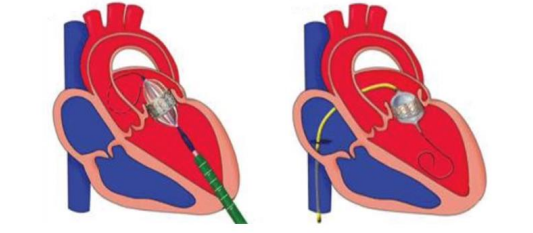
Figure 1: Trans Apical Access Versus Trans- Septal Approach
Cases
Case-1
Eighty-two years old, male, k/c/o COPD, old Subdural hematoma, Minor CAD with Primary MR, Post MVR (MV- 29mm St. Jude tissue valve) (2009). Currently has come with complaints of dyspnoea on exertion and recurrent heart failure admissions.
Echo done showed Degenerated Bioprosthetic mitral valve, mitral annulus-29mm, Severe MR, No paravalvular leak, Normal LV function (LVEF-55%). Pre-transcatheter mitral valve replacement Work-up showed presence of Peri mount valve (Edwards Lifesciences) with mitral annulus -29mm

Figure 2
Procedure
Procedure is done under General Anaesthesia (GA), TEE probe is inserted post induction of General Anaesthesia. TEE increases the safety and success rate of septal puncture in thickened or hypertrophic atrial septum.

Figure 3
Access- 6F radial access for Hemodynamic monitoring and Pigtail inserted in LV for pre and post LA-LV gradient. 7F carotid Venous sheath for RV temporary pacing wire. Primary access was right Femoral vein with 16F sheath. Trans septal Puncture was done with Brocken borough needle. Mullins sheath is inserted into the right femoral vein and advanced into the RA. Septal puncture done under TEE and fluoroscopic guidance (TEE-BICAVAL VIEW). In 4 chamber view septa was punctured at height of 2.5 -4 cm above the mitral annular plane. Inj Heparin 5000 IU is given systemically. Trans septal needle is withdrawn and an Inoue wire is advanced into LA. Agilis sheath with introducer is advanced into the LA. Entry of sheath into LA is confirmed by Contrast injection, Heparin is given to maintain ACT >250. Agilis sheath is steered towards the mitral annulus and a pigtail is passed in to LV apex. Pigtail was used to passed over 035 Teflon wire across the mitral valve and parked in the ascending aorta thro LV apex. Valve negotiation through the bioprosthetic valve was difficult due to low trans- septal puncture and whole system with wire was backing out.

Figure 4
035 wire was exchanged with lunderquist super stiff wire. Swan Ganz was passed from the Right Femoral Vein to left ventricle to the aorta. Venoarterial loop was formed.20mm Snare wire was passed from the left femoral artery. Aorta wire was snared to provide the stability to deploy the new transcatheter heart valve (THV).

Figure 5
Transcatheter Heart Valve (THV) was introduced into the mitral valve area by push pull technique using the venoarterial loop. (while pushing valve on wire simultaneously pulling the wire), All this time second operator was pulling on the snare to make the VA loop taught, with great difficulty the valve could be finally negotiated across the bio- prosthetic valve. When the THV was partially deployed the snare, wire was released for coaxial placement of the valve, (because of the snaring technique – the tip of the THV BALLOON WAS POINTING TOWARDS LVOT INSTEAD OF LV APEX) 27.5mm MYVAL THV was used. Left ventricle to aorta pulls back was done to see the gradient which was nil. Post Deployment Assessment and Management- ECHO showed no paravalvular leak and there was no gradient across the mitral valve Follow up – Patient is doing well and on single anti- platelet and statin and there is no further hospital admissions.

Figure 6
Case-2
72-year female with Severe Calcific aortic stenosis, Presented with complaints of DOE – Class III, Angina on exertion. ECHO revealed Densely calcific aortic valve. Severe aortic stenosis (AVA- 0.5sqcm, AVG-72/50mmhg) and normal LV systolic function. Patient was planned for transcatheter aortic valve implantation procedure and CT transcatheter aortic valve implantation protocol was done which revealed the annulus of 19.7mm diameter with favourable coronary height.
Procedure
Access-Radial Access was taken with 6F sheath for pressure monitoring, and Pig tail was inserted for aortic root angiogram. Left femoral access was taken for temporary pacemaker insertion into RV.

Figure 7
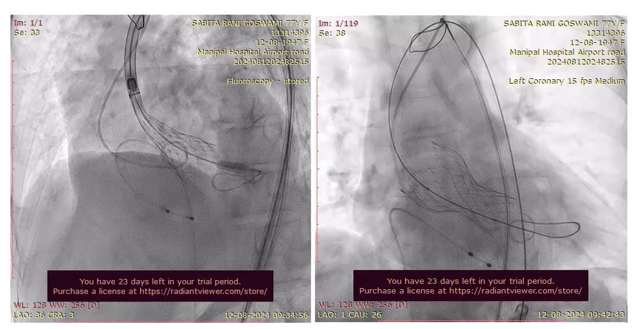
Figure 8
Pigtail placed in the non-coronary cusp. Amplatzer Left - 1 Cather with straight wire used to cross the Aortic valve exchanged to confide stiff wire. EVOLUTE R 23MM Medtronic valve Inserted over the wire but there was difficulty in tracking over the Arch of aorta. (due to stiff delivery system of THV and horizontal ascending aorta), For which left femoral artery access was taken and 20mm snare wire passed from left femoral artery, snare wire grasps the distal end of delivery system, (whole technique of crossing aortic valve done through wire across the snare) snare wire was then pulled from left femoral artery (to acutely bend the nose cone of the THV) so that we are able to cross the native aortic valve and THV delivery system was pushed as it became co-axial and was deployed in a co-planar view after releasing the snare. Post procedure-ECHO showed well expanded valve with No para valvular leak. Femoral access was closed with Proglide and patient was discharged on single antiplatelet and statins.

Figure 9
Conclusion
These two cases have shown that snare assisted Transcatheter Aortic Valve Implantation and Transcatheter Mitral Valve Replacement in complex mitral and aortic valve anatomy have good procedural safety and efficiency [1-6].
References
- Webb, J. (2011). Balloon valvuloplasty for stenotic bioprosthetic aortic valves. Catheterization and Cardiovascular Interventions, 77(4), 593-593.
- Yearoo, I., Joshi, N. V., Turner, M., Mahadevan, K., & Dorman,S. H. (2019). Novel techniques to crossing a severely stenoticaortic valve. JACC: Case Reports, 1(5), 848-852.
- Pyxaras, S. A., Pizzulli, L., & Gerckens, U. (2016). Nose cone entrapment after transcatheter aortic valve implantation of a CoreValve self-expandable bioprosthesis. Journal of Cardiovascular Medicine, 17, e183-e184.
- Naganuma, T., Kawamoto, H., Hirokazu, O., & Nakamura,S. (2019). Successful use of the loop snare technique for crossing a degenerated surgical valve with the Evolut-R system. Catheterization and Cardiovascular Interventions, 93(7), E400-E402.
- Nguyen, A., Urena, M., Himbert, D., Goublaire, C., Brochet, E., Gardy-Verdonk, C., ... & Vahanian, A. (2016). Late displacement after transcatheter mitral valve replacement for degenerative mitral valve disease with massive annular calcification. JACC: Cardiovascular Interventions, 9(15), 1633-1634.
- Bapat, V. V. N., Khaliel, F., & Ihleberg, L. (2014). Delayed migration of Sapien valve following a transcatheter mitral valve-in-valve implantation. Catheterization and Cardiovascular Interventions, 83(1), E150-E154.