

International Journal of Health Policy Planning(IJHPP)
ISSN: 2833-9320 | DOI: 10.33140/IJHPP
Impact Factor: 1.08


Review Article - (2026) Volume 5, Issue 1
Simulation Modelling in Public Health: Concepts, Applications and Integration with Artificial Intelligence. A Conceptual and Applied Framework for Prediction, Preparedness, and Decision-Making in Public Health Systems

Received Date: May 05, 2026 / Accepted Date: May 25, 2026 / Published Date: Jun 02, 2026
Copyright: ©2026 Sandhya Ahuja. This is an open-access article distributed under the terms of the Creative Commons Attribution License, which permits unrestricted use, distribution, and reproduction in any medium, provided the original author and source are credited.
Citation: Ahuja, S. (2026). Simulation Modelling in Public Health: Concepts, Applications and Integration with Artificial Intelligence. Int J Health Policy Plann, 5(1), 01-17.
Abstract
Simulation modelling is an important method in public health for understanding complex health problems, testing possible scenarios, and supporting better planning and decision-making. Public health systems often work under uncertainty, especially during outbreaks, climate-related health events, disasters, hospital emergencies, and changing disease patterns. In such situations, simulation modelling helps answer practical “what if” questions without waiting for real-life events to occur. For example, it can help estimate what may happen if air quality worsens, if rainfall increases dengue risk, if vaccination coverage improves, or if hospital admissions suddenly rise during a heat wave or epidemic. This article explains the basic concept of simulation modelling in public health, its major types, and its applications across different public health division’s such as communicable diseases, non- communicable diseases, maternal and child health, immunization, nutrition, climate change and health, hospital preparedness, disaster management, health financing, and disease surveillance. It also explains how simulation models can be developed step by step, starting from defining the public health problem, identifying variables, selecting data sources, making assumptions, running scenarios, validating results, and using the findings for public health action. The article further discusses how artificial intelligence can strengthen simulation modelling by improving prediction, identifying hidden patterns, analyzing large datasets, generating real-time alerts, and supporting decision-making. When simulation modelling is combined with AI, surveillance data, hospital data, climate data, and environmental data, it can become a powerful tool for early warning systems and preparedness planning. This is especially useful for India, where large-scale public health programmers, climate-sensitive diseases, digital surveillance platforms, and hospital-based reporting systems can benefit from predictive and scenario-based analysis. Overall, simulation modelling should not be seen only as a technical or mathematical exercise. It is a practical public health tool that can help move health systems from delayed response to early preparedness, from routine reporting to predictive action, and from isolated data analysis to informed policy and programme planning.
Introduction
Public health systems continuously deal with uncertainty, complexity, and rapidly changing situations. Disease outbreaks, climate-related illnesses, seasonal variations, population movement, environmental pollution, health emergencies, and changing healthcare demand soften make it difficult for health authorities to predict future health needs accurately. Many public health decisions, therefore need to be taken even before complete information becomes available. In such situations, simulation modelling becomes an important tool for planning, prediction, preparedness, and decision-making. Simulation modelling is a method of creating a virtual representation of a real-life public health situation and then testing different possible scenarios using computer-based models. Instead of waiting for an outbreak, disaster, or health crisis to occur, simulation models allow researchers, policymakers, hospitals, and programme managers to study possible outcomes in advance. These models help answer important practical questions such as what may happen if vaccination coverage increases or decreases, if air pollution remains high for several days, if rainfall increases mosquito breeding, or if hospital admissions suddenly rise during a heat wave or epidemic.
The importance of simulation modelling has increased significantly in recent years because public health problems have become more interconnected and data-driven. Climate change, urbanisation, population density, migration, emerging infectious diseases, antimicrobial resistance, and increasing healthcare costs have made traditional planning methods insufficient in many situations. At the same time, the availability of digital surveillance systems, hospital databases, environmental monitoring systems, satellite information, and real-time reporting platforms has created opportunities for more advanced predictive analysis. Simulation modelling is now being used in several areas of public health, including outbreak prediction, hospital preparedness, emergency response planning, vaccination strategies, environmental health risk assessment, health financing, disease burden estimation, and policy evaluation. During the COVID-19 pandemic, simulation models were widely used across the world to estimate transmission patterns, ICU requirements, oxygen demand, lockdown impact, and vaccination scenarios. Similarly, climate-health researchers are increasingly using simulation approaches to study the relationship between temperature, rainfall, air pollution, and diseases such as acute respiratory infections, heat stroke, malaria, dengue, and other climate-sensitive conditions.
Different types of simulation methods are used depending on the public health problem being studied. Some models focus on entire health systems and long-term trends, while others simulate the behaviour of individual people, healthcare facilities, or disease transmission patterns. Some methods estimate uncertainty and probability, while others model hospital workflows or patient movement. Although these approaches may appear highly technical, their basic objective remains simple: to improve understanding, preparedness, and evidence-based decision-making. In recent years, artificial intelligence has further expanded the scope and usefulness of simulation modelling in public health. AI can analyses very large datasets, identify hidden patterns, continuously update predictions, and improve the accuracy of simulations over time. Integration of AI with simulation modelling can support real-time early warning systems, predictive surveillance, hospital preparedness planning, and rapid policy analysis. This combination is becoming particularly important for countries like India, where large populations, environmental challenges, and diverse health conditions require scalable and proactive public health approaches. This article explains the concept of simulation modelling in public health in simple and practical language. It discusses major types of simulation methods, their applications across different public health divisions, the process of building simulation models, and the growing role of artificial intelligence in predictive public health systems. The article also highlights practical examples related to disease surveillance, climate-health interactions, and healthcare preparedness to demonstrate how simulation modelling can support modern public health planning and response systems. Particular emphasis is placed on practical applications in the Indian public health context, including climate–health linkages, disease surveillance, and hospital preparedness.
Understanding Simulation Modelling in Public Health
Simulation modelling is a method used to create a simplified representation of a real-life public health system, event, disease pattern, healthcare process, or population behaviour in a virtual environment. The purpose of simulation is to study how a system behaves under different conditions and to estimate what may happen in the future if certain changes occur. In public health, simulation modelling helps researchers and policymakers test different scenarios without directly experimenting on populations or waiting for real events to occur. In simple terms, simulation modelling tries to answer “what if” questions.
For example:
• What may happen if air pollution levels remain very poor for one week?
• What may happen if vaccination coverage falls below a certain level?
• How many hospital beds may be required during a heat wave?
• What may happen to dengue cases after heavy rainfall and waterlogging?
• How will disease transmission change if schools are closed during an outbreak?
Instead of relying only on past trends or assumptions, simulation models allow public health teams to study multiple possible situations systematically. This helps in preparedness, planning, policy evaluation, and resource management.
Asimulation model usually contains several important components. These include the population being studied, health-related variables, assumptions, environmental conditions, interactions between factors, and expected outcomes. The model is then run repeatedly under different scenarios to estimate how the system may behave over time.
For example, in a climate-health simulation model studying acute respiratory infections (ARI), the inputs may include:
• AQI levels
• PM2.5 concentration
• Temperature
• Humidity
• Rainfall
• Age groups
• Baseline ARI cases
• Hospital admission trends
The model may then simulate how ARI burden changes under different environmental conditions.
Similarly, in an infectious disease simulation model, the inputs may include:
• Population density
• Vaccination coverage
• Mobility patterns
• Contact rates
• Incubation period
• Recovery rate
• Mask usage or preventive behaviour
The model can then estimate how rapidly a disease may spread and how different interventions may affect the outbreak.
Simulation models are especially useful in public health because many health systems are highly complex. Disease occurrence is rarely influenced by a single factor. Instead, health outcomes are usually affected by multiple interacting variables such as environment, behaviour, climate, healthcare access, socioeconomic conditions, infrastructure, mobility, and policy decisions. Simulation modelling allows these interactions to be studied together. Another important feature of simulation modelling is that it supports scenario analysis. Public health officials can compare different possible situations before making decisions.
For example:
Scenario 1: No intervention
Scenario 2: Moderate intervention
Scenario 3: Aggressive intervention
The model may then estimate differences in disease burden, mortality, healthcare demand, or programme costs under each scenario.
Simulation modelling also helps reduce uncertainty in planning. Public health programmes often need to prepare for situations where exact outcomes are unknown. For example, during a pandemic or extreme weather event, authorities may not know the exact number of patients, oxygen requirement, medicine stock needed, or ICU demand. Simulation models can estimate a likely range of outcomes and help improve preparedness.
Modern simulation modelling increasingly depends on data from multiple sources such as:
• Disease surveillance systems
• Hospital records
• Environmental monitoring systems
• Census and demographic databases
• Laboratory reporting systems
• Satellite and weather data
• Mobility and transport data
• Electronic health records
With advances in digital health systems and artificial intelligence, simulation models are becoming more dynamic and capable of real-time analysis. AI can continuously update simulations as new data becomes available, making prediction systems more responsive and accurate. Although simulation modelling involves mathematical and computational methods, its ultimate purpose in public health is practical rather than theoretical. The goal is to improve prevention, preparedness, response, planning, and policy decisions in order to reduce disease burden and improve population health outcomes.
Importance of Simulation Modelling in Public Health
Public health systems operate in highly dynamic and uncertain environments where decisions often need to be taken before complete information becomes available. Outbreaks may spread rapidly, climate conditions may change suddenly, hospitals may become overloaded during emergencies, and health programmers may need to function under limited resources. In such situations, simulation modelling becomes an important support tool for planning, prediction, preparedness, and evidence-based decision-making. Traditional public health analysis often focuses on describing past events using reports, trends, and statistical summaries. While this remains important, simulation modelling goes one step further by helping estimate future possibilities and testing different interventions before they are implemented in real life. This allows policymakers and programme managers to better understand potential risks, expected outcomes, and resource requirements. One of the major strengths of simulation modelling is its ability to study complex systems where multiple factors interact simultaneously. Public health problems are rarely caused by a single variable. For example, respiratory diseases may be influenced by air pollution, temperature, humidity, overcrowding, smoking, healthcare access, age distribution, and seasonal changes.
Similarly, vector-borne diseases may depend on rainfall, temperature, waterlogging, vector density, human movement, and preventive measures. Simulation models allow these interactions to be studied together rather than separately. Simulation modelling is also useful because many public health interventions cannot be tested directly on populations due to ethical, financial, or operational limitations. Governments cannot wait for disasters to occur before planning emergency response systems, and hospitals cannot deliberately create overcrowding situations to test preparedness. Simulation models provide a safer and more practical alternative by creating virtual scenarios that can be studied repeatedly under different conditions. Another important advantage is that simulation modelling supports proactive rather than reactive public health action. Instead of responding after disease burden increases, public health systems can use predictive simulations to identify possible risks earlier and prepare in advance. This is particularly important for climate-sensitive diseases, outbreaks, environmental health emergencies, and disaster preparedness. For example, a simulation model using AQI, temperature, and hospital surveillance data may predict a likely increase in acute respiratory infections over the next few days. Hospitals can then prepare oxygen supply, nebulization facilities, emergency staffing, and medicine stock before patient load actually increases.
Simulation modelling also plays an important role in health policy and programme evaluation. Governments can compare different intervention strategies virtually before implementation.
For example:
• What may happen if tobacco taxation increases?
• What may happen if vaccination coverage improves from 70% to 95%?
• What may happen if more ICU beds are added?
• What may happen if heat alerts are issued earlier?
• What may happen if vector control activities are intensified before the monsoon season?
Simulation models help estimate possible outcomes, costs, and operational impact under each scenario. The importance of simulation modelling became highly visible during the COVID-19 pandemic. Many countries used simulation models to estimate transmission patterns, hospital bed requirements, oxygen demand, ICU capacity, lockdown impact, and vaccination strategies. These models helped guide national and state-level public health decisions during rapidly evolving situations.
In recent years, simulation modelling has become increasingly important in climate change and health. Rising temperatures, worsening air pollution, changing rainfall patterns, floods, droughts, and extreme weather events are affecting disease patterns across many countries, including India. Simulation approaches can help estimate how environmental changes may influence diseases such as:
• Acute respiratory infections
• Heat stroke
• Malaria
• Dengue
• Diarrhoeal diseases
• Cardiovascular illnesses
Simulation modelling is also valuable for strengthening hospital preparedness and health system management. Hospitals can simulate patient flow, emergency load, waiting times, ambulance movement, medicine stock requirements, and workforce demand under different conditions. This helps improve operational efficiency and emergency planning. Another emerging area is the integration of simulation modelling with digital surveillance systems and artificial intelligence. Modern surveillance platforms generate very large amounts of real-time data. AI-supported simulation models can analyse these data continuously, identify hidden patterns, update predictions automatically, and support early warning systems.
For example:
IHIP disease data + AQI data + IMD weather data + hospital admissions → AI-supported simulation model → prediction of respiratory disease burden → early preparedness alerts.
This type of integrated system can support faster public health response and more targeted interventions.
|
Public Health Need |
Role of Simulation Modelling |
|
Outbreak Preparedness |
Predict disease spread and healthcare demand |
|
Climate and Environmental Health |
Estimate impact of AQI, heat, rainfall and extreme weather |
|
Hospital Preparedness |
Predict patient load, ICU demand and medicine requirement |
|
Policy Evaluation |
Compare impact of different interventions |
|
Vaccination Planning |
Estimate outbreak reduction under different coverage levels |
|
Disaster Management |
Support emergency planning and resource allocation |
|
Health Financing |
Estimate programme cost and resource utilization |
|
Disease Surveillance |
Support predictive and early warning systems |
Table 1: Importance of Simulation Modelling in Public Health

Figure 1: Why Simulation Modelling is Important in Public Health
Major Types of Simulation Modelling in Public Health
Different public health problems require different types of simulation approaches. Some methods are useful for studying disease transmission in populations, while others are more suitable for hospital operations, climate-health interactions, or policy analysis. The choice of simulation method depends on the objective of the study, the availability of data, the level of complexity, and the type of outcome being analysed. Although simulation methods may appear highly technical, their practical purpose remains simple: to understand how a public health system or health event may behave under different conditions and to support better planning and decision-making. The major types of simulation modelling commonly used in public health are discussed below.
• System Dynamics Simulation
System dynamics simulation is used to study how different components of a public health system interact with each other over time. It focuses on relationships, feedback loops, delays, and long-term trends within complex systems. This method is especially useful when public health outcomes are influenced by multiple interconnected factors.
For example:
• Population growth
• Pollution
• Climate change
• Healthcare access
• Disease burden
• Workforce availability
• Health financing
In system dynamics models, variables continuously influence one another. A change in one factor may gradually affect several other parts of the system.
For example:
Increasing air pollution
↓
Higher respiratory disease burden
↓
Increased hospital admissions
↓
Greater healthcare expenditure
↓
Increased pressure on health systems
System dynamics modelling is therefore useful for understanding how public health systems behave over long periods rather than focusing only on short-term events.
• Public Health Areas Where It Can Be Used
 Climate change and health
Health system strengthening
Chronic disease burden
Workforce planning
Population health projection
Nutrition and food systems
Health financing
Urban health planning
Example in Public Health
A city-level model may simulate how increasing temperature, worsening AQI, and population density together influence ARI cases and hospital admissions over 10 years.
Similarly, governments can simulate long-term effects of policies such as:
• Tobacco control,
• Clean fuel programmers,
• or healthcare financing reforms.
Strengths
• Useful for large complex systems
• Good for long-term planning
• Helps understand interconnected factors
• Useful for policy-level analysis
Limitations
• Requires many assumptions
• May oversimplify human behavior
• Validation can sometimes be difficult
|
Component |
Description |
|
Main Focus |
Interaction between system components over time |
|
Common Variables |
Population, pollution, disease burden, resources |
|
Time Scale |
Medium-term to long-term |
|
Main Use |
Policy planning and system-level analysis |
|
Strength |
Understanding complex interconnected systems |
Table 2: Characteristics of System Dynamics Simulation
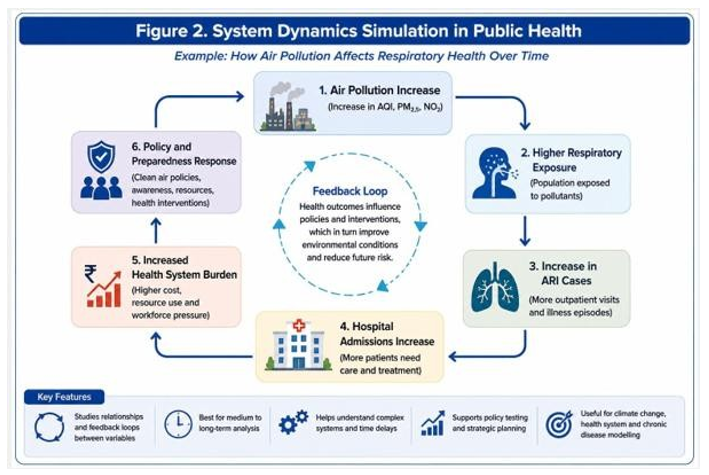
Figure 2: System Dynamics Simulation in Public Health
• Agent-Based Simulation (ABS)
Agent-based simulation models the behaviour and interaction of individual people or “agents” within a population. Each agent behaves independently according to predefined characteristics and rules.
An agent may represent:
• A person,
• Patient,
• Healthcare worker,
• Mosquito,
• Household,
• or even a healthcare facility.
Each agent can have different characteristics, such as:
• Age,
• Sex,
• Infection status,
• Vaccination status,
• Mobility,
• Occupation,
• Social behavior
• Healthcare access
The model then studies how interactions between agents affect disease spread or health outcomes.
This method became highly important during the COVID-19 pandemic because disease transmission depends heavily on individual movement and interaction patterns.
Example
One infected person attending a crowded event may infect multiple individuals, who then spread infection to different communities.
The simulation can estimate how quickly the outbreak may grow under different conditions.
• Public Health Areas Where It Can Be Used
Infectious disease transmission
Vaccination strategy analysis
Pandemic preparedness
Behavioural health studies
Urban crowd movement
Vector-borne disease spread
Community-level interventions
• Strengths
Highly realistic population modelling
Captures human behaviour and interaction]
Useful for outbreak studies
Supports localized analysis
• Limitations
Computationally intensive
Requires detailed data
Complex to design and validate
|
Component |
Description |
|
Main Focus |
Individual behaviour and interactions |
|
Main Unit |
Person or agent |
|
Common Variables |
Mobility, infection status, behaviour |
|
Main Use |
Infectious disease modelling |
|
Strength |
Realistic behavioural modelling |
|
Example |
COVID-19 transmission simulation |
Table 3: Characteristics of Agent-Based Simulation
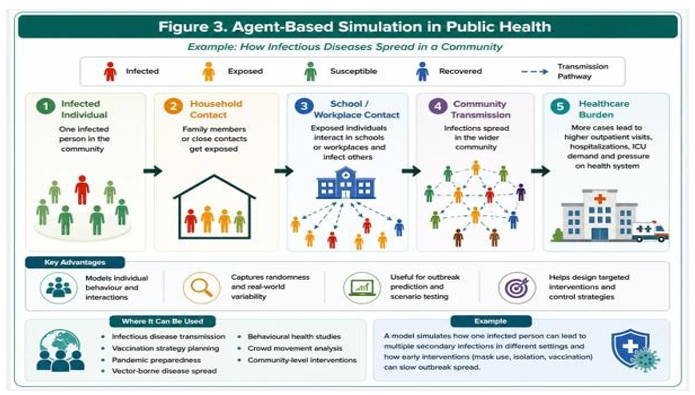
Figure 3: Agent-Based Simulation in Public Health
• Discrete Event Simulation (DES)
Discrete Event Simulation (DES) is a modelling method used to study systems where events occur at specific points in time. In public health and hospital systems, these events may include patient arrival, registration, consultation, admission, laboratory testing, ICU transfer, discharge, ambulance movement, or medicine dispensing. Unlike some other simulation methods that focus mainly on long-term trends or population behaviour, DES mainly focuses on operational processes, patient flow, waiting time, resource utilization, and healthcare system efficiency. This method is especially useful in hospitals and emergency preparedness because healthcare facilities function through a sequence of events that occur continuously throughout the day.
For example:
Patient arrives at the emergency department
↓
Registration
↓
Triage
↓
Doctor consultation
↓
Laboratory tests
↓
Admission or discharge
Each stage takes time and uses resources such as doctors, nurses, beds, laboratory staff, ambulances, oxygen supply, and medicines. If patient load suddenly increases, bottlenecks may develop, causing overcrowding and delays. DES helps identify these problems before they occur in real situations. One of the major advantages of DES is that it can estimate how healthcare systems may behave under different patient load scenarios.
For example:
• What may happen if emergency cases double during a heat wave?
• How many ICU beds may be needed during a respiratory outbreak?
• What may happen if ambulance response time increases?
• How long may patients wait during peak OPD hours?
• How much oxygen supply may be required during a severe AQI episode?
Simulation Models can Estimate:
• Patient waiting time,
• Queue length,
• Bed occupancy,
• Staff workload,
• Medicine demand,
• ICU utilization,
• and emergency response capacity.
This type of modelling became very important during the COVID-19 pandemic when hospitals needed to estimate:
• Oxygen demand,
• Ventilator requirement,
• ICU capacity,
• Emergency staffing,
• and patient overflow scenarios.
DES is also highly useful for climate-related health preparedness. During heat waves, severe
pollution episodes, floods, or disease outbreaks, hospitals may suddenly receive large numbers of patients. Simulation helps hospitals estimate resource needs in advance and improve preparedness planning.
Public Health Areas Where DES Can Be Used
• Hospital management
• Emergency department planning
• ICU preparedness
• Ambulance and referral systems
• Laboratory workflow management
• Vaccine centre management
• Disaster preparedness
• Heat wave and epidemic response planning
• Oxygen and medicine supply management
Example in Public Health
A hospital may simulate emergency patient flow during severe AQI days to estimate:
• Increase in respiratory OPD load,
• Nebulization demand,
• Oxygen requirement,
• ICU occupancy,
• and staffing needs.
Similarly, district health authorities may simulate referral movement during floods or heat emergencies to improve ambulance planning.
Strengths
• Very useful for operational planning
• Helps identify bottlenecks and delays
• Supports hospital preparedness
• Useful for real-time resource management
• Can improve efficiency and patient flow
Limitations
• Requires detailed operational data
• Can become complex in large hospitals
• Results depend on the quality of assumptions and workflow mapping
|
Component |
Description |
|
Main Focus |
Events occurring over time |
|
Common Events |
Patient arrival, admission, discharge, ICU transfer |
|
Main Use |
Hospital operations and resource management |
|
Time Scale |
Minutes to days |
|
Strength |
Identifies bottlenecks and operational delays |
|
Example |
ICU and oxygen demand during outbreak |
Table 4: Characteristics of Discrete Event Simulation
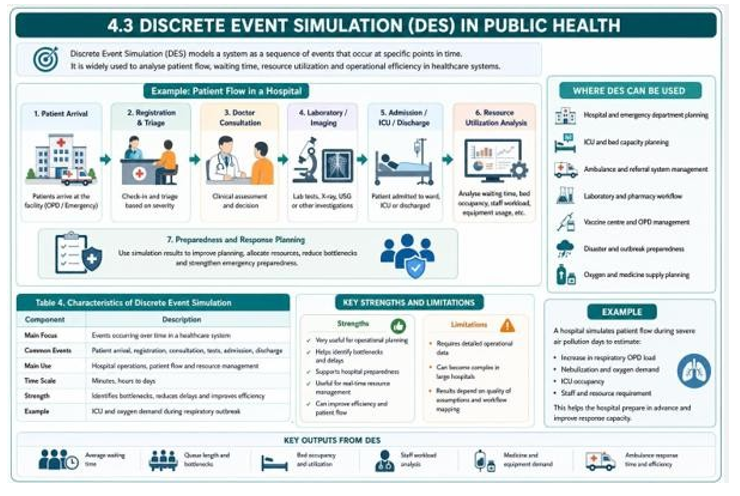
Figure 4: Discrete Event Simulation (DES) in Public Health
• Monte Carlo Simulation
Monte Carlo Simulation is a statistical simulation method that uses repeated random sampling to estimate possible outcomes under uncertainty. Instead of producing only one predicted result, this method generates many possible scenarios and calculates the probability of different outcomes. This method is especially useful in public health because many health events involve uncertainty and variability.
For example:
• Disease spread may vary,
• Weather conditions may change,
• Patient numbers may fluctuate,
• Intervention effectiveness may differ,
• and reporting completeness may not remain constant.
Monte Carlo simulation repeatedly runs the model thousands of times using slightly different values for important variables. The final result shows a range of possible outcomes rather than a single fixed prediction.
For example:
A model predicting dengue cases during monsoon season may include uncertainty in:
• Rainfall,
• Temperature,
• Mosquito density,
• Reporting completeness,
• and human exposure.
The Simulation may then Estimate:
• Minimum expected cases,
• Most likely cases,
• and worst-case scenarios.
This helps public health officials prepare for uncertainty rather than depending only on one estimate.
Monte Carlo simulation is commonly used in:
• Risk analysis,
• Outbreak forecasting,
• Environmental health,
• Health economics,
• Burden estimation,
• and policy evaluation.
Public Health Areas Where It Can Be Used
• Disease outbreak prediction
• Climate and environmental risk assessment
• Heat wave preparedness
• Air pollution health impact estimation
• Health financing and cost analysis
• Mortality estimation
• Uncertainty analysis in surveillance systems
Example in Public Health
A climate-health model may estimate possible ARI burden under different AQI and temperature scenarios during the winter months.
Instead of giving only one estimate, the model may show:
• Low-risk scenario,
• Moderate-risk scenario,
• and high-risk scenario.
• This improves preparedness planning.
Strengths
• Handles uncertainty effectively
• Provides probability-based outcomes
• Useful for risk assessment
• Supports decision-making under uncertain conditions
Limitations
• Requires a large number of repeated simulations
• Dependent on the quality of input assumptions
• May require statistical expertise
|
Component |
Description |
|
Main Focus |
Uncertainty and probability |
|
Method |
Repeated random simulations |
|
Main Use |
Risk estimation and forecasting |
|
Strength |
Provides a range of possible outcomes |
|
Example |
Predicting outbreak burden under uncertain conditions |
Table 5: Characteristics of Monte Carlo Simulation

Figure 5: Monte Carlo Simulation for Public Health
• Microsimulation
Microsimulation is a simulation method that models individuals one by one and follows their life course over time to understand how diseases, health conditions, and health outcomes develop. Unlike system-level models, microsimulation focuses on individual characteristics and tracks how each person’s health status changes based on risk factors, exposures, and interventions. In public health, this method is especially useful when outcomes vary across individuals depending on age, gender, behaviour, socioeconomic status, and access to healthcare. Instead of looking only at average population trends, microsimulation allows detailed analysis of how different sub-groups are affected.
For example, in a microsimulation model studying diabetes, each individual may have different:
• Age,
• BMI,
• Diet,
• Physical activity,
• Genetic risk,
• Access to healthcare.
The model then simulates how these factors influence the probability of developing diabetes, complications, hospitalization, and mortality over time. Microsimulation is widely used in chronic disease modelling, health economics, population ageing studies, and long-term policy planning.
Public Health Areas Where Microsimulation Can Be Used
• Non-communicable diseases (diabetes, hypertension, cancer)
• Ageing population studies
• Maternal and child health outcomes
• Nutrition and anaemia
• Health insurance and financial protection
• Screening programmes (e.g., cancer screening)
• Long-term disease burden estimation
Example in Public Health
A national-level model may simulate how different groups of people develop hypertension over 20 years and estimate how early screening, lifestyle changes, or treatment may reduce complications such as stroke and heart disease. Similarly, microsimulation can estimate how improving maternal nutrition or antenatal care may affect birth outcomes and child health over time.
Strengths
• Highly detailed individual-level analysis
• Useful for subgroup analysis (age, gender, risk groups)
• Supports long-term projections
• Useful for health economics and policy evaluation
Limitations
• Requires large and detailed datasets
• Computationally intensive
• Complex to design and interpret
• Results depend on the quality of assumptions
|
Component |
Description |
|
Main Focus |
Individual-level simulation over time |
|
Unit of Analysis |
Individual person |
|
Main Use |
Chronic disease and long-term outcomes |
|
Time Scale |
Years to decades |
|
Strength |
Detailed subgroup analysis |
|
Example |
Diabetes progression over time |
Table 6: Characteristics of Microsimulation
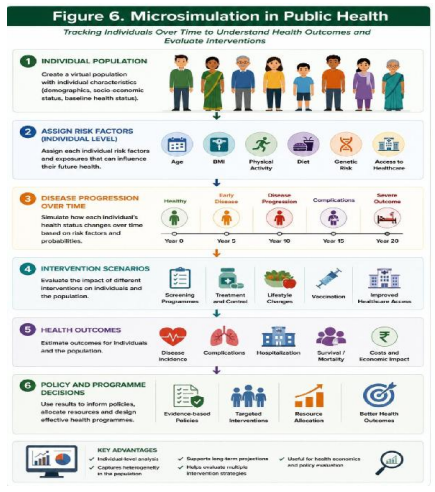
Figure 6: Microsimulation in Public Health
Step-by-Step Process of Building a Public Health Simulation Model
This is the most important practical section of the article because it explains how simulation modelling is actually done. The objective is to present a simple, structured approach that can be understood and applied by public health professionals. Simulation modelling should not be seen as only a technical exercise. It is a logical process that starts from a clearly defined public health problem and moves towards actionable outputs.
The process can be explained in simple steps.
(i) Step 1. Define the Public Health Problem
The first step is to clearly identify the issue that needs to be studied.
Example: Rising acute respiratory infection (ARI) cases during periods of poor air quality.
(ii) Step 2. Define the Objective of the Model
Specify what the model is expected to estimate or predict. Example:
To estimate the expected ARI burden over the next 7 days under different AQI scenarios.
(iii) Step 3. Identify Key Variables
List all important variables that influence the problem.
Example:
• AQI
• PM2.5
• Temperature
• Humidity
• Rainfall
• Age groups
• Baseline ARI cases
• Hospital admissions
(iv) Step 4. Data Collection
Collect data from reliable sources. Example:
• IHIP disease surveillance data
• Hospital records
• India Meteorological Department data
• CPCB AQI data
• Census and demographic data
(v) Step 5. Select the Type of Simulation Model
Choose the most appropriate method depending on the problem. Example:
• System dynamics for long-term trends
• Agent-based model for disease spread
• Discrete event simulation for hospital preparedness
• AI-based model for prediction
(vi) Step 6. Define Assumptions
Every model is based on certain assumptions. Example:
ARI cases may increase after 2–3 days of exposure to poor AQI.
(vii) Step 7. Develop and Run Scenarios
Test different possible situations.
Example:
• Scenario 1: AQI moderate for 7 days
• Scenario 2: AQI poor for 7 days
• Scenario 3: AQI is very poor for 7 days
• Scenario 4: AQI severe for 3 days
(viii) Step 8. Analyze Outputs Interpret model results. Example:
• expected ARI cases
• OPD load
• hospital admissions
• oxygen demand
(ix) Step 9. Validate the Model
Compare model predictions with real-world data to ensure reliability.
(x) Step 10. Use Results for Action
Convert model outputs into public health action.
Example:
• Issue alerts
• Increase hospital preparedness
• Allocate resources
• Inform policy decisions
|
Step |
Description |
|
Problem Definition |
Identify public health issue |
|
Objective |
Define purpose of modelling |
|
Variables |
Identify influencing factors |
|
Data Collection |
Gather relevant data |
|
Model Selection |
Choose simulation method |
|
Assumptions |
Define model conditions |
|
Scenario Testing |
Run different situations |
|
Output Analysis |
Interpret results |
|
Validation |
Compare with real data |
|
Action |
Use results for decision-making |
Table 7: Step-by-Step Simulation Modelling Process

Figure 7: Step-by-Step Simulation Modelling in Public Health
Integration of Simulation Modelling with Artificial Intelligence
Simulation modelling has traditionally been based on predefined rules, equations, and assumptions. While this approach is useful, it has certain limitations, especially when dealing with large datasets, rapidly changing conditions, and complex interactions between multiple variables. This is where artificial intelligence adds significant value. Integration of simulation modelling with AI is transforming public health from a reactive system to a predictive and adaptive system. Artificial intelligence can analyses very large and complex datasets much faster than traditional methods. It can identify hidden patterns, detect trends, and continuously update predictions as new data becomes available. When combined with simulation modelling, AI improves accuracy, speed, and real-time applicability.
In simple terms, simulation provides the structure of “what may happen”, while AI improves the accuracy of “how likely it is to happen” and “when it may happen”. One of the most important roles of AI in simulation modelling is predictive analysis. Machine learning algorithms can learn from historical data such as disease trends, weather patterns, hospital admissions, and environmental conditions. Once trained, these models can predict future outcomes under different scenarios. These predictions can then be integrated into simulation models to test various public health interventions. For example, an AI model can learn the relationship between AQI levels, temperature, humidity, and acute respiratory infections. The simulation model can then use these predictions to estimate how ARI cases may change under different environmental conditions. This combination creates a more realistic and dynamic modelling system. Another important contribution of AI is in real-time surveillance and early warning systems. Public health systems today generate large volumes of data from multiple sources, such as disease surveillance platforms, hospital information systems, laboratory reporting, environmental monitoring, and weather data. AI can process these data streams continuously and update simulation models in real time.
For example:
IHIP disease data + hospital admissions + AQI data + weather data from India Meteorological Department → AI model → simulation of future disease burden → automated alert system → hospital and public health preparedness.
This type of system can generate early warnings for outbreaks, heat-related illnesses, respiratory diseases, and other health risks. AI also enhances agent-based simulations by making agents behave more realistically. Traditional models may assume that all individuals behave in a similar way, but AI can incorporate variations in human behaviour such as mobility, compliance with public health advisories, social interactions, and response to interventions. This makes simulation outputs more realistic and useful for policy planning. Another advanced concept is the development of digital twins in public health. A digital twin is a virtual replica of a real-world system, such as a city, hospital, or population. AI continuously feeds real-time data into this virtual model, and simulation runs continuously in the background. This allows policymakers to test different scenarios and interventions in real time without affecting the actual system.
For example, a digital twin of a city like Delhi may include:
• Population data,
• AQI levels,
• Weather conditions,
• Hospital capacity,
• Mobility patterns,
• Disease surveillance data.
Simulation models can then estimate how a heat wave, pollution episode, or outbreak may affect the population and health system in real time. AI is also useful in scenario generation and optimisation. It can automatically test thousands of possible scenarios and identify the most effective intervention strategies.
For example:
• Optimal vaccination strategy,
• Best timing for public health advisories,
• Allocation of ICU beds,
• Distribution of oxygen supply,
• Targeting high-risk populations. Another important role of AI is in generating synthetic data. In many public health settings, complete or high-quality data may not be available. AI can generate realistic synthetic datasets based on existing patterns, which can be used for simulation modelling and testing. AI also supports automated reporting and decision support. Simulation results can be converted into dashboards, alerts, and simple visual outputs that can be easily understood by policymakers and health administrators.
|
Stage of Simulation |
Role of AI |
|
Data Collection |
Integrates multiple large datasets |
|
Pattern Detection |
Identifies hidden trends and relationships |
|
Model Development |
Improves predictive accuracy |
|
Scenario Testing |
Runs multiple simulations rapidly |
|
Real-Time Updating |
Continuously updates predictions |
|
Output Interpretation |
Generates dashboards and alerts |
|
Decision Support |
Supports policy and programme decisions |
Table 8: Role of Artificial Intelligence in Simulation Modelling

Figure 8: Integration of AI with Simulation Modelling in Public Health
Conclusion and Future Directions
Simulation modelling, when combined with artificial intelligence, represents a major shift in the way public health systems operate. Instead of relying only on past data and reactive responses, health systems can now anticipate future risks, test interventions, and prepare in advance. In countries like India, where public health challenges are diverse and large-scale, simulation modelling can play a critical role in strengthening surveillance systems, improving hospital preparedness, and supporting evidence-based policy decisions. Integration with existing platforms such as disease surveillance systems, hospital reporting systems, and environmental monitoring networks can further enhance its impact. Climate change, urbanisation, emerging infectious diseases, and increasing burden of non- communicable diseases will continue to create complex public health challenges. Simulation modelling provides a practical way to understand these complexities and plan effective responses. Artificial intelligence will further strengthen this approach by improving prediction accuracy, enabling real-time analysis, and supporting automated decision-making systems. Together, simulation and AI can help public health systems move from delayed response to early preparedness, from uncertainty to informed planning, and from isolated data analysis to integrated and actionable insights.
The future of public health lies in combining data, technology, and practical decision-making tools. Simulation modelling integrated with AI has the potential to become a core component of modern public health systems, particularly in areas such as climate-health surveillance, outbreak prediction, hospital management, and policy planning. This approach is not only relevant for researchers and data scientists but also for programme managers, hospital administrators, and policymakers who need simple, reliable, and actionable insights to improve population health outcomes. Data sources referenced include surveillance platforms, environmental monitoring systems, and hospital-based reporting systems used in India [1-13].
References
- World Health Organization. Simulation modelling in health systems and policy planning.
- Centers for Disease Control and Prevention. Introduction to public health modelling.
- Banks, J. (2005). Discrete event system simulation. Pearson Education India.
- Law AM. Simulation Modeling and Analysis.
- Keeling, M. J., & Rohani, P. (2008). Modeling infectious diseases in humans and animals. Princeton university press.
- Vynnycky, E., & White, R. (2010). An introduction to infectious disease modelling. Oxford university press.
- WHO. Climate change and health reports.
- IPCC. Climate Change and Health Assessments.
- World Health Organization. (2024). Ethics and governance of artificial intelligence for health: large multi-modal models. WHO guidance. World Health Organization.
- Jiang, F., Jiang, Y., Zhi, H., Dong, Y., Li, H., Ma, S., ... & Wang, Y. (2017). Artificial intelligence in healthcare: past, present and future. Stroke and vascular neurology, 2(4).
- Ministry of Health and Family Welfare, India. IHIP platform.
- Central Pollution Control Board. Air Quality Monitoring Programme.
- National Centre for Disease Control, India. Surveillance reports.