

Advances in Bioengineering and Biomedical Science Research(ABBSR)
ISSN: 2640-4133 | DOI: 10.33140/ABBSR

Impact Factor: 1.7

Research Article - (2020) Volume 3, Issue 3
Significant Waning of Active Cases of Covid-19 With High Recovery After Three Months of Complete Lockdown: Plausible Implication On Emergence of Herd Immunity in The Population
Received Date: Nov 02, 2020 / Accepted Date: Nov 09, 2020 / Published Date: Nov 18, 2020
Copyright: ©Copyright: ©2020 Prabir Chakravarty. This is an open-access article distributed under the terms of the Creative Commons Attribution License, which permits unrestricted use, distribution, and reproduction in any medium, provided the original author and source are credited.
Abstract
COVID-19 is fast spreading around the globe in a highly contagious manner. Until date there are no therapeutic agents/vaccines developed which could control this highly infectious virus from spreading among human population. Our earlier studies showed that implementation of prolonged lockdown had a profound effect on the rate of spread of COVID-19 in the population. The observed increase in doubling time of COVID-19 with a high recovery rate following complete Lockdown reflected that protective immunity may be present in the population. In this article, the data from three months following completion of Lockdown was considered. The results reflected that there was a significant down trend in the rate of COVID-19 with high recovery rate reaching up to 83% of the affected cases of COVID-19 by September 30, 2020. The projection made from the data up to 30 November, 2020, pointed towards continued decrease in active cases of COVID-19. Concomitant with this result, the recovery from COVID-19 reached to ~90% by end of October, 2020. The significance of the above mentioned results with rapid fall in active cases from end of September 30, 2020, in spite of increased testing for COVID-19 in generating immunity against COVID-19 is discussed.
Keywords
Active cases, COVID-19, Herd immunity, Interventions, Protective immunity.Introduction
SARS virus belongs to the family Coronaviridae, which is known to cause respiratory illnesses in humans and in animals. Coronavirus (CoV) is a novel member of this family that causes acute respiratory distress syndrome (ARDS), which is associated with high mortality rate. Two main strains of the virus have been identified as G614 and D614. The predominant strain circulating at present is G614 which is highly contagious.
In the past two decades, three deadly human respiratory syndromes associated with coronavirus (CoV) infections have emerged: Severe Acute Respiratory Syndrome (SARS) in 2002, Middle East Respiratory Syndrome (MERS) in 2012, and Coronavirus Disease 2019 (COVID-19) in 2019. These three diseases are caused by the zoonotic CoVs; SARS-CoV-1, MERS-CoV, and SARS-CoV-2 respectively. Among these zoonotic viruses, SARS-CoV-2 has affected millions and killed over one million worldwide after its origin in Wuhan, China in early 2020. This unprecedented challenge to Mankind has prompted widespread efforts to develop new vaccines and antiviral strategies against this highly infectious virus.
Due to alarming nature of this disaster world-wide and to contain its spread at an early stage, a country wide Lock down was implemented for two months by the Indian Authorities starting from March 25 2020. In our earlier studies, we observed that evaluating percent change in progression of COVID-19 was a better monitor to assess the progression of COVID-19 at the earlier stages as during this period abrupt changes took place during progression of COVID-19 [1-2]. It was noted from our previous studies on progression and control of COVID-19 after implementation of Lockdown, that a) percent alteration in COVID-19 cases accurately reflected the progression and abrupt changes, if any, occurring due to any external factors; b) with the implementation of complete Lockdown, there was an increase in doubling time of COVID-19 in the population; c) Lockdown had a negative impact on the rate of increase of COVID-19 [3-6]. In this article we have taken up studies on the impact of spread of COVID-19 after prolonged relaxation of complete lockdown. We have elucidated whether protective immunity was actually present in the Indian population against SARS-CoV-2 and if so, its plausible implication in emergence of ‘herd immunity’ that could assist in complete eradication of COVID-19 from the population
Methods
The present study was carried out on the data collected for COVID-19 from different sources that include the Ministry of Health (Health bulletin) Government of India and from other National and International News outlets starting from March 15, 2020 until date as described previously by us [1-6]. The Statistical analysis was performed by Microsoft Excel and power point programs and the correlation studies were done using Pearson Correlation Coefficient program.Results & Conclusions
Briefly stated that a two-month long Lockdown imposed during the end of March 2020 ended on May 30, 2020. Following which, Lockdown was ‘unlocked’ in phases of one month starting from 01 June, 2020 onwards. In this study, the focus was on evaluating the extent of protective immunity developed in the population the data was analysed at a later stage; for the entire month of September & onwards to reach a credible conclusion.
Analysis of the rate of COVID-19 in the population is given in Figure-1. The graph reflects that in the beginning of September, 2020 there was high volatility in the rate of COVID-19 cases resulting from volatility due to relaxation of Lockdown, however, the volatility was substantially reduced after 23 September, 2020 and a downward trend was noted until 30 September, 2020. A trend line drawn until October 30, 2020 from the data reflected that the rate of COVID-19 could go down further barring any untoward incident. However, the trend line appears to be weak with the R² value at 0.311. However, a positive feature of this study is the rate of recovery from COVID-19 was phenomenal as shown in Figure-2.

Figure 1: The figure reflects the percent change in COVID-19 during the month of September, 2020 and it projects a possible trend in COVID-19 at the end of October, 2020.
The figure shows that the total number of active cases of COVID-19 and those who recovered completely from COVID-19 during the month of September, 2020. The blue bar in the graph representing recovered cases reflect a steady and linear increase in number of recovered patients from COVID-19 and as on September 30, 2020 the recovery was at 83.3% with R² value at 0.995. However, there was not much change in the number of active cases of COVID-19, which is represented by red bar in the graph (15.1%) and the active cases of COVID-19 maintained a flat curve for the entire month of September 2020 with a w`eak R² value 0.419. However, the total number of recovered individuals showed a linear increase during the same period from the beginning of September, 2020 with R² value being 0.995 (p value ≥ 0.05 - Figure-2 & Figure-3).
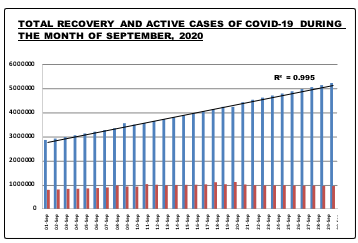
Figure 2: The Figure depicts the Active cases of COVID-19 & of those who showed recovery from active disease.

Figure 3: The Figure depicts the Active cases of COVID-19 had some degree of volatility during month of September, 2020. On the contrary those showing recovery from active disease showed a linear increase in number of disease free condition.
It appeared that there is a contradiction between high recovery rate with no change in active cases. But it is to be noted that the trend started to reverse from the end of September, 2020 as shown in Figure-4, wherein the total active cases was considered between 24 September and 30 September, 2020. During this time period, there was a gradual decline in the number of active cases of COVID-19. The graph depicts that number of active cases, after some initial volatility, decreased in number from 27 September onwards and the trend line showed a strong down ward trend since around the same time with R² value of 0.722. This graph explains the flatness of the curve observed in Figure-3 which represented the entire month of September, 2020. However, when the total number of active cases were plotted on a scatter graph for a period of ten days beginning from 20 September to 30 September, 2020, it reflected that there was a negative
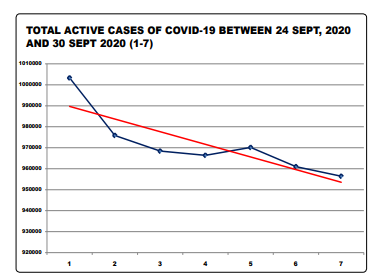
Figure 4: The Figure depicts the Active cases of COVID-19 between 24 September, 2020 and 30 September, 2020; showing a downward trend (R² value of 0.722).
Correlation with the total number of confirmed cases, with R² value of 0.553 as shown in Figure: 5.

Figure 5: The scatter plot describes a decline in active cases from 20 September until the end of September, though it was a weak correlation with R² value of 0.553.
On the other hand, when the active cases of 30 September, 2020 was compared with last day of previous month, 31 August, 2020, as shown in

Figure: 6 The graph reflects the confirmed (TC), recovered (TR), active (TA) and Death (TD) due to COVID-19 cases on 31/08/2020 & on 01/09/2020
Figure: 6, it reflected that there was no change in the number of active cases of COVID-19 between the two dates which again demonstrated that the trend in total number of active cases was downwards. The figure-6 shows the distribution of confirmed (TC), recovered (TR), active (TA) and fatal (TD) cases of COVID-19 on 31 August and 30 September, 2020 respectively. The exponential curve clearly indicates a downward trend of the total active cases on both the dates. When the case load corresponding to different categories between the end of August and September was compared in a dough-nut graph, as shown in Figure: 7, the data clearly indicated
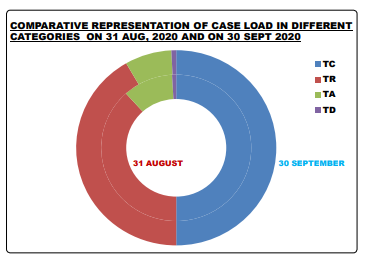
Figure 7: The graph represents distribution of the confirmed (TC), recovered (TR), active (TA) and Death (TD) due to COVID-19 as on 31/08/2020 & on 01/09/2020 respectively
that there was an increase in number of recovered cases and reduction in number of active cases on 30 September, 2020 as compared to that of 31 August, 2020. Whereas, there was no change in fatality between two dates (~1.5%). The point of concern as reflected in this graph is that of fatality due to COVID-19, which has remained the same and appears to remain so as projected until October 30 in Figure 8. That the percent of fatalities have not come down until now and as projected in the above graph it may not come down until 30 October, 2020, in spite of lower number of active cases, is a matter of concern and requires more attention to be paid for Health care for terminal patients and/or earlier detection of COVID-19 casesby
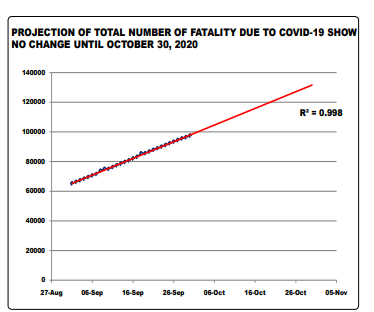
Figure 8: The graph represents the projection of fatalities from COVID-19 until 30 October, 2020 (1.5%)
increasing the number of testing for COVID-19 in the population. However, one silvering lining was the gradual decrease in the rate of confirmed cases of COVID-19 as shown in Figure:1. When a projection of rate of COVID-19 cases was made until November 30, 2020 from the October data, the trend line reflected a downward trend with a strong R² value of 0.967 (significant at p< 0.05) suggesting that the spread of COVID-19 in the population in general was showing a sign of fatigue with high doubling time of COVID-19 (Figure 9). However, the results would only be predictable/confirmed with certainty when testing for COVID-19 are substantially increased in the population.
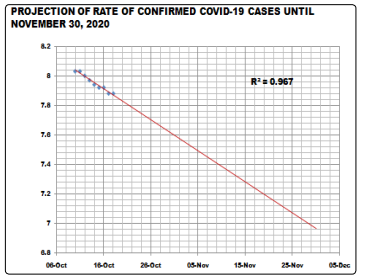
Figure 9: The graph represents the projection in the rate of confirmed cases of COVID-19 until 30 November, 2020.
From the preliminary data, comparing the rate of confirmed cases with the

Figure 10: The graph represents rate of confirmed cases of COVID-19 compared to the number of individuals tested for COVID-19.
total number of individuals tested for COVID-19 between the period of 10 October, 2020 and 18 October, 2020, a strong negative correlation (p < 0.05) was observed between the two parameters meaning that a high number of recovery was taking place with the increase in the number of tests carried out. This also implied that the higher number of recovery was taking place among those detected at an early stage of COVID-19 could be due to prior-existence of acquired immune protection against COVID-19 in the population. This presumption was further confirmed from the study depicting active cases/day and the total number of individuals tested for COVID-19/day. The result given in Figure 11 considered the period between 10 October, 2020 and 28 October, 2020. The data clearly indicated that

Figure 11: The column graph represents total samples tested/day (blue column) compared to the active cases on that day (brown column) between 10 October and 28 October. The trend line for active cases/day show strong downward trend with R² value at 0.989
the active cases had a strong down ward trend starting from 20 October, 2020 until 28 October, 2020 with R² value of 0.989 (p < .05). However, the number of samples tested per day was irregular and therefore, showed a very weak R² value. Perhaps, further studies are required with more data to further verify the matter. Nevertheless, when the active cases of COVID-19 were independently projected after 28 October, 2020 to 30 December 2020,
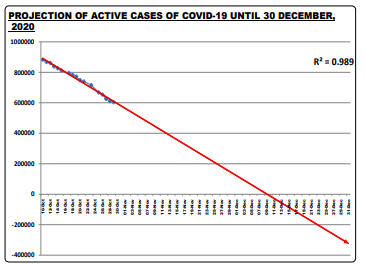
Figure 12: The graph shows a strong downward projection of the number of active COVID-19 individuals until 30 December, 2020 (R² = 0.989; p < 0.05).
it demonstrated a strong downward trend and the number of active cases being neutralized by 11 December, 2020 in the population (Figure 12). However, to conclusively come to a conclusion more data is required regarding the total number of testing done for COVID-19 in the population. Nevertheless, taking the data together, it is a clear pointer that the active cases of COVID-19 are diminishing every day which definitely points towards pre¬existing protective immunity in the population against a virus.Perhaps, towards that end, in our earlier studies, we did observe that following complete Lockdown, implemented at the end of March 25, 2020, in spite of initial volatility in the rate of COVID-19, there was a gradual increase in the number of Recovered/disease-free individuals with time [4-6]. And due to abrupt volatility in the number of cases at different time points due to unavoidable extrinsic factors like contribution from a ‘single source’, movement of labourers/workers to their native homes etc. [4, 5] when abrupt increase in number of individuals took place in a closed environment which could facilitate spread of COVID-19.
Immunity and Covid-19
Several studies have shown that patients recovered from COVID-19 across the world, had the presence of antibodies against SARS-CoV-2, and transfer of ‘Plasma’ taken from such recovered patients were able to cure patients suffering from COVID-19 establishing body’s immune response to play a vital role in the cure of COVID-19. Supporting this conjecture, it was demonstrated by some studies that specific T cells plays a crucial role in fighting this disease at a later stage of infection with SARS-CoV-2. A recent study has corroborated that divergent SARS-CoV-2-specific T and B cell responses were seen during serious COVID-19 [7]. Studies until now have repeatedly demonstrated that a long term memory T-cell mediated response is vital for eradicating a viral infection and SARS-CoV-2 would not be an exception. Therefore, it is reasonable to speculate that an earlier presence/induction of specific T cell response against the SARS-CoV-2 and or presence of long term memory T-cell due to earlier exposure to a related/unrelated pathogen could prevent the spread of COVID-19 in a population and or cure the disease at an early stage. The Figure 13 illustrate the details of T cell mediated response during COVID-19 in a SARS-CoV-2 infected cell.

The data presented in this paper bolsters our previous claim that a major factor for increased survival from COVID-19 is due to prior immunization to a related/unrelated pathogen as outlined in Table 1. Given this assumption based on sound data, possibly indicates that the entire population showing significant recovery rate is gradually moving towards achieving ‘herd immunity’ against COVID-19 with minimum loss of lives.
Protective Immunity Moving Towards Herd Immunity
Given the importance of specific immunity in control of any viral disease including COVID-19, it is worthwhile to evaluate the existence of prior immunity in the population which could prevent/ cure COVID-19. This type of protection could be achieved either through vaccination or from exposure to previous infections; and also by gradually acquiring passive immunization against, Lockdown induced, weakened (attenuated) SARS-CoV-2.
It is evident that when the coronavirus, SARS-CoV-2, did not meet any substantial resistance (immune response) in a population at an early stage of invading a population and it was able to spread quickly and subsequently caused havoc in the population with huge loss of human lives. In India however, the picture was apparently different for various reasons/factors as alluded to in the above paragraphs. Firstly, in the Indian population, wide spread vaccination/prior-immunization/exposure to related or unrelated infectious pathogens could have protected them against infection by the novel coronavirus, SARS-CoV-2 at an early stage. The vaccination/prior immunization during early life against TB, diphtheria, influenza, tetanus etc., as described in Table 1 could have played a major role in in this direction [8]. All the pathogens mentioned in Table-1 have the ability to induce a T-cell mediated immune response as described in Figure 11. Regarding development of immunity against non-exposed pathogen, a study has demonstrated that blood samples collected from a group of 20 people suffering from Flu in the year 2015, but being never exposed to SARS-CoV-2, had cross-reactive Th cells that were capable of recognizing & responding faster to the SARS-CoV-2 infected cells [9]. Secondly, the SARS-CoV-2 when met with stringent resistance by way of physical intervention due to implementation of Lockdown, resulted in their abrupt slow down and weakening (attenuation) aiding in development of ‘passive immunization’ to the virus within the population

Table-1: The table gives a list of pathogens against which Indians were immunized at different times that could provide immunity against SARS-CoV-2 infection.
The data furnished and analysed for a period between 1st September and 30th September, 2020, that is, three month’s post Lockdown reconfirms that prior immunity among the population could have prevented/cured the affected individuals from COVID-19. The high rate of recovery from COVID-19 observed during this period, which swiftly reached to 90% without facing any resistance by end of October, and gradual & consistent waning of active cases of COVID-19 to about 15.1% on September 30, 2020 and to about 9.29% as on 22 October, 2020 re-established the concept of prior immunization of the population being effective against COVID-19. Now, the point is whether the protective immunity could aid in the development of ‘herd immunity’ in the population.
Herd immunity, also called herd protection, is the resistance to the spread of a contagious disease within a population that results if a sufficiently high proportion of individuals become immune to the disease [10]. It basically serves as an indirect protection to those who are not immune to the disease. In our study: a) the swift increase in recovery from COVID-19 to ~90%; b) Abrupt decline in number of active COVID-19 cases from late September, 2020 and c) lower number of active cases in spite increasing the number of tests conducted per day for detection of COVID-19, clearly indicated that there is a gradual progression from protective immunity to ‘herd immunity’; without increase in fatality which has consistently remained at ~1.5% for last several months.
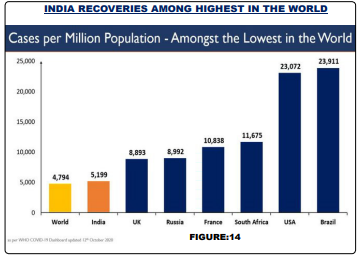
Additionally, WHO data of October 12, 2020 (Figure: 14) suggests that India has lowest number of COVID-19 cases/million. taken this with highest recovery from COVID-19 points towards presence of wide spread protective immunity in the population against virus related pathology including COVID-19.
Some other factors which point to the Indian population moving towards Herd Immunity are:
1. No Contact Inhibition: Poor maintenance of social distancing in public transports and local gatherings have not derailed the rate of recovery from COVID-19 or from gradual waning of active cases of COVID-19; with minimum fatality.
2. Some earlier instances of abrupt spurt in the number of COVID-19 cases on 1st April, 2020 from a ‘single source’ as described in details earlier did not affect the long term downward trend of COVID-19 [3, 5].
3. Mass migration of a large number of migrant labourers (~6.3 million) beginning from 1st May, 2020 onwards, to their respective native states, in trains, buses & on foot from across India had resulted in abrupt rise in COVID-19 positive case, sometimes reaching up to ~ 100,000 per day. However, such unprecedented events failed to cause mass infection of SARS-CoV-2 in the population. Instead with time the number infection has come down to ~ 48,000 per day. It is, therefore, plausible to assume that large number of these people in the population were previously immunized against many of the deadly microbe borne diseases like TB, small pox, diphtheria tetanus etc. which conferred them protection against COVID-19. For the same reason the efficacy of BCG is being tested for curing unrelated pathological conditions including COVID-19; Two clinical trials addressing the efficacy of using BCG for treatment of COVID-19 is underway, and WHO will evaluate the evidence when it is available [11, 12].
4.Contrary to the present belief that as long as there are susceptible and infected people in the population, the virus could spread, the data presented here has demonstrated that the protective immunity prevailing in the population is gradually moving towards attaining ‘Herd Immunity’ without too many fatalities; a concern voiced by WHO of losing lives if there is an attempt to reach ‘herd immunity
Acknowledgement
• Government of India & related websites for the data on COVID-19
• Different News channels of India & NY times, for the information regarding COVID-19.
• Thanks to Dr. Prabal Chakravarty for providing assistance in preparation of Manuscript and for providing encouragement.
References
- Chakravarty P (2020) A Simple Method for Detecting Early Signal in Nature of Progression of Covid-19 in Indian Population. Preprints 2020: 2020040041.
- Chakravarty P (2020) A Simple Method for Detecting Early Signal in Nature of Progression of Covid-19 in Indian Population. Sumerianz. Journal of Biotechnology 3: 10-13.
- Chakravarty P (2020) COVID-19 Follows a Flattened Growth Curve Subsequent to Prolonged Intervention in A Population; Its Implication on Rate of Doubling Time & Plausible Suppression of SARS-CoV-2 Infection. Preprints 2020: 2020050110.
- Chakravarty P (2020) Percent Alteration Accurately Reflects Progression, Intervention and Any Abrupt Changes Occurring in a Population: Plausible Significance of the Sudden Spurt in Spread of Covid-19. J Biomed Sci Res 2: 124.
- Chakravarty P (2020) COVID-19 Follows a Flattened Growth Curve Subsequent to Prolonged Intervention in A Population; Its Implication on Rate of Doubling Time & Plausible Suppression of covid-19. J Biomed Sci Res 2: 120.
- Chakravarty P (2020) Increased Doubling Time with Significant Recovery and Low Mortality from COVID-19 following Extended Lockdown: Implication for Development of Protective Immunity against SARS-CoV-2 In a Population. J Cur Tre Clin Bio Res 1: 102.
- Anna E Oja, Anno Saris, Cherien A Ghandour, Natasja A M Kragten, Boris M Hogema, et al. (2020) Divergent SARS-CoV-2-specific T and B cell responses in severe but not mild COVID-19. bioRxiv. doi: https://doi.org/10.1101/2020.06.18.159202
- Chandrakant Lahariya (2014) A brief history of vaccines & vaccination in India. Indian J Med Res 139: 491-511.
- Alba Grifoni, Daniela Weiskopf, Sydney I Ramirez, Davey M Smith, Shane Crotty, et al. (2020) Targets of T Cell Responses to SARS-CoV-2 Coronavirus in Humans with COVID-19 Disease and Unexposed Individuals. Cell 181: 1-13.
- Vyas J, Kadam A, Mashru R (2020) The role of herd immunity in control of contagious diseases. International Journal of Research and Review 7: 108-119.
- BCG vaccination linked to reduced incidence of lung cancer Med wire news, 21 October, 2019.
- Martinez R (1992) BCG vaccination in Spain. Lancet (London, England), Lancet 340: 1475.