International Journal of Forensic Research(IJFR)
ISSN: 2767-2972 | DOI: 10.33140/IJFR
Impact Factor: 1.9

Review Article - (2020) Volume 1, Issue 1
Review on Effect of Processing on Cassava Anti-Nutritional Factors and Impacts on Health
2Lecturer and Researcher of Horticulture, Debre Birhan University, Ethiopia
Received Date: Nov 07, 2020 / Accepted Date: Nov 16, 2020 / Published Date: Nov 23, 2020
Copyright: ©Copyright: ©2020 Lamrot W Mariam. This is an open-access article distributed under the terms of the Creative Commons Attribution License, which permits unrestricted use, distribution, and reproduction in any medium, provided the original author and source are credited.
Abstract
Cassava is a valuable source of food for developing countries, Different processing techniques exist to remove cyanogens andt heir effectiveness depends on the processing steps and the sequence utilized, and it often is time-dependent. The proximate composition of raw and boiled cassava tubers was not significantly different (P> 0.05), except in moisture, fat, carbohydrate and Energy value. High levels of the antinutrients in raw cassava tubers (20.56mg/100g Tannins; 1,16mg/100g oxalate and 3.36mg/100g phytate) make them unsafe and unsuitable for human consumption except after processing. Crushing and sun-drying cassava roots made into flour removes 96% to 99% of total cyanogens, whereas soaking and sun-drying into lafun or fufu, or soaking and fermenting and roasting into gari or farina, removes about 98% of cyanogens. For cassava leaves, which have 10 times more cyanogens than roots, pounding and boiling in water is an efficient process to remove about 99% of cyanogens. Other strategies to reduce toxicity include development of low-cyanogen cassava varieties and cassava transgenic lines with accelerated cyanogenesis during processing. Fermentation and oven-drying are efficient processing methods to remove phytate (85.6%) and polyphenols (52%), respectively, fromcassava roots. Sun-drying the leaves, with or without prior steaming or shredding, removes about 60% phytate. Cassava is a nutritionally strategic famine crop for developing countries and, therefore, reducing its toxicity and improving its nutritional value is crucial.
Keywords
Cassava, Nutritional Composition, Anti- Nutritional Factors
Introduction
Cassava (Manihot spp) is one of the most important root and tuber crops grown in countries of low land and humid Tropics. It is tolerant to certain diseases, adapts to poor soil on which many other crops fail and is relatively high yielding. Moreover, it is easily propagated by stem cuttings and resist drought, making it a famine-reserve crop. It can be planted any time of the year, provided there is enough moisture for stem cuttings to take root. Cassava is extremely reliable to grow, especially on sloping rain-fed soils of low fertility, survives drought periods and grows well with limited supplies of water. In addition, it is tolerant of acid soils and yields well on marginal soils without excessive use of costly inputs. These qualities have endeared cassava to resource-poor farmers [1].
Cassava is a basic food staple and a major source of farm income for the people of sub-Saharan Africa. It contributes about 40% of the food calories consumed in Africa and both rich and poor farmers often derive more cash income from cassava than from any other crop or income earning activity [2].
Currently, some cassava varieties are being promoted in food insecure northern areas of Ethiopia. In the Southern Ethiopia, particularly in Amaro-Kello area, cassava is almost used as a staple food. In Wolayta and Sidama Zone, cassava roots are widely consumed after washing and boiling or in the form of bread or “injera” (Ethiopia staple food) after mixing its flour with that of some cereal crops such as maize, wheat, sorghum, or teff [3].
Cassava was introduced into Africa from Brazil in the 16th century, can grow and produce reasonable returns even under very poor soil and climatic conditions. It has now become one of the continent’s leading food crops, giving Africa a worldwide leader [4]. Even if the introduction of the crop to Ethiopia is not well documented, it cultivation counted more than a century. But, it is mainly cultivated by small resource poor farmers on smallholding plots of land [5]. The crop was introduced to Ethiopia in the 19th century. The ones identified as the bitter cultivars by locals had been introduced first, and then followed by the sweet cultivars, having high and low cyanide contents, respectively. It is known by a variety of local names like ‘’Mita Boyeâ??,’’Yenchet Boyeâ??, ‘’Furno Treeâ?? and ‘’Mogoâ?? in the southern parts of Ethiopia, where it is dominantly grown and utilized. It is primarily grown and used as food crop for about a century in southern and south-western parts of Ethiopia. Therefore, the objectives of this paper is to review the effect of processing on anti-nutritional factors and health beneficial properties of cassava (Manihot spp).
Discussion
Effect of Processing Methods on the Nutritional Composition of Cassava
Cassava (Manihot esculenta Crantz) is a root and tuber crop that has been identified as important food, especially in Africa. In areas where cassava is a main staple, people have developed ways for its processing into storable products such as tapioca, starch, dough and gari. It plays a major role in efforts to alleviate the African food crisis because of its efficient production of food, year round availability and tolerance to extreme stress conditions [6].
On analysis of nutritional value of cassava, its roots are good in carbohydrate and its leaves are good in minerals, vitamins and fiber sources for humans. Even though it is good in nutrients, it contains anti-nutrients that are toxic and interfere with the digestibility and uptake of some nutrients. Cassava’s importance derives from the fact that its starchy, tuberous roots are a valuable source of cheap calories, especially in developing countries where calorie deficiency and malnutrition are widespread. Cassava alone provides the major source of dietary calories for about 500 million people, many of them in Africa [6]. Cassava’s use as a potential food crop in Ethiopia has increased during and after the 1984 famine [7].
In Ethiopia, cassava grows in vast areas mainly in Southern Region [8]. The average total coverage and production of cassava per annum in Southern region of Ethiopia is 4942 hectares with the yield of 53036.2 tones [5]. Although its first introduction into the country is not yet known, the crop had been growing in south, south west and western part of Ethiopia for several years [9]. It is increasingly becoming a source of industrial raw material for production of starch, ethanol, waxy starch, bio-plastics, glucose, bakery and confectionery products, glue among others.
Processing of cassava leaves has a marginal effect on the majority of the compositional nutrients.
In a study by Achidi, leaves of two varieties of Manihot esculenta Crantz were subjected to processing (heat-treated, pounded and cooked and crushed, ground and cooked) and compared for proximate composition, minerals, vitamins and anti-nutritional factors [10]. The processing methods had no significant effect on ash, lipids, protein, fibre, total carbohydrate, carotene, Ca, Mg, potassium, sodium, phosphorus, copper, zinc, and manganese, but produced significant reduction in the levels of free sugars, content of leaf meal, except chopping of leaves which resulted in consistently reduced crude protein content. The mean crude protein level was 23.1 g/100 g dry matter [11]. Fasuyi studied the nutrient profile of leaves of three genetically improved varieties of cassava plants that were harvested and subjected to different processing methods (sun-drying, oven-drying, steaming, shredding, steeping, and a combination of these methods).
The nutritional value of the roots is important because, they are the main part of the plant consumed in developing countries. Cassava roots and leaves which constitute 50% and 6% of the mature plant, respectively, are the nutritionally valuable parts of the plant [12]. The edible starchy flesh comprises some 80% to 90% total weight of the root with water forming the major components. The water content of cassava ranges from 60.3% to 87.1%, moisture content for cassava flour varies from 9.2% to 12.3% and 11% to 16.5% [13-16]. Water is an important parameter in the storage of cassava flour; very high levels greater than 12% allow for microbial growth and thus low levels are favorable and give relatively longer shelf life [16]. Cassava contains about 1-2% protein which makes it a predominantly starchy food. The protein content is low at 1% to 3% on a dry matter basis and between 0.4 and 1.5 g/100 g fresh weight [15].
The chemical composition of the root varies depending on some factors such as age of the plant, variety, climatic conditions and cultural practices. The cassava root has an average composition of 60%- 65% moisture, 30% - 35% carbohydrate, 0.2% -0.6% extractives, 1%-2% crude protein, 0.3%-1.3% ash, 0.8%-1.3% fibre and vitamin C is found in an appreciable amount [17]. Cassava also provides minerals including relatively high amount of calcium and iron which are found in higher qualities in some product such as grain than in the raw root [18]. The nutritional composition of cassava is dependent of specific tissue and on several factors like geographic location, variety, age of the plant and environmental conditions. The roots nutritional value is important because, they are the main part of the plant consumed in developing countries.
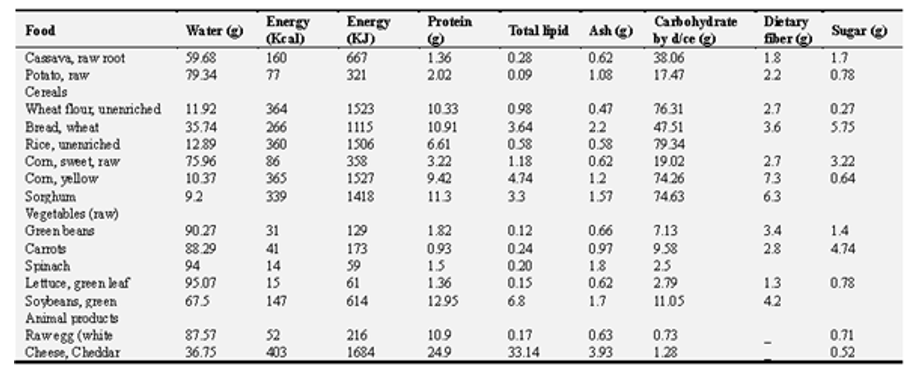
Roots and tuber crops are important cultivated staple energy sources, second to cereals, generally in tropical regions in the world. They include potatoes, cassava, sweet potatoes, yams, and aroids belonging to different botanical families (table 1) but are grouped together as all types produce underground food. An important agronomic advantage of root and tuber crops as staple foods is their favorable adaptation to diverse soil and environmental conditions and a variety of farming systems with minimum agricultural inputs. In addition, variations in the growth pattern and adopting cultural practices make roots and tubers specific in production systems [19].
Table 1. Nutritional composition of different kinds of foods (100g) for comparison to cassava root.
source:- (Adugna, 2019)
Total carbohydrate content of Qulle and Kello flour samples are reported Table 2. Qulle flour was found to have 90.54±0.01% total carbohydrate for raw, 92.91±0.02% for boiled and 90.54±0.01% for fermented samples, Kello flour was found to have 91.76±0.84%, 93.45±0.05% and 91.27±0.33% for raw boiled and fermented samples respectively. Boiling significantly (P≤0.05) increased the carbohydrate content of flour samples in both varieties. The finding of agrees with the reported value by Bradbury and Holloway, in which the total carbohydrate content is 92.81±0.07% for raw cassava flour samples and 89.42±0.06% for fermented cassava flour samples [20]. This can be due to the action of microbial enzymes that are capable of hydrolyzing carbohydrate into simple sugars, which the organism could use as its carbon source and transform it to other macromolecules or metabolites such as protein and fat [21].
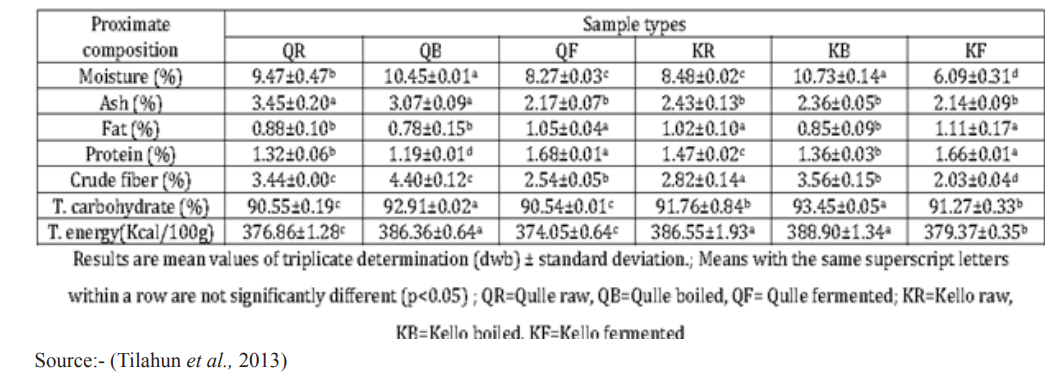
Table 3 shows The water content of cassava were compared with some foods like potato, raw egg, raw fish, milk, soybeans, carrots, green beans and lettuce, and the water content of these foods are higher than that of cassava root. Water content cassava flour was much higher than cheese, sorghum, corn, rice and wheat which are consumed by human beings frequently in different countries. Cassava root has higher energy than other sources of energy giving food components, least in protein content and it has relatively rich in sugar. The water content of cassava root is relatively at moderate level compared to others which attribute and important water to the human body for body functionality also its ash content is lower than other.
Table 3.Mineral content of 100 g of various foods for comparison to cassava root

Source:- (Adugna, 2019).
Cassava leaves contains high minerals such as iron, zinc, manganese, magnesium, and calcium. Some variation in amino acid content of leaves may be attributed to differences in maturity of leaf, sampling, analytical methods used and ecological conditions. Cassava leaves are richer in thiamin (vitamin B1, 0.25 mg/100 g) than legumes and leafy legumes, except for soybeans (0.435 mg/100 g). The leaves have more thiamin than other several animal foods including fresh egg, cheese, and 3.25% fat whole milk.
Table 4. The proximate, chemical and mineral compositions of the cassava varieties after processing
|
Cassava variety |
Moisture |
ash |
Crude fiber |
Crude protien |
Crude fat |
cynide |
charboydrate |
PH |
Zn |
Fe |
Ca |
|
Kello |
8.54 |
1.58 |
2.10 |
1.69 |
1.32 |
1.13 |
83.55 |
5.53 |
0.09 |
0.26 |
0.60 |
|
Local check |
7.53 |
2.09 |
1.76 |
1.80 |
1.22 |
1.15 |
80.19 |
5.52 |
0.07 |
0.35 |
0.70 |
|
Qulle |
9.91 |
2.52 |
1.75 |
1.63 |
1.47 |
1.02 |
84.08 |
5.47 |
0.09 |
0.24 |
0.87 |
|
CV |
1.61 |
23.3 |
6.62 |
5.39 |
2.33 |
12.33 |
6.45 |
1.42 |
8.6 |
18.5 |
4.13 |
|
LSD(0.05) |
0.32 |
1.09 |
0.46 |
0.21 |
0.07 |
0.31 |
12.1 |
1.09 |
0.02 |
0.12 |
1.09 |
|
P value |
* |
|
|
|
* |
|
|
|
* |
|
* |
Source:- (Megersa, 2019)
The study by oresented in table 5 shows the proximate composition of the boiled cassava tubers was slightly lower in the boiled tubers than in the raw tubers, probably due to leaching [22, 23]. Reported that boiling or heat processing might rescue some nutrients in food samples. The ash contents obtained from this study [1.05% and 0.76% for raw and boiled tubers] were lower than the recommended ash content range of 1.5-2.5% for nuts, seeds and tubers in order to be suitable for animal feeds. The crude fibre content of the raw and cassava tubers [1.11% and 1.17% respectively] were low compared to other crops like legumes with mean values ranging between 5-6%. Crude fibre helps in the maintenance of normal peristaltic movement of the intestinal tract hence; diets containing lower fibre could cause constipation, and eventually lead to colon diseases. The values obtained for carbohydrate [by difference] [36.63% and 36.82% for raw and boiled tubers respectively]. It’s an indication that the raw and boiled cassava tubers are rich sources of energy and capable of supplying the daily energy requirements of the body [24]. The calculated metabolizable energy value of boiled cassava tuber [151.95kcal] is significantly higher than that in the raw cassava tuber [129.71kcal]. This implies that cassava tubers are a good source of energy.
Table 5: Proximate composition of Raw and boiled cassava tubers

Source:- ( Omosuli, 2014)
Atrial was conducted by Oboh and Akindahunsi on the fermentation of cassava peels with a consortium of microorganisms in which the sundried fermented peels were analyzed for proximate, mineral, anti-nutrient composition and protein digestibility [24]. The results of their trial are as presented in Tables 6. These authors concluded that in view of the significant increase in protein content and digestibility of the microbially treated peels versus the untreated. control, such fermented cassava-by-product could be a good supplement in compounding animal feed [26].
Table 6: Proximate composition of Fermented cassava peel

Source:- ( Omosuli, 2014)
Effect of processing methods on the Anti-Nutritional factors of Cassava
The cassava has advantage over other crops particularly in several developing countries due to its outstanding ecological adaptation, low labor requirement, its high resistance to plant diseases and high tolerance to extreme stress conditions such as drought and poor soils, ease of cultivation and high yields. However, major drawbacks of the cassava crop are the low tuber protein content, rapid tuber postharvest perishability, and high content of toxic substances such as cyanogenic glucosides: linamarin and lotaustralin (methyl-linamarin) [27]. Other anti-nutritional factors such as tannin, phytates and oxalates are also found in relatively small proportion and reduce the bioavailability of essential nutrients. Therefore, to limit the toxic effects of cyanide and other anti-nutrients found and to improve bioavailability of nutrients, cassava should be processed properly. For this reason, all cassava and cassava based products should pass through different effective processing methods to suppress adverse health effects and to improve bioavailability of nutrients.
Cassava contains two cyanogenic glucosides, linamarin and a small amount of lotaustralin, which are catalytically hydrolyzed to release toxic hydrogen cyanide (HCN) when the plant tissue is crushed. Several varieties of cassava have been identified and grouped into bitter and sweet depending on the quantity of linamarin in the tuber. The consumption of cassava and its derived products which contain large amounts of HCN may be responsible for such visible manifestations as goiter and cretinism.
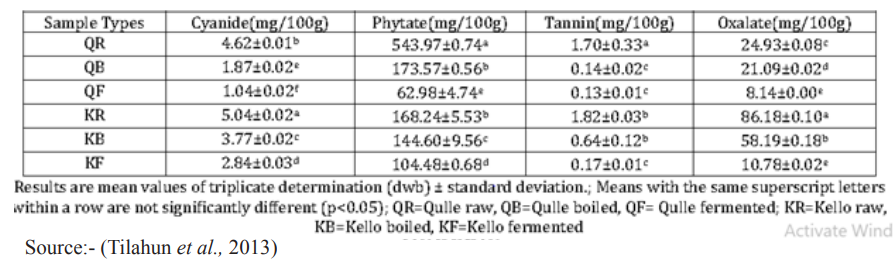
Tilahun et al., justifies that anti-nutritional factors are presented in Table 7 of Qulle and Kello cassava flour samples. Cyanide content was significantly (P≤0.05) reduced by boiling and fermentation process. The cyanide content recorded as 4.62±0.01mg/100g in raw Qulle flour was found reduced to a level of 1.87±0.02mg/100g by boiling and 1.04±0.02mg/100g by fermentation process. Similarly, from 5.04±0.02mg/100g in raw Kello flour reduced to a level of 3.77±0.02mg/100g by boiling and to 2.84±0.03mg/100g by fermentation process. The reduction of cyanide content by boiling and fermentation process has also been reported by other workers (26), in which the cyanide content was reduced from 10.9±0.3 to 3.4±0.4 (mg/kg). This is due to natural fermentation in which the microorganisms are capable of utilizing cyanogenic glycosides and the breakdown products in to other forms such as hydrogen cyanides and cyanohydrins. Raw Qulle flour sample containing 543.97±0.74mg/100g was reduced to 173.57±0.56mg/100g by boiling and to 62.98±4.74mg/100g by fermentation process.
In the same way phytate content in raw Kello was reduced from 168.24±5.53mg/100g to 144.60±9.56mg/100g and 104.48±0.68mg/100g by boiling and fermentation process respectively. Thus boiling and fermentation significantly (P≤0.05 affects phytate content in both varieties. The decrease in the phytate content of the fungi fermented cassava flour could possibly be attributed to the secretion of the enzyme phytase by during fermentation. This enzyme is capable of hydrolyzing phytate, thereby, decreasing the phytate content of the cassava flour.
Table 7.Antinutritional factors in Qulle and Kello cassava varieties
Source:- (Tilahun et al., 2013)
The most toxic substance restricting consumption of cassava roots and leaves is cyanide. The cyanide level contained in cassava leaves ranges from 53 to 1300 mg/kg dry matter Consumption of 50 to 100 mg of cyanide is acute, poisonous and lethal to adults [28]. Lower consumption of cyanide is not lethal but long term intake can cause severe health problem like tropical neuropathy. People ingesting cyanide and high amounts of nitrates and nitrites have the risk of developing stomach cancer. Cassava eating individuals have a high amount of thiocyanate in the stomach due to cyanide detoxification by the body, which may catalyze the formation of carcinogenic nitrosamines [29]. Oxalates are anti¬nutrients affecting Ca and Mg bioavailability and form complexes with proteins, which inhibit peptic digestion. Oxalate ranges from 1.35 to 2.88 g/100 g dry matter for cassava leaf meal [29].
Soaking of peeled roots in clay pots for 24 h lowered the cyanogen content by 39.6%, while a 31.0% reduction was achieved with unpeeled roots. A much greater reduction (49.9%) was obtained after a further 24 h of soaking for peeled roots than for unpeeled roots (25.0%). During soaking of peeled roots, concentration of cyanohydrin increased, reaching the maximum of 18.1 ± 1.0 mg HCN eq./kg DM. The increase was more notable in the pulp of unpeeled roots (48.5 ± 1.2 mg HCN eq./kg DM). After 24 h, the pH of the pulp dropped from 6.03 to 3.65; this low pH does not favour enzymatic conversion of linamarin to cyanohydrins. The decrease in cyanohydrin levels was probably due to leaching and squeezing of the pulp by the community before sun drying. Prior to sun drying, the levels of cyanogens in peeled roots were lower than the safe limit of 10 mg HCN eq./kg dry weight. Sun drying increased total cyanogen reduction by 2_4%. Therefore, soaking peeled roots results in faster and more efficient removal of cyanogens in the pulp than soaking unpeeled roots [30, 31]. Investigation presented in table 8 pointed out that the retained HCN level in the flour obtained after processing is very safe for human consumption since the HCN levels are very near to the WHO safe level of 10 ppm. Tivana and Bvochora also reported that cassava flour with 25 ppm HCN may be used to prepare a cassava flour meal without disorder to human health which is in agreement to the findings [32]. Although different countries have different safe levels of HCN; the WHO has set a safe level of cyanogens in cassava flour as 10 ppm [33]. For example, the acceptable limit in Indonesia is 40 ppm [34]. In this study, this was apparent for the variety NW-44/72 which resulted in 10.83 ppm after socking for 24 h. This investigation highlighted the importance of socking cassava chips for at least 24 h prior to sun drying during cassava flour making. However, it is quite important to develop further processing techniques to reduce total HCN in the product.
Table 8. Effect of variety and soaking time on the total HCN (ppm) content of cassava flour of the three different varieties.

Source: (Nebyu and Getachew,2011)
Table 8 shows, When the two processing methods are compared in terms of anti-nutrients reduction and nutrients availability, natural fermentation was observed to be very effective processing method both for optimum anti-nutrients reduction and nutrients availability. In relation to nutritional profile, the low protein content of both cassava varieties is observed to increase and decrease by fermentation and boiling respectively. From the minerals analyzed, it is observed that both cassava varieties are poor in their iron content and zinc was not detected but found to be rich sources of phosphorus which decrease up on cooking due to solubility in water and consequent leaching out with water.
Boiling: is not an effective method for cyanide removal (50%). The inefficiency of this processing method is due to the high temperatures. At 100 ºC, linamarase, a heat-labile β-glucosidase, is denatured and linamarin cannot then be hydrolyzed into cyanohydrin. Cooke and Maduagwu (1978) reported that bound glucosides were reduced to 45% to 50% after 25 min of boiling. Free cyanide and cyanohydrin in boiled cassava roots are found at very low concentrations.
Steaming, Baking and Frying: The loss of cyanide resulting from steaming, baking, or frying is small (Table 8) due to processing temperatures of over 100 ºC and to the stability of linamarin in neutral or weak acid conditions.
Drying Methods: Two kinds of drying are used for cassava: mechanical drying, such as in an oven, and natural drying by the sun (Table 9). In the drying process, endogeneous linamarase controls the cyanogenic glucoside removal, and thus is responsible for cyanohydrin and free cyanide accumulation in dried cassava. During oven-drying, an increase in drying temperature is accompanied by an increase in cyanide retention. Indeed, Cooke and Maduagwu observed a cyanide reduction of 29% at 46 ºC and of 10% at 80 ºC. In 10-mm-thick chips, Nambisan observed similar cyanide reductions of 45% to 50% and 53% to 60% at 50 and 70 ºC, respectively. At drying temperatures above 55 ºC, linamarase activity is inhibited and, therefore, linamarin starts to accumulate in dried cassava. Nambisan showed that at equal temperatures, a decrease in cassava size was associated with an increase in cyanide retention in the oven-drying processes. Indeed, at 50ºC, 10-mm-thick chips retained 45% to 50% of the cyanogenic glucosides, and 3-mm-thick chips retained 60% to 65%.
Table 9. Effects of drying processes on cyanogen content of cassava roots.

Source :- (Julie et al., 2009)
Cyanide retention during sun-drying is lower than in oven drying because the temperatures remain well below 55 â?¦C [35]. These temperatures are optimal for linamarase activity resulting in better cyanogen degradation. Generally, drying is not an efficient means of detoxification, especially for cassava varieties with high initial cyanogen glucoside content. In Tanzania, sun-drying whole roots into makopa reduced cyanide levels from 751 to 254 mg HCN equivalents/kg DW, that is, 66% of total cyanogens were removed [35].
Cyanogenic glucoside breakdown during sun drying depends on enzymatic hydrolysis and on gradual root cell disintegration. Results from have shown that grinding followed by sun drying was fairly effective in removing HCN from cassava leaves but no other anti-nutritional factors and Processing was fairly effective in removing about 60% of the hydrogen cyanide [36]. Similarly, the contents of other anti-nutritional factors i.e. saponins, phenols and tannins were also reduced but that of phytic acid increased [37]. Studied about The Antinutrients quality of raw and boiled cassava tubers were shown in table 10, there were significant differences in the antinutrients [tannins, oxalate and phylate] determined in this study. The raw cassava tuber was significantly higher in antinutrients than boiled cassava tubers, such as tannins, oxalate and phylate. Hence, consumption of raw cassava tubers may be detrimental to humans, since it could result in neurotoxicity and neuropathy [38]. As observed in this study, boiling significantly reduced the levels of the Antinutrients. Hence, it is imperative to suggest that cassava tubers should be properly processed before consumption, by either boiling, steeping, roasting or soaking in water for a period of time reported a decrease in antinutritional factors of sorghum during, soaking, probably due to leaching into the soaking water Omosuli [37]. The determination of the antinutrients was of interest due to their negative effects on mineral bioavailability and poor growth.
Table 10: Anti- nutrients Quality of Raw and Boiled Cassava Tubers

Source:- ( Omosuli, 2014) The efficiencies of two different processing methods (boiling and fermentation) in reducing cyanide levels in cassava tubers were compared. Of the tuber samples analyzed, cyanide level was the highest in raw samples and lowest in sample of fermented samples. The cyanide reduction rate is 98.23% by boiling and 100% by fermentation for cassava flour samples. The considerable reduction in total HCN content of the cassava flour recorded in experiment might be explained as a result of enhanced hydrolysis process of cyanogenic glucosides by the enzyme linamarase [39]. The significant contribution of soaking of cassava slices in water for 24 hours was apparent to induce hydrolysis [39].
Boiling and fermentation were found to be an effective method in reducing anti-nutritional factors such as cyanide, phytate, tannins and oxalate at different levels of concentration. The removal of these anti-nutrients has resulted in the improvement of nutritional composition of both cassava varieties [39]. Investigation shows that although the varieties are good choices in relation to cyanide content, the high level of phytate content in both varieties still remains a problem. Boiling and fermentation found to improve the availability of nutrients in the cassava varieties studied by decreasing the anti-nutritional factors of cyanide, phytate, tannin and oxalates. From the anti-nutrients analyzed, low content of tannins in both varieties was observed.
Cyanogens in Cassava: Impacts on Human Health
While cassava has many positive attributes, which largely explain its widespread cultivation, it has a number of serious limitations. Firstly, there is the problem of rapid post-harvest deterioration of the tubers following removal from the soil, which limits its marketability [40]. Secondly, the tubers are low in protein and some essential micro-nutrients thus, an unbalanced diet can result in “hidden hunger” [41-43]. Thirdly, cassava contains a number of bioactive products that are harmful to human health [35]. The most important of these are the cyanogenic glycosides, which breakdown to release toxic hydrogen cyanide gas (HCN) in a process known as cyanogenesis. The risk of cyanide toxicity from cassava is increased because not only is the part that is consumed highly cyanogenic but it also frequently forms a large proportion of the overall diet. Cassava consumption can lead, therefore, to chronic health problems and death unless the food products are appropriately processed [44].
Sulphur-containing amino acids (methionine and cysteine) are required to detoxify cyanide in humans [34]. Not only is the overall proportion of ingested protein low in a high cassava diet, but the need for S-amino acids for detoxification restricts the proportion of that protein that can be assigned to growth, which may result in stunting of children [45]. Thus, where cassava is the main source of food in human diets, there is a need to ensure that there is adequate sulphur nutrition. Cases of cyanide poisoning are most common among people who subsist on a monotonous diet of cassava.
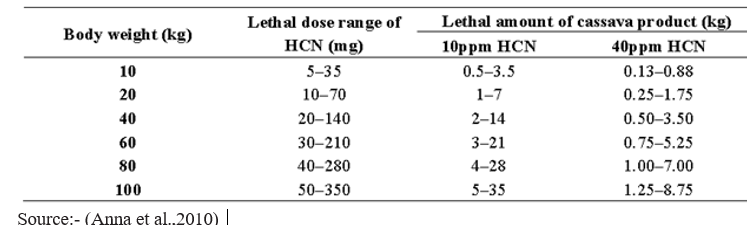
Acute intoxication symptoms, which occur within hours of consumption of insufficiently processed cassava, include dizziness, fatigue, headache, nausea and diarrhoea [46]. Too much cyanide over a relatively short time interval (i.e., weeks). The acute lethal dose of cyanide for humans is 0.5–3.5 mg kg–1 body weight [47]. To control the level of cyanogenic glycosides in cassava products, the World Health Organisation has set the safe level of total cyanogens in cassava flour at 10 mg kg–1 dry weight (i.e., 10 ppm) [20].
The final amount of total cyanide in cassava products depends on the initial concentrations of cyanogens in the cassava plants and the type of processing used. All methods include some way to disrupt the cells followed by an incubation period to allow the cyanide to dissipate. Simply cooking tubers and leaves of high-cyanogenic cassava does not decrease the risk of intoxication Processing methods vary among cultures and countries, and even among communities within particular regions. Women and children most often process the cassava and, therefore, are vulnerable to the cyanide released during the detoxification process [48].
Table 11. Minimum lethal dose ranges of hydrogen cyanide (HCN) in humans per body weight and the amount of cassava product, containing 10 ppm and 40 ppm HCN, required to reach these lethal doses