

Advances in Bioengineering and Biomedical Science Research(ABBSR)
ISSN: 2640-4133 | DOI: 10.33140/ABBSR
Impact Factor: 1.7

Research Article - (2022) Volume 5, Issue 1
Repellent Effect of the Pandanus (Pandanus amaryllifolius Roxb.) and Neem (Azadirachta Indica) Against Rice Weevil Sitophilus oryzae L. (Coleoptera, Curculionidae)
2Department of Plant Protection, Faculty of Agriculture University of Jember, Jalan Kalimantan 37 Jem, Indonesia
Received Date: Jan 29, 2022 / Accepted Date: Feb 12, 2022 / Published Date: Feb 24, 2022
Copyright: ©Copyright: ©2022 Slamet Fauzi, et al. This is an open-access article distributed under the terms of the Creative Commons Attribution License, which permits unrestricted use, distribution, and reproduction in any medium, provided the original author and source are credited.
Citation: Slamet Fauzi, Sigit Prastowo (2022) Repellent Effect of the Pandanus (Pandanus amaryllifolius Roxb.) and Neem (Azadirachta Indica) Against Rice Weevil Sitophilus oryzae L. (Coleoptera, Curculionidae). Adv Bioeng Biomed Sci Res 5(1): 10- 17.
Abstract
The aim of this study was to determine the effect of Pandanus (Pandanus amaryllifolius Roxb.) and Neem (Azadirachta indica) leaves powder on the repellency, mortality, and weight loss of grains due to Sitophilus oryzae. The methodes of this study used a completely randomized design (CRD) with 7 treatments and 4 replications. The results of this study indicate that the best treatment in terms of causing repellency was the treatment of 10 grams of pandanus with a percentage of 87.5%, while the best treatment in terms of causing pest mortality and was also able to reduce the risk of rice weight loss due to Sitophilus oryzae was treatment 10 gram of neem with a mortality percentage of 76.25% and weight loss of rice 3.14%. This research showed that neem leaf com- pounds are better in terms of causing mortality, while Pandanus compounds are better in terms of causing mortality of Sitophilus oryzae.
Keywords
Insecticides; Pandanus Amaryllifolius, Azadirachta Indica, Storage Pests
Introduction
Rice is the staple food for people in the most parts of Indonesia. Various disturbances from organisms that can reduce the quality and quantity of rice are always there. One of the pests that exist in rice and can cause the decline in quality and quantity of rice is the post-harvest pest S. oryzae [1-4]. The presence of S. oryzae in rice is extremely detrimental and causes damage. Manage¬ment is necessary in order to avoid damage caused by S. oryzae, proper handling is needed when storing rice.
According to the ICSA, in 2019, Indonesia’s rice production reached 54.60 million [5]. The total production decreased by 7.76% from the total production in 2018 which reached 60.60 million tons. Food Agricultural Organization in 2017 stated that Indonesia as a Southeast Asian has a risk of losing rice products after harvest reaching 10-37%, so it is necessary to take control to minimize the risk of damage during its storage period.
Rice stored in warehouses globally reduced 5-10% in damaging in a relatively short time due to warehouse pests, especially S. oryzae [6]. The level of damage for each country varies depend¬ing on the region, type of rice, climate, and duration of storage [3]. For instance, rice damage in Ukraine can reach 25-50%, Australia 0.7%, Pakistan 16%, India 20-25% in 2010-2011, and Poland 3-5% [6-8]. According to Phillips and Throne, the loss of storage products due to S. oryzae pests ranges between 9% in de¬veloped countries and 20% in developing countries. This shows the importance of controlling S.oryzae to be carried out [9].
The use of synthetic fumigants causes a variety of serious prob¬lems, such as pest resistance, human health, the environment, natural enemies of pests, and pollution [10-12]. The synthetic fu¬migants commonly used to control S. oryzae are methyl bromide and phosphine [13]. The latest research by Kim et al., stated that the S.oryzae in the quarantine of South Korea was resistant to Methyl Bromide (CH3Br) and Phosphine (PH3) [14].
Hereby, it is important to control S. oryzae by using natural ma¬terials from plants used as bioinsecticide repellents so it will not cause negative effects on food safety. One of the alternative ma¬terials that can be used as bioinsecticides is Neem and Pandanus leaves. Neem leaves contain are alkaloid compounds, nimbidine, tannins, resins, azadiractin, and Pandanus leaves contain are al¬kaloids, flavonoids, polyphenols, terpenoids, steroids, hydrocar¬bons, and aldehydes [15-19]. According to Ahmad et al, stated that the bioactive compounds commonly used in plant pesticides are mostly steroids, alkaloids, tannins, terpenoids, phenols, fla¬vonoids, and resins that have insecticidal properties [20]. The content of these compounds is following accordance with the re¬searchers chose to study the repellent effect of Pandanus leaves and neem bioinsecticide combination against S. oryzae pests.
The previous research that also evaluated the repellent effect from the other botanical pesticides against S. oryzae was con-ducted by Auamcharoen et al., Akhtar et al., Yankanchi et al., Aref and Valizadegan; Das et al., Klys et al., [2, 21-25]. The results of a study by Auamcharoen et al., explained that the fast¬est repellent effect on S. oryzae in just 5 minutes given by the methanol extract of Duabanga grandiflora at a concentration of 0.252 mg/cm2 which resulted in a 63% response rate [21]. After 4 hours, the repellency rate to S. oryzae was 100%, while the results of Klys et al., showed a 98% repellent effect against S. oryzae after 5 hours of exposure to bioinsecticide from caraway essential oil with a concentration of 0.5% [25]. Elgizawy et al., have also evaluated the fumigant toxicity and repellent activity of Litsea cubeba essential oil and its two main active ingredients against S. oryzae [26]. The results showed that the repellency of S.oryzae are 81.83% at 4 hours after the start of the study. Dif¬ferent things were done by Fernando and Karunaratne, through the use of bioinsecticides from Olax zeylanica leaf powder (a rural vegetable in Sri Lanka) at a dose of 7 gr and 1 gr per 50 gr of rice can provide a repellent effect against S. oryzae of 96% and 50% [27].
The repellency assessment of the insecticides of Neem and Pan¬danus leaves is highly necessary. The aim of this study was to test the repellency of the combination of neem leaves and Pan¬danus, and without the combination of the two being used as a powder to control S. oryzae. This research is expected to be able to control S. oryzae with an environmentally friendly manner, reduce the risk of product damage, and novel scientific development
Materials and Methods
The study was conducted in the laboratory conditions at 280C with 60 ± 5% relative humidity at the Department of Plant Protection in the University of Jember. The research design used a completely randomized design (CRD) with 7 treatments and 4 replications, the treatments consisted of:
P0: Rice
P1: Rice with 10 g of neem leaves powder
P2: Rice with 8 g of neem and 2 g of Pandanus leaves powder
P3: Rice with 6 g of neem and 4 g of Pandanus leaves powder
P4: Rice with 4 g of neem and 6 g of Pandanus leaves powder
P5: Rice with 2 g of neem and 8 g of Pandanus leaves powder
P6: Rice 10 g of Pandanus leaves powder
S. oryzae adults reared was carried out according to the proce-dure and modification of Klys et al., namely 50 (25 male and 25 female) S. oryzae were kept in a plastic jar filled with rice as a place to live and the food was then covered with a saffron cloth, and invested for 7 days and then all the pests were removed from the jar and waited for ± 35 days for the emerging of S. ory¬zae to come out of the rice [25]. The method of obtaining adult female and male insects with a uniform number and size was then carried out by separating the young (virgin) with a slightly reddish-brown color. The male and female insects could be dis¬tinguished by their body size, female insects are larger in size than male insects. Besides, it could also be seen in the snout, where the snout length of the female of S. oryzae is longer than the male [28].
The application methodolgy of neem and Pandanus leaves obtained was weighed according to the dosage in the treatment, namely 2 g, 4 g, 6 g, 8 g, and 10 g. The insecticide was put into a tea bag and then put into a plastic cup filled with 100 g of rice and 20 adapted S. oryzae covered with saffron cloth. This was done as a new way of applying insecticides by utilizing vola¬tile compounds from the materials used or using the concept of inhalation poisons system. The Repellency observations were observed every 2 hours during the day and 4 hours at night for 48 hours. The calculation of repellency is seen from the insects that leave/move from the place that was given treatment to the outside of plastic cup in the jar. The evaluation of the repellen¬cy effects were based on the emigration index, calculated as a percentage proportion of individuals emigrating when compared with the total number of individuals in the population. The calculations were made using the following formula [25]:

The percentage of mortality was calculated by comparing the number of dead insects after application compared to the num¬ber of tested insetcs using the formula from Abdelatti and Manfred [29]. The calculation of mortality at intervals of 3 days and until no more insects have died.

The percentage of weight loss was calculated after 30 days after insecticide application. The method used was by sifting with a size of 40 mesh, then the sieve in the form of flour from rice was weighed using a digital scale. The calculation used the formula from Mehta and Surjeet [30] as follows:

where U is the weight of uninfested grains (g), NU is the number of uninfested grains (n), D is the weight of infested grains (g), and ND is the number of infested grains (n).
We have investigated whether there were statistically significant diferences in the repellent effect of different concentrations of neem and Pandanus leaves powder on S. oryzae. The dependent variable is the insect emigration rate. The analysis of variance (ANOVA) Kruskall–Wallis rank test was applied followed by the Duncan’s Multiple
Range Test (DMRT), in this case a multiple comparison test [31]. The test probability level “p”and the significance level were 0.05. The calculations were performed in the Excel’s Statistics tool.
Results
The results of the application of insecticides from the pandanus and neem leaves powder, and the combination of the two had a higly significant effect on the control of the repellency of S. oryzae. Based on the results of the analysis of variance (ANOVA), the F count of 48 hours of response was 155.85 and was greater than the F crit of 5% and 1%, namely 2.57 and 3.81. The results of the Analysis of Variance were very significantly different and continued with the Duncan’s Multiple Range Test (DMRT) 5% which can be seen in the Table 1.
Table 1: Repellent effects of the Pandanus and neem leaves powder on the Sitophilus oryzae
|
Repellency rate (%) in hours after aplication (haa) |
|||||||
|
Treatments |
2 |
10 |
14 |
18 |
22 |
26 |
48 |
|
P0 |
10 a |
17,5 a |
17,5 a |
17,5 a |
17,5 a |
17,5 a |
17,5 a |
|
P1 |
36,25 bc |
52,5 c |
57,5 d |
62,5 c |
65 d |
67,5 c |
67,5 c |
|
P2 |
30 b |
45 b |
47,5 b |
51,25 b |
52,5 b |
53,75 b |
53,75 b |
|
P3 |
36,25 bc |
46,25 b |
50 bc |
50 b |
53,75 bc |
57,5 b |
57,5 b |
|
P4 |
32,5 bc |
53,75 c |
53,75 cd |
56,25 bc |
57,5 c |
58,75 b |
58,75 b |
|
P5 |
41,25 d |
65 d |
70 e |
70 d |
73,75 e |
73, 75 d |
73,75 d |
|
P6 |
40 cd |
70 e |
82,5 f |
85 e |
87,5 f |
87,5 e |
87,5 e |
The values followed by the same code are not significantly dif-ferent in the same column P0 (control), P1 (10 g neem), P2 (2 g pandanus + 8 g neem), P3 (4 g pandanus + 6 g neem), P4 (6 g pandanus + 4 g neem), P5 (8 g pandanus + 2 g neem), and P6 (10 g pandanus)
Based on the results of the Duncan’s Multiple Range Test at 2 hours to 48 hours of observation, there was a difference between treatments, the control was very significantly different from all other treatments. The Differences also occurred in the change and increase in the percentage of repellents in all treatments compared to controls. The control tended to have no increase in the percentage of repellents after exceeding the observation time of 4 hours and remained at 17.5% until the end of the observa¬tion. Treatments other than control continued to experience an increase in the percentage of response up to 22 hours of obser¬vation. Based on the figure 1, that the highest increase in repel¬lency was in the first 2 hours of observation with a percentage of 40% in the combination treatment of 8 grams of pandanus and 2 grams of neem (P5). However, the highest response from 10 hours to 48 hours was the treatment of 10 grams of pandanus (P6).

Figure 1: Repellency rate of Sitophilus oryzae caused by neem and pandan leaves powder
In addition to the repellency rate, insects’ mortality was also calculated based on the results of the analysis of variance (ANO-VA), the F value of the insect’s mortality count is 169.15 and is greater than the F crit of 5% and 1%, namely 2.57 and 3.81. The results of the analysis differed significantly so that it was contin¬ued with the Duncan’s Multiples Range Test at 5% level further test which can be seen in the table 2.
Table 2: Mortality effects of the Pandanus and neem leaves powder on the Sitophilus oryzae.
|
Repellency rate (%) in hours after aplication (haa) |
|||||||
|
Treatments |
3 |
6 |
9 |
12 |
15 |
18 |
21 |
|
P0 |
0 a |
0 a |
0 a |
0 a |
0 a |
0 a |
0 a |
|
P1 |
27,5 e |
43,75 e |
55 e |
67,5 e |
72,5 e |
76,25 e |
76,25 e |
|
P2 |
23,75 de |
38,75 d |
43,75 d |
51,25 d |
58,75 d |
62,5 d |
62,5 d |
|
P3 |
16,25 bc |
26,25 bc |
37,5 c |
46,25 bc |
50 c |
51,25 c |
51,25 c |
|
P4 |
15 b |
25 b |
30 b |
42,5 b |
42,5 b |
43,75 b |
43,75 b |
|
P5 |
20 cd |
27,5 c |
40 cd |
45 bc |
45 b |
45 b |
45 b |
|
P6 |
22,5 d |
37,5 d |
41,25 cd |
47,5 cd |
52,5 c |
55 c |
55 c |
|
The values followed by the same code are not significantly different in the same column |
|||||||
The Values Followed by the Same Code are not Significantly Different in the Same Column
Based on the results of the Duncan’s Multiples Range Test at 5% level, that is the observation of 3 to 21 days after application there were differences between treatments, namely the control was highly significantly different from all other treatments. In the control treatment, there was no increase in the percentage of mortality ranging from 3 til 21 days after application. The treatments other than controls continued to experience increased mortality up to 18 days after application (Figure 2). Based on the Figure 2, that the highest increase in mortality was observed 3 days after application with a percentage of 27.5% in the 10 g neem treatment (P1). The treatment of 10 grams of neem remained the treatment that caused the highest mortality until the end of the observation up to 21 days after application, which was 76.25%. The combination treatment of 2 g of pandanus and 8 g of neem (P2) also had a fairly good mortality percentage of 62.5% up to 18 days after application. The treatment other than control that had the lowest percentage mortality value was the combination treatment of 6 g of pandanus and 4 g of neem with a mortality percentage value of 43.75% until the end of 21 days after application. The percentage value of mortality which was almost the same as the combination treatment of 6 g panda and 4 g of neem was in the combination treatment of 8 g of pandanus and 2 g of neem of 45%.
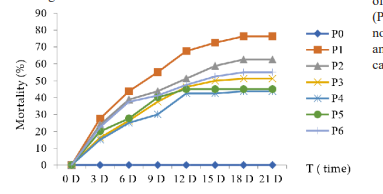
Figure 2: Mortality rate of Sitophilus oryzae caused by neem and pandan leaves powder
S. oryzae also causes weight loss of rice which becomes pow-dery like flour. The results of the research data were analyzed using descriptive analysis. The percentage of rice weight lossfor 30 days from each treatment can be seen in the Table 3 and Figure 3.
Table 3: Weight loss due to infestation of the Sitophilus oryzae.
|
Weight loss (%) in days after application |
|
|
Treatments |
30 |
|
P0 |
6,55 d |
|
P1 |
3,14 a |
|
P2 |
3,40 ab |
|
P3 |
3,87 bc |
|
P4 |
4,32 c |
|
P5 |
3,92 c |
|
P6 |
3,57 bc |
|
The values followed by the same code are not significantly differen |
|
Based on Table 3 above, it showed that the control treatment with other treatments was very significantly different. The treat¬ment of 10 g neem (P1) was significantly different from the combination treatment of 4 g pandanus and 6 g neem (P3), the combination of 6 g pandan and 4 g neem (P4), the combination of 8 g pandan and 2 g neem (P5), the 10 g treatment pandanus (P6), and control. However, the treatment of 10 g neem (P1) was not significantly different from the combination of 2 g pandan and 8 g neem (P2). The percentage of high and low weight loss can be seen in Figure 3
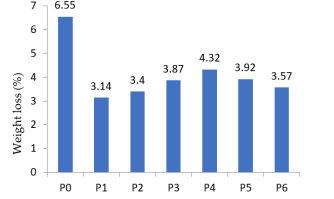
Figure 3: Weight loss rate of rice caused by S. oryzae
The percentage of rice weight loss as shown in the figure 3 above is quite diverse. The highest percentage of loss occurred in the control at 6.55% or the equivalent of 6.55 grams of weight loss. The treatment that had the least weight loss was 10 g of neem (P1), which was only 3.14%. The combination treatment of 2 grams of pandanus and 8 grams of neem was the second-best treatment with a percentage of rice weight loss of only 3.40% of the initial rice weight and a percentage difference of 0.36% of 10 grams of neem. This indicates that the treatment of 10 grams of neem is the most effective in reducing or suppressing rice weight loss due to S. oryzae.
Discussions
The results of this study showed that the highest percentage of repellency occurred in the insecticide combination treated with a combination of 8 g of Pandanus and 2 g of neem at 61.25% at 8 hours after application and was not significantly different from the treatment of 10 g of Pandanus. The percentage of repellen¬cy was still greater than the combination of 10 g of Pandanus treatment which causes repellent of 56.25% (Figure 1). This phenomenon is following the results of a similar study by Das et al., that the insecticide combination from the combination of mahogani and neem was 66.67% greater resulting in repellency to S. oryzae than without the combination [24]. In addition, the study from Abdellati and Manfred, state that the combination is carried out to increase the of effectiveness of insecticides, in¬cluding in terms of repellent to S. oryzae [29]. Beside, the results of this study are in line with similar research but differ in the basic materials of insecticides, that the highest repellant effect occurs in the first 5 hours after application, such as research from Auamcharoen et al., which explains that the fastest repellent effect on S. oryzae in just 5 minutes given by waste methanol extract at a concentration of 0.252 mg/cm2 which resulted in a 63% repellency rate [21]. After 4 hours, the repellency rate on S. oryzae was 100%. The results of the study by Klys et al., showed a 98% response effect against S. oryzae after 5 hours of exposure to insecticides from caraway essential oil with a concentration of 0.5% [25]. The repellency effect is due to the volatile com¬pounds produced by insecticides so that insects stay away from bioinsecticide sources [32]. The insects stay away from insecti¬cide sources due to the volatile compound that produces a dis¬tinctive odor so that insects try to save themselves as shown in the results of this study.
The repellency of 10 g of Pandanus treatment was the highest at 70% when it entered 10 hours after application (Figure 1). The treatment which consisted of a smaller neem dose in the com¬bination of 8 g pandan and 2 g neem had more high repellency than the larger neem dose combination. This study is different from the results of research by Fernando and Karunarate, which explain that the higher the dose, the greater the repellency [27]. The results of his research explained that insecticides from the leaf powder of olax zeylanica (a rural vegetable in Sri Lanka) at a dose of 1 g and 7 g per 50 g of rice can provide 50% and 96% repellency effect against S. oryzae. However, the results of this study are following the results of the study by Klys et al., that the repellent effect of insecticides is not always influenced by the larger the dose is given, it will produce a greater effect, sometimes low doses are more effective in controlling insects than using too high a dose [25]. Based on the result of his re-search, the repellency effect of caraway essential oil at a dose of 0.5% and 0.1% was 98% and 100%, respectively. According to Dhakshinamoorthy and Selvanarayanan, this phenomenon is caused by differences in the materials used which contain syn-ergistic or antagonistic compounds, different formulations, and compounds [33].
The highest repellency in this study occurred in the first 2 hours after the application of insecticide (Figure 1). The information in the figure 1 showed that S. oryzae are quite fast in responding to repellent sources of insecticides. The highest repellency value after 2 hours of application was the combination treatment of 8 g of Pandanus and 2 g of neem at 41.25%. This study proved that the use of a combination of insecticide-based materials is better at repellency effect of S. oryzae in the first 2 until 8 hours. The ability of the basic materials to be repellent between Pandanus and neem, so in this study it was seen to be greater in Pandanus. The repelency can be seen in the combination treatment of 8 g of Pandanus and 2 g of neem and treatment of 10 g of panda-nus. The percentage produced is also greater than the 10 g neem treatment which produces a repellency effect at 2 hours after application is only 36.25%. This phenomenon may be due to the content of Terpenoid compounds which produce a stronger repellency effect on S. oryzae of Pandanus than neem [34, 17].
The repellency effect tends to increase due to the increase in a certain time (Figure 1), but in this study, the increase in repel-lency did not occur after 26 hours of observation. This is fol-lowing previous research Das et al.; Klys et al.; Fernando and Karunatne; Abtew et al., which reported that the repellency of insects of insecticides can still have an effect on 1 until 24 hours after application and after that time the effect will not be too high on repellency [24, 25, 27 and 35]. This phenomenon is since insecticides can evaporate over time, thereby reducing their re¬pellency to target insects, which is in this case are S. oryzae [36-37]. The lack of the repellency activity occurred 26 hours after the application of the insecticide in this study. In order the per¬centages were in the treatment of 10 g of Pandanus was 87.5%, a combination of 8 g of Pandanus and 2 g of neem was 73.75%, 10 g of neem treatment was 67.5%, the combination of treatment of 6 g of Pandanus and 4 g of neem was 58 75%, the treatment combination of 4 g of Pandanus and 6 g of neem was 57.5%, the combination of treatment of 2 g of Pandanus and 8 g of neem was 53.75%, and control was 17.5%. The interesting thing in this study was that the insecticide is still have repellent after 24 hours although there is less repellency than before 24 hours after application.
In mortality rate, the mortality of S. oryzae in this study began to occur at 3 days after application with the age of S. oryzae was 42 days. The highest mortality at 3 days after application occurred in 10 g of neem treatment with a percentage of 27.5%. S. oryzae has not experienced mortality at 1 to 2 days after application. This result was different from previous studies, such as Akter et al., in that the S. oryzae died in 100% after 72 hours of insecti¬cide application from extracts of materials containing neem [38]. Differences in toxicity that cause mortality may be influenced by differences in the way the insecticides work. Previous studies used contact poison or insecticide mixed with rice which is the food of S. oryzae so that the toxicity tends to be faster. The dif¬ference in this study was the use of neurotoxins by utilizing the distinctive odor of volatile compounds from insecticides so that the toxicity may tend to be longer in causing mortality in insects.
The phenomenon is because most of the toxic fumigant action of insecticides is made to penetrate the insect’s body through the respiratory system or the inhalation system [39]. In addition, the same thing was conveyed by Fernando and Karunaratne, that volatile compounds that evaporate can interfere with the phys¬iological function of insects through the entry of spiracles so that they interfere with breathing and cause death [27]. This is also due to the differential response of insects to insecticides that block octopamine receptors in insect so that they experience in¬terference with their bodies which results in an abnormal respi¬ratory system and causes death [40-42]. Insects that experienced mortality were in a lying position with their legs bent stiffly.
The highest mortality percentage until the last observation in this study was still in the combination treatment of 10 g neem, which was 76.25% at 18 and 21 days after insecticide applica-tion, followed by the combination treatment of 2 g Pandanus and 8 g neem which had a mortality value of 62.25%, treatment of 10 g of Pandanus was 55%, a combination of 4 g of Pandanus and 6 g of neem was 51.25%, a combination of 8 g of Pandanus and 2 g of neem was 45%, and a combination treatment of 6 g of Pandanus and 4 g of neem has a percentage of 43.75%, and 0% control (Figure 2). This result was almost the same as the research by Singh et al., that insecticide with neem as the base material causes 76.10% mortality against S. oryzae with a concentration of 0.5% per 100 g of rice [43]. The results of this study may be because the compounds in neem are more deadly to S. oryzae (alkaloids, resins) than the compounds in Pandanus leaves [44]. Insecticide with neem composition causes higher mortality than pandan or a combination of the both. According to Dhakshinamoorthy and Selvanarayanan, the efficacy of pes-ticides used depends on the content of compounds that are syn-ergistic or antagonistic, differences in formulation, temperature, and origin of the plant [33].
Based on the figure 2, it was known that in addition to control, the effect of insecticides on S. oryzae’s mortality will tend to in-crease from 3 until 18 days after application of insecticide. How-ever, when entering 15 days after application, the increase in effect on mortality tended to be slight and stable. This is different from the previous percentage of repellant effect, that insecticides with more pandan-based ingredients will cause higher repellent than neem, while on insects mortality effects, insecticides with more neem composition produce higher mortality than Pandanus or a combination of both. The insects that died from the insec¬ticides showed stiff bodies with bent legs and the body lying sideways. This may be due to the insecticidal effect exposed. According to Ravi Dhar et al.,[45], that the volatile organosul-fur constituents of insecticides can enter through the cuticle or through the spiracles and disrupt gas exchange in respiration or shortness of breath, resulting in death. This is also due to the differential response of insects to insecticides that block Octo-pamine receptors in insects so that they experience interference in their bodies which results in an abnormal respiratory system and causes death [40-42]. S. oryzae can experience death due to exposure to volatile compounds from the insecticides used.
In weight loss rate due to S. oryzae, the results showed that the use of insecticides can reduce the risk of weight loss in rice. Based on the Figure 3, it can be seen that in the control treatment without the use of insecticides had the highest percentage of rice weight loss was 6.55%. This study is following the research of Prakash and Rao, that S. oryzae cause 5-25% weight loss starting from 30 days of it infected rice [46].
The percentage of rice weight loss depends on the length of time the rice is infested by S. oryzae. According to Okpile et al., so far no rice is resistant to S. oryzae [47]. This is based on the results of his research, that of the 10 types of rice (royale stallion, mama royale, parboiled rice, mama gold, white rice, super eagle, indian rice, champion rice, abakiliki rice, and mama africa) none of them are resistant and permanent, experienced weight loss with an average of 19%. According to Gvozdenac et al., also reported on the results of their research that the S. oryzae caused a weight loss of 35.4% in wheat for 50 days of infestation [48]. The large weight loss is due to the absence of special treatment for S. oryzae, such as the use of pesticides to control them.
The percentage of rice weight loss was quite different between the controls and those treated with insecticide. The lowest per-centage of rice weight loss was in the treatment of 10 g of neem (P1) which only experienced a weight loss of 3.14%. The de¬creasing weight loss of rice indicate that the material or insecticide used is effective. This is because great insecticides affect appetite, disrupt metabolism, and block pest spiracles, causing pests to die [49]. The high insects mortality will cause a small risk of rice weight loss. Based on the results of this study, if sorted from the treatment that caused weight loss from the least to the most, namely the treatment of 10 g neem was 3,14%, the combination of 2 g of Pandanus and 8 g of neem was 3,40%, treatment of 10 g pandan neem resulted in a weight loss of 3,57%, the combination of 4 g of Pandanus and 6 g of neem was 3.87%, the combination of 8 g of Pandanus and 2 g of neem was 3,92%, and the combination of 6 g of Pandanus and 4 g of neem was 4,32%.
The different effectiveness is caused by differences in the composition of the insecticide used [33]. The results of this study provided information that the effect of the compounds contained in neem is better in terms of preserving rice as evidenced by the least of weight loss than in Pandanus, a mixture of both, and con¬trols. According to Shannag et al., neem has alkaloid and resin compounds that give a more lethal effect on S. oryzae than the terpenoid content contained in Pandanus leaves [44].
Conclusions
conclusion, Based on the results of research that had been car-ried out, the best treatment in terms of causing repellent was the treatment of 10 grams of Pandanus with a percentage of 87.5%, while the best treatment in terms of causing mortality and reduc¬ing the risk of rice weight loss due to S. oryzae was the treatment of 10 grams of neem with a mortality percentage of 76.25 and weight loss of rice was 3.14%. The results of this research still need to be continued by other researchers by separating pure compounds from pandanus and neem leaves and formulating them in gas form so that they will become new products in the form of biodegradable fumigants. All of these efforts are expect¬ed to help reduce the risk of rice damage caused by S. oryzae.
Author & Co-Author Contributions
Conceptualization, S.F.; methodology, S.P.; analysis of results; investiga- tions, S.F. and S.P.; writing-review and editing, S.F. and S.P.; compiled figures, S.P.; collect ref- erences, S.F. and S.P. All authors have read and agreed to the published version of the manuscript.
Funding
This research received no external funding
Conflicts of Interest
The authors declare no conflict of interest
References
- Sawicka B (2019) Post-harvest Losses of Agricultural Produce. Spri Nat Swi 1: 1-16.
- Akhtar M, Raza ABM, Iram, N Chaudhry, MI Azeem W (2015) Effect of infestation of Sitophilus oryzae L. (Coleop-tera: Cur- culionidae) on protein quality of rice under storage conditions. Int J Agric Appl Sci 7: 43-45.
- Klys M, Malejky N (2017) Nowak-Chmura, M. The repellent effect of plants and their active substances against the beetle storage pests. J of Stor Pro Res 74: 66-77.
- Park IK, Lee SG, Choi DH, Park JD (2003) Insecticidal activities of constituents identified in the essential oil from leaves of Chamaecyparis obtusa against Callosobruchus chinensis (L.) and Sitophilus oryzae (L.). J Stored Prod Res 39: 375-384.
- Indonesian Central Statistics Agency (2021) www.bps.go.id
- Fox T (2013) Global Food: Waste Not, Want Not; Institution of Mechanical Engineers: London, UK, 2013: 1-31.
- Nattudurai G, Irudayaraj SS, Paulraj MG, Baskar K, Ignaci-muthu (2015) Insecticidal and repellent activities of Todda-lia asiatica (L.) lam. extracts against three major stored product pests. Entomol Ornithol Herpetol 4: 2-5.
- Nawrot J, Harmatha J (2012) Phytochemical feeding deterrents for stored product insect pests. Phytochem Rev 11: 543-566.
- Phillips TW, James E, Throne JE (2010) Biorational Approaches to Managing Stored-Product Insects. Ann. Rev. Entomol 55: 375-397.
- Lengai GMW, Muthomi JW, Mbega ER (2020) Phytochemical activity and role of botanical pesticides in pest management for sustainable agricultural crop production. Scientific African 7: 1-13.
- Sande J, Mullen M, Wetzstein J Houston (2011) Environ-mental impacts from pesticide use: a case study of soil fu-migation in Florida tomato production. Int. J. Environ. Res. Public Health 12: 4649-4661.
- Wimalawansa SJ, Wimalawansa SA (2014) Agrochem-ical-related environmental pollution: effects on human health. Glob. J Biol. Agric. Health Sci 3: 72-83.
- Zettler JL, Arthur FH (2000) Chemical control of stored product insects with fumigants and residual treatments. Crop Prot 19: 577-582.
- Kim B, Ja Eun SY, Jeong SP, YoungJu P, Eun Mi S, Jeon-gOh Y (2019) Insecticidal Efects of Fumigants (EF, MB, and PH3) to- wards Phosphine-Susceptible and –Resistant Sitophilus oryzae (Coleoptera: Curculionidae). Insects 10: 327.
- Girish K, Shankara Neem (2008) A Green Treasure. Elect J of Biology 4: 102-111.
- Lopez DC, Nonato MG (2005) Alkaloids from Pandanus amaryllifolius collected from Marikina, Philippines. Philip J of Science 134: 39-44.
- Faras AF, Wadkar Ghosh (2014) Effect of leaf extract of Pandanus amaryllifolius (Roxb.) on growth of Escherichia coli and Mi- crococcus (Staphylococcus) aureus. Int Food Res Journal 21: 421-423.
- Wongpornchai, S Pandanus (2006) In: Peter, K., Ed., Handbook of Herbs and Spices. Vol. 3, Woodhead Publishing Limited, Abing- ton Hall, Abington Cambridge England 2006: 453-459.
- Akhir RMD, Siti ZU, Nurul AA, Salman AH, M Rusop, et al. (2020) The Po- tential of Pandanus amaryllifolius Leaves Extract in Fabrication of Dense and Uniform ZnO Microrods. Micromachines 11: 299.
- Ahmad S, Shilpa, Sanjay K (2017) Phytochemical Screening and antimicrobial study of Euphorbia hirta extracts. J Med Plant Stud 2: 183-186.
- Auamcharoe W, Angsumarn Chandrapatya, Anake Kijjoa, Yooichi Kainoh (2012) Toxicity and Repellency Activities of the Crude Methanol Extract of Dua- banga grandiflora (Lythraceae) Against Sitophilus oryzae (Coleoptera: Curcu-lionidae). Pak J of Zoology 44: 227-232.
- Yankanchi SR, Jadhav Patil (2014) Insecticidal and repellent activities of Clerodendrum serratum L. leaf extract against rice weevil, Sitophilus oryzae L. Asian J. Biol. Life Sci 3: 35-39.
- Aref SP, Valizadegan (2015) Fumigant toxicity and repellent effect of three Iranian Eucalyptus species against the lesser grain bee- tle, Rhyzopertha dominica(F.) (Col.: Bostrichidae). J Entomol Zool Stud 3: 198-202.
- Das S, Rayhan MZ, Kamal MM, Sarkar R, Gharami RK et al. (2015) Assessment of toxic and repellent effect of natural bio pesticides on rice weevil (Sitophilus oryzae L.). J. Agr. Vet. Sci 8: 16-23.
- Klys M, Izdebska A, Malejky Klusek N (2020) Repellent of the Caraway Carum carvi L. on the Rice Weevil Sitophilus oryzae L. (Coleoptera, Dryophthoridae). Insects 836: 1-11.
- Elgizawy, El-Shewy, Morsy (2019) Evaluation of Essential Oil and its Main Active Ingredients of Chinese Litsea cubeba Against Two Stored-Grain Insects. Acad. J. Entomol12: 29-39.
- Fernando HSD, Karunaratne MMSC (2013) Mella (Olax zeylanica) Leaves as an Eco-friendly Repellent for Storage Insect Pest Management. J of Tropl For and Env 3: 64-69.
- Wilhelm G, Handschuh S, Plant J, Nemeschkal HL (2011) Sexual dimorphism in head structures of the weevil Rho-palapion longirostre (Olivier 1807) (Coleoptera: Curculion-oidea): a response to ecological demands of egg deposition. Bio J of the Linn Society 104: 642-660.
- Abdellati ZAS, Manfred H (2019) Plant oil mixtures as a novel botanical pesticide to control gregarious locusts. J of Pest Science 93: 341-353
- Mehta V, Kumar S (2020) Influence of Different Plant Powders as Grain Protectants on Sitophilus oryzae (L.) (Cole-optera: Curculionidae) in Stored Wheat. J of Stor Prod Res 83, 2167-2172.
- Sokal RR, Rohlf FJ (1995) Biometry—The Principles and Practice of Statistics in Biological Research; WH Freeman and Company 1995: 887.
- Hamza AF, El Orabi MN, Gharieb OH, El Saeady AH, Hussein AE (2016) Response of Sitophilus granarius L. to fumigant toxicity of some plant volatile oils. J Rad Res and App Sciences 9: 8-14.
- Dhakshinamoorthy G, Selvanarayanan V (2002) Evaluation of certain natural products against pulse beetle, Callosobruchus maculatus (Fab.) infesting stored g r e e n gram. Insect Environment 8: 29-30.
- Nerio LS, Verbel Stashenko (2010) Repellent activity of essential oils: a review. Bioresour Technol 101: 372-378.
- Abtew A, Subramanian S, Cheseto X, Kreiter S, Garzia GT, et al. (2015) Repellency of Plant Extracts against the Le-gume Flower Thrips Megalurothrips sjostedti (Thysanop-tera: Thripidae). Insects 6: 609-625.
- Utah Poison Control Center (2021) Annual Report https:// poisoncontrol.utah.edu/newsletters/pdfs/annual-report-ar-chive/2010.pdf
- Suteu D, Lacramioara R, Carmen Z, Marinela B, Gabriel MD (2020) Challenge of Utilization Vegetal Extracts as Natural Plant Protection Products. Appl Sci 10: 2-21.
- Akter A, Talukder S, Tahmina A, Munjuri A, Mohammad JU (2015) Assessment of Neem Products for Management of Rice Weevil (Sitophilus Oryzae L.) in Stored Rice Grain. Int Jou of Res & Rev 2: 543-545.
- Rani S, Gailce LJ, Sheeba JR (2019) Evaluation of plantextracts against rice weevil, Sitophilus oryzae (Coleoptera: Curculionidae) in stored sorghum seeds. The Phar Inn Journal 8: 154-159.
- Enan EE (2004) Molecular and pharmacological analysis of an octopamine receptor from American cockroach and fruit fly in response to plant essential oils. Archives of Ins Bioc and Phys 59: 161-171.
- Kostyukovsky M, Rafaeli A, Gileadi C, Demchenko N, Shaaya (2002) Activation of octopaminergic receptors by essential oil constituents isolated from aromatic plants: possible mode of action against insect pests. Pest Management Science 58: 1101-1106.
- Priestley CM, Burgess IF, Williamson M (2006) Lethality of essential oil constituents towards human louse, Pediculus humanus, and its eggs. Fitoterapia 77: 303-309.
- Singh BK (2017) Study On The Life Cycle Of Sitophilus Oryzae On Rice Cultivar Pusa 2-21 In Laboratory Condition. Int J of Edu & App Scie Res 4: 37-42.
- Shannag HK, Capinera JL, Frelihat NM (2015) Effects of Neem-Based Insecticides on Consumption and Utilization of Food in Larvae of Spodoptera eridania (Lepidoptera: Noctuidae). J of Insect Science 15: 152.
- Ravi D, Dawar H, Garg S, Basir S, Talwar GP (1996) Effect of volatiles from neem and other natural products on genotrophic cycle and oviposition of Anopheles stephensi and An. culicifacies (Diptera: Culicidae). J of Medical En-tomology 33: 195-201.
- Prakash A, Rao J (1995) Insect pest management in stored-rice ecosystems. In: White NDG, Muir WE (eds) Jayas DG. Marcel Dekker, Stored-grain ecosystem. New York. Basel, Hong Kong 1995: 709-736.
- Okpile C, Zakka U, Nwosu LC (2021) Susceptibility of ten rice brands to weevil, Sitophilus oryzae L. (Coleoptera: Curculionidae), and their influence on the insect and infestation rate.Bull Natl Res Cent 45: 2-10.
- Gvozdenac S, TanaskoviÄ? V, Dejan Prvulovic, Filip N. Vu-kajloviÄ? (2020) Host And Ovipositional Preference Of Rice Weevil (Sitophilus Oryzae) Depending On Feeding Experience. App Eco and Env Researc 18: 6663-6673.
- Sokker RF, Hussein MA, Ahmed SM, Hamed RKA (2012) Effect of katel-sous dust and clove powder and their mixtures on the cowpea seed beetle, Callosobruchus maculatus (F.) (Coleoptera: bruchidae). Egyptian Acad J Bio Sci 4: 23- 33.