

Environmental Science and Climate Research(ESCR)
ISSN: 2996-2498 | DOI: 10.33140/ESCR


Research Article - (2025) Volume 3, Issue 1
Renovations in the Energy Sector-Energy Innovations In Human Utilities
2Founder, Scientifique Global Limited, Room 1508, 15/F., Ofice Tower Two, Grand Plaza, 625 Nathan Road, Kowloon, Hong Kong
Received Date: Dec 27, 2024 / Accepted Date: Jan 17, 2025 / Published Date: Jan 24, 2025
Copyright: ©©2025 Yang I. Cao, et al. This is an open-access article distributed under the terms of the Creative Commons Attribution License, which permits unrestricted use, distribution, and reproduction in any medium, provided the original author and source are credited.
Citation: Peng, G.G., Cao, Y. I. (2025). Renovations in the Energy Sector
Abstract
The confusion of concepts has been present in the emerging propositions of the energy sector. In the research, we sort through the concepts of new energy, green energy, clean energy, recyclable energy, recycled energy, and renewable energy in order to clarify the concepts in terms of the basic scientific understandings in the context of primary energy (PE) production. We further categorize the emerging PE trends by their basic properties, i.e., sources from phosphates, geo-oscillation, and biosynthesis, so as to evaluate the strengths and weaknesses in PE production.
Keywords
Bioenergy, Energy Strategy, New Energy, Phosphorylation, Oscillation
Introduction
It is an unchanging theme with varied narratives that economic growths are driven by energy consumption. With an average annual energy consumption rate growth of 1.4% from 2010 to 2019, the global energy consumption growth kept at 2.1% in 2022 [1]. For the clarification of emerging concepts with steadily growing demands, we raise the nature-utility-human triad in Figure 1 with their motivations in the chain of innovation for primary energy (PE) production.
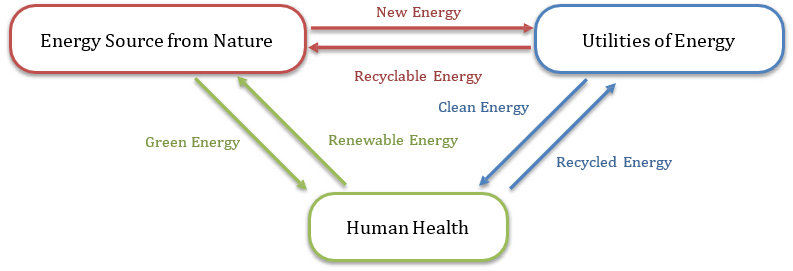
Figure 1: Elements of innovation in the energy sector categorized by motivations.
With the conceptual framework proposed, we review the current literature in harnessing, storing, and optimizing the utilities of energy. Apart from the current innovation trends in PE production, we put the focus on human health element in the innovation cycles, in a constructive approach in ruling out creative destruction with a human security paradigm [2, 3]. Key factors of the scientific rationales are categorically analyzed so that further overarching correlative elements are not overlooked.
Methods
Precision search on search engines such as Google and on academic artificial intelligence engines such as Semantic Scholars, SciSpace, and Dimensions are performed with keywords and phrases. The scope of the literature survey is guided by the nuclear science in energy production, and the concepts raised from the last two decades in energy policies. We mainly categorize and conceptualize the repertoire of PE into phosphate physic-chemistry, geo-oscillation engineering, and biosynthesis, and briefly review the strengths and limitations of each technological and technical elements.
Sources from Phosphates
Phosphates are not only potent chemicals in nuclear energy, but also in energy storage. Calcium phosphate-based biomaterials are reported to be able to store low (≤100 keV) to medium (100 keV < E < 1022 keV) photon energy by photoelectric resonance, and phosphorus bombardment by nitrogen ions for PE production has been one of the key reactions in the choice for nuclear waste energy recycling [4-6]. Moreover, high-level radiation-resistant phosphate-based nuclear waste forms with high solubility for actinides, particularly monazites, are considered for potent recycled energy [7, 8].
Lightly induced and spontaneous fissions are the main targets in phosphate energy utilization. The energy generated from spontaneous fission of phosphates are relatively limited compared to the spontaneous fission of 238U, however, the limitations from crystallization of zircon and monazite separates do not impact on civil utilization nor energy automation in device-powering [9, 10]. The hydrothermal capacities of phosphates with oxidization during hydrolysis do not necessarily render it clean energy for the potentials in superheavy element production through metathesis [7, 11-13].
Geo-Oscillation
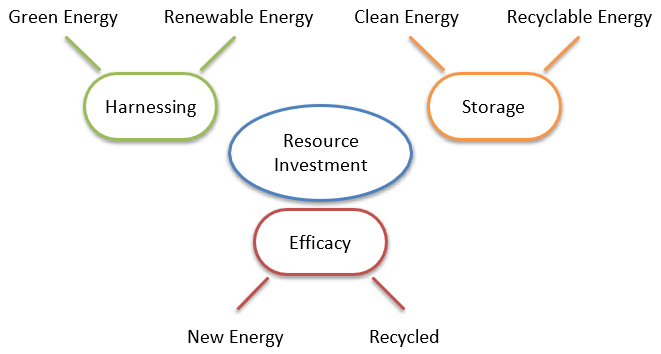
Geo-oscillation sources are mostly renewable energies in the chained interactions between human civilization and the nature. Concrete examples include geothermal energy, wind energy, solar energy, gravitational potential energies such as hydropower plants. Various indigenous cultures have utilized the energy source category and modern & contemporary civilizations have been renovating pragmatically, such as the Three-Gorges Dam in mainland China. Renewable energies are highly dependent on the predictable yet uncertain variations in the natural environment, and the intervening factors of energy harnessing do not change the natural physical laws of conservation of energy and Gibbs free energy change. Recent decades experienced a growth in renewable energy for the concept of a false promise and the calls for clean energy [14]. The mixed-up concepts originate from the confusions between energy safety and green energy, i.e., green energy is necessarily clean, but only with proper energy safety and mindfulness in public health during project designs can clean energy be achieved [15]. We further map in Figure 2 the details of the nature-utility-human triad from the perspective of PE investment, analogous to the impossible trinity.
Biosynthesis
Biosynthesis is a competitive method for clean energy if not green in circumstances such as nitrogen- and carbon-based compound side-productions. PE production through biosynthesis mimics the metabolic and photosynthetic processes, such as phosphorylation, biohythane, bioethanol, and biodiesel utilizations [16-18]. The renovation through biosynthesis mainly takes two paths in the past decades of development in bioconversion: 1) direct utilization of readymade bioenergy through exergonic reactions, and 2) industrialization of the bioconversion process in replacement of traditional fuel refinement techniques [19-21].
The incentives in biosynthesis PE development are not purely out of concerns in human security, but the concerns for PE production’s pollutions on food supplies [22]. There has also been such a trend in nuclear energy optimization with alterations in the organic nuclear chemical catalysis to prevent and minimize inorganic waste production [23]. Therefore, although the development of biosynthesis in PE production is relatively new compared to traditional and nuclear fuels, its renovation capacities in the formers show an economically empirical potential with promising innovative engineering emergence.
Result
Centering on the human health element in PE production, biosynthesis is the genuinely innovative field. The disruptive innovation factor first proposed by Clayton Christensen is considered for in the literature survey, and the “impossible trinity” in PE production solves the efficacy problem in biosynthesis PE by empiricism in financial economy.
Discussion
Innovation in biosynthesis PE production can take reference in green and renewable energies. Biomass capture has been a quantitative approach of the U.S. economy, while solidifying the greenhouse gas byproducts from entering the atmosphere is still not resolved with this novel civil application [24]. The bioethanol, however, can be recycled with large enough storage units with appropriate safety procedures. Albeit sustainable development goals do not necessarily have to involve nuclear energy production, the developing countries’ desires in catching up with the scientific technological advancements are strong [25]. This can be substantially driven by the post-Cold-War competitions with growing conflicts between militarization and economic developments, driven by the natural laws of energy production. Therefore, a distinction must be accentuated between transitional economy and exacerbation. Large power plants utilizing geo-oscillation need to be managed in accordance and in the interests of civil economic development. The seemingly optimal form of PE, especially in grandeur applications, alters the natural environmental variables the most. The existing projects’ management between the utilitarian principles and sustainable development goals in the preservation of nature and natural resources is the most demanding.
Conclusion
The review comes to the conclusions that a mixed PE strategy in the short- and mid-terms conforms best to sustainable development goals both economically and in observance of human-nature interactions. For the mid- and long-term strategies, biosynthesis is the most promising field and phosphorylation technologies are optimal in reducing tensions in the energy sector.
References
- Enerdata. (2023). World Energy & Climate Statistics — Yearbook 2023.
- Foster, R., & Kaplan, S. (2001). Creative Destruction: Why companies that are built to last underperform the market--And how to success fully transform them. Crown Currency.
- Kaldor, M. (2011). War and economic crisis. The Deepening Crisis: Governance Challenges after Neoliberalism (ed C. Calhoun, and G. Derluguian), 109-133.
- Newman, E., & Toth, K. S. (1963). Nuclear Reactions Induced by the Nitrogen Bombardment of Boron-11, Fluorine, Aluminum, Silicon, Phosphorus, and Chlorine. Physical Review, 129(2), 802.
- Oelkers, E. H., & Montel, J. M. (2008). Phosphates and nuclear waste storage. Elements, 4(2), 113-116.
- Singh, V. P., Badiger, N. M., Tekin, H. O., Kara, U., Vega, C., & Fernandes, Z. (2017). Photon absorption of calcium phosphate-based dental biomaterials.
- Bamberger, C. E. (1982). Preparation of metal phosphates by metathesis reaction with BPO4. Journal of the American Ceramic Society, 65(7), c107-c108.
- Ewing, R. C., & Wang, L. (2002). Phosphates as nuclear waste forms. Reviews in mineralogy and geochemistry, 48(1), 673-699.
- Ragettli, R. A., Hebeda, E. H., Signer, P., & Wieler, R. (1994). Uranium-xenon chronology: precise determination of λsƒ∗ 136Ysƒ for spontaneous fission of 238U. Earth and Planetary Science Letters, 128(3-4), 653-670.
- Wieler, R., & Eikenberg, J. (1999). An upper limit on the spontaneous fission decay constant of 232Th derived from xenon in monazites with extremely high Th/U ratios. Geophysical research letters, 26(1), 107-110.
- Stoughton, R. W., Ketelle, B. H., O'Kelley, G. D., & Halperin,J. (1979). Search for superheavy elements in monazites. Journal of Inorganic and Nuclear Chemistry, 41(12), 1655-1660.
- Stakemann, R., Heimann, R., Herrmann, G., Tittel, G., & Trautmann, N. (1982). Search for superheavy elements in monazites using chemical enrichment. Nature, 297(5862), 136-138.
- Grand’Homme, A. (2016). Hydrothermal monazite: the unavoidable accessory (Doctoral dissertation, Université Grenoble Alpes).
- Zissler, R. (2022). During the energy crisis renewable energy grows, fossils and nuclear energy decrease. Renewable Energy Law and Policy Review, 11(1), 28-31.
- Bolufawi, O. (2018). Renewable energy integration with energy storage systems and safety. special topics in renewable energy systems, 39.
- Spedding, C. R. W. (1981). Alternative energy: the biological option.
- Lieberman, M.A. & Sleight, R.G., Energy Production and Metabolism, in Cell Physiology Source Book. 2001. p. 119-138. DOI: 10.1016/b978-012656976-6/50099-8.
- Sevda, S., Garlapati, V. K., Sharma, S., & Sreekrishnan, T.R. (2021). Potential of high energy compounds: Biohythane production. In Delivering Low-Carbon Biofuels with Bioproduct Recovery (pp. 165-176). Elsevier.
- Keenan, J. D. (1977). Fuels via bioconversion. EnergyConversion, 16(3), 95-103.
- Ollis, D. L., Liu, J. W., & Stevenson, B. J. (2012). Engineering Enzymes for Energy Production. Australian Journal of Chemistry, 65(6), 652-655.
- Wardhan, R., Mudgal, P., Wardhan, R., & Mudgal, P. (2017). Bioenergetics and Energy Transduction. Textbook of Membrane Biology, 223-292.
- Ramos-Martín, J. L., & Duque, E. (2019). Twenty-first-century chemical odyssey: fuels versus commodities and cell factories versus chemical plants.
- Itoh, A., Ozawa, S., Oshima, K., Sasaki, S., Yamamoto, H.,Hiyama, T., & Nozaki, H. (1980). Stereochemical studies on the nucleophilic substitution in the reaction of allylic phosphates with organoaluminum reagents. Bulletin of the Chemical Society of Japan, 53(8), 2357-2362.
- Douglas, L. Focus: Giant pipeline in U.S. Midwest tests future of carbon capture. Reuters, 2021. Available from: https:// www.reuters.com/markets/commodities/giant-pipeline-us-midwest-tests-future-carbon-capture-2021-11-23/.
- IAEA World Fusion Outlook 2023. 2023, Vienna: INTERNATIONAL ATOMIC ENERGY AGENCY. https://www.iaea.org/publications/15524/iaea-world-fusion-outlook-2023.