

Archives of Clinical and Medical Microbiology(ACMMJ)
ISSN: 2835-9968 | DOI: 10.33140/ACMMJ
Impact Factor: 1.0

Research Article - (2025) Volume 4, Issue 1
Reliability of Pre-Test and Post-Test Measures in Assessing the Impact of Food Safety Training for Hygiene and Sanitation Officers and Environmental Protection Specialist Across All Districts in Rwanda
Received Date: Jan 20, 2025 / Accepted Date: Feb 14, 2025 / Published Date: Feb 24, 2025
Copyright: ©©2025 Frederic Ntirenganya, et al. This is an open-access article distributed under the terms of the Creative Commons Attribution License, which permits unrestricted use, distribution, and reproduction in any medium, provided the original author and source are credited.
Citation: Ntirenganya, F., Karamage, A. P., Alexi, K., Hagabimana, A., Balisanga, H. (2025). Reliability of Pre-test and Post-test Measures in Assessing the Impact of Food Safety Training for Hygiene and Sanitation Officers and environmental protection specialist across All Districts in Rwanda. Archives Clin Med Microbiol, 4(1), 01-05.
Abstract
Background: Food and waterborne diseases, caused by microorganisms or chemicals in contaminated food or water, are a significant global health concern. In Rwanda, diarrheal diseases, exacerbated by unsafe food and water consumption, rank 7th among the top 10 causes of morbidity and mortality, particularly affecting children under 5 years old. From 2016-2021, food and waterborne diseases accounted for 83% of reported outbreaks. This study evaluates the reliability of pre-test and post- test measures in assessing the impact of food safety training on hygiene and sanitation officers and environmental protection specialists across all districts in Rwanda.
Methods: A retrospective quantitative research design was used to gather data from 30 hygiene and sanitation officers and environmental protection specialists across all 30 districts and the city of Kigali during training sessions. A set of 16 questions was administered electronically as a pre-test before the workshop, followed by the same questionnaire as a post-test after a five-day training program on food safety. Data were exported to Excel and analyzed using R packages. Normality of the data was checked using Quantile-Quantile plots and the Kolmogorov-Smirnov test. A paired t-test was conducted to evaluate the differences between pre-test and post-test scores.
Results: The average pre-test score was 76%, which increased to 92% in the post-test, showing a 16% improvement. Statistical analysis revealed a p-value of 0.9374, indicating no significant difference at the 5% significance level. However, the paired t-test showed a t-statistic of 5.9452 and a p-value of 0.000, indicating a statistically significant improvement in scores after the training.
Conclusion: The pre-test and post-test effectively measured participants' knowledge acquisition, fulfilling the workshop’s learning objectives. Participants preferred ongoing training sessions, either online or in person, to enhance their understanding. Overall, the workshop was highly rated for its content, organization, delivery, and practical utility.
Keywords
Food Safety, Pre-Test, Post-Test, Training, Hygiene And Sanitation Officers
Introduction
Food and waterborne diseases encompass a broad spectrum of illnesses resulting from the consumption of food or water contaminated with microorganisms or chemicals. Water contamination can occur at various stages, from its source to storage and consumption [1]. Similarly, food can become contaminated at any point along the production-to-consumption process, either unintentionally or due to unsafe handling practices and environmental pollution, such as water, soil, or air pollution. The main causes of these diseases are typically infectious organisms, chemicals, and toxins [2].
Foodborne diseases pose a growing public health challenge worldwide, contributing significantly to disability and mortality rates [3]. Gastrointestinal symptoms are the most common clinical presentations of food and waterborne illnesses, while more severe consequences can include kidney and liver failure, neurological disorders, reactive arthritis, and cancer. Antimicrobial-resistant microbes can also be transmitted through the food chain, direct contact between animals and humans, or environmental pathways Each year, an estimated 700,000 people worldwide lose their lives due to antimicrobial-resistant infections [5].
The World Health Organization (WHO) has estimated that unsafe food consumption leads to the loss of approximately 33 million years of healthy life worldwide annually, a figure that may be underestimated. Nearly 600 million people, or nearly 1 in 10 globally, fall ill after consuming contaminated food, resulting in 420,000 deaths each year and a loss of 33 million healthy life years [6]. Low and middle-income countries bear a substantial economic burden, with annual losses totaling around US$110 billion in productivity and medical expenses due to unsafe food. Children under 5 years old account for 40% of the burden of foodborne diseases, resulting in 125,000 deaths annuall [7]. Foodborne illnesses hinder socioeconomic development by straining healthcare systems and adversely impacting national economies, tourism, and trade. The Uganda Ministry of Health reports that foodborne diseases affect approximately 1.3 million people annually, making up 14% of all treated cases. The most frequent foodborne illnesses include typhoid, brucellosis, bacillus dysentery, cholera, and contamination by aflatoxins [8].
In Rwanda, diarrheal diseases rank 7th among the top ten causes of morbidity and mortality, with children under 5 years old being particularly vulnerable whereby diarrhea ranks as the third most common cause of death among children under the age of five [9,10]. In the last five years (2016-2021), most (83%) reported outbreaks were attributed to food and waterborne diseases [11].
Therefore, providing educational training on food and waterborne diseases to hygiene and sanitation staff across all districts of Rwanda is crucial. This training is essential for preventing and reducing the impact of these diseases in various sectors, including raising awareness to save lives. This process gives facilitators feedback by assessing the knowledge and skills that participants possess before the training program and what they acquire after the workshop [12].
The food safety training outcomes can be evaluated through pretest and post-test questionnaires. Data collected from these tests can be analyzed using suitable statistical methods aligned with the training program's hypothesis [13]. Initially, participants might score low on the pre-test, with some showing reluctance to respond. However, the post-test highlights participants’ immediate improvement. Trainers inform participants that the goal of these questionnaires is solely to assess the training's impact, not to evaluate their knowledge for other purposes. This study is to determine the immediate impact of the training on food safety of hygiene and sanitation officers from the districts in Rwanda
Methods
Study Setting
The food safety training was facilitated by the Rwanda Biomedical Centre (RBC) team in collaboration with Johns Hopkins Program for International Education in Gynecology and Obstetrics (Jhpiego), Rwanda Institute of Conservation Agriculture (RICA),Rwanda FDA, and the University of Rwanda.
Study Population
All hygiene and sanitation officers and environmental protection specialist from 30 districts of Rwanda who are involved in the development and implementation of local hygiene and sanitation strategies, overseeing execution at the sector level, generating reports, collaborating with stakeholders for awareness campaigns, ensuring enforcement of norms, and conducting inspections.
Study Design
A retrospective quantitative study design was employed using pre-test and post-test research questionnaires during food safety training
Sample Size
All thirty (30) hygiene and sanitation officers and environmental protection specialist who attended food safety training are included. The whole population is taken since it is small.
Sampling Technique
All thirty (30) hygiene and sanitation officers and environmental protection specialists who attended the food safety training are included in the study, as the entire population is small.
Study Tool
Self-administered questionnaires created in an online Kobotoolbox platform have been used for pretest and posttest data collection during food safety training of hygiene and sanitation officers and environmental protection specialists.
Data Collection
Data was gathered via self-administered questionnaires sent through email and phone. Interactive sessions were used to address potential ambiguities from group work presentations and other learning activities.
Statistical Data Analysis
Quantitative data was analyzed using t-tests through R packages to evaluate the reliability of pre-test and post-test measures in assessing the impact of food safety training on hygiene and sanitation officers and environmental protection specialists from 30 districts in Rwanda. The Kolmogorov-Smirnov test and quantile-quantile plot were used to assess data normality before performing the paired t-test.
Ethical Considerations
This study analyzed secondary data from questionnaires used in pre- and post-training tests. Permission to analyze the data was obtained from the division manager of epidemic surveillance and response, Rwanda Biomedical Centre. The data were kept anonymous to ensure confidentiality
Findings
The pre-test and post-test data, displaying the percentage of correct answers, were exported from kobotoolbox and opened in Excel.
The average correct score in pre-test was 76% whereby the average of correct score in post-test was 92% making an increase of 16%.
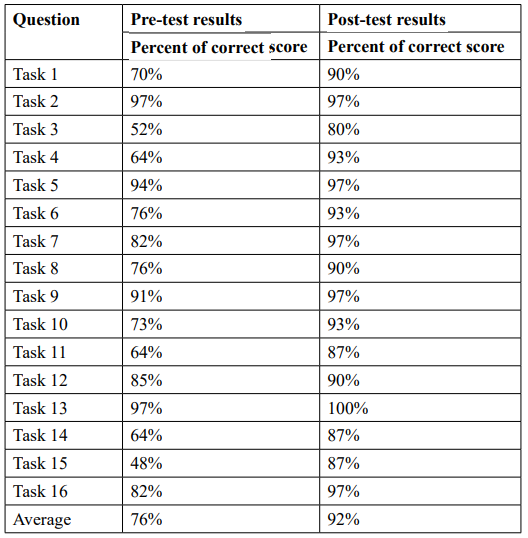
Table 1: Percentage of Correct Score in Both Pre-Test And Post-Test on Food Safety
Normality Test for the Data
Many statistical methods and tests assume that the data follows a normal distribution. For instance, parametric tests such as t-tests, ANOVA (analysis of variance), and linear regression often assume normality of residuals; which means that data distribution is symmetric around its mean [14]. Therefore, before running t-test, we have to test normality of the datasets. We conducted a Kolmogorov-Smirnov test to assess the normality of the data. According to this test, if the p-value exceeds the significance level (α = 0.05), we consider the data to be normally distributed. Our test yielded a p-value of 0.9374, which is well above the significance level (α = 0.05). Therefore, we conclude that both the pre-test and post-test scores follow a normal distribution. Additionally, we utilized a quantile-quantile plot (Q-Q plot) to examine the correspondence between our sample data and a normal distribution.
Q-Q plots are valuable in assessing the normality assumption required for many parametric statistical tests like t-tests [15]. They provide a visual and quantitative means to understand how well data conforms to a normal distribution, helping to make informed decisions about the appropriateness of statistical methods. This plot includes a 45-degree reference line for comparison. The Q-Q plot indicates that our data closely adhere to the characteristics of a normal distribution. Hence both Q-Q plot and Kolmogorov-Smirnov test confirm normality of pretest and post-test data as required by student’s t-tests analysis.
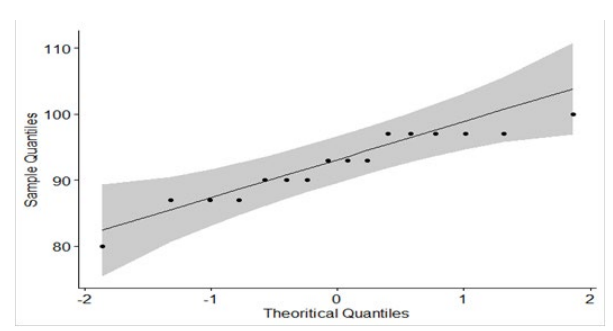
Figure 1: Normality Test Using Quantile-Quantile Plot
After confirming normality, we conducted a paired sample t-test. This test compares the means of two related groups and considers the variability within the data to assess the likelihood that observed differences are statistically significant rather than due to chance. Specifically, it evaluates the significance of differences between pre-test and post-test scores. The t-test is used to determine the statistical significance of these differences, providing insight into the effectiveness or impact of the training materials used during the workshop.

Table 2: Paired Sample T-Test For Pre-Test And Post-Test Results on Food Safety
Discussion
The study evaluates the effectiveness of a training program designed to enhance food safety knowledge and skills among district hygiene and sanitation officers, as well as environmental protection specialists within the hospitality sector nationwide. The inclusion of both pre-test and post-test assessments allows for a comprehensive evaluation of the immediate impact of the workshop, providing valuable insights into the efficacy of the training materials and methods employed. This research aims to contribute to improving food safety practices and standards in the hospitality industry, thereby potentially enhancing public health outcomes and regulatory compliance nationwide. The study analyzed the pre-test and post-test scores of 30 participants, comprising hygiene and sanitation officers, and environmental protection specialist from all thirty districts of Rwanda. A paired t-test was conducted on the correct scores from both tests, revealing a statistically significant within-group difference (p ≤ .000, significance level of 0.05). The findings of the research support the notion in Qatar highlighting that ongoing food safety and hygiene training should be universally adopted across food services to equip all food handlers with the necessary knowledge and skills to consistently ensure food safety nationwide [15]. The use of pre-test and post-test questionnaires proved instrumental in rejecting the null hypothesis and supporting the research hypothesis, indicating a significant improvement in knowledge and skills following the capacity-building workshops. This finding aligns with similar studies Sthat have reported comparable outcomes [12,16,17].
Conclusion
Significant differences were observed in both intra-group and inter-group comparisons of pre-test and post-test scores. The use of pre-test and post-test questionnaires proved effective in assessing participants' knowledge acquisition following group work and lectures during a capacity-building workshop, thereby achieving the workshop's learning objectives. Participants expressed a preference for regular training sessions, whether online or in person, to further enhance their knowledge.
Acknowledgement
The authors express their gratitude to all the hygiene and sanitation officers and environmental specialists from the districts who participated in the food safety training and voluntarily took part in the study. They also extend their thanks to the management of RBC for granting permission to conduct the training in collaboration with Jhpiego, RICA, Rwanda FDA, and the University of Rwanda
Conflicts of Interest
The authors declare that the research was conducted without any commercial or financial relationships that might be perceived as potential conflicts of interest.
Authors Contribution
All authors have made significant contributions to the work and have read and approved the manuscript. FN, APK, HB, and KA were responsible for conceptualizing the study, designing the methodology, and facilitating data curation. FN, AH, and APK handled data cleaning and analysis, while FN wrote the original draft of the manuscript and HB supervised the work.
References
1. WHO. (2020). Food safety.
2. CDC. Foodborne Germs and Illnesses [Internet]. 2021 [cited 2024 Jun 11].
3. Centers for Disease Control and Prevention (CDC). (2018). Burden of Foodborne Illness: Findings. Emerg Infect Dis.17(1):1–8.
4. Framework S. FAO Strategic Priorities for Food Safety within the FAO Strategic Framework 2022-2031.
5. WHO. Antibiotic Resistance Threats in the United States, 2019 [Internet]. 2020 [cited 2024 Jun 11].
6. Todd, E. (2020). Food-borne disease prevention and risk assessment. International journal of environmental research and public health, 1–13.
7. FAO (2019). The Safe Food Imperative: Accelerating Progress in Low- and Middle-Income Countries.
8. FAO. Food and Agriculture Organization of the United Nations (FAO). (2022). It is not food if it is not safe: Advocating for food safety and quality assurance to improve Uganda’s economy and people’s health.
9. WHO. World Health Organization. (2019). Top causes of death, Deaths per 100 000 population. Rwanda, 2019.
10. Claudine, U., Kim, J. Y., Kim, E. M., & Yong, T. S. (2021). Association between sociodemographic factors and diarrhea in children under 5 years in Rwanda. The Korean journal parasitology, 59(1), 61.
11. CDC. (2023). Preliminary Incidence and Trends of Infections Caused by Pathogens Transmitted Commonly Through Food — Foodborne Diseases Active Surveillance Network, 10 U.S. Sites, 2022 MMWR.
12. Hassan S. (2022). Pretest and posttest reliability to measure the impact of online team-based learning workshops during the Covid-19 pandemic as a continuing faculty development activity among health professional educators. J Educ Res Rev.10(9):140–4.
13. Newbold, P., Carlson, W. L., & Thorne, B. M. (2013). Statistics for business and economics. Pearson.
14. Field A. Discovering statistics using IBM SPSS statistics (4th ed.). (2013) SAGE Publ Ltd., 01:1–7.
15. Elobeid, T., Savvaidis, I., & Ganji, V. (2019). Impact of food safety training on the knowledge, practice, and attitudes of food handlers working in fast-food restaurants. British Food Journal, 121(4), 937-949.
16. Biswas, A., Sen, S., & Ray, K. (2019). Reliability assessment of pre-post test questionnaire on the impact of a daylong clinical pharmacology workshop among medical professionals. Asian Journal of Medical Sciences, 10(6), 93-97.
17. Hassan, S., Venkateswaran, S. P., & Nadarajah, V. D. (2021). Evaluation of immediate impact of Faculty Development Programme using a pretest–post-test study design format. Innovation and Education, 3(1), 1.