

International Journal of Women's Health Care(IJWHC)
ISSN: 2573-9506 | DOI: 10.33140/IJWHC
Impact Factor: 1.011

Research Article - (2020) Volume 5, Issue 2
Reference Range of Prolactin level in Sudanese non Pregnant Women Living in Khartoum State (Pilot Study)
2Department of Physiology, Faculty of Medicine, The National Ribat University, Sudan
Received Date: Apr 04, 2020 / Accepted Date: Apr 15, 2020 / Published Date: May 07, 2020
Copyright: ©Ibrahim A Ali, et al. This is an open-access article distributed under the terms of the Creative Commons Attribution License, which permits unrestricted use, distribution, and reproduction in any medium, provided the original author and source are credited.
Abstract
Background: Prolactin is synthesized by the lactotrophs, which represent approximately 15% of the tissue in the anterior lobe of the pituitary. Is secreted in pulstile fashion with 4-14 pulses per day, it is normal level about 40-530 IU/L the number of lactotrophs increases during pregnancy and lactation when the demand for prolactin is increased. The objective of this study is to assess the normal prolactin level among non-pregnant Sudanese women in Khartoum state.
Methods: The study involved 20 non-pregnant Sudanese women aged between 18-35 years old in Khartoum state and the normal prolactin level was evaluated using the Immune-enzymometric Assay.
Results: The Mean of prolactin level was 188.61 iu/l while the range between 92.1 to 241 iu/l with a lower maximum than international level and lower range than the local lab reference. There was significant correlation of prolactin with age, which decreased with age.
Conclusion: There was a narrow range of prolactin level in this study with lower maximum value than the international prolactin level.
Keywords
Immunoenzymometric Assay, Non-Pregnant Sudanese Women, Prolactin
Introduction
Prolactin (PRL) is a peptide hormone secreted by the lactotrophs in the anterior pituitary gland [1]. When secreted in excess, it increases adrenal androgens and blunts the response of gonadotropes and gonadal cells to tropic factors by decreasing the gonadoliberin. As consequently chronically elevated prolactin induce amenorrhea and infertility in women and impotence in men [2-4]. During pregnancy and lactation circulating levels of prolactin increased about ten folds and that is due to hormonal changes during pregnancy, primary the change in estrogen levels [5,6]. Measurement of prolactin concentration in the blood is essential in evaluating patients with infertility or suspected hypothalamic-pituitary dysfunction. The infertility clinic in Sudan uses the international standard level of prolactin as reference point.
Hyperprolactinemia is the most common pituitary hormonal abnormality. Prolactinomas are the prolactin secreting tumours of the pituitary gland is secreting pituitary tumors, it’s the most common cause of tumoral hyperprolactinemia high levels of prolactin result in unovulation, secondary to inhibition of luteinizing hormone pulsatility [7]. It has been suggested that raised prolactin levels can also compromise follicular development and reduce corpus luteal sensitivity to luteinizing hormone with a resulting reduction in progesterone secretion. However, ovarian sensitivity to prolactin is very variable and moderately elevated levels may have no effect in some cases but cause anovulation and amenorrhea in others [8]. Increased PRL level is considered as a risk factor for human breast and probably prostate cancer but more data is needed to prove this [9].
Serotonergic receptor mediates prolactin release and that is why chronic use of serotonin reuptake inhibitors such as Fluoxetine leads to increase prolactin level [10]. The chronic use of Haloperidol (Dopamine antagonist) is associated with high prolactin [11]. Prolactin is secreted in pulstile fashion with 4-14 pulses per day (60% occur during the sleep), the secretary pulses begin 60-90 min after onset of sleep so the blood test recommended being taken two hours after waken up [12,13]. Prolactin in the postpartum women was found in high concentration (140 ng/ml) during first three days followed by a rapid fall to be around 30 ng/ml by day eleven [12]. Breast pump, suckling and stimulation of the nipple and areola can increase the prolactin level [14].
In a study on three ethnic groups of India; Rajput’s, Gorkhas and South-Indians in May 2010 for evaluation of the plasma hormones including prolactin by using Enzyme-Immunoassay (EIA), the results indicated that plasma hormone concentrations were within physiological range and inter-ethnic differences were most prominent between north-(Rajput’s and Gorkhas) and south-Indians [15].
In another study done in 1990 by Key, on Sex hormones in women in rural China and in Britain, prolactin concentrations did not differ significantly between the two countries in any age group [16]. In 2007 study done on serum level of prolactin in normally menstruating Nigerian women aged 17-40 years by Amballi AA, Dada OA, Adeleye AO and Jide Salu using ELA prolactin level was 157.0-302.2 iu/L [17].
Methodology
Across sectional descriptive study was conducted in Khartoum state on 20 non-pregnant Sudanese women aged from 18-35 years old. Ethical approval taken from the National Ribat University and all the subjects signed a written consent for this study.
2.5 ml of venous blood was collected from each subject; collections were done between 10-11:00am during menstruation. The blood was collected into lithium heparin container. Each sample was centrifuged at 50.000 rounds per mints for 5 min. The serum obtained was put into a plant container and stored at -30C0. Samples were analyzed by using PRL Immuo Enzymometric Assay by TOSOH AIA system Analyzer. The various assays results were analyzed by using the SPSS (Statistical Package for the Social Science) version 25.
Results
In this study the minimum level of prolactin was 92.10 IU/L and the maximum value was 241 iu/l while the mean was 188.61. About 10% of subjects (2 subjects) their prolactin was 169 IU/L and another 10% was 197 IU/l. There was a correlation between menarche (first menstrual cycle) and prolactin level but not that significance as shown in Table 1.
Table 1: Mean Prolactin IU/L in Related to First Period Age
|
First period age/year |
Mean of prolactin |
|
9 |
175 |
|
11 |
*208 |
|
12 |
180 |
|
13 |
182 |
|
14 |
189 |
|
15 |
215 |
*it is an odd result, significant negative correlation between age and prolactin, prolactin diminished with age.
Discussion
In Amballi (17) study which was done in 2007 the prolactin range was between 157-302; while in this study the range was found to be from 92.10 up to 241miu/l which is significantly different with less maximum and minimum values. The mean of prolactin in this study was 188.61. Amballia A study was found that the mean of prolactinwas 229.6 IU/L which about 40 IU/L different from this study. The international reference range from 40 to 530 IU/L as shown in Table 2 and Figure 1. The results of this study confirmed the results of previous studies that shown that the differences in the normal values in Sudan have been documented in some hematological values, respiratory function tests parameters, Renal functions test, serum electrolytes and mean of glycated hemoglobin(Hb A1c) [18-30].
Table 2: Comparison of the Prolactin Level in Amballi A Study, Lab Reference and this Study
|
Studies |
In this study |
Amballia study (17) |
International range |
Local lab reference |
|
PRL iu/L |
92.10 - 241 |
157-302 |
40-530 |
102-496 |
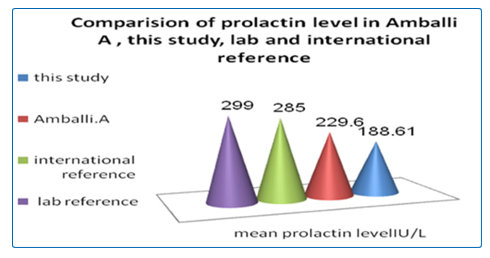
Figure 1: Comparison of the Prolactin Level in Amballi A Study, Lab Reference and this Study
Conclusion
There was a narrow range of prolactin level in this study 92.10-241 IU/L with lower maximum value than the international prolactin level. Prolactin decreased with age.
References
- Freeman ME, Kanyicska B, Lerant A, Nagy G (2000) Prolactin: Structure, function, and regulation of secretion. Physiol Rev 80: 1523-1631.
- Gomez G, Reyes FI and Faiman C (1977) Non puerperal Galactorrhea and Hyperprolactinemia. Am J of Med 62: 648-660.
- Board JA, Bhatnagar (1976) AS Serum prolactin level in Galactorrhea. Am J Obstet Gynecol 123: 419.
- Bernstein Leslie, Pike MC, Ross RK, Judd HL, Brown JB, et al. (2012). Estrogen and sex hormone-binding Globulin levels in Nulliparous and parous women. Oxford journals Journal of the National cancer Institute 74: 741-745.
- Dinc H, Esen F, Demirci A, Sari A, Resit G, et al. (1998) Pituitary dimensions and volume measurements in pregnancy and postpartum. MR assessment Acta Radio l39: 64-69.
- Hattori N (1996) The frequency of Macroprolactinemia in pregnant women and the Heterogeneity of its etiologies. J Clin Endocrainol Metab 81: 586-590.
- Webster J, Scanlon MF (1997) Prolactinomas. In: Sheaves R, Jenkins PJ, Wass JA, editors. Clinical Endocrine Oncology. Oxford: Blackwell Science 189-94.
- McNatty KP, Sawyer RS, McNeilly AS (1974) A possible role for prolactin in control of steroid secretion by the human Graafian follicle. Nature 250: 653-655.
- Tikk K, Sookthai D, Johnson T, Rinaldi S, Romieu I (2014) Circulating prolactin and breast cancer risk among pre and postmenopausal women in the EPIC cohort. Annals of Oncology 25: 1422-1428.
- Randall J Urban, Johannes D Veldhuis (1991) Aselective serotonin reuptake inhibitor, fluoxetine hydrochloride, modulates the pulsatiale release of prolactin in postmenopausal women. American Journal of Obstetrics and Gynecology 164: 147-152.
- David SR, Taylor CC, Kinon BJ, Breier A (2000) The effects of olanzapine, risperidone, and haloperidol on plasma prolactin levels in patients with schizophrenia. Clin Therapeutic 22: 1085-1096.
- Berinder K, Hulting AL, Granath F, Hirschberg AL, Akre O (2007) Parity, pregnancy and neonatal outcomes in women treated for hyperprolactinaemia compared with a control group. Clin Endocrinol 67: 393-397.
- Wang H, Gorpudolo N, Behr B (2009) The role of prolactin-and endometriosis-associated infertility. Obstet Gynecol Surv 64: 542-547.
- Gordon L, Noelhan K, Suhandrew G (1974) Frantz Prolactin Release during Nursing and Breast Stimulation in Postpartum and Nonpostpartum. Clinical Endocrinology & Metabolism 38: 413-423.
- SN Singh, AK Salhan, US Ray (2010) Evaluation of plasma hormone concentration using EIA in healthy Indian men. Indian Journal of Clinical Biochemistry 25: 153-157.
- TJ Key, J Chen, DY Wang, MC Pike, J Boreham (1990) Sex hormones in women in rural China and in Britain. BJC British Journal of cancer Br J Cancer 62: 631-636.
- Amballi AA, Dada OA, Adeleye AO, Jide Salu (2007) Evaluation of the determination of reference ranges for reproductive hormones (prolactin, FSH, LH, and testosterone) using enzyme immuno assay method. Scientific Research and Essay 2: 135-138.
- Hamad IM, Musa OA (2013) Reference Hb value in apparently healthy Sudanese children in Khartoum state. 37th Congress of IUPS (Birmingham, UK) (2013) Proc 37th IUPS, PCA297, At Birmingham, UK.
- Awad KM, Bashir AA, Osman AA et.al. (2019) Reference values for hemoglobin and red blood cells indices in Sudanese in Khartoum state. Int J Health Sci Res 9: 210-214.
- Taha EH, Elshiekh M, Alborai A, Hajo EY, Hussein A, et al. (2018) Normal range of white blood cells and differential count of Sudanese in Khartoum state. Int J Adv Med 5: 784-787.
- Elmutaz H Taha, Mohammed Elshiekh, Mohamed Ali Alzain, Elnagi Y Hajo, Abdelmohisen Hussein, et al. (2018) Reference Range of Platelets count in Healthy Adult Sudanese. SAS J Med 4: 171-175.
- Elmutaz H Taha, Mohammed Elshiekh, Mohamed Ali Alzain, Elnagi Y Hajo, Abdelmohisen Hussein, et al. (2018) Reference Ranges of White Blood Cells Count among Sudanese Healthy Adults. Saudi J Med 3: 554-559.
- Amir A Bashir, Omer A Musa (2012) Reference spirometric values in Sudanese. cohort EMHJ 18:147-154.
- Abeadalla AA, Bashir AA, Abdalla IM, Ibrahim Abdelrhim Ali , Kamal M. Awad et al. (2018) Normal reference value of adult Sudanese serum creatinine and urea in Khartoum state. Int J Health Sci Res 8: 19-24.
- Ayat A. Hassan, Hager M Osman, Ibrahim A Ali, Omer A Musa (2018) Reference Values for Serum Electrolytes (Na+, K+, Ca++) in Khartoum State. Saudi Journal of Medical and Pharmaceutical Sciences 4: 753-757
- Ali IA, Abdalarhim HM, Musa OA (2016) Reference values for hemoglobin A1c in males living in Khartoum state pilot study. Sudan Med Monit 11: 91-96.
- Fatima Ahmed Fadul, Hisham Mohammed Abdelrhim, Ibrahim Abdelrhim Ali, Omer Abdelaziz Musa (2017) Normal Values of Hemoglobin A1c among Women in Khartoum State: (A Pilot Study, 2016). International Journal of Science and Research 6: 352-257.
- Ibrahim A Ai, Hisham M Abdel Rahim, Babiker Almobasher, Rihab M Badi, Abdarahiem Alborai, et al. (2018) Reference Range of Hemoglobin A1c in Khartoum State. Anatomy Physiol Biochem Int J 4: 555644.
- Ibrahim A Ai, Hisham M Abdel Rahim, Elmoataz H Taha, Abdarahiem A Abeadalla, Abdelmohisen Hussein, et al. (2018) Distribution of Glycated Hemoglobin According to Gender, Age and Body Mass Index in Sudanese Adults without Diabetes. Sch Int J Anat Physiol 1: 68-71.
- Ibrahim A Ali, Musa OA, Elmoataz HT, Abdarahiem A, Abdelmohisen H (2018) Reference Range of Hemoglobin A1c in Sudan. Curre Res Diabetes & Obes J 8: 555745.