

Journal of Agriculture and Horticulture Research(JAHR)
ISSN: 2643-671X | DOI: 10.33140/JAHR
Impact Factor: 1.12

Research Article - (2025) Volume 8, Issue 1
Rediscovering Buckwheat: A Review on its Restorative Capacities
2Department of Agronomy, College of Hill Agricul- ture, Chirbatiya, VCSG Uttarakhand University of Ho, India
3Department of Genetics and Plant Breeding, Col- lege of Hill Agriculture, Chirbatiya, VCSG Uttara- k, India
Received Date: Apr 08, 2025 / Accepted Date: May 19, 2025 / Published Date: May 30, 2025
Copyright: ©Â©2025 Arunima Paliwal, et al. This is an open-access article distributed under the terms of the Creative Commons Attribution License, which permits unrestricted use, distribution, and reproduction in any medium, provided the original author and source are credited.
Citation: Rayeen, S., Paliwal, A., Kumar, A., Kumar, P., Deorari, M., Sharma, D. (2025). Rediscovering Buckwheat: A Review on its Restorative Capacities. J Agri Horti Res, 8(1), 01-07.
Abstract
Biodiversity may significantly decline in many nations where agricultural production is based solely on a small number of crops. Buckwheat (Fagopyrum sp.) is a pseudocereal and one of the earliest cultivated plants of Polygonaceae family, includes around 30 species with F. esculentum and F. tataricum being the most widely cultivated and consumed. Despite a global production volume of 4.65 million tons in 2023, its cultivation has declined due to low yield and agronomic limitations such as seed shattering, lodging and asynchronous maturation. A promising environmentally friendly crop, buckwheat can help to maintain a balance between the benefits of biodiversity and crop productivity. Additionally, it can be utilized as a cover crop to eradicate weeds and replenish plants in harmed ecosystems as well as strengthen the soil. It is a raw material crop that produces honey and is valuable as a foreground crop since it improves the soil and is grown without pesticides. With the help of Azospirillum bacteria and other organisms, buckwheat can fix nitrogen in the root rhizosphere non-symbiotically. It was evaluated as a green manure crop that helps to fertilize the soil with a variety of important macro and microelements. To address the concerns of food and nutritional security, the current analysis underlines the multifaceted potential of buckwheat as a super-crop.
Keywords
Allelopathy, Buckwheat, Honey Crop, Potential, Restorative Crop
Introduction
A mere 30 species make up the little genus Fagopyrum. According to conventional wisdom, the genus Fagopyrum has about 19 species. According to and the two types of buckwheat that are produced and consumed the most globally are common (Fagopyrum esculentum Moench) and tartary (Fagopyrum tataricum (L.) Gaertn) [1,2]. According to the latest report by the Food & Agricultural Organisation (FAO), the global production ofbuckwheat in 2021 was 1,862.41 thousand metric tons [3]. The top five countries in buckwheat production are Russia, China, Ukraine, the USA, and Kazakhstan. Global buckwheat production reached a volume of about 4.65 million tons in 2023 [4]. Due to its chemical composition, buckwheat has a long storage season and a short growing season of 70 to 90 days. Due to their unequal pattern of ripening, buckwheat seeds require special technological harvesting procedures [5]. A variety of tasks are carried out by buckwheat,including guarding the main crop from wild animals, protecting the soil from erosion caused by water and wind, breaking the life cycle of insects, pests and diseases, green manure, smothering crop (suppressing weeds) and nutrient conserving crop (enhanced nutrient uptake, reduced nutrient leaching and immobilisation) [6]. Buckwheat can thrive in every setting, even infertile soil which is inappropriate for other crops. In addition to doing related research, the National Bureau of Plant Genetic Resources (NBPGR) of India collects, assesses, and characterises the plant genetic and genomic resources of agri-horticultural crops. As of January 31, 2019, 1052 accessions of buckwheat were kept at -18 degrees Celsius at the National Gene Bank. Popular varieties that are launched in India include PRB-1, Sangla B-1, Shimla B-1, Uday-KBB3, VL-7, Himgiri and Himpriya [7-9].
Origin
An important component of the global human diet, buckwheat belongs to the family Polygonaceae and the genus Fagopyrum. It is an old pseudocereal crop [2, 10-11]. Though it originated in the hilly districts of southern China, buckwheat is now widely grown throughout Asia, Europe and America [11-12]. Common names for buckwheat include Ogala, Phafra, Bhares, Daryun, Kathu and Kuttu in India, Jare in Bhutan, Soba in Japan, Mithe Phaapar in Nepal, Grecicha Kulafurnaja in Russia and Tian'qiao in China [13].
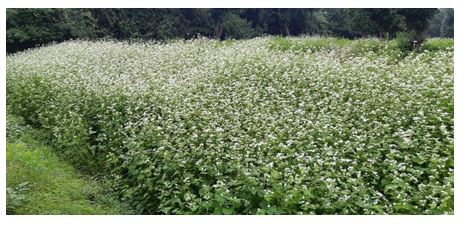
Allelopathic Outcomes of Buckwheat
"Allelopathy" refers to a biochemical interaction between various plant species. Allelopathic chemicals, secondary metabolites and chemical compounds which serve primarily as information carriers are its primary characteristics [14]. Numerous studies have been conducted throughout the years on the allelopathic qualities of common buckwheat (Fagopyrum esculentum Moench) [15- 17]. .According to a study, rice field weeds have been controlled by buckwheat residues by up to 80% [15]. When compared to a control solution made from uncultivated soil, the water extract from the buckwheat-cultivated soil significantly reduced the root elongation of E. crusgalli var. crus-galli and P. oleraceae seedlings. Weeds including Agropyron repens, Digitaria ciliaris and Galinsoga ciliate are predicted to develop more slowly in the presence of buckwheat [18].
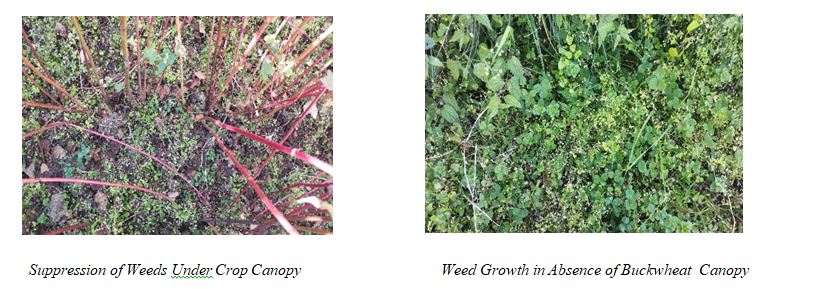
Incorporating buckwheat as a green manure or ground cover crop may provide inhibitors that suppress weed growth, since it may have allelopathic potential [19]. Whether utilised as a green manure, mulch, smother crop, cover crop or integrated into rotational sequences, allelopathic crops can improve soil quality, lower the number of noxious weeds and plant diseases and raise crop productivity.
Buckwheat as A Honey Crop
When honey production first began in our country, buckwheat was a significant crop, particularly in the Northeast where the climate is most conducive to nectar flow. When buckwheat was a common crop, it was one of the best sources of nectar for beekeepers. Buckwheat honey often had more supply than demand. Buckwheat honey, however, is currently so rare and so expensive compared to nearly any other honey due to the decrease of buckwheat as a grain crop [20]. The number of plants, the number of flowers on each plant and the sugar content of the blooms all affect the nectar yield of buckwheat farming per unit area. The weather throughout the flowering season has a significant impact on the amount of nectar that flowers secrete [21]. Studies have shown that this honey has strong antibacterial and antioxidant qualities which highlights its usefulness in treating respiratory tract infections (cough) and wound healing (burn wounds, venous leg ulcers, etc.) [22]. The botanical and geographic origins of Buckwheat Honey have historically been ascertained using bee pollen analyses, organoleptic evaluations, and physicochemical assessments. These factors have an impact on the honey's quality and price [23]. According to a study, the phenolic profile of pollen from the buckwheat plant confirmed the presence of the most characteristic polyphenols produced by the plant; nevertheless, it also indicated fewer flavonoids and phenolic acids than samples of nectar and honey [24].
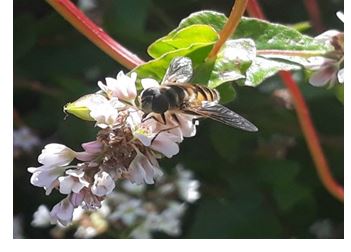
According to a study using 49 samples of natural bee honey, a few characteristics set buckwheat honey apart: high colour intensity (2109.2 mAU), high TPC value (196.59 mg GAE/100 g), colour on the Pfund scale (159.8 mm Pfund) and strong activity in the FRAP assay (0.403 equivalent of mol Fe2+/mL). The median DPPH test result for this kind of honey was 41.1%. The median level of 4-hydroxybenzoic acid in buckwheat honey was also the highest (3.129 mg/100 g). Buckwheat honey constitutes an excellent source of antioxidants and ought to be incorporated into diets lacking in them [25]. Interestingly, honey from red-flower buckwheat has significantly higher anti-oxidative activity than honey from white-flower buckwheat [26]; this could be because the red flowers contain more anthocyanin. Consequently, it may be appropriate to cultivate red-flower buckwheat to produce useful foods, such as honey [27].
Land Reclamative Crop
There has been a decline in the amount of arable land used globally over the past ten years, but there is still pressure to increase agricultural land use to fulfil the growing need for food [3]. A study demonstrates that buckwheat also enhances soil aggregation through secretions from its vast network of fine roots, allowing subsequent crops to be grown in an ecologically pure and uncontaminated environment [28]. According to a study, aggregate stability and soil macro porosity correlate with total root length and surface area. Rye, mustard, and buckwheat all exhibited considerably higher microporosity and aggregate stability, respectively of 10, 8 and 7% [29]. The physical, chemical and biological qualities of soil are deteriorating due to the intensification of agricultural practices, which is disrupting rhizosphere activities. However, cover crops, a plant class that offers ecosystem services, can be exploited during fallow periods or used as an intercrop to improve soil health [30]. This crop's deep root system aids soil binding, prevents erosion during the wet season and functions as a great soil conditioner [31].The soil becomes more brittle and organic due to the increased aeration caused by its high fibre residues, which also stimulate various microbial activities less complicated to grow [32] as the point of contact between a plant and the soil, roots are essential to many ecosystem functions.
Nutrient Management
Buckwheat is a good crop for green manuring because it increases the stability of the soil's aggregates and scavenges nutrients, particularly calcium and phosphorus [33]. According to a study, buckwheat plants can produce nitrogen through the action of nitrogen-fixing microorganisms [34-35]. This suggests that the plant could be important for the cultivation of crops that are sustainable. As per the research, soil investigations revealed that buckwheat can replenish soil with important nutrients; especially phosphate and nitrogen after buckwheat residues have been incorporated. High soil pH was the main factor restricting buckwheat development, according to a correlation study between the aboveground biomass of buckwheat and soil parameters. The findings also revealed that there is a low to medium level of buckwheat root colonisation and that buckwheat creates symbiosis with arbuscular mycorrhizal fungi. The uptake of inorganic phosphorus and the total growth of buckwheat were enhanced by symbiosis with arbuscular mycorrhizal fungus [36]. According to a study, mowing the competing non-legumes enhanced legume biomass five times in combinations combining buckwheat
and sorghum sudan/buckwheat species with complementary growth periods, while maintaining weed suppression. In mowed buckwheat combinations, nitrogen fixation increased eight to 10 times [37].
Nutritive Value of Buckwheat
The underutilised pseudo cereals have attracted a lot of interest due to their high nutritional value, potential health benefits and bioactive characteristics [38]. Buckwheat, which has 8% of the high biological value protein, is the most well-known source in the plant kingdom. Its proteins equal 81.4% of dried whole eggs and 92.3% of dry non-fat milk solids [39]. Buckwheat is an excellent source of protein since it includes all eight of the essential amino acids. Buckwheat contains the following proteins: prolamins (0.8%–2.9%), glutelin (8.0%–22.7%), globulins (43.3%–64.5%), albumins (12.5%–18.2%) and 15% of remaining proteins [40]. Buckwheat proteins have well-balanced amino acid compositions and are high in aspartic, lysine and arginine [41]. Among other important vitamins and minerals, it is also a good source of iron, magnesium, potassium and B vitamins [42]. People with celiac disease or gluten intolerance can safely and healthily consume buckwheat because it is naturally gluten-free [43].Whole pseudo- cereal grains such as buckwheat, amaranth and quinoa are also rich in a wide range of components, such as phenolic compounds, flavonoids, trace minerals, fatty acids and vitamins. Studies on these substances have demonstrated their beneficial benefits on the well-being of people, notably the prevention and treatment of a variety of degenerative disorders [44-47]. Buckwheat grain has anti-inflammatory, anti-tumour, anti-diabetic, anti-tumorous and neuroprotective qualities due to the presence of specific bioactive chemicals such as fagopyrins, terpenoids, flavonoids and thiamin-binding proteins [48]. Based on research, protein, zinc, total polyphenols, antioxidative and chelating activities were all significantly increased (p < 0.05) when buckwheat flour was substituted [49]. Rutin, which is found in buckwheat, can lower oxidative stress and inflammatory reactions; it has also been shown to be beneficial in wound healing and hyperglycaemic mice. This lowers the chance of ulcer formation [50]. Quercetin may be used as a medication to treat compromised renal function and prevent acute kidney damage [51]. In general, buckwheat is a very adaptable and nutrient-dense food that you should include in your diet [52].
8. Value Added Products
Buckwheat presents a great deal of potential for the development of value-added goods that satisfy the health and functionality demands of contemporary consumers due to its exceptional nutritional qualities and adaptability. A food product is considered value-added if it has undergone extra processing or has been mixed with other goods to increase its total nutritional worth of the item [53]. Buckwheat is becoming a more and more well-liked health food because of its high nutritional content, adaptability in the kitchen and gluten-free status [54]. Buckwheat was used to make many gluten-free goods, such as noodles, tea, bakery items (bread, biscuits and cookies) and extruded goods that had a satisfactory organoleptic quality and were well-liked by consumers [5]. When
it comes to enhancing the quality of gluten-free dough matrix and pasta, buckwheat flour has outperformed other gluten-free flour. It also has the least negative effects on cooking loss and texture hardness [55]. Value-added buckwheat products, such as plant- based protein substitutes, gluten-free baked goods and functional meals, demonstrate the variety of opportunities that result from comprehending and using its special qualities [56]. The economic benefits to buckwheat farmers can be increased by processing the grain further to produce value-added goods such as cakes, instant powder, wine or vinegar [57].
Basic Cause of Decline in Buckwheat Cultivation
The Green Revolution is credited with being the primary catalyst for the remarkable modernization of the agricultural system. Certain important crops, including rice, wheat and barley, have gained priority since the green revolution, while other indigenous crops have begun to receive less attention. This has finally caused them to decline at a startling rate, which has resulted in the gene pool being smaller and more restricted. Although they might produce less than major crops, these crops have been favourably relied upon in cases where primary staple crops have failed as a result of threats or disasters [58]. Buckwheat production has decreased globally during the past two to three decades due to its inconsistent and low yield. Numerous physiological and ecological traits, such as female sterility, slow growth habit, self-incompatibility, lodging and sensitivity to frost and dirtily appear to be the cause of its low yield [59]. While having a significant role in the functional food industry, buckwheat's decrease is primarily due to an issue with seed breaking, particularly during harvest [60]. Brittle and weak pedicles are the two main types of buckwheat shattering problems. However, wild buckwheat, which develops on its own and is controlled by two complementary dominant genes, Sht1 and Sht2, is the primary plant in which brittle pedicles are detected. Practically all common buckwheat cultivars carry the Sht1 gene that is connected to the S locus [61]. The limited range, asynchronous maturation and breeding constraints of this species make it an underutilised or ignored crop in many parts of the world [62]. To halt the decrease in farmers' zeal for growing buckwheat in hilly areas, researchers, developers and policy makers must act quickly to create and promote location-specific scientific interventions and legislation [6].
Future Thrust
According to numerous research organisations including the Consultative Group on International Agriculture and the International Plant Genetic Resources Institute, buckwheat has a huge amount of promise for crop development initiatives [59]. Because of its adaptability to marginalised habitats, the crop buckwheat represents a vast gene pool with a range of genetic resources for agriculture in the future [63]. Nonetheless, the buckwheat crop has a lot of potential due to its many uses and low nutrient requirements. Given that organic farming is being promoted in the Himalayan states, which will boost its export potential and high revenue earning value, this is very crucial. In order to facilitate broader adoption, high-yielding genotypes with deterministic growth habits, resistance to lodging and shattering and early maturity should be developed. Additionally, breeding and germplasm evaluation efforts should be directed towards the creation of effective stress-resistant genotypes with high biomass and grain yields [64].
Conclusion
Buckwheat is the most promising crop in terms of regulating nutrients, restoring soil fertility and yielding honey. Going forward, it is advised that you utilise buckwheat because it has been demonstrated to have numerous beneficial impacts. However, there are still several shortcomings, like breeding limitations in seed breakage and asynchronous harvesting periods that need to be improved. Buckwheat seeds are a low-input crop that is high in proteins, carbohydrates, lipids and a variety of other nutrients [61- 66]. It also doesn't need a lot of chemicals or fertilisers. Buckwheat flour is free of gluten and has many uses in baking, cooking and health care since its groats are packed with flavonoids and other healthy compounds. Despite the fact that there are still a lot of problems to be solved, such as asynchronous harvesting schedules and seed-shattering issues, there are a lot of organisations involved, such as the International Centre for Underutilised Crops (ICUC) and projects like AICRN-Potential Crops, that house these neglected, underutilized potential crops and work to improve them in order to safeguard the nation's nutritional value and secure future agricultural prospects.
Declarations of Interest
None. The research was done on behalf of the authors’ interest with no competing interests.
Funding
No funding was received to assist with the preparation of this manuscript.
Data Availability Declarations
Data sharing not applicable to this article as no datasets were generated or analysed during the current study.
Disclosure
During the preparation of this work the author used ChatGPT 3.5 in order to formulate new sentences with same meanings. After using this tool/service, the author reviewed and edited the content as needed and takes full responsibility for the content of the publication.
Author Contributions
SR: Conceptualization, Material preparation, Formal analysis, Writing—original draft. AP: Conceptualization, Supervision, Resources, Writing—review and editing. AK, PK, MD & DS: Writing—review and editing.
References
1. Ahmed A, Khalid N, Ahmad A, Abbasi NA, Latif MSZ, Randhawa MA (2014) Phytochemicals and biofunctional properties of buckwheat: a review. J Agric Sci 152 (3): 349- 369.
2. Kwon SJ, Roy SK, Choi J, Park J, Cho S, Sarker K, Woo SH (2018) Recent research updates on functional components in buckwheat. J Agric Sci 34: 1-8.
3. FAO (2021) Land statistics. Global, regional and country trends, 1990–2018. FAOSTAT Analytical Brief Series No. 15.
4. FAO (2023) Statistical data base food and agriculture organization, Rome, Italy.
5. Sofi SA, Ahmed N, Farooq A, Rafiq S, Zargar SM, Kamran F, Dar TA, Mir SA, Dar BN, Mousavi Khaneghah A (2023) Nutritional and bioactive characteristics of buckwheat, and its potential for developing glutenâ?ÂÂfree products: An updated overview. Food Sci Nutr 11 (5): 2256-2276.
6. Babu S, Yadav GS, Singh R, Avasthe RK, Das A, Mohapatra KP, Tahashildar M, Kumar K, Prabha M, Devi MT, Rana DS (2018) Production technology and multifarious uses of buckwheat (Fagopyrum spp.): A review. Indian J Agron 63
(4): 415-427.
7. Rana JC, Chauhan RC, Sharma TR, Gupta N (2012) Analyzing problems and prospects of buckwheat cultivation in India. Eur J Plant Sci Biotechnol 6 (2): 50-56.
8. Chaudhary HK, Sethi GS (2002) Natural resource conservation for sustainable food security in the Western Himalayas. In: International Symposium Sustaining Food Security and Managing Natural Resources in Southeast Asia-Challenges for the 21st century, January. pp. 8-11.
9. Chaudhary HK (1996) Biodiversity and stability of seed yield in buck-wheat (Fagpyrum esculentum). Crop Improvement- India, 23, 278-280.
10. Park BI, Kim J, Lee K, Lim T, Hwang KT (2019) Flavonoids in common and tartary buckwheat hull extracts and antioxidant activity of the extracts against lipids in mayonnaise. J Food Sci Technol 56: 2712-2720.
11. SinkoviÃÂ?ÂÂ L, Kokalj D, Vidrih R, MegliÃÂ?ÂÂ V (2020) Milling fractions fatty acid composition of common (Fagopyrum esculentum Moench) and tartary (Fagopyrum tataricum (L.) Gaertn) buckwheat. J Stored Prod Res 85: 101551.
12. Ji X, Han L, Liu F, Yin S, Peng Q, Wang M (2019) A mini- review of isolation, chemical properties and bioactivities of polysaccharides from buckwheat (Fagopyrum Mill). Int J Biol Macromol 127: 204-209.
13. Zhou M, Tang Y, Deng X, Ruan C, Ding M, Shao J, Tang Y, Wu Y (2018) Description of cultivated common buckwheat. In: Buckwheat Germplasm in the World. Academic Press. pp. 53-60.
14. Klejdus B, Kuban V (1999) Plant phenolic compounds in allelopathy. Chemické listy 93 (4): 243-248.
15. Xuan TD (2004) Allelopathic plants: buckwheat (Fagopyrum spp.). Allelopathy J 13: 137-148.
16. Golisz A, Gawronska H, Gawronski SW (2007) Influence of buckwheat allelochemicals on crops and weeds. Allelopathy J 19 (2): 337.
17. Falquet B, Gfeller A, Pourcelot M, Tschuy F, Wirth J (2015) Weed suppression by common buckwheat: a review. Environ Control Biol 53 (1): 1-6.
18. Choi BH, Park KY, Park RK (1995) Current status of buckwheat culture technology in Korea. People 42: 121-375.
19. Iqbal Z, Hiradate S, Noda A, Isojima SI, Fujii Y (2003) Allelopathic activity of buckwheat: isolation and characterization of phenolics. Weed Sci 51 (5): 657-662.
20. Pomeranz Y, Lorenz K (1983) Buckwheat: Structure, composition, and utilization. Crit Rev Food Sci Nutr 19 (3): 213-258.
21. Alekseyeva ES, Bureyko AL (2000) Bee visitation, nectar productivity and pollen efficiency of common buckwheat. Fagopyrum 17: 77-80.
22. Gheldof N, Wang XH, Engeseth NJ (2002) Identification and quantification of antioxidant components of honeys from various floral sources. J Agric Food Chem 50 (21): 5870-5877.
23. Pasini F, Gardini S, Marcazzan GL, Caboni MF (2013) Buckwheat honeys: screening of composition and properties. Food Chem 141 (3): 2802-2811.
24. NešoviÃÂ?? M, GašiÃÂ?? U, Tosti T, Horvacki N, Šikoparija B, NediÃÂ?? N, BlagojeviÃÂ?? S, IgnjatoviÃÂ?? L, TešiÃÂ?? ÃÂ?½ (2020) Polyphenol profile of buckwheat honey, nectar and pollen. R Soc Open Sc 7 (12): 201576.
25. PuÃÂ??cion-Jakubik A, KarpiÃÂ??ska E, Moskwa J, Socha K (2022) Content of phenolic acids as a marker of polish honey varieties and relationship with selected honey-quality-influencing variables. Antioxidants 11 (7): 1312.
26. Inoue N, Katabayashi H, Fujita K (2005) Antioxdant activity red-flower buckwheat honey collected by Japanese honeybee (Apis cerana japonica R.). In: International symposium on buckwheat and the dietary culture. pp. 26-31.
27. Suzuki T, Noda T, Morishita T, Ishiguro K, Otsuka S, Brunori A (2020) Present status and future perspectives of breeding for buckwheat quality. Breed Sci 70 (1): 48-66.
28. János L, Gócs L (2009) Second crop buckwheat in nyírség regions. Fascicula: ProtecÃÂ?£ia Mediului 14: 190-195.
29. Hudek C, Putinica C, Otten W, De Baets S (2022) Functional root traitâ?ÂÂbased classification of cover crops to improve soil physical properties. Eur J Soil Sci 73 (1): e13147.
30. Griffiths M, Delory BM, Jawahir V, Wong KM, Bagnall GC, Dowd TG, Nusinow DA, Miller AJ, Topp CN (2022) Optimisation of root traits to provide enhanced ecosystem services in agricultural systems: A focus on cover crops. Plant Cell Environ 45 (3): 751-770.
31. Possinger AR, Byrne LB, Breen NE (2013) Effect of buckwheat (Fagopyrum esculentum) on soilâ?ÂÂphosphorus availability and organic acids. J Plant Nutr Soil Sci 176 (1): 16-18.
32. Das SK, Avasthe RK, Singh M (2015) Buckwheat: the natural enhancer in rhizosphere phosphorus. Curr Sci 109 (10): 1763.
33. Clark A (2008) Managing cover crops profitably. Diane Publishing.
34. Lakhova VI (1998) Nitrogen fixing micro-organisms of the rhizosphere buckwheat and their influence on productivity of the plant (Doctoral dissertation, Thesis for candidate degree).
35. Alekseyeva ES (2002) Progress and prospects of buckwheat improvement in Ukraine-Current status and future research. Fagopyrum 19: 111-113.
36. Boglaienko D, Soti P, Shetty KG, Jayachandran K (2014) Buckwheat as a cover crop in Florida: Mycorrhizal Status and soil analysis. Agroecol Sustain Food Syst 38 (9): 1033-1046.
37. van Zyl CB (2010) Using Annual Summer Cover Crops to Manage Nitrogen Fixation and Weed Suppression in Agro- ecosystems (Doctoral dissertation, Cornell University).
38. Malik AM, Singh A (2022) Pseudocereals proteins-A comprehensive review on its isolation, composition and quality evaluation techniques. Food Chem Adv 1: 100001.
39. Sure B (1955) Nutritive value of proteins in buckwheat and their role as supplements to proteins in cereal grains. J Agric Food Chem 3 (9): 793-795.
40. Chrungoo NK, Chettry U (2021) Buckwheat: A critical approach towards assessment of its potential as a super crop. Indian J Genet Plant Breed 81 (01): 1-23.
41. Bhinder S, Kaur A, Singh B, Yadav MP, Singh N (2020) Proximate composition, amino acid profile, pasting and process characteristics of flour from different Tartary buckwheat varieties. Food Res Int 130: 108946.
42. Arum RH, Syamsuri R, Dewayani W, Basri E (2021). Nutritional content and organoleptic properties of bread made from modified cornflour. In: IOP Conference Series: Earth and Environmental Science, IOP Publishing, 807 (2): p. 022054.
43. Tang Y, Yan J, Peng Y, Weng W, Yao X, Gao A, Cheng J, Ruan J, Zhang K (2022) First report of Botryosphaeria dothidea causing gray mold on tartary buckwheat in Southwest China. Plant Dis 106 (2): 765.
44. Gorinstein S, Pawelzik E, Delgadoâ?ÂÂLicon E, Haruenkit R, Weisz M, Trakhtenberg S (2002) Characterisation of pseudocereal and cereal proteins by protein and amino acid analyses. J Sci Food Agric 82 (8): 886-891.
45. Kalinova J, Dadakova E (2009) Rutin and total quercetin content in amaranth (Amaranthus spp.). Plant Foods Hum Nutr 64: 68-74.
46. Li SQ, Zhang QH (2001) Advances in the development of functional foods from buckwheat. Crit Rev Food Sci Nutr 41 (6): 451-464.
47. Tomotake H, Yamamoto N, Kitabayashi H, Kawakami A, Kayashita J, Ohinata H, Karasawa H, Kato N (2007) Preparation of tartary buckwheat protein product and its improving effect on cholesterol metabolism in rats and mice fed cholesterolâ?ÂÂenriched diet. J Food Sci 72 (7): S528-S533.
48. Qaiser H, Abdullah R, Kaleem A, Iqtedar M, Sajer BH (2023) Buckwheat. In: Essentials of Medicinal and Aromatic Crops. Cham: Springer International Publishing. pp. 811-829.
49. FilipÃÂ?ÂÂev B, Šimurina O, SakaÃÂ? M, Sedej I, Jovanov P, PestoriÃÂ?? M, BodroÃÂ?¾a-Solarov M (2011) Feasibility of use of buckwheat flour as an ingredient in ginger nut biscuit formulation. Food Chem 125 (1): 164-170.
50. Chen LY, Huang CN, Liao CK, Chang HM, Kuan YH, Tseng TJ, Yen KJ, Yang KL, Lin HC (2020) Effects of rutin on wound healing in hyperglycaemic rats. Antioxidants 9 (11): 1122.
51. Yang W, Su Y, Dong G, Qian G, Shi Y, Mi Y, Zhang Y, Xue J, Du W, Shi T, Chen S (2020) Liquid chromatography-mass spectrometry-based metabolomics analysis of flavonoids and anthraquinones in Fagopyrum tataricum L. Gaertn. (Tartary buckwheat) seeds to trace morphological variations. Food Chem 331: 127354.
52. Bassore DG, Desalegn BB (2017) Formulation of Flat Bread (Kitta) from Maize (Zea mays Linaeus.) and Amaranth (Amaranthus caudatus L.): Evaluation of Physico-Chemical Properties, Nutritional, Sensory and Keeping Quality. Int J Food Sci 7 (6): 125-131.
53. Shaheen S, Ahmad M, Haroon N (2017) Edible Wild Plants: An alternative approach to food security (p. 03). Cham, Switzerland: Springer International Publishing.
54. Sharma N, Minhas R (2023) Value-added food products from Buckwheat (Fagopyrum) species: A functional food. J Pharm Innov 12 (5): 2109-2113.
55. Schoenlechner R, Wendner M, Siebenhandl-Ehn S, Berghofer E (2010) Pseudocereals as alternative sources for high folate content in staple foods. J Cereal Sci 52 (3): 475-479.
56. Ratan P, Kothiyal P (2011) Fagopyrum esculentum Moench (common buckwheat) edible plant of Himalayas: A Review. Asian J Pharmacy Life Sci 2231: 4423.
57. IPGRI-APO (1999) Status reports on genetic resources of buckwheat. IPGRI Regional Office for Asia, the Pacific and Oceania, Serdang, Malaysia.
58. Wani AB, Biaza, Irtiza (2021) Neglected and Underutilized Crops: Present Status and Future Prospectus. Neglected and Underutilized Crops-Towards Nutritional Security and Sustainability 51-70.
59. Farooq S, Rehman RU, Pirzadah TB, Malik B, Dar FA, Tahir I (2016) Cultivation, agronomic practices, and growth performance of buckwheat. In: Molecular breeding and nutritional aspects of buckwheat. Academic Press. pp. 299- 319.
60. Lee JH (1996) Produced, harvested and utilizable grain yield of the pseudocereals buckwheat (Fagopyrum esculentum, Moench), quinoa (Chenopodium quinoa, Wild) and amaranth (Amaranthus hypochondriacus, L× A. hybridus, L.) as affected by production techniques. Bodenkultur 47: 5-14.
61. Matsui K, Nishio T, Tetsuka T (2004) Genes outside the S supergene suppress S functions in buckwheat (Fagopyrum esculentum). Ann Bot 94 (6): 805-809.
62. Kumari A, Chaudhary HK (2020) Nutraceutical crop buckwheat: a concealed wealth in the lap of Himalayas. Crit Rev Biotechnol 40 (4): 539-554.
63. Singh M, Malhotra N, Sharma K (2020) Buckwheat (Fagopyrum sp.) genetic resources: What can they contribute towards nutritional security of changing world?. Genet Resour Crop Evol 67 (7): 1639-1658.
64. Dutta M (2004) Buckwheat improvement in India: current status and future prospects. In: Advances in Buckwheat Research. Proceeding of the 9th International Symposium on Buckwheat, held at the Congress Centre, University of Agriculture, Prague, Czech Republic. pp. 302-312.