

World Journal of Forest Research(WJFR)
ISSN: 2994-5569 | DOI: 10.33140/WJFR



Research Article - (2025) Volume 4, Issue 1
Pyramids Beneath the Forest: A Global Phenomenon and the Dilemma Between Archaeological Discovery and Ecological Preservation
Received Date: Apr 17, 2025 / Accepted Date: May 22, 2025 / Published Date: Jun 02, 2025
Copyright: ©Â©2025 Sam Osmanagich. This is an open-access article distributed under the terms of the Creative Commons Attribution License, which permits unrestricted use, distribution, and reproduction in any medium, provided the original author and source are credited.
Citation: Osmanagich, S. (2025). Pyramids Beneath the Forest: A Global Phenomenon and the Dilemma Between Archaeological Discovery and Ecological Preservation. World J Forest Res, 4(1), 01-16.
Abstract
Over the past several decades, hundreds of pyramid-shaped structures around the world have remained obscured beneath layers of forest, vegetation, and soil — often misclassified, neglected, or unexplored due to ecological, cultural, or political barriers. This article presents the first comprehensive global overview of forested pyramids across continents, including sites in China, Indonesia, Mesoamerica, Bosnia, the United States, Cambodia, and the Mediterranean. Drawing from over 30 years of firsthand archaeological exploration and field research, this work analyzes the materials, geometry, orientation, and preservation status of these hidden structures. The paper frames a critical dilemma facing modern archaeology: whether to preserve forest ecosystems that now cover these monuments or excavate and restore the pyramids to advance scientific knowledge and sustainable tourism. Special focus is given to material durability, local ecological conditions, and stakeholder positions (scientific, governmental, and public). The article proposes a tiered strategy for excavation and site management based on construction quality and cultural value, advocating for a balanced approach between conservation and discovery.
Keywords
Pyramids, Forest Archaeology, Vegetation Cover, Hidden Monuments, Global Heritage, Bosnian Pyramid, Chinese Pyramids, Mayan Pyramids, Gunung Padang, Teotihuacan, Archaeological Conservation, Eco-Cultural Tourism, Site Excavation Policy
Introduction
Pyramids have long stood as some of the most enigmatic and iconic architectural forms in human history. While the Great Pyramid of Giza in Egypt dominates public imagination, equally impressive structures — often larger, older, and technologically complex — remain buried beneath layers of forest and vegetation across continents. These include the pyramids of China, Bosnia, Indonesia, Central and South America and North America [1- 6]. In many cases, the combination of remote locations, dense vegetation, and institutional neglect has left these monuments inaccessible and understudied, despite growing interest among independent researchers and a rising global demand for cultural heritage tourism.
Over the last 30 years, fieldwork by the author and other international investigators has uncovered dozens of such sites whose archaeological significance is being re-evaluated in light of non-invasive technologies like LIDAR, ground-penetrating radar, and core drilling. For example, recent work at Gunung Padang in West Java has revealed a pyramid structure built in multiple layers beneath volcanic sediment, possibly dating back more than 20,000 years [3]. In Visoko, Bosnia-Herzegovina, the Pyramid of the Sun — with its geometrically precise, artificially produced concrete slabs — challenges traditional chronologies and invites interdisciplinary examination [2,7].
Despite mounting evidence of anthropogenic design and high- level engineering, excavation and public recognition of these sites often meet resistance from conservative academic institutions and heritage authorities. In China, for example, the excavation of pyramids in Shaanxi Province is restricted due to political and cultural sensitivities, even as research from Chinese archaeologists confirms the presence of large mausoleum-style pyramids under forest cover [1,8]. Similarly, in North America, monumental pyramid-like structures such as Monks Mound in Cahokia are misclassified as simple “mounds,” which minimizes their architectural complexity and limits funding for deeper investigation [6].
The central question posed by this paper is whether these forest-covered pyramids should remain hidden for ecological preservation, or whether scientific excavation, stabilization, and public presentation should take precedence. This debate is especially relevant today as governments, conservationists, and archaeologists struggle to balance environmental stewardship with cultural heritage disclosure.
This paper offers the first global synthesis of pyramids beneath the forest, combining firsthand field research, peer-reviewed studies, and conservation case examples. Through comparative analysis of material quality, structural preservation, tourist impact, and ecological conditions, it proposes a tiered excavation strategy that aligns archaeological value with environmental responsibility.
Methodology
This study is based on over three decades of global field research by the author, supported by published archaeological, geological, and remote sensing data. The methodology combines direct exploration, on-site measurement, photographic documentation, interviews with local archaeologists, and multidisciplinary analysis of pyramid structures located in forested regions across Asia, Europe, Africa, and the Americas.
Site Selection Criteria
The study includes only those pyramid-shaped structures that meet the following criteria:
• Located in forested or vegetated areas with at least partial coverage
• Displaying evidence of intentional construction, such as geometry, orientation, or advanced material use
• Documented by field observation, published literature, or archaeological findings
• Representing a range of materials (e.g., stone, concrete, brick, volcanic rock) Sites selected include:
• Shaanxi pyramids (China)
• Bosnian Pyramid of the Sun (Visoko, Bosnia-Herzegovina)
• Gunung Padang (Indonesia)
• El Mirador and Palenque (Guatemala and Mexico)
• Cahokia (USA)
• Mauritius, Canary Islands, Montevecchia (Italy), Copán, and others
Field Documentation
During site visits, the author used:
• GPS mapping and orientation checks using compass and satellite tools
• Photographic and drone imaging, particularly in China, Indonesia, Bosnia, and Mesoamerica
• Core sampling and sediment removal, as seen in the Ravne Tunnel Complex and Visoko pyramids [1,2]
• Collaboration with local institutions and archaeologists (e.g., Shaanxi Institute of Archaeology, Chinese researchers Jiao Nanfeng and Cao Fazhan [3])
Material Analysis
Where excavation or partial exposure was allowed, the study incorporated:
• Visual and tactile analysis of construction materials (e.g., megalithic blocks, geopolymer concrete, andesite lava rock)
• Reference to scientific laboratory reports (e.g., compressive strength, water absorption, and layering in Bosnian concrete [1])
• Radiocarbon and optically stimulated luminescence (OSL) dating where available (e.g., Visoko structures dated to ~29,200 years BP [2])
Comparative Framework
Each site was evaluated based on the following categories:
• Construction material quality and preservation
• Level of vegetation cover and type
• Archaeological accessibility and excavation history
• Recognition by academic or governmental bodies
• Tourism infrastructure and public access
• Potential for full or partial forest removal
These factors were used to propose a tiered excavation and exposure framework (see Section 6), prioritizing durability, scientific value, and ecological balance.
Case Studies
China: Forest-Covered Pyramids of Shaanxi Province China’s Shaanxi Province is home to the largest concentration of pyramid structures in Asia, primarily located near Xi’an in the Guanzhong Plain. Satellite imagery and field surveys have identified dozens of forest-covered pyramids in the region, many officially designated as imperial mausoleums from the Western Han Dynasty (206 BCE–9 CE) [1].
While the official position of Chinese authorities classifies these structures as burial mounds, fieldwork and photographic documentation show square bases, stepped geometries, and precise cardinal orientation, consistent with intentional monumental design. Many of these pyramids are constructed from brick, clay, and stone blocks, with larger structures such as the pyramid attributed to Emperor Qin Shi Huang incorporating granite and sandstone, and featuring underground tunnels [1,3].
Despite their scale and engineering, these structures are largely buried beneath dense pine forests, planted in the 1960s and 1970s. Chinese archaeologists such as Dr. Jiao Nanfeng and Dr. Cao Fazhan have reported significant archaeological findings, including internal chambers and intact subterranean architecture [3]. However, state policy prohibits excavation, citing the site's antiquity and its potential to disrupt China’s conventional historical timeline.
This case highlights a critical point: while material quality and scientific significance justify excavation, the pyramids remain concealed due to political, cultural, and ecological caution.
Bosnia: The Pyramid of the Sun and the Ravne Tunnel Complex
In Visoko, Bosnia-Herzegovina, the Pyramid of the Sun is the largest known pyramid in Europe, with a verified height of 368 meters, exceeding that of Egypt’s Great Pyramid [2]. Covered with dense forest and soil until 2005, the structure was revealed to have three visible triangular faces, each oriented toward
the cardinal directions [2,4]. Excavations led by the author have exposed large artificial concrete slabs just one meter below the surface, confirmed by lab analysis to have higher compressive strength and lower water absorption than modern concrete [2].
Forest vegetation, largely planted in the 1960s, had obscured this geometry for decades. Since the structure is built from engineered concrete of exceptional durability, it has withstood tectonic and environmental pressures for over 29,000 years, based on radiocarbon and luminescence dating [2,5].
Adjacent to the pyramid is the Ravne Tunnel Complex, a vast subterranean network built with dry-stone pebble walls, recently recognized in scientific literature as a distinct class of subterranean archaeological engineering [6]. The archaeological significance of this site fully justifies removal of forest cover, partial restoration, and international recognition, all of which are supported by tourism data showing over 250,000 visitors in 2024.
Indonesia: Gunung Padang Megalithic Pyramid
Located in West Java, Gunung Padang is emerging as one of the most important and controversial pyramid discoveries in Southeast Asia. Constructed from volcanic andesite blocks, the site was long considered a megalithic terrace until deep-core drilling and geophysical analysis revealed a multi-layered stepped pyramid extending deep beneath the surface [3].
Geological and archaeological studies led by Dr. Danny Hilman suggest that the earliest cultural layer may date back more than 20,000 years, making Gunung Padang potentially the oldest pyramid in the world [3]. The structure is currently covered by dense tropical vegetation, and only the uppermost terraces are visible to the public. The Indonesian cultural establishment does not officially recognize the lower layers as artificial or prehistoric, and excavation efforts have been hindered by bureaucratic resistance.
However, the site is built from solid stone, not fragile mud or earth, and thus can withstand further excavation and forest clearing without degradation. It exemplifies a case where scientific potential is extremely high, but political and institutional support remains minimal.
Mesoamerica: El Mirador, Palenque, Copán, and Ek
Balam Mesoamerica offers some of the most advanced pyramid architecture of the ancient world, yet many major sites remain partially buried beneath forest cover, especially in remote or underfunded regions.
At the heart of the Guatemalan jungle, El Mirador contains what may be the largest pyramid in the Mayan world: The La Danta complex, rising 74 meters in height [4]. Although rediscovered in the 20th century, the site remains mostly inaccessible due to its location and lack of infrastructure. The structure is built from durable limestone blocks and is architecturally comparable to fully excavated sites like Tikal. Given its construction quality and historical value, forest removal and revitalization would be fully justified, transforming the site into a major archaeological and tourist destination.
In Palenque, Mexico, more than 25 pyramids and temples have been uncovered, including the Temple of the Inscriptions, while hundreds of additional structures remain buried beneath jungle vegetation [4]. The largest, most geometrically perfect pyramid lies untouched beside the main plaza. With evidence of sophisticated construction and long-term durability, the site could benefit from controlled clearing to reveal additional architectural and cultural layers.
The site of Copán in Honduras represents a successful model of forest management and conservation. Here, vegetation was cleared from the largest pyramid to prevent root damage. This effort led to the discovery of the Rosalila Temple, an intact structure buried within the pyramid, now celebrated as one of Honduras’s most important archaeological finds [5].
Similarly, Ek Balam in Yucatán was excavated and partially reconstructed after being hidden under jungle growth. Its stepped pyramids and elaborate stucco façades have since become a major tourism draw [4].
These cases show that when construction materials are robust and conservation methods are carefully applied, the removal of vegetation enhances both scientific and cultural value.
North America: Cahokia and the Misclassified “Mounds” In the American Midwest, pyramid-like structures such as Monks Mound at Cahokia (Illinois, USA) are often labeled “mounds,” a term that fails to reflect their architectural significance. Monks Mound is over 30 meters tall, and its surface area exceeds that of the Great Pyramid of Egypt by 11% [6]. While archaeologists attribute these formations to pre-Columbian Native American societies, this claim is debated. These cultures were largely nomadic and not known for constructing large-scale, permanent structures, especially with layered stone fill.
Monks Mound and over 120 surviving pyramidal structures in the Cahokia complex remain unexcavated beneath grass and managed vegetation. Recent surveys show they consist of layered stone, compacted sand, and pebbles, not mere earth heaps. Despite their potential, there has been no major archaeological effort to investigate internal chambers, passageways, or construction phases. This reflects an institutional hesitance to reassess cultural attributions and a lack of governmental investment in deeper exploration.
This case underscores the need for reclassification and proactive investigation, as preservation alone without study leaves major gaps in understanding the continent’s true architectural history.
Mediterranean and Africa: Montevecchia, Mauritius, and Akapana
In Montevecchia, Italy, three pyramid-shaped hills have been discovered with geometrical alignment similar to pyramids in Giza, Teotihuacan, and Palencia. Covered entirely by forest, these mounds are located on private land, have not been excavated, and remain unrecognized by Italian cultural authorities [4]. Preliminary studies suggest they are arranged in a triangular layout and built with internal stone layers, though this remains speculative without excavation.
On the island of Mauritius, seven stepped pyramids have been discovered near the international airport at Plaine Magnien, built from volcanic stone similar to the pyramids in Güímar (Tenerife) [4]. Though officially dismissed as stone heaps left by sugarcane farmers in the 1940s, their square bases, stepped platforms, and cardinal orientation suggest intentional construction. The site is on private agricultural land, not protected or excavated, and has received no recognition as cultural heritage. Nonetheless, their structural integrity and alignment make them strong candidates for future archaeological study.
In the Andes Mountains of Bolivia, the Akapana Pyramid at Tiwanaku has been partially restored, revealing megalithic stone blocks of exceptional quality and craftsmanship [4]. Excavations have shown high-precision joints and terraces. If further funds were available, full restoration would be justified, especially given its status as a major ceremonial center of a vanished Andean civilization. The structure was covered by vegetation for centuries and only recently brought back to visibility.
Tiered Excavation Strategy: Balancing Scientific Value and Ecological Preservation
Global pyramid sites vary widely in construction material, preservation state, vegetation type, and cultural recognition. This diversity calls for a strategic, tiered approach to forest clearing and archaeological excavation — one that accounts for both scientific potential and environmental impact.
This paper proposes a three-tiered framework for excavation and exposure of forest-covered pyramidal structures, informed by the case studies reviewed in Section 3.
Tier 1: Full Excavation and Presentation
Criteria:
• Constructed from durable materials such as granite, sandstone, limestone, or ancient concrete
• Geometric features are well preserved
• Site shows high potential for archaeological discoveries (e.g., chambers, tunnels, artifacts)
• Low ecological sensitivity or manageable vegetation
• Existing or potential tourism infrastructure
Recommended Action: Complete removal of forest and soil overburden, followed by stabilization, documentation, and site presentation for public visitation.
Examples:
• Bosnian Pyramid of the Sun (concrete slabs, 29,200 years old) [2,5]
• Akapana Pyramid in Bolivia (granite masonry) [4]
• Rosalila Temple within Copán (Limestone, structurally preserved) [5]
• Teotihuacan (volcanic stone with lime cement) [4]
Tier 2: Partial Excavation and Scientific Assessment
Criteria:
• Built from semi-durable materials (e.g., volcanic rock, compacted clay, fired brick)
• Geometry is partially visible or suspected beneath vegetation
• Site has scientific importance but lacks immediate tourism infrastructure
• Moderate ecological sensitivity (e.g., jungle, reforested zones)
Recommended Action: Targeted clearing of key faces or summit areas for scientific investigation and non-invasive testing (LIDAR, GPR, core drilling), with limited exposure until more data or funding is available.
Examples:
• Gunung Padang, Indonesia (andesite blocks, core samples only) [3]
• Palenque’s larger forested pyramid (unexcavated, limestone) [4]
• El Mirador (massive structure, but deep jungle context) [4]
• Montevecchia (stone core suspected, ecological caution needed) [4]
Tier 3: Preservation in Situ with Monitoring Criteria:
• Built from fragile materials (e.g., mudbrick, adobe, loose fill)
• Heavy vegetation coverage with high ecological value
• Cultural or institutional resistance to excavation
• Lack of structural integrity or risk of collapse upon exposure
Recommended Action: Preserve vegetation cover, monitor site stability using remote sensing, and allow only minimal exploratory access. Consider interpretive signage or virtual reconstructions instead of physical exposure.
Examples:
• Satellite pyramids in Shaanxi made of clay and adobe [1,3]
• Smaller, unprotected Guatemalan and Yucatec sites lacking stone cores [4]
• US “mounds” lacking recognition or structural validation [6] Implementation Guidelines
• Conduct environmental impact assessments before clearing vegetation
• Collaborate with local communities and governments
• Apply non-invasive technologies where excavation is restricted
• Use tourism income to fund conservation and site protection
• Publish results in peer-reviewed outlets to support international recognition
This model allows researchers, heritage managers, and governments to prioritize pyramid sites based on material evidence, ecological context, and cultural significance, rather than political convenience or tourist trends. A selective and evidence-based excavation strategy ensures that hidden pyramids are neither needlessly destroyed nor indefinitely ignored.
Discussion and Conclusion
The global presence of pyramids concealed beneath vegetation — from China and Bosnia to Mesoamerica, Indonesia, and the United States — challenges both traditional archaeological assumptions and the modern relationship between ecological conservation and cultural heritage disclosure. This paper has shown that many of these structures are not natural hills or mere ceremonial mounds, but purposefully constructed, architecturally advanced pyramids, often made from durable materials such as stone blocks, volcanic rock, or ancient concrete.
One of the central findings is that vegetation cover often protects but also conceals these monuments. In some cases — such as at Teotihuacan, Copán, and the Bosnian Pyramid of the Sun — responsible forest removal has led to world-class archaeological discoveries, enhanced cultural identity, and the creation of sustainable tourism models. In contrast, sites like Gunung Padang, El Mirador, or Chinese imperial pyramids remain trapped in political or institutional inertia, where their potential is acknowledged, but systematically underexplored or publicly denied.
The tiered excavation strategy proposed here offers a practical framework for resolving the conflict between preservation and discovery. Sites constructed from robust materials, and with clear scientific and cultural potential, should be prioritized for partial or full excavation. Others, built from more fragile materials or located in sensitive ecological zones, should be documented, monitored, and left intact, pending future advances in non-invasive archaeology.
This paper also challenges the categorization of pyramids in official narratives. In the United States, the term "mound" has functioned to minimize architectural and civilizational achievements, preventing formal excavation and reinterpretation. Similarly, forest-covered pyramids in China, Italy, and Mauritius are often dismissed without proper investigation, despite geometric regularity, astronomical orientation, and construction scale that suggests intentional design.
It is important to emphasize that this is not a call for widespread deforestation or reckless exposure. On the contrary, it is a call for evidence-based decision-making, where material science, architectural analysis, environmental studies, and cultural diplomacy come together to guide the future of pyramid archaeology. The goal is not to destroy natural heritage, but to reveal and preserve ancient human heritage that is equally irreplaceable.
As climate change, urbanization, and political instability continue to threaten both natural landscapes and archaeological sites, it becomes all the more urgent to document, assess, and — where justified — carefully uncover the pyramids beneath the forest. These structures are global in scope, ancient in origin, and far more numerous and diverse than currently acknowledged in mainstream academic discourse [9,10].
Their stories are still largely buried — but not lost.
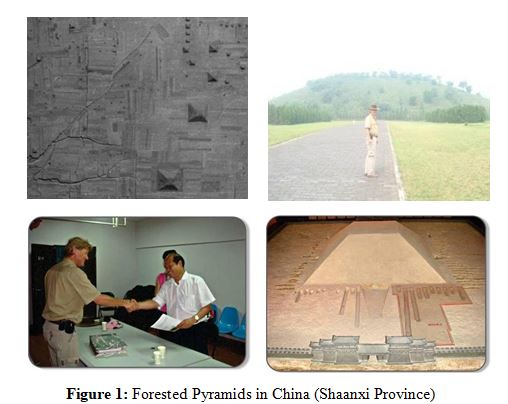
Upper left: Satellite image of central Shaanxi shows dozens of pyramidal structures near Xi’an, partially obscured by farmland and vegetation. Some estimates suggest that over 250 pyramids exist in this province. This area, especially near the Wei River, contains the highest concentration of pyramid structures in Asia. Upper right: The author stands in front of the Han Yang Ling pyramid, completely covered by forest and vegetation.Lower left: Dr. Sam Osmanagich meets with leading Chinese archaeologist Cao Fa Zhan at the Han Yang Ling site. Lower right: A scale model of the Han Yang Ling pyramid reveals its square base, flat summit plateau, and cardinal orientation. Source: Osmanagich, S. (2014). Pyramids Around the World & Lost Pyramids of Bosnia. Archaeological Park: Bosnian Pyramid of the Sun Foundation, Sarajevo, pp. 115–132.
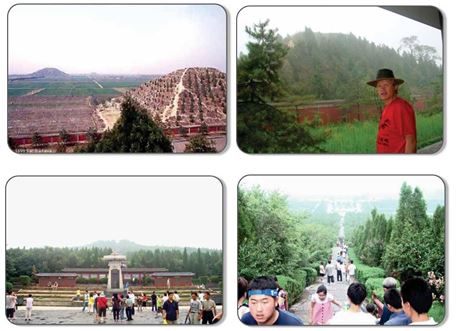
Figure 2: Chinese Pyramids Built of Clay, Brick, Sandstone, and Granite, Now Covered by Forest
Upper left: Apyramid known as the “Tomb of General Huo Qubing” (117 BCE), constructed primarily of clay and brick, reforested with trees in the late 1960s. Attribution remains unconfirmed due to lack of archaeological evidence.
Upper right: The author in front of the same pyramid, now fully obscured by dense vegetation planted in the 1980s and 1990s. This structure displays accurate cardinal orientation and symmetrical pyramid geometry. Bottom left and right: The pyramid attributed to Emperor Qin Shi Huang, now enveloped by a lush, forested park environment. Dense vegetation, including pine and pomegranate trees, has transformed the site into a landscaped public area with paved walkways and tourist access. The pyramid’s geometry remains intact beneath the soil and greenery, with a base measuring approximately 350 × 345 meters and a debated original height ranging from 43 to 120 meters. Drilling evidence suggests construction using clay, granite, and sandstone blocks. Despite being the centerpiece of a massive funerary complex that includes the famous Terracotta Army, the pyramid itself remains unexcavated, and its attribution to the emperor is not conclusively proven.
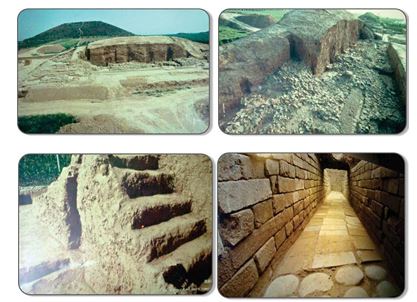
Figure 3: Excavation Practices and Structural Differences Among Chinese Pyramids
Upper left: Bulldozers, still commonly used in archaeological operations, have caused significant damage to some pyramid structures during excavation work.
Upper right: A satellite pyramid that was completely destroyed in the process of searching for internal chambers. On several satellite pyramids, forest cover has been entirely removed, and invasive excavation has taken place. These smaller pyramids are constructed from inferior mudbrick materials, making them particularly vulnerable to damage.
Bottom left: A stairway built from mud and adobe bricks on a satellite pyramid, revealing the fragile nature of its construction. Bottom right: A rare and well-preserved underground passageway discovered beneath one of the larger pyramids, constructed with stone blocks and paved flooring, indicating an advanced level of engineering.
Unlike the satellite pyramids, the largest and oldest Chinese pyramids—constructed from granite and sandstone blocks— remain unexcavated, except in isolated cases. According to Dr. Jiao Nanfeng, Director of the Archaeological Institute of Shaanxi Province in Xi’an, official permission to excavate these superior structures is unlikely to be granted for at least another generation (approximately 30 years). The reason: these monumental pyramids are believed to be significantly older than the timeline of officially recognized Chinese history, making them politically and academically sensitive. In the meantime, natural vegetation continues to grow, resulting in dense forestation that further conceals the structures.
Source: Osmanagich, S. (2014). Pyramids Around the World & Lost Pyramids of Bosnia. Archaeological Park: Bosnian Pyramid of the Sun Foundation, Sarajevo, pp. 132–134.
Source: Osmanagich, S. (2014). Pyramids Around the World & Lost Pyramids of Bosnia. Archaeological Park: Bosnian Pyramid of the Sun Foundation, Sarajevo, pp. 118–123
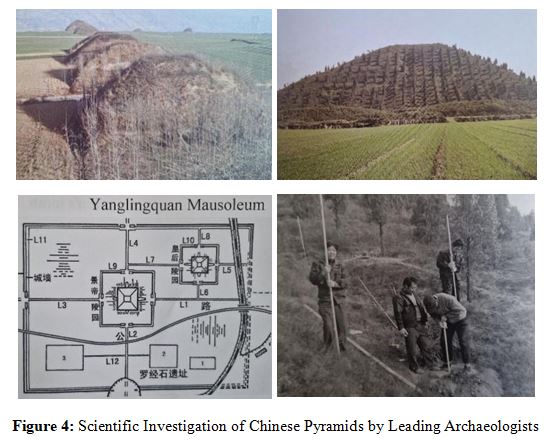
This figure highlights the work of Dr. Jiao Nanfeng, Director of the Archaeological Institute of Shaanxi Province in Xi’an, and Dr. Cao Fazhan, lead archaeologist at the Han Yangling site. Together, they have conducted more than four decades of research into the structures they refer to as mausoleums. Their findings were publicly presented for the first time outside of China during the First International Scientific Conference on the Bosnian Valley of the Pyramids (Visoko and Sarajevo, August 25–30, 2008).
Upper left: A row of nine medium-sized pyramids surrounded by agricultural fields, with partial vegetation cover.
Upper right: A large, forest-covered pyramid, revealing how afforestation since the 1960s has obscured these monumental structures.
Bottom left: A map of the Yanglingquan Mausoleum complex,
interpreted by Chinese archaeologists as a system of four-sided pyramids arranged in a planned layout, now concealed beneath dense vegetation.
Bottom right: Chinese archaeologists, engineers, and geodesists conducting field investigations on pyramid sites despite forest cover, which has developed over decades through intentional planting.
Source: Nanfeng, J., & Fazhan, C. (2009). Study of the Layout and Structure of Chinese Imperial Mausoleums in the Western Han Dynasty. In: Proceedings of the First International Scientific Conference – Bosnian Valley of the Pyramids. Archaeological Park: Bosnian Pyramid of the Sun Foundation, Sarajevo, pp. 37– 66.
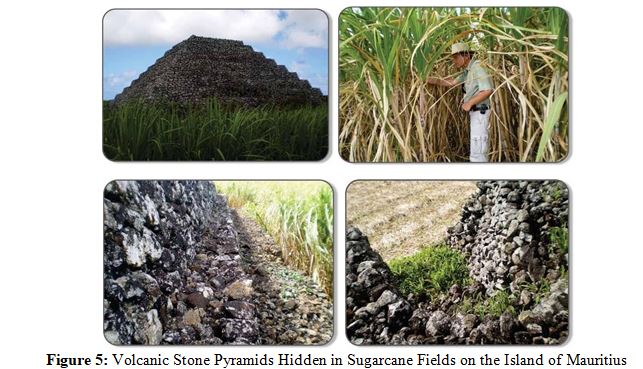
Mauritius, a volcanic island in the southern Indian Ocean, lies approximately 2,000 km from Africa and 1,000 km from Madagascar. Despite the prevailing claim that the island was uninhabited before European arrival in the 16th century, seven pyramid structures have been identified in the southern region of the island, near Plaine Magnien and the international airport, amidst dense sugarcane fields.
Upper left: Pyramid No. 5, also called the "White Pyramid" for its light-colored volcanic stone, features 11 stepped levels and a square base measuring 24.95 × 24.95 meters, with one face oriented to the east.
Upper right: The author investigates the site within sugarcane vegetation reaching up to 3.5 meters high, which conceals the structures from plain view.
Bottom left: The stone structure is regularly cleared of overgrowth by locals, though vegetation reaches the walls.
Bottom right: Pyramid No. 6, the most damaged structure, has lost over two tons of stone. Visible here is a weed-covered hollow where part of the structure has collapsed or been dismantled.
The Mauritian authorities currently regard these structures as agricultural stone heaps allegedly created during plantation clearing in the 1940s. They are not protected, studied, or promoted as part of the island’s cultural heritage, and the land remains private. As a result, there is no tourism or conservation conflict at this time. Structurally, these pyramids are remarkably similar to those in Güímar, Tenerife (Canary Islands), sharing stepped construction, volcanic stone masonry, and cardinal orientation.
Source: Osmanagich, S. (2014). “Seven Pyramids from Mauritius Demand Answers,” in Pyramids Around the World & Lost Pyramids of Bosnia. Archaeological Park: Bosnian Pyramid of the Sun Foundation, Sarajevo, pp. 18–31.
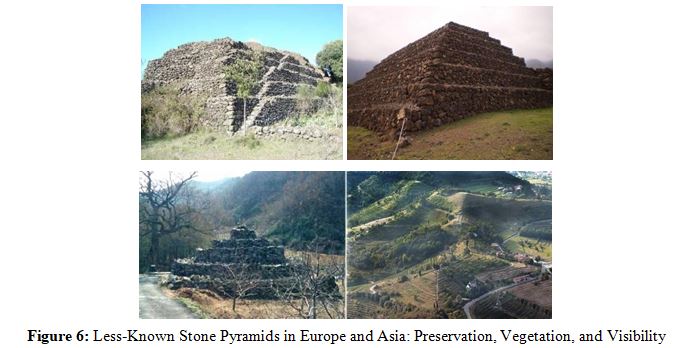
Upper left: One of 43 stepped stone pyramids on the island of Sicily, Italy, constructed from volcanic stone. Located on private land and surrounded by vegetation, these structures are not officially recognized as cultural heritage and receive no tourism, avoiding conflict between preservation, vegetation, and development. Upper right: A 104-step stone pyramid in Tenerife, Canary Islands (Spain) near the town of Güímar. While the local Spanish scientific community does not acknowledge these as pyramids, some have been preserved and presented to the public within a privately run ethnographic park. Others have been cleared of vegetation or destroyed due to agricultural development and urban expansion. Bottom left: A rare grouping of three stone pyramids near Andong, South Korea, that have survived modern development. They remain largely hidden in nature, are not promoted as tourist attractions, and are minimally disturbed.
Bottom right: Aerial view of the Montevecchia pyramid complex in northern Italy, believed by some researchers to include three pyramidal mounds arranged in a triangular layout similar to Giza (Egypt), Teotihuacan (Mexico), and Palencia (Spain). These features are entirely covered by forest and vegetation, lie on private land, and have not been formally excavated or investigated.
These examples highlight a key principle: pyramids constructed from durable materials (such as granite, sandstone, limestone, or ancient concrete) may merit full uncovering and preservation as cultural heritage sites for tourism and education. In contrast, structures made of fragile or soft materials and currently covered by vegetation may be best left partially buried, with limited exposure for archaeological research only, to prevent damage and preserve natural surroundings.
Source: Osmanagich, S. (2014). Pyramids Around the World & Lost Pyramids of Bosnia. Archaeological Park: Bosnian Pyramid of the Sun Foundation, Sarajevo, pp. 32–60, 215. Also available at: www.drsamosmanagich.com, accessed May 11, 2025.

Figure 7: The Akapana Pyramid in Bolivia: High-Precision Masonry and Partial Restoration Located in the ancient site of Tiwanaku near Lake Titicaca, the Akapana Pyramid is one of the most prominent pre-Columbian structures in South America. Believed to have been built by an advanced, long-lost civilization, the pyramid is constructed from high-quality granite blocks featuring intricate cuts, right angles, and interlocking features.
Upper left: View of the Akapana Pyramid’s restored terrace steps and partially cleared structural remains.
Upper right and bottom right: Close-ups of precisely cut granite blocks showing advanced stone-working techniques, such as recessed joints and interlocking mortises.
Bottom left: Official site sign identifying the "Pirámide de Akapana", emphasizing its historical and archaeological significance.
The structure has been only partially excavated and restored, with vegetation and soil still covering large portions of the original pyramid. Given the quality of construction and cultural importance, a full restoration would be justified if adequate funding and preservation infrastructure were available. Today, Akapana is a well-maintained and actively visited archaeological park, drawing global attention for its craftsmanship and mystery.
Source: Osmanagich, S. (2014). Pyramids Around the World & Lost Pyramids of Bosnia. Archaeological Park: Bosnian Pyramid of the Sun Foundation, Sarajevo, pp. 149–152.
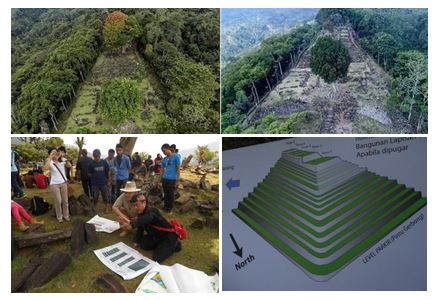
Figure 8: Gunung Padang Pyramid, West Java, Indonesia: A Contested Megalithic Structure in the Jungle
The Gunung Padang pyramid is one of the most debated ancient structures in Asia. Located in West Java, Indonesia, it is considered by its lead researcher, Dr. Danny Hilman, to be over 27,000 years old, based on deep-core sampling and geophysical analyses. The site is composed of shaped volcanic andesite blocks, arranged in multiple stepped terraces, and is largely buried beneath jungle vegetation.
Upper left and right: Aerial views of Gunung Padang, revealing the terraced structure mostly obscured by dense tropical vegetation. Bottom left: Dr. Danny Hilman (center left) discusses excavation layers with Dr. Sam Osmanagich (center right, wearing hat), who visited the site as part of his comparative global pyramid studies. Bottom right: A digital reconstruction model showing the pyramid’s multi-layered stepped design, oriented to the cardinal points and hypothesized to contain at least four distinct cultural phases.
Despite growing scientific interest and evidence suggesting advanced prehistoric construction, Indonesia’s cultural authorities currently do not recognize Gunung Padang as an ancient pyramid. Official interpretation focuses only on the uppermost layer, believed to be a later Hindu temple. Excavation efforts face bureaucratic resistance, and full-scale uncovering remains stalled. Given the structure’s solid stone composition and historical significance, its complete excavation would be archaeologically justified if funding and permissions were granted.
Source: Osmanagich, S. (2014). Pyramids Around the World & Lost Pyramids of Bosnia. Archaeological Park: Bosnian Pyramid of the Sun Foundation, Sarajevo, pp. 216–220

Figure 9: Teotihuacan’s Pyramid of the Sun: From Forested Mound to Restored Global MonumentTop image: Archival photo showing the Pyramid of the Sun at Teotihuacan, Mexico, before excavation — completely covered in soil, bushes, and trees. At the time, it resembled a natural hill, its geometry and scale hidden beneath centuries of overgrowth andsedimentation.
Bottom image: The fully restored and stabilized pyramid, now standing as a major archaeological landmark. Excavation and reconstruction were carried out over 75 years by archaeologists from Mexico and the United States, supported by substantial state funding. Restoration efforts revealed the pyramid's iconic stepped form, stone masonry, and alignment along the Avenue of the Dead, confirming its ceremonial and architectural significance.
The contrast between the two images demonstrates how proper excavation, long-term planning, and public funding can transform a forest-covered pyramid into a fully accessible and celebrated site. Built from durable volcanic stone and lime-based mortar, the Pyramid of the Sun was a strong candidate for full restoration, unlike other pyramids around the world made from softer materials.
Source: Osmanagich, S. (2014). Pyramids Around the World & Lost Pyramids of Bosnia. Archaeological Park: Bosnian Pyramid of the Sun Foundation, Sarajevo, pp. 96, 153–156.
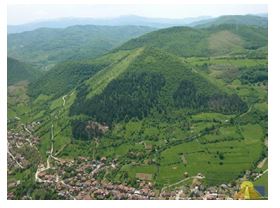
Figure 10: The Bosnian Pyramid of the Sun: A Geometric Megastructure Beneath Forest and Soil
Aerial view of the Bosnian Pyramid of the Sun located in Visoko, Bosnia-Herzegovina — the tallest and most prominent of several pyramid-shaped formations in the Bosnian Valley of the Pyramids. This structure stands out for its remarkably regular triangular geometry, cardinal orientation, and symmetrical faces, which are consistent with intentional construction.
According to multidisciplinary research including geological, structural, and archaeological analyses, this formation is not a natural hill, but an anthropogenic structure built in prehistoric times. Core drilling and excavation have revealed large, artificially produced concrete blocks located just one meter beneath the surface layer of soil, supporting the theory of man-made construction.
The forest covering the pyramid — primarily pine trees planted in the 1960s — was introduced decades before the discovery of the pyramid’s artificial surface. This overgrowth was a result of state forestry efforts, unaware of the archaeological significance beneath.
Radiocarbon and luminescence dating from multiple layers — including organic material sealed between the concrete plates — suggest an extraordinary construction age of approximately 29,200 years, making it potentially the oldest known pyramid in the world. For full analysis, see:
• Osmanagich, S. (2025). Spiral Geometry in Ancient Design: Evidence of Fibonacci Proportions in the Egyptian and Bosnian Pyramids. Acta Scientific Environmental Sciences, p. 21. Link
• Multidisciplinary Evaluation of the Pyramid-Shaped Formation near Visoko, Bosnia-Herzegovina: A Case for Anthropogenic Construction. Link
Establishing Deep-Time, Multi-Method Dating of Archaeological and Speleological Features in the Bosnian Valley of the Pyramids. Link
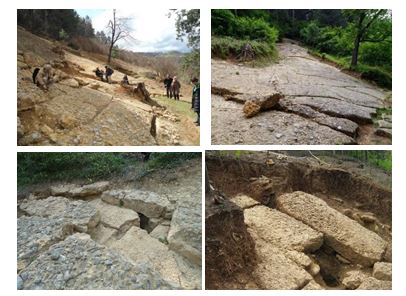
Figure 11: Excavated Concrete Slabs on the Bosnian Pyramid of the Sun: Evidence of Advanced Construction Material
Ongoing archaeological excavations on the slopes of the Bosnian Pyramid of the Sun have uncovered large, regularly shaped concrete blocks, revealing a previously unknown construction technique of exceptional quality. The artificial concrete — composed of highly compacted gravel, sand, clay, and a geopolymer binder — exhibits remarkable hardness, low water absorption, and superior durability compared to modern concrete standards.
Upper left and right: Large rectangular plates, some weighing several tons, are systematically exposed beneath a thin surface layer of soil and vegetation. The regularity, bonding joints, and placement indicate intentional design and engineering.
Bottom left and right: Deeper excavation layers show overlapping and interlocked blocks, confirming a multilayered structural system. These blocks have retained their integrity over tens of thousands of years despite tectonic activity and environmental exposure.
The quality of this construction material and its preservation over time fully justifies the removal of forest, vegetation, and overburdened soil to continue uncovering and documenting the pyramid’s full surface. Unlike fragile earthen or mudbrick pyramids, this structure is engineered for permanence, supporting both conservation and cultural heritage presentation.
Source: Osmanagich, S. (2023). Bosnian Pyramids – My Story. Archaeological Park: Bosnian Pyramid of the Sun Foundation, Visoko, pp. 33–36. Also published in: Multidisciplinary Evaluation of the Pyramid-Shaped Formation near Visoko
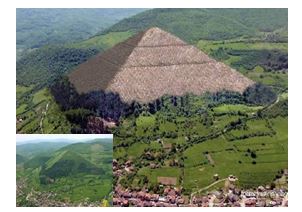
Figure 12: Visual Reconstruction of the Bosnian Pyramid of the Sun Without Soil and Vegetation Cover
This digital illustration shows how the Bosnian Pyramid of the Sun might appear if completely cleared of soil, forest, and vegetation — revealing its original stepped, geometric structure with precise triangular faces and alignment to the cardinal points. Inset image (bottom left): Actual aerial photograph of the pyramid covered in forest and vegetation, as it appears today.
Thanks to the efforts of the nonprofit NGO Archaeological Park: Bosnian Pyramid of the Sun Foundation, this site has become a major international attraction, drawing approximately 250,000 visitors in 2024 and welcoming tourists from over 160 countries to date. The site's growing popularity and ongoing independent research have positioned it as a unique case in global archaeology.
However, excavations were halted in 2006 by Bosnia's official cultural authorities, citing concerns about preserving a "medieval fortress" at the pyramid’s summit — despite its long abandonment and lack of conservation for more than 550 years. Critics argue that this decision reflects resistance to the pyramid’s implications, which challenge established historical narratives about the region and early human civilization.
Source: Illustration based on aerial photo analysis and field research by the Archaeological Park Foundation. Background image: Osmanagich, S. (2025), Spiral Geometry in Ancient Design, Acta Scientific Environmental Sciences, and www. drsamosmanagich.com
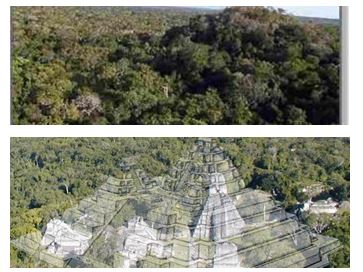
Figure 13: El Mirador, Guatemala: The Largest and Least Known Mayan Pyramid Complex Hidden in Forest
Top image: Dense tropical rainforest conceals the monumental El Mirador pyramid complex in northern Guatemala.
Bottom image: A digital reconstruction overlay reveals the true scope of the La Danta pyramid, one of the largest known Mayan pyramids, standing at approximately 74 meters in height and surpassing even Tikal’s famous temples in both volume and architectural complexity.
Despite its scale and historical significance, El Mirador remains remote, understudied, and rarely visited, in part due to its inaccessibility and heavy forest cover. Its preservation within the Petén jungle has protected the structure from modern development, but also obscured it from public awareness and scholarly focus. Given its superior construction and status as a major ceremonial center of the Preclassic Maya civilization, this site warrants partial removal of forest cover and controlled excavation, similar to what has been done at Tikal. Proper revitalization and site planning could transform El Mirador into a world-class archaeological destination, contributing to both scientific understanding and eco- cultural tourism in the region.
Source: Osmanagich, S. (2014). Pyramids Around the World & Lost Pyramids of Bosnia. Archaeological Park: Bosnian Pyramid of the Sun Foundation, Sarajevo, pp. 167–201.
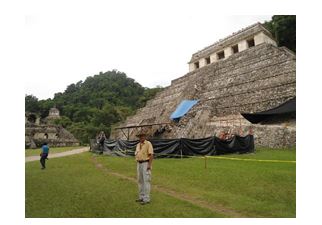
Figure 14: Palenque, Chiapas, Mexico: A Partially Uncovered Mayan Masterpiece with Hidden Potential
Palenque is one of the most architecturally refined and historically significant ancient Maya sites in Mesoamerica. Located in the tropical rainforest of Chiapas, Mexico, it is known for its elegant pyramid-temples, elaborate stone inscriptions, and sophisticated urban planning.
In the foreground stands the famous Temple of the Inscriptions, a stepped pyramid with one of the longest known Maya glyphic texts. Excavation and stabilization are still ongoing, as seen by the protective scaffolding and tents.
To the left, still covered by dense vegetation, is a larger, superior pyramid structure that remains entirely unexcavated. Though more than 25 pyramid structures have been cleared and restored at Palenque, hundreds more remain buried beneath the jungle, including some of the most massive and promising features in the entire complex.
Given the Maya civilization’s use of superior limestone construction techniques and the architectural precision already revealed at Palenque, forest removal and further excavation would be fully justified—contingent on proper funding and cultural heritage planning. Such efforts could greatly expand both scientific understanding and sustainable tourism development at the site.
Source: Osmanagich, S. (2014). Pyramids Around the World & Lost Pyramids of Bosnia. Archaeological Park: Bosnian Pyramid of the Sun Foundation, Sarajevo, pp. 167–202
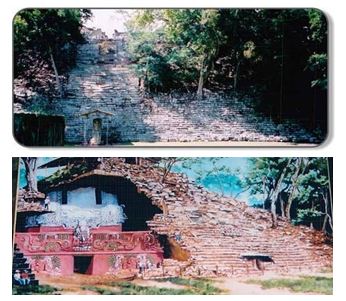
Figure 15: Copán, Honduras: Forest Clearing Reveals the Rosalila Temple Hidden Within a Mayan Pyramid
The ancient Mayan city of Copán, located in western Honduras near the Guatemalan border, is renowned for its refined stelae, pyramidal architecture, and glyphic inscriptions. Its largest pyramid, partially buried under forest cover, underwent conservation and restoration work that involved the removal of trees and dense vegetation damaging the structure.
Top image: The pyramid after clearing and stabilization. Roots and overgrowth were found to be dismantling the staircases and destabilizing the stone walls, necessitating conservation-led vegetation removal.
Bottom image: During the restoration process, archaeologists uncovered the Rosalila Temple, a perfectly preserved substructure within the pyramid, noted for its vivid rose-colored façade, ceremonial architecture, and cultural symbolism. The temple was named Rosalila due to the intense pigmentation and now stands as one of the most significant archaeological discoveries in Honduras.
Today, the Rosalila Temple is a major tourist attraction, and Copán is the most visited archaeological site in the country. This case serves as a successful model demonstrating how responsible forest removal, guided by scientific and conservation standards, can lead to the discovery, protection, and presentation of cultural heritage.
Source: Osmanagich, S. (2014). The Mayan Cosmic Mission, pp. 40–47. Available at: The Mayan Cosmic Mission (PDF)
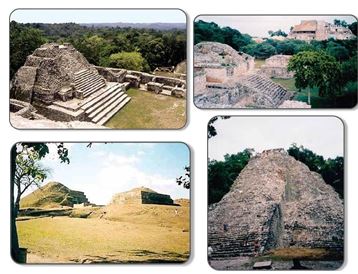
Figure 16: Recovered and Restored Mayan Pyramids in Mesoamerica: From Jungle Obscurity to Global Visibility
Upper left: The Caana Pyramid in Caracol, Belize — the tallest ancient structure in the country rises above the canopy after full forest clearing and reconstruction. Caracol is now one of the most visited archaeological parks in Belize.
Upper right: View of the ceremonial center of Ek’ Balam, Yucatán, Mexico. The site has been cleared from dense vegetation, revealing its elaborate temple façades and stucco artwork.
Bottom left: A pair of pyramids at San Andrés, El Salvador. After vegetation removal, this site became a key national monument and important tourist destination, highlighting the value of conservation-based exposure.
Bottom right: The Great Pyramid of Cobá, Yucatán, Mexico.
Formerly engulfed in jungle, it was uncovered and stabilized, becoming a popular climbing site and archaeological destination.
Each of these pyramids demonstrates the successful integration of archaeological excavation with vegetation management, enabling scientific discovery, heritage conservation, and tourism development. Their revitalization serves as precedent for other forest-covered pyramid complexes worldwide.
Source: Osmanagich, S. (2014). Pyramids Around the World & Lost Pyramids of Bosnia. Archaeological Park: Bosnian Pyramid of the Sun Foundation, Sarajevo, pp. 195–203.
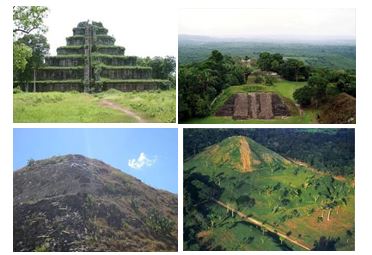
Figure 17: Partially Cleared and Maintained Pyramids: Balancing Conservation and Accessibility
Upper left: The Koh Ker pyramid, Cambodia a stepped pyramid from the early Angkorian period, partially cleared and stabilized while retaining its tropical surroundings.
Upper right: The Altun Ha pyramid complex in Belize, showcasing cleared plazas and partially exposed pyramids that attract international visitors while remaining embedded in a lush environment.
Bottom left: Monte Albán, Mexico one of the most important Zapotec ceremonial centers. Several pyramids remain partially covered, while others have been fully excavated and integrated into a broader archaeological park.
Bottom right: The La Venta pyramid, Mexico — a pre-Columbian Olmec structure located in a tropical region. Its distinctive conical shape is still largely covered in vegetation, though cleared areas around the base allow access and research.
These examples demonstrate how partial vegetation removal and careful site management can preserve both the natural setting and the archaeological integrity of pyramid structures. Each site has become a major tourist attraction, showing that responsible exposure of ancient monuments can support both cultural heritage and sustainable tourism.
Source: Osmanagich, S. (2014). Pyramids Around the World & Lost Pyramids of Bosnia. Archaeological Park: Bosnian Pyramid of the Sun Foundation, Sarajevo, pp. 160–203.
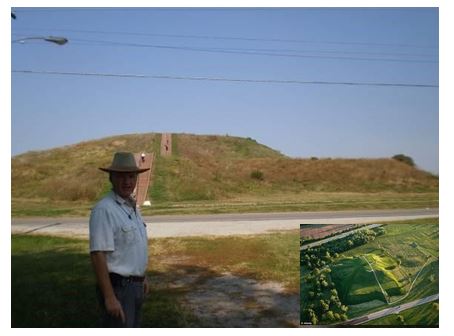
Figure 18: Cahokia Pyramid (Monks Mound), Illinois, USA: A Monumental Structure Misclassified as a ‘Mound’
The massive Monks Mound, located in Cahokia, Illinois, is the largest prehistoric structure in North America. Rising over 30 meters in height, it covers a surface area that is 11% larger than the base of the Great Pyramid of Giza, making it one of the most massive ancient pyramid structures in the world.
Main image: The author stands before Monks Mound, whose stepped sides and symmetrical layout are obscured by grass but remain geometrically defined. Inset image
(bottom right): Aerial view of the Cahokia pyramid complex, revealing its vast spatial organization and the presence of at least 120 surviving pyramid-like structures across the site.
Despite its scale and engineering sophistication, Monks Mound is commonly referred to as a "mound", a term that fails to reflect its likely ceremonial and architectural significance. Archaeologists generally attribute the construction to pre-Columbian Native American groups, yet this claim is debated: the historically nomadic lifestyle of these groups did not typically include permanent, large- scale stone or earthwork architecture of this magnitude.
The mound was constructed using layers of sandstone blocks, compacted sand, pebbles, and other materials, indicating intentional design rather than random soil accumulation. Unfortunately, no comprehensive archaeological excavation has been undertaken to explore possible internal chambers, passageways, or cultural layers. While vegetation is controlled for preservation, the lack of detailed investigation leaves the true origin, function, and cultural identity of the Cahokia pyramids uncertain.
Source: Osmanagich, S. (2014). Pyramids Around the World & Lost Pyramids of Bosnia. Archaeological Park: Bosnian Pyramid of the Sun Foundation, Sarajevo, pp. 208–210.
References
1. Nanfeng, J., & Fazhan, C. (2009). Study of the Layout and Structure of Chinese Imperial Mausoleums in the Western Han Dynasty. In: Proceedings of the First International Scientific Conference – Bosnian Valley of the Pyramids. Archaeological Park: Bosnian Pyramid of the Sun Foundation, Sarajevo, pp. 37-66.
2. Osmanagich, S. (2023). Bosnian Pyramids – My Story. Archaeological Park: Bosnian Pyramid of the Sun Foundation, Visoko, pp. 33–36
3. Hilman, D. et al. (2023). Geo-archaeological evidence of early construction at Gunung Padang, West Java, Indonesia. Archaeological Prospection, 31(2).
4. Osmanagich, S. (2014). Pyramids Around the World & Lost Pyramids of Bosnia. Archaeological Park: Bosnian Pyramid of the Sun Foundation, Sarajevo, pp. 18-210.
5. Osmanagich, S. (2014). The Mayan Cosmic Mission.
6. Osmanagich, S. (2014). Seven Pyramids from Mauritius Demand Answers. In: Pyramids Around the World & Lost Pyramids of Bosnia, pp. 18-31.
7. Osmanagich, S. (2025). Spiral Geometry in Ancient Design: Evidence of Fibonacci Proportions in the Egyptian and Bosnian Pyramids. Acta Scientific Environmental Sciences, 9(4), 21-26.
8. Osmanagich, S. (2025). Establishing Deep-Time, Multi- Method Dating of Archaeological and Speleological Features in the Bosnian Valley of the Pyramids.
9. Osmanagich, S. (2025). Multidisciplinary Evaluation of the Pyramid-Shaped Formation near Visoko, Bosnia- Herzegovina: A Case for Anthropogenic Construction.
10. Osmanagich, S. (2025). The Global Phenomenon of Stone Spheres: New Findings from ZavidoviÄ?i, Bosnia-Herzegovina and Implications for Prehistoric Technological Knowledge – Featuring the World’s Largest Stone Sphere.