

Archives of Case Reports: Open Access(ACROA)
ISSN: 3065-7598 | DOI: 10.33140/ACROA


Research Article - (2024) Volume 1, Issue 1
Purpose and Structure on New Health Clinic: Organization Models
Received Date: Aug 23, 2024 / Accepted Date: Aug 29, 2024 / Published Date: Sep 10, 2024
Copyright: ©Ã?©2024 Julian Ungar-Sargon. This is an open-access article distributed under the terms of the Creative Commons Attribution License, which permits unrestricted use, distribution, and reproduction in any medium, provided the original author and source are credited.
Citation: Ungar-Sargon, J. (2024). Purpose and Structure on New Health Clinic: Organization Models. Arch of case Rep: Open, 1(1), 01-19.
Abstract
In attempting to rethink the way we have adapted rational thinking in modern medicine to a mechanical, technological and mathematical model of medicine, and having reviewed the way patients have suffered by being reduced to mechanical biological machines, we need to borrow from other disciplines as to how to affect adaptive ingrained responses to open caregivers to another paradigm.
Introduction
In attempting to rethink the way we have adapted rational thinking in modern medicine to a mechanical, technological and mathematical model of medicine, and having reviewed the way patients have suffered by being reduced to mechanical biological machines, we need to borrow from other disciplines as to how to affect adaptive ingrained responses to open caregivers to another paradigm.
In this essay I will review the work of four researchers in comparing their approach to modify crustaceous thinking in organizations to better implement their original goals.
I hope to appropriate their theories to the medical model in a subsequent essay with case histories.

Literature Review
1. M.B. Weisbord and Sandra Janoff [1].
2. W. Warner Burke [2].
3. Burke and Litwin [3].
4. Phillip Bromley [4].
M. B. Weisbord and Sandra Janoff [5].
Weisbord (i.e., [4]) suggested Six Box Model for organizational diagnosis, which consists of following key boxes: purpose, structure, relationships, rewards, leadership and helpful mechanism. The fundamental purpose of the enterprise is captured in a mission statement. The two main factors should be pointed here. First, the goal definition, which refers to the extent to, which employees are clear about organization’s mission. The following is goal agreements such as employees’ support of the purpose. Organizational structure can be functional, matrix, divisional or different networks. The interactions between employees, as well as employees’ attitudes toward technol-ogy, have been embodied by Relationships. This item correlation investigates three types of connections: between employees, between departments that perform different tasks, and between employees and their job requirements. The source of conflicts and resolving conflicts also belongs to this box.
In assessing the reward box, the manager should identify the disappearances between the compensation package, initiative systems, and employees perceived rewards or punishments
The central case in a model is leadership which is essential for organizational success. The successful management continually balances internal boxes. The helpful mechanism refers to organizational processes, which contribute to goal achievements, such as planning, con¬trol, budget, informational systems. Weisbord (i.e. [4]) identifies inputs such as financial resources, employees’ knowledge and skills, ideas, technology required for complete the organization’s mission. Outputs are products and/or services. The following two premises are necessary to understand Six Box Model. First premise presents relationships between formal and informal systems. The formal systems are written procedures and rules, although informal systems offer organizational behavior. The informal systems reflected in which state employees follow procedures and rules. The successful management balances the formal as well as informal systems. The difference between them often discovers organizational ineffectiveness. The second premise refers to balance between the company and its environment. The business should equate to market demand. Weisbord (i.e. [4]) argued that requirement or pressures came from customers, government and unions.
Weisbord (i.e., [4]) provides complete diagnostic questions for each of six boxes. Some of the questions will be presented.
• Purpose
What business are a company in? Do employees understand the company’s mission?
• Structure
How do managers distribute the work? Would organizational structure protect mission accomplishment?
• Relationships
What is a relationship between individuals and their jobs? How do leaders manage conflicts?
• Rewards
Do all needed tasks have incentives?
• Leadership
What is the leadership style? Do leaders keep the boxes in balance?
• Helpful mechanism
Has company acceptable coordinating technologies?
Weisbord’s model focuses on internal problems identified through diagnostic questions in order to determinate the gaps. The develop-ment of organizational diagnostic questionnaires has enhanced ability to assess organization (i.e., [2]). The impact of internal factors on success has been assessed. The organizational success is defined as goals accomplishment. In proposed model main activities and key factors are presented in clear and visible structure. Main advantages of Weisbord’s model is simplicity and successful implementation of strategic choice under time pressure.
To provide a model of organizational performance and change, at least two lines of theorizing need to be explored-organization malfunc¬tioning and organizational change. The authors go beyond description and suggest causal linkages that hypothesize how performance is affected and how effective change occurs.
Change is depicted in terms of both process and content, with particular emphasis on transformational as compared with transactional factors. Transformational change occurs as a response to the external environment and directly affects organizational mission and strate¬gy, the organization ‘s leadership, and culture. In turn, the transaction malefactors are affected-structure, systems, management practices, and climate. These transformational and transactional factors together affect motivation, which, in turn, affects performance [6].
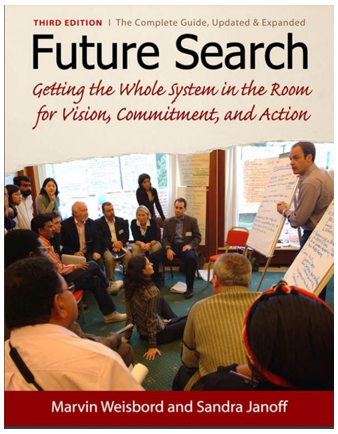
Marvin Weisbord and Sandra Janoff have made significant contributions to the field of organizational development and meeting facil¬itation through their work on “Future Search” below reviewed, and principles for effective meetings [7]. Here are some of their key contributions:
Search Methodology
Weisbord and Janoff co-developed Future Search, a structured methodology for large group meetings and planning. The key aspects of
Future Search include:
• Getting the “whole system in the room” to focus on the future and create values-based action strategies
• A structured 2.5-day meeting format based on specific principles
• Enabling diverse stakeholders to find common ground and collaborate on complex issues Future Search has been used successfully worldwide in various sectors including healthcare, education, community development, and more.
Principles for Effective Meetings
In their book “Don’t Just Do Something, Stand There!”, Weisbord and Janoff outline ten principles for leading effective meetings. Some key ideas include:
• Respecting people’s time and contributions
• Facilitating groups to enable self-management and learning
• Creating conditions for constructive dialogue among diverse participants
• Focusing on common ground rather than problems
Theoretical Foundations
Their work integrates concepts from:
• Systems thinking - viewing organizations as whole systems
• Group dynamics - understanding how groups develop and function
• Action research - involving stakeholders in studying and changing their own systems
Practical Applications
Weisbord and Janoff have applied their methods to address various real-world challenges:
• Healthcare reform and reducing health disparities
• Community development and conflict resolution
• Organizational change in corporations and non-profits
• International development work with organizations like UNICEF
Their approach emphasizes creating the right conditions for groups to collaborate effectively and take responsibility for implementation, rather than the facilitator solving problems directly. In summary, Weisbord and Janoff’s major contribution has been developing prac¬tical, principle-based methods for engaging whole systems in creating shared visions and action plans, with applications across many fields and cultures.
Future Search: Getting the Whole System in the Room for Vision, Commitment, and Action [8].
Their work claims to achieve creative plans, high commitment, and fast implementation from a single meeting. Based on how to get the “whole system in the room,” help people find common ground, and create long-lasting follow-up. This approach involves lots of other stakeholders and can seem cumbersome and risky. Events unfold so fast now that the idea of planning “changes” to systems in perpetual motion seems crazy-making. How does one organize complex human activity as the ground shifts constantly? Many people see technol¬ogy as both the source of and the solution to this dilemma. Despite technological progress, we daily encounter intractable dilemmas of war, disease, poverty, and environmental degradation that threaten the planet.
The challenges to participative democracy and personal action have never been greater. Under conditions of relentless change and mindboggling diversity, Future Search is one way to help people act with hope, support, and new resolve. This book describes how to do that in face-to-face planning meetings. This book started in an experimental workshop at the Cape Cod Institute of the Albert Einstein College of Medicine in 1991. Their goal was to find out whether giving people enough guidance in a few days they could do successful Future Searches.

M. Warner Burke
W. Warner Burke had already proposed a theory of organizational change in his groundbreaking work: [9].
Change is the law of nature. We can observe change in every walk of our life be it is business, profession or personal life. Way of doing business is changing drastically due to globalization, privatization, and liberal government policies etc. To survive in this highly dynamic and competitive environment it is of great importance for all to know what is change, how to manage it. Warner Burke describes the process of organizational change and how to manage it in his book titled, "Organization Theory and Practice". The change that occurs in the organization is, for the most part, unplanned and gradual. Planned organization change, especially on a large scale, affecting the entire system, is unusual: not exactly an everyday occurrence.
Revolutionary change-a major overhaul of the organization resulting in a modified or entirely new mission, a change in strategy, lead-ership, and culture-is rare indeed. Most organization change is evolutionary. These two distinctions; planned versus unplanned and revolutionary versus evolutionary, represent core themes in his work. He deals with the process of rethinking organizational change which explains the concept of change and how it is implemented in organizations, its levels, types, extant theories and various models of change. This gives an insight to the executives, managers and administrators those wants to turn the organization in another direction, fundamentally modify the way "we do things" to overhaul the structure-the design of the organization for decision making and account-ability, and to provide the organization members a whole new vision for the future.
He continues to build the foundation which gives us deeper understanding of Organization Change how external environment has an effect on it; he also tells us how life sciences reflect in organizations. How an organism is compared with an organization through its logic of survival through interdependency. He then comprehensively explains; evolutionary, revolutionary change, individual, group and organizational change, and various recent approaches, cases and theories to change for the deeper understanding of the managers and administrators those who are on the way to planned organizational change. The organizational theory literature is about continuity and stabilization. Lastly he has artfully explains the conceptual models, integrated models for understanding organizational change and transactional dimensions.
Transformational factors show the effect of external environment, organizational culture, mission and strategy, along with individual and organizational performance along with leader in bringing about organization change; here the change is discontinuous and revolutionary. In transactional factors we see leadership does not have an important role, also this kind of change is more evolutionary, continuous and not sweeping. He provides a practical guide for leading organization change by outlining the various phases of organization change (e.g., prelaunch, launch, post-launch, sustaining the change) and the actions that leaders must take in order to ensure success within each phase. The map is designed for the leaders, guiding them through the change process in their organization [10].
In the final section a new concept is introduced from Malcolm Gladwell's book The Tipping Point, which deals with how viruses spread to become an epidemic or how a fashion trend starts and becomes a fad. How do you spark a trend that spreads like wildfire, or turn a product into the latest must-have item? You create a social epidemic. The Tipping Point explains how social epidemics - spreading ideas, messages, behaviors, and products - function like viruses, growing gradually until they reach a critical mass (the tipping point) and explode.
These three factors can be adjusted to tip an idea to a social epidemic: the messenger, the message itself, or the context of the message. He identifies three characteristics:
• Contagiousness
• Small causes can have big effects and
• Change occurs at one dramatic moment
Burke and Litwin
Burke and Litwin proposed a different kind of model [11].
To provide a model of organizational performance and change, at least two lines of theorizing need to be explored-organizational functioning and organizational change. The authors go beyond description and suggest causal linkages that hypothesize how perfor-mance is affected and how effective change occurs. Change is depicted in terms of both process and content, with particular emphasis on transformational as compared with transactional factors. Transformational change occurs as a response to the external environment and directly affects organizational mission and strategy, the organization’s leader- ship, and culture. In turn, the transactional factors are affected-struc- ture, systems, management practices, and climate. These transformational and transactional factors together affect moti¬vation, which, in turn, affects performance. In support of the model’s potential validity, theory and research as well as practice are cited.
Organization change is a kind of chaos (Gleick, 1987). The number of variables changing at the same time, the magnitude of environ-mental change, and the frequent resistance of human systems create a whole confluence of processes that are extremely difficult to pre¬dict and almost impossible to control. Nevertheless, there are consistent patterns that exist-linkages among classes of events that have been demonstrated repeatedly in the research literature and can be seen in actual organizations. The enormous and pervasive impact of culture and beliefs- to the point where it causes organizations to do fundamentally unsound things from a business point of view-would be such an observed phenomenon.
To build a most likely model describing the causes of organizational performance and change, we must explore two important lines of thinking. First, we must understand more thoroughly how organizations function (i.e., what leads to what). Second, given our model of causation, we must understand how organizations might be deliberately changed. The purpose of this article is to explain our understand¬ing so far. More specifically, we present our framework for under-standing-a causal model of organizational performance and change. But, first, a bit of background.
In our organizational consulting work, we try very hard to link the practice to sound theory and research. The linkage typically is in the direction of theory and research to practice: that is, to ground our consultation in what is known, what is theoretically and empirically sound. Creation of the model to be presented in this article was not quite in that knowledge-to-practice direction, however. With respect to theory, we strongly believe in the open system framework, especially rep- resented by Katz, and Kahn (1978). Thus, any organiza¬tional model that we might develop would stem from an input-throughput-output, with a feedback loop, for- mat. The model presented here is definitely of that genre. In other words, the fun- damental framework for the model evolved from theory. The components of the model and what causes what and in what order, on the other hand, have evolved from our practice. To risk stating what is often not politic to admit in academic circles, we admit that the ultimate development of our causal model evolved from practice, not extensive theory or research. What we are attempting with this arti- cle, therefore, is a theoretical and empirical justification of what we clearly believe works. To be candid, we acknowledge that our attempt is not unlike attribution theory-we are explaining our beliefs and actions ex post facto: “This seemed to have worked; I wonder if the literature supports our action.”
Our consulting efforts over a period of about 5 years with British Airways taught us a lot-what changes seemed to have worked and what activities clearly did not. It was from these experiences that our model took form. As a case example, we refer to the work at British Airways later in this article. For a more recent overview of that change effort, see Goodstein and Burke (1991).
Other Organizational Models
From the perspective of both research about organizations and consultation to organizational clients, we have experienced some frus-tration about most if not all current organizational models that do little more than describe or depict. A case in point is the 7S model developed by Pascale and Athos (1981) and further honed by Peters and Waterman (1982). Parenthetically, let us quickly add that by comparing our model with others, particularly those the reader may be familiar with, if not fond of, we wish to clarify the nature of our thinking and, ideally, its distinc-tive contribution, not cast our comments in a competitive manner.
The strengths of the 7S model are (a) its description of organizational variables that convey obvious importance-strategy, structure, sys¬tems, style, staff, skills, and shared values (as will be seen, we have incorporated these dimensions in one form or another in our model) and (b) its recognition of the importance of the interrelationships among all of these seven variables, or dimensions. The 7S model, on the other hand, does not contain any external environment or perfor- mance variables. The model is a description of these seven import¬ant elements and shows that they interact to create organizational patterns, but there is no explication of how these seven dimensions are affected by the external environment. Nor do we know how each dimension affects the other or what specific performance indices may be involved.
Some organizational models that in our judgment are largely descriptive do at least stipulate certain “shoulds.” Weisbord (1976), for example, states that the role of the leadership box in his six-box model is to coordinate the remaining five. The Nadler-Tushman (1977) model is one of congruence. They argue that for organi- zational effectiveness the various boxes composing their model should be con-gru- ent with one another (e.g., organizational arrangements, or structure, should be congruent with organizational strategy).
Even contingency models of organizations, which imply that “it all depends” and that there is no one best way to organize or to manage (e.g., Lawrence & Lorsch, 1969, and Burns & Stalker, 1961, before them) have certain causal impli- cations. Organizational effective¬ness is, in part, contingent on the degree of match between the organization’s external environment (whether static or dynamic) and the organization’s internal structure (either mechanistic or organic).
To some degree, then, models such as NadlerTushman and the positions taken by Burns and Stalker and by Lawrence and Lorsch suggest a cause-effect linkage. Nadler and Tushman at least imply that little or no congruence between, say, strategy and structure produces low organizational performance, and the contingency models posit that an improper match between the organization’s external environment and its internal structure “causes” organizational ineffectiveness. The issue in both is that the number of items that might be congruent (or matched in the case of contingency) is great and the models provide neither a formula for determining which are central nor an objective means for knowing when congruence or matching has occurred or what levels of congruence/matching or incongruence non-matching produce desirable or undesirable effects. In short, our desire is for a model that will serve as a guide for both organizational diagnosis and planned, managed organization change one that clearly shows cause-and-effect relationships and can be tested empirically.
With respect to the latter half of this desire, a model of organization change, we are attempting to provide a causal framework that en¬compasses both the what and the how what organizational dimensions are key to successful change and how these dimensions should be linked causally to achieve the change goals. In other words, we are attempting to integrate two categories of change theory from the world of organization development (OD), what Porras and Robertson (1987) as well as Woodman (1989) refer to as (a) implementation theory and (b) change process theory. The former concerns activities that must be undertaken to affect planned change (e.g., survey feed- back) and the latter refers to specific changes that need to occur as a consequence of these implementation activities (e.g., embracing a particular value such as emphasizing service to customers more than adhering rigidly to procedures regarding how to deal with custom¬ers, rather than vice versa). As these OD researchers have pointed out, theory in OD is typically either one or the other-implementation or change process. With the model presented in this article, we are striving for an integration of both theories.
An additional desire, as noted already, is to link what we understand from our practice to what is known from research and theory. It is clear that, for example, the 7S model came from consulting practice (see Peters & Waterman, 1982: 9- 12), and we know firsthand that Weisbord’s six-box model evolved from his practice. We believe that these models have valid components because they are in fact based on practice and do not convey irrelevant or the so-called ivory tower think- ing. Yet these and other models do not go far enough. For example, such critical dimensions as the external environment, performance, and organizational culture are not accounted for sufficient¬ly. Moreover, depicting organizational models as simply as possible can be beneficial, especially when attempting to explain sys- temic ideas to people who are relatively naive about large organizations; however, reality is much more complex than most, if not all, models depict. And when at- tempting to account for organizational functioning and change at the same time, we must depict a considerable degree of complexity while maintaining coher- ence-no mean feat. We know of no organizational models that attempt this de- gree of complexity, coherence, and predictability (i.e., causality).
Background: Climate and Culture
Climate
The early, original thinking underlying the model presented here came from George Litwin and others during the 1960s. In 1967, the Harvard Business School sponsored a conference on organizational climate. The results of this conference were subsequently published in two books (Litwin & Stringer, 1968; Tagiuri & Litwin, 1968). The concept of organizational climate that emerged from this se- ries of studies and articles was that of a psychological state strongly affected by organizational conditions (e.g., systems, structure, manager behavior, etc).
The importance of this early research and theory development regarding orga- nizational climate was that it clearly linked psycholog-ical and organizational vari- ables in a cause-effect model that was empirically testable. Using the model, Litwin and Stringer (1968) were able to predict and control the motivational and performance consequences of various organizational climates established in their research experiment. They were working with motivation analysis and arousal techniques developed by McClelland (1961), Atkinson (1958), and others over a period of more than 20 years.
Culture
In recent years, there has been a great deal of interest in the concept of organizational culture. Drawn from anthropology, the concept of culture is meant to describe the relatively enduring set of values and norms that underlie a social system. These underlying values and norms may not be entirely available to one’s consciousness. They are thought to describe a “meaning system” that allows members of that social system to attribute meanings and values to the variety of external and internal events that are experienced. In this article, we attempt to be very explicit about the distinction between climate and culture. Climate is defined in terms of perceptions that individuals have of how their local work unit is managed and how effectively they and their day- to-day colleagues work together on the job. The level of analysis, therefore, is the group, the work unit. Climate is much more in the foreground of organizational members’ perceptions, whereas culture is more background and defined by be- liefs and values. The level of analysis for culture is the organization. Climate is, of mate) and at an individual level (e.g., motivation, individual needs and values, and job-person match).

It is no doubt an understatement to say that the model is complex. At the same time, however, we recognize the need for the human mind to simplify the rich complexity of organizational phenomena. And though complex to depict and de- scribe, our model, exhibited two-dimensionally, is still an oversimplification. A hologram would be better, but is not available.
Arrows going in both directions are meant to convey the open-systems principle. A change in one (or more) “box(es)” will eventually have an impact on the others. Moreover, if we could diagram the model such that the arrows would be more circular-the hologram idea-reality could be represented more accurately. Yet this is a causal model. For example, though culture and systems affect one an- oth¬er, we believe culture has a stronger influence on systems than vice versa. Kerr and Slocum (1987), for example, have provided data that suggest a strong linkage between corporate culture and the organization’s reward system. They show how a company’s reward system is a manifestation of its culture. They also point out that the organization’s reward system can be used to help change the company’s culture. Their data lend support to the linkage notion. We would simply take their evidence and suggest a step further by arguing that cor¬porate culture (beliefs and values) determine the type of reward system an organization has. Yet we would strongly agree that to change culture the reward system should be used (i.e., to reward the behaviors that would reflect the new values we might wish to incorporate).
Displaying the model the way we have is meant to make a statement about or- ganizational change. Organizational change, especially an overhaul of the com- pany business strategy, stems more from environmental impact than from any other factor. Moreover, in large scale or total organizational change, mission, strategy, leadership, and culture have more “weight” than structure, management practices, and systems: that is, having organizational leaders communicate the new strategy is not sufficient for effective change. Culture change must be planned as well and aligned with strategy and leader behavior. These variables have more weight because when changing them (e.g., organizational mission), they affect the total system. Changing structure, on the other hand, may or may not affect the total system. It depends on where in the organization a structural change might occur.

Summary
Table 1 provides a summary of the studies that we have cited as preliminary support for the model’s validity, particularly in terms of arrows that are in the downward direction. A summary word of qualification: The studies we have chosen to demonstrate support for our ideas about organizational performance and change are highly selective. There are no doubt numerous other studies that both support and perhaps question our arguments. The fact that evidence does exist, however, is the point we wish to make.
The evidence that we have cited comes from disparate sources and, with respect to the model, is piecemeal. Ideally, a proper test of the model would be a study that simultaneously examines the impact of all boxes across a variety of organizations. The closest we have come so far is to examine organizational members’ perceptions and beliefs: how managers’ beliefs about mission and strategy, for ex¬ample, relate to (if not predict) their perceptions and their subordinates’ perceptions of work unit climate. To cite an actual example, at British Airways one

of the performance indices used was perceived team effectiveness. Data were also collected from BA managers regarding their beliefs and perceptions about (a) team manager practices (e.g., degree of empowering behavior toward subordinates), (b) the usefulness of BA’s structure toward subordinates, (c) the clarity of BA’s strategy, (d) the extent to which BA’s culture supports change, and (e) the team’s climate (e.g., goal and role clarity). These data categorized according to just these five boxes from the model accounted for 54% of the variance in ratings of team effectiveness for this organization, British Airways (Bernstein, 1987). We are not implying that the model always explains this degree of variance. We are illustrating how the model can be used methodologically for particular client organiza¬tions.
Figure 4 shows these relationships diagrammatically from the model as they were applied to the client organization, in this case, BA. In another more recent, direct attempt to test the validity of the model in assess- ing primarily (but not exclusively) the culture of a hos¬pital, Fox (1990) showed significant support for the causal relationships of certain dimensions (“boxes”). Using the model as a causal predictor, her path analysis outcomes demonstrated that leadership, culture, and management practices predicted significant variance in employees’ perceptions of work unit climate and organizational performance. The two transformational dimensions, leadership and culture, were clearly the two strongest predictors.
Conclusions
By covering the choice of variables (boxes) that we have selected, we have made an attempt with this article to describe and define an organizational model that, at least at face value, makes good, common sense. Yet others have done this kind of modeling work as well. It is our contention, however, that we have taken an additional step by hypothesizing causality (arrows), particularly in the weighted direction; that is, top-down, the transformational then transactional fac- tors. We have searched and have found, from the literature and from our own work, at least in part, empirical support for this hypothesized causality. We are as a consequence encouraged, and we intend to search further and conduct more re-

search. For a recent and further application of the model in a corporate setting, see Burke and Jackson (1991). We do not always obtain evidence that supports precisely the causal chain de- picted in the model, however. We have found from our experience, for example, that on occasion perceptions regarding strategy or structure explain more variance in ratings of climate or some index of performance than do management prac- tices, usually a heavy indicator. These occasions are when the organization is in the midst of a change in strategy, a change in structure, or both. It may also be that national differences would affect the causal chain in ways that are not quite the same as the model predicts. In the UK, for example, beliefs about “the team” and what constitutes satisfaction may not be the same as American beliefs. When given the opportunity to complain or criticize, the British seem to attribute their feelings of dissatisfaction more toward distant factors the culture, the struc- ture than to factors close to home one’s teammates. Americans, on the other hand, are just as likely to criticize their teammates as they are to complain about the inadequate organizational structure.
Finding exceptions to the causal implications of the model does not detract necessarily from its usefulness. As a guide for what to look for and as a predictor for what and how to manage large-scale organizational change, we have found the model invaluable. Like any other model, however, we must not allow it to deter- mine exclusively what we diagnose or how we handle organization change. We cannot afford to allow our model to become ideology, as Morgan (1986) has warned, and that our “way of seeing is a way of not seeing.” (Morgan, 1986: 73) A final note: It is interesting to point out that executives and managers more typically concern themselves with the left side of the model-mission and strat- egy, structure, task requirements and individual skills/abilities, and performance (i.e., when one wants to change an organization, these are the critical dimensions). Behavioral scientists, on the other hand, are more likely to be concerned with the right side and middle-leadership, culture, systems (especially rewards), man- agement practices, climate, individual needs and values, motivation, and perfor- mance. We are criticized by the former group as only dealing with the “soft” stuff. We, of course, should be concerned with both, and with a more effective integra- tion of purpose and practice.

Philip Bromley
Testing a Causal Model of Corporate Risk Taking and Performance
Philip Bromley writes [12].
The determinants of organizational risk taking and its impact on eco- nomic performance are critical issues in strategic management. Using a model that included risk, performance, performance expectations and aspirations, slack, and industry performance, this research addressed how past performance and other factors influence isk taking and how risk taking and other factors influence future perfor¬mance. Not only did poor performance appear to increase risk taking-risk taking appeared to result in further poor performance, even when past performance, industry performance, and organizational slack were con- trolled. Overall, the results favor a model in which low performance and lack of slack drive risk taking, but the risks taken have poor returns.
Although risk has long been considered an important aspect of strategic choice, it is only in recent years that researchers in strategic management have become directly concerned with research on tisk. Sparked by Bowman (1980, 1982, 1984), many recent studies of strategy have included risk measures. Part of the attention has focused on what Bowman described as a paradox. Using a capital markets analogy. he predicted that risky projects and investments would need to offer higher earnings than other projects to be attractive and that by extension, variable income flows would be associated with high average income Instead, he found negative associations between variance in returns and the level of returns in some industries.
Since Bowman (1980), numerous studies have investigated risk-return connections. Fiegenbaum and Thomas (1985, 1985) found some industries with positive associations between returns and variance in returns and some with negative associations. They also found that the associations varied over time. Fiegenbaum and Thomas (1988) reported a positive association between returns and variance in returns for above-average performers and a negative association for below-average performers. This pattern is consistent with Bowman’s con¬cept of “risk seeking by troubled firms” (Bowman, 1982: 33), which he associated with the prospect theory of Kahneman and Tversky (1979). Related studies have focused on risk and return relative to diversification (Amit & Livnat, 1988; Bettis & Mahajan, 1985; Chang & Thomas, 1987); business unit risk assessed in terms of both accounting-based measures of systematic risk (Aaker & Jacobson, 1987) and a variety of accounting and operational risk measures (Woo, 1987); and corporate risk and return relative to structural and opera¬tional variables (Jemison, 1987; Singh, 1986). Fiegenbaum and Thomas (1988) provide an excellent survey of the riskreturn literature.
An underlying difficulty in much of this literature is that researchers wish to make causal statements but are dealing with strictly cross-sectional data. Researchers want to say that a given set of circumstances leads to risk taking or that risk taking has a certain effect on performance, but their anal- yses usually associate variance in returns with average returns calculated using data from the same time period, making it impossible to differentiate between risk influencing performance and performance influencing risk. Bowman (1984) attempted to disentangle this effect by looking at content analysis measures of risk in one time period and performance in another. His analysis suggested that low performance led to risk taking but that risk taking did not influence future performance.
Previous researchers have clearly recognized this problem of unclear causality. Both Singh (1986) and Woo (1987) noted that their models im- posed stringent and untested assumptions concerning the direction of causal relations between risk and performance They argued that time series models incorporating lags were needed to test such relations more clearly (Singh, 1986: 581; Woo, 1987 152). Following their suggestions, I attempted to model the impact of past performance on risk taking and the impact of risk taking on subse¬quent performance.
Specifically, this research addressed two questions: (1) What deter- mines the amount of risk a corporation undertakes? and (2) What effect does that risk taking have on future economic performance? Following Bowman (1980, 1982, 1984) and Fiegenbaum and Thomas (1985, 1986, 1988), I de- fined risk as the uncertainty of a company’s income stream. I addressed the two questions by specifying and estimating a statistical model that includes both the determinants of risk taking and its influence on economic performance. The model estimated is based on the process theory of organizational decision making (cf. Cyert & March, 1963; Simon, 1976).
The answers to the questions addressed in this research may contribute to knowledge in two areas. First, by specifying and testing a model of cor- Bowman (1982, 1984) and Aaker and Jacobson (1987) are exceptions porate risk taking, this work attempts to advance understanding of the de- terminants of corporate risk taking and performance. It advances the re- search on risk by (1) presenting and estimating a dynamic model based on a specific theory of organizations, (2) testing for possible ties between risk taking and future eco¬nomic performance, and (3) using an ex ante measure of risk taking. Second, because Cyert and March’s (1963) behavioral theory of the firm underlies the model tested, the research can be seen as a large- sample test of that theory.
Model Development
The model used herein was based on Cyert and March’s (1963) behav- ioral theory of the firm. A very brief summary of some of the basic concepts of that theory follows; a more detailed summary appears in chapter 6 of Cyert and March’s book. Cyert and March viewed firms as large systems of stan- dard operating procedures, or routines. Managers in firms have both levels of performance they aspire to (aspirations) and levels of performance they ex- pect (expectations). If expectations fall below aspirations, managers search for solutions that can raise expected performance to the aspiration level, and if they cannot find such solutions, they lower aspirations. The system is buffered by slack-excess resources that a company can use to loosen the ties between environmental changes and the need for organizational responses.
Following the behavioral theory of the firm, the current model includes five basic variables: performance, slack, aspirations, expecta-tions, and risk.
Measurement and Estimation
The model requires measures for risk, performance, aspirations, expec- tations, and slack.
Measuring Risk
Previous studies of risk-return relations have defined risk as the unpre- dictability of a firm’s income stream (Bowman, 1980; Conrad & Plotkin, 1968; Fiegenbaum & Thomas, 1985; Fisher & Hall, 1969). These studies have measured risk by the ex post, or actual, variance of a firm’s return on in- vestment or equity.
In this research, risk was measured as the exante uncertainty of a firm’s earnings stream. Conventional measures of income stream risk, such as the variance in a firm’s return on assets (ROA) and the variance of ROA around a time trend, measure ex post uncertainty, which may differ substantially from the uncertainty occurring before the time period. In 1970, an oil com- pany might have expected the 1970s to be a stable period and would have based its actions on that expectation rather than on the uncertainty that the Organization of Petro¬leum Exporting Countries (OPEC) introduced. Thus, ex ante measures of risk may be preferable to ex post measures (Bowman, 1982; Silhan & Thomas, 1986). In addition, it is desirable to use a risk measure that differentiates between predictable changes in outcomes, which are not risky, and risky unpredictable changes in outcomes. Measures like variance in returns classify businesses with predictable but rapidly growing returns as highly risky and those with stable or slowly declining returns as not risky (Cardozo & Smith, 1983).
If a number of analysts forecast the earnings of a given corporation, the variance in their forecasts should be strongly associated with the exante uncertainty of that earnings stream. Consequently, I measured the risk of a company’s income stream for a given year by the variance in security analysts forecasts of that income. Extensive research on capital markets has used the divergence of analysts forecasts as a measure of uncertainty (Brown. Richardson, & Schwager, 1987; Carvell & Strebel, 1984; Givoly & Lakonishok, 1988; Imhoff & Lobo, 1984, 1987; Malkiel, 1982); further, Con- roy and Harris (1987) provided results supporting use of this measure. I assumed that the greater the variance in such forecasts, the less predictable and consequently the more risky the income stream. Means and standard deviations of analysts’ forecasts are available from the Institutional Brokers Estimate System (IBES). The risk for a company in a given year is measured by the standard deviation of the securities analysts’ forecasts of earnings per share for the year. This research used the forecasts from the January IBES report.
Enhancing the Effectiveness of Work Groups and Teams
Teamwork has been at the core of human accomplishment across the millennia, and it was a focus of social psychological inquiry on small group behavior for nearly half a century. However, as organizations world-wide reorganized work around teams over the past two decades, the nature of teamwork and factors influencing it became a central focus of research in organizational psychology and management. Kozlowski and Ilgen, in a review monograph reflected on the impetus, strategy, key features, and scientific contribution of “Enhancing the Effectiveness of Work Groups and Teams,” Teams are at the core of how work is accomplished in business, medicine, science, the military, and sports-in virtually all human pursuits [13,14]. On any given day, they interacted with teams to get things ac¬complished in the workplace.
Psychologists have studied small groups for well over 60 years. Much of that research was initially conducted by social psychologists who were interested in how individual behavior was influenced by the group context and in factors that influenced interpersonal pro-cesses and group behavior. For example, early work focused on power and social influence, social forces that bond people together, and social pressures for conformity, later work centered on cooperation and competition, mixed motives, and a range of decision biases that manifest in groups.
For most of the 20th century, work was organized around individual jobs. Industrial and organizational psychology (IOP), which studies people at work, primarily studied factors at the individual level that influenced work behaviors and reactions. In the 1980s, however, organizations world-wide began an ongoing restructuring of work around small groups and teams in an effort to enable more rapid, agile, and adaptive responses. Quite rapidly, there was a consequent increase in interest centered on the topic of team effectiveness among IOP and management scholars. Serendipitously, this interest in teams as focal units for research coincided with rising interest in multilevel theory which is focused on connecting the levels (often defined by disciplinary boundaries) that separate the science of organizations into micro- (individual), meso- (group or team), and macro- (organizational) levels of analysis.
Accompanied by advances in multilevel methods and analyses, research incorporating MLT and methods exploded. Because teams are at the micro-macro juncture, much of that research has focused on the antecedents of teamwork (i.e., team inputs), team member inter¬actions (i.e., team processes), and effectiveness facets (i.e., outputs).
The Kozlowski and Ilgen (2006) monograph in PSPI was not the first review on the topic of team effectiveness that either of us had written [15]. However, the review for PSPI was different in its intent. It was intended to be relevant to a broad audience, and with 50-plus years of research, to document actionable knowledge based on that scientific foundation that could be readily applied and to identify where future research effort could be profitably invested.
Conceptual Framework
The dominant framework that has shaped research on team effectiveness is based on the logic of an input-process-output (IPO) heuristic developed by McGrath [16]. Inputs constitute the composition of the team with respect to member individual differences (i.e., knowl-edge, skills, abilities, and other characteristics) such as cognitive ability, experience, and personality as well as individual, team, and organizational resources. Processes are relevant to team member actions that combine resources to address task goals and demands. Out¬puts are typically characterized with respect to performance, member satisfaction, and team viability (Hackman, 1987) [17]. Of course, most of the research has been cross-sectional, so the causality has largely been conceptual in nature.
Structure and Focus
This conceptual structure set the boundaries for how they engaged the literature. First, within the IPO structure, team processes or emer¬gent states are the primary contributors to team effectiveness. That is, the IOP heuristic situates team processes as the means by which team members combine their cognition, motivation, affect, and behavior to achieve some degree of team performance.
Thus, team processes and emergent states that contribute to team effectiveness became the primary review target. In addition, because our goal was to make actionable recommendations for application, we also needed to incorporate those factors that shape or align team processes with demands on the team for performance. These factors are, in effect, interventions that can leverage team effectiveness by shaping and aligning team member processes to satisfy task demands and other inputs. This conceptual structure and focus is illustrated in Figure 1, reproduced from the PSPI monograph.

The goal was to generate forceful conclusions and actionable recommendations. With literally thousands of studies available in the lit¬erature spanning some 50 to 60 years, we needed a way to filter the findings to focus on those that were most compelling and useful. We used a stratified approach. First, the focus was on those topics-both processes and interventions-for which theory and research were well developed such that there would be a firm foundation for generating actionable recommendations. We sought topics that were mature such that there were one or more meta-analytic reviews that could provide a quantitative basis for solid conclusions and recommenda¬tions.
Second, topics were sought that had been subject to systematic research, even if there had not been a meta-analytic review. These con¬clusions were strong but often also had some aspects that were equivocal. Third, we considered topics that had an interesting theory and promising findings but less extensive empirical support. These latter topics were more a matter of our judgment; thus, our conclusions and recommendations were more circumspect. By filtering the literature and findings in this way and scaling the forcefulness of con¬clusions and recommendations with respect to the rigor of the scientific foundation, a useful, actionable, and transparent critique of the team effectiveness literature was performed.
Core Team Processes
Cognitive team processes that were identified included team climate, team mental models, team transactive memory, and team learn¬ing. Climate at the team or unit level represents a shared perception among team members (i.e., high interrater agreement; restricted within-team variance) regarding the salient goals or strategic imperatives that define the task environment. Climate is conceptualized as providing a directing and motivating function for member resources [18]. It is well developed with a mature research foundation; it is eminently applicable. Team mental models are shared cognitive representations reflecting the structure of team knowledge relevant to the task, equipment, and team. Transactive memory is an alternative way of conceptualizing collective knowledge in that team members hold unique knowledge, but the team as a collective shares common understanding of how the expertise is distributed.
Team learning process mechanisms have been mapped theoretically and a process-oriented computational theory of team learning has received empirical support [19]. Team motivational and affective processes that were examined included cohesion, efficacy, and poten¬cy; affect, mood, and emotion; and conflict. The first three constructs represent bonding and motivational states that were very well de¬veloped, whereas the latter constructs represent affective interpersonal states that, at the time, were not well developed. Team cohesion, which is the most studied team process state, captures member mutual social attraction and commitment to the collective task. Team ef¬ficacy represents a shared, task-specific expectation that the team can accomplish its goals, whereas potency is a more generalized sense of competence. There is solid meta-analytic support for both constructs and evidence that these processes can be shaped, making them good application targets [20]. Although affect, mood, emotion, and conflict are all important team processes and one would certainly expect them to be important contributors to team effectiveness. Barsade and Knight in their review concluded: “Group affect no longer lives on the fringes of research on groups and teams; rather, it has become increasingly central to this domain” (p. 22). For example, meta-analytic support indicates that shared positive affect promotes social integration and is positively related to team performance [21]. Shared negative affect is negatively related to team performance when caused by internal sources or when it manifests in ongoing groups where it impedes social integration. However, when shared negative affect is due to external factors or occurs in a one-shot team, it promotes social integration and performance.
Team behavioral processes that we addressed included team member knowledge, skills, and abilities (KSAs), competencies, and func-tions; coordination, collaboration, and communication; and performance regulation and adaptation. There is research identifying the KSAs and competencies that foster team coordination and performance. For example, research supports the following core team-work competencies: mutual performance monitoring, back-up behavior, and feedback; coordination; communication; shared situational awareness; interpersonal relations; team leadership; decision making; and adaptability [22]. There is also work on the performance regu¬lation and adaptive processes that contribute to team effectiveness. Team performance regulation is based on a multilevel, multiple goal model of self- and team regulation (i.e., goal, strategy, effort, performance, feedback, goal-performance discrepancy, and self-efficacy reactions).
Interventions
The review focused on team design, team training and development, and team leadership. The research foundation for most of the fac¬tors that can be used to influence team processes was well developed. Team development, however, represented a topic for which there was much theory and little data; that has not changed in the intervening years. Cutting across the topics, there is a substantial amount of actionable knowledge.
Impact and Contributions
In engineering and computer science, Tolston et al. focused on the dynamics of team communication patterns and how they influenced the development of a shared conceptual structure—a form of team cognition [23].
In medicine, focused on the concept of team-centric leadership and identified tools to assess it [24]. Of the 9,913 abstracts screened, 83 studies were included. They described 61 team leadership assessment tools. Forty-nine tools (80%) provided behaviors, skills, or characteristics to define leadership. Forty-four tools (72%) assessed leadership as one component of a larger assessment, 13 tools (21%) identified leadership as the primary focus of the assessment, and 4 (7%) assessed leadership style. Fifty-three studies (64%) assessed leadership at the team level; 29 (35%) did so at the individual level. Assessments of simulated (n = 55) and live (n = 30) patient care events were performed.
Physicians work in teams, but they are not trained in teamwork or leadership, yet we know that good team-centric leadership improves team effectiveness. Wooten et al [25]. Examined multidisciplinary translational teams, team process trajectories, and their effects on translation and innovative science. This translation to influence science and application in other disciplines likely contributes to impact.
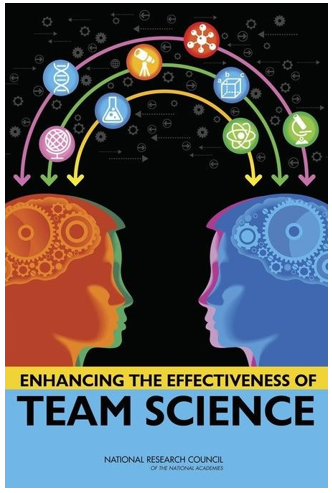
The National Research Council (2015) report concludes [26]. “Enhancing the Effectiveness of Team Science” drew upon it exten-sively to translate what we know from the science of team effectiveness that can be applied to enhance multidisciplinary team science and the scientific enterprise.” Broader influences-advancing research on the dynamics of team processes-can also be gleaned. This review is merely one voice among a chorus of voices that have been pushing to treat team processes as process dynamics, rather than static, emergent-state constructs. Teams as dynamic systems in which members align and adapt teamwork processes to fit shifting environmental and task demands was the conceptual foundation of the review and a key lens for our critique (see Figure 1).
Our science appears to be at an inflection point that will radically advance fundamental research on human process phenomena. Digital traces (i.e., the markers left behind through the use of e-mail, chat, social media, smart phone services, and the Internet; new measure¬ment tools (e.g., team interaction sensors; and innovative methodologies (e.g., computational modeling) enable direct research on team process dynamics.
Summary
In making use of the above models we will next approach the virtual reimagined healthcare clinic/space by applying the tools specifi-cally regarding the various stakeholders from physician NP, PA, nurse, aide, technician, blood tech, respiratory techs, radiology techs to the front desk secretaries and intake persons and billing and collections. All these must be included in for consultation seminars task adaptive workshops in defining the following six practices essential for improving whole systems.
• Define the whole system: the integration of all stakeholders in a shared vision for the clinic and mutual respect for each other despite credentials. The members of this group have Authority to act and make decisions in the organization Resources such as contacts money and time, Expertise in the issues to be considered Information about the topic at hand and how to make changes if need be.
• Matching the people to the task at hand
• Match the meeting’s length to the agenda
• Giving the people (equal) time to express themselves and grievances
• Manage the meeting using the D/I principles for example mixing and matching groups of stakeholders to present alternative persepc-tives with: Authority, responsibility, support with resources, and informed consent to take an action.
• 3x3 rule: getting any three levels and three functions into the same conversation on any issue of mutual concern. The gets better res-olution sooner.
In my next essay I will provide the case histories where this type of adaptation made differences in clinical outcomes.
References
- Weisbord, M. R. (1976). Organizational diagnosis: Six places to look for trouble with or without a theory. Group & Organization Studies, 1(4), 430-447.
- Burke, W. W. (2023). Organization change: Theory and practice. Sage publications.
- Dollinger, M. J., & Golden, P. A. (1992). Interorganizational and collective strategies in small firms: Environmental effects andperformance. Journal of management, 18(4), 695-715.
- Bromiley, P. (1991). Testing a causal model of corporate risk taking and performance. Academy of Management journal, 34(1), 37-59.
- Weisbord, M. R. (1976). Organizational diagnosis: Six places to look for trouble with or without a theory. Group & Organization Studies, 1(4), 430-447.
- Burke, W. W., & Litwin, G. H. (1992). A causal model of organizational performance and change. Journal of management, 18(3), 523-545.
- Weisbord, M. R. (1976). Organizational diagnosis: Six places to look for trouble with or without a theory. Group & Organization Studies, 1(4), 430-447.
- Published by Berrett-Koehler Publishers
- Sage Publications, Inc; Sixth edition (May 25, 2023).
- Dias technology review vo l. 7 no. 2 october 2010 - march 2011
- Dollinger, M. J., & Golden, P. A. (1992). Interorganizational and collective strategies in small firms: Environmental effects and performance. Journal of management, 18(4), 695-715.
- Bromiley, P. (1991). Testing a causal model of corporate risk taking and performance. Academy of Management journal, 34(1), 37-59.
- Matsuo, M., & Matsuo, T. (2017). The effect of diagnostic and interactive uses of management control systems and managerial coaching on reflection in teams. Journal of accounting & organizational change, 13(3), 410-424.
- Koole, S. L., Greenberg, J., & Pyszczynski, T. (2006). Introducing science to the psychology of the soul: Experimental existential psychology. Current Directions in Psychological Science, 15(5), 212-216.
- Kozlowski, S. W., & Ilgen, D. R. (2006). Enhancing the effectiveness of work groups and teams. Psychological science in the public interest, 7(3), 77-124.
- McGrath J. E. (1964). Social psychology: A brief introduction. New York, NY: Holt, Rinehart and Winston.
- Hackman J. R. (1987). The design of work teams. In Lorsch J. (Ed.), Handbook of organizational behavior. Englewood Cliffs, NJ: Prentice-Hall, 315–342.
- Zohar, D. M., & Hofmann, D. A. (2012). Organizational culture and climate. In S. W. J. Kozlowski (Ed.), The Oxford handbook of organizational psychology, Oxford University Press. 1, 643–666.
- Fiore, S. M., Smith-Jentsch, K. A., Salas, E., Warner, N., & Letsky, M. (2010). Towards an understanding of macrocognition in teams: developing and defining complex collaborative processes and products. Theoretical Issues in Ergonomics Science, 11(4), 250-271.
- Beal, D. J., Cohen, R. R., Burke, M. J., & McLendon, C. L. (2003). Cohesion and performance in groups: a meta-analytic clarification of construct relations. Journal of applied psychology, 88(6), 989.
- Knight, A. P., & Eisenkraft, N. (2015). Positive is usually good, negative is not always bad: The effects of group affect on social integration and task performance. Journal of Applied Psychology, 100(4), 1214.
- Cannon-Bowers, J. A., & Salas, E. E. (1998). Making decisions under stress: Implications for individual and team training (pp. xxiii-447). American psychological association.
- Tolston, M. T., Finomore, V., Funke, G. J., Mancusco V., & Brown R., et al. (2017). Effects of biasing information on the conceptual structure of team communications. Advances in Intelligent Systems and Computing, 488, 433–455.
- Rosenman, E. D., Ilgen, J. S., Shandro, J. R., Harper, A. L., & Fernandez, R. (2015). A systematic review of tools used to assess team leadership in health care action teams. Academic Medicine, 90(10), 1408-1422.
- Wooten, K. C., Calhoun, W. J., Bhavnani, S., Rose, R. M., & Ameredes, B., et al. (2015). Evolution of multidisciplinary translational teams (MTTs): insights for accelerating translational innovations. Clinical and translational science, 8(5), 542-552.
- National Research Council. (2015). Enhancing the effectiveness of team science.