

International Journal of Health Policy Planning(IJHPP)
ISSN: 2833-9320 | DOI: 10.33140/IJHPP
Impact Factor: 1.08


Research Article - (2025) Volume 4, Issue 1
Prevalence, Bacterial Profiles and Factors Associated with Surgical Site Infection among Post-Operative Mothers at Kawempe National Referral Hospital, Uganda
2Mulago National Referral Hospital, Uganda
3Kawempe National Referral Hospital, Uganda
Received Date: Jun 24, 2024 / Accepted Date: Jan 23, 2025 / Published Date: Feb 05, 2025
Copyright: ©Â©2025 Muyingo Yusuf, et al. This is an open-access article distributed under the terms of the Creative Commons Attribution License, which permits unrestricted use, distribution, and reproduction in any medium, provided the original author and source are credited.
Citation: Yusuf, M., Jawuhala, N., Nelson, N. F., Emmanuel, B., Muhammad, H., et, al. (2025). Prevalence, Bacterial Profiles and Factors Associated with Surgical Site Infection among Post-Operative Mothers at Kawempe National Referral Hospital, Uganda. Int J Health Policy Plann, 4(1), 01-09.
Abstract
Background: Surgical Site Infections (SSI) pose a global threat of morbidity and mortality in patients undergoing all types of operations and account for a fifth of all healthcare-associated infections and about 12% of maternal deaths in developing countries Uganda inclusive, Due to this outrageous increased number of mothers failing to heal-off their surgical site, therefore the study focused on determining the prevalence of Surgical site infections, commonest pathogens causing sepsis, the associated factors and the antimicrobial susceptibility at Kawempe National referral hospital.
Methods: Across-sectional study conducted from Jan - April 2023, with 202 consented participants using purposive sampling were administered with Structured questionnaires to collect data on associated factors. Swabs were collected, transported at 2-8oc and inoculated on Blood Agar and CLED Agar microbial plates, incubated in carbon dioxide at 37°C for 18-24 hours and examined macroscopically for potential pathogens. Gram staining followed by suitable biochemical tests and susceptibility testing on Meuller Hinton Agar (incubated at 370c for 18-24hrs) of the fresh isolates were done. Zones of inhibitions were measured in millimeters using a ruler and interpreted according to the inhibition zone sizes against the standard chart.
Results: The prevalence of surgical site infection was 30.7%. Having multiple parities (p-value 0.013), being over weight (p-value <0.001), more than two Vaginal examinations (p-value 0.011), vertical type of incision (p-value 0.026), and failure to administer antibiotics before surgery (p-value 0.020) all had p-value <0.05. The most common organism was Staphylococcus aureus and was most susceptible to Clindamycin and Vancomycin.
Conclusions: The prevalence of post-Caesarean wound sepsis was 30.7% mostly attributed to by Staphylococcus aureus. Having multiple parities, being overweight, more than two Vaginal examinations, vertical type of incision, and failure to administer antibiotics before surgery were all significantly and positively associated with post-Caesarean wound sepsis.
Keywords
Prevalence, Bacterial Profiles, Factors, Surgical Site Infection, Uganda
Background
Given the global burden of Health care associated infections is still unknown, recent evidence from studies has estimated hundreds of millions of patients affected from Health care associated infections significantly contributing to mortality, morbidity, quality of life and financial loss to patients and health care system. Nearly one third of patients that have undergone a surgical procedure have been reported with surgical site infections in low- and middle-income countries with a reported pooled incidence of 11.8%. furthermore, the endemic burden of SSIs has been shown to be 2 to 3 times significantly higher in Low- and middle-income countries compared to high income countries.
Recent studies conducted in high income countries estimated the magnitude of SSI at 20% in USA and 17% in Europe [1]. In Sub-Saharan African, SSI has been reported in up to 20% of women who give birth by Caesarean delivery developed SSI with 2.87% reported in Egypt and 10.9% in Tanzania [2]. In Uganda there is shortage of data on post-operative surgical site infection, however studies conducted on post cesarean wound sepsis in the southwestern hospitals have reported a prevalence of 15.5% with other studies reporting between 2.5 to 33.3%. Furthermore, women giving birth by cesarean section have shown a 5 to 20 times greater risk of postpartum sepsis than those giving birth vaginally [3].
Surgical site infections (SSI) pose a global threat of morbidity and mortality in patients undergoing all types of operations. These infections have been further associated to increased duration of hospitalization, high health care costs, morbidity, and ultimately a risk of death and Recent studies from the World Health Organization (WHO) have highlighted particularly high SSI rates in SSA. However, the magnitude of the problem is derived from a complex of operative procedures, therefore leaving the true burden of SSI quite unclear, but presumed to be greater [4].
To minimize the risk of post-operative surgical site infection, World Health Organization (WHO) recommends use of pre-Cesarean delivery prophylactic antibiotics 30 to 60 minutes prior to operative skin incision [5]. Strict adherence to antibiotic to prophylactic antibiotics and infection control guidelines has also been associated with a reduction in postpartum incidence of surgical site infections by approximately 70% [6].
In Uganda, a high prevalence of SSIs of 15.5% in a study conducted from western region as well our study is meant to provide an overview on the prevalence of SSIs in central region [3]. According to Joseph Isanga et al., & Muhumuza et al., Staphylococcus aureus, klebsiella pneumoniae, Escherichia coli and proteus species were the predominant species in SSIs and our study focused on finding of any displacement of the dominant bacterial profiles [3,7]. Therefore, this study set out to determine the prevalence and associated factors among post-operative mothers at Kawempe National referral hospital.
In summary a retrospective analysis and case note review conducted in Ethiopia indicated the magnitude of SSI was 8.6% with recent reports indicating the potential facilitating factors for SSI as a complex and interrelated [8,9]. Thus, our study focused on knowing the magnitude and the associated factors of SSI in postoperative mothers. High sensitivity to ceftriazone and ciprofloxacin and wide spread resistance to penicillin such as ampicillin has been reported and our study focused on to determine most susceptible antibacterial [3].
Methods And Materials
Study Area, Design, and Study Population
This was a cross-sectional study utilizing quantitative method of data collection. We conducted the study from 25th March to 10 April, 2023 in Kawempe National Referral Hospital which remains the largest public gynecological hospital in Uganda with an official bed capacity of 200, although it often houses over 1,000 patients. It is approximately 5 kilometers, by road, north of Mulago National Referral Hospital, along the Kampala-Gulu highway. This location is approximately 8 kilometers, north of the central business district of the city. The geographical coordinates of the hospital are; 0°21'43.0"N, 32°33'41.0"E (Latitude: 0.361944; Longitude: 32.561389).
Being a national referral hospital, more than 100 mothers daily are referred from various facilities at all levels within the country and the region, from countries like Rwanda, Tanzania, South Sudan and Democratic Republic of Congo (DRC). Currently, women delivering by Cesarean section at the National referral hospital receive a single dose of pre-operative antibiotics usually given within 30 minutes to one hour of skin incision as a policy. We recruited 202 mothers between 15-49 years of age who deliver by cesarean section and admitted in post-natal to up to 30 days post-surgery.
Sampling Size Determination
We determined the sample size using Kish Leslie (1965) formula with a 95% level of significance, the estimated proportion of mothers with surgical site infections in Mbarara Regional Referral Hospital study = 0.155 (15.5%) and maximum error of 5%. With the design effect of 1.96, we obtained a minimum sample size of 202 of mothers [3].
Sampling Procedure
We adopted a non-probability sampling method given the nature of the study participants. We used convenience sampling in a consecutive pattern where every mother met the inclusion criteria was enrolled into the study.
Inclusion Criteria
Mothers were selected based on the eligibility criteria below; Post cesarean mothers from 15- 49 years diagnosed with post cesarean infection on post-natal ward. Infection which occurred within 30 days following surgery. The mothers who presented with at least one of the following.
• Purulent drainage from the incision,
• Pain or tenderness
• Localized swelling,
• Redness, or heat
• Presence of an abscess
• Diagnosis of incision SSI made by a surgeon or attending clinician.
Exclusion Criteria
• Post cesarean mothers with wound infection that occurred after 30 days of the cesarean.
• Post cesarean mothers with sepsis who were very ill to participate in the study.
• Post cesarean mothers with sepsis but failed to consent to participate in the study.
Data Collection Procedure
We designed a survey interview guide capturing three generating factors of the surgical site infections. The questionnaire was administered to mother after obtaining informed consent from them to obtain information on social demographic characteristics, medical and obstetric characteristics.
Laboratory Analysis
We obtained swabs from the mothers, and introduced the samples on blood, chocolate and MacConkey agar medias on Day 1. we incubated Blood Agar and Chocolate Agar plates in carbon dioxide at 35-37°C for 24-48hours while MacConkey agar incubated in Oxygen at the same temperature and time. We examined all Plates macroscopically for potential pathogens. We performed Gram staining to identify the gram reaction of the isolated pathogens, followed by biochemical tests depending on the gram reaction of the pathogens using API (Analytical Profile Index) including catalase, optochin, bacitracin, coagulase, indole, citrate utilization, urea utilization, triple sugar iron agar fermentation, MR-VP test and oxidase.
We set Antimicrobial susceptibility profiles of bacterial isolates using Kirby Bauer disk diffusion method. We seeded Mueller Hinton agar plates with a suspension of freshly isolated bacteria of the same colony per plate. We aseptically placed Antimicrobial discs of the right potency on the plates and incubated at 35-370c for an overnight. We measured the zones of inhibitions in millimeters using a measuring ruler. We interpreted Susceptibility according to the inhibition zone sizes as sensitive, intermediate and resistant and reported according to standard operating procedures of the microbiology department in Mulago National Referral Hospital.
Ethical Considerations
Approval was obtained from Mbarara Faculty Research Committee (FRC) then submitted for review to Mulago National Referral Hospital research and ethics committee. Permission was then obtained from the Executive Director Kawempe National Referral hospital. All participants provided informed consent and were free to withdraw consent at any time during the study. Study documents were kept confidential to the public by not sharing to the parties which are not part of the study. Every participating mother was identified with a unique identifier code to avoid cross labeling or double date entry.
Data Management and Analysis
We entered the data into the Epi data software version v4.6.0.2 (Epi-Data, Odense, Denmark) with double entry, validation and cleaning. Data collected were coded, then exported to Microsoft excel and then imported into Stata software version 15.2 (Stata Corp, College Station, Texas, USA) for analysis. The out-come variable was the Prevalence of surgical site infections among post cesarean mothers which was dichotomised as “Sepsis or No sepsis”. Socio demographic characteristics were presented in the form of proportions. The association between SSI prevalence and risk factors was determined using normal logistic regression. Variables from bivariate analysis with p values ≤0.2 were considered for multivariable regression analysis. We built the model using a backward stepwise method until we remained with significant variables at p values of <0.05.
Results
We recruited 202 mothers of age range 16–42 years with a mean and standard deviation of 25.7 ± 5.4. The great majority of 183 (90.6%) and 120 (59.4%) women who had cesarean section were married and attained a minimum of secondary education respectively.
Prevalence of Surgical Site Infections
In this study comprising 202 participants, 30.7(62/202)% were diagnosed with post-Caesarean wound sepsis with gram positive, gram negative, and mixed gram reaction having the prevalence of 82.2(51/62)%, 6.5(4/62)% and 11.3(7/62)% respectively.
Bacterial Species in the Surgical Sites
In our study we found out that the most common bacterial isolate was Staphylococcus aureus, 42.9%, followed by Coagulase Negative Staphylococuss, 41.4%. Escherichia coli, 4.3% and Klebsiella species, 4.3%. The least was Proteus mirabilis among other isolates.
Factors Associated with Surgical Site Infections among Post-Operative Mothers
Socio-Demographic Characteristics
|
Variable |
Freq (202) |
Percent (%) |
|
Age(years) (Median 25)(R=16-42) |
||
|
16-20 |
41 |
20.3 |
|
21-25 |
66 |
32.7 |
|
26-30 |
54 |
26.7 |
|
31-35 |
33 |
16.3 |
|
>35 |
8 |
4.0 |
|
Parity (median=2) (R=1-5) |
||
|
1 |
95 |
47.3 |
|
>1 |
107 |
52.9 |
|
Marital Status |
||
|
Single |
18 |
8.9 |
|
Married |
183 |
90.6 |
|
Divorced |
1 |
0.5 |
|
Widow |
0 |
0 |
|
Education level |
||
|
None |
5 |
2.5 |
|
Primary |
48 |
23.7 |
|
Secondary |
120 |
59.4 |
|
Tertiary |
29 |
14.4 |
Table 1: A Table Showing Socio-Demographic Characteristics of Study Participants Attending Kawempe National Referral Hospital from Mar - April 2023
The median age was 25 years for all participants with age ranged from 16-42 years, with (183) 90.6% married, Majority of the study participants had formal education (198) 97.56% and most of the participants had more than 1 parities 107 (52.9%).
Mother Related Factors of Study Participants
About (198) 98.0% of the mothers were attending the Antenatal clinic, The BMI among participants was dominantly normal (190) 95.0%. The prevalence of HIV, and Hypertension were high i.e. (27)13.3% and (37)18.3 % respectively.
|
Variable |
Freq (202) |
Percent(%) |
|
Attended Antenatal |
||
|
NO |
4 |
2.0 |
|
YES |
198 |
98.0 |
|
BMI |
||
|
Normal |
190 |
95.0 |
|
Obese |
1 |
0.5 |
|
Overweight |
8 |
4.0 |
|
Underweight |
1 |
0.5 |
|
HIV |
||
|
Positive |
27 |
13.3 |
|
Negative |
170 |
84.2 |
|
Unknown Status |
5 |
2.5 |
|
Hypertensive patient |
||
|
NO |
165 |
81.7 |
|
YES |
37 |
18.3 |
|
Diabetes Mellitus patient |
||
|
NO |
202 |
100 |
|
YES |
0 |
0 |
Table 2: A Table Showing Mother Related Factors of Study Participants Attending Kawempe National Referral Hospital from Mar - April 2023
Obstetric Factors of Study Participants
|
Variable |
Freq. |
Percent (%) |
|
Duration of Operation (minutes)(n=186) (Median=60) (R=10-300) |
||
|
Up to 30 minutes |
70 |
37.6 |
|
30-60 minutes |
82 |
44.1 |
|
>60 minutes |
34 |
18.3 |
|
Number of Vaginal Exams (Median=4) (R=1-20) |
||
|
2 times |
120 |
59.4 |
|
>2 times |
82 |
40.6 |
|
Duration of Rapture of Membrane (hours) (n=65) (Median=6.5) (R=0.5-96) |
|
|
|
Within 12hrs |
37 |
56.9 |
|
>12hrs |
28 |
43.1 |
|
Duration of Labor (hours) (n=158) (Median 24) (R=0-420) |
||
|
12hrs |
62 |
39.2 |
|
>12hrs |
96 |
60.8 |
|
Type of Incision |
||
|
Vertical |
46 |
22.8 |
|
Transverse |
156 |
77.2 |
|
Antibiotic use before CS |
||
|
NO |
102 |
50.5 |
|
YES |
100 |
49.5 |
Table 3: A Table Showing Obstetric Factors of Study Participants Attending Kawempe National Referral Hospital from Mar -April 2023 (R - Range, n - Number of participants, Freq: Frequency, CS - Caesarean Section)
In our study, among (102) 50.5% of patients, there were no antibiotics given before surgery. Premature rupture of membranes was mostly seen within 12 hours. Mostly of the operations were done with in a turnaround time of 1 hour (152) 81.7%. It was noticed that (156) 77.2% mothers were transversely incised.
Multivariate Logistic Regression Analysis of Post-Caesarean Wound Sepsis on Associated Factors among Patients Attending Kawempe National Referral Hospital
The analysis of post-Caesarean wound sepsis on associated factors among patients attending Kawempe National Referral Hospital was done on all factors which showed p-value of <0.200 on bivariate analysis using STATA version 15.2 as shown in the table 4 below.
|
Risk Factor |
Sepsis (62) |
No Sepsis(140) |
P-value |
CoR(95% CI) |
AoR(95% CI) |
|
Parity |
|||||
|
1 |
21(10.4) |
74(36.6) |
|
Ref |
|
|
>1 |
41(20.3) |
66(32.7) |
0.013 |
0.46(0.25,0.85) |
0.53(0.32,0.87) |
|
BMI |
|||||
|
Normal |
55(27.5) |
135(67.5) |
|
Ref |
|
|
Obese |
0(0.00) |
1(0.5) |
0.900 |
1.23(0.05,30.63) |
|
|
Overweight |
7(3.5) |
1(0.5) |
<0.001 |
0.06 (0.01, 0.48) |
0.42(0.20,0.88) |
|
Underweight |
0(0.00) |
1(0.5) |
0.900 |
1.23(0.05,30.63) |
|
|
Number of Vaginal Exams |
|||||
|
2 times |
23(11.4) |
79(39.1) |
|
Ref |
|
|
>2 times |
39(19.3) |
61(30.2) |
0.011 |
0.46(0.25,0.84) |
0.52(0.32,0.86) |
|
Type of Incision |
|||||
|
Vertical |
8(4.0) |
38(18.8) |
0.026 |
Ref |
|
|
Transverse |
54(26.7) |
102(50.5) |
|
0.40 (0.17, 0.91) |
0.51(0.28,0.91) |
|
Antibiotic use before CS |
|||||
|
NO |
44(21.8) |
75(37.1) |
0.020 |
Ref |
|
|
YES |
18(8.9) |
65(32.2) |
|
2.12 (1.12, 4.02) |
1.39(0.85,2.28) |
AoR: Adjusted Odds Ratio, CI: Confidence Interval, CoR: Crude Odds Ratio
Table 4: A Table Showing Multivariate Logistic Regression Analysis of Post-Caesarean Wound Sepsis on Associated Factors among Patients Attending Kawempe National Referral Hospital from Mar - April 2023
On adjusted analysis: Post cesarean section mothers who had first pregnancy were 53% less likely of developing post-cesarean wound sepsis compared to those in who were holding multiple parities (AoR = 0.53 95% CI 0.32, 0.87).
Post cesarean section mothers whose BMI was underweight, Normal and Obese were 42% less likely of developing post-cesarean wound sepsis compared to those whose BMI were overweight (AoR = 0.42 95% CI 0.20, 0.88).
Post cesarean section mothers who experienced two and less vaginal examinations were 52% less likely to develop post-cesarean wound sepsis compared to those in whom more than two vaginal examinations were done (AoR = 0.52 95% CI 0.32, 0.86).
Post cesarean section mothers who experienced transverse incision were 51% less likely of developing post-cesarean wound sepsis compared to those in whom incision was vertically done (AoR = 0.51 95% CI 0.28, 0.91).
Post cesarean section mothers who were not administered with antibiotics before the cesarean section were 39% more likely to develop post-cesarean wound sepsis compared to those who received antibiotics prior to the cesarean section procedure (AoR = 1.39 95% CI 0.85, 2.28).
Antimicrobial Activity of Isolated Bacterial Profiles Causing Surgical Site Infections among Post-Operative Mothers at Kawempe National Referral Hospital
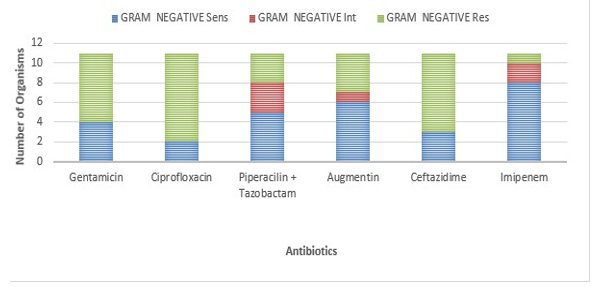
Figure 1: Bar Graph Showing Gram Negatives Susceptibility Testing to Antibiotics (Number of Organisms against Antibiotics) among Patients Attending Kawempe National Referral Hospital from Mar - April 2023
As shown in Figure 1, Imipenem was the most susceptible antibacterial, followed by Augmentin to all gram-negative isolates in the study.

S - Sensitive, I - Intermediate, R - Resistant
Figure 2: Bar Graph Showing Gram Negative Isolates susceptibility testing to antibiotics (Number of organisms against Antibiotics), Among Patients Attending Kawempe National Referral Hospital from Mar - April 2023.
As shown in Figure 2, E. coli was more susceptible to Gentamicin and Imipenem, Klebsiella spp and other coliforms were more susceptible to Agumentin and Imipenem.
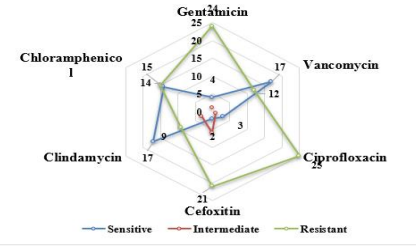
Figure 3: A Radar Chart Showing Staphylococcus Aureus Susceptibility Testing to Antibiotics (Number of Organisms against Antibiotics) Among Patients Attending Kawempe National Referral Hospital from Mar - April 2023
As shown in Figure 3, Vancomycin and clindamycin was the most susceptible antibiotic to Staphylococcus Aureus.
Discussion and Results
Prevalence of Surgical Site Infection in Post-Operative Mothers at Kawempe National Referral Hospital
In our study the overall prevalence of post-Caesarean wound sepsis was 30.7%. This was much higher than the reported sub-Saharan Africa prevalence of 7.3% [10]. The discrepancy could be due to small area of coverage within the population by the researchers they considered Burundi, DRC and Sierra Leone and generalized it to all Sub-Saharan Africa. In addition, the current prevalence is also higher than that of 16.8% done in Hoima regional referral Hospital [7]. This could be due to fact that Kawempe National Referral Hospital is one of the biggest national referral Hospital in East Africa handling more cases than Hoima Regional Referral Hospital.
Bacterial Species from Exudates on Wounds of Post-Operative Mothers at Kawempe National Referral Hospital
We found common bacteria being Staphylococcus aureus followed by E. coli. These findings agree with findings in western Uganda in which Staphylococcus aureus and coliforms have been shown to be common pathogens in post-Caesarean wound sepsis [7]. In addition, in the University of Port Harcourt teaching hospital, Staphylococcus aureus and E. coli were found to be common pathogens in sepsis, showing similarities in the common pathogens of Tanzania and Uganda, this could be attributed to the fact that Staphylococcus is a normal skin flora, and could have contaminated the wound during cesarian section since most of the work was handled by doctors who possibly had poor surgical techniques [11,12]. However findings are different from the study done in Mnazi Mmoja Hospital in Zanzibar, Tanzania, where the commonest organism isolated was Pseudomonas aeruginosa, this could be due to the difference in the standard of Hygiene (poor aseptic technique) as evidenced in this Hospital, since one nurse was responsible for cleaning and dressing 15 post-operative wounds hence putting patients at risk of cross infection [13].
Factors Associated with Surgical Site Infections among Post-Operative Mothers at Kawempe National Referral Hospital
This study found out people who are highly educated tend to have soft life that predisposes them to obesity and hypertension that may affect wound healing after cesarean section which was partially in line with the study done in Mulago Hospital by Nansikombi [14]. This may be worsened by the feeding habits of the formally educated. On the other hand, it is hypothesized that those who have not gone to school strictly follow the "Dos and Don'ts” concerning their health care and they always eat natural foods hence reduced morbidity. These findings call for the need to sensitize the public especially the highly educated about poor adherence, self-prescription/ medication, Sedentary life style and the dangers of strictly not following orders from the medical personnel because ideally high levels of education are supposed to impact on health positively and not negatively as shown by the study findings.
According to this study, young age and null parity had no influence on post cesarean wound infection as Muhumuza et al., discovered [7]. Muhumuza et al., also established that post cesarean wound infection was common among single mothers as for a study conducted in Ethiopia [7]. Aweze et al., yet this study did not show any association between marital status and post cesarean wound infection as by Nansikombi et al., discovered [14,15]. This may be explained by the under representation of the young and single mothers in the current study. In addition, our study stated that overweight mothers were at great risk to acquire post cesarean wound infection which is in line with Hansa et al., Ghuman and Ezechi, et al [16]. However, our study did not agree with Muhumuza, et al., and Nansikombi [7,14].
Furthermore, Mothers who experienced more than two vaginal examinations had increased risk of post caesarean sepsis compared to mothers who experienced less than 2 vaginal examinations. Our findings are consistent with findings by Muhumuza et al., among mothers attending Hoima Regional referral Hospital [7]. The similarity is the highest delivery rate between the two hospitals; Kawempe National Referral Hospital and Hoima Regional Referral Hospital. The same findings were obtained by Hassan et al obtained among mothers attending Port Harcourt Teaching Hospital, Southern Nigeria [11]. Frequent vaginal examinations are likely to introduce microbial pathogens during examination into uterus through the vagina.
Accordingly, among obstetric factors, transverse type of skin incision was found to be protective against post cesarean wound infection and this is in line with cross-sectional studies carried out in Mulago National Referral Hospital Nansikombi and in Ethiopia Azeez et al., who also found out that mothers who had vertical skin incision were at higher risk of getting post cesarean wound infection compared to those who had transverse type of skin incision (p = 0.034) [14,15]. This could be attributed to the type of skin incision that is used in cases of cesarean sections that parallels the course of the segmental nerves that are cut hence minimizing muscle parenthesis and paralysis post operatively that could result into reduced activity of the muscle and reduced blood supply to incision site hence delayed healing and wound infection. More to that antibiotics prophylaxis was found to be protective against post cesarean wound infection and this is in line with cross-sectional study carried out in Ethiopia but was against a study conducted in Hoima Regional referral Hospital where mothers who were given antibiotics before surgery were 2.1 times more likely to develop post-cesarian wound sepsis compared to those who never received antibiotic [7,15].
Antimicrobial Activity of Isolated Bacterial Profiles Causing Surgical Site Infections among Post-Operative Mothers at Kawempe National Referral Hospital
In our study, coliforms showed high susceptibility to Imipenem and this is comparable to a study done in Mbale Regional Referral Hospital, Eastern Uganda, as well as in the study conducted from Hoima Regional Referral Hospital [7,17]. In the same study, Staphylococcus aureus showed high susceptibility to Clindamycin and Vancomycin which is contrary to other studies from Hoima and Mbale regional Referral hospital which showed high sensitivity to Ciprofloxacin.
Furthermore, the study also showed that Staphylococcus aureus was resistant to Ciprofloxacin, Gentamycin, and Cefoxitin while coliforms were resistant to Ciprofloxacin, Ceftazidime, and Gentamicin. This could be attributed to the fact that these drugs were the most erroneously prescribed medications among the study population in Kawempe National Referral Hospital. These findings agree with a study conducted in Hoima [7].
Conclusion and Recommendations
Conclusions
Post-Caesarean wound sepsis is a health challenge at Kawempe Regional Referral Hospital as revealed by a high prevalence according to our study findings; Staphylococcus aureus were responsible for most infections at the study area. Having multiple parities, overweight, multiple Vaginal examinations, vertical type of incision, and failure to administer antibiotics before surgery are significantly associated with post-Caesarean wound sepsis.
Recommendations
We recommend to put emphasis on personal genital hygiene, having mandatory administration of antibiotics prior surgery, ensuring maximum attention to Mothers with multiple parities, practicing life style change to minimize weight gain, aseptic vaginal examination practices, and limiting vertical incision. There should be notification of health workers about the high prevalence of post Caesarean sepsis at this hospital to devise means of controlling it by ensuring maximum attention to Mothers with multiple parities, routine checking of mothers BMI, aseptic vaginal examination practices, limiting vertical incision. Additionally, further studies should be carried out to involve swabbing theater and aerial space to correlate environmental contamination and post-Caesarean wound sepsis.
Study Limitations
The lack of consistency of SSI definitions, follow-up methods and time-periods makes determining the current exact prevalence difficult. This study shares the limitations of cross-sectional studies and hence can’t establish a temporal relationship between surgical site infections and explanatory variables. Since the study is prospectively done at a government hospital, some of the variables are not fully documented.
References
- Curcio, D., Cane, A., Fernández, F., & Correa, J. (2019). Surgical site infection in elective clean and clean-contaminated surgeries in developing countries. International Journal of Infectious Diseases, 80, 34-45.
- Adane, F., Mulu, A., Seyoum, G., Gebrie, A., & Lake, A. (2019). Prevalence and root causes of surgical site infection among women undergoing caesarean section in Ethiopia: a systematic review and meta-analysis. Patient safety in surgery, 13, 1-10.
- Isanga, J., Emmanuel, B., Musa, K., Julius, M., Tibaijuka, L., Ronald, M., & Ngonzi, J. (2020). The prevalence, risk factors, and bacterial profile of cesarean surgical site infections at a University Teaching Hospital in South Western Uganda. International Journal of Women's Health Care, 5(1), 5-10.
- Abiodun, O. M., & Balogun, O. R. (2009). Sexual activity and contraceptive use among young female students of tertiary educational institutions in Ilorin, Nigeria. Contraception, 79(2), 146-149.
- Adaji, J. A., Akaba, G. O., Isah, A. Y., & Yunusa, T. (2020). Short versus long-term antibiotic prophylaxis in cesarean section: A randomized clinical trial. Nigerian Medical Journal, 61(4), 173-179.
- Temming, L. A., Raghuraman, N., Carter, E. B., Stout, M. J., Rampersad, R. M., Macones, G. A., ... & Tuuli, M. G. (2017). Impact of evidence-based interventions on wound complications after cesarean delivery. American journal of obstetrics and gynecology, 217(4), 449-e1.
- Muhumuza, I., Lavingia, A. Z., Tayebwa, B., Ahmed, A. A., Koriow, F. M., Tetty, V. O., ... & Ssebuwufu, R. (2020). Post Caesarean Wound sepsis and associated factors among patients attending a rural regional referral hospital in Western Uganda: A cross-sectional study.
- Yerba, K., Failoc-Rojas, V., Zeña-Ñañez, S., & Valladares-Garrido, M. (2020). Factors associated with surgical site infection in post-cesarean section: a case-control study in a Peruvian hospital. Ethiopian journal of health sciences, 30(1).
- Lukabwe, H., Kajabwangu, R., Mugisha, D., Mayengo, H., Munyanderu, B., Baluku, A., ... & Ngonzi, J. (2022). Effectiveness of preoperative bath using chloroxylenol antiseptic soap on the incidence of post emergency cesarean section surgical site infection at Mbarara Regional Referral hospital, Uganda: a randomized controlled trial. Pan African Medical Journal, 41(1).
- Carshon-Marsh, R., Squire, J. S., Kamara, K. N., Sargsyan, A., Delamou, A., Camara, B. S., ... & Kenneh, S. (2022). Incidence of surgical site infection and use of antibiotics among patients who underwent caesarean section and herniorrhaphy at a regional referral hospital, Sierra Leone. International Journal of Environmental Research and Public Health, 19(7), 4048.
- John, C. O., & Omoruyi, S. A. PREVALENCE AND PATTERN OF POST CAESAREAN SECTION WOUND SEPSIS AT THE UNIVERSITY OF PORT HARCOURT TEACHING HOSPITAL: A 5 YEAR REVIEW.
- Devi, S. L., & Durga, D. V. K. (2018). Surgical site infections post cesarean section. International Journal of Reproduction, Contraception, Obstetrics and Gynecology, 7(6), 2486-2490.
- Aboud, S., Ali, S. S., & Kibwana, U. O. (2022). Bacterial Profile and Antibiogram of Pathogens Causing Surgical Site Infections at Mnazi Mmoja Hospital in Zanzibar, Tanzania.
- Nansikombi, S. (2015). Risk factors for post cesarean wound infection among mothers at Mulago national referral hospital-Uganda (Doctoral dissertation, International Health Sciences University).
- Azeze, G. G., & Bizuneh, A. D. (2019). Surgical site infection and its associated factors following cesarean section in Ethiopia: a cross-sectional study. BMC research notes, 12, 1-6.
- Ezechi, O. C., Edet, A., Akinlade, H., Gab-Okafor, C. V., & Herbertson, E. (2009). Incidence and risk factors for caesarean wound infection in Lagos Nigeria. BMC research notes, 2, 1-5.
- Matinyi, S., Enoch, M., Akia, D., Byaruhanga, V., Masereka, E., Ekeu, I., & Atuheire, C. (2018). Contamination of microbial pathogens and their antimicrobial pattern in operating theatres of peri-urban eastern Uganda: a cross-sectional study. BMC infectious diseases, 18, 1-9.