

International Journal of Botany and Horticulture Research(IJBHR)
ISSN: 2994-872X | DOI: 10.33140/IJBHR
Impact Factor: 0.98

Research Article - (2024) Volume 2, Issue 2
Post-Harvest Physiological Studies in Aonla Varieties Under Ambient Temperature
2Associate Professors, Regional Research Station, TNAU, Aruppukottai, India
3Professor and Head, Regional Research Station, TNAU, Aruppukottai, India
Received Date: Aug 01, 2024 / Accepted Date: Aug 19, 2024 / Published Date: Sep 04, 2024
Copyright: ©©2024 Chelvi Ramesh, et al. This is an open-access article distributed under the terms of the Creative Commons Attribution License, which permits unrestricted use, distribution, and reproduction in any medium, provided the original author and source are credited.
Citation: Surendar, K. K., Balasubramanian, P., Akila, R., Ramesh, C. (2024). Post-Harvest Physiological Studies in Aonla Varieties Under Ambient Temperature. Int J Bot Hor Res, 2(2), 01-05.
Abstract
The experiment was laid in a Factorial Completely Randomized Design with six replications. The plots had four treatments viz., T1 - 0 day, T2 - 4 days, T3 - 8 days, T4 -12 days, T5 -16 days. The varieties BSR 1, NA7, Kanchan and Chakaiya were used as experimental material with all normal cultural practices followed for aonla cultivation during 2023-2024. The post-harvest physiological studies like., TSS (°Brix) acidity (pH) ascorbic acid content (mg/100g pulp) physiological loss in weight (%) and percentage in decay loss were recorded. The Aonla variety BSR 1 registered highest mean TSS (12.33°Brix), Acidity (3.33%), Ascorbic acid (561.13mg/100g), lowest mean Physiological loss in weight (5.29%) at 16 days storage period and lesser percent decay loss (19.85%).
Keywords
TSS, Acidity, PWL, Post-Harvest Studies, Physiological Parameters, Aonla
Introduction
The Indian gooseberry (Emblica officinalis Gaertn. Syn. Phyllanthus emblica) is a member of the Euphorbiacea family and is known as Aonla in India. It is rich source of vitamin C and its ascorbic acid level is second only to the Barbados cherry [1]. Due to its highly acidic and astringent nature, consumers do not prefer this fruit in its natural state, thus it is usually eaten in processed forms such as jam, jelly, murabba, candy, pickles, herbal jam, sauce, and so forth [2]. It is commercially utilised to make ayurveda tonics such as Chavyanprash and triphala [3,4]. Aonla fruits are highly perishable and difficult to store or transport across long distances. As a result, it requires quick marketing and utilization. It becomes necessary to keep the fruits for a long time in order to get a decent return and avoid market glut. The shelf life of aonla fruits could be extended by reducing the respiration rate, water loss through transpiration [5] and limiting various post-harvest diseases mainly blue mould (Penicillium citrinum) and other diseases caused by Rhizopus, Aspergillus and Syncephalastrum racemosum [6]. Plant growth regulators and certain chemicals play a vital role for short period storage [5]. To combat post-harvest losses in perishable commodities such as aonla, the current study looked into the post harvest studies on the physiological parameters of aonla fruits during different days after storage period.
Materials and Methods
Site of Study: Fresh fruits of aonla cv. BSR1, NA7, Kanchan and Chakaiya of uniform shape, size, colour and free from bruises were harvested from Regional research Station, Aruppukottai research field trial (Field Number B1) at the physiological mature stage during the morning hours and brought to the laboratory immediately and further investigation was carried out in Laboratory, Regional research Station, Aruppukottai during 2022 to 2024.
Treatments and Methods of Analysis: The selected fruits were stored in the room temperature. The experiment was laid in a Factorial Completely Randomized Design with six replications. The plots had five treatments viz., T1- 0 day, T2- 4 days, T3- 8 days, T4-12 days, T5-16 days. All the parameters were analysed at an intervals of 0 days up to 16 days. The physiological loss in weight was calculated by the following formula. expressed in percentage. The change in colour during the storage period was determined on visual basis.

Statistical Analysis: The experiment was carried out in Factorial Completely Randomized Design with six replications for analysis of variance (ANOVA). The data were analysed with the help of OPSTAT statistical software.
Results and Discussion
The data on TSS (°Brix) were recorded in four varieties in different days interval at ambient temperature. Comparing the four varieties, BSR1 had higher TSS mean values 12.33°Brix, which was followed by NA7 10.45°Brix than the other Aonla varieties. The Lowest TSS mean values registered in Kanchan 8.29°Brix.
Table 1: Varietal Variation in TSS (°Brix) of Aonla Fruits at Ambient Temperature
|
Varieties |
0 days |
4 days |
8 days |
12 days |
16 days |
Mean |
|
BSR 1 |
11.85 |
12.09 |
12.33 |
12.57 |
12.83 |
12.33 |
|
NA 7 |
10.04 |
10.24 |
10.44 |
10.65 |
10.86 |
10.45 |
|
KANCHAN |
7.97 |
8.13 |
8.29 |
8.46 |
8.63 |
8.29 |
|
CHAKAIYA |
8.77 |
8.94 |
9.12 |
9.30 |
9.49 |
9.13 |
|
Mean |
9.66 |
9.85 |
10.05 |
10.25 |
10.45 |
|
|
SEd |
CD ( 0.05) |
|||||
|
V |
0.09812 |
V |
0.19831 |
|||
|
D |
0.10970 |
D |
0.22171 |
|||
|
V x D |
0.21940 |
VxD |
0.44343 |
|||
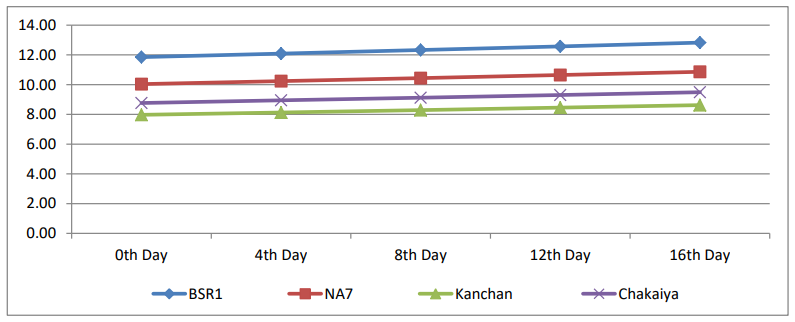
Table 2: Varietal Variations in Acidity (pH) of Aonla Fruits at Ambient Temperature
|
Varieties |
0 days |
4 days |
8 days |
12 days |
16 days |
Mean |
|
BSR 1 |
3.20 |
3.26 |
3.33 |
3.39 |
3.47 |
3.33 |
|
NA 7 |
2.71 |
2.76 |
2.82 |
2.87 |
2.94 |
2.82 |
|
KANCHAN |
2.15 |
2.20 |
2.24 |
2.28 |
2.34 |
2.24 |
|
CHAKAIYA |
2.36 |
2.42 |
2.46 |
2.51 |
2.56 |
2.46 |
|
Mean |
2.61 |
2.66 |
2.71 |
2.76 |
2.83 |
|
|
SEd |
CD ( 0.05) |
|||||
|
V |
0.02434 |
V |
0.04919 |
|||
|
D |
0.02721 |
D |
0.05499 |
|||
|
V x D |
0.05442 |
V x D |
0.10998 |
|||
The result on acidity was recorded in four varieties in different days interval at ambient temperature. Among the different aonla varieties BSR1 maintained its superiority in acidity (pH) 3.47 followed by NA7 2.94 at 16 days storage period. The Lowest acidity values registered in chakaiya 2.34 at 16 days storage period.
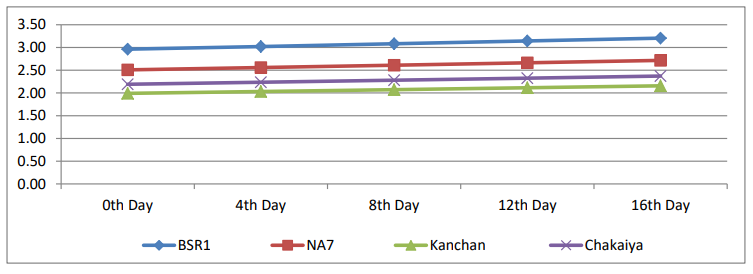
Table 3: Varietal Variations in Ascorbic Acid Content (Mg/100g Pulp) of Aonla Fruits at Ambient Temperature
|
Varieties |
0 days |
4 days |
8 days |
12 days |
16 days |
Mean |
||
|
BSR 1 |
601.47 |
589.47 |
571.74 |
543.20 |
499.75 |
561.13 |
||
|
NA 7 |
512.57 |
502.31 |
487.19 |
462.89 |
425.84 |
478.16 |
||
|
KANCHAN |
469.80 |
460.50 |
446.65 |
424.25 |
390.39 |
438.32 |
||
|
CHAKAIYA |
508.42 |
498.28 |
483.28 |
459.11 |
422.43 |
474.3 |
||
|
Mean |
523.07 |
512.64 |
497.22 |
472.36 |
434.6 |
|
||
|
SEd |
CD ( 0.05) |
|||||||
|
V |
4.50735 |
V |
9.10989 |
|||||
|
D |
5.03937 |
D |
10.18517 |
|||||
|
VxD |
10.07875 |
VxD |
20.37034 |
|||||
The result on ascorbic acid content (mg/100g pulp) was recorded in four varieties in different days interval at ambient temperature. Comparing the four varieties BSR1 registered higher Ascorbic acid content 499.75 mg / 100 g pulp, which was followed by NA7 (425.84 mg / 100 +g of pulp) at 16 days storage period. The Lowest ascorbic acid content registered in Kanchan 390.39 mg / 100g of Pulp at 16 days storage period.
Table 4: Varietal Variation in Physiological loss in Weight (%) of Aonla Fruits at Ambient Temperature
|
Varieties |
0-4 days |
5-8 days |
9-12 days |
13-16 days |
Mean |
|||
|
BSR 1 |
2.90 |
6.03 |
7.95 |
4.26 |
5.29 |
|||
|
NA 7 |
5.46 |
9.58 |
14.67 |
14.15 |
10.97 |
|||
|
KANCHAN |
5.58 |
8.99 |
11.91 |
12.33 |
9.7 |
|||
|
CHAKAIYA |
5.46 |
10.82 |
13.16 |
11.20 |
10.16 |
|||
|
Mean |
4.85 |
8.86 |
11.92 |
10.49 |
|
|||
|
SEd |
CD ( 0.05) |
|||||||
|
V |
0.13109 |
V |
0.26702 |
|||||
|
D |
0.13109 |
D |
0.26702 |
|||||
|
V x D |
0.26217 |
VxD |
0.53404 |
|||||
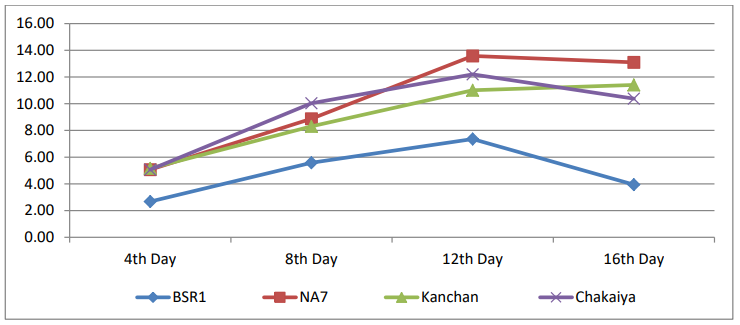
The post harvest studies on physiological loss in weight (%) were recorded in four aonla varieties. Among the different aonla varieties BSR1 registered less mean physiological loss in weight (4.26) than other anola varieties at 16 days storage period. These results were in accordance with the report of Singh and Neeraj stated that, the increased physiological weight loss in fruits must be due to various physiological mechanisms such as upsurged respiration and transpiration rate [2,7]. Among the different aonla varieties BSR1 registered less mean physiological loss in weight (4.26) which might be due to characteristics by limiting the disintegration of cytoplasmic membranes, mitochondria and endoplasmic reticulum, which results into enhancement of shelf life of aonla [8].
Table 5: Varietal Variation (%) in Decay Loss of Aonla Fruits at Ambient Temperature
|
Varieties |
1-4 days |
1-8 days |
1-12 days |
1-16 days |
|
BSR 1 |
0.00 |
8.86 |
19.85 |
100 |
|
NA 7 |
0.00 |
17.06 |
34.99 |
100 |
|
KANCHAN |
0.00 |
17.74 |
34.08 |
100 |
|
CHAKAIYA |
0.00 |
9.93 |
20.76 |
100 |
|
Mean |
0.00 |
13.4 |
27.42 |
100 |
|
SEd |
CD ( 0.05) |
|||
|
V |
0.66425 |
V |
1.35307 |
|
|
D |
0.66425 |
D |
1.35307 |
|
|
V x D |
1.32850 |
VxD |
2.70615 |
|
Among the Aonla varieties NA7 registered higher percent decay loss (34.99%) than other Aonla varieties at 12 days storage period. The Lowest percent decay loss registered in BSR 1 (19.85%). This is because BSR1 variety resistance against pathogens like fungi which are causative factors for rotting of fruits and in maintaining the cell wall integrity and maintain the shelf life of fruits for longer period [9].
Conclusion
From the present investigation, it can be concluded that, the Aonla variety BSR 1 registered highest mean TSS (12.33ºBrix), Acidity (3.33%), Ascorbic acid (561.13mg/100g), lowest mean Physiological loss in weight (5.29%) at 16 days storage period and lesser percent decay loss (19.85%) [10].
References
- Chadha, K. L. (2001). Handbook of horticulture.
- Singh, A. K., Shukla, H. S., Kumar, H., Singh, V., & Singh,R. R. (2015). Effect of gibberelic acid and calcium nitrate on the physiological and physico-chemical changes and shelf-life of aonla (Emblica officinalis Gaertn) fruits. International Journal of Farm Sciences, 5(2), 140-145.
- Goyal, A., & Singh, N. P. (2007). Consumer perception about fast food in India: an exploratory study. British food journal, 109(2), 182-195.
- Singh, J., Koul, R., Bhat, A., Sood, M., & Bandral, J. D. (2012). Comparative studies on compositional changes in aonla supari (Emblica officinalis) during storage. Annals of Food Science and Technology, 13(1), 19-24.
- Dhumal, S. S., Karale, A. R., Garande, V. K., Patil, B. T., Masalkar, S. D., & Kshirsagar, D. B. (2008). Shelf life of aonla fruits: Influenced by post harvest treatments and packaging materials. Indian Journal of Agricultural Research, 42(3), 189-194.
- Singh, B. P., Pandey, G., Sarolia, D. K., Pandey, M. K., & Pathak, R. K. (2005). Shelf-life evaluation of aonla cultivars. Indian Journal of Horticulture, 62(2), 137-140.
- Neeraj, N., Surinder Kumar, S. K., Jitender Kumar, J. K., & Godara, R. K. (2002). Effect of different polythene bags on phenols, chlorophyll and carotenoid content of aonla fruits during room temperature storage.
- Dhumal, R. S., Biradar, S. V., Yamamura, S., Paradkar, A. R., & York, P. (2008). Preparation of amorphous cefuroxime axetil nanoparticles by sonoprecipitation for enhancement of bioavailability. European Journal of Pharmaceutics and Biopharmaceutics, 70(1), 109-115.
- Lodhi, D. K., & Tiwari, R. A. J. E. S. H. (2017). Effect of calcium nitrate on physico-chemical changes and shelf-life of aonla (Emblica officinalis Gaertn.) fruits. Annals of plant and soil research, 19(1), 32-36.
- Goyal, R. K., Patil, R. T., Kingsly, A. R. P., Himanshu Walia,H. W., & Pradeep Kumar, P. K. (2008). Status of post-harvest technology of aonla in India-a review.