

World Journal of Tourism Management(WJTM)
ISSN: 3070-4030 | DOI: 10.33140/WJTM


Research Article - (2026) Volume 2, Issue 1
Policy and Business Models for National Electric Boat Transportation System, Case Study: Thousand Islands, Indonesia
Received Date: Jan 09, 2026 / Accepted Date: Feb 03, 2026 / Published Date: Feb 11, 2026
Copyright: ©2026 Kelvin Narada Gunawan, et al. This is an open-access article distributed under the terms of the Creative Commons Attribution License, which permits unrestricted use, distribution, and reproduction in any medium, provided the original author and source are credited.
Citation: Gunawan, K. N., Putri, S. A. A., Arifa, S. H. (2026). Policy and Business Models for National Electric Boat Transportation System, Case Study: Thousand Islands, Indonesia. World J Tourism Mgm, 2(1), 01-21.
Abstract
Aligned with Indonesia’s ASTACITA agenda on electrification, renewable energy, and the Koperasi Desa Merah Putih solar initiative, electric boats powered by batteries and solar energy offer a low-emission and cost-efficient alternative for short-distance coastal transport. This study examines suitable policy and business models for national electric boat deployment, with the Thousand Islands (Kepulauan Seribu) proposed as a prototype site. The archipelago of over 100 small islands north of Jakarta, designated in the Jakarta Spatial Plan (RTRW) as a strategic environmental region, functions as both a marine conservation and tourism area with potential for sustainable marine resource development. Despite its strategic position, the region faces persistent challenges in inter-island connectivity and the delivery of essential goods, largely due to its dependence on fossil-fuel-based marine transport that is both costly and environmentally unsustainable. Initial survey findings reveal that although transportation routes operated by the Department of Transportation already exist, they primarily connect the islands to Jakarta and do not adequately facilitate inter-island movement. As a result, residents who need to travel between islands often face long detours and difficult transit connections, relying instead on informal small-boat services that operate without fixed schedules or safety assurance. This study assesses three dimensions: (1) infrastructure and physical suitability, (2) social acceptance and regulatory readiness, and (3) economic viability. The initial findings indicate that calm waters and short travel distances support technical feasibility, although charging infrastructure requires development. On the social aspect, communities show interest in more affordable and sustainable options, while safety and range remain concerns. On the economic aspect, the system demonstrates strong viability under a Public–Private Partnership (PPP) model, with a total investment of approximately Rp 512.8 billion. Operational costs are projected to be 40–60% lower than conventional diesel vessels, largely due to reduced fuel and maintenance expenditures. Financial modeling yields an Internal Rate of Return (IRR) of 12.37%, and an average Return on Investment (ROI) of 17.52%, with a payback period of around 9 years. Moreover, electric boats also show a higher long-term profit margin potential, especially when combined with logistics transport and eco-tourism services. Energy efficiency gains reach up to 70%, significantly reducing lifecycle emissions and operating risks related to fuel price volatility, while revenue diversification through logistics, tourism, and carbon credits enhances long-term viability. This study recommends a phased implementation strategy beginning with high-demand routes, investment in solar charging infrastructure, and the development of a supportive regulatory and financial framework.
Keywords
Policy and Business Models, National Electric Boat, Public-Private Partnership (Ppp), Renewable Energy Transition, Kepulauan Seribu
Introduction
Electric boats, powered by batteries and supported by renewable energy such as solar power, provide a low-emission and cost- efficient alternative, particularly suited for short-distance, low- wake coastal routes. Electric boat systems can reduce operating costs, cut lifecycle emissions by up to 70%, and foster eco-tourism. The adoption of electric marine transportation is strongly aligned with Indonesia’s national development agenda that emphasizes energy transition, electrification, and renewable integration. It also resonates with emerging cooperative-based initiatives for community-driven renewable energy adoption.The Thousand Islands (Kepulauan Seribu) is an archipelago of over 100 small islands located north of Jakarta. Despite its ecological value and policy designation as a strategic environmental region, the area faces persistent development barriers.
Initial survey findings indicate that connectivity between islands remains weak: transportation routes operated by the Department of Transportation primarily link the islands to Jakarta, while inter- island services are limited. Residents who wish to travel between islands often face long detours, difficult transit, and must rely on costly or informal small-boat arrangements. Furthermore, docking facilities on many inhabited islands are constrained in capacity, vulnerable to wave and tidal impacts, and lack adequate supporting infrastructure. Energy and fuel supply chains are also heavily dependent on shipments from outside the archipelago, creating higher costs, exposure to price volatility, and vulnerabilities in daily logistics. These conditions not only constrain economic opportunities but also impose a disproportionate burden on local communities, who face high transport costs and restricted accessibility.
Given these conditions, Kepulauan Seribu offers an ideal setting to prototype electric boat deployment as a model for sustainable archipelagic transport. This study introduces a prototype electric boat (length ±6–7 m) constructed from marine plywood and fiberglass, powered by a 20-kW electric outboard motor and lithium battery storage (10–15 kWh). The vessel integrates 1–2 kWp solar panels on its canopy as an auxiliary energy source and is designed to accommodate 6–10 passengers on short to medium routes (3–10 km). Field testing demonstrates lower noise, zero emissions, and 40–60% cheaper operating costs compared to conventional diesel boats, primarily due to reduced fuel and maintenance requirements.

Figure 1: Prototype Electric Boat
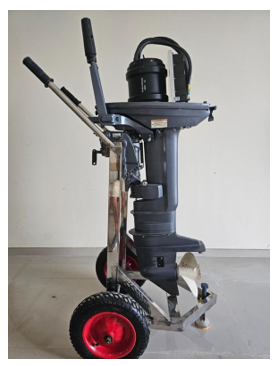
Figure 2: 20 kW Electric Outboard Motor

Figure 3: Batteries and Charger
In parallel, solar photovoltaic (PLTS) charging hubs are planned for Marina Ancol, Pulau Pramuka, and Pulau Tidung. Each site is envisioned to host 250–500 kWp rooftop solar systems with battery storage, capable of powering both electric boats and local community loads. With module efficiencies exceeding 21%, the systems are expected to reduce carbon intensity while enabling leasing schemes that lower upfront investment barriers. Beyond these hubs, 11 inhabited islands across the Thousand Islands regency, including Pulau Pramuka, Tidung, Panggang, Harapan, Kelapa, Pari, Untung Jawa, and others, will have PLN-connected charging points using existing 200–500 kVA electrical capacities. This network is sufficient to support moderate-scale charging when coupled with efficient scheduling and smart load control, enabling a resilient, hybrid renewable-powered ecosystem for 24- hour electric vessel operations and scalable replication nationwide.
This study aims to identify feasible policy and business models for electric boat transportation in Indonesia, beginning with a case study in Kepulauan Seribu. Specifically, it seeks to examine:
I. The technical and infrastructural suitability of electric boats for inter-island operations;
II. The social acceptance and regulatory readiness of communities and institutions toward electric mobility; and
III. The economic viability and partnership models, including public–private and cooperative-based schemes, to support sustainable deployment.
The findings are expected to inform scalable strategies for integrating electric boats into Indonesia’s broader blue economy and renewable energy transition framework.
Methods
This study applies a multi-dimensional feasibility framework consisting of three main analytical approaches: (1) infrastructure and physical suitability, (2) social acceptance and regulatory readiness, and (3) economic viability and business models. Each dimension is designed to assess different but interrelated factors influencing the adoption of electric boat transportation in Kepulauan Seribu.
a. Infrastructure and Physical Suitability: The first dimension assesses the existing marine infrastructure and physical environment across 11 inhabited islands in Kepulauan Seribu through site visits, field documentation, and spatial observation. The assessment focuses on docking conditions, water depth, mooring facilities, and accessibility for electric charging installations. Technical evaluations were conducted by comparing field measurements and local infrastructure data with operational and engineering requirements obtained from secondary sources, including manufacturer specifications of electric motors, battery systems, and charging equipment. This comparison determines whether current physical conditions meet minimum standards for electric boat operations, particularly in terms of draft depth, docking resilience, and charging feasibility. Furthermore, the study evaluates the potential for solar energy integration by identifying available open spaces and examining existing energy distribution layouts on each island to estimate solar generation capacity and battery storage compatibility.
b. Social Acceptance and Regulatory Readiness: The second dimension investigates the policy, regulatory, and community readiness for electric boat adoption. A comprehensive policy review was conducted to analyze the alignment of electric mobility with Indonesia’s national frameworks, including on Energy Transition Acceleration, RZWP3K, Perpres 60/2021, and local spatial planning documents such as and, alongside the Kepulauan Seribu Development Strategy [1-3]. In parallel, a community survey was carried out to capture local perceptions of affordability, safety, and sustainability. The survey involved approximately 11 respondents—one representative per inhabited island—consisting of local residents, fishermen, dock officers, and government officials (from agencies such as the Regional Development Planning Agency and the Department of Transportation). These responses provide insight into the social and institutional readiness for transitioning toward electric marine transport systems.
c. Economic Viability and Business Models: The third dimension analyzes the financial feasibility of electric boat deployment using quantitative financial modeling. Data sources include field cost estimates, supplier quotations, and secondary datasets from government reports and academic literature. The analysis calculates key project valuation indicators such as Capital Expenditure (CAPEX), Net Present Value (NPV), Internal Rate of Return (IRR), Return on Investment (ROI), Return on Equity (ROE), Break-Even Point (BEP), and Payback Period (PP). The model applies financial assumptions on electricity tariffs, fuel prices, operational costs, and discount rates to estimate long-term profitability under varying demand and route scenarios. Several partnership schemes are examined, including Public–Private Partnerships (PPP), cooperative leasing mechanisms through community-based institutions like Koperasi Desa Merah Putih, and additional monetization from carbon credit trading under voluntary or compliance markets.
Results and Findings
The Results and Findings section presents and discusses three main analytical dimensions of this study as mentioned in methods section. Each dimension provides complementary insights into the technical feasibility, community perception, and financial sustainability of electric boat implementation in the Thousand Islands.
Infrastructure and Physical Suitability
The Infrastructure and Physical Suitability section discusses four key components: existing sea transport route conditions, docking conditions, accessibility for electric charging installation, and product development.
Existing Sea Transport Routes Conditions
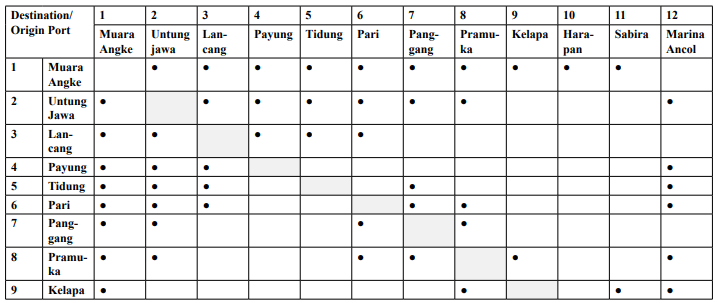
The sea transportation network in the Thousand Islands (Kepulauan Seribu) is characterized by two primary movement patterns: inter-regional movements connecting the islands with the mainland (Jakarta and Banten), and intra-regional movements between islands within the archipelago.
According to, the existing navigation pattern is predominantly a point-to-point connection or single-point connection. This pattern aligns with field observations indicating that most daily trips are dominated by small local boats (kapal ojek) transporting residents from inhabited islands to the mainland, mainly to Jakarta or Tangerang, for essential needs [4]. According to field survey, travel behavior analysis indicates that passenger movements within the Thousand Islands are driven by several key factors. The most frequent motive is to fulfill consumptive needs, such as purchasing daily necessities and household supplies that are unavailable on the islands. In addition, residents frequently travel for social, educational, and health- related purposes, including visiting family, attending school, or seeking medical care on the mainland. Administrative travel also plays a significant role, particularly for managing government- related affairs and documentation. From an economic standpoint, many residents commute to sell marine products or procure fishing and operational supplies. Lastly, tourism-related activities contribute to the overall mobility pattern, as local operators and visitors move from Jakarta and between islands for recreational and service-based purposes.
Consequently, the existing sea transport network can be classified into three main systems:
• Kepulauan Seribu-Tangerang routes, serving daily consumption and goods supply needs;
• Kepulauan Seribu-Muara Angke and Marina Ancol routes (DKI Jakarta), facilitating goods distribution, logistics, and passenger transit to and from Jakarta; and
• Inter-island connections within Kepulauan Seribu, mainly for local mobility, trade, and community interaction.
According to the, both the government-managed and privately- operated marine transport services can be summarized as follows [5]:

Further investigation into goods movement indicates that there are three main points of origin for logistics supply: Muara Angke, Rawa Saban, and Tanjung Pasir. Goods are distributed to each island based on proximity, with vessels ranging from traditional small boats to cargo ships depending on the route and cargo type.
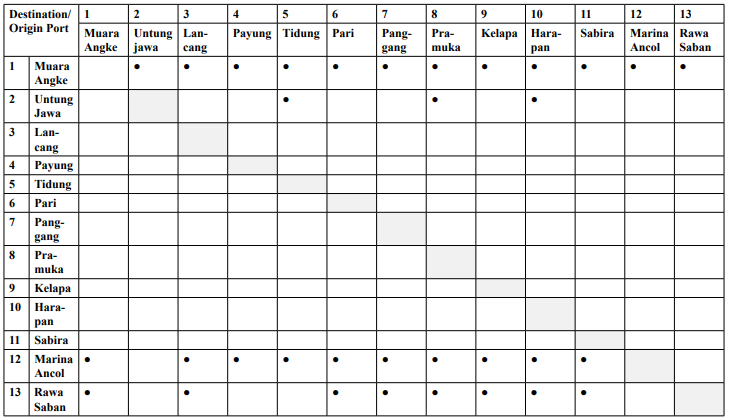
Table 2: Indication of Goods Movement in the Thousand Islands Region
Currently, only two categories of sea transport operators serve the archipelago: private operators and the DKI Jakarta Provincial Government, managed through the Unit Pengelola Angkutan Perairan (UPAP) [6]. The official sea routes are differentiated based on vessel type and management, namely:
• Dishub Sonar Vessel Routes: Muara Angke–Pulau Tidung; Muara Angke–Pulau Pramuka; Muara Angke–Pulau Kelapa
• Dishub Vessel Routes: Muara Angke–Pulau Untung Jawa– Pulau Lancang–Pulau Payung–Pulau Tidung; Muara Angke– Pulau Untung Jawa–Pulau Pari–Pulau Panggang–Pulau Pramuka; Muara Angke–Pulau Kelapa–Pulau Sebira
• Traditional Vessel Routes: Muara Angke–Pulau Tidung; Muara Angke–Pulau Pari; Muara Angke–Pulau Untung Jawa; Muara Angke–Pulau Pramuka; Muara Angke–Pulau Kelapa; Muara Angke–Pulau Harapan

Figure 4: Existing Sea Transport Routes in the Thousand Islands (Dishub Sonar, Dishub, and Traditional Vessels)
Based on the Decree of the Head of the [7]. There are four officially designated operational routes:
• Route 1: Muara Angke–Untung Jawa–Lancang–Payung– Tidung
• Route 2: Muara Angke–Untung Jawa–Pari–Panggang– Pramuka
• Route 3: Muara Angke–Untung Jawa–Pari–Pramuka–Kelapa
• Route 4: Muara Angke–Kelapa–Sabira
|
Service Type |
Route |
|
Liner – Main Service Route (Trunkline) |
Muara Angke – Untung Jawa – Lancang – Payung – Tidung |
|
Muara Angke – Untung Jawa – Pari – Panggang – Pramuka |
|
|
Muara Angke – Untung Jawa – Pari – Pramuka – Kelapa |
|
|
Muara Angke – Kelapa – Sebira |
|
|
Muara Angke – Cipir – Onrust – Kelor – Bidadari |
|
|
Marina Ancol – Cipir – Onrust – Kelor – Bidadari |
|
|
Liner – Supporting Service Route (Feeder) |
Pramuka – Panggang |
|
Pramuka – Panggang – Kelapa – Dolphin |
|
|
Pramuka – Ayer – Tidung – Payung |
|
|
Pramuka – Pari – Lancang |
|
|
Pari – Kelapa |
|
|
Kelapa – Kelapa Dua – Sebira |
|
|
Liner – Cargo Service Route |
Muara Angke – Untung Jawa – Lancang – Payung – Tidung |
|
Muara Angke – Pari – Pramuka – Kelapa |
|
|
Muara Angke – Harapan – Sebira |
|
|
Passenger Tramper |
Kelapa – Kaliage – Royal |
|
Harapan – Papatheo – Sepa – Pantara |
|
|
Harapan – Bira – Pelangi – Sepa – Putri |
|
|
Harapan – Genteng – Matahari – Macan – Putri Panjang – Kayu Angin – Putri |
|
|
Harapan – Tongkeng – Bintang – Dolphin – Semut |
Table 3: Transport Routes in the Thousand Islands
Tariff regulations follow Jakarta Regional Regulation No. 1/2015 on regional retribution, reinstated under Governor Regulation No. 36/2023 concerning the “Abolition of Administrative Sanctions.” Ticket prices include a Rp2,000 terminal fee and Rp2,000 insurance from Jasa Raharja, excluding online transaction costs from the Jaketboat application [8].
|
Zone |
Route |
Fare |
|
Zone I |
Muara Angke |
Rp44.000,00 |
|
|
Muara Angke |
|
|
|
Muara Angke |
|
|
|
Inter-Island |
|
|
Zone II |
Muara Angke |
Rp54.000,00 |
|
|
Muara Angke |
|
|
|
Muara Angke |
|
|
|
Muara Angke |
|
|
|
Muara Angke |
|
|
|
Kelapa Island |
|
|
Zone II+ |
Muara Angke |
Rp74.000,00 |

Table 4: Passenger Fare Rates by Zone – Thousand Islands Region
Overall, the current sea transport system in Kepulauan Seribu remains highly Jakarta-centric, emphasizing mainland connectivity rather than efficient inter-island mobility. This creates logistical inefficiencies, long detours, and limited accessibility between inhabited islands, underscoring the strategic opportunity for an integrated electric boat network to fill this connectivity gap.
Docking Conditions
According to the National Port Master Plan, seven seaports operate within the Province of DKI Jakarta, classified under a three- tier hierarchy: Main Ports (Pelabuhan Utama) serving national and international cargo and passenger flows, Collector Ports (Pelabuhan Pengumpul) functioning as inter-provincial nodes, and Feeder Ports (Pelabuhan Pengumpan) that support domestic routes within provincial or regency boundaries [9]. Among these, Muara Angke, Sunda Kelapa, and Marina Ancol are the principal gateways for passenger and goods transportation to the Thousand Islands. In practice, most departures and arrivals to the archipelago occur through these three points located along the northern Jakarta coastline.
|
No. |
Port |
Hierarchy |
Service Classification |
Destination Islands |
Facilities |
|
1 |
Muara Angke Port |
Regional Feeder Port |
Passenger and cargo transport |
Untung Jawa, Pari, Pramuka, Panggang, Harapan, Kelapa, Tidung, Lancang, Payung, Sabira |
Passenger terminal, harbor basin, four docks |
|
2 |
Marina Ancol Port |
Local Feeder Port |
Passenger transport |
Bidadari, Pari, Pramuka, Untung Jawa, Kelapa, Tidung, Harapan |
Harbor basin, one dock |
|
3 |
Sunda Kelapa |
Collector Ports |
Passenger and cargo transport |
Untung jawa, Tidung, Kelapa |
Harbor basin, two docks |
Table 5: Profile of Ports Serving the Thousand Islands
According to the same master plan, eleven ports (either existing or planned) are located within the Thousand Islands Regency. Of these, only one (on Pramuka Island) currently operates as a Regional Feeder Port, while the others are categorized as Local Feeder Ports that primarily support inter-island transport and tourism.
|
No. |
Port Location |
Hierarchy |
Tourism Support Function |
Status |
|
1 |
Pramuka Island |
Regional Feeder Port |
 |
Existing |
|
2 |
Bidadari Island |
Local Feeder Port |
|
Planned |
|
3 |
Harapan Island |
Local Feeder Port |
- |
Planned |
|
4 |
Panggang Island |
Local Feeder Port |
- |
Planned |
|
5 |
Pari Island |
Local Feeder Port |
|
Planned |
|
6 |
Payung Island |
Local Feeder Port |
|
Planned |
|
7 |
Sabira Island |
Local Feeder Port |
|
Planned |
|
8 |
Kelapa Island |
Local Feeder Port |
|
Planned |
|
9 |
Lancang Island |
Local Feeder Port |
- |
Planned |
|
10 |
Tidung Island |
Local Feeder Port |
|
Planned |
|
11 |
Untung Jawa Island |
Local Feeder Port |
|
Planned |
Table 6: Ports in the Thousand Islands (Existing and Planned
Field observations and documentation focused on inhabited islands, excluding uninhabited or purely tourist clusters. The survey evaluated the number of docks, ownership, operational classification, main destinations, existing facilities, functions, and potential for installing electric-boat charging stations. The results are summarized on attachment 1.
Across the surveyed inhabited islands, no existing electric-boat charging infrastructure was identified. However, multiple docks— particularly those on Pramuka, Panggang, Pari, Kelapa, Tidung, and Untung Jawa—demonstrate structural and spatial readiness for installation with moderate adaptation. Common enabling conditions include reinforced dock structures, calm water, and canopy-covered workspaces. Conversely, the main constraints involve structural degradation, absence of protective facilities, and tidal elevation variability between docks and vessels. Despite these challenges, the physical readiness of many docks provides a solid foundation for establishing future electric-boat infrastructure in the Thousand Islands, especially if supported by targeted rehabilitation and inter-agency coordination.
Accessibility for Electric Charging Installation
Based on field survey results, all inhabited islands in the Thousand Islands Regency are connected to the national electricity grid managed by PLN (Perusahaan Listrik Negara) through submarine power cables, with the exception of Sabira Island, which operates independently using a hybrid system powered by solar photovoltaic (PLTS) and diesel generators. This grid- based electricity infrastructure provides a strong foundation for integrating electric boat charging systems, particularly on islands with reliable 24-hour power supply. Outside the inhabited islands, tourism-oriented and uninhabited islands generally do not have access to submarine electricity networks. Most of these islands rely on diesel generators, while a few—such as Onrust Island—are equipped with solar power installations, although some systems are currently non-operational due to technical deterioration.
These off-grid conditions pose challenges for large-scale charging station deployment, requiring either localized hybrid energy solutions or connection to nearby inhabited islands through short- distance distribution networks. Across the inhabited islands, electricity availability is continuous and relatively stable, with service coverage reaching 100% of households. The installed electrical capacity per island ranges from 200 to 500 kVA, sufficient to support additional moderate-scale infrastructure such as charging systems, particularly if coupled with energy- efficient scheduling and smart load management.In terms of consumption, average household electricity use ranges between 1,000–2,000 kWh per month, while homestays and small tourism accommodations consume approximately 2,000–3,000 kWh per month. These figures indicate a well-established and reliable energy distribution system, capable of supporting early-phase implementation of electric-boat charging facilities without causing major disruptions to existing residential or commercial loads.
Overall, the survey findings suggest that electrical accessibility is not a limiting factor for pilot charging infrastructure in the Thousand Islands. However, careful technical design—particularly in load allocation, grid safety, and synchronization with renewable backup systems—will be necessary to ensure operational stability and sustainability of the planned electric transport network.
Product Development
The proposed product development, represents an integrated innovation ecosystem designed to replace seven existing categories of marine vessels operating in the Thousand Islands (Kepulauan Seribu). The system adopts a modular electric propulsion platform built upon domestically developed technologies from ITB Electric Drive Laboratory, PT Pindad Maritime Division, LEN Industri, and Topband Energy Systems, with renewable energy integration from SEI and Xurya [10].
The development framework is structured to ensure technological feasibility (TRL ≥ 7), economic efficiency, and alignment with Indonesia’s national renewable energy roadmap (PLTS 100 GW Program).
Each subsystem—propulsion, energy storage, charging, and control—uses components that are currently available within Indonesia’s industrial ecosystem.
|
Subsystem |
Key Technology |
Source |
TRL |
Remarks |
|
Propulsion |
Switched Reluctance / BLDC motors (10–200 kW, η > 93 %) |
ITB E-Drive, GEMPACS |
7–8 |
Compact, water-cooled, low torque ripple |
|
Battery |
LiFePOâ?? / LTO 48–720 V (5 000–8 000 cycles, IP67) |
Topband BESS |
9 |
Marine-grade, modular pack |
|
Inverter / BMS |
Smart marine inverter + CAN-Bus BMS |
ITB-LEN Consortium |
7 |
Supports regenerative braking |
|
Hull Material |
FRP / Aluminium composite |
Pindad Marine |
8 |
30 % lighter, corrosion- resistant |
|
Energy Hub |
PLTS 250–500 kWp + BESS 3 MWh |
SEI / Xurya |
9 |
Floating & rooftop hybrid |
|
Monitoring |
IoT + LEN SCADA integration |
LEN Industri |
8 |
Real-time SOC / SOH tracking |
Table 7: Components of the Electric Boat System and Technology Readiness Levels (TRLs)
Seven prototype classes were defined to represent all operational typologies in the Thousand Islands, ensuring continuity of government, community, logistics, and tourism functions.
|
Category |
Model |
Price Estimation |
Capacity |
Powertrain |
Range / Endurance |
Material |
Key Function |
|
Gov. Passenger Ferry |
E-Ferry 150 |
USD 1,2 Million (IDR 18 Billion) |
100–150 pax |
2 × 100 kW + 500 kWh |
80 km / 4 h |
Aluminium |
Dishub scheduled transport / public tourism |
|
Community Ferry |
E-Commuter 100 |
USD 850.000 (IDR 13 Billion) |
100 pax + cargo |
2 × 75 kW + 400 kWh |
60 km |
FRP |
Local operator / cooperative |
|
Speedboat / Charter |
E-Swift Predator |
USD 450.000 (IDR 7 Billion) |
10–40 pax |
2 × 60 kW + 150 kWh + 1 kWp solar |
50 km / 25 knots |
Carbon composite |
Tourist and VIP transport |
|
Traditional Tourist Boat |
E-Phinisi Eco- Tour |
USD 350.000 (IDR 5 Billion) |
20–60 pax |
1 × 50 kW + 120 kWh |
8 h trip |
Wood-FRP hybrid |
Cultural tourism & leisure |
|
Micro Boat / Ojek Perahu |
E-Micro 6 |
USD 15.000 (IDR 230 Million) |
1–6 pax |
1 × 10 kW + 10–15 kWh + 1 kWp solar |
20 km |
FRP |
Daily inter-island mobility |
|
Cargo / Logistic Vessel |
E-Cargo Lite RORO |
USD 1,8 Million (IDR 28 Billion) |
50–100 t |
2 × 200 kW + 1 MWh + diesel hybrid 30 % |
80 km |
Steel-Al hybrid |
Food & material distribution |
|
Medical Service Boat |
E-Med Cruiser |
USD 500.000 (IDR 7.5 Billion) |
5–10 pax + crew |
1 × 60 kW + 120 kWh |
70 km / 6 h |
FRP-Al hybrid |
Health & emergency operations |
Table 8: Classification and Technical Specifications of Electric Boat Models
Each vessel model is engineered to achieve 40–60% operational cost reduction and up to 70% improvement in energy-use efficiency compared with conventional diesel-powered vessels. The design optimization prioritizes hydrodynamic drag reduction, achieved through lightweight composite hull structures and high-efficiency propeller geometry, combined with solar-assisted charging where feasible.The electric vessel ecosystem is supported by a distributed network of three solar-powered charging hubs, strategically located at Marina Ancol, Pulau Pramuka, and Pulau Tidung to ensure route-wide coverage and operational reliability. Each hub integrates a hybrid solar PV plant (250–500 kWp) with a battery energy storage system (BESS) of 3 MWh capacity, complemented by DC fast-charging ports (60–120 kW) for simultaneous vessel servicing. The Marina Ancol hub, serving as the main gateway, is designed for a 500 kWp PV system occupying approximately 3,200–3,800 m² of rooftop and carport surfaces. The Pulau Pramuka hub, functioning as the central node, integrates a 400 kWp hybrid floating–rooftop PV system covering 2,800–3,200 m², while the Pulau Tidung hub hosts a 250 kWp rooftop installation over 1,800–2,000 m² of coastal facilities. Collectively, these hubs provide 1.15 MWp of installed solar capacity, capable of producing about 1.6 GWh annually, sufficient to support the daily charging of 20–25 vessels.
The system incorporates the following design features:
I. Dual-mode grid interconnection (on/off-grid), enabling operation under both isolated and interconnected energy systems.
II. Energy storage management utilizing LEN SCADA for real- time monitoring, optimization, and predictive maintenance.
III. Floating solar arrays that minimize land use and enhance resilience against tidal and climatic fluctuations.
IV. Charging duration optimized between 1–3 hours per vessel, depending on vessel class and battery state of charge.
Beyond these hubs, 11 inhabited islands across the Thousand Islands regency—including Pulau Pramuka, Tidung, Panggang, Harapan, Kelapa, Pari, Untung Jawa, and others—already possess installed PLN electrical capacities ranging from 200 to 500 kVA per island. This existing grid infrastructure is sufficient to support moderate-scale charging systems, particularly if combined with energy-efficient scheduling and smart load management. Average electricity consumption per island ranges between 1,000–2,000 kWh per household and 2,000–3,000 kWh for small tourism accommodations, indicating a reliable and well-distributed power system. These conditions enable early-phase implementation of electric-boat charging facilities without major disruption to residential or commercial loads.
This integrated configuration ensures full-day operational readiness, reduces dependence on fossil fuels, and establishes the foundation for a resilient, zero-emission maritime transportation corridor throughout the Thousand Islands.
Social Acceptance and Regulatory Readiness
The Social Acceptance and Regulatory Readiness section discusses two key components: stakeholder analysis, social acceptance, and regulatory readiness.
Stakeholder Analysis
From a social perspective, local communities express growing interest in more affordable and sustainable transport options. While enthusiasm is evident, concerns remain over safety standards, vessel range, and reliability of charging facilities. Regulatory frameworks are beginning to evolve, though marine-specific classification standards for electric vessels and renewable-powered docking infrastructure are still limited.Stakeholder mapping highlights a diverse set of actors whose roles and perceptions will shape adoption. At the government level, the Provincial Government of DKI Jakarta, the Kepulauan Seribu Regency Administration, and relevant sub-agencies (Suku Dinas) are key decision-makers, alongside the management of the Thousand Islands National Park and local kelurahan authorities.
From the community side, stakeholders include local residents, fisher groups, youth organizations (Karang Taruna), religious and women’s groups, and local cooperatives such as Koperasi Merah Putih. Civil society organizations (e.g., WALHI), universities (UGM, UI, LIPI/BRIN), and research institutions play an important role in providing expertise and external oversight. Meanwhile, businesses such as travel agents, tour operators, and private companie; ranging from micro and small enterprises to larger firms which are directly linked to tourism and logistics activities. Finally, national and local media (Jakarta Post, Tempo, Republika, Media Indonesia, and online platforms) serve as important channels for public communication and awareness.
Stakeholder influence–interest analysis shows that:
• Manage closely: high-influence and high-interest stakeholders (Provincial Government, Suku Dinas, Bupati/ Kepala Kepulauan Seribu, and private sector investors) must be actively engaged, consulted, and involved in decision- making.
• Keep satisfied: actors with high influence but lower direct interest (national media, provincial technical agencies not directly related, and investors) should be kept informed and provided with timely information.
• Keep informed: stakeholders with high interest but lower influence (local communities, fisher groups, women’s groups, youth organizations, and local cooperatives) must be included in consultations, community discussions, and benefit-sharing schemes.
• Monitor: stakeholders with lower interest and influence (non- local NGOs, external researchers, and local media) should be monitored and engaged when relevant. These findings suggest that successful deployment of electric boat systems in Kepulauan Seribu will require not only technological readiness but also a carefully designed stakeholder engagement strategy, ensuring government leadership, private sector investment, and strong community participation.
Social Acceptance
We assess community perception and readiness toward electric boat implementation in the Thousand Islands through semi- structured interviews with two local leaders representing Pulau Untung Jawa, Pulau Panggang, Pulau Pari, and Pulau Kelapa Dua. The respondents were selected for their active engagement in local governance and maritime livelihood activities, providing perspectives that combine both citizen and community managerial viewpoints.
Both respondents report that existing marine transport systems, while functional, remain heavily dependent on diesel fuel and highly sensitive to weather conditions. Services are operated mainly by private or community-based actors, complemented by government-subsidized ferries. The systems are characterized by irregular schedules, limited safety standards, and high operational costs linked to fluctuating diesel prices.
|
Aspect |
Pulau Untung Jawa (Ibu Imas) |
Pulau Panggang (Pak Nasrullah) |
Pulau Pari (Ibu Asmani) |
Pulau Kelapa Dua (Pak Musliadi) |
|
Dominant Transport Modes |
Wooden boats, Dishub ferry |
Ojek boats, tourist boats, Dishub ferry |
Traditional boats, Dishub boats, bulk vessels |
Ojek boats, local ferries |
|
Travel Frequency |
1–2×/month |
Daily |
Only when needed (PKH, school, Jakarta–Tidung–Pramuka) |
Very frequent: daily 06.00–22.00 |
|
Fuel Source & Cost |
Diesel from local resellers |
Diesel resold after SPBU closure |
Diesel availability limited |
Fuel difficult; reliance on local supply |
|
Reliability |
Operates daily but weather-dependent |
Highly uncertain schedules |
Dishub often stops if waves high; traditional boats always available |
Good condition boats, but larger ferries only run twice/day |
|
Safety & Maintenance |
Periodic maintenance |
No clear SOP |
Wooden boats considered “safe enough”; fiber boats less stable |
Condition good; essential transport |
|
Public Perception |
“Comfortable but weather dependent” |
“Unreliable, expensive” |
“Traditional boats must stay; Dishub often stops” |
“Transport is essential; capacity/time constraints” |
Table 9: Current Maritime Transport Conditions in the Case Study Areas
The findings confirm that while transport access exists, the system’s predictability and affordability are the main concerns among residents. Subsidized or community-run operations are preferred, though maintenance and safety oversight remain inconsistent.
Awareness of electric boat technology is negligible among both communities. Neither respondent had prior exposure to electric propulsion systems for marine transport. However, after explanation, both expressed positive and pragmatic attitudes toward the concept. Their responses indicate latent acceptance potential, conditional on clear evidence of economic and functional benefits.
|
Dimension |
Untung Jawa (Imas) |
Panggang (Nasrullah) |
Pari (Asmani) |
Kelapa Dua (Musliadi) |
|
Prior Knowledge |
Never heard |
Never heard |
Never heard |
Heard once (UNISBA presentation) |
|
Initial Reaction |
Curious; needs demo |
Interested if cheaper/ reliable |
Unsure; fears displacement |
Strongly supportive; sees urgent need |
|
Main Concerns |
Unfamiliar; trust |
Price & schedule |
Protection of traditional boats; limited fuel on island |
Range, battery capacity, weather, charging readiness |
|
Openness Factors |
Prototype demo |
Lower fares |
Environmental benefit but respect local livelihoods |
Socialization, technical reliability, NOT vague promises |
|
Perceived Benefits |
Environment, jobs |
Efficiency, lower fares |
Cleaner, fuel-saving |
High need due to fuel scarcity; community will support |
Table 10: Perception and Openness Toward Electric Boat Adoption
The interviews reveal three major determinants of social acceptance:
i. Economic practicality – communities prioritize ticket affordability and reliability over environmental aspects.
ii. Participatory demonstration – acceptance depends on tangible, visible proof of performance, such as pilot trials and prototype exhibitions in accessible local waters.
iii. Collaborative ownership models – respondents advocate for community-operated or cooperative-based schemes (e.g., Koperasi Merah Putih), supported by government or private entities for maintenance and training.
|
Determinant |
Key Findings |
Implementation Implication |
|
Economic |
Preference for affordable fares and stable schedules |
PPP or cooperative leasing models must maintain competitive pricing (equal or lower than diesel vessels) |
|
Cultural |
Community-based decision making; trust built through demonstration |
Early-stage pilot in community context rather than port-centric demonstration |
|
Institutional |
Need for co-management and local involvement |
Integrate community cooperatives into operational structure |
|
Informational |
Low awareness, but high curiosity |
Conduct workshops, visual outreach, and real-life testing sessions |
Table 11: Determinants of Social Acceptance
The communities of the Thousand Islands are socio-economically receptive yet technologically unfamiliar. Electric boat initiatives are more likely to succeed if positioned not merely as a “green innovation,” but as a cost-efficient and reliable solution to existing transport inefficiencies. The respondents’ emphasis on affordability and reliability aligns with previous studies on socio- technical transitions in small islands, where practical performance and economic value often outweigh environmental awareness in early adoption stages. Hence, it is recommended that initial implementation emphasize:
a. Pilot-scale demonstrations in socially embedded environments (e.g., Untung Jawa, Pramuka);
b. Inclusive local co-ownership through cooperatives; and
c. Integrated communication campaigns combining visual, experiential, and participatory elements.
Such approaches are expected to enhance perceived value, social trust, and behavioral acceptance, forming a foundation for large-scale replication of electric maritime transport systems in Indonesia’s archipelagic regions.
Regulatory Readiness
This policy review analyzes the impacts of national and regional policy framework supporting the development of electric boats for fishermen in the Thousand Islands, focusing on the transition to renewable energy in the maritime sector, environmental sustainability, and improved welfare for small-scale fishermen. These policies align with efforts to decarbonize traditional fisheries, where electric boats can reduce CO2 emissions by up to 80% and operational costs by 70% through battery propulsion and solar charging [11,12]. Integrating electric boats into coastal spatial planning also ensures accessibility to infrastructure like charging stations at ports [13].
Asta Cita of the Prabowo Administration
Asta Cita represents the current government's eight priority visions emphasizing energy independence through renewable energy self-sufficiency, including the development of an electric vehicle (EV) ecosystem that can extend to the maritime sector [14,15]. In the context of sea transportation, Asta Cita supports sustainable connectivity and safety, where the Ministry of Transportation (Kemenhub) prioritizes maritime decarbonization to achieve net- zero emissions by 2060 [16]. The development of electric boats for fishermen in the Thousand Islands aligns with the second Asta Cita, promoting green energy innovation to support the blue economy and local fishermen's self-reliance [17].
Key National Policies
Law Number 2 of 2024, referring to renewable energy regulations such as Minister of Energy and Mineral Resources Regulation Number 2 of 2024 on Rooftop Solar Power Plants (PLTS Atap), eliminates net-metering schemes to encourage large-scale solar infrastructure connected to the PLN grid, thereby supporting electric boat charging in coastal areas [15,18]. The Coastal and Small Islands Spatial Zoning Plan (RZWP3K) regulates sustainable coastal space utilization, with 27 provinces issuing related regional regulations to balance marine ecosystems and green energy development, including zones for eco-friendly vessel infrastructure in small island groups like the Thousand Islands [2,19]. Presidential Regulation Number 60 of 2021 on National Priority Lake Rescue strengthens water environmental commitments, which can be analogized to coastal water protection to support the shift to electric boats and reduce pollution from fossil fuels [20].
Electric boat development for fishermen in the Thousand Islands is situated within a regulatory and technical landscape shaped by the existing profile of “pelayaran rakyat” vessels, traditional small-scale Indonesian sea transport. As described in the study done by The Ministry of Transportation Indonesia and The University of Indonesia (2023), most operating vessels in this region are individually or privately owned and have long relied on conventional gasoline engines. These boats face regulatory limitations regarding licensing, compliance, and technical certification, highlighting the urgency for electrification schemes that support standardized marine electrical installations and safer propulsion systems suitable for local socio-economic conditions.
Safety risks and operational reliability for traditional vessels remain critical concerns in the context of electrification. The report identifies common deficiencies among these boats, such as inadequate fire prevention systems, substandard wiring, lack of routine technical inspections, and limited access to standard marine- grade batteries. Modernization policies are thus recommended to address not only compliance and technical upgrading—such as integration of suitable battery technologies and ventilation—but also routine maintenance, improved crew training, and systematic vessel renovation aligned with regulatory requirements.
Regional Policies in DKI Jakarta
The DKI Jakarta Regional Spatial Plan (RTRW) 2024-2044 establishes a spatial framework for sustainable transportation, including renewable energy integration in island areas, with an emphasis on equitable energy distribution through the Regional Energy General Plan (RUED) targeting balanced electricity supply in the Thousand Islands by 2027 [21,22]. The Detailed Spatial Plan (RDTR) of DKI Jakarta via Governor Regulation Number 31 of 2022 optimizes the Thousand Islands area for quality development, including coastal zones for green infrastructure such as solar charging stations for fishermen's boats, to reduce energy disparities and support fisheries ecotourism [2,23]. These policies enable land allocation for electric boat projects, aligning with the RUED 2020-2050 targets for energy transition in shallow waters [24]. As stated in DKI Jakarta Provincial Regulation Number 5 of 2023, that among the targets of DKI Jakarta RUED are the fulfillment of electricity infrastructure provision, specifically transmission and distribution networks, substations, and distribution substations, including for the Thousand Islands. In the same regulation, the target of development Solar Power Plant or PLTS by 2025 at least 20 MW Capacity and by 2050 up to 200 MW Capacity and the use of electric cars, electric motorcycles, and electric buses should account for at least 10% of the total vehicles by 2030 and 75% of the total vehicles by 2050.
Related Ministry Policies
The Ministry of Transportation through Circular Letter DJPL Number 12 of 2024 regulates the handling of electric vehicle transport ships with a focus on safety, including ventilation and monitoring at ports, which can be extended to small-scale fishermen's electric boat operations with safe distances from emergency engines [25]. Additionally, Circular Letter DJPL Number 22 of 2022 mandates Onshore Power Supply (OPS) facilities at ports to reduce vessel emissions, supporting land- based charging for fishermen's boats in the Thousand Islands as part of the NDC for the maritime transportation subsector [13]. The Ministry of Marine Affairs and Fisheries (KKP), through initiatives like Blue Tech Indonesia and seaBLUE, has launched 100% electric boat pilots for small-scale fishermen, including 2 kW electric motors with speeds of 4-6 knots and solar charging, reducing fuel costs and emissions in coastal communities such as Pangandaran and Bali, with expansion plans to Jakarta [11,12,26]. This program, supported by UNDP and Japan, targets 500 women fishermen and electric boat pilots to minimize post-harvest losses and 19% emissions from the fisheries sector [27].
Solar Power Plants (PLTS) as Charging Stations for Electric Boats
Solar power plants, particularly rooftop solar (PLTS Atap) and mini-grid photovoltaic (PV) systems, are increasingly integrated as a core component of the charging infrastructure for electric boats in Indonesia. The government has recognized the strategic role of PLTS not only for rural electrification but also for the decarbonization of the maritime sector, in line with Indonesia's renewable energy targets [28]. Minister of Energy and Mineral Resources (MEMR) Regulation No. 2 of 2024 and its predecessors regulate the deployment and operation of PLTS in both private and public sectors, facilitating their use for charging stations at ports and coastal villages [18,29].
A techno-economic feasibility study conducted on Sabangko Island demonstrated that utilizing excess energy from village PV mini-grids to charge electric boat batteries is not only technically viable but also economically attractive, providing reliable power supply to fishermen without undermining household electrification [30,31]. Hundreds of such PV mini-grids have been deployed nationwide, which, if optimized with battery management and adequate regulations, can support widespread adoption of electric boats for small-scale fisheries [31].
Further, the integration of PLTS into boat charging stations helps overcome the logistical and cost barriers associated with transporting fossil fuels to remote islands, provides operational savings to fishermen, and reduces both carbon emissions and local air/water pollution [32]. This approach is also supported by international cooperation initiatives such as EnDev and Blue Tech Indonesia, which have piloted solar-based charging solutions in various region [11,33]. Regional spatial plans (RTRW/RDTR) and sectoral strategies should encourage the allocation of land and grid connections for PLTS-based charging stations at fisheries ports and boat landing sites, ensuring sustainable operation and equitable energy access [21].
Overall, these policies form a supportive ecosystem for electric boats in the Kepulauan Seribu, with potential integration through RZWP3K and RDTR for charging infrastructure, as well as Asta Cita incentives for local innovation [34,35]. Implementation requires inter-ministerial coordination to ensure fishermen access battery subsidies and training, thereby enhancing sustainable fisheries competitiveness [11].
|
Policy/Regulation Area |
Main Policy Content |
Direct Implication for Electric Boats |
Key Reference(s) |
|
National Policy Direction (Asta Cita) |
Eight priority visions emphasize renewable energy, support for EV ecosystem and maritime sector decarbonization. |
Enables regulatory support and incentives for green innovation in small-scale fisheries and maritime transport. |
[14,15,17] |
|
Renewable Energy & Electric Boat Enablers |
Law 2/2024 and MEMR 2/2024 promote solar plant (PLTS) integration, restrict net metering, and strengthen PLN grid for charging, while RZWP3K zones infrastructure for green vessels. |
Creates legal basis for solar-charging stations and prioritizes renewable energy for port and island villages. |
[2,18,19] |
|
Presidential/ Environmental Protection |
Presidential Regulation 60/2021 on water conservation creates framework for environmental compliance and supports vessel electrification as pollution control. |
Sets legal expectations for emission reduction from marine transport. |
[20] |
|
Regional Planning (RTRW, RUED, RDTR, Perda 5/2023) |
Policy targets balanced electricity supply/ distribution, specific PLTS targets (20 MW by 2025, 200 MW by 2050), and land allocation for green port infrastructure, as well as EV adoption targets (10%-75%). |
Directs land use policy and infrastructure buildout (charging, substations) in Thousand Islands and mandates EV share in transport. |
[21-24] |
|
Maritime Regulations (Kemenhub, KKP) |
Circulars DJPL 12/2024 and 22/2022 focus on electric vessel safety (ventilation, firefighting) and OPS, while KKP/UNDP pilot solar-charged fishing boats for women fishers. |
Promotes marine technical standards and pilots renewably charged, small-scale electric fishing boats. |
[11,25,26] |
|
Integration of Solar PV/ PLTS for Charging |
Mini-grid and rooftop solar are integrally linked to charging for boats, encouraging local grid stability, cost-efficiency, and emission reduction. |
Reduces operational burden of fossil fuel transport and catalyzes local RE integration at ports/landing sites. |
[28,30,31] |
|
Technical, Economic, and Regulatory Barriers |
Fleet mostly operates outside current technical/ licensing regime, faces fire/electrical safety gaps, and lacks routine inspections and modern battery systems. |
Highlights urgent need for new vessel/ electrical standards, compliance, subsidies, and workforce training. |
[13] |
|
Inter-Ministerial & Local Government Coordination |
Calls for integrated implementation, battery subsidy/fisher training, and sectoral innovation to enhance sustainable fisheries. |
Ensures ecosystem-wide support for electrification and ongoing competitiveness. |
[11,34,35] |
Table 12: Policy Review and Key References
Economic Viability and Business Models
The economic viability analysis of the electric boat transportation system for the Thousand Islands (Kepulauan Seribu) demonstrates strong potential for both financial feasibility and socio- environmental sustainability. Based on a 20-year projection model, the total project investment is estimated at Rp 512.8 billion, encompassing the procurement of seven categories of electric vessels (21 units), three solar-powered charging hubs, operational and pre-operational expenses, and interest during construction. The system is designed to operate under a Public–Private Partnership (PPP) and cooperative-based ownership model, with the potential integration of carbon credits and renewable energy incentives.
Financially, the project achieves a positive Net Present Value (NPV) of Rp 365.3 billion, an Internal Rate of Return (IRR) of 12.37%, and an average Return on Investment (ROI) of 17.52%, making it viable under both public and blended financing schemes. The payback period is approximately 9.1 years, aligning with mid- range infrastructure investment norms. The cumulative revenue projection reaches Rp 1.16 trillion after 10 years and Rp 2.95 trillion after 20 years, while the cumulative EBITDA increases from Rp 647 billion to Rp 1.88 trillion over the same period. Profitability improves significantly after the loan repayment period (six years), when the project transitions into a stable positive cashflow phase. The annual EBITDA and net profit average Rp 94 billion and Rp 53 billion, respectively, indicating efficient cost management through electrification and renewable integration. The capital structure assumes full loan financing (100%), with an interest rate of 8.25% (Bank Indonesia rate +2% spread).
However, hybrid models involving state-backed green financing, such as those provided by PT SMI or international climate funds, could further enhance returns and reduce the financial burden. Taxation (22%) and depreciation schedules are incorporated to reflect real fiscal conditions. The benefit–cost ratio (BCR) exceeds 1.1, confirming that the investment’s socio-economic benefits outweigh its costs.Operationally, the system demonstrates cost efficiency with an annual OPEX of approximately Rp 55 billion, or roughly 11% of total investment. This covers energy consumption, operations and maintenance (O&M), and general administrative expenses (SG&A). The use of solar-powered charging hubs at Marina Ancol (500 kWp), Pulau Pramuka (400 kWp), and Pulau Tidung (250 kWp)—each integrated with a 3 MWh battery energy storage system (BESS)—substantially reduces fuel dependency and long-term energy costs.
The estimated land areas for these facilities are 3,500 m², 2,800 m², and 1,900 m², respectively. In addition, eleven inhabited islands in the archipelago already possess 200–500 kVA PLN- installed capacity, which is sufficient to support moderate-scale electric charging infrastructure, particularly when combined with energy-efficient scheduling and smart load management.The business model integrates three revenue pillars: (1) direct income from ticket sales and logistics operations, (2) indirect income from government subsidies, carbon credits, and brand partnerships, and (3) community-based profit-sharing through Koperasi Merah Putih, which oversees micro-scale electric boat operations (E-Micro 6). Annual revenue streams are estimated at Rp 47–50 billion, with significant potential for expansion through tourism, eco-charter services, and integrated logistics. In later phases, the model envisions an Electric Maritime Cooperative (EMC) framework—linking local operators, cooperatives, and regional government units—enabling reinvestment of surplus profits into vessel maintenance, training, and renewable infrastructure upgrades.
Beyond financial indicators, the project contributes measurable environmental and socio-economic value. Annual energy savings reach 65–70% compared to diesel counterparts, reducing diesel fuel consumption by approximately 2.5 million liters per year and mitigating around 3,000 tons of COâ?? emissions. This provides eligibility for carbon credit monetization under national and international carbon trading schemes. Moreover, the electric fleet enhances tourism quality, reduces noise pollution, and improves the safety and reliability of inter-island transport, directly benefiting over 20,000 residents and thousands of tourists annually.
Conclusions, Implications, and Significance
This study finds that an electric boat transportation system in Kepulauan Seribu is technically feasible, socially acceptable under the right conditions, and financially feasible within a blended public–private model. From an infrastructure standpoint, existing docks on key inhabited islands (Pramuka, Panggang, Pari, Kelapa, Tidung, Untung Jawa) already provide a workable physical base for charging installation with moderate reinforcement, while the regional electricity network—supported by PLN connections of 200–500 kVA per island and supplemented by planned PLTS– BESS hubs in Marina Ancol, Pulau Pramuka, and Pulau Tidung— forms an enabling energy backbone. This means that electrification does not require building an entirely new port or grid system; instead, it requires upgrading and overlaying new systems (DC fast charging, coordinated load management, floating/rooftop PV) onto existing public assets. Technically, vessel concepts ranging from small inter-island ojek boats (1–6 passengers) to 150-passenger ferries and 50–100 ton logistics carriers can be electrified using propulsion, energy storage, and control technologies that are already available at Technology Readiness Levels of 7–9 within Indonesian industrial partners, indicating that the proposal is not speculative R&D but near-deployment engineering.
Socially, communities in the Thousand Islands express dissatisfaction with the current marine transport system’s cost, reliability, schedule unpredictability, and safety—particularly in relation to diesel dependence, informal operations, and weather- driven cancellations. At the same time, awareness of electric boats is still very low, and trust in new technology is conditional. Acceptance is therefore not automatic, but it is attainable. Interviews with community leaders suggest that residents are open to electric boats if (a) fares are equal to or cheaper than current services, (b) service frequency and scheduling are more predictable, and (c) the system is visibly demonstrated in their own waters, not only on the Jakarta mainland. This implies that social legitimacy depends on transparency, co-ownership, and performance proof rather than purely on environmental narratives. Practical demonstrations, cooperative-based operation (rather than purely private concession models), and local training for maintenance are seen as essential. In policy terms, this means deployment should be framed as an affordability and accessibility intervention in essential mobility and logistics, not solely as a climate intervention.
Economically, the proposed system is investable. The full program—covering 21 vessels across seven service classes, three solar-powered charging hubs, early operational setup, and financing—has an estimated total cost on the order of Rp 512.8 billion. Under a Public–Private Partnership (PPP) structure complemented by cooperative participation for smaller vessels, the model produces a positive NPV (~Rp 365.3 billion), an IRR of 12.37%, an average ROI of 17.52%, and a payback period of about nine years. Operating expenditure is projected to be 40–60% lower than equivalent diesel operations due to avoided fuel purchases and lower maintenance requirements, and annual OPEX remains manageable at roughly Rp 55 billion (≈11% of total investment). Revenue pathways include regulated passenger fares, time-definite inter-island logistics, medical and emergency services, and tourism/charter services, with additional upside from carbon credit monetization and renewable energy incentives. Importantly, profitability improves significantly after debt service in year 6–7, suggesting that the model becomes fiscally stable in steady state. These outcomes indicate that local governments, SOEs, and mission-driven private investors can reasonably justify capital deployment if regulatory certainty and route guarantees are provided.
The policy implications are direct. First, the Thousand Islands can serve as a controlled pilot region for marine electrification in Indonesia, aligning national energy-transition commitments (ASTACITA), regional spatial policy (RTRW/RDTR DKI Jakarta), and maritime modernization agendas. Second, new regulatory instruments are required to (i) standardize technical and safety requirements for small and medium electric vessels, (ii) recognize solar–battery coastal charging infrastructure as public utility infrastructure in zoning and permitting terms, and (iii) enable cooperative or hybrid public–community operators to legally run subsidized routes. Third, integration with local economic structures—particularly fisheries logistics, small-scale tourism, and health access—should be embedded from the outset. Electrification should not be designed only for tourists; it must also move goods, treat patients, and support daily mobility between inhabited islands without forcing residents to transit via Jakarta.
The broader significance is twofold. At the national scale, Kepulauan Seribu offers a replicable template for other Indonesian archipelagos—such as Nusa Tenggara, Maluku, and Riau Islands— where shallow waters, short travel distances, and fragmented settlement patterns create similar service needs and similar market failures. The approach demonstrated here treats electric boats not as isolated assets but as part of an integrated coastal mobility ecosystem: standardized vessel classes, distributed renewable charging, PPP-backed financing, and community-inclusive operation. At the global scale, this model situates Indonesia as an early mover in “electrified blue mobility,” where maritime decarbonization, equitable access, and local economic resilience are advanced simultaneously. If successfully implemented, Kepulauan Seribu would not only reduce fuel volatility risk and marine pollution, but also strengthen territorial cohesion, lower household transport burdens, and professionalize small-vessel services under a sustainable, locally anchored business model.
References
- Government of Indonesia. (2024). Undang-Undang No. 2/2024 tentang Provinsi Daerah Khusus Jakarta. Jakarta: SekretariatNegara.
- Ministry of Marine Affairs. (2024). Policy of the Coastal Zone and Small Islands Zoning Plan (RZWP3K).
- Sekkab Kepulauan Seribu. (2023, February 27). Sekkab Kepulauan Seribu Participates in the Socialization of the Detailed Spatial Plan (RDTR) 2023.
- Abriyati, Putri Dwi and Sulistiyono, Singgih Tri. (2024). From Muara Angke Port to Kali Adem Dock: The Development of Maritime Transportation in the Seribu Island. JMSNI (Journal of Maritime Studies and National Integration), 7 (1) 2023:37-44
- DKI Jakarta Provincial Government. (2023). Regional Regulation No. 36/2023 about Abolition of Administrative Sanctions. DKI Jakarta Provincial Government: DKI Jakarta.
- DKI Jakarta Provincial Transportation Agency. (2025). Maritime Transport Routes. DKI Jakarta Provincial Transportation Agency: DKI Jakarta
- DKI Jakarta Provincial Transportation Agency. (2024). Jakarta Provincial Transportation Agency Decree No. e-0046 of 2024
- DKI Jakarta Provincial Government. (2015). Regional Regulation No.1/2015 about Regional Retribution. DKI Jakarta Provincial Government: DKI Jakarta.
- Government of Indonesia. (2017). National Port Master Plan (RIPKN KP No. 432/2017). Government of Indonesia: DKI Jakarta
- TOPBAND. (2024). Marine Battery Design T-Premium Series. Shenzhen: Topband Energy.
- Blue Tech Indonesia. (2025, April 29). Blue Tech Indonesia inaugurated: A new era of clean energy for Indonesia’s small- scale fisheries.
- Asia-Pacific Solidarity. (2025, September 21). EV trial among Bali east coast fishers shows promise amid headwinds
- Ministry of Transportation. (2022). Circular Letter of the Director General of Sea Transportation No. SE-DJPL 22/2022 about Use of Onshore Power Supply (OPS) Facilities at Ports. Ministry of Transportation: Jakarta.
- Prabowo-Gibran Administration. (2024, November 8). Asta Cita of the Prabowo Gibran Administration.
- PwC Indonesia. (2024, November 19). Infrastructure is the key to realising Asta Cita
- Indonesia Ministry of Transportation. (2025, October 19).One Year of President Prabowo Subianto Administration.
- Antara News. (2025, October 20). Prabowo's Asta Cita is amoral compass for the nation
- IESR. (2024, February 22). MEMR Regulation No. 2/2024 Limits Public Participation to Support Energy Transition through Rooftop Solar PV.
- WWF Indonesia. (2019, June 24). Flashback of the Preparation of RZWP-3-K
- Government of Indonesia. (2021). Presidential Regulation No. 60 Year 2021 on National Priority Lake Rescue.
- Bappeda DKI Jakarta. (2019). RTRW - Rencana Tata Ruang dan Wilayah.
- DPRD DKI Jakarta. (2023, July 3). Melalui Perda RUED,DPRD DKI Perjuangkan Pemerataan Distribusi Energi di Pulau Seribu.
- DKI Jakarta Provincial Government. (2022). Governor Regulation No. 31/2022 about Detailed Spatial Planning of Provincial Planning Area. DKI Jakarta Provincial Government: DKI Jakarta.
- DKI Jakarta Provincial Government, PPID DKI Jakarta. (2024). Regional Government Work Plan (RKPD) 2024. DKI Jakarta Provincial Government: DKI Jakarta
- Ministry of Transportation. (2024). Circular Letter of the Director General of Sea Transportation No. SE-DJPL 12/2024 about Handling of Indonesian-flagged Ships Conducting Electric Vehicle Transportation. Ministry of Transportation: Jakarta.
- UNDP Indonesia. (2025, June 18). Japan, KKP, and UNDPIndonesia Launch “seaBLUE” Initiative.
- PROSIDING SNTTM. (2024). Proceedings of SNTTM XXII.
- Ministry of Energy and Mineral Resources. (2024). Minister Regulation No. 2 of 2024 on Rooftop Solar Power Plants.
- Indonesia. (2024, March 5). Gov't Issues New Rooftop Solar Power Plant Regulation.
- Ekacitta, P. C., et al. (2025, February 26). Feasibility Study of the Development of Ground-Mounted Photovoltaic Power Plants in Indonesia's New Capital City. Indonesian Journal of Energy.
- Indonesian Journal of Energy. (2020). Techno-economic Feasibility Analysis of Photovoltaic Charging Stations for Electric Boats. IJE-PYC, 3(1), 34–50.
- Rhakasywi, D. (2023). Use of Solar Energy to Save Fishing Boat Batteries. Journal Madani.
- EnDev. (2025, August 10). How a solar-powered boat is making waves in the renewable energy transition.
- ITS Surabaya. (2023). Navigating Indonesian Maritime Policies.
- Ministry of Economic Affairs. (2025, October 17). Developing Green Economy, the Government Encourages Inclusive and Sustainable Development.
ATTACHMENT 1
Table. Existing Docking Conditions on Inhabited Islands
|
No. |
Island |
Number of Docks |
Owner- ship |
Function Classifi- cation |
Destina- tions |
Key Facili- ties |
Current Use and Activities |
Potential for Installing Charging Station |
Technical Chal- lenges for Charging Installation |
|
1 |
Pra- |
Four docks |
DKI |
Passenger, |
Muara |
Harbor |
Passenger |
There is currently no existing |
1. The vertical |
|
|
muka |
(Dock 1, |
Jakarta |
cargo, and |
Angke, |
basin, |
embar- |
charging station; however, |
alignment between |
|
|
Island |
Dock 2, |
Provincial |
fishing |
Marina An- |
dock |
kation/ |
installations could potentially |
the pier and the boat |
|
|
|
Dock 3, |
Trans- |
transport |
col, Rawa |
struc- |
disembar- |
be developed at the main dock |
is inconsistent due to |
|
|
|
Dock 4) |
portation |
|
Saban, |
tures |
kation, |
as it meets several favorable |
tidal variations. |
|
|
|
|
Sub-Agen- |
|
Sunda Ke- |
|
cargo |
conditions: |
2. Spatial arrange- |
|
|
|
|
cy (Docks |
|
lapa, Tan- |
|
handling, |
1. The docking structures are |
ment needs to be reg- |
|
|
|
|
1, 2, 4) |
|
jung Pasir, |
|
tourism |
generally sound and likely |
ulated to accommo- |
|
|
|
|
and UPPD |
|
Panggang |
|
(snor- |
capable of supporting the static |
date the installation |
|
|
|
|
DKI |
|
Island, Pari |
|
keling/ |
load of charging equipment |
of charging stations |
|
|
|
|
Jakarta |
|
Island, Ke- |
|
diving), |
without cracking or deforma- |
and grounding/pro- |
|
|
|
|
(Dock 3) |
|
lapa Island, |
|
fishing |
tion (although some repairs are |
tection equipment. |
|
|
|
|
|
|
Untung |
|
activities |
needed, as a few sections are in |
For the remaining |
|
|
|
|
|
|
Jawa Island |
|
|
suboptimal condition). |
piers, installation is |
|
|
|
|
|
|
|
|
|
2. There are dry and protected |
not entirely feasible. |
|
|
|
|
|
|
|
|
|
working zones available on the |
Although some dock- |
|
|
|
|
|
|
|
|
|
piers, as they are equipped with |
ing structures are |
|
|
|
|
|
|
|
|
|
shelter structures (canopies). |
physically stable and |
|
|
|
|
|
|
|
|
|
3. There is available space that |
can likely withstand |
|
|
|
|
|
|
|
|
|
could be utilized for installing |
the static load of |
|
|
|
|
|
|
|
|
|
main protection or grounding |
charging equipment |
|
|
|
|
|
|
|
|
|
equipment. |
without cracking or |
|
|
|
|
|
|
|
|
|
4. The pier areas are relative- |
deformation, there |
|
|
|
|
|
|
|
|
|
ly calm and equipped with |
are no dry or protect- |
|
|
|
|
|
|
|
|
|
mooring facilities suitable for |
ed working zones |
|
|
|
|
|
|
|
|
|
charging connections. |
available on the |
|
|
|
|
|
|
|
|
|
|
piers, as no sheltering |
|
|
|
|
|
|
|
|
|
|
structures are present. |
|
2 |
Hara- |
One main |
DKI |
Passenger |
Marina An- |
Harbor |
Passenger |
There is currently no existing |
1. The vertical |
|
|
pan |
dock |
Jakarta |
transport |
col, Muara |
basin, |
move- |
charging station; however, |
alignment between |
|
|
Island |
|
Provincial |
|
Angke, |
dock |
ment, |
installations could potentially |
the pier and the boat |
|
|
|
|
Transpor- |
|
Pramuka |
|
cargo |
be developed at the main dock |
is inconsistent due to |
|
|
|
|
tation De- |
|
Island |
|
loading/ |
as it meets several favorable |
tidal variations. |
|
|
|
|
partment |
|
|
|
unload- |
conditions: |
2. Spatial arrange- |
|
|
|
|
|
|
|
|
ing, tour- |
1. The docking structures are |
ment needs to be reg- |
|
|
|
|
|
|
|
|
ism and |
generally sound and likely |
ulated to accommo- |
|
|
|
|
|
|
|
|
fishing |
capable of supporting the static |
date the installation |
|
|
|
|
|
|
|
|
|
load of charging equipment |
of charging stations |
|
|
|
|
|
|
|
|
|
without cracking or deforma- |
and grounding/pro- |
|
|
|
|
|
|
|
|
|
tion (although some repairs are |
tection equipment. |
|
|
|
|
|
|
|
|
|
needed, as a few sections are in |
|
|
|
|
|
|
|
|
|
|
suboptimal condition). |
|
|
|
|
|
|
|
|
|
|
2. There are dry and protected |
|
|
|
|
|
|
|
|
|
|
working zones available on the |
|
|
|
|
|
|
|
|
|
|
piers, as they are equipped with |
|
|
|
|
|
|
|
|
|
|
shelter structures (canopies). |
|
|
|
|
|
|
|
|
|
|
3. There is available space that |
|
|
|
|
|
|
|
|
|
|
could be utilized for installing |
|
|
|
|
|
|
|
|
|
|
main protection or grounding |
|
|
|
|
|
|
|
|
|
|
equipment. |
|
|
|
|
|
|
|
|
|
|
4. The pier areas are relative- |
|
|
|
|
|
|
|
|
|
|
ly calm and equipped with |
|
|
|
|
|
|
|
|
|
|
mooring facilities suitable for |
|
|
|
|
|
|
|
|
|
|
charging connections. |
|
|
3. |
Pang- |
Five docks |
DKI |
Passenger, |
Muara |
Harbor |
Passenger |
There is currently no existing |
1. The vertical |
|
|
gang |
(1 main, |
Jakarta |
cargo, and |
Angke, |
basin, |
move- |
charging station; however, |
alignment between |
|
|
Island |
4 fishing |
Provincial |
fishing |
Marina An- |
docks |
ment, |
installations could potentially |
the pier and the boat |
|
|
|
docks) |
Trans- |
transport |
col, Rawa |
|
cargo |
be developed at the main dock |
is inconsistent due to |
|
|
|
|
portation |
|
Saban, Tan- |
|
logis- |
as it meets several favorable |
tidal variations. |
|
|
|
|
Sub-Agen- |
|
jung Pasir, |
|
tics, and |
conditions: |
2. Spatial arrange- |
|
|
|
|
cy |
|
Pramuka |
|
fishing |
1. The docking structures are |
ment needs to be reg- |
|
|
|
|
|
|
Island, Pari |
|
operations |
generally sound and likely |
ulated to accommo- |
|
|
|
|
|
|
Island, Un- |
|
|
capable of supporting the static |
date the installation |
|
|
|
|
|
|
tung Jawa |
|
|
load of charging equipment |
of charging stations |
|
|
|
|
|
|
Island |
|
|
without cracking or deforma- |
and grounding/pro- |
|
|
|
|
|
|
|
|
|
tion (although some repairs are |
tection equipment. |
|
|
|
|
|
|
|
|
|
needed, as a few sections are in |
For the remaining |
|
|
|
|
|
|
|
|
|
suboptimal condition). |
piers, installation is |
|
|
|
|
|
|
|
|
|
2. There are dry and protected |
not entirely feasible. |
|
|
|
|
|
|
|
|
|
working zones available on the |
Although some dock- |
|
|
|
|
|
|
|
|
|
piers, as they are equipped with |
ing structures are |
|
|
|
|
|
|
|
|
|
shelter structures (canopies). |
physically stable and |
|
|
|
|
|
|
|
|
|
3. There is available space that |
can likely withstand |
|
|
|
|
|
|
|
|
|
could be utilized for installing |
the static load of |
|
|
|
|
|
|
|
|
|
main protection or grounding |
charging equipment |
|
|
|
|
|
|
|
|
|
equipment. |
without cracking or |
|
|
|
|
|
|
|
|
|
4. The pier areas are relative- |
deformation, there |
|
|
|
|
|
|
|
|
|
ly calm and equipped with |
are no dry or protect- |
|
|
|
|
|
|
|
|
|
mooring facilities suitable for |
ed working zones |
|
|
|
|
|
|
|
|
|
charging connections. |
available on the |
|
|
|
|
|
|
|
|
|
|
piers, as no sheltering |
|
|
|
|
|
|
|
|
|
|
structures are present. |
|
4 |
Pari |
Three |
DKI |
Passenger |
Muara An- |
Harbor |
Passenger |
There is currently no existing |
1. The vertical |
|
|
Island |
docks (1a, |
Jakarta |
and cargo |
gke, Rawa |
basin, |
move- |
charging station; however, |
alignment between |
|
|
|
1b, 1c) |
Provincial |
transport |
Saban, |
docks |
ment, lo- |
installations could potentially |
the pier and the boat |
|
|
|
|
Trans- |
|
Tanjung |
|
cal goods |
be developed at the dock 1b |
is inconsistent due to |
|
|
|
|
portation |
|
Pasir, Ma- |
|
transport, |
as it meets several favorable |
tidal variations. |
|
|
|
|
Sub-Agen- |
|
rina Ancol, |
|
fishing |
conditions: |
2. Spatial arrange- |
|
|
|
|
cy |
|
Lancang |
|
|
1. The docking structures are |
ment needs to be reg- |
|
|
|
|
|
|
Island, |
|
|
generally sound and likely |
ulated to accommo- |
|
|
|
|
|
|
Panggang |
|
|
capable of supporting the static |
date the installation |
|
|
|
|
|
|
Island, |
|
|
load of charging equipment |
of charging stations |
|
|
|
|
|
|
Pramuka |
|
|
without cracking or deforma- |
and grounding/pro- |
|
|
|
|
|
|
Island, Un- |
|
|
tion (although some repairs are |
tection equipment. |
|
|
|
|
|
|
tung Jawa |
|
|
needed, as a few sections are in |
For the remaining |
|
|
|
|
|
|
Island |
|
|
suboptimal condition). |
piers, installation is |
|
|
|
|
|
|
|
|
|
2. There are dry and protected |
not entirely feasible. |
|
|
|
|
|
|
|
|
|
working zones available on the |
Although some dock- |
|
|
|
|
|
|
|
|
|
piers, as they are equipped with |
ing structures are |
|
|
|
|
|
|
|
|
|
shelter structures (canopies). |
physically stable and |
|
|
|
|
|
|
|
|
|
3. There is available space that |
can likely withstand |
|
|
|
|
|
|
|
|
|
could be utilized for installing |
the static load of |
|
|
|
|
|
|
|
|
|
main protection or grounding |
charging equipment |
|
|
|
|
|
|
|
|
|
equipment. |
without cracking or |
|
|
|
|
|
|
|
|
|
4. The pier areas are relative- |
deformation, there |
|
|
|
|
|
|
|
|
|
ly calm and equipped with |
are no dry or protect- |
|
|
|
|
|
|
|
|
|
mooring facilities suitable for |
ed working zones |
|
|
|
|
|
|
|
|
|
charging connections. |
available on the |
|
|
|
|
|
|
|
|
|
|
piers, as no sheltering |
|
|
|
|
|
|
|
|
|
|
structures are present. |
|
5 |
Payung |
One main |
UPAPK |
Passen- |
Muara |
Harbor |
Passenger |
There is currently no existing |
1. The docking |
|
|
Island |
dock |
|
ger and |
Angke, |
basin, |
and goods |
charging station, and instal- |
structure is not in |
|
|
|
|
|
fishing |
Marina An- |
dock |
transfer, |
lation is not quite feasible as |
sound condition and |
|
|
|
|
|
transport |
col, Tidung |
|
fishing |
it would require extensive |
may not be able to |
|
|
|
|
|
|
Island, |
|
|
structural reinforcement and |
withstand the static |
|
|
|
|
|
|
Lancang |
|
|
additional spatial arrangements |
load of the charging |
|
|
|
|
|
|
Island, Un- |
|
|
|
equipment without |
|
|
|
|
|
|
tung Jawa |
|
|
|
cracking or defor- |
|
|
|
|
|
|
Island |
|
|
|
mation (the existing |
|
|
|
|
|
|
|
|
|
|
structure has already |
|
|
|
|
|
|
|
|
|
|
experienced dam- |
|
|
|
|
|
|
|
|
|
|
age). |
|
|
|
|
|
|
|
|
|
|
2. The vertical |
|
|
|
|
|
|
|
|
|
|
alignment between |
|
|
|
|
|
|
|
|
|
|
the pier and the boat |
|
|
|
|
|
|
|
|
|
|
is inconsistent due to |
|
|
|
|
|
|
|
|
|
|
tidal variations. |
|
|
|
|
|
|
|
|
|
|
3. Spatial arrange- |
|
|
|
|
|
|
|
|
|
|
ment needs to be reg- |
|
|
|
|
|
|
|
|
|
|
ulated to accommo- |
|
|
|
|
|
|
|
|
|
|
date the installation |
|
|
|
|
|
|
|
|
|
|
of charging stations |
|
|
|
|
|
|
|
|
|
|
and grounding/pro- |
|
|
|
|
|
|
|
|
|
|
tection equipment. |
|
6 |
Sabira |
Two docks |
West |
Passenger |
Muara |
Harbor |
Passenger |
There is currently no existing |
1. The docking |
|
|
Island |
(East and |
Dock: DKI |
and goods |
Angke, Ke- |
basin, |
move- |
charging station, and instal- |
structure is not in |
|
|
|
West) |
Jakarta |
transport |
lapa Island, |
dock |
ment, |
lation is not quite feasible as |
sound condition and |
|
|
|
|
Trans- |
|
Pramuka |
|
cargo |
it would require extensive |
may not be able to |
|
|
|
|
portation |
|
Island, Pari |
|
handling, |
structural reinforcement and |
withstand the static |
|
|
|
|
Sub-Agen- |
|
Island |
|
fishing |
additional spatial arrangements |
load of the charging |
|
|
|
|
cy; East |
|
|
|
|
|
equipment without |
|
|
|
|
Dock: |
|
|
|
|
|
cracking or defor- |
|
|
|
|
UPPD |
|
|
|
|
|
mation (the existing |
|
|
|
|
DKI |
|
|
|
|
|
structure has already |
|
|
|
|
Jakarta |
|
|
|
|
|
experienced dam- |
|
|
|
|
|
|
|
|
|
|
age). |
|
|
|
|
|
|
|
|
|
|
2. The vertical |
|
|
|
|
|
|
|
|
|
|
alignment between |
|
|
|
|
|
|
|
|
|
|
the pier and the boat |
|
|
|
|
|
|
|
|
|
|
is inconsistent due to |
|
|
|
|
|
|
|
|
|
|
tidal variations. |
|
|
|
|
|
|
|
|
|
|
3. Spatial arrange- |
|
|
|
|
|
|
|
|
|
|
ment needs to be reg- |
|
|
|
|
|
|
|
|
|
|
ulated to accommo- |
|
|
|
|
|
|
|
|
|
|
date the installation |
|
|
|
|
|
|
|
|
|
|
of charging stations |
|
|
|
|
|
|
|
|
|
|
and grounding/pro- |
|
|
|
|
|
|
|
|
|
|
tection equipment. |
|
7 |
Kelapa |
Two docks |
Main |
Passenger |
Muara |
Harbor |
Passenger |
There is currently no existing |
1. The vertical |
|
|
Island |
(Main and |
Dock: DKI |
and cargo |
Angke, |
basin, |
move- |
charging station; however, |
alignment between |
|
|
|
Subdistrict |
Jakarta |
transport |
Marina An- |
dock |
ment, |
installations could potentially |
the pier and the boat |
|
|
|
Docks) |
Trans- |
(cargo |
col, Rawa |
|
cargo |
be developed at the main dock |
is inconsistent due to |
|
|
|
|
portation |
at Main |
Saban, |
|
handling |
as it meets several favorable |
tidal variations. |
|
|
|
|
Dept.; |
Dock |
Kronjo, |
|
|
conditions: |
2. Spatial arrange- |
|
|
|
|
Subdistrict |
only) |
Pramuka |
|
|
1. The docking structures are |
ment needs to be reg- |
|
|
|
|
Dock: |
|
Island, |
|
|
generally sound and likely |
ulated to accommo- |
|
|
|
|
Trans- |
|
Panggang |
|
|
capable of supporting the static |
date the installation |
|
|
|
|
portation |
|
Island, |
|
|
load of charging equipment |
of charging stations |
|
|
|
|
Sub-Agen- |
|
Sabira |
|
|
without cracking or deforma- |
and grounding/pro- |
|
|
|
|
cy |
|
Island |
|
|
tion (although some repairs are |
tection equipment. |
|
|
|
|
|
|
|
|
|
needed, as a few sections are in |
For the remaining |
|
|
|
|
|
|
|
|
|
suboptimal condition). |
piers, installation is |
|
|
|
|
|
|
|
|
|
2. There are dry and protected |
not entirely feasible. |
|
|
|
|
|
|
|
|
|
working zones available on the |
Although some dock- |
|
|
|
|
|
|
|
|
|
piers, as they are equipped with |
ing structures are |
|
|
|
|
|
|
|
|
|
shelter structures (canopies). |
physically stable and |
|
|
|
|
|
|
|
|
|
3. There is available space that |
can likely withstand |
|
|
|
|
|
|
|
|
|
could be utilized for installing |
the static load of |
|
|
|
|
|
|
|
|
|
main protection or grounding |
charging equipment |
|
|
|
|
|
|
|
|
|
equipment. |
without cracking or |
|
|
|
|
|
|
|
|
|
4. The pier areas are relative- |
deformation, there |
|
|
|
|
|
|
|
|
|
ly calm and equipped with |
are no dry or protect- |
|
|
|
|
|
|
|
|
|
mooring facilities suitable for |
ed working zones |
|
|
|
|
|
|
|
|
|
charging connections. |
available on the |
|
|
|
|
|
|
|
|
|
|
piers, as no sheltering |
|
|
|
|
|
|
|
|
|
|
structures are present. |
|
8 |
Lan- |
Three |
Main |
Passenger |
Muara An- |
Harbor |
Passenger |
There is currently no existing |
1. The vertical |
|
|
cang |
docks |
Dock: DKI |
and cargo |
gke, Rawa |
basin, |
move- |
charging station; however, |
alignment between |
|
|
Island |
(Main, |
Jakarta |
transport |
Saban, Tan- |
dock |
ment, |
installations could potentially |
the pier and the boat |
|
|
|
East, West) |
Trans- |
(cargo at |
jung Pasir, |
|
local |
be developed at the main dock |
is inconsistent due to |
|
|
|
|
portation |
East Dock |
Payung |
|
logistics |
and the east dock as they meet |
tidal variations. |
|
|
|
|
Dept.; |
only) |
Island, |
|
|
several favorable conditions: |
2. Spatial arrange- |
|
|
|
|
West |
|
Tidung |
|
|
1. The docking structures are |
ment needs to be reg- |
|
|
|
|
Dock: |
|
Island, Pari |
|
|
generally sound and likely |
ulated to accommo- |
|
|
|
|
Trans- |
|
Island, Un- |
|
|
capable of supporting the static |
date the installation |
|
|
|
|
portation |
|
tung Jawa |
|
|
load of charging equipment |
of charging stations |
|
|
|
|
Sub-Agen- |
|
Island |
|
|
without cracking or deforma- |
and grounding/pro- |
|
|
|
|
cy; East |
|
|
|
|
tion (although some repairs are |
tection equipment. |
|
|
|
|
Dock: |
|
|
|
|
needed, as a few sections are in |
For the remaining |
|
|
|
|
UPAPK |
|
|
|
|
suboptimal condition). |
piers, installation is |
|
|
|
|
|
|
|
|
|
2. There are dry and protected |
not entirely feasible. |
|
|
|
|
|
|
|
|
|
working zones available on the |
Although some dock- |
|
|
|
|
|
|
|
|
|
piers, as they are equipped with |
ing structures are |
|
|
|
|
|
|
|
|
|
shelter structures (canopies). |
physically stable and |
|
|
|
|
|
|
|
|
|
3. There is available space that |
can likely withstand |
|
|
|
|
|
|
|
|
|
could be utilized for installing |
the static load of |
|
|
|
|
|
|
|
|
|
main protection or grounding |
charging equipment |
|
|
|
|
|
|
|
|
|
equipment. |
without cracking or |
|
|
|
|
|
|
|
|
|
4. The pier areas are relative- |
deformation, there |
|
|
|
|
|
|
|
|
|
ly calm and equipped with |
are no dry or protect- |
|
|
|
|
|
|
|
|
|
mooring facilities suitable for |
ed working zones |
|
|
|
|
|
|
|
|
|
charging connections. |
available on the |
|
|
|
|
|
|
|
|
|
|
piers, as no sheltering |
|
|
|
|
|
|
|
|
|
|
structures are present. |
|
9 |
Tidung |
Four docks |
West, |
Passenger, |
Muara An- |
Harbor |
Passenger |
There is currently no existing |
1. The vertical |
|
|
Island |
(Main, |
Cinta, |
cargo, and |
gke, Rawa |
basin, |
and cargo |
charging station; however, in- |
alignment between |
|
|
|
West, |
and North |
fishing |
Saban, Ma- |
dock |
transfer, |
stallations could potentially be |
the pier and the boat |
|
|
|
North, |
Docks |
transport |
rina Ancol, |
|
fishing, |
developed at the main dock and |
is inconsistent due to |
|
|
|
Cinta) |
managed |
|
Pramuka |
|
tourism |
the cinta dock, as they meet |
tidal variations. |
|
|
|
|
by DKI |
|
Island, |
|
|
several favorable conditions: |
2. Spatial arrange- |
|
|
|
|
Jakarta |
|
Lancang |
|
|
1. The docking structures are |
ment needs to be reg- |
|
|
|
|
Trans- |
|
Island, Pari |
|
|
generally sound and likely |
ulated to accommo- |
|
|
|
|
portation |
|
Island, |
|
|
capable of supporting the static |
date the installation |
|
|
|
|
Sub-Agen- |
|
Payung |
|
|
load of charging equipment |
of charging stations |
|
|
|
|
cy |
|
Island, Un- |
|
|
without cracking or deforma- |
and grounding/pro- |
|
|
|
|
|
|
tung Jawa |
|
|
tion (although some repairs are |
tection equipment. |
|
|
|
|
|
|
Island |
|
|
needed, as a few sections are in |
For the remaining |
|
|
|
|
|
|
|
|
|
suboptimal condition). |
piers, installation is |
|
|
|
|
|
|
|
|
|
2. There are dry and protected |
not entirely feasible. |
|
|
|
|
|
|
|
|
|
working zones available on the |
Although some dock- |
|
|
|
|
|
|
|
|
|
piers, as they are equipped with |
ing structures are |
|
|
|
|
|
|
|
|
|
shelter structures (canopies). |
physically stable and |
|
|
|
|
|
|
|
|
|
3. There is available space that |
can likely withstand |
|
|
|
|
|
|
|
|
|
could be utilized for installing |
the static load of |
|
|
|
|
|
|
|
|
|
main protection or grounding |
charging equipment |
|
|
|
|
|
|
|
|
|
equipment. |
without cracking or |
|
|
|
|
|
|
|
|
|
4. The pier areas are relative- |
deformation, there |
|
|
|
|
|
|
|
|
|
ly calm and equipped with |
are no dry or protect- |
|
|
|
|
|
|
|
|
|
mooring facilities suitable for |
ed working zones |
|
|
|
|
|
|
|
|
|
charging connections. |
available on the |
|
|
|
|
|
|
|
|
|
|
piers, as no sheltering |
|
|
|
|
|
|
|
|
|
|
structures are present. |
|
10 |
Untung |
Four docks |
DKI Jakar- |
Passenger |
Muara An- |
Harbor |
Passenger |
There is currently no existing |
1. The vertical |
|
|
Jawa |
(Main, |
ta Trans- |
and cargo |
gke, Rawa |
basin, |
and cargo |
charging station; however, in- |
alignment between |
|
|
Island |
Central, |
portation |
transport |
Saban, |
dock |
handling, |
stallations could potentially be |
the pier and the boat |
|
|
|
East, |
Sub-Agen- |
|
Tanjung |
|
tourism, |
developed at the main dock, the |
is inconsistent due to |
|
|
|
Dishub) |
cy |
|
Pasir, Ma- |
|
fishing |
east dock, and the Transpor- |
tidal variations. |
|
|
|
|
|
|
rina Ancol, |
|
|
tation Agency (Dishub) dock, |
2. Spatial arrange- |
|
|
|
|
|
|
Pramuka |
|
|
as they meet several favorable |
ment needs to be reg- |
|
|
|
|
|
|
Island, |
|
|
conditions: |
ulated to accommo- |
|
|
|
|
|
|
Panggang |
|
|
1. The docking structures are |
date the installation |
|
|
|
|
|
|
Island, Pari |
|
|
generally sound and likely |
of charging stations |
|
|
|
|
|
|
Island, |
|
|
capable of supporting the static |
and grounding/pro- |
|
|
|
|
|
|
Tidung |
|
|
load of charging equipment |
tection equipment. |
|
|
|
|
|
|
Island, |
|
|
without cracking or deforma- |
For the remaining |
|
|
|
|
|
|
Payung |
|
|
tion (although some repairs are |
piers, installation is |
|
|
|
|
|
|
Island, |
|
|
needed, as a few sections are in |
not entirely feasible. |
|
|
|
|
|
|
Lancang |
|
|
suboptimal condition). |
Although some dock- |
|
|
|
|
|
|
Island |
|
|
2. There are dry and protected |
ing structures are |
|
|
|
|
|
|
|
|
|
working zones available on the |
physically stable and |
|
|
|
|
|
|
|
|
|
piers, as they are equipped with |
can likely withstand |
|
|
|
|
|
|
|
|
|
shelter structures (canopies). |
the static load of |
|
|
|
|
|
|
|
|
|
3. There is available space that |
charging equipment |
|
|
|
|
|
|
|
|
|
could be utilized for installing |
without cracking or |
|
|
|
|
|
|
|
|
|
main protection or grounding |
deformation, there |
|
|
|
|
|
|
|
|
|
equipment. |
are no dry or protect- |
|
|
|
|
|
|
|
|
|
4. The pier areas are relative- |
ed working zones |
|
|
|
|
|
|
|
|
|
ly calm and equipped with |
available on the |
|
|
|
|
|
|
|
|
|
mooring facilities suitable for |
piers, as no sheltering |
|
|
|
|
|
|
|
|
|
charging connections. |
structures are present. |