

International Journal of Criminology and Criminal Law(IJCCL)
ISSN: 2996-3397 | DOI: 10.33140/IJCCL


Review Article - (2026) Volume 4, Issue 1
Platform Governance and Perceived Fairness in Professional Freelance Marketplaces: Evidence from Upwork
Received Date: Jan 16, 2026 / Accepted Date: Feb 26, 2026 / Published Date: Mar 09, 2026
Copyright: ©2026 Paulo H. Leocadio. This is an open-access article distributed under the terms of the Creative Commons Attribution License, which permits unrestricted use, distribution, and reproduction in any medium, provided the original author and source are credited.
Citation: Paulo, H. L. (2026). Platform Governance and Perceived Fairness in Professional Freelance Marketplaces: Evidence from Upwork. Int J Criminol Criminal Law, 4(1), 01-17.
Abstract
This study examines governance dynamics in online freelancing platforms within the gig economy, using Upwork as a case study. It analyzes platform policies, enforcement mechanisms, and dispute processes to assess how governance structures affect freelancers and hiring organizations. Adopting a descriptive and analytical approach, the research evaluates fairness, risk distribution, and incentive alignment across user groups, with attention to observed patterns of compliance and circumvention. The findings situate Upwork within broader debates on digital labor governance, platform accountability, and institutional design, contributing empirical insight into how policy architecture shapes trust, participation, and market stability in mediated labor environments. Keywords: Gig economy; Online freelancing platforms; Platform governance; Digital labor markets; Policy enforcement; Freelancers.
Keywords
Crimes Against Women, Indian Penal Code, Gender-Based Violence, Geographical Variation, NCRB, India
Introduction
Digital labor platforms have become a central organizing mechanism of contemporary work, reshaping how labor is sourced, compensated, and governed across national and sectoral boundaries. Within the broader gig economy, online freelancing platforms mediate transactions between independent professionals and hiring organizations through algorithmic matching, standardized contracts, and platform-defined governance rules. These systems have enabled rapid scaling of remote labor markets while simultaneously introducing new forms of dependency, asymmetry, and institutional control [1,2].
Among these platforms, Upwork has emerged as one of the most prominent global intermediaries for professional freelance labor. Since its formation through the 2015 merger of Elance and oDesk, Upwork has positioned itself as a full-spectrum digital labor marketplace, supporting millions of freelancers and clients across technical, creative, and professional services. Unlike task-based gig platforms focused on localized or low-skill work, Upwork facilitates complex, knowledge-intensive engagements that often substitute for traditional employment relationships [3,4].
At the same time, the growth of platform-mediated work has intensified debates around governance, fairness, and accountability in digital labor markets. Platform operators simultaneously act as market designers, rule enforcers, and economic beneficiaries, creating structural tensions between efficiency, control, and trust. Prior research has shown that while platforms reduce transaction costs and expand access to global talent, they also concentrate power through opaque enforcement mechanisms, asymmetrical dispute resolution, and unilateral policy changes [2,5].
These tensions have become particularly salient as freelancing platforms scale and professionalize. As platforms move beyond simple matchmaking toward active regulation of behavior, payments, and reputation, questions arise about how policies are applied in practice, how users experience enforcement, and whether governance mechanisms operate consistently across stakeholder groups. The intersection of platform governance and perceived fairness is therefore no longer a peripheral concern but a core determinant of platform legitimacy and sustainability (Kellogg et al., 2020).
This study situates Upwork within this evolving landscape and examines its governance architecture as a real- world example of platform-mediated labor control. Rather than treating Upwork solely as a business case or a market success story, the analysis focuses on how policy frameworks, enforcement mechanisms, and structural incentives shape the experiences of freelancers and clients on the platform.
Background and Motivation
The expansion of platform-mediated labor marks a structural shift in how work is organized and regulated. Freelancers on digital platforms increasingly rely on platform-defined rules for income access, dispute resolution, and reputational capital. Unlike traditional employment arrangements, these systems lack collective bargaining structures and external regulatory oversight, underscoring the importance of internal platform governance [2].
Governance and policy design matter particularly in high-skill freelancing markets, where work outcomes depend on trust, information symmetry, and long-term relationships. In such contexts, enforcement practices, dispute resolution processes, and sanctions directly affect economic security and professional trajectories. Empirical evidence suggests that perceived inconsistencies in enforcement and limited transparency can undermine trust, even in platforms that provide strong transactional infrastructure [6].
The motivation for this research is the need to move beyond generalized debates about the gig economy toward platform- specific analyses of how governance operates in practice. Upwork is a suitable case study because of its scale, diversity of work types, and an explicit policy regime that governs both freelancers and hiring organizations.
Scope and Research Focus
This paper examines Upwork as a digital labor intermediary, with a specific focus on platform governance, enforcement mechanisms, and user-perceived fairness. The analysis addresses the following dimensions:
• The structural design of Upwork’s policy framework and its stated objectives
• Enforcement architectures and dispute-resolution mechanisms as implemented in practice
• Common adversarial behaviors and failure modes arising within the platform
• Differential impacts of governance mechanisms on freelancers and hiring organizations
• Implications for trust, incentives, and market quality in platform- mediated work
The study does not evaluate individual legal claims, adjudicate specific disputes, or assess the financial performance of individual users. Nor does it prescribe regulatory reforms or platform redesigns. Instead, it offers an analytical examination of governance dynamics, as observed in publicly available documentation, prior research, and reported user experiences.
Contribution and Structure of the Paper
This paper contributes to the literature on platform-mediated labor by providing a structured, governance-focused analysis of a leading professional freelancing platform. It bridges research on gig-economy institutions with empirical observations drawn from platform policies, enforcement practices, and market behavior, highlighting how governance mechanisms shape economic outcomes and perceptions of fairness.
The remainder of the paper is organized as follows. The section “Context and Related Work” reviews the relevant literature on platform economies, online labor markets, and governance challenges. Section “Method and Materials” outlines the study design, data sources, and methodological limitations. The “Corporate and Market Profile” section presents a descriptive overview of Upwork’s corporate and market characteristics. Section “Policy Framework and Governance” analyzes the platform’s policy framework and enforcement architecture. Section “Adversarial Behaviors and Failure Modes” examines adversarial behaviors and systemic failure modes. The “Outlook” section presents a brief overview based on observed patterns. The “Discussion and Implications” section examines implications for freelancers, hiring organizations, and platform governance. The “Conclusion” section summarizes the findings and outlines directions for future research.
Context and Related Work
The rise of digital labor platforms has fundamentally reshaped the organization of work, the allocation of economic risk, and the governance of employment relationships. Often grouped under the umbrella of the gig economy, these platforms mediate short- term, task-based, and project-oriented labor through algorithmic coordination rather than traditional contractual employment structures. This section situates the present study within the broader scholarly literature on platform-mediated labor, online labor markets, and platform governance, with particular attention to how trust, enforcement, and institutional design are treated in existing research.
The Gig Economy and Platform-Mediated Labor
The gig economy refers to labor markets characterized by temporary, flexible, and on-demand work arrangements facilitated by digital platforms rather than conventional employers. Prior research emphasizes that gig work restructures labor relations by shifting coordination, monitoring, and enforcement functions from firms to platforms, while simultaneously transferring economic risk to individual workers [1,7].
Digital labor platforms act as intermediaries that match supply and demand, set participation rules, and enforce compliance through technical and contractual mechanisms. Unlike traditional labor markets, platform-mediated work relies heavily on reputation systems, standardized contracts, and algorithmic oversight to substitute for long-term employment relationships [5]. This reconfiguration raises questions about worker autonomy, fairness, and accountability, particularly in environments where platform rules are opaque or unevenly enforced.
Scholars have noted that gig platforms blur the boundaries between independent contracting and employment, creating regulatory ambiguities that strain existing labor law frameworks [8]. As a result, governance on these platforms often emerges through a combination of private ordering, contractual policy enforcement, and informal norms rather than statutory labor protections.
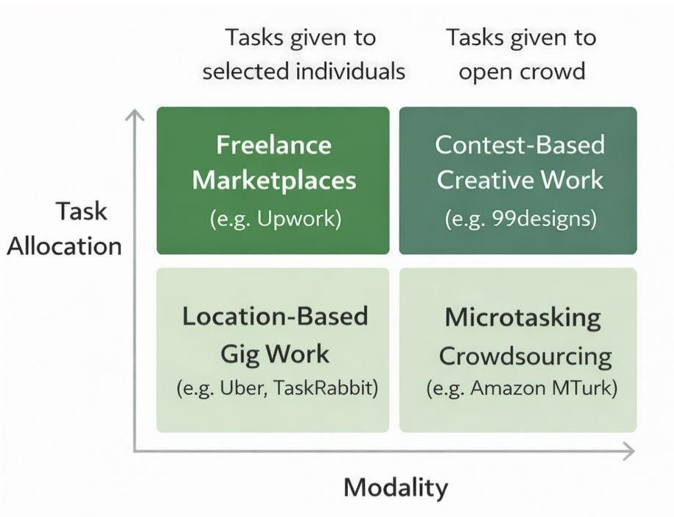
Figure 1: Digital Labour Platform Typology
Online Labor Markets as Institutional Systems
Online labor markets are a subset of the gig economy in which professional and semi-professional services (e.g., software development, design, writing, and consulting) are exchanged through digital marketplaces. These platforms differ from location- based gig services (e.g., ride-hailing or food delivery) in that work is remote, globally distributed, and often knowledge-intensive [2].
Research on online labor markets highlights their role as institutional systems rather than neutral marketplaces. Platforms set participation criteria, regulate pricing, structure dispute resolution, and define acceptable forms of interaction between clients and freelancers [2]. These institutional features shape market behavior by influencing incentives, information asymmetries, and bargaining power between clients and freelancers.
Prior studies identify reputation systems as a central coordination mechanism in online labor markets, serving as both a trust substitute and a disciplinary tool [9]. However, reliance on reputation also creates vulnerabilities, including strategic feedback manipulation, entry barriers for new workers, and asymmetric penalties that disproportionately affect freelancers relative to clients [2].
Platform Governance, Trust, and Enforcement
Platform governance refers to the set of rules, policies, technical systems, and enforcement practices that platforms use to regulate participant behavior. Unlike public regulatory regimes, platform governance is typically unilateral, proprietary, and dynamically adjusted by platform operators (Plantin, Lagoze, Edwards, & Sandvig, 2016) Trust has been identified as a foundational requirement for platform viability, particularly in markets marked by information asymmetry and limited repeat interactions [10]. Platforms seek to cultivate trust through mechanisms such as escrow payments, identity verification, standardized contracts, and dispute- resolution processes. However, empirical research indicates that these mechanisms are unevenly effective and may create new forms of risk and exclusion [11].
Enforcement practices, such as account suspensions, payment holds, and access restrictions, serve as primary governance tools in online labor markets. Studies indicate that enforcement is often opaque, difficult to appeal, and applied asymmetrically, raising concerns about procedural fairness and due process for platform participants (Kellogg, Valentine, & Christin, 2020). These dynamics fuel ongoing debates about whether platform governance should be treated as a form of private regulation with public consequences.
Gaps in Existing Literature
While prior research has extensively examined gig-economy labor conditions, algorithmic management, and regulatory challenges, few studies offer detailed, platform-specific analyses of governance mechanisms in professional online labor markets. Existing work often emphasizes worker precarity or macro-level regulatory debates, leaving gaps in understanding how concrete policy frameworks, enforcement architectures, and dispute mechanisms operate in practice on large-scale platforms.
Moreover, comparative discussions of trust, fairness, and enforcement across platforms often rely on survey- based perceptions rather than on structural analyses of platform rules and behaviors. This limits the ability to link observed user experiences to the underlying institutional design choices made by platform operators.
The present study contributes to this literature by offering a structured examination of governance, enforcement, and adversarial behavior on a major online labor platform, situating empirical observations within established theoretical frameworks of platform governance and digital labor markets.
This study employs a qualitative, document-centered case analysis to examine governance structures, enforcement mechanisms, and adversarial behavior within a large online labor platform. The methodological approach is designed to support descriptive and analytical objectives rather than causal inference, consistent with established practices in platform studies and institutional analysis.
Research Design
The research adopts a single-platform case study design. Case- based approaches are widely used in studies of digital platforms, where governance mechanisms, policy enforcement, and institutional rules are embedded in proprietary systems and cannot be isolated through experimental methods [12].
The objective of the study is not to evaluate performance or outcomes in normative terms but to document and analyze how platform rules are structured, how enforcement is operationalized, and how users interact with these systems in real-world conditions. The design emphasizes structural clarity, internal coherence, and traceability of observations to documented sources.
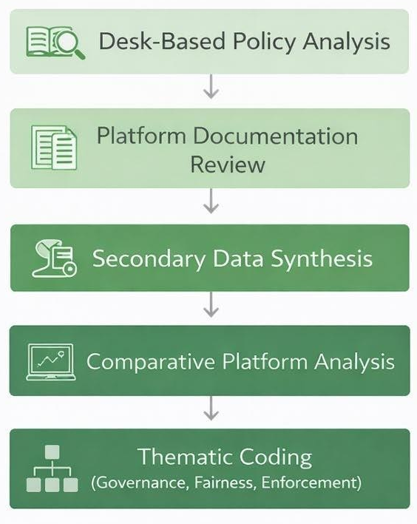
Figure 2: Study Design Flow
Data Sources
The analysis draws on multiple non-experimental data sources to triangulate observations and reduce reliance on any single perspective:
• Platform Documentation
Publicly available policy documents, terms of service, user guides, and official platform communications were reviewed to establish the formal governance framework. These materials provide insight into stated rules, enforcement procedures, and dispute-resolution mechanisms.
• Archival and Secondary Sources
Industry reports, prior academic studies, regulatory commentary, and reputable trade publications were used to contextualize platform operations within broader gig-economy and online labor- market trends.
• Observed Platform Interactions
The study incorporates anonymized observations derived from prolonged platform use, including interactions related to proposal submission, contract formation, dispute processes, account enforcement actions, and platform communications. These observations are used descriptively to illustrate mechanisms and patterns rather than to make statistical generalizations.
• Public Case Accounts
Documented cases reported in media outlets, practitioner forums, and policy discussions were included where they directly illustrate enforcement outcomes, disputes, or governance boundaries. These cases were selected for relevance and clarity rather than representativeness.
Analytical Approach
The analysis follows a structured thematic approach. Source materials were examined iteratively to identify recurring patterns related to:
• Policy scope and enforcement triggers
• Dispute escalation pathways
• Sanctioning mechanisms and corrective actions
• Common forms of adversarial or evasive behavior
• Governance limits and operational tradeoffs
Rather than coding sentiment or outcomes, the analysis focuses on mechanism identification: how rules are applied, where discretion is exercised, and how users adapt their behavior in response to governance constraints. This approach aligns with institutional and systems-oriented analyses of platform governance.
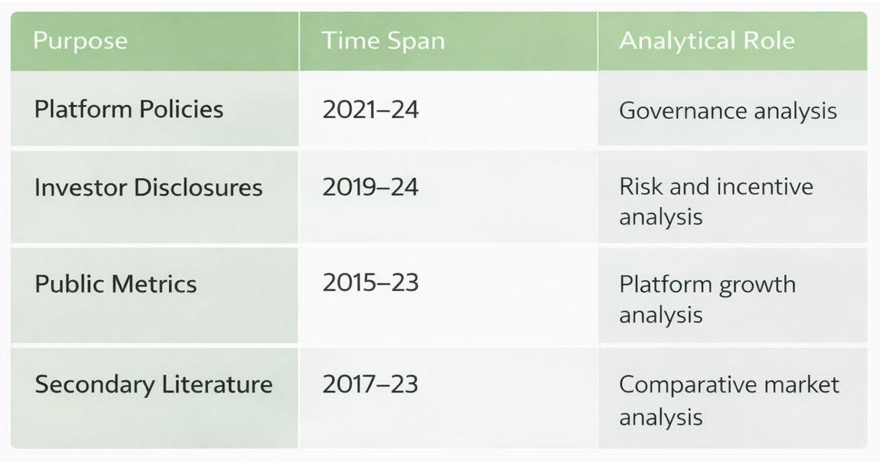
Figure 3: Document Corpus Review
Scope and Boundaries
The study is intentionally bounded in several respects:
• It does not attempt to measure platform effectiveness, fairness, or economic efficiency quantitatively.
• It does not claim representativeness across all gig economy platforms.
• It does not infer user intent beyond what is observable through documented behavior and policy interaction. The focus is limited to governance-relevant interactions that illuminate the platform’s structural features. Individual user outcomes are treated as illustrative rather than evidentiary.
Ethical Considerations
No personally identifiable information is included in this study. Observational material is anonymized, and no private communications are disclosed. The analysis relies solely on publicly available documentation and generalized experiential observations, consistent with ethical standards for qualitative research on digital platforms.
Limitations
As with all qualitative case analyses, the findings are constrained by the opacity of platforms and the proprietary nature of enforcement systems. Internal decision-making processes,algorithmic thresholds, and moderation criteria are not fully observable. Accordingly, conclusions are limited to externally visible behaviors and documented mechanisms.
These limitations are addressed through careful sourcing, conservative interpretation, and explicit separation between observation and inference.
Corporate and Market Profile
This section provides a descriptive overview of Upwork’s corporate structure, market positioning, revenue model, user base, and financial profile. The purpose is to establish a factual context for subsequent analysis of governance mechanisms, policy enforcement, and adversarial behavior. No evaluative or normative claims are made in this section.
Corporate Overview
Corporate History
Upwork was established in 2015 through the merger of two early online freelancing platforms, Elance and oDesk. Elance was founded in 1999, and oDesk in 2003, each aiming to facilitate remote collaboration between businesses and independent professionals. The merger consolidated the user bases, operational infrastructure, and market presence of both platforms under the Upwork brand, creating a unified online labor marketplace [3].

Figure 4: Platform Evolution Timeline
Mission and Platform Scope
Upwork’s stated mission is to create economic opportunities by connecting businesses with independent professionals and agencies. The platform supports a wide range of engagement models, including short-term tasks, long-term projects, hourly contracts, and fixed-price agreements. Services span multiple professional domains, including software development, design, writing, marketing, administrative support, and financial services [6].
Projects on the platform are typically structured as either hourly engagements, supported by time-tracking tools, or fixed-price contracts with milestone-based payment releases. These formats define the platform’s core transactional architecture and shape user interaction patterns.
Strategic Acquisitions and Partnerships
Upwork has pursued targeted acquisitions to enhance platform capabilities and expand service offerings. Notably, in 2019 Upwork acquired Clearhead, a digital optimization firm previously affiliated with Accenture. The acquisition focused on strengthening data-driven experimentation, user experience optimization, and analytics capabilities [13].
In addition to acquisitions, Upwork has formed partnerships and collaborations with technology providers, educational institutions, and industry organizations. These relationships support platform expansion, user onboarding, and ecosystem development without altering the marketplace’s core transactional structure [14,15].
Market Positioning and Competitive Landscape
Market Role
Upwork operates as a multi-sided online labor marketplace, facilitating transactions between clients seeking professional services and independent workers offering those services. The platform occupies a generalist position in the gig economy, supporting a broad range of skills, pricing models, and engagement durations.
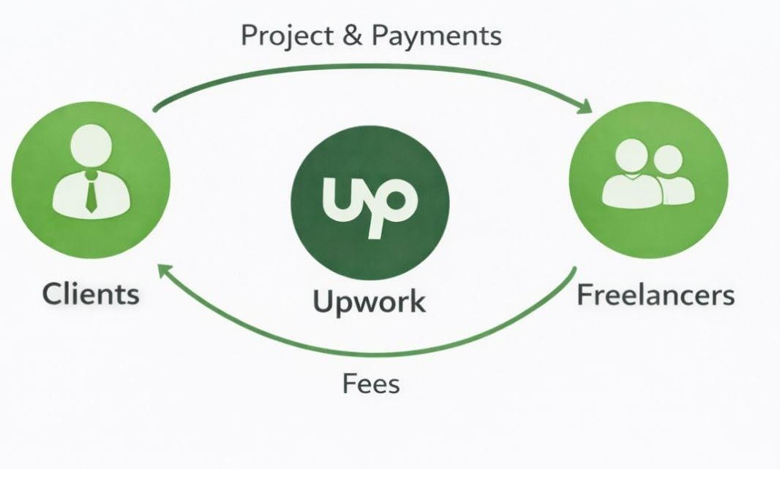
Figure 5: Market Positioning Map
Competitive Landscape
The online freelancing market includes several major platforms with distinct operational models. Fiverr operates primarily through a gig-based model, in which services are offered at predefined prices. The platform emphasizes rapid transactions and standardized offerings, with revenue generated through transaction-based service fees [3].
Freelancer.com employs a competitive bidding model in which clients post projects and freelancers submit proposals. Pricing and selection are influenced by bid competition, and the platform earns revenue from commissions, subscriptions, and optional service enhancements [13].
Total positions itself as a curated talent marketplace, focusing on a smaller pool of highly vetted professionals. Engagements typically involve higher-value contracts and enterprise clients, supported by a rigorous screening process [16].
These platforms coexist in the same market, addressing different segments of client demand and freelancer participation.
Comparative Market Structure
Across the sector, platforms vary along dimensions including pricing transparency, talent vetting, project duration, and governance mechanisms. Upwork’s model combines open marketplace access with layered controls, including identity verification, escrow, and dispute resolution. These structural differences influence user behavior and platform dynamics, but are not evaluated in this section [17].
Revenue Model and Fee Structure
Monetization Logic
Upwork generates revenue through multiple streams, including freelancer service fees, client transaction fees, subscription plans, and enterprise service offerings. This diversified monetization approach supports platform operations and ongoing development.
Pricing Tiers and Fees
Freelancers are subject to a tiered service fee based on cumulative billings from individual clients. Client-side fees include transaction-processing charges applied to payments. Subscription plans offer additional platform features, such as enhanced visibility or expanded proposal allowances [13].
Enterprise offerings, including managed services, compliance support, and workforce analytics tailored to large organizations, constitute a distinct revenue channel [6].
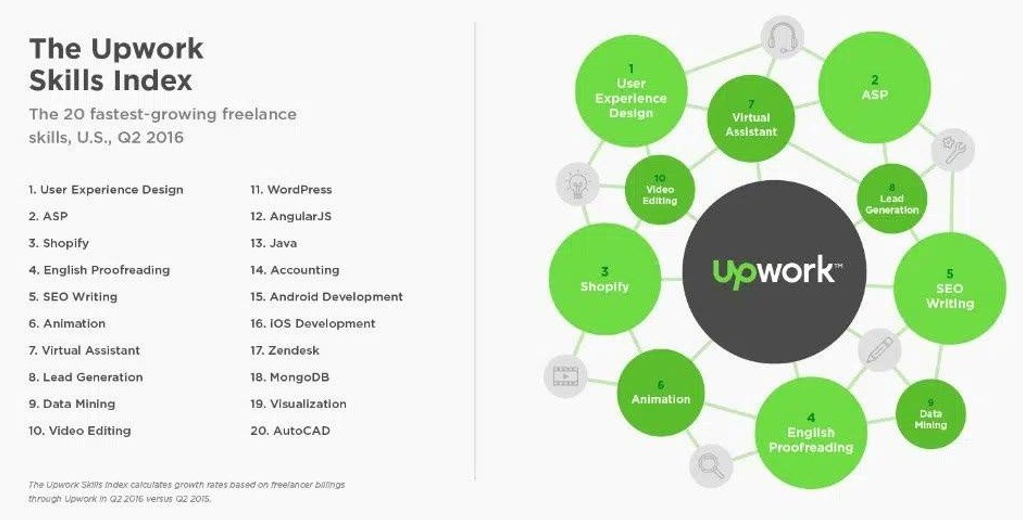
Figure 6: Project Category Distribution
Note: From Upwork, by Upwork’s Design Team, www.upwork.com, Copyright 2026 by Upwork, Inc.
Revenue Growth
Between 2020 and 2023, Upwork’s reported revenue rose from approximately $373 million to over $600 million, reflecting sustained growth in transaction volume and expanded platform usage [13].
User Base and Engagement Indicators
User Composition
As of 2023, Upwork reported more than 18 million registered freelancers and approximately 5 million registered clients. Freelancers come from diverse professional backgrounds, and clients include small businesses, startups, and large enterprises across multiple industries [3].
Geographic Distribution
Platform participation spans multiple regions, with significant activity originating in North America, Europe, South Asia, and Southeast Asia. This geographic dispersion reflects both client demand and global labor supply dynamics.
Engagement Metrics
Transaction values on the platform vary by project type and skill category. Reported average transaction sizes range from several hundred to over 1,000 U.S. dollars, depending on the scope and duration [18].
Policy Framework and Governance
Upwork operates under a formal policy framework that regulates participation, governs transactions, and maintains marketplace integrity. This section outlines the scope, enforcement architecture, dispute-resolution mechanisms, and sanctioning processes that govern interactions between freelancers and clients. It is descriptive in nature and establishes the governance baseline against which adversarial behaviors and system limitations are examined in subsequent sections.

Figure 7: Policy Scope Diagram
Policy Scope and Objectives
Upwork’s policy framework is intended to support marketplace integrity by defining acceptable conduct, transactional boundaries, and participation requirements for all users. Policies apply to both freelancers and clients and are structured to address identity verification, payment security, professional conduct, intellectual property protection, confidentiality, and restrictions on off- platform engagement. The stated objectives of the framework include:
• preserving trust between transacting parties,
• reducing fraud and misrepresentation,
• ensuring contractual clarity, and
• maintaining operational continuity of the platform.
Policies are codified in publicly available terms of service, user agreements, and supplemental guidelines, which evolve in response to platform usage and regulatory considerations [14,15].
Policies for Freelancers
Freelancer-facing policies govern profile accuracy, proposal submission practices, project delivery standards, communication requirements, and dispute participation. Freelancers must with agreed terms, and adhere to platform-mediated payment processes. Violations may trigger warnings, account limitations, or removal from the platform.
Policies for Clients
Client-facing policies address the accuracy of project descriptions, payment obligations, handling of intellectual property, and professional conduct. Clients are expected to fund milestones appropriately, communicate expectations clearly, and comply with platform dispute mechanisms. Failure to meet these requirements may result in account restrictions or termination [13].
Enforcement Architecture
Upwork enforces its policies through a combination of automated systems and human oversight. This hybrid enforcement architecture is designed to balance scalability with case-specific review.
Automated Monitoring
Automated systems monitor transactions, communication patterns, payment flows, and account activity to identify potential policy violations. These systems flag anomalies, including repeated account creation, suspicious payment behavior, and patterns indicative of off-platform circumvention.
Manual Review and Investigations
Flagged cases are subject to manual review by platform personnel. Human reviewers assess reported violations, contextual evidence, and communication records. Manual investigations may be initiated through automated alerts or user-submitted reports [4].
Reporting Channels
Users may report suspected violations through formal reporting tools. Submitted reports are incorporated into the enforcement pipeline and evaluated alongside system-generated signals.

Figure 8: Enforcement Pipeline
Dispute Resolution and Remedial Processes
Upwork provides structured dispute-resolution mechanisms to resolve conflicts that arise during project execution.
Mediation and Arbitration Pathways
For disputes involving fixed-price contracts, Upwork offers mediation services that facilitate negotiated resolution between the parties. If mediation fails, arbitration may be invoked under specified conditions. These processes are procedural and governed by predefined rules [14,15].
Escrow and Payment Protection
Payment protection mechanisms include escrow-funded milestones and time-tracking validation for hourly contracts. These mechanisms are designed to reduce payment disputes by tying compensation to verifiable completion of work.
Sanctions and Corrective Actions
Policy violations may result in graduated sanctions depending on severity, frequency, and assessed intent.
sanction types
Sanctions may include:
• formal warnings,
• temporary account limitations,
• suspension of platform access, and
• permanent account removal. Sanctions apply to both freelancers and clients, including penalties for non-payment, fraudulent conduct, or repeated violations of platform rules [6].
Corrective Intent
Sanctions are framed as corrective measures aimed at restoring compliance rather than punitive actions alone. However, repeated or severe violations may result in irreversible account termination.
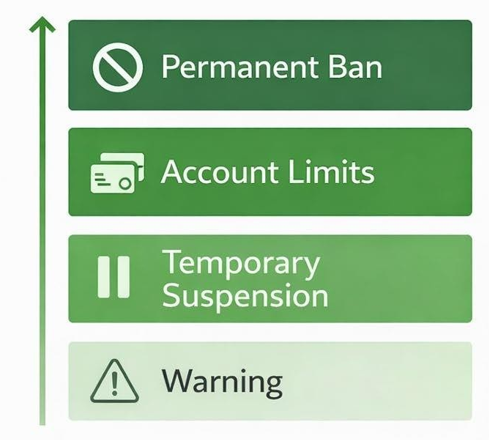
Figure 9: Sanction Ladder
Governance Boundaries and Operational Limits
Despite formal policies and enforcement mechanisms, governance operates within practical and technical limits. Platform-scale moderation faces inherent challenges, including detection latency, false positives, evidentiary ambiguity, and tradeoffs between enforcement speed and user friction. These boundaries do not eliminate governance structures; rather, they shape their effectiveness in real-world conditions. Understanding these limits is essential for contextualizing the adversarial behaviors and failure modes examined in the next section.
Adversarial Behaviors and Failure Modes
While Upwork maintains a formal policy and enforcement framework, the platform operates within a large, heterogeneous, and incentive-driven marketplace. Under such conditions, participants may adopt behaviors that exploit structural gaps, enforcement latency, or informational asymmetries. This section documents recurring adversarial behaviors and systemic failure modes observed on the platform, focusing on their origins and their effects on market functioning.
The behaviors described do not imply widespread noncompliance; rather, they illustrate predictable responses to platform incentives and constraints.
Fraud and Misrepresentation
A second class of adversarial behaviors relates to identity, capability signaling, and reputation mechanisms.
Skill Inflation and Misrepresentation
Some freelancers exaggerate qualifications or misrepresent experience to secure contracts. In more complex cases, work may be subcontracted to third parties without disclosure, resulting in delivery outcomes that diverge from client expectations. These practices exploit information asymmetry inherent in remote labor markets [18].
Fake Profiles and Reputation Manipulation
Instances of multiple account creation, coordinated review inflation, and retaliatory feedback have been documented. Such behaviors distort platform signaling mechanisms, reducing the informational value of ratings and reviews for both clients and freelancers [19].
Bypassing Formal Dispute Mechanisms
Some users avoid formal dispute resolution channels, opting instead for informal negotiation, pressure tactics, or reputational threats. While expedient for individual cases, such behavior undermines standardized resolution processes and introduces variability in outcomes [14,15].

Figure 10: Off-Platform Leakage Pathways
Dispute Escalation Dynamics
Certain adversarial behaviors emerge during project execution rather than at onboarding.
Scope Creep and Strategic Underbidding
Freelancers may submit low initial bids to secure contracts and subsequently renegotiate scope or compensation once project dependency is established. Conversely, clients may incrementally expand project requirements without proportional compensation adjustments. These dynamics often escalate into disputes, particularly in loosely specified engagements [6].
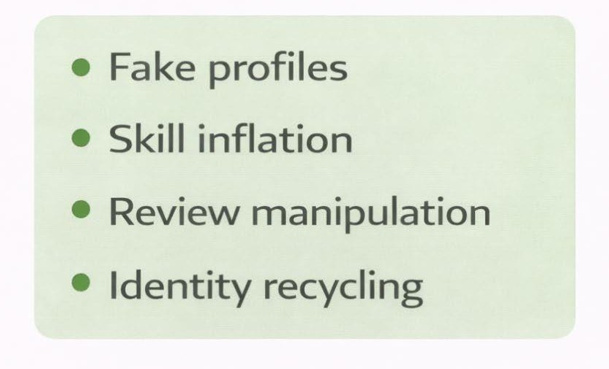
Figure 11: Fraud Vectors
Effects on Market Quality and Platform Load
The cumulative impact of adversarial behaviors manifests at the system level rather than in isolated incidents.
Signal Degradation
Reputation inflation, misrepresentation, and off-platform movement undermine the reliability of platform signals, including ratings, job success scores, and historical performance indicators. As signal quality declines, transaction costs increase for all participants.
Enforcement Load and Resource Allocation
Detection and remediation of adversarial behaviors require ongoing investment in monitoring, investigation, and enforcement infrastructure. Increased enforcement load diverts resources from platform development and user support, creating tradeoffs between governance intensity and user experience [4].
Trust Friction
Repeated exposure to disputes, misrepresentation, or perceived inconsistencies in enforcement undermines trust in the marketplace. This may influence user retention decisions and encourage further circumvention behaviors, reinforcing a feedback loop [13].
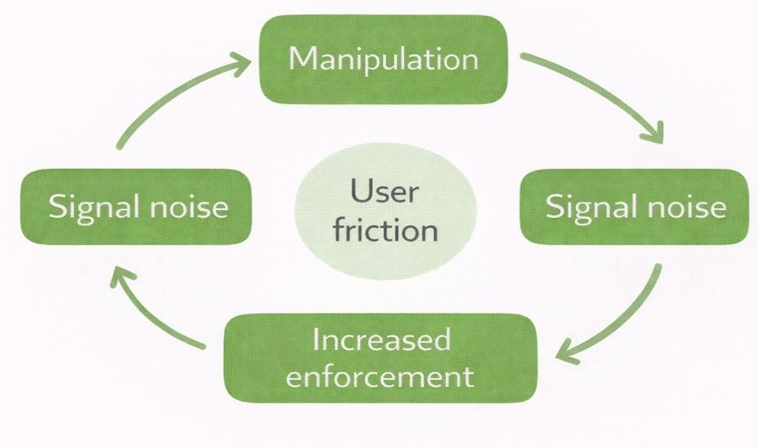
Figure 12: Signal Degradation Loop
Outlook
This section outlines observed patterns and directional pressures shaping platform-mediated freelance labor markets. The discussion does not advance prescriptions or normative claims; instead, it synthesizes recurring signals emerging from platform operation, user behavior, and governance dynamics documented in prior sections.
The examples provided are illustrative. They contextualize earlier analysis without concluding.
Evolving Participation Patterns
Observed participation dynamics indicate increasing polarization among platform users. Experienced freelancers tend to focus their activity on short-duration, high-interaction engagements, while less-established participants exhibit higher churn and proposal fatigue. Clients similarly exhibit bifurcation: some prioritize rapid task completion, while others seek longer-term relationships that extend beyond platform-native interaction models.
These participation patterns appear consistent with incentive structures favoring speed, responsiveness, and transaction volume over depth or continuity.
Proposal Saturation and Interaction Density
High proposal submission rates have emerged as a structural characteristic of competitive platform environments. Freelancers frequently submit large volumes of proposals to secure consistent work, often accompanied by repeated interviews and pre-contract interactions. While effective for some participants, this dynamic introduces substantial time overhead and contributes to uneven opportunity distribution. The pattern suggests that success is increasingly correlated with interaction throughput rather than credential accumulation alone.
Community Signaling and Informal Knowledge Transfer
Beyond formal platform mechanisms, informal communities (e.g., forums, social media groups, and peer networks) are increasingly important for disseminating operational knowledge. Users exchange strategies for navigating proposal systems, interpreting policy enforcement, and identifying opportunity niches. These informal knowledge channels serve as adaptive layers on top of formal platform governance, influencing behavior without direct institutional coordination.

Figure 13: Observed Pattern Aggregation
Platform Visibility and External Amplification
Platform narratives increasingly extend beyond native interfaces through blogs, webinars, social media content, and influencer- driven amplification. These external channels shape user expectations and influence perceptions, particularly for new entrants. Visibility mechanisms also introduce feedback loops, in which success stories and high- profile cases disproportionately influence participation behavior. Such amplification effects may reinforce both opportunity optimism and competitive pressure.
Directional Pressures on Governance Systems
Observed behavioral patterns suggest growing tension between scale and individualized governance. As platform participation expands, enforcement systems face increasing load, while users demand greater transparency and consistency. This tension highlights an ongoing tradeoff between procedural efficiency and perceived fairness.
While governance frameworks continue to evolve, the persistence of circumvention behaviors indicates structural limits to centralized control in large, heterogeneous marketplaces [20].
Discussion and Implications
This section interprets the findings presented in earlier sections and examines their implications for key stakeholder groups. Rather than introducing new evidence, it synthesizes observed platform dynamics to assess how governance design, incentive structures,and enforcement mechanisms shape participant behavior and market outcomes.
The discussion is structured across three analytical lenses: freelancers, hiring organizations, and platform governance.

Figure 14: Stakeholder Impact Matrix
Implications for Freelancers
For freelancers, participation in platform-mediated labor markets entails navigating a system where opportunity access, risk exposure, and incentive alignment are tightly coupled.
The findings suggest that while platforms such as Upwork provide broad access to global demand, this access is mediated by competitive mechanisms that reward high interaction throughput. Success increasingly correlates with the ability to sustain frequent proposal submissions, rapid response cycles, and short-term engagements. This dynamic advantage participants with available time buffers, platform fluency, and tolerance for uncertainty, while disadvantaging those oriented toward longer-duration or depth- intensive work.
Risk exposure is asymmetrically distributed. Freelancers bear substantial downside risk related to policy enforcement, dispute outcomes, and reputational signaling, often without full transparency into enforcement criteria. While escrow systems and mediation mechanisms provide baseline protections, enforcement opacity contributes to perceived arbitrariness, thereby undermining trust and long-term engagement.
Incentive alignment further complicates participation. Fee structures, ranking algorithms, and visibility mechanisms implicitly encourage volume-oriented behaviors. Over time, this may induce adaptive strategies that prioritize speed and proposal efficiency over specialization or quality differentiation. The implication is not individual failure, but structural pressure shaping behavior at scale.
Taken together, these dynamics suggest that freelancers operate within a constrained optimization environment, where agency exists but is bounded by platform-defined incentives and enforcement asymmetries.
Implications for Hiring Organizations
For hiring organizations, platform participation offers efficiency gains but also introduces new coordination challenges.
Access to a large and diverse talent pool reduces search costs and accelerates project initiation. Platform tools for milestone management, payment protection, and communication provide a procedural structure that many organizations find advantageous, particularly for short-term or modular work.
However, the same competitive dynamics that shape freelancer behavior also affect client outcomes. High proposal volume can obscure signal quality, complicate talent evaluation, and increase screening effort. Information asymmetries (e.g., skill inflation or reputational manipulation) pose quality-control risks that clients must actively mitigate.
Transaction costs are therefore redistributed rather than eliminated. While platforms reduce formal contracting overhead, they increase informal coordination costs associated with vetting, dispute resolution, and expectation management. Organizations that internalize these dynamics tend to develop recurring engagement patterns or external- validation heuristics, whereas less-experienced clients may experience inconsistent outcomes.
The findings indicate that platform efficiency gains depend on the organization’s capacity to manage uncertainty and to engage iteratively with platform mechanisms.
Implications for Platform Governance and Policy
From a governance perspective, the analysis highlights inherent tradeoffs between scale, control, and perceived fairness.
Platform policy frameworks are designed to standardize interactions across heterogeneous participants. Yet enforcement systems operate under information constraints and must balance speed against accuracy. As participation volume increases, these constraints intensify, leading to greater reliance on automated monitoring and heuristic enforcement.
This reliance introduces legitimacy challenges. Users evaluate governance not only by formal rules but also by consistency, transparency, and the availability of recourse. When enforcement outcomes are insufficiently explainable, trust erodes even with procedural compliance.
The persistence of adversarial behaviors (e.g., off-platform transactions and reputational manipulation) suggests that governance boundaries are structural rather than incidental. Platforms can mitigate, but not fully eliminate, circumvention incentives, particularly when fee structures and interaction costs diverge from participants’ expectations.
For regulators and institutional stakeholders, these findings underscore the importance of viewing platform governance as an evolving control system rather than a fixed compliance apparatus. Effective oversight requires recognizing the limits of centralized enforcement in decentralized labor markets.
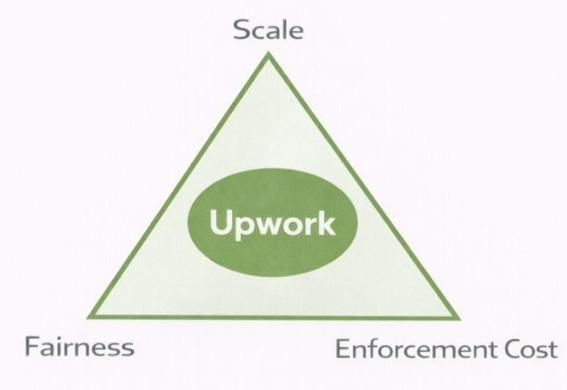
Figure 15: Governance Trade off Triangle
Integrative Interpretation
Across stakeholders, a common pattern emerges: platform design shapes behavior through incentives more than through explicit instruction. Governance mechanisms define the feasible action space, within which participants adapt strategically.
The implications are not normative judgments about platform success or failure, but analytical insights into how large-scale digital labor systems mediate trust, risk, and coordination. Understanding these dynamics is essential for evaluating platform sustainability, participant welfare, and regulatory relevance. This discussion establishes the analytical foundation for the recommendations presented in the following section.
Recommendations
The recommendations presented in this section are derived directly from the empirical observations and analytical interpretations discussed in the previous sections. They are framed as institutional and policy-oriented considerations, rather than operational prescriptions, and are intended to inform platform designers, organizational users, and regulatory stakeholders.
Recommendations for Platform Operators
Enhance Enforcement Transparency without Revealing
Detection Mechanisms Platforms should improve the explainability of enforcement actions by providing structured rationale categories for sanctions, suspensions, and dispute outcomes. Transparency need not entail disclosing detection logic, but it should reduce perceived arbitrariness by clarifying which policy dimensions were implicated.
Rebalance Incentive Structures to Reduce Volume Bias
Current ranking and visibility mechanisms implicitly favor high- frequency interaction patterns. Platforms should explore incentive designs that recognize engagement stability, repeat relationships, and outcome consistency, thereby mitigating pressure toward proposal saturation and short-termism.
Differentiate Governance Pathways by Participant Maturity
Enforcing a uniform policy across heterogeneous users creates disproportionate risk for experienced participants with higher exposure. Tiered governance models—based on verified history rather than revenue alone—could improve fairness without weakening control.
Recommendations for Hiring Organizations
Adopt Structured Vetting Heuristics
Organizations using freelance platforms should develop standardized screening protocols that supplement platform- provided signals. This includes staged engagements, task decomposition, and reputation triangulation across projects rather than reliance on aggregate scores.
Internalize Platform Transaction Costs
Rather than assuming that platforms eliminate coordination overhead, organizations should treat vetting, communication, and dispute resolution as explicit transaction costs. This recognition improves the realism of project planning and reduces dissatisfaction arising from unmet expectations.
Leverage Repeat Engagements to Reduce Uncertainty
Empirical patterns suggest that repeat client–freelancer relationships significantly reduce coordination friction. Organizations should prioritize continuity where feasible, treating platforms as relationship brokers rather than one- off marketplaces.
Recommendations for Freelancers
Align Participation Strategy with Platform Incentives
Freelancers should approach participation on platforms as a constrained optimization problem. Strategies that emphasize short- cycle responsiveness and proposal efficiency are better aligned with platform dynamics than credential-centric signaling alone.
Risk Mitigation through Portfolio Diversification
Dependence on a single platform amplifies enforcement and reputational risk. Freelancers should diversify engagement channels and maintain continuity of their off-platform professional identity to reduce vulnerability to unilateral policy actions.
Reputation Management as A Governance Interface
Given the weight of reputational signals, freelancers should treat communication discipline, scope clarity, and documentation as protective mechanisms rather than administrative overhead.
Recommendations for Policymakers And Regulators
Recognize Platforms as Labor Governance Systems
Digital labor platforms function as quasi-regulatory environments. Oversight frameworks should account for their role in shaping labor access, dispute resolution, and income stability, rather than treating them solely as neutral intermediaries.
Prioritize Procedural Fairness over Outcome Control
Regulatory focus should emphasize transparency, appeal mechanisms, and consistency of enforcement rather than attempting to mandate specific pricing or ranking outcomes, which may distort platform dynamics.
Encourage Auditability and Reporting Standards
Platforms operating at scale should be encouraged to publish aggregate enforcement statistics, dispute-resolution outcomes, and rationales for policy changes. Such reporting supports accountability without compromising operational integrity.
• Synthesis
These recommendations do not assume convergence toward a single optimal platform model. Instead, they reflect the reality that digital labor markets are inherently tension-filled systems balancing scale, control, and participant trust. Effective intervention, whether by platform operators, organizational users, or regulators, requires acknowledging these tradeoffs and designing governance mechanisms that are adaptive rather than static.
The following section concludes the study by summarizing key contributions and outlining directions for future research.
Conclusion and Future Research
This study examined digital labor platforms through the lenses of governance, policy enforcement, and participant behavior, using Upwork as a representative case of a large-scale freelance marketplace. Rather than treating the platform as a neutral intermediary, the analysis positioned it as an active institutional environment that shapes incentives, constrains behavior, and arbitrates disputes amid asymmetric information and opaque enforcement.
Across corporate structures, market positioning, policy frameworks, adversarial behavior, and participants’ perceptions, the findings consistently indicate that platform outcomes are not driven solely by individual competence or market efficiency. Instead, they emerge from the interaction between platform design choices, enforcement architectures, and user adaptation strategies.
The study contributes to the literature on the gig economy by demonstrating that fairness, trust, and performance on digital labor platforms are not static attributes but system-level properties that fluctuate with governance mechanisms. Enforcement actions, reputational signaling, dispute resolution processes, and incentive structures jointly determine how value is created, contested, and redistributed among freelancers, hiring organizations, and the platform itself.
Importantly, the analysis avoids normative claims about optimal platform behavior. Instead, it documents structural tensions that are intrinsic to scalable digital labor markets: efficiency versus due process, growth versus trust, automation versus explainability. These tensions do not represent platform failures per se, but persistent governance tradeoffs that require continuous recalibration.
Contributions to Policy and Management Scholarship
This research offers three primary contributions:
• Conceptual clarification
It reframes digital freelance platforms as labor governance systems rather than transactional marketplaces, aligning platform studies more closely with institutional and regulatory theory.
• Empirical synthesis
By integrating corporate disclosures, market data, policy documentation, user-reported behaviors, and comparative platform analysis, the study provides a multi-layered account of how governance operates in practice.
• Analytical boundary-setting
The paper explicitly separates descriptive analysis from normative judgment, offering a methodological template for studying commercial platforms within academic policy contexts without collapsing into consultancy-style evaluation.
Limitations
Several limitations should be acknowledged. First, the study relies on secondary data sources and publicly available materials, which constrain access to internal enforcement logic and proprietary decision systems. Second, while Upwork serves as a useful focal case, platform-specific dynamics limit the generalizability of certain findings to smaller or more specialized marketplaces. Finally, user experience narratives, while analytically informative, cannot fully capture the diversity of participant trajectories across global labor markets.
These limitations do not undermine the study’s conclusions; rather, they delineate the scope within which its interpretations remain valid.
Directions for Future Research
Future research could extend this work along several dimensions:
• Comparative governance analysis
Systematic cross-platform studies examining enforcement transparency, dispute-resolution outcomes, and reputational dynamics would clarify whether governance features are structural or platform-specific.
• Longitudinal participant trajectories
Tracking freelancers and hiring organizations over time could illuminate how exposure to platform governance shapes behavior, risk tolerance, and exit decisions.
• Regulatory interface studies
As jurisdictions increasingly scrutinize digital labor platforms, research examining the interaction between platform governance and external regulation would provide valuable policy insight.
• Algorithmic accountability
Greater scholarly attention to ranking systems, automated moderation, and matching algorithms is needed to understand how technical design choices translate into labor outcomes [21-28].
Closing Statement
Digital labor platforms are no longer peripheral actors in the global economy. They are infrastructures of work that exercise governance functions traditionally associated with firms, markets, and regulators. Understanding their behavior, therefore, requires analytical rigor that goes beyond performance metrics or user satisfaction surveys. By situating platform dynamics within a governance and policy framework, this study aims to contribute to a more precise, institutionally grounded understanding of the gig economy: one that can inform scholarship, management practice, and regulatory debate without conflating them.
Acknowledgements
The author acknowledges the use of Grammarly for spelling, grammar, plagiarism, and similarity checks with AI-generated text; Elsevier Menseley for bibliography storage, organization, and sorting; JabRef for validating the bibliography and generating the XML file for import; OpenAI to check for plagiarism and generate all figures (except otherwise noted), as well as for individual reference vetting or replacement recommendations; and TurnItIn for plagiarism checking. All final content, including the ideation, concept, structure, research (study), drafting, reviewing, and authoring of both versions of this paper, was executed by the author.
References
- Kässi, O., & Lehdonvirta, V. (2018). Online labour index: Measuring the online gig economy for policy and research. Technological forecasting and social change, 137, 241-248.
- Wood, A. J., Graham, M., Lehdonvirta, V., & Hjorth, I. (2019). Good gig, bad gig: autonomy and algorithmic control in the global gig economy. Work, employment and society, 33(1), 56-75.
- Melidoniotis, A. (2024, August). Upwork review: Does it meet our expectations in 2024? Retrieved 10 17, 2024.
- Beckman, J. (2023, October). 80+ Upwork statistics in 2023: revenue, users, and more. Retrieved 1 26, 2025, from Tech Report.
- Rosenblat, A., & Stark, L. (2015). Algorithmic labor and information asymmetries: A case study of Uber’s drivers. International journal of communication, 10, 27-27.
- Freelancermap Gmbh. (2025). The freelancer study 2024. The freelancer study 2024. Freelancermap GmbH.
- De Stefano, V. (2015). The rise of the “just-in-time workforce”: on-demand work, crowdwork and labour protection in the “gig-economy”. Journal, S.S.R.N. Electronic, 37, 461–471.
- Cherry, M. A., & Aloisi, A. (2017). Dependent contractors in the gig economy: A comparative approach. Am. UL Rev., 66, 635.
- Pallais, A. (2014, November). Inefficient hiring in entry-levellabor markets. Review, American Economic, 104, 3565–3599.
- Gefen, D., Karahanna, E., & Straub, D. W. (2003). Trust and tam in online shopping: An integrated model1. MIS quarterly, 27(1), 51-90.
- Gray, M. L., & Suri, S. (2019). Ghost work: How to stop Silicon Valley from building a new global underclass. Harper Business.
- Yin, R. K. (2018). Case study research and applications (Vol. 6). Thousand Oaks, CA: Sage.
- Clennett, S. (2020, September). Upwork review: all you need to know. Retrieved 10 17, 2024, from Wise.
- Upwork Inc. (2023). Q1 2023 shareholder letter. Retrieved10 17, 2024.
- Upwork Inc. (2023). Q2 2021 shareholder letter. Q2 2021shareholder letter. Upwork Inc.
- Todorov, A. G. (2023, May). 104 essential freelance stats 2024 [facts and trends]. Retrieved 10 17, 2024.
- Kempton, B. (2023). Gig economy statistics and key takeaways for. 2024. Upwork.
- Steven, K. (2025, January). 40+ incredible Upwork statistics2024 (revenue facts). Retrieved 1 26, 2025.
- Wise, J. (2023, June). How many people use Upwork in 2023? (user & revenue stats.
- Banik, A., Chaudhuri, A., Suar, D., Vij, M., Sarkar, S. S., Mukherjee, P., . . . Chatterjee, R. (2020). Gig economy,financial stability, efficiency in the auto sector, opinion on budget (Vol. 9). (P. Mukherjee, R. Basu, & S. R. Chowdhury, Eds.) Publication, I. M. I. Kolkata.
- Buffett, J. (2024, June). Workers in the gig economy: 2022 statistics. Retrieved 10 17, 2024, from Zety Blog.
- Crouch, C. (2019, June). Will the gig economy prevail? Press, Polity.
- Donovan, S. A., Bradley, D. H., & Shimabukuru, J. O. (2016). What does the gig economy mean for workers?.
- Kaine, S., & Josserand, E. (2019). The organisation and experience of work in the gig economy. Journal of Industrial Relations, 61(4), 479-501.
- Paterson, A. P. (2016, October). Why you should never use Upwork, ever. Retrieved 10 17, 2024.
- Stewart, A., & Stanford, J. (2017). Regulating work in the gig economy: What are the options?. The Economic and Labour Relations Review, 28(3), 420-437.
- Vallas, S., & Schor, J. B. (2020). What do platforms do? Understanding the gig economy. Annual review of sociology, 46(1), 273-294.
- Woodcock, J., & Graham, M. (2020). The gig economy: a critical introduction. Press, Polity Press.